Choosing a truck for poor road conditions comes down to a handful of decisions that matter far more than brand or horsepower: how much weight the axles actually carry, how the suspension absorbs shock, how much traction the drive layout provides, and whether the frame and tires can survive years of washboard, mud, and broken pavement. A truck that performs well on a paved highway can fall apart quickly on unimproved haul roads, and the reverse is also true. This guide walks through the engineering trade-offs I look at when matching a vehicle to rough, unpaved, or poorly maintained routes, and it explains why the cheapest unit on the quotation sheet is rarely the cheapest truck to run.
Start With the Duty Cycle, Not the Spec Sheet
Before anyone talks about engine size or cab type, the operating profile has to be defined. Poor road conditions are not a single condition. A municipal garbage route with potholes, a quarry haul road with 8% grades and loose gravel, and a rural construction site that turns to mud after rain all demand different configurations. I treat the following as the minimum input data set:
- Surface type and condition: broken asphalt, graded gravel, compacted dirt, sand, or seasonal mud
- Route length and cycle time: short shuttle runs versus longer hauls change gearing and cooling priorities
- Gradient: sustained grades above roughly 6% push engine, transmission, and brake selection in a different direction
- Payload and material density: the same body volume can mean very different tonnage depending on what is being carried
- Annual mileage and daily hours: a truck doing 40,000 km a year on rough roads wears differently than one doing 120,000 km on mixed surfaces
- Climate and altitude: heat, cold, dust, and thin air all affect cooling, starting, and power delivery
- Loading and unloading method: excavator loading, rear tipping, side loading, or crane work all influence chassis and body design
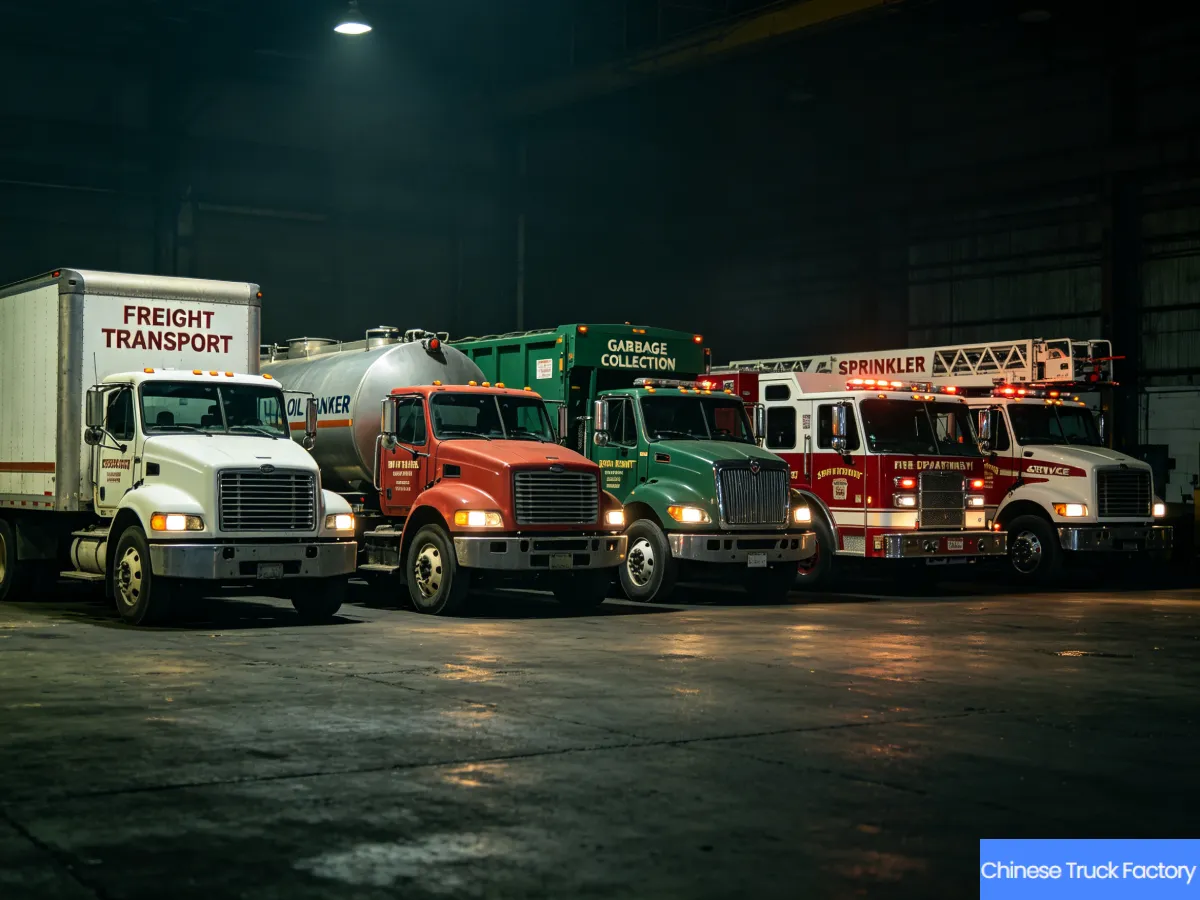
Once those are on paper, the vehicle class usually narrows itself. A 4×2 chassis may be fine for light municipal work on paved streets with occasional rough patches. A 6×4 or 6×6 configuration is more appropriate where traction is unreliable. An 8×4 gives higher legal axle capacity but adds tare weight, tire cost, and turning radius — a real drawback on narrow, winding rural roads.
Drive Configuration and Traction: The First Real Filter
Traction is where poor-road truck selection usually goes wrong. Buyers sometimes specify a 6×4 for cost reasons and then discover the rear axle spins out on wet clay or loose gravel. Others over-specify 6×6 or 8×8 and pay for capability they never use.
| Configuration | Best Suited To | Main Advantage | Main Limitation |
|---|---|---|---|
| 4×2 | Light municipal routes, mostly paved with rough sections | Lower cost, lighter tare, better fuel economy | Limited traction and lower legal payload |
| 6×4 | Construction, quarry, and mixed paved/unpaved haulage | Good balance of traction, payload, and cost | Can still struggle in deep mud or steep loose grades |
| 6×6 | Unpaved haul roads, wet or sandy terrain, steep grades | Front axle drive adds traction when loaded | Higher purchase price, more driveline complexity, higher fuel use |
| 8×4 | Higher legal payload on poor but firm surfaces | More axle capacity, good stability when loaded | Heavier, wider turning circle, more tire cost |
| 8×8 | Severe off-road, mining access roads, extreme terrain | Maximum traction and axle capacity | High cost, complex maintenance, limited parts availability in some markets |
The trade-off here is straightforward. More driven axles mean more traction but also more weight, more parasitic losses, and more components that can fail. On a route that is rough but generally firm, a well-specified 6×4 with the right tires and differential locks often outperforms a heavier 6×6 on cost per ton moved.
Chassis, Frame, and Suspension: Where Rough Roads Take Their Toll
Poor roads punish the frame and suspension more than the engine. Twisting, potholes, and uneven loading generate stresses that a highway truck rarely sees. The chassis needs to be stiff enough to resist bending and torsion, but not so rigid that it transfers every shock directly into the body and cab.
Frame and crossmember considerations
Look for a frame with adequate section height and reinforcement in the areas where loads concentrate — behind the cab, over the rear suspension, and around the tipping hinge point on a dump truck. On dedicated rough-road chassis, additional crossmembers and gusseting are common. This is not marketing language; it is a measurable difference in how the truck holds up over years of service.
Suspension choices
- Leaf spring suspension is the traditional choice for rough roads. It is simple, robust, easy to repair in the field, and tolerant of overload. The trade-off is a firmer ride and more shock transfer to the frame.
- Air suspension gives a smoother ride and better load leveling, but adds complexity, requires air system maintenance, and can be vulnerable to damage in severe off-road use.
- Heavy-duty parabolic or multi-leaf setups are often specified for mining and quarry work where shock loads are high.
For most poor-road applications outside of specialized mining, a well-rated leaf spring suspension with quality shock absorbers is the practical answer. It is not the most comfortable option, but it is the one that keeps the truck working.
Payload, GVW, and Legal Weight: Getting the Numbers Straight
This is where I see the most expensive mistakes. Buyers often confuse four different numbers:
- Curb weight (tare): the truck with fuel, fluids, and standard equipment, no cargo
- Payload: the weight of cargo the truck is designed to carry
- GVW / GVWR: the maximum total weight of the loaded vehicle
- Legal payload: what the destination country’s axle and gross weight rules actually allow on the road
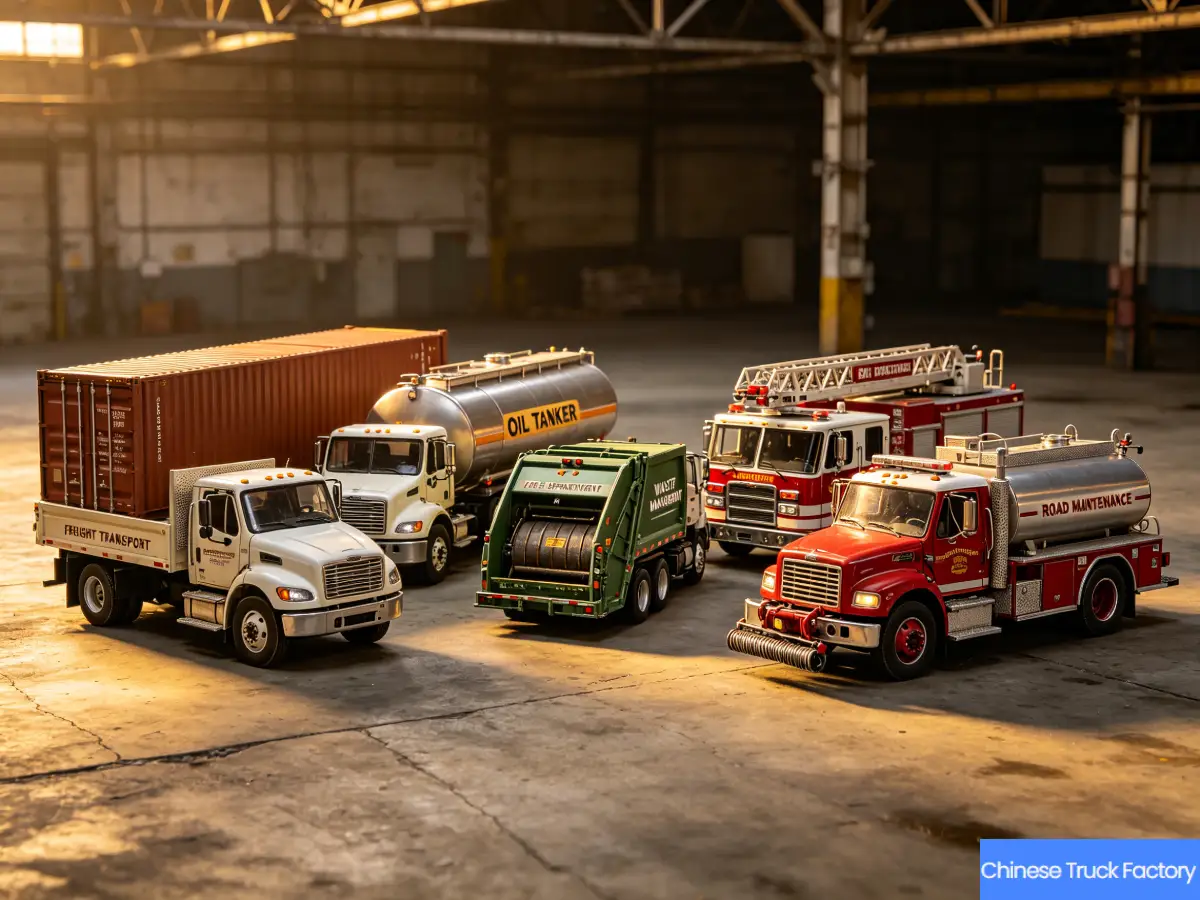
A 20 m³ dump body does not automatically mean 20 tonnes of payload. Sand, gravel, rock, coal, and construction waste all have different densities. A body sized for one material may be overloaded or underused with another. The correct approach is to calculate material density × body volume, then check that result against axle capacity, tire rating, and legal limits in the destination market.
Factory-rated capacity is a technical limit. Legal payload is a regulatory limit. They are not the same number, and the lower of the two is what governs your operation.
For trucks where payload is central to the business case, it is worth reviewing how GVW, curb weight, and legal payload interact before finalizing a specification.
Powertrain Selection for Rough Roads
Rough roads change what “enough power” means. On a paved highway, a truck can often maintain speed with modest horsepower. On a loose gravel grade, the same load may require more torque at lower wheel speed, which means different gearing.
Engine and torque
What matters is not peak horsepower but the shape of the torque curve and how it matches the transmission and final drive. A truck that holds torque at low rpm climbs better and consumes less fuel than one that has to be revved hard to maintain momentum. For sustained grades, an engine with strong low-end torque and a well-matched transmission is more useful than a higher-horsepower unit with a narrow power band.
Transmission and final drive
- Manual transmissions remain common on rough-road trucks because they tolerate abuse and are easier to repair in remote areas.
- Automated manual transmissions (AMT) offer smoother shifts and less driver fatigue, but require good service support and clean electronics.
- Final drive ratio should be selected for the actual route: a numerically higher ratio improves gradeability and traction but raises engine speed and fuel consumption at cruise.
Buyers evaluating gearing should look at how final drive ratio selection affects both climbing ability and fuel use, because the two are directly linked.
Tires and ground pressure
Tire choice on poor roads is not cosmetic. Wider or dual tires reduce ground pressure and improve flotation on soft surfaces, but increase rolling resistance and cost. Aggressive tread patterns improve traction but wear faster on paved sections. Tire pressure management is one of the most underused tools in rough-road fleets — correct pressure extends tire life and improves traction more than most hardware changes.
Body and Superstructure: Matching the Upper Structure to the Job
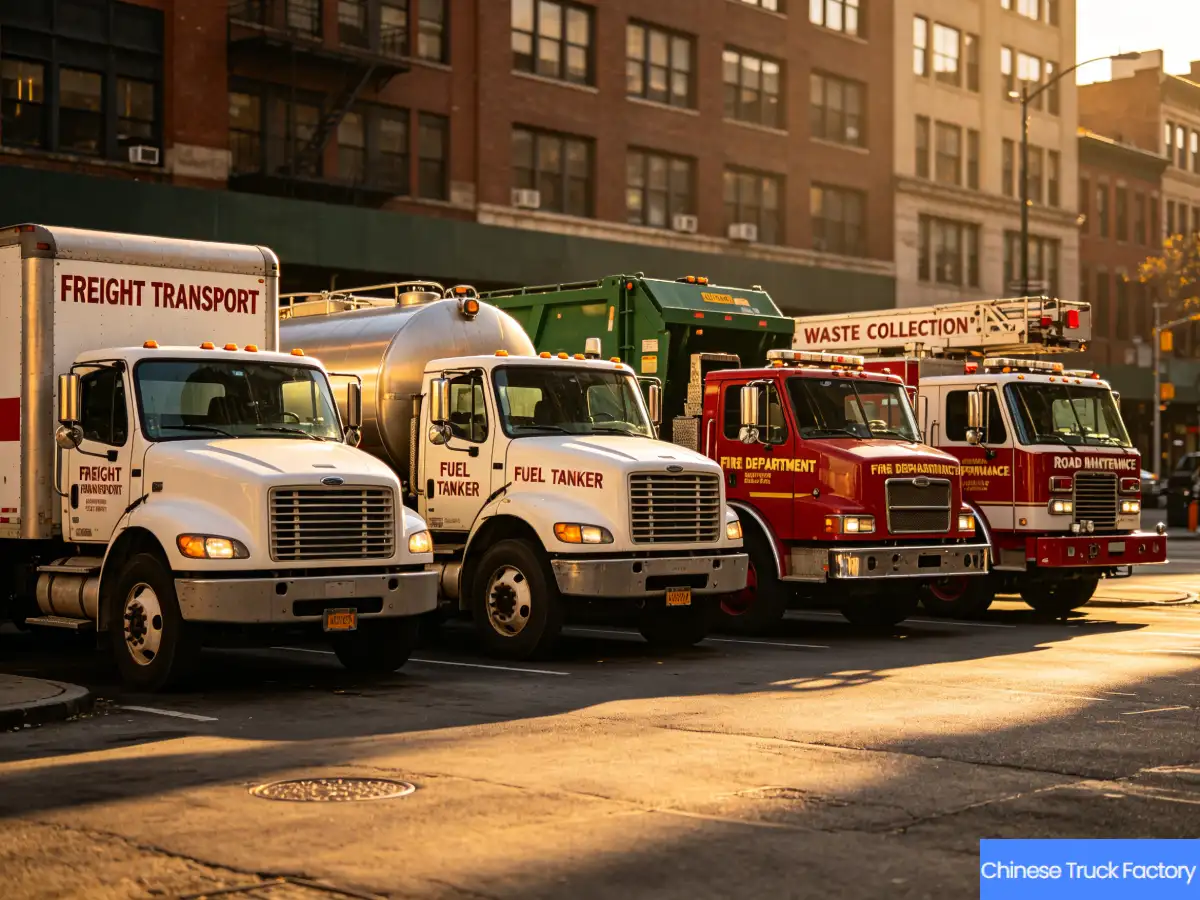
The chassis is only half the truck. On poor roads, the body or superstructure often determines whether the vehicle actually does the work it was bought for.
Dump trucks
For quarry and construction work, body volume, steel grade, floor thickness, and sidewall thickness all affect wear life. A thicker floor resists impact from large rock but adds tare weight and reduces payload. Tipping angle and hydraulic cylinder selection affect stability on uneven ground — a truck that tips safely on flat concrete may struggle on a side slope.
For mining and quarry duty, the decision is usually better made on cost per ton moved than on purchase price alone. Buyers who want to compare chassis and body options in that context may find the dump truck selection guide for mining useful as a reference framework.
Garbage and sanitation trucks
On poor urban or rural collection routes, the compactor body, hopper design, bin lifter, and hydraulic cycle time matter as much as the chassis. Stop-start frequency on rough roads increases wear on the compaction mechanism and hydraulic system. Leachate management and body sealing also become more important when routes include unpaved sections.
Crane and specialized bodies
A truck-mounted crane does not lift its rated tonnage at full boom extension. The load chart — not the nominal tonnage — determines what the crane can actually lift at a given radius and height. On rough ground, outrigger setup and chassis stability become critical, and the crane’s deadweight reduces remaining cargo payload. Buyers comparing options should look at truck-mounted crane configurations with the load chart in hand, not just the headline capacity.
Fuel and Energy Consumption on Poor Roads
There is no single fuel consumption figure that applies to all poor-road operations. Actual consumption depends heavily on gross weight, average speed, gradient, idling time, driver behavior, axle ratio, tire pressure, and surface condition. A truck that returns acceptable fuel economy on a paved route can consume significantly more on a loose gravel haul with constant grade changes.
What buyers can do is establish an indicative operating range for their own duty cycle, then track actual consumption once the truck is in service. For rough-road fleets, the biggest controllable factors are usually:
- Reducing unnecessary idling
- Maintaining correct tire pressure
- Matching axle ratio to the actual route
- Training drivers to use torque rather than rpm
- Keeping the air filter and cooling system clean in dusty conditions
For electric trucks, the calculation shifts but the principle is the same. Usable battery capacity, route profile, payload, ambient temperature, and charging availability all determine whether an electric truck is viable on a given rough-road route. Depot charging and predictable daily mileage usually matter more than peak range figures.
Maintenance and Reliability: The Real Cost Driver
On poor roads, downtime costs more than repairs. A truck that is easy to service, uses widely available parts, and can be diagnosed without specialized tools will earn more over its life than one with marginally better specifications but long lead times on components.
Practical maintenance planning for rough-road trucks includes:
- Daily checks: tire condition and pressure, fluid leaks, hydraulic hoses, lights, air pressure, warning indicators
- Periodic checks: engine oil and filters, transmission and differential oil, brake system, suspension components, wheel bearings, hydraulic oil, PTO engagement, body hinges, and crane pins where applicable
- Dust and heat management: air filters, cooling system, and hydraulic oil temperature deserve more attention in dusty or hot conditions
Specific service intervals should always follow the actual engine and component manufacturer’s manual for the exact model supplied. Generic intervals are a starting point, not a specification.
Total Cost of Ownership: Where the Real Comparison Happens
Purchase price is the easiest number to compare and the least useful on its own. A realistic total cost of ownership calculation for a rough-road truck includes:
- Purchase price (with the correct Incoterm — EXW, FOB, CFR, or CIF)
- Freight, insurance, and destination port charges
- Import duties, taxes, and compliance costs
- Fuel or electricity over the expected service life
- Tires — often the single largest consumable on rough roads
- Scheduled maintenance and unscheduled repairs
- Spare parts inventory and lead time
- Downtime cost, which is frequently underestimated
- Residual value at the end of the planned ownership period
Two trucks with the same purchase price can have very different lifetime costs if one has better parts availability, simpler maintenance, or lower tire consumption. This is why comparing FOB prices alone rarely gives a reliable answer — a landed cost comparison, adjusted for the actual duty cycle, is the more honest basis for a decision.
Compliance and Destination-Market Requirements
There is no single global specification that works everywhere. The same truck model may need different emission calibration, lighting, braking, steering side, and axle configuration depending on where it will be registered and operated. Buyers should confirm, for their specific destination:
- Emission standard required for registration
- Homologation or type-approval requirements
- Axle-weight and gross-weight limits
- Vehicle dimension limits
- Left-hand or right-hand drive
- Lighting and safety equipment rules
- Fuel quality and availability of DEF/AdBlue where required
- Local service and parts capability
Regulations change, and requirements vary widely between markets. The practical approach is to confirm current rules with the relevant authority or a qualified local agent before ordering, rather than relying on general assumptions.
Shipping and Import Considerations
How a truck is shipped affects both cost and risk. RoRo, breakbulk, flat rack, and container shipping each have different implications for vehicle dimensions, protection during transit, and port handling. The right choice depends on the truck’s size and weight, the quantity being shipped, the route, and the destination port’s capabilities. Marine insurance, customs clearance, and inland transport should all be factored into the landed cost estimate rather than treated as afterthoughts.
Buyers who want a clearer picture of how heavy trucks move internationally can review the overseas shipping process for heavy trucks before finalizing commercial terms.
What to Look For in a Supplier
When comparing suppliers for rough-road trucks, I use a simple evaluation framework rather than a brand ranking:
- Application fit: Does the supplier ask about your duty cycle before quoting, or do they quote a standard model?
- Configuration transparency: Are chassis, engine, transmission, axle, and body specifications clearly documented?
- Compliance support: Can they confirm what is required for your destination market?
- Parts and service planning: Is there a realistic plan for spare parts and technical support?
- Commercial clarity: Are Incoterms, warranty scope, and inspection requirements clearly stated?
- Documentation: Are export documents, test reports, and inspection records available?
Chinese Truck Factory works within this framework by matching configurations to the actual operating conditions and destination requirements rather than pushing a single standard model. Buyers who want to discuss a specific rough-road application can start a configuration discussion here with their route, payload, and compliance details in hand.
Frequently Asked Questions
How do I choose the right payload for a truck on poor roads?
Start with the material density and the body volume you actually need, then check the result against the chassis GVW, axle ratings, tire capacity, and the legal weight limits in your destination country. The lowest of those numbers governs what you can legally and safely carry. Do not assume that body volume equals payload.
Which axle configuration is best for rough or unpaved roads?
It depends on how much traction you actually need. A 6×4 suits most mixed paved and unpaved haulage. A 6×6 or 8×8 is appropriate for deep mud, steep loose grades, or severe off-road access. Each additional driven axle adds cost, weight, and maintenance complexity, so it should be justified by the route.
How does road condition affect truck selection?
Poor roads increase shock loads on the frame and suspension, reduce traction, raise tire wear, and change the effective gearing needed for grades. They also affect fuel consumption and maintenance frequency. Selection should be based on the actual surface, gradient, and cycle rather than on a general “rough road” description.
What affects fuel consumption on rough-road trucks?
Gross weight, average speed, gradient, surface condition, idling time, axle ratio, tire pressure, and driver behavior all matter. There is no single figure that applies to every operation. Establishing an indicative range for your own duty cycle and then tracking actual consumption is more useful than comparing published numbers.
What maintenance should I plan for on unpaved routes?
Expect more frequent inspection of tires, suspension, brakes, air filters, and hydraulic components. Dust and vibration accelerate wear on many systems. Follow the actual component manufacturer’s service intervals for the specific model supplied, and keep critical spare parts on hand to reduce downtime.
How do I estimate total cost of ownership for a rough-road truck?
Add purchase price, freight, import and compliance costs, fuel or energy, tires, scheduled and unscheduled maintenance, spare parts, and downtime cost, then subtract expected residual value. Comparing FOB prices alone gives a misleading picture because landed cost and lifetime operating cost can differ significantly between configurations.
How do I confirm a truck will comply with my destination market?
Check emission standards, homologation requirements, axle and gross weight limits, dimension limits, steering side, lighting, and safety rules with the relevant authority or a qualified local agent. Requirements vary by country and change over time, so confirmation should be done for the specific market and model before ordering.
What information should I provide to get an accurate quotation?
Destination country and port, application and material, required payload and body capacity, daily mileage, road and gradient conditions, drive configuration, steering side, emission requirement, quantity, and any special options. The more precise the input, the more accurate the configuration and price will be.
Final Thoughts
The right truck for poor road conditions is not the one with the largest engine or the heaviest frame. It is the configuration that matches the actual payload, route, legal weight limits, maintenance capability, and expected operating cycle with the fewest compromises. Get the duty cycle right first, then work through drive configuration, chassis and suspension, powertrain, body design, and compliance in that order. Buyers who do this consistently end up with trucks that stay in service, cost less per ton moved, and hold their value — which is a better outcome than saving a few percent on the purchase price and paying for it every month afterward.



