Vacuum Pump System
Match pump performance and protection features to waste consistency, suction depth, hose length and duty cycle.
Find a vacuum sewage truck configuration for sewage collection, septic tank cleaning and sludge removal. Compare tank, pump and chassis options, then request a quotation based on your project and destination market.
Final tank capacity, technical specification, availability and pricing are confirmed for each quotation.
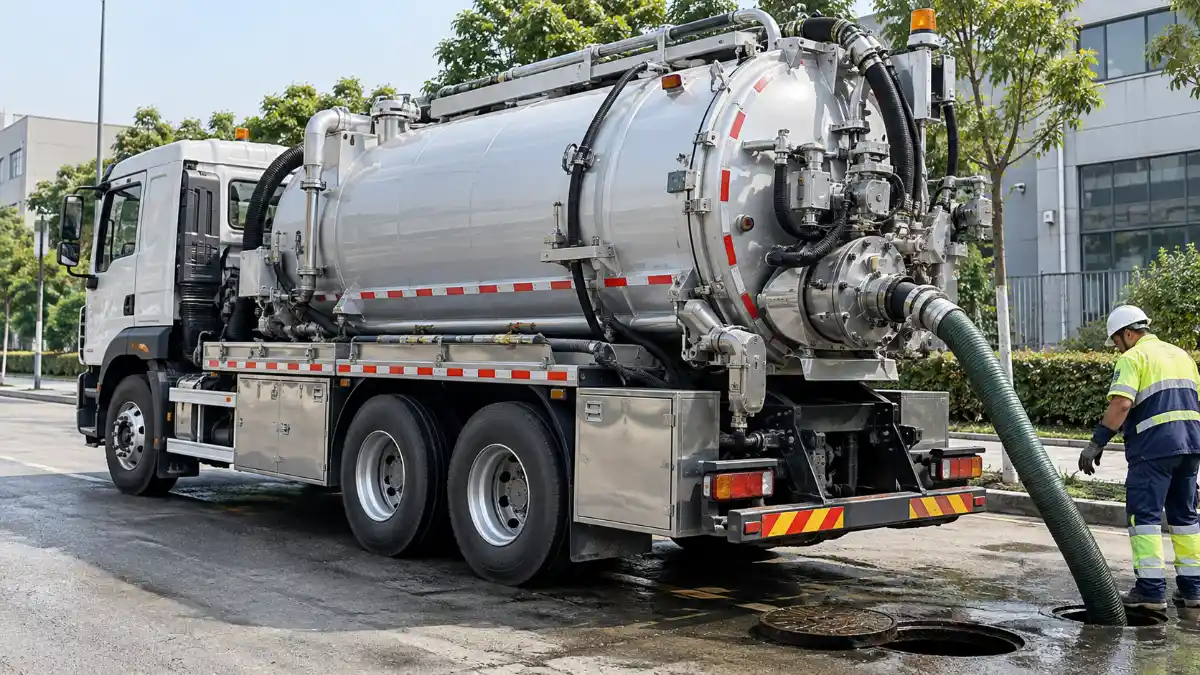
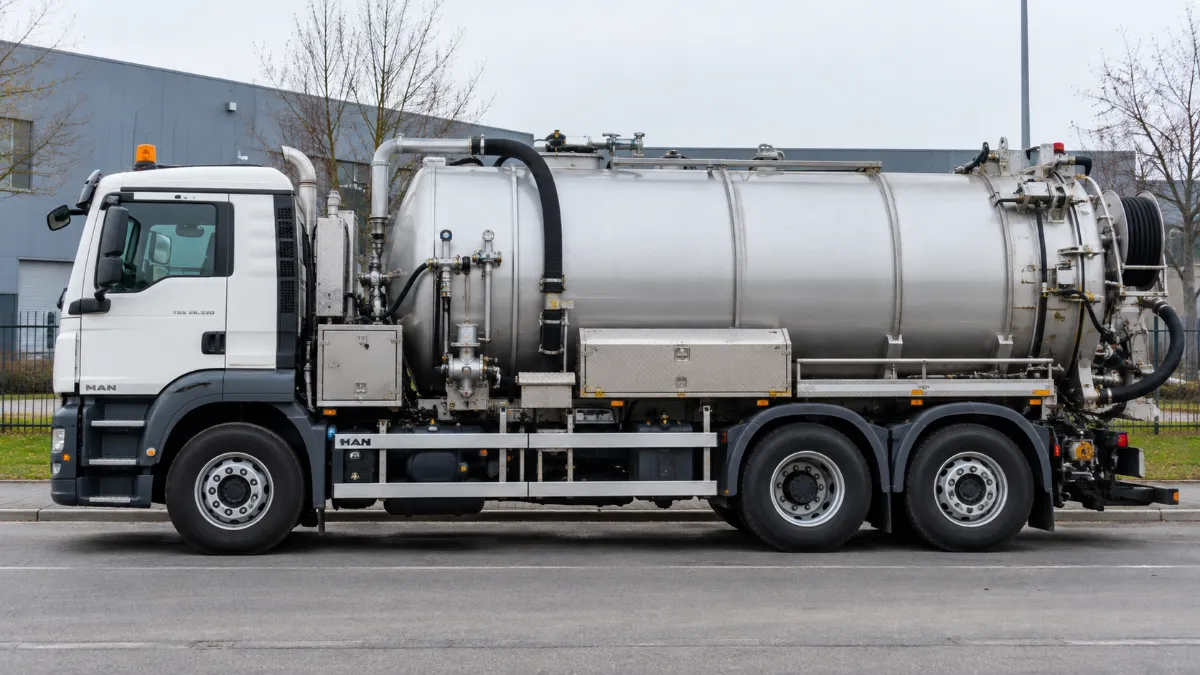
A vacuum sewage suction truck is designed to collect, contain and transport appropriate liquid and semi-liquid waste, including septic wastewater and pumpable sludge. It is a practical vehicle category for municipal contractors, septic service companies and wastewater handling operators.
The onboard vacuum pump reduces pressure in the sealed tank, allowing material to enter through the suction hose. The collected waste is then transported to an approved receiving or disposal facility, where it is discharged using the method specified for that vehicle.
Evaluate each system by the job it needs to perform, not only by the truck's external appearance.
Match pump performance and protection features to waste consistency, suction depth, hose length and duty cycle.
Confirm tank capacity, material, corrosion considerations and maintenance access for the intended waste stream.
Review road access, legal weight, wheelbase, drive arrangement and local service availability before selecting a chassis.
Specify how the truck will unload at the receiving facility and whether optional hydraulic functions are required.
Discuss anti-overflow, pressure/vacuum monitoring, isolation valves and safe access features for the final design.
Review hose storage, control locations, lighting, fleet markings and other requirements before the technical sheet is finalized.
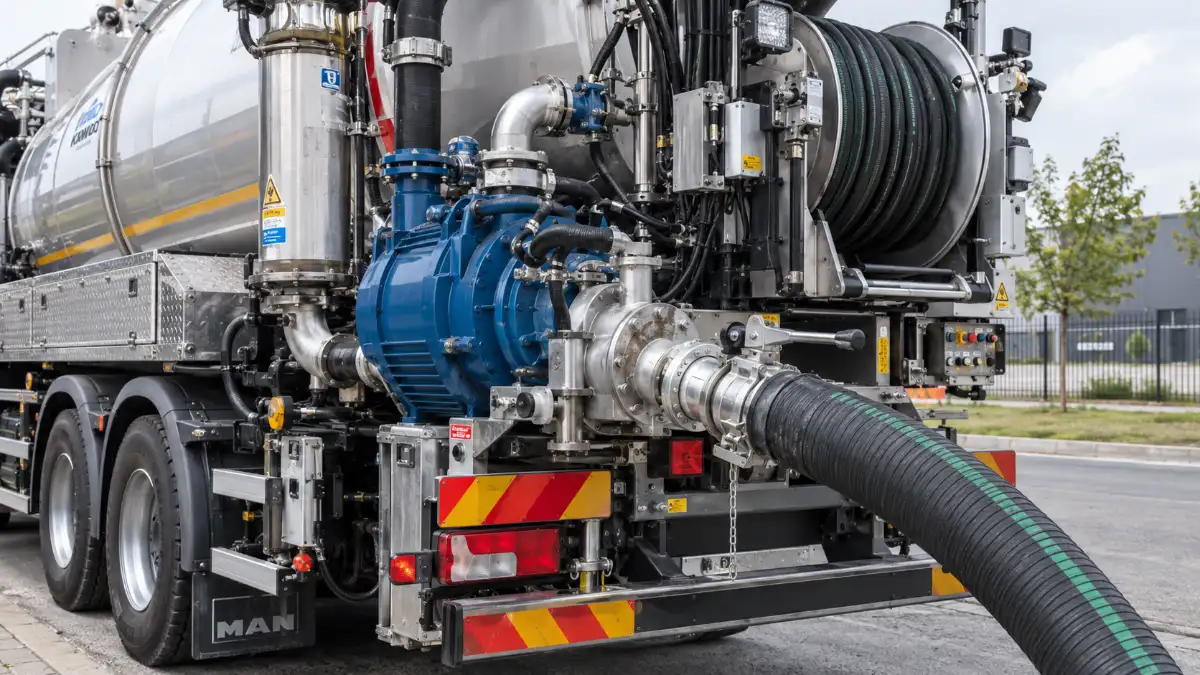
A tank alone does not determine suction performance. Tell us the collection depth, hose reach, waste consistency and unloading arrangement so the system can be reviewed as a complete working package.
Discuss the Working System →These are purchasing scenarios—not fixed stocked models. Final tank volume, chassis compatibility and equipment availability require confirmation.
For septic collection jobs where narrow roads, restricted entrances or maneuverability are major concerns.
For planned sewage collection routes where daily volume, disposal distance and operating efficiency drive selection.
For defined pumpable sludge or approved wastewater applications that require closer pump and tank matching.
These categories illustrate use cases only. They are not an availability list or a guarantee that a particular specification can be supplied.
Use the table as an RFQ checklist. Actual technical values and equipment inclusion must be confirmed in the supplier's final specification sheet.
| Item | Configuration / Purchasing Consideration | Status |
|---|---|---|
| Vacuum Tank Capacity | Determine using waste volume, material density, chassis payload and route planning. | To be confirmed |
| Chassis Brand / Model | Discuss preferred platform, local servicing and vehicle dimensions. | Depends on availability |
| Drive Configuration | Match road access and traction requirements (e.g., 4×2, 6×4 if suitable). | To be confirmed |
| Engine | Specify desired fuel type, engine requirement and local service considerations. | Chassis-dependent |
| Vacuum Pump | Confirm pump type, rated performance and suitability for the intended duty. | Ask for specification |
| Tank Material | Discuss material, corrosion protection and suitability for the waste stream. | To be confirmed |
| Suction System | Specify hose diameter, length, access conditions and connection requirements. | Project-dependent |
| Discharge System | Confirm valve arrangement, discharge outlet and any hydraulic tipping requirement. | To be confirmed |
| Steering Position | Left-hand drive or right-hand drive. | Subject to chassis availability |
| Emission Standard | Match destination-market import and registration requirements. | To be confirmed |
| Safety Equipment | Review overfill protection, gauges, valves and operator protection. | Specify requested functions |
| Optional Equipment | Hose reels, hydraulic equipment, lighting, color and project-specific accessories. | Subject to engineering review |
Confirm GVW, axle loads, dimensions and permissible payload together with tank volume. Volume alone does not determine legal carrying capacity.
Ask for a Detailed Specification →A suitable tank, pump and hose arrangement can support a range of non-hazardous liquid-waste collection operations, subject to material compatibility and local regulations.
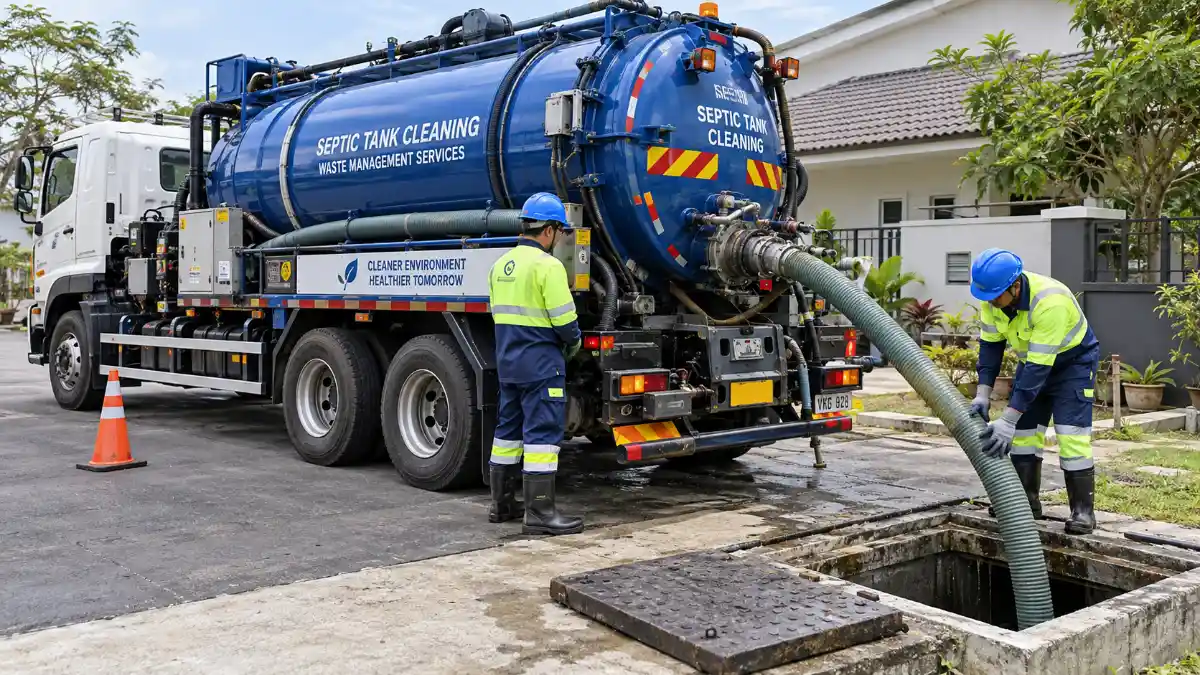
Collect septage from residential, hospitality and commercial systems for authorized disposal.
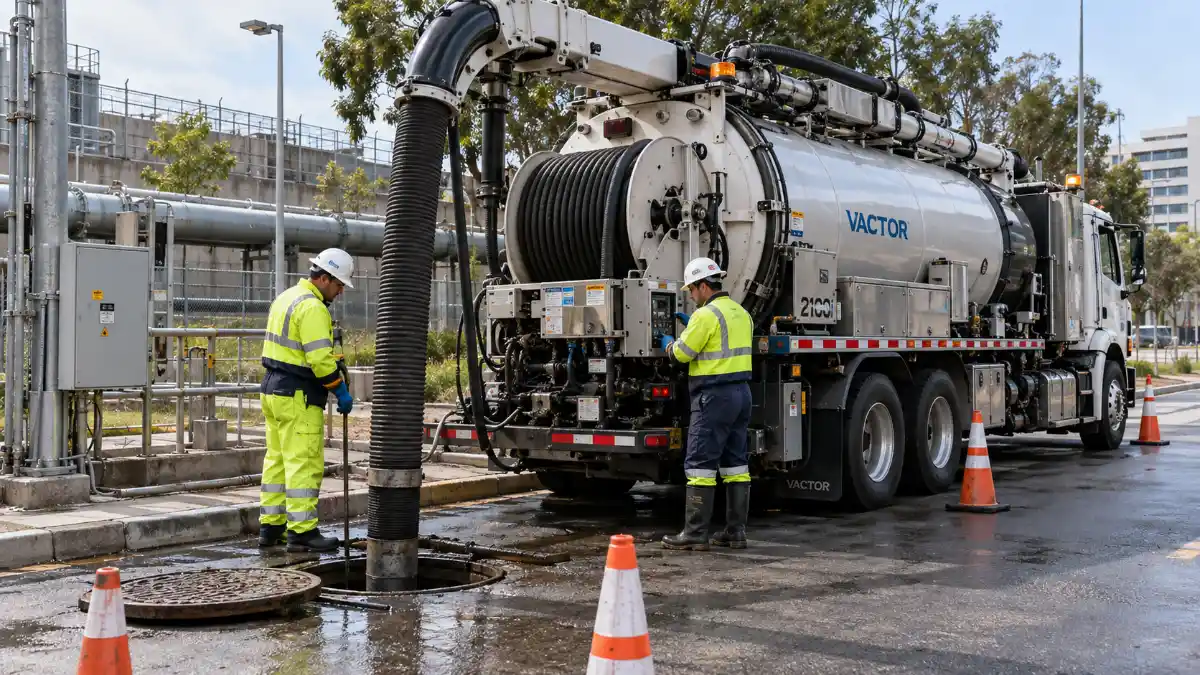
Remove accessible wastewater from holding points, inspection chambers or suitable collection sites.
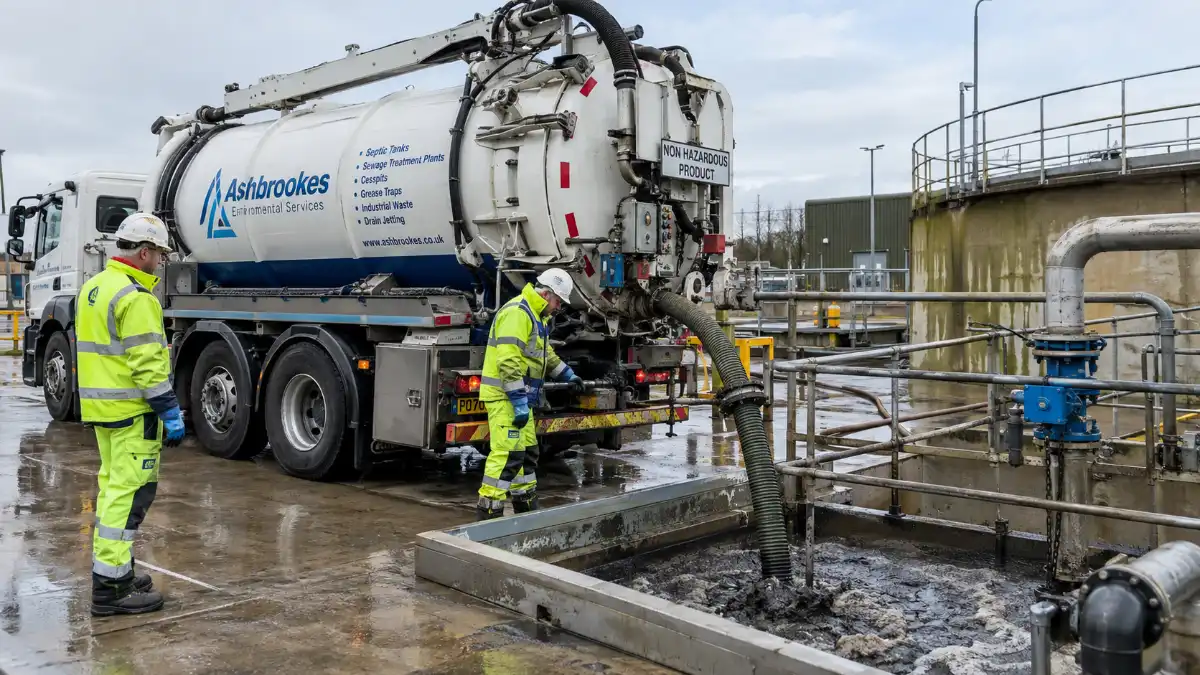
Handle compatible liquid or semi-liquid sludge where the pump and tank are specified for the material.
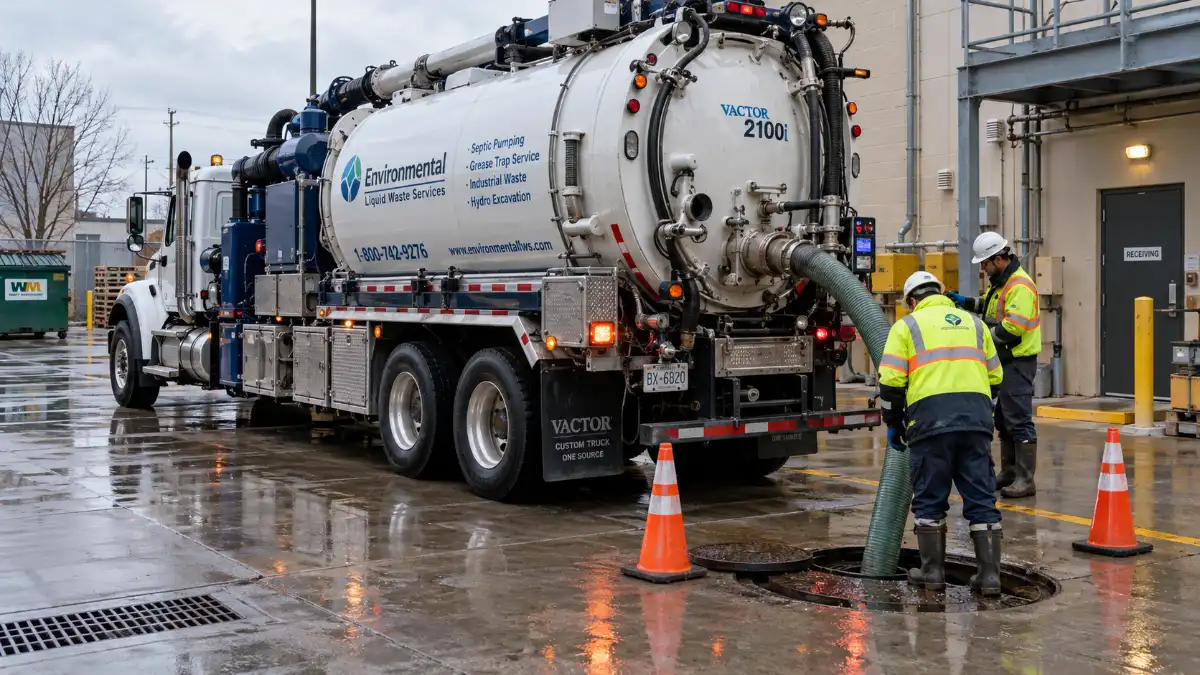
Support planned emptying and liquid waste collection for commercial premises.
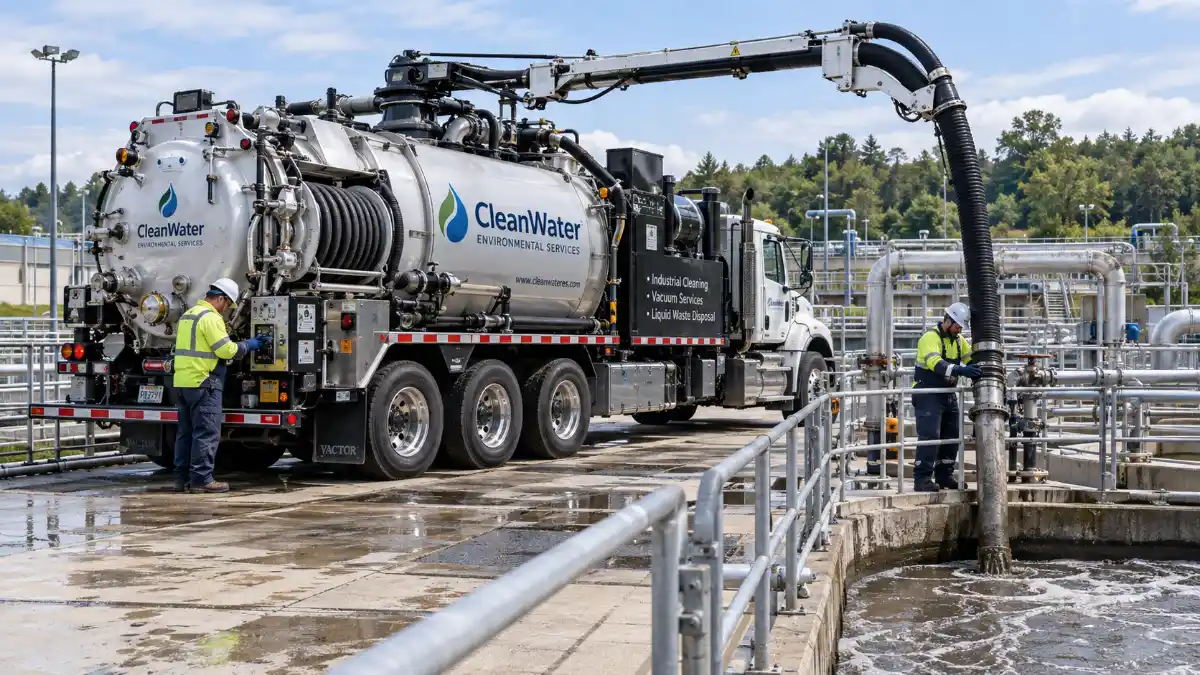
Transfer suitable liquid residues and pumpable sludge between designated points and facilities.
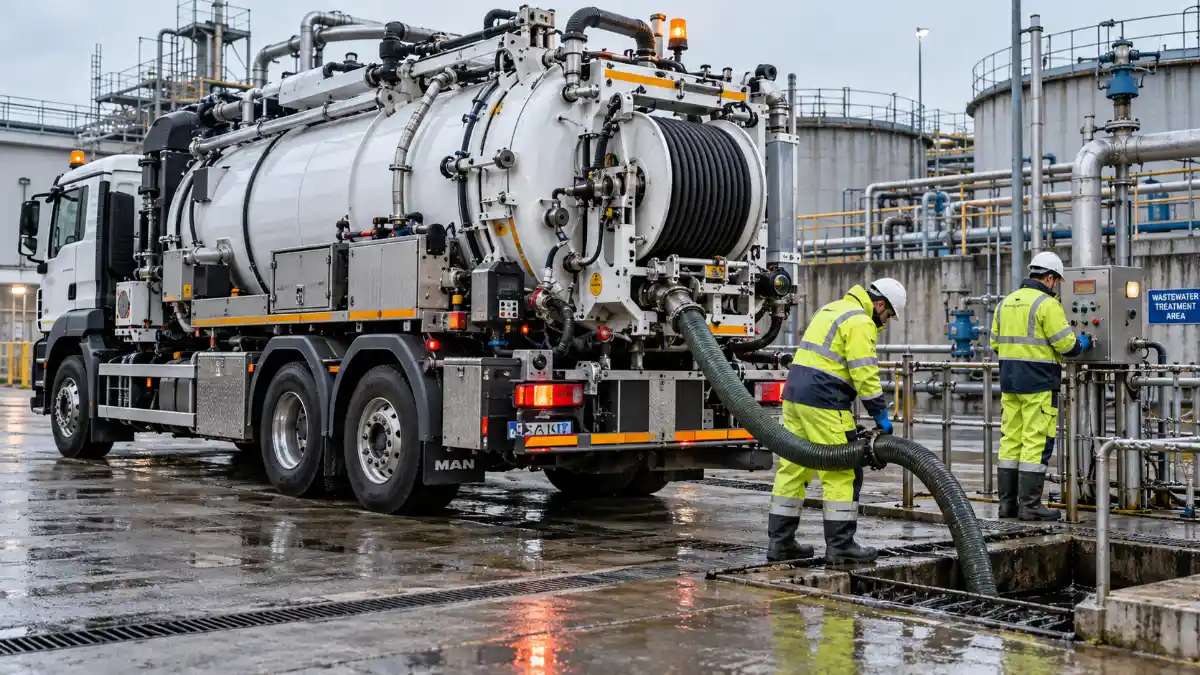
Recover specifically approved liquids from site facilities after checking material and equipment compatibility.
Do not use a standard sewage suction truck for flammable, toxic, corrosive or otherwise hazardous materials without purpose-designed equipment and verified regulatory compliance.
A useful purchase starts with the collection job and legal operating limits. Use these six questions to make a supplier quote comparable.
Estimate the volume per job, waste density, collection frequency and transport distance. Check the resulting payload against chassis limits.
Describe solids content, viscosity, potential contaminants and chemical characteristics. These determine pump, tank and safety needs.
Provide road width, turning access, grades and axle restrictions. Verify that local parts and service are practical.
Share typical suction depth, horizontal hose reach, discharge distance and expected operating hours.
Confirm steering side, emissions, dimensions, weight limits, import approvals and road registration with local authorities.
Explain the receiving facility's layout, discharge connections and whether the project needs an additional hydraulic system.
Send your preferred specifications or tender documents to discuss a suitable sewage suction truck configuration.
Our sourcing approach starts with your application and the specification that needs to be confirmed—not a one-size-fits-all advertised truck.
Discuss waste type, capacity, route constraints, pump requirements and disposal method before narrowing the truck configuration.
Review available sourcing options and requested chassis/body specifications. Confirm actual supplier and production arrangements in the quotation.
Request an itemized specification and discuss order terms, available technical documents, inspection scope and destination requirements.
Discuss shipping methods, destination port and document requirements, subject to confirmed commercial terms and logistics availability.
A transparent specification and quotation process helps reduce purchasing misunderstandings.
Share waste type, tank target, quantity and destination country.
Compare chassis, vacuum system, tank and equipment requirements.
Review price scope, options, terms, compliance and timing in writing.
Agree production and inspection arrangements for the confirmed order.
Coordinate shipment and paperwork under the agreed Incoterms.
Clear answers to common commercial and technical questions before requesting a quote.
It collects and transports compatible liquid and semi-liquid waste such as septic wastewater, sewage and pumpable sludge. The precise applications depend on the pump, tank, waste characteristics and local operating rules.
An onboard vacuum pump creates negative pressure in the sealed tank. Waste is drawn through a connected suction hose into the tank, transported to an approved facility and discharged using the vehicle's specified unloading system.
Start with material density, volume collected per shift, expected trips, travel distance and chassis payload limits. Ask for a matched tank/chassis configuration instead of selecting by volume alone.
A vacuum truck primarily collects and transports material. A sewer jetting truck uses high-pressure water to clean pipes and dislodge blockages. Combined jetting and vacuum trucks have both functions when equipped for them.
Chassis, pump, tank and hose requirements can be discussed for your project. Final options depend on component availability, engineering compatibility and the agreed specification.
Pricing depends on chassis, tank size and material, pump, hydraulic functions, emission requirements, optional equipment, quantity and shipping terms. Provide your desired specification and destination for a project quotation.
Septic tank trucks are commonly a type of vacuum truck designed around septage collection. The two terms can overlap, but pump suitability, tank design and intended waste types must still be checked for the actual vehicle.
Export documentation and shipping arrangements can be reviewed according to the vehicle, destination port, route and commercial terms. Import permits and local registration should be checked with the buyer's relevant authorities.
Provide target tank capacity, waste type, application, quantity, destination country or port, preferred chassis and steering position, plus any technical drawings or tender requirements.
Do not assume so. A standard vacuum sewage truck is not necessarily suitable for hazardous, flammable or corrosive waste. Such applications require a separate engineering and regulatory assessment and may require purpose-built equipment.
Explore other sanitation vehicle categories or learn how vacuum and septic truck applications differ.
Tell us your required tank capacity, application, quantity and destination country. We can discuss a suitable configuration and the information required for a project quotation.
Add these details in your message if the form does not have dedicated fields for them.