Hydraulic Compaction
Moves and compresses refuse into the body, helping use available body volume efficiently during multi-stop collection routes.
Source a garbage compactor truck configured around your collection route, body-capacity target, local bin system, chassis requirements, steering position, emissions rules, and destination market. We support municipal fleets, sanitation contractors, truck dealers, importers, and project buyers with configuration review, export documentation coordination, and shipping planning from China.
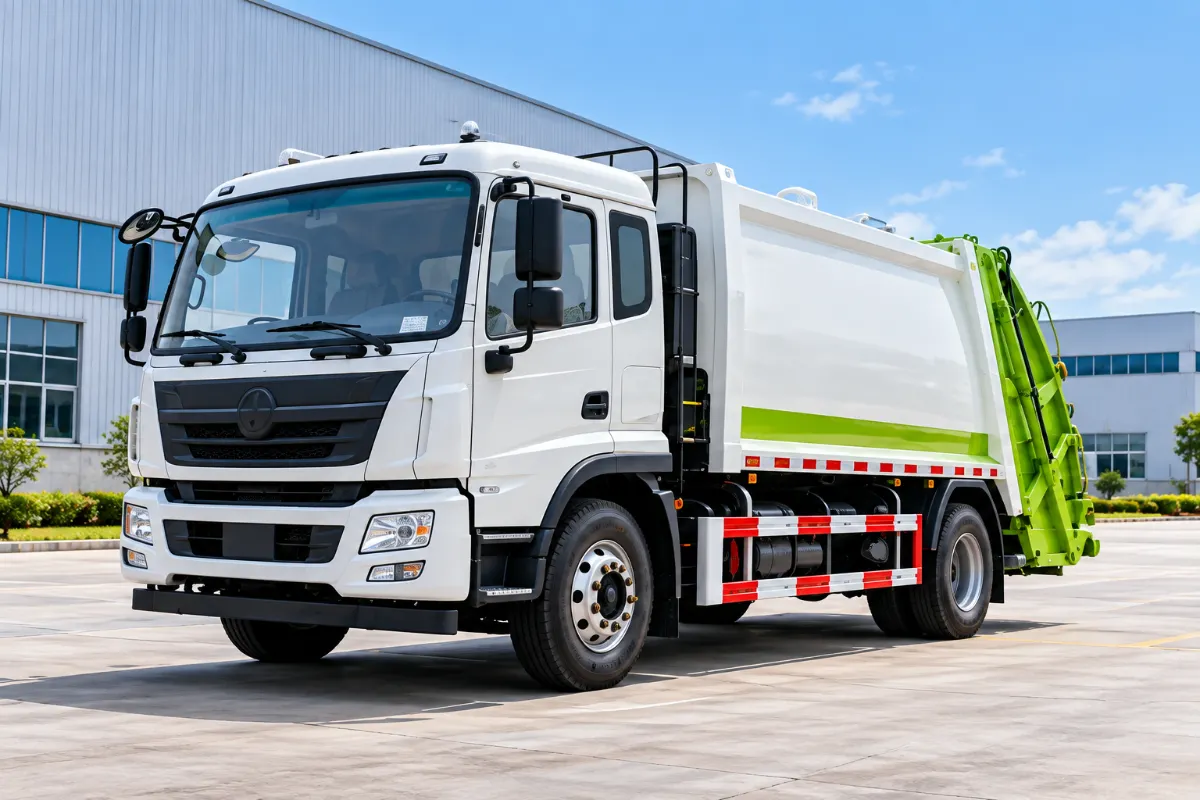
A garbage compactor truck—also called a refuse compactor truck, garbage collection truck, or rear-loader garbage truck—is a specialized waste collection vehicle that uses a hydraulic loading and compression system to move refuse into a sealed body and reduce the space it occupies. The result is more useful body volume between disposal trips, subject to waste density, route conditions, and the selected body design.
These trucks are commonly specified for municipal waste collection, residential routes, commercial properties, industrial parks, sanitation departments, private waste-management contractors, and fleet procurement projects. The correct truck is not determined by body size alone; chassis GVW, road access, axle limits, container standards, steering position, emissions requirements, and unloading conditions all matter.
For a broader view of our sanitation range, see our garbage compactor trucks and sanitation vehicles page or review our waste management vehicle solutions.
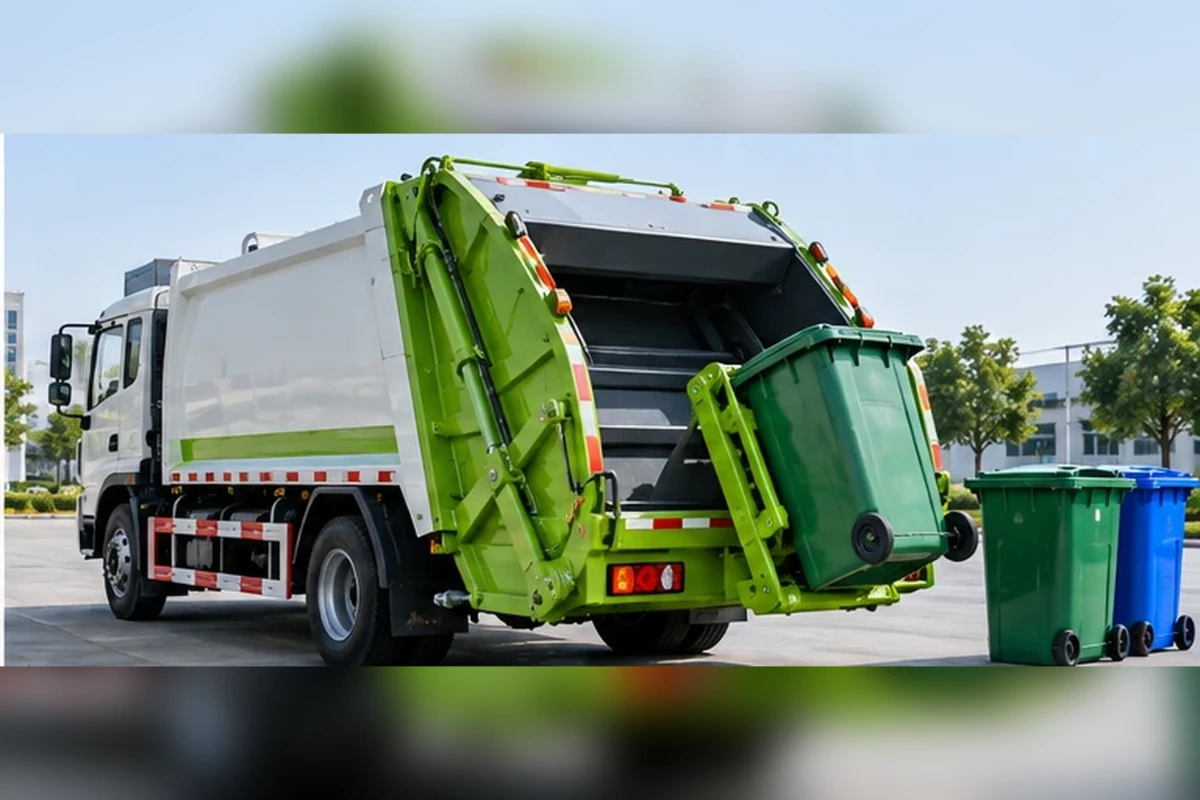
The ranges below are practical planning categories, not fixed specifications for every chassis. Final body volume, payload, dimensions, and axle loading must be confirmed for the exact vehicle configuration.
Because the body is mounted on different commercial truck chassis, there is no single specification that accurately represents every garbage compactor truck for sale. Use the table below as an RFQ checklist, then confirm the final data sheet before ordering.
| Specification | Typical Configuration Approach | What You Should Confirm |
|---|---|---|
| Garbage Body Capacity | Multiple body sizes available by project | Daily waste volume, route length, waste density, chassis GVW |
| Chassis Brand | Selected according to project requirements and availability | Local service support, GVW, wheelbase, parts availability |
| Drive Type | Varies by chassis and operating conditions | Road surface, grade, access conditions, payload requirement |
| Engine | Varies by chassis and destination market | Power requirement, fuel type, local emissions / registration rules |
| Transmission | Varies by selected chassis | Driver preference, local serviceability, duty cycle |
| Emission Standard | Depends on chassis / engine combination | Import, registration, and local authority requirements |
| Compaction System | Hydraulic compaction | Waste type, body design, loading cycle, operating procedure |
| Loading System | Rear-loading, side-loading, or project-specific arrangement | Local bin system and collection workflow |
| Discharge System | Hydraulic unloading arrangement | Disposal site, transfer station, final body design |
| Control System | Manual / automatic functions vary by model | Control locations, interlocks, emergency-stop requirements |
| Bin Lifter | Optional and configured to bin standard | Bin volume, dimensions, lifting interface, photographs |
| Steering Position | LHD or RHD subject to chassis availability | Destination-country driving and registration requirements |
| Body Finish | Project color and markings can be discussed | Fleet color, logo file, warning labels, language requirements |
All values and options are configuration-dependent. Final chassis model, dimensions, payload, body volume, engine, emissions level, equipment, warranty, and production schedule should be stated in the quotation, technical sheet, and sales contract.
A rear-loading refuse compactor uses hydraulic mechanisms to receive waste, move it from the hopper into the body, compress it, and discharge it at the disposal point. Exact motion sequences depend on the selected body and control system.
Waste enters the rear hopper manually or through a compatible bin-lifting device.
The loading mechanism gathers material in the hopper before the compaction cycle.
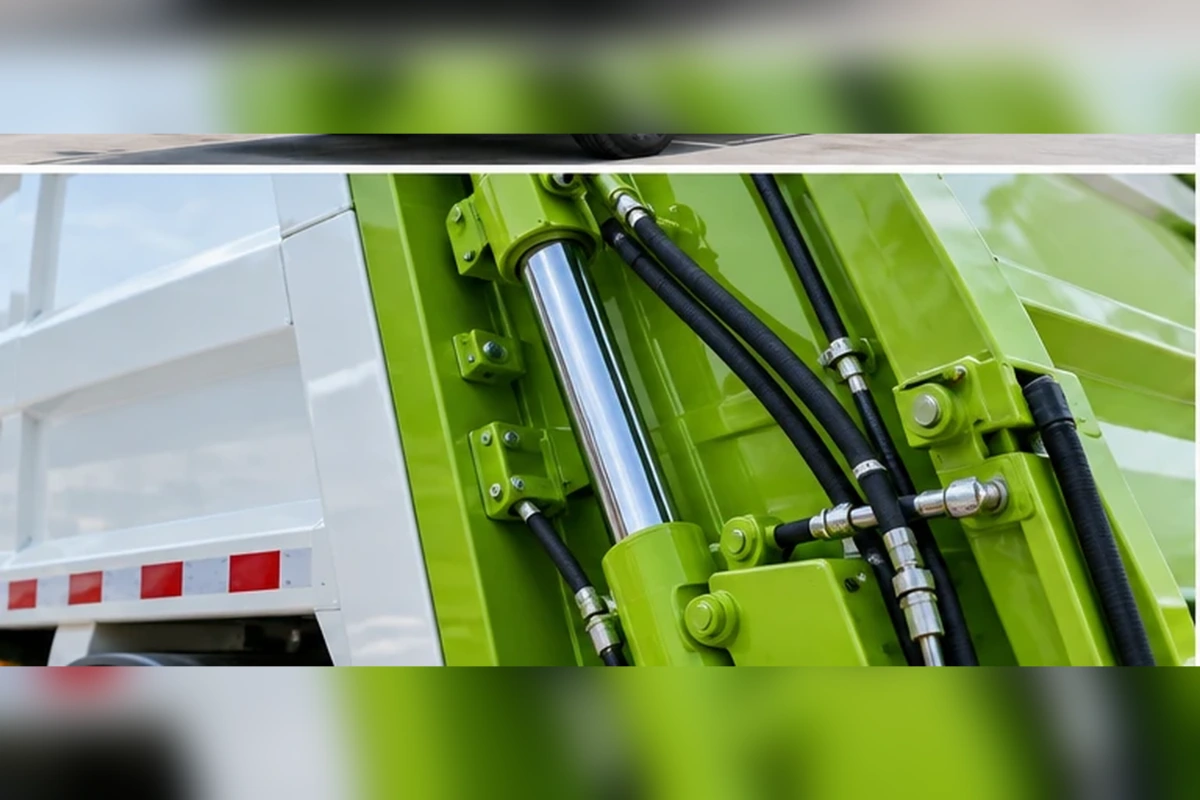
The hydraulic mechanism transfers and compresses waste into the main body.
Compacted waste remains in the enclosed body until the route or load is complete.
The body opens and the unloading mechanism pushes or ejects the load according to the body design.
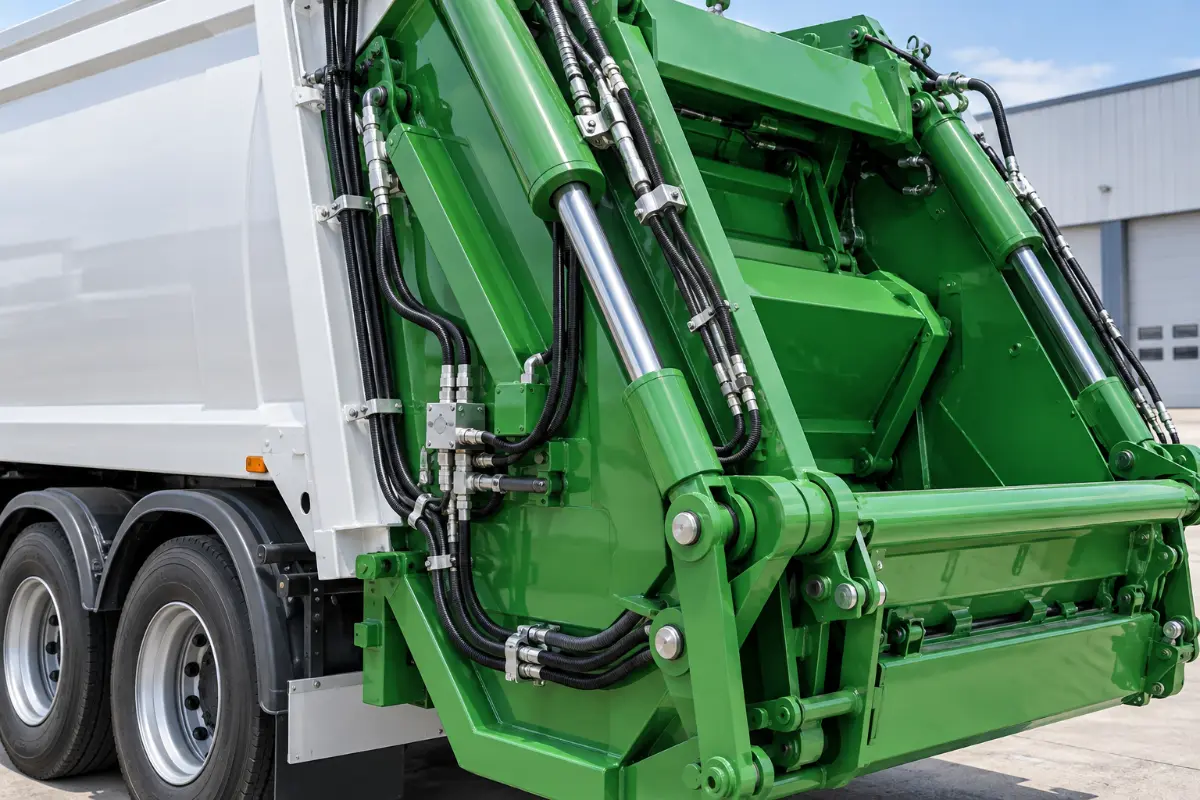
Compaction reduces the space occupied by collected refuse so the truck can use its body volume more effectively. Actual carrying performance depends on waste density, moisture, material mix, body geometry, chassis limits, and operator procedure. For procurement, compare the complete vehicle specification rather than relying on a single advertised compression ratio.
For other vocational chassis and body combinations, browse our specialized industrial vehicles and diesel truck platforms.
Moves and compresses refuse into the body, helping use available body volume efficiently during multi-stop collection routes.
Supports manual bag loading and, when specified, integration with compatible wheeled-bin lifting equipment.
Designed for contained waste transport; sealing details should be confirmed for the waste type and project requirements.
Supports controlled unloading at transfer stations, landfills, or designated disposal points according to body configuration.
Can be matched to specified bin sizes and interfaces where compatible. Send dimensions or photos before finalizing the lifter.
Control positions, emergency stops, cameras, warning devices, and interlocks can be reviewed against the required operating procedure.
Often selected where a crew loads bagged waste or moves bins to the rear hopper. It is a flexible choice for mixed municipal, residential, and commercial routes.
Often considered where containers are positioned consistently along the side of the collection route and the loading system is matched to a standardized bin arrangement.
For projects combining collection vehicles with broader sanitation planning, our waste management solutions page provides additional context.
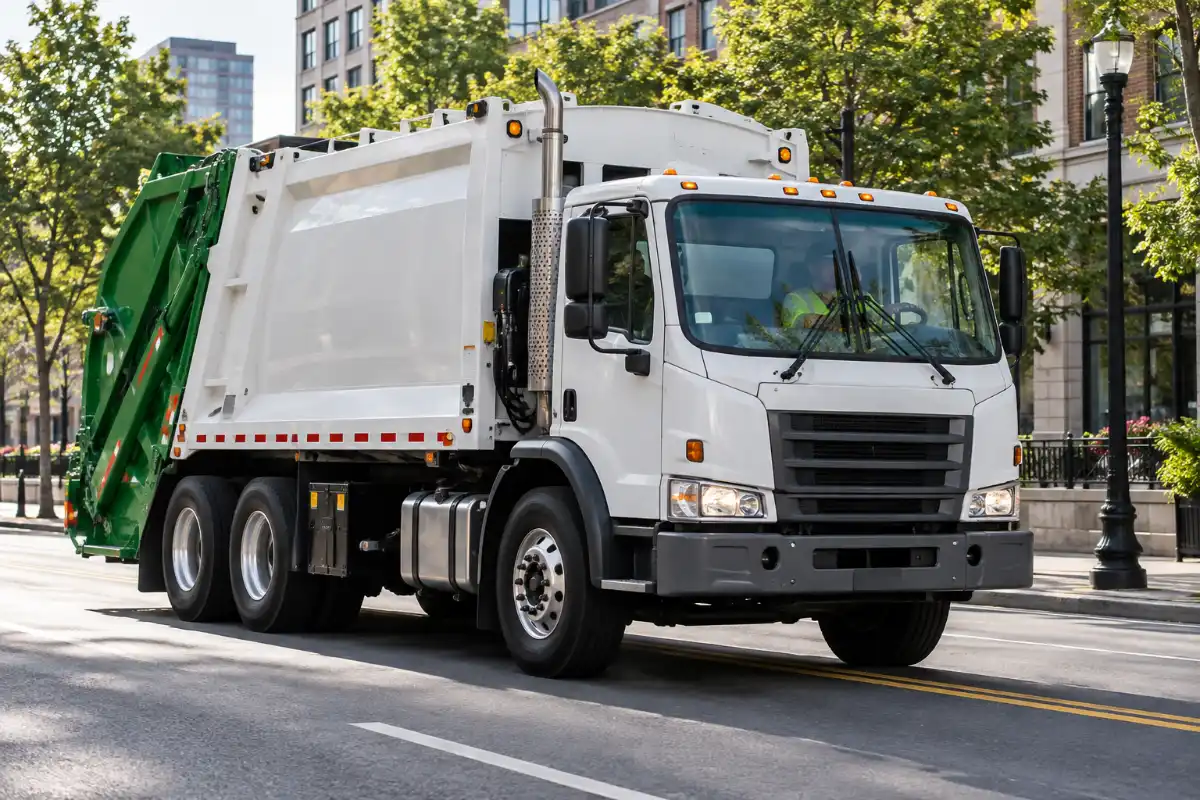
International buyers often need different configurations because road rules, fleet standards, bin systems, emissions requirements, and service networks differ by market.
GVW, wheelbase, drive layout, engine, transmission, steering position, and service availability should be reviewed together.
Body size can be discussed against route volume, road access, waste density, and chassis capacity.
120L, 240L, 660L, or 1100L compatibility may be possible depending on the selected lifting mechanism and local bin interface.
Paint color, logo placement, language labels, cameras, warning lights, and other accessories can be discussed by project.
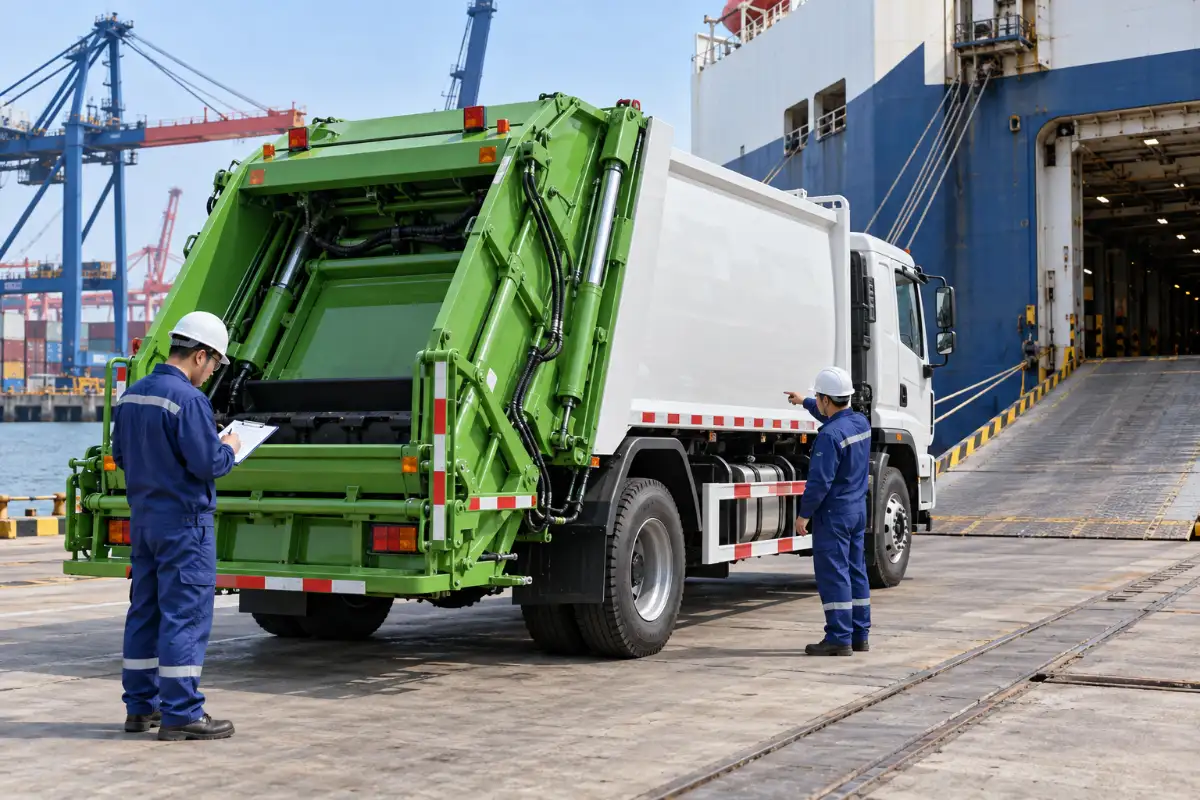
Direct project communication can make it easier to align the chassis, body, loading system, local bin standard, destination-market requirements, and optional equipment before the order is finalized.
Start with the route and waste stream, then choose the chassis and body.
Estimate how much waste is collected per shift and how far the truck travels before unloading. High volume does not automatically mean the largest body is best.
Record road width, turning space, gradients, access restrictions, collection-stop density, and disposal-site conditions.
Household refuse, commercial waste, wet waste, and bulky material behave differently. Waste density affects payload and useful body volume.
If you need a bin lifter, send bin capacity, outside dimensions, lifting interface, and clear photos before production.
Verify local axle loads, dimensions, emissions rules, steering position, homologation, and registration requirements before selecting the chassis.
Consider local access to filters, braking parts, engine service, transmission service, hydraulic components, and diagnostic capability.
There is no responsible single “factory price” for every garbage compactor truck because the quotation changes with the truck specification. A useful quote should be based on the exact configuration you plan to import and operate.
Body capacity, chassis brand, GVW class, drive configuration, engine, transmission, and emissions standard.
Hydraulic system, rear hopper, bin lifter, control functions, cameras, warning devices, and project-specific options.
Quantity, destination country, destination port, Incoterm, shipping method, documentation scope, and any inspection requirement.
Send your required body capacity, preferred chassis or GVW, waste type, bin size, LHD/RHD requirement, quantity, destination country, and destination port. If you have a tender sheet or reference truck specification, include it in your inquiry.
For a faster configuration review, include photos or dimensions of the garbage bins if a lifting device is required.
Truck type, capacity, quantity, route, bin system, and destination.
Review chassis, body, steering, emissions, loading system, and options.
Pricing and commercial terms are prepared for the confirmed configuration.
Build and inspection scope follow the confirmed order specification.
Route, port, documentation, and shipping method are discussed for the destination.
It is a specialized waste collection vehicle that loads refuse into an enclosed body and uses hydraulic mechanisms to move and compress the material. Rear-loader, side-loader, and project-specific configurations can be selected depending on the collection method.
Price depends on body capacity, chassis, GVW, engine, emissions standard, drive configuration, loading system, bin lifter, optional equipment, quantity, destination, and shipping scope. Send the target specification for a meaningful quotation rather than relying on a generic advertised price.
Match the body and chassis to daily waste volume, waste density, road width, turning space, number of stops, disposal distance, axle limits, and local container system. Smaller bodies can be more practical on dense urban routes; larger bodies may suit high-volume routes with adequate road access.
Multiple body-size classes can be discussed, including small, medium, and heavy-duty configurations. Common planning requests include 4–6 CBM, 8 CBM, 10–12 CBM, 14–16 CBM, and 18–20+ CBM, subject to the selected chassis and final engineering configuration.
Waste enters the rear hopper manually or through a lifting mechanism. Hydraulic components move and compact the refuse into the main body. At the disposal point, the rear body arrangement opens and the unloading system discharges the load according to the selected design.
Compatibility depends on the bin lifter and local container interface. Send the bin capacity, dimensions, lifting points, and photographs so the required lifting arrangement can be reviewed before production.
LHD or RHD availability depends on the selected chassis, engine, destination market, and current chassis supply. State the required steering position in the RFQ so the available chassis options can be reviewed.
Chassis selection varies by GVW, wheelbase, engine, emissions requirement, steering position, local service needs, destination market, and current availability. If you have a preferred brand or engine family, include it in your inquiry.
Project-specific options can include body capacity, chassis, steering position, loading arrangement, bin lifter, control system, cameras, warning devices, paint color, logo placement, language labels, and other accessories, subject to the selected model.
The shipping method depends on vehicle dimensions, destination, route, port facilities, quantity, and commercial terms. RO-RO, container-based solutions where dimensions allow, or bulk / break-bulk shipping may be discussed for the specific order.
Send the truck type, body capacity or payload target, preferred chassis or GVW, drive configuration, waste type, bin standard, LHD/RHD requirement, emissions requirement, quantity, destination country, and destination port. A tender sheet or reference specification is especially helpful.
Production timing depends on chassis availability, body configuration, optional equipment, quantity, inspection requirements, and the production schedule at the time of order. The expected lead time should be confirmed in the quotation for the exact project.
Product images and descriptions are for configuration reference. Final chassis, dimensions, payload, body capacity, emissions standard, optional equipment, warranty, production schedule, compliance documentation, and shipping scope vary by model and destination market. Confirm all project-specific data in the quotation, technical sheet, and sales contract before ordering.