Most buyers get landed cost wrong because they stop at the FOB price. Landed cost is the full amount of money that leaves your account before a truck turns its first wheel in your yard — and it usually lands 25% to 60% above the invoice value depending on destination, shipping method, duty structure and configuration. If you are comparing two suppliers on price alone, you are comparing the wrong number. This article breaks down every cost layer between a Chinese factory gate and your operating site, shows how to build the calculation yourself, and explains which variables move the total the most.
I have worked through enough import files to know that the surprises rarely come from the truck itself. They come from freight classification, port charges, inland trucking, customs valuation, and the small line items nobody quotes in the first email. Build the model first, then negotiate the price.
Why FOB and CIF Are Not Landed Cost
Three price terms get used interchangeably in truck quotations, and they mean very different things.
- EXW (Ex Works) — the truck is yours at the factory. You arrange inland transport, export clearance, and everything after.
- FOB (Free On Board) — the seller delivers to the port of loading and clears export. Your cost starts at the ship’s rail.
- CIF (Cost, Insurance, Freight) — the seller covers ocean freight and marine insurance to your destination port. You still pay discharge, port charges, customs duty, inland transport and registration.
Even CIF, which sounds comprehensive, typically represents 70% to 85% of the true landed cost. The remaining 15% to 30% is where importers lose margin. For a clearer breakdown of what each term actually includes, see FOB truck price explained and the comparison of CIF vs FOB truck prices.
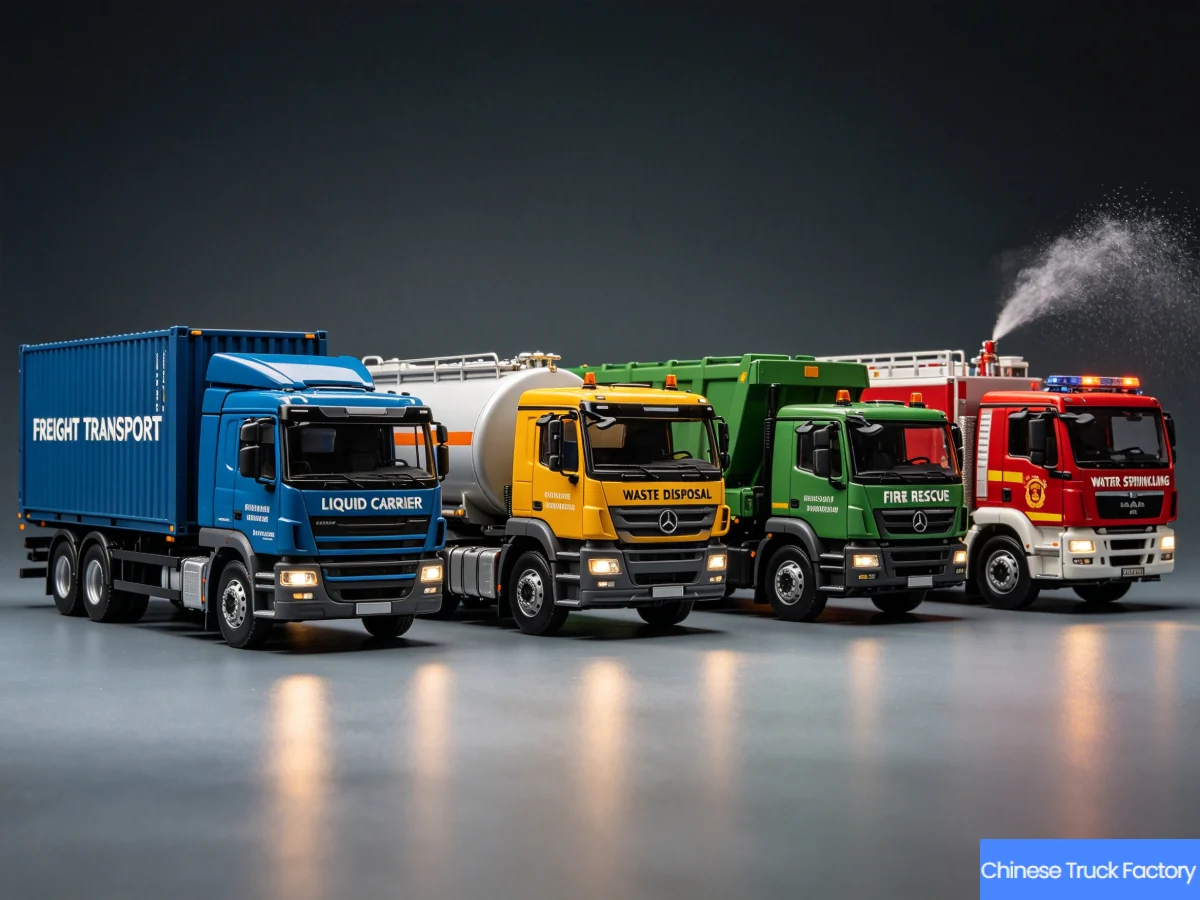
The Landed Cost Formula
Here is the structure I use when building a landed cost sheet for a truck import. Every line should be filled with a real number or a defensible estimate before you sign anything.
| Cost Layer | What It Covers | Typical Share of Total |
|---|---|---|
| Vehicle price (EXW/FOB) | Chassis, body, options, factory prep | 55% – 75% |
| Inland transport to port | Factory to loading port, permits | 1% – 3% |
| Export documentation | Customs declaration, certificate of origin | <1% |
| Ocean freight | RoRo, breakbulk, flat rack or container | 4% – 15% |
| Marine insurance | Typically 0.3% – 0.6% of CIF value | <1% |
| Destination port charges | THC, agency, wharfage, storage | 1% – 4% |
| Customs duty & taxes | Import duty, VAT/GST, excise where applicable | 5% – 25% |
| Inland transport to site | Port to yard, escort, permits | 1% – 5% |
| Registration & compliance | Inspection, homologation, plates | 1% – 4% |
| Commissioning & spares | PDI, fluids, initial parts kit | 1% – 3% |
Notice how wide the duty range is. That single line can swing the total by more than the difference between two competing truck brands. Confirm your HS code and duty rate with a licensed customs broker before you commit to a purchase order.
Shipping Method Drives a Big Chunk of the Cost
How the truck travels determines both freight cost and how much handling damage risk you carry. The four practical methods for heavy trucks are RoRo, breakbulk, flat rack, and container — and they are not interchangeable.
| Method | Best For | Cost Profile | Main Limitation |
|---|---|---|---|
| RoRo | Complete, driveable trucks | Usually lowest per unit | Fixed sailing schedule, no cargo inside cab |
| Breakbulk | Oversize or non-running units | Higher, but flexible | Needs crane at both ends |
| Flat rack | Long or wide units, project cargo | Moderate to high | Dimension limits, lashing cost |
| Container | Small trucks, CKD/SKD, parts | Low per CBM if you fill it | Height and width limits exclude most heavy trucks |
For a full-size 6×4 tractor or dump truck, RoRo is almost always the default. Breakbulk becomes relevant when the unit cannot be driven onto the vessel or when you are shipping several units with attachments that exceed RoRo height limits. If you want a deeper look at how this works in practice, the guide on how heavy trucks are shipped overseas from China covers vessel booking, stowage and lashing.
One detail buyers miss: RoRo freight is quoted per unit based on cubic measurement, not weight. A truck with a taller body or a crane mounted on the deck measures more, and that changes the price. Get the freight quote against the exact final dimensions, not the base chassis.
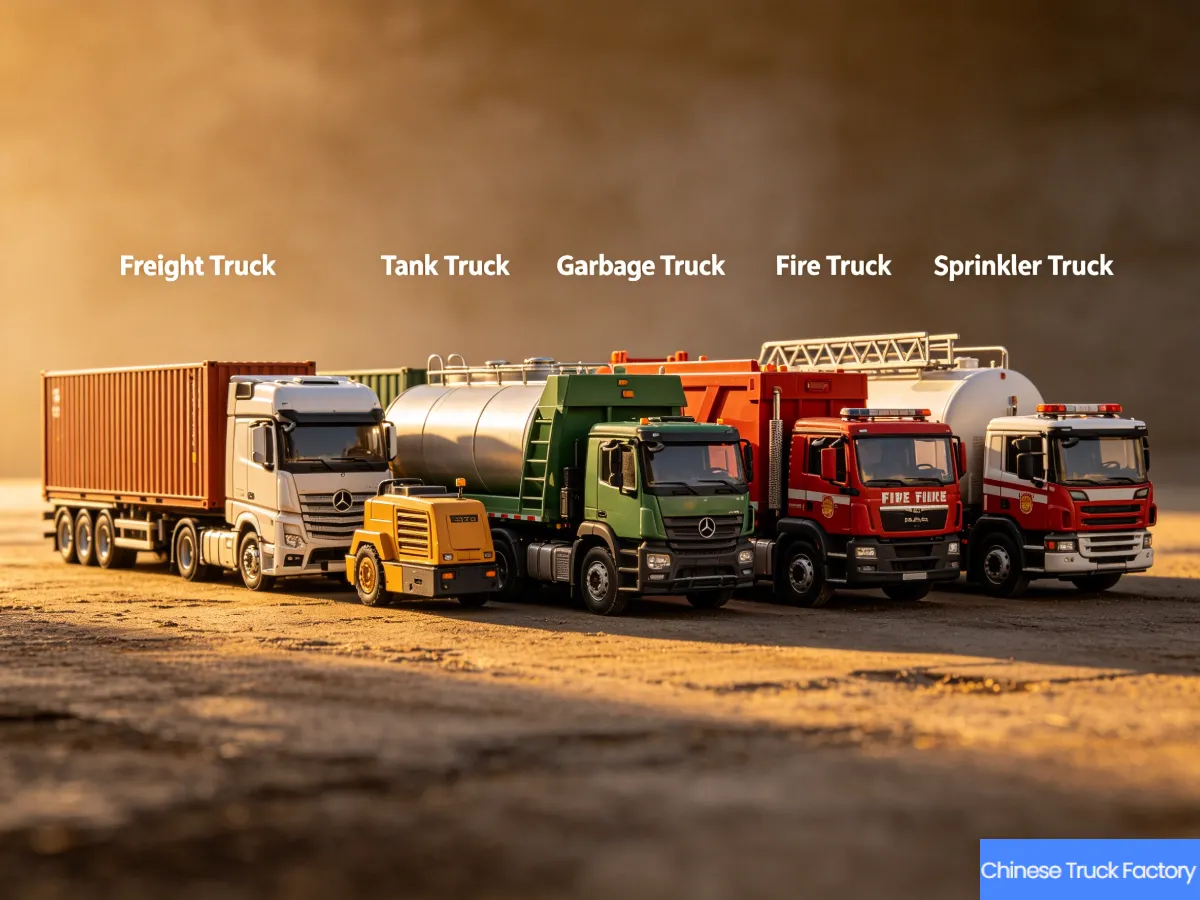
Duty, Taxes and Customs Valuation
Customs duty is calculated on the CIF value — the vehicle price plus freight plus insurance. This matters because a cheaper freight rate lowers your duty base, and a higher declared value raises it. Some importers try to under-declare to reduce duty. That is a bad idea. Customs authorities in most markets have access to reference pricing for commercial vehicles and will re-assess, add penalties, and hold the shipment.
Three components typically apply at destination:
- Import duty — a percentage of CIF value, set by your country’s tariff schedule for the specific HS code.
- Value-added tax or GST — usually recoverable if you are a registered business, but it is a real cash-flow cost at the moment of clearance.
- Excise or special levy — applies in some markets to certain vehicle classes, engine sizes, or weight categories.
Do not accept a duty rate from a forum post. Rates change, and the same truck can fall under different HS codes depending on whether it is imported as a complete vehicle, a chassis-cab, or in CKD form. A one-line email to a customs broker in your country will save you more money than a week of internet research.
Configuration Choices That Move Landed Cost
The truck specification itself changes the landed number in ways that are not obvious from the quotation. Every option adds weight, and weight matters twice: once in the vehicle price, and again in freight and duty.
- Body and superstructure — a heavier dump body or larger tank increases both the invoice and the shipping measurement.
- Axle configuration — an 8×4 carries more tare weight than a 6×4, which affects RoRo classification and in some markets the duty band.
- Emission standard — a higher emission tier usually means a higher engine price and a more complex aftertreatment system, both of which raise the invoice value.
- Steering side — RHD and LHD are both available, but RHD units are built to order and can carry a longer lead time, which affects your working capital cycle.
- Optional equipment — cranes, PTOs, hydraulic systems, and specialized bodies are all billed separately and each adds freight volume.
If you are importing a truck-mounted crane, the crane itself is a significant cost line, and its stowed height can push you from RoRo into breakbulk. That single configuration decision can add several thousand dollars to freight. Plan the crane position and boom rest with the shipping method in mind.
Inland Transport and Port Charges
Two cost lines that consistently surprise first-time importers are destination port charges and inland trucking.
Port charges include terminal handling, agency fees, wharfage, documentation, and — if clearance is slow — storage. Storage is the killer. A truck sitting on the dock for two extra weeks because a document was missing can cost more than the freight itself in some ports. Have your broker ready before the vessel sails, not after it arrives.
Inland transport for a heavy truck is not a standard flatbed job. You are moving a unit that may be 9 to 12 meters long and 3 to 4 meters tall, sometimes with a crane or body fitted. That requires:
- A lowboy or extendable trailer rated for the gross weight
- Route survey for bridge heights, overhead lines and turning radii
- Escort vehicles and permits in many jurisdictions
- Loading and unloading equipment at both ends
Get this quoted before you buy. In some markets, the inland leg from port to site costs more than the ocean freight.
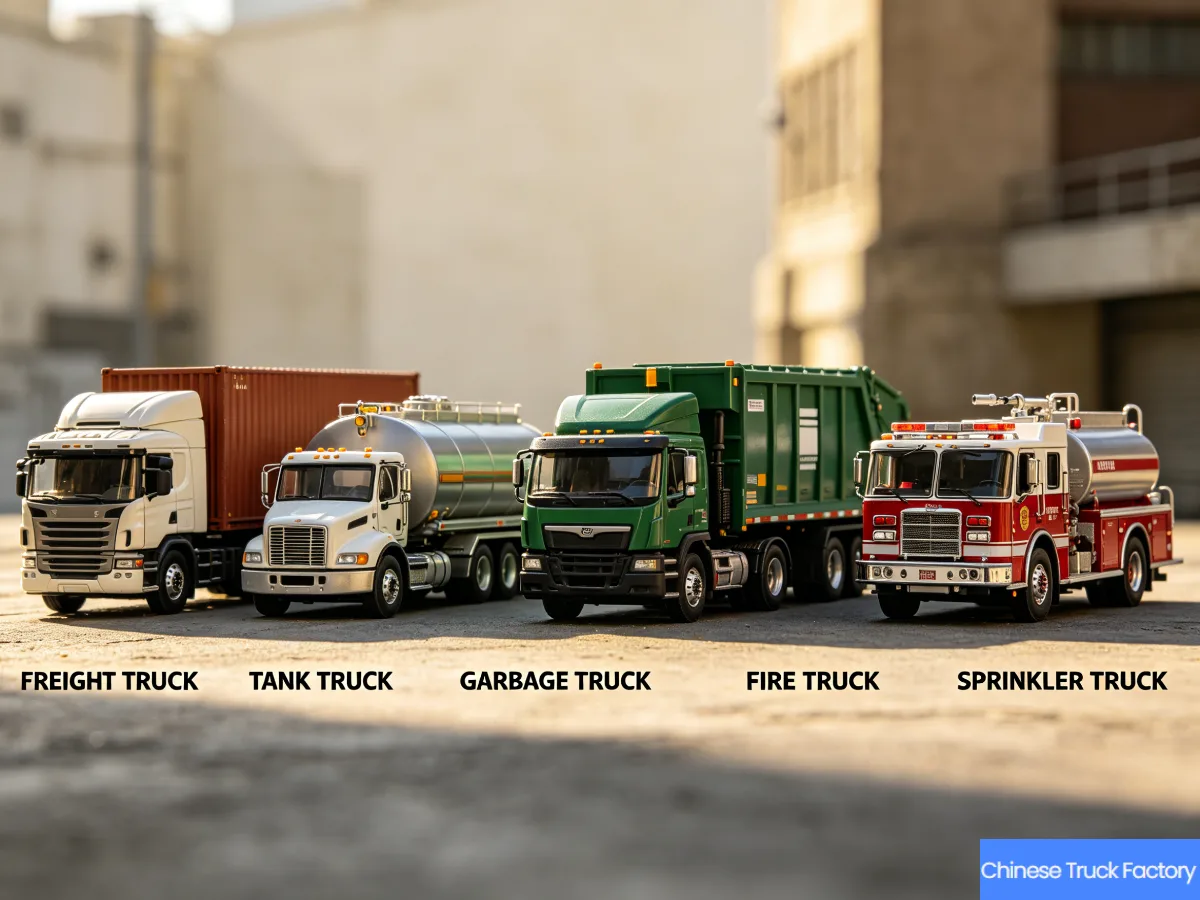
Building a Worked Estimate
Here is an illustrative example — not a real quote, just a structure you can adapt. Assume a 6×4 heavy-duty dump truck with a 20 m³ body, shipped RoRo, delivered to a port in a market with a 15% duty rate and 10% VAT.
| Line Item | Basis | Illustrative Amount (USD) |
|---|---|---|
| Vehicle FOB price | Quoted | 52,000 |
| Ocean freight (RoRo) | Per unit, per sailing | 6,500 |
| Marine insurance | 0.4% of CIF | 235 |
| CIF value | Sum above | 58,735 |
| Import duty | 15% of CIF | 8,810 |
| VAT | 10% of (CIF + duty) | 6,755 |
| Port charges | Estimate | 1,200 |
| Inland transport | Estimate | 1,800 |
| Registration & inspection | Estimate | 900 |
| Commissioning & spares kit | Estimate | 1,500 |
| Total landed cost | 79,700 |
The truck was invoiced at 52,000. It landed at roughly 79,700 — a multiplier of about 1.53. That multiplier is the number you actually need to compare against a local dealer’s price. If a local dealer quotes 85,000 for a comparable unit with warranty and parts support, the import case is thin. If they quote 105,000, importing makes sense — provided you can handle compliance and service.
Change any variable and the multiplier moves. Drop the duty to 5% and the multiplier falls under 1.4. Add breakbulk shipping and a crane, and it climbs past 1.7. This is why two buyers importing the “same” truck can end up with wildly different landed costs.
Compliance and Registration Costs
Compliance is where landed cost meets legal risk. Depending on your market, you may need to budget for:
- Pre-shipment inspection (PSI) or destination inspection
- Emissions testing or certification
- Vehicle type approval or individual approval
- Roadworthiness inspection
- Weight and dimension verification against local axle-load law
- Lighting and safety equipment modification
Some of these are cheap administrative steps. Others can require physical modification of the truck after arrival — additional lights, reflective markings, tachograph, speed limiter, or a different exhaust configuration. Each modification adds cost and time. Confirm the destination requirements before the truck is built, not after it lands. Retrofit is always more expensive than factory fit.
The same logic applies to emission standards. If your market requires a specific tier, the truck must be built to that tier at the factory. You cannot upgrade after the fact. The comparison of Euro 2 vs Euro 3 vs Euro 5 trucks is worth reading before you lock the specification, because the emission tier affects both the purchase price and the fuel and DEF quality you will need to maintain.
Where ChineseTruckFactory Fits
When you are comparing suppliers, use a consistent evaluation framework rather than a price list. I would score any supplier on these five criteria:
- Configuration transparency — can they provide a full technical specification with weights, dimensions, axle loads and body details, not just a model name?
- Export documentation competence — do they handle export clearance, certificate of origin and shipping documents cleanly, or do they push that onto you?
- Shipping method guidance — do they advise on RoRo vs breakbulk vs flat rack based on your actual unit dimensions, or do they quote one method blindly?
- Spare parts planning — can they supply an initial parts kit matched to your duty cycle and operating environment?
- Post-sale support structure — is there a clear path for warranty claims, technical questions and parts reorders after the truck is in service?
ChineseTruckFactory works within this framework because it is structured as a sourcing and export channel rather than a single-brand dealer. That means the specification can be matched to the application — whether that is a heavy-duty construction vehicle, a sanitation vehicle, or a long-haul tractor — instead of forcing a fixed model onto every buyer. For buyers who want to skip the guesswork on configuration, the Chinese truck buying guide walks through the specification inputs that matter most.
Get a Landed Cost Estimate for Your Truck Configuration
Total Cost of Ownership Starts at Landed Cost
Landed cost is the entry ticket, not the whole game. Once the truck is in service, the operating cost stack begins: fuel or electricity, tires, scheduled maintenance, unscheduled repairs, spares, downtime and — eventually — residual value. A truck that lands cheap but burns 15% more fuel over five years can cost more than a truck that lands 10% higher. The full picture is covered in the dump truck operating cost per kilometer breakdown, which applies the same logic to any heavy truck class.
Two practical rules I would give any importer building a landed cost model:
- Use a range, not a point estimate. Freight, duty and port charges all move. Build a low case and a high case, and check that the project still works at the high case.
- Separate one-time costs from recurring costs. Landed cost is one-time. Fuel, tires and maintenance are recurring. Do not blend them into a single number, or you will not be able to see which one is hurting you.
Common Mistakes That Inflate Landed Cost
- Comparing FOB to a local delivered price. These are different scopes. Normalize both to landed cost before comparing.
- Ignoring inland transport. The port-to-site leg is often the most underestimated line.
- Under-declaring value. Customs re-assessment, penalties and delays cost more than the duty saved.
- Locking the specification before confirming compliance. Retrofitting at destination is expensive.
- Forgetting the initial spares kit. A truck that arrives without filters, belts and a few critical wear parts will sit idle waiting for air freight.
- Using a single freight quote. Get at least two, and make sure both are quoted against the exact final dimensions.
Frequently Asked Questions
What is the difference between FOB price and landed cost?
FOB price covers the truck delivered to the port of loading with export clearance done. Landed cost includes everything from that point to your site: ocean freight, insurance, destination port charges, import duty, taxes, inland transport, registration and commissioning. Landed cost is typically 25% to 60% higher than FOB, depending on destination and configuration.
How do I estimate import duty on a truck?
Duty is calculated on the CIF value — vehicle price plus freight plus insurance — using the HS code and tariff rate that apply in your country. Rates vary widely by market and by vehicle classification. Confirm the HS code and rate with a licensed customs broker before you commit to a purchase order, because the same truck can fall under different codes depending on whether it is imported as a complete vehicle or as a chassis-cab.
Which shipping method is cheapest for a heavy truck?
RoRo is usually the lowest cost per unit for a complete, driveable truck. Breakbulk and flat rack cost more but handle oversize or non-running units. Container shipping is only practical for smaller trucks or CKD/SKD shipments because standard containers cannot accommodate the height and width of most heavy trucks.
Does the truck configuration affect landed cost?
Yes, significantly. Heavier bodies, larger cranes, more axles and higher emission tiers all increase the invoice value and often the shipping measurement. A taller or longer unit can move you from RoRo into breakbulk, which adds thousands of dollars. Lock the configuration before requesting freight quotes.
What documents do I need for customs clearance?
Typically: commercial invoice, packing list, bill of lading, certificate of origin, and any inspection or conformity certificates required by your destination market. Some countries also require a pre-shipment inspection certificate. Your customs broker can give you the exact list for your market, and it is worth confirming before the vessel sails rather than after it arrives.
How long does the whole import cycle take?
From order confirmation to truck on site, plan for roughly 30 to 60 days for production, 15 to 45 days for ocean transit depending on route, and 5 to 20 days for clearance and inland delivery. The range is wide because production lead time depends on configuration and shipping schedules are fixed. Build the timeline into your project plan before you commit to a delivery date.
Should I buy from a factory or a trading company?
Both models exist and both can work. Factories usually offer better pricing on standard configurations but may be less flexible on multi-brand sourcing. Trading companies can often match a specification across brands and handle export logistics, but pricing transparency varies. What matters most is whether the supplier can provide a full technical specification, handle export documentation cleanly, and support you after delivery. The comparison of Chinese truck factory vs trading company covers the trade-offs in detail.
Final Thoughts
The landed cost calculation is not complicated, but it is unforgiving. Miss one line — inland transport, port storage, a compliance retrofit — and your project economics change. The buyers who get this right are the ones who build the full cost model before they negotiate the truck price, because the truck price is only one input among many.
Three things are worth confirming before you sign anything: the exact HS code and duty rate for your destination, the final unit dimensions used for the freight quote, and the compliance requirements your market will enforce at registration. Get those three right, and the rest of the landed cost model falls into place. The most suitable truck is not the one with the lowest FOB price. It is the configuration that arrives legally, operates reliably, and delivers the lowest cost per ton moved over its service life.



