Shipping Chinese trucks to South America is not one single process. It is a chain of decisions that starts long before a vessel is booked. The route, the Incoterm, the drive configuration, the emission level, and the way the truck is secured on board all depend on the destination country, the port, and the vehicle itself. Get the sequence right and a 6×4 dump truck or a fleet of tractor heads can move from a factory yard to a jobsite with predictable cost and few surprises. Get it wrong and the truck can sit at port for weeks, or arrive with the wrong steering side and no path to registration. This guide walks through the practical steps in the order they actually happen.
Start With the Destination, Not the Truck
Before anyone discusses engine power or body volume, the buyer needs to answer a short set of country-level questions. These determine whether a given chassis can even be imported, registered, and operated legally.
- Drive side. Some markets require left-hand drive, others right-hand drive. This is not a preference; it is a registration requirement in most places. A truck built on the wrong steering side may be unusable.
- Emission standard. The acceptable emission level varies widely. Some countries accept older mechanical engines; others require a specific Euro stage or a national equivalent. Fuel sulfur content matters here too, because a high-sulfur fuel supply can damage aftertreatment systems.
- Axle and gross weight limits. Legal payload is set by the destination, not the factory. A chassis rated for a heavy load may be legally limited to far less on public roads.
- Vehicle dimensions. Overall length, width, and height limits affect which body and cab options are viable.
- Registration and homologation. Some markets require type approval or an inspection before a first registration. Others are more flexible for commercial vehicles.
I always tell buyers to confirm these five points with a local customs broker or transport authority before sending a deposit. A specification that looks perfect on paper can fail at registration for a reason that had nothing to do with the truck’s quality.
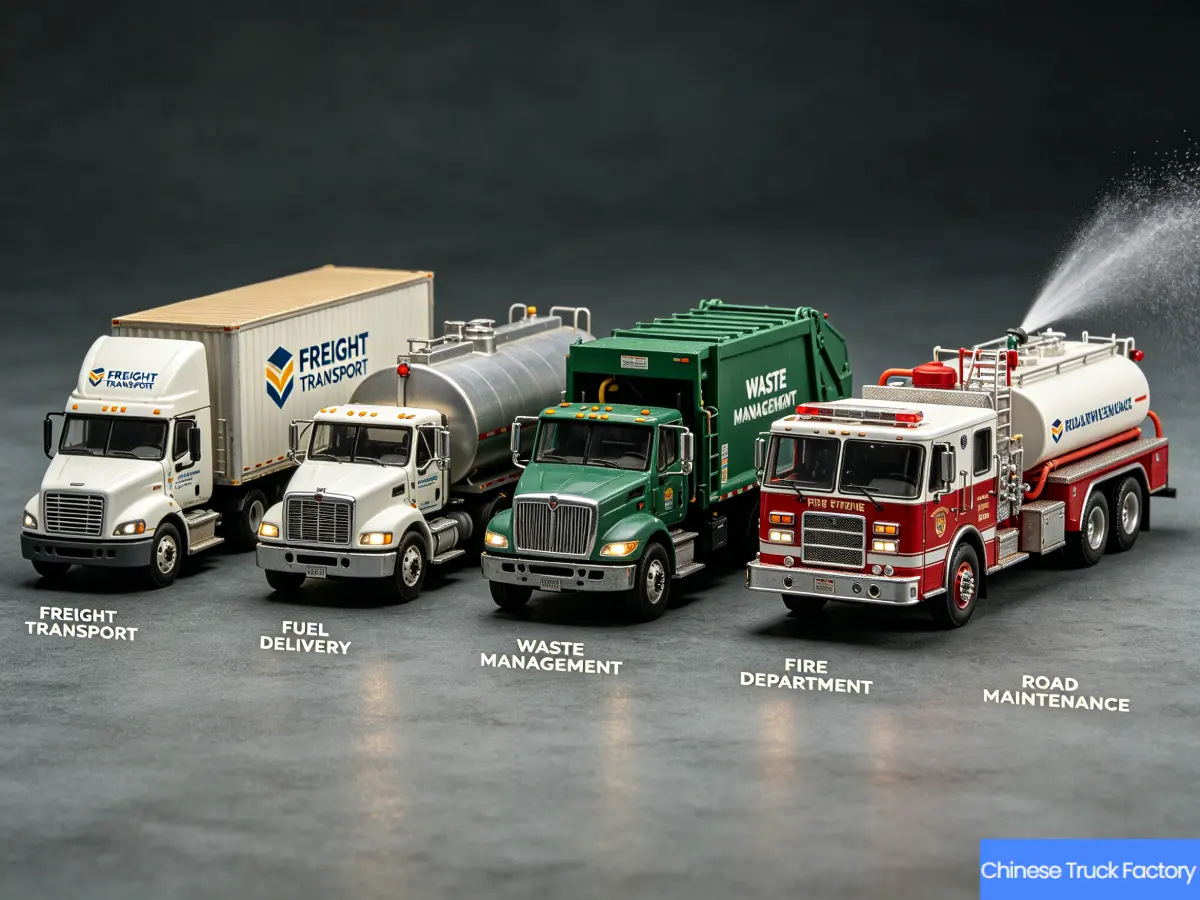
Choosing the Right Truck for the Route
South America covers an enormous range of operating conditions. A truck working a flat coastal highway has very different requirements from one climbing a steep mountain haul road at altitude. The duty cycle should drive the specification, not the other way around.
Match the configuration to the job
| Operating Condition | Typical Configuration | Why It Fits |
|---|---|---|
| Long-haul highway freight | 6×4 tractor truck with sleeper cab | High torque, comfortable cab, good fuel economy at steady speed |
| Construction and quarry haulage | 6×4 or 8×4 dump truck | Strong frame, reinforced body, good traction on unpaved roads |
| Steep mountain routes | Higher power, lower final drive ratio, engine brake | Better gradeability and controlled descent |
| Urban distribution | 4×2 or 6×2 cargo truck | Smaller turning radius, lower curb weight, easier parking |
| Mining and off-road | 6×6 or 8×8 heavy chassis | All-wheel drive for loose or wet ground |
For haulage work where the material is dense, a mining dump truck selection guide can help clarify how body volume, material density, and legal payload interact. A 20 m³ body does not automatically carry 20 tonnes. Sand, gravel, and rock all have different densities, and the legal limit is often reached before the body is full.
Payload, GVW, and the legal limit are three different numbers
This is where a lot of first-time importers lose money. The curb weight of the truck, the rated payload, the gross vehicle weight, and the legally permitted payload in the destination country are all separate figures. A chassis may be technically capable of a heavy load while the road authority permits far less. Always check the destination’s axle load and gross weight rules against the truck’s actual weights, including the body, fuel, driver, and any mounted equipment.
If the legal payload is lower than the rated payload, the truck will run below its capability every day. That changes the cost per ton moved, and it changes the whole business case.
How Trucks Are Actually Shipped
There are three practical methods for moving commercial vehicles across the ocean, and the right one depends on the vehicle’s size, weight, whether it can be driven, the quantity, and the destination port.
| Method | Best For | Main Consideration |
|---|---|---|
| RoRo (Roll-on/Roll-off) | Complete, driveable trucks | Fast loading, but the schedule depends on the shipping line and the port must have RoRo facilities |
| Breakbulk | Oversized or non-driveable units | Flexible for large or unusual cargo, but higher handling cost |
| Container / flat rack | Smaller trucks, spare parts, partial units | Good for CKD or SKD shipments, but size and weight limits apply |
A complete dump truck or tractor head almost always moves by RoRo because it can be driven on and off the vessel. That is usually the simplest and least expensive option. For a detailed look at this method, including cost factors and what affects transit time, see the guide on RoRo shipping cost for trucks from China.
Flat rack shipping becomes relevant when a truck is too tall or too wide for a standard container, or when the buyer wants to combine a chassis with a separate body or attachment. The flat rack shipping guide explains the size and weight limits that decide whether this is practical.
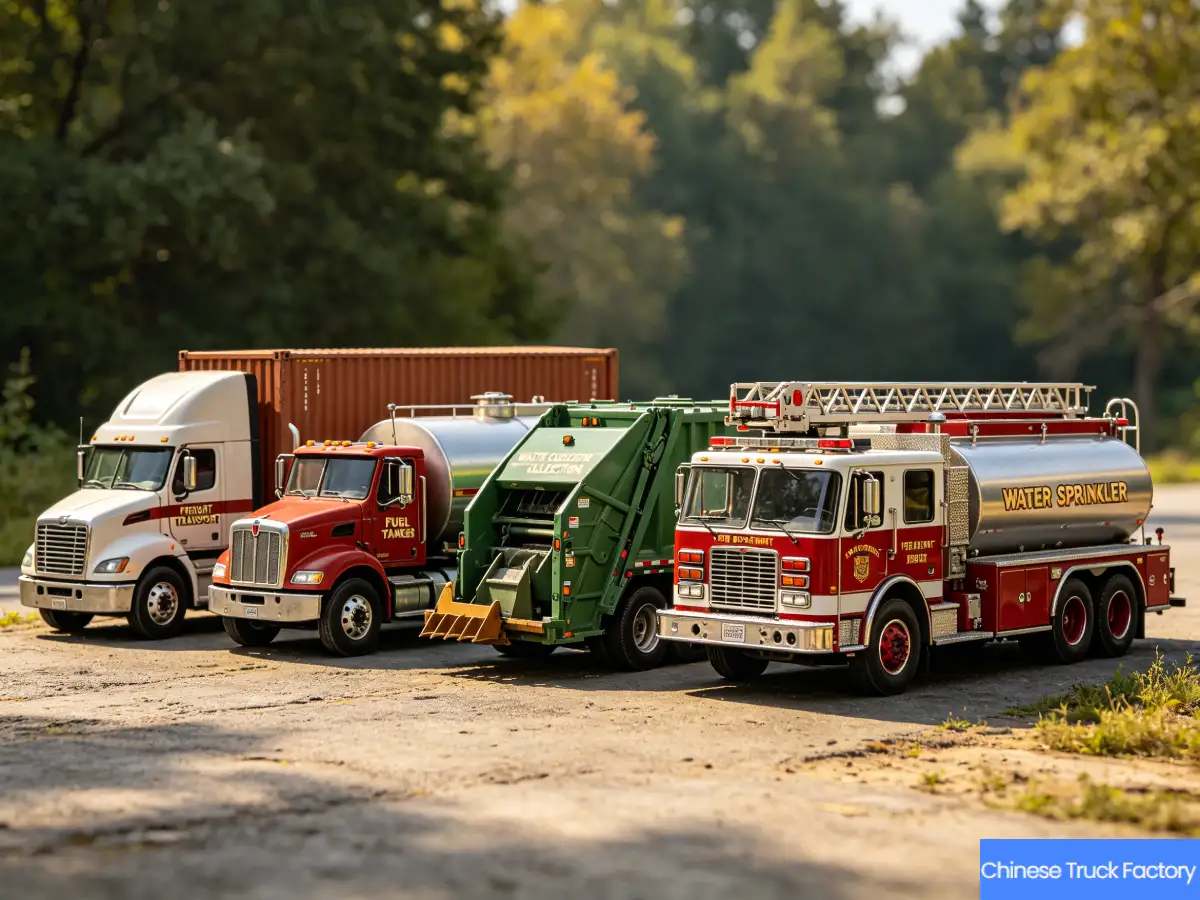
What happens between the factory and the port
After the truck is built and inspected, it is driven or transported to the loading port. Before loading, the export team typically:
- Checks the vehicle against the order specification and records the chassis number
- Confirms fluids, fuel level, and battery condition for the voyage
- Secures loose items and protects exposed surfaces
- Prepares the commercial invoice, packing list, and certificate of origin
- Arranges marine insurance if the Incoterm requires it
On a RoRo vessel, the truck is driven on by a stevedore, lashed to the deck, and driven off at the destination. On a flat rack or in a container, the truck is lifted by crane and secured with chains or straps. Either way, the condition on arrival depends heavily on how well the unit was prepared and secured.
Incoterms: What You Are Actually Buying
The Incoterm decides who pays for what, and where the risk transfers. This matters enormously for trucks because the inland transport and port handling can be a significant share of the total cost.
| Term | Seller Covers | Buyer Covers |
|---|---|---|
| EXW | Vehicle at factory | Everything after pickup |
| FOB | Delivery to the port and loading | Freight, insurance, destination charges |
| CFR | Freight to destination port | Insurance and destination charges |
| CIF | Freight and insurance to destination port | Destination charges and inland transport |
A common mistake is comparing an FOB price with a landed cost. They are not the same thing. The FOB price stops at the loading port. The landed cost includes ocean freight, insurance, customs duty, port charges, inland transport, and any local inspection or registration fees. When you compare quotes from different suppliers, make sure they are quoted on the same Incoterm. The difference between CIF and FOB pricing can be substantial and is easy to overlook.

Documentation and Customs Clearance
The paperwork is not glamorous, but it is where shipments get stuck. A missing or inconsistent document can hold a truck at port for days, and storage charges add up quickly.
Typical documents for a truck shipment include:
- Commercial invoice
- Packing list
- Bill of lading
- Certificate of origin
- Marine insurance certificate (if applicable)
- Any required conformity or inspection certificates for the destination market
The bill of lading is the key document. It is both a receipt and a contract of carriage, and in many cases it is required to release the cargo at the destination. Make sure the consignee details, the chassis numbers, and the description of goods match the invoice exactly. Small inconsistencies cause large delays.
Import duty rates and clearance procedures vary by country. Do not assume they are the same across the region. Confirm the tariff classification and any applicable trade agreements with a local customs broker before the shipment departs.
Compliance and Registration at the Destination
This is the step that most often surprises buyers. A truck can be perfectly legal to export and still fail to register at the destination.
Before ordering, confirm:
- Emission standard. The acceptable level and whether the local fuel quality supports the required aftertreatment.
- Steering side. Left-hand or right-hand drive as required for registration.
- Lighting and safety equipment. Some markets require specific lights, reflectors, or warning devices.
- Braking requirements. Certain markets require specific brake systems or additional safety features.
- Dimensions and axle weights. These must be within the legal limits for the intended routes.
- Homologation or type approval. Some countries require it; others do not for commercial vehicles.
There is no single “global compliant” truck. Every destination has its own rules, and they change over time. The safest approach is to get the requirements in writing from the destination authority or a qualified local agent, and to have the supplier confirm the specification against those requirements before production begins.
Cost Beyond the Sticker Price
The purchase price is only one line in the total cost of ownership. For an imported truck, the full picture includes:
- Vehicle purchase price (EXW, FOB, or CIF)
- Ocean freight and marine insurance
- Import duty and taxes
- Port charges and terminal handling
- Inland transport to the jobsite or dealership
- Registration and inspection fees
- Fuel or electricity over the operating life
- Tires and scheduled maintenance
- Unscheduled repairs and downtime
- Spare parts and their lead time
Downtime is often the largest hidden cost. A truck that is waiting for a part it cannot source locally loses money every day. Before choosing a model, check whether common wear parts are available in the destination market or whether a spare parts package should be included in the initial order. A well-planned spare parts package for export can reduce the risk of a long off-road period.
What to Prepare Before Requesting a Quote
A complete inquiry gets a faster and more accurate response. When contacting a supplier, include:
- Destination country and port
- Application and cargo type
- Required payload or body capacity
- Daily mileage and road conditions
- Gradient and altitude if relevant
- Drive configuration preference
- Steering side
- Emission requirement
- Quantity
- Any required options or attachments
For specialized vehicles, add the specific parameters. A crane truck inquiry needs the maximum lifting weight, working radius, and lifting height. A tanker truck needs the product type, volume, and compartment requirements. A garbage truck needs the waste type, bin type, and loading method. The more precise the input, the more precise the specification and the fewer changes after the order is placed.
If you want to move forward with a specific configuration, you can request a detailed quotation with your operating data, and the specification can be matched to your route and legal limits.
Why Buyers Work With Chinese Truck Factory
When evaluating a supplier for an export order, I use a simple framework: application fit, configuration transparency, documentation support, spare parts planning, and after-sales accessibility. A supplier that scores well on all five reduces the risk that comes with any cross-border purchase.
Chinese Truck Factory works within this framework. The site covers a wide range of vehicle types, from heavy-duty diesel trucks and construction vehicles to sanitation vehicles and specialized vehicles, and it publishes practical guides on shipping, cost, and specification. That combination of product range and technical information is useful for buyers who need to compare options before committing. It is not a guarantee of a perfect fit for every route, but it does give a buyer a clear starting point and a way to check the details that matter.
Frequently Asked Questions
What is the best way to ship a truck from China to South America?
For a complete, driveable truck, RoRo is usually the simplest and most cost-effective method. Breakbulk is used for oversized or non-driveable units, and flat rack or container shipping is used for smaller vehicles, partial units, or when the buyer wants to combine a chassis with separate equipment. The right choice depends on the vehicle dimensions, weight, quantity, and destination port facilities.
How long does shipping take?
Transit time depends on the loading port, the destination port, the shipping line, and the route. It can range from a few weeks to over a month. The schedule is also affected by vessel availability and port congestion. Your freight forwarder can give a more accurate estimate once the route and sailing schedule are confirmed.
What documents are needed to import a truck?
Typically a commercial invoice, packing list, bill of lading, certificate of origin, and marine insurance certificate. Some destinations also require conformity or inspection certificates. The exact list depends on the destination country, so confirm it with a local customs broker before the shipment departs.
Can I register a Chinese truck in my country?
It depends on the destination’s emission, steering, dimension, and safety requirements. There is no universal answer. Confirm the registration requirements with the local transport authority before ordering, and make sure the truck specification matches those requirements. A truck that meets one country’s rules may not meet another’s.
How do I choose the right payload?
Start with the legal axle and gross weight limits in the destination country, then subtract the curb weight of the chassis and body, the fuel, the driver, and any mounted equipment. The result is the legal payload. Compare that with the rated payload of the chassis. If the legal payload is lower, the truck will operate below its rated capability, which affects the cost per ton moved.
What affects the total cost of ownership for an imported truck?
Purchase price, freight, duty, port charges, inland transport, fuel, tires, maintenance, repairs, downtime, and spare parts availability all contribute. Downtime and parts lead time are often the largest hidden costs, especially if common wear parts are not available locally.
Should I include spare parts in the initial order?
For most first-time imports, yes. A basic spare parts package covering common wear items reduces the risk of a long off-road period while parts are sourced. The right package depends on the vehicle type and the local parts market.
The most suitable shipping plan is not necessarily the cheapest quote or the fastest route. It is the combination of truck specification, shipping method, Incoterm, and documentation that matches the destination’s legal requirements and the operator’s duty cycle with the fewest compromises. Confirm the country-level requirements first, match the configuration to the route, choose the shipping method that fits the vehicle, and plan for parts and maintenance before the truck ever leaves the factory.



