A realistic garbage truck price can range from roughly $18,000–$50,000+ for basic factory-direct compactor configurations before freight, destination-side compliance, taxes, and other delivery costs, while complete new refuse trucks purchased through full-service fleet channels can cost $180,000–$400,000 or more. The gap is not necessarily a quality difference. In most cases, buyers are comparing different chassis classes, body sizes, loading systems, safety packages, delivery terms, and after-sales scope. When we prepare a quotation, we therefore start with the collection route and technical specification rather than a generic advertised number. This guide explains what drives refuse truck cost, what should be included in a quote, how to compare rear loaders and other configurations, and how to calculate the real cost before placing an order.
How Much Does a Garbage Truck Cost?
If you only need a working budget, the first thing to understand is that there are two very different price levels in this business. A factory-direct garbage truck price may represent the chassis, refuse body, hydraulic equipment, and selected options before shipping and destination-side costs. A complete fleet purchase may include a higher-cost chassis, sophisticated automated loading equipment, compliance work, dealer preparation, warranties, service support, and other items.
That is why one buyer may see a new garbage compactor advertised for less than $30,000 while another procurement department is approving a refuse truck costing more than $250,000. Both numbers can be real. They simply do not describe the same purchasing scope.
| Configuration | Practical Planning Range | What the Number Usually Represents |
|---|---|---|
| Compact 4–8 CBM compactor | About $18,000–$30,000+ | Basic factory-direct truck configuration before final delivery costs |
| 10–12 CBM garbage compactor | About $22,000–$35,000+ | Mid-size factory-direct configuration; chassis and lifter choice matter |
| 16–20+ CBM heavy-duty compactor | About $30,000–$50,000+ | Larger chassis, heavier body, larger hydraulic system, project options |
| Complete new rear-loader fleet truck | About $180,000–$360,000+ | Complete vocational chassis and refuse body with delivery and support scope |
| Highly automated side/front loading truck | About $250,000–$450,000+ | Heavy chassis, automated loading system, controls, cameras, safety equipment, service support |
These figures are budgeting ranges, not fixed quotations. The actual garbage truck price can move outside them when you change the chassis, engine, transmission, body size, axle configuration, hydraulic specification, automation level, bin lifting equipment, emission requirement, safety equipment, quantity, shipping scope, or inspection requirements.
Public fleet purchases also show how wide the upper end can be. A 2025 public procurement document listed an 8-yard refuse truck at $205,147.60. Another 2025 record listed a complete 25-yard rear-loader at $266,241, while a separate 32-yard rear-loader purchase was listed at $355,357. Those examples should not be treated as universal averages. They demonstrate why comparing a delivered fleet vehicle with a basic factory-direct quotation can create a misleading price comparison.
When someone asks us for a garbage truck price, I normally want to know the body capacity, waste type, collection method, bin size, chassis requirement, steering configuration, quantity, and delivery scope before treating any number seriously.

Why Can the Garbage Truck Price Differ by More Than $200,000?
The biggest pricing mistake I see is comparing two numbers before confirming what each supplier actually included. A low advertised garbage truck price may be a basic factory configuration. A much higher number may represent a complete truck with a premium chassis, automatic transmission, automated arm, cameras, service package, inspection, warranty coverage, and delivery preparation.
Before deciding that one quote is expensive, put both specifications side by side. The truck body may look similar in a photograph even though almost everything underneath it is different.
1. The chassis may be completely different
The chassis is one of the largest parts of the new garbage truck cost. Engine output, wheelbase, axle ratings, suspension, transmission, brakes, cab layout, drivetrain, and emission equipment can change the quotation substantially.
A light compact truck designed for a small refuse body should not be compared directly with a heavy vocational chassis carrying a large compaction body. The second truck has to support more body weight, more waste, larger hydraulic equipment, and a more demanding stop-and-go duty cycle.
2. Body capacity affects much more than steel volume
Moving from a 6 CBM body to an 18 CBM body is not simply a matter of building a larger box. The supporting chassis, subframe, loading mechanism, cylinders, pump capacity, rear structure, suspension requirements, and legal axle load all have to work together.
For that reason, a larger garbage body can push the garbage truck price upward even before optional equipment is added.
3. Manual loading and automated loading are different machines
A basic rear loader can use a comparatively straightforward loading and compaction system. An automated side loader may require a complex lifting arm, additional hydraulic control, electronic sensors, cameras, interlocks, and operator controls.
The higher automated refuse truck cost can make sense when the loading system reduces manual handling or improves route productivity, but the purchase decision should be based on the collection operation rather than automation for its own sake.
4. A bin lifter is not a generic accessory
One of the first things we request when a buyer needs a lifter is the actual bin information. Capacity alone is not enough. We want dimensions, lifting interface, photographs, and preferably a drawing when available.
If the truck arrives and the lifting system does not match the bins already in service, a low garbage truck price stops looking cheap very quickly.
5. Commercial terms can hide a large part of the real cost
Ask whether the quotation is factory pickup, port delivery, delivered shipping, or another agreed term. Then check whether marine freight, insurance, inspection, documentation, destination charges, taxes, registration work, and commissioning are included.
Two quotations should only be compared after these commercial boundaries are aligned.
Garbage Truck Price by Truck Type
The collection system has as much influence on garbage truck price as body size. Rear loaders, side loaders, front loaders, hook-lift trucks, and roll-off trucks solve different waste-handling problems. Choosing the wrong type and then trying to force it into your existing route usually costs more than selecting the correct system from the beginning.
For an overview of available configurations, our garbage trucks for sale page explains rear-loading, side-loading, front-loading, hook-lift, roll-off, swing-arm, and sealed-body options in more detail.
Rear Loader Garbage Truck Price
A rear loader remains one of the most flexible choices for mixed collection routes. Waste is placed into a hopper at the back and moved into the main body by the hydraulic packer mechanism. A compatible cart lifter can also be installed.
The rear loader garbage truck price depends heavily on body size and chassis class. Compact factory-direct configurations can fall near the lower end of the ranges above, while a complete heavy-duty rear loader with a high-spec chassis can exceed $250,000.
Rear loaders work well when the route includes bagged waste, carts, mixed collection points, or crews that already operate from the back of the vehicle. When comparing prices, check the hopper volume, loading cycle, packer design, ejector or discharge arrangement, hydraulic components, safety controls, and lifter.
Side Loader Garbage Truck Price
A side loader collects bins from the side of the vehicle. It may use a simple lifting device or a much more advanced automated arm. That difference explains why the side loader garbage truck price can vary widely.
Automated arms add hydraulic valves, cylinders, sensors, structural reinforcement, controls, and maintenance points. Before paying for automation, make sure your bin placement and route layout are consistent enough to use it efficiently.
I would never finalize a side-loader quote without checking the container dimensions and lifting interface. A powerful arm that cannot reliably engage the existing bin is not an upgrade.
Front Loader Garbage Truck Price
A front loader is typically built around compatible large containers. Forks lift the container over the cab and empty it into the refuse body. The chassis, body structure, front lifting assembly, and hydraulic package are substantial, so the garbage collection truck price is usually higher than a basic compact rear loader.
The critical buying question is not simply capacity. It is whether the truck’s fork spacing, container interface, overhead clearance, body size, and route conditions match the collection system.
Hook-Lift and Roll-Off Truck Price
Hook-lift and roll-off trucks handle detachable containers instead of using a conventional compaction body. Their price depends on chassis capacity, hoist rating, container dimensions, hydraulic system, rails, locks, tarping equipment, and whether containers are included in the purchase.
When comparing the garbage truck price of a hook-lift system with a compactor, compare the whole system. A hook-lift truck may serve multiple containers, while a compactor carries its body permanently. The economics are therefore different.
Garbage Compactor Truck Price
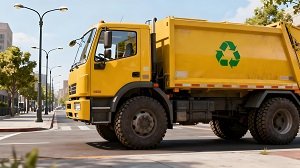
The term garbage compactor truck usually refers to a refuse vehicle that hydraulically compresses waste into an enclosed body. For many buyers, this is the most searched category because it balances body volume and collection efficiency.
A typical garbage compactor truck price is influenced by chassis rating, body volume, compaction mechanism, hydraulic pump, cylinders, valve group, hopper design, discharge system, and optional lifter. Our garbage compactor truck specification guide covers common 4–6 CBM, 8 CBM, 10–12 CBM, 14–16 CBM, and 18–20+ CBM planning classes.
How Body Capacity Changes the Garbage Truck Price
Body size is one of the easiest specifications to compare, but it is also one of the easiest to misuse. Buyers often tell us, “I want the biggest body available.” My next question is usually how much waste the truck actually needs to collect before unloading.
The cheapest garbage truck price per cubic meter is not necessarily the lowest operating cost. An oversized truck can be harder to maneuver, heavier when empty, more expensive to maintain, and unable to use the full theoretical payload because the chassis reaches its legal weight limit first.
| Body Size | Typical Planning Use | Main Price Drivers |
|---|---|---|
| 4–6 CBM | Compact routes, facilities, restricted access | Light chassis, simple body, lifter option |
| 8 CBM | Small and medium collection routes | Chassis rating, engine, hydraulic package |
| 10–12 CBM | General residential and commercial collection | Body structure, chassis class, bin lifter, controls |
| 14–16 CBM | Higher-volume collection routes | Heavier chassis, axle capacity, larger hydraulic equipment |
| 18–20+ CBM | Heavy-duty fleet and high-volume work | Heavy chassis, drivetrain, body weight, cylinders, braking and suspension requirements |
The right way to specify capacity is to combine loose waste volume, expected waste density, number of collection stops, disposal distance, available road space, and maximum permitted vehicle weight. That gives the supplier enough information to recommend a truck rather than simply sell a larger body.
This approach also makes the garbage truck price easier to defend internally because every major specification is tied to a real operating requirement.
Chassis, Engine, Transmission, and Axles: The Hidden Price Difference
When two garbage trucks look almost identical from the side but one costs considerably more, the chassis specification is often the reason. This is where buyers need to slow down and read the technical sheet instead of the sales headline.
Gross vehicle weight rating
The chassis has to carry the cab, refuse body, hydraulic equipment, optional lifter, fuel, crew, tools, and collected waste. Selecting a chassis too close to its practical limit can leave very little usable payload.
Always compare the completed vehicle’s expected curb weight with its allowable gross weight and axle ratings. A low garbage truck price is not a saving if the final truck cannot legally carry the intended load.
Engine power and torque
Garbage trucks spend much of their working day accelerating, stopping, idling, operating hydraulic equipment, and moving again. That duty cycle is different from steady highway operation.
More horsepower is not automatically better. The engine should be matched to completed vehicle weight, gradients, route speed, power take-off requirements, and service support. Overspecifying the engine increases the new garbage truck cost without necessarily increasing useful productivity.
Transmission
Frequent stop-and-go operation makes transmission choice important. Automatic transmissions can improve driver consistency and reduce workload, while simpler manual systems may be attractive where maintenance familiarity and acquisition cost matter more.
The correct answer depends on the fleet’s technicians, drivers, route pattern, and parts availability. Transmission type should always appear on the quotation.
Axle and suspension configuration
A larger garbage body does not create legal payload by itself. The axle ratings and suspension have to support the completed truck. Heavy rear loading can also make weight distribution important.
Before approving the garbage truck price, ask for front and rear axle ratings, expected completed vehicle weight, body weight if available, wheelbase, tire specification, and intended payload.
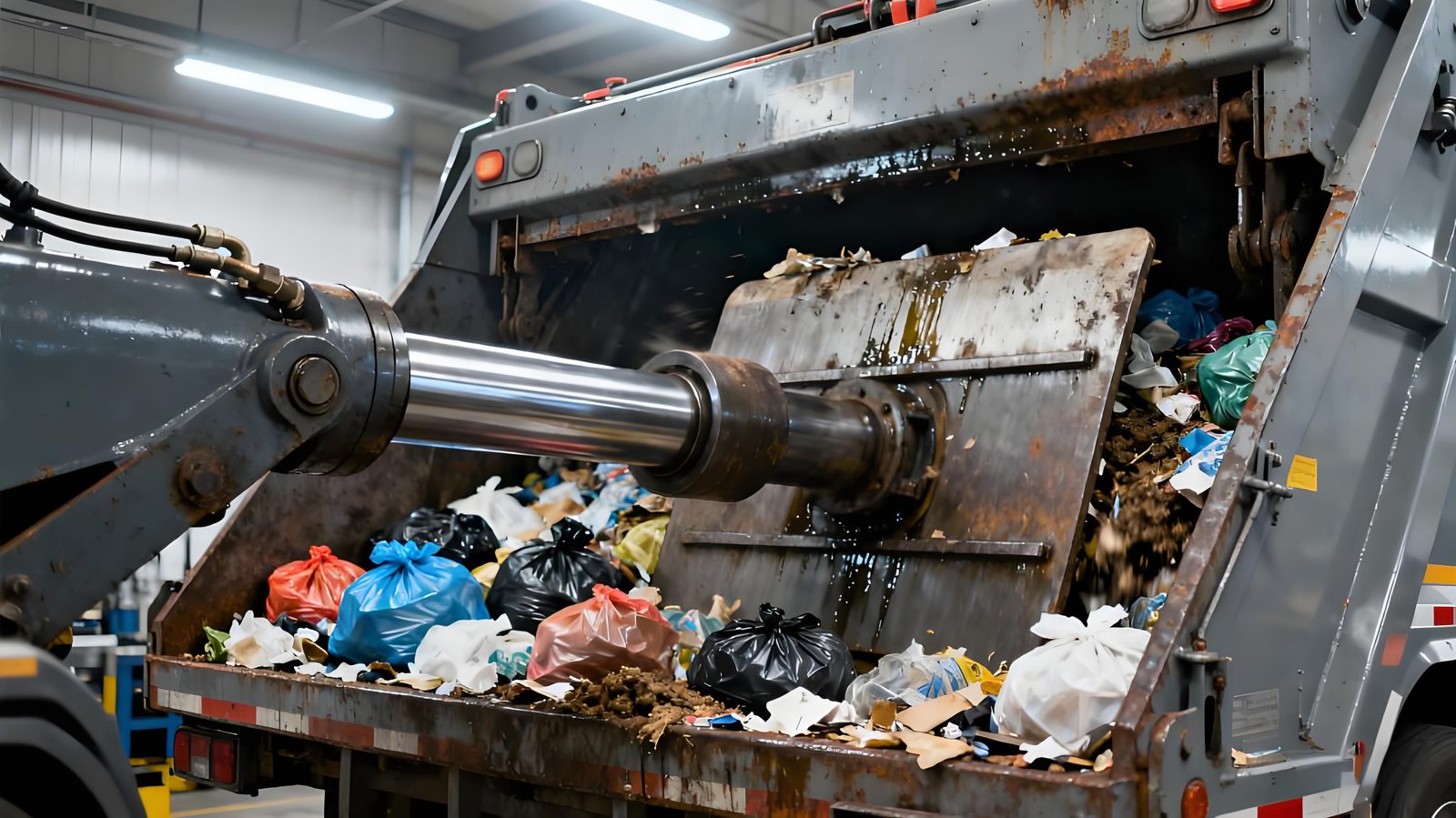
Hydraulic System Quality Has a Direct Effect on Refuse Truck Cost
The hydraulic system is one area where I would not buy from photographs alone. A garbage compactor may perform hundreds of loading cycles during a working shift. Pumps, cylinders, valves, hoses, seals, fittings, filters, and control logic all affect reliability.
When comparing garbage truck price quotations, ask the supplier to identify the hydraulic system components included in the offered configuration. You do not necessarily need the most expensive component available, but you do need a system that can be serviced and supported.
Questions worth asking
- What hydraulic pump is used?
- What cylinders are installed for packing, lifting, and discharge?
- Where are hydraulic filters located?
- Are replacement seal kits available?
- What hydraulic oil specification is recommended?
- Are pressure settings documented?
- Can common hoses be manufactured locally?
- Is a manual or hydraulic diagram available?
- Which functions include safety interlocks?
- What spare hydraulic parts should be ordered with the truck?
A few thousand dollars saved during purchasing can disappear quickly if the truck spends weeks waiting for a proprietary valve, cylinder seal, or electronic controller. This is why I treat spare-parts planning as part of the original garbage compactor truck price rather than something to think about after delivery.
Bin Lifter Cost: A Small Option That Can Make or Break the Purchase
Bin lifting equipment is usually much cheaper than the complete truck, but it deserves more attention than it gets. We regularly ask buyers to send photographs and measurements before a lifter configuration is finalized.
Common bin capacities may include 120 L, 240 L, 660 L, and 1,100 L, but capacity does not prove compatibility. Wheel layout, lip design, trunnions, comb interface, lifting bar position, and overall geometry matter.
A supplier can give you an attractive garbage truck price and still deliver the wrong working solution if the lifter specification is vague.
Before approving production, confirm:
- Bin capacity and outside dimensions
- Photographs from the front, side, and lifting interface
- Maximum loaded bin weight
- Lifting mechanism type
- Required lifting cycle
- Manual or automatic control preference
- Emergency-stop arrangement
- Whether multiple bin sizes must be handled
When several container standards are used on one route, describe all of them in the RFQ. A combination lifter may cost more initially, but it can be less expensive than changing thousands of existing containers.
Safety Equipment Should Be Included in the Price Comparison
A refuse collection vehicle works around pedestrians, collection crews, containers, parked vehicles, and frequent reversing movements. Safety equipment therefore deserves its own line in a garbage truck price comparison.
NIOSH guidance on refuse-truck struck-by risks recommends selecting equipment appropriate for the task and discusses measures such as cameras, radar, audible reverse warnings, safe backing procedures, and worker visibility. Those recommendations are useful when writing a vehicle specification because safety is easier to design into the truck before production than to add later.
Depending on the application, I would consider specifying:
- Rear-view or multi-camera system
- Audible reverse alarm
- Work lights around the loading area
- Emergency-stop controls
- Warning beacons
- Hydraulic interlocks
- Reflective markings
- Grab handles and safe access points
- Operator warning labels
- Proximity detection when required
Do not compare a stripped base truck against a vehicle carrying a complete safety package and conclude that the second garbage truck price is excessive. Normalize the equipment first.
Emission, Registration, and Compliance Requirements Affect the Final Cost
One of the most expensive purchasing mistakes is selecting the truck first and checking registration requirements afterward. Engine configuration, emission level, steering position, dimensions, axle loads, lighting, markings, safety equipment, and documentation can all affect whether a truck can be registered for its intended use.
This is also why an online garbage truck price should never be treated as a delivered final price until the destination requirements are confirmed.
Before requesting a firm quotation, prepare a simple compliance checklist:
- Required emission level
- Left-hand or right-hand steering
- Maximum vehicle width and height
- Maximum gross and axle weights
- Lighting and reflective marking requirements
- Required vehicle documentation
- Inspection or certification requirements
- Registration documents
- Required warning labels and language
If you are uncertain, confirm the requirements with the registration authority or an experienced compliance specialist before production. The cost of correcting the wrong engine or chassis after shipment can be far higher than the original refuse truck cost difference.
Factory Price, FOB Price, and Delivered Price Are Not the Same Thing
A large share of confusion around garbage truck price comes from shipping terms. Buyers sometimes compare a factory pickup number with a delivered vehicle number as though both represent the same product cost.
They do not.
Factory pickup price
This normally covers the truck according to the agreed factory specification. Transport from the factory and subsequent logistics may remain the buyer’s responsibility.
Port-based price
Depending on the agreed commercial term, the supplier may include inland movement and certain export handling up to the loading point. The exact boundary needs to be written in the quotation.
Freight-included price
Ocean or other transportation may be included to an agreed destination point, but destination charges, duties, taxes, customs work, inland delivery, registration, and compliance may still be separate.
Complete delivered cost
For serious budgeting, calculate the landed or delivered total rather than stopping at the supplier’s garbage truck price.
A useful formula is:
Not every project includes every cost, but writing them down prevents surprises.
New vs. Used Garbage Truck Price
A used truck can reduce the initial purchase budget, but refuse vehicles are among the hardest-working vocational trucks. Mileage alone does not tell you how much life remains.
When evaluating a used garbage truck price, I would place operating hours, hydraulic condition, body corrosion, structural cracks, packer wear, cylinder leakage, chassis history, and maintenance records ahead of paint condition.
Important checks include:
- Engine operating hours and mileage
- Transmission behavior under load
- Hydraulic pump pressure and noise
- Cylinder rod condition and leakage
- Packer blade and slide wear
- Hopper floor wear
- Body corrosion
- Subframe cracks or previous welding
- Rear door sealing
- Bin lifter play and pin wear
- Electrical harness condition
- Camera and warning equipment operation
- Brake and tire condition
- Availability of service history
A used garbage truck cost that is $70,000 lower than a new vehicle sounds attractive until the truck immediately needs a hydraulic rebuild, body repair, tires, brakes, and several weeks of downtime.
For this reason, compare the expected first two years of repair cost as well as the purchase price.
The Purchase Price Is Only One Part of Total Ownership Cost
Fleet buyers who focus only on the initial garbage truck price often miss the larger number: what the truck will cost to keep working.
A useful ownership-cost model includes:
- Initial truck purchase
- Financing cost where applicable
- Fuel or energy
- Driver and crew labor
- Preventive maintenance
- Hydraulic filters and oil
- Engine and transmission service
- Tires and brakes
- Wear plates, pins, bushings, and seals
- Unscheduled repairs
- Downtime
- Replacement vehicles or rental equipment
- Insurance
- Inspection and registration
- Residual value when the truck leaves service
Downtime deserves its own number
If a truck is unavailable, the waste still has to be collected. The fleet may need overtime, a spare vehicle, rental equipment, or an altered route. That operating disruption can cost more than the failed component.
For this reason, parts availability is part of the garbage collection truck price even if it does not appear on the invoice.
Keep a basic spare-parts package
For fleet orders, we recommend discussing spare parts before shipment. Filters, seals, sensors, hydraulic hoses or fittings, switches, lamps, and application-specific wear parts are easier to plan at the purchasing stage.
The lowest garbage truck price becomes less attractive if every small repair requires a long supply delay.
How I Build a Useful Garbage Truck RFQ
If you want accurate quotations from several suppliers, send all of them the same information. Otherwise, every supplier will make different assumptions and the resulting garbage truck price comparison will be meaningless.
My preferred RFQ starts with the job rather than the model name.
Collection information
- Waste type
- Approximate daily volume
- Approximate waste density if known
- Number of collection stops
- Average route distance
- Distance to unloading point
- Road width and turning restrictions
- Maximum gradients
Container information
- Bin capacities
- Bin dimensions
- Lifting interface
- Loaded bin weight
- Clear photographs
Truck requirements
- Rear loader, side loader, front loader, compactor, hook lift, or roll-off
- Preferred body capacity
- Chassis class or preferred chassis if already defined
- Drive configuration
- Steering position
- Engine and emission requirements
- Transmission preference
- Required cameras and safety equipment
- Body color and fleet markings
Commercial information
- Quantity
- Required delivery schedule
- Delivery point
- Required shipping term
- Inspection requirements
- Required spare-parts package
- Required manuals and technical documents
- Warranty expectations
Once suppliers quote against the same RFQ, you can start comparing the garbage truck price instead of comparing assumptions.
How to Compare Garbage Truck Quotes Without Getting Fooled by the Lowest Number
I use a simple rule: never compare totals until the specifications are normalized. If Supplier A quotes $24,000 and Supplier B quotes $29,000, that does not automatically make Supplier A cheaper.
Supplier A may have excluded the bin lifter, camera package, spare filters, export inspection, or upgraded hydraulic system. Once those items are added, the real garbage truck price may be the same or even higher.
| Item to Compare | Supplier A | Supplier B | What to Verify |
|---|---|---|---|
| Chassis | Specified? | Specified? | Model, GVW, wheelbase, axles |
| Engine | Specified? | Specified? | Power, emission level, fuel |
| Body capacity | Specified? | Specified? | Usable body volume and design |
| Hydraulics | Specified? | Specified? | Pump, valves, cylinders, controls |
| Bin lifter | Included? | Included? | Actual bin compatibility |
| Safety package | Included? | Included? | Camera, alarm, lighting, interlocks |
| Spare parts | Included? | Included? | List and quantity |
| Warranty | Written? | Written? | Chassis/body scope and exclusions |
| Shipping term | Defined? | Defined? | Where supplier responsibility ends |
Once every row matches, the final price comparison becomes useful.
A Practical 12 CBM Quote Comparison Example
Here is the type of exercise I recommend before approving a 12 CBM garbage truck purchase. The numbers below are an illustrative RFQ example, not a claimed customer order.
Suppose Quote A shows a garbage truck price of $22,800. Quote B is $26,100. At first glance, Quote A saves $3,300.
After reading the specifications, however, you discover that Quote A uses a different chassis rating, does not include the required 240/660 L lifter, excludes the rear camera, includes no initial spare-parts kit, and uses a different shipping term.
If the missing lifter, camera, spare parts, and commercial scope add $4,500, Quote A is no longer the cheaper purchase.
This is exactly why I prefer a line-by-line comparison:
- First compare chassis.
- Then compare body capacity and body construction.
- Then compare hydraulic equipment.
- Then compare lifters and safety options.
- Then compare warranty and spare parts.
- Finally compare the same shipping boundary.
Only after that do I compare the final garbage truck price.
What Should Be Checked Before the Truck Leaves the Factory?
Pre-delivery inspection should be based on the signed specification sheet. A generic inspection checklist is helpful, but the actual acceptance criteria need to match the truck you ordered.
Our waste management vehicle solutions page explains how sanitation configurations can be matched to different collection requirements. For a purchase inspection, I would divide the work into six areas.
1. Chassis confirmation
- Model and identification information
- Engine
- Transmission
- Axle configuration
- Tires
- Steering position
- Emission specification where applicable
2. Body inspection
- Body capacity and general dimensions
- Weld quality
- Doors and access panels
- Paint finish
- Sealing surfaces
- Subframe mounting
3. Hydraulic function test
- Loading cycle
- Compaction cycle
- Bin lifting
- Rear door movement
- Discharge operation
- Visible leaks
- Abnormal noise
4. Electrical and safety equipment
- Camera operation
- Reverse alarm
- Warning lights
- Work lights
- Emergency stops
- Interlocks
5. Options and branding
- Bin lifter type
- Toolboxes
- Requested spare parts
- Body color
- Logo and fleet markings
6. Documentation
- Final specification sheet
- Commercial invoice
- Packing information where required
- Operating instructions where available
- Maintenance information
- Spare-parts information
- Warranty terms
Inspection does not reduce the agreed garbage truck price, but it can greatly reduce the chance of paying for a truck that does not match the order.
How to Evaluate a Garbage Truck Manufacturer
I do not recommend evaluating a truck supplier by website appearance or headline garbage truck price. A better evaluation framework is based on whether the supplier can turn your operating requirement into a complete written specification.
| Evaluation Point | What a Serious Buyer Should Expect |
|---|---|
| Specification transparency | Chassis, body, engine, hydraulics, capacity, options, and commercial scope stated clearly |
| Application review | Questions about route, waste, bins, payload, and working conditions before quotation |
| Container compatibility | Bin dimensions and lifting interface checked before lifter selection |
| Inspection process | Functional testing tied to the confirmed specification |
| Spare-parts planning | Recommended maintenance and critical spare parts discussed before shipment |
| Warranty clarity | Coverage, duration, responsibilities, and exclusions documented |
| Commercial clarity | Payment, shipping term, delivery scope, production schedule, and documentation defined |
Why Chinese Truck Factory fits this purchasing framework
Chinese Truck Factory approaches garbage truck sourcing around the specification rather than treating every truck as the same product. Our sanitation vehicle pages separate chassis selection, body volume, loading method, compaction system, bin lifter, steering configuration, safety equipment, inspection, spare parts, and shipping requirements.
That matters because the garbage truck price is only useful when it describes the truck the buyer actually needs.
For an RFQ, we prefer receiving the waste type, target capacity, chassis or GVW requirement, bin details, steering requirement, emission requirement, quantity, and delivery information. If a tender sheet already exists, using that document as the technical baseline makes the quotation easier to compare.
I would apply the same standard to any supplier you are considering: ask them to explain the specification behind the price. If the supplier cannot explain what is included, the number is not ready for comparison.
How to Negotiate a Better Garbage Truck Price Without Cutting the Wrong Specification
Good negotiation does not mean removing components until the truck is cheaper. It means spending money where it creates operating value and removing options that do not.
Start with quantity
Multiple-unit orders can sometimes improve purchasing efficiency because the same chassis, body, paint, documentation, inspection procedure, and spare-parts package can be standardized.
If you expect future orders, tell the supplier. Standardizing the fleet may reduce parts complexity even when the first garbage truck price is not dramatically lower.
Standardize the specification
Five trucks with five different hydraulic components create five maintenance problems. When practical, keep engines, filters, hydraulic components, controls, and lifters consistent across the fleet.
Do not pay for unused capacity
If a 12 CBM truck finishes the route comfortably, buying an 18 CBM body simply because it looks more productive can add chassis cost, weight, and maintenance without reducing trips.
Buy the spare parts you are likely to use
A giant spare-parts package is not always necessary. Start with filters, seals, sensors, common switches, wear parts, and other components identified from the maintenance plan.
Separate must-have equipment from optional equipment
Create three columns: required, preferred, and optional. Ask the supplier to price optional equipment separately. That makes it much easier to see what is actually changing the garbage truck price.
Five Common Garbage Truck Buying Mistakes
Buying by body volume alone
A 20 CBM body sounds better than a 12 CBM body until the truck cannot access the route or reaches the weight limit before the body is full.
Comparing prices with different shipping terms
This is one of the fastest ways to believe one supplier is cheaper when it is not. Put the same delivery boundary on every quote.
Ignoring bin compatibility
Never approve a lifter solely because the supplier recognizes the bin capacity. Send measurements and photographs.
Leaving safety equipment until the end
Cameras, alarms, lighting, interlocks, and emergency controls should be part of the vehicle specification, not last-minute accessories added after the garbage truck price has already been approved.
Buying without a parts plan
Every refuse truck will eventually need wear parts. Ask how common components can be identified and ordered before you purchase the truck.
What Information Should You Send to Get an Accurate Garbage Truck Price?
If you want a fast and useful quotation, send the following information in the first inquiry:
- Truck type: rear loader, side loader, front loader, compactor, hook lift, roll-off, or another configuration.
- Body capacity: preferred CBM/cubic-yard range or expected daily waste volume.
- Waste type: household refuse, commercial waste, recyclables, wet waste, bulky material, or another stream.
- Bin information: capacity, dimensions, lifting interface, photographs, and loaded weight where known.
- Chassis requirement: preferred model, GVW class, wheelbase, or operating requirement.
- Steering position: specify what is required.
- Engine/emission requirement: confirm before production.
- Drive configuration: for example, 4×2 or 6×4 where appropriate.
- Optional equipment: camera, warning lights, automatic controls, fleet markings, or other items.
- Quantity: one truck or fleet order.
- Delivery information: required destination and preferred commercial term.
- Technical documents: attach tender specifications or reference drawings when available.
With these details, the supplier can calculate a garbage truck price around the actual project instead of sending a generic number that changes later.
Frequently Asked Questions About Garbage Truck Price
How much is a new garbage truck?
A new garbage truck price can range from roughly $18,000–$50,000+ for basic factory-direct compactor configurations before freight and destination-side costs, while complete vocational refuse trucks supplied through full-service fleet channels can cost roughly $180,000–$400,000 or more. Truck type, chassis, body size, automation, safety equipment, commercial terms, and support scope explain much of the difference.
Why are some garbage trucks advertised for $20,000 while others cost more than $200,000?
They are often different purchasing packages. The lower garbage compactor truck price may be a relatively simple factory-direct configuration before freight, taxes, registration work, and other costs. A six-figure truck may use a premium vocational chassis, automatic transmission, sophisticated refuse body, automated loading equipment, advanced safety systems, service support, and a complete delivered purchasing package.
How much does a rear loader garbage truck cost?
The rear loader garbage truck price depends on body capacity, chassis class, hydraulic system, lifter, and delivery scope. Smaller factory-direct compactors may begin in the low tens of thousands of dollars, while complete heavy-duty rear loaders can exceed $250,000. Public procurement records show complete rear-loader purchases above $200,000 and $300,000, demonstrating why specification and purchase scope matter.
What is the price of a 10–12 CBM garbage compactor truck?
For early sourcing, a 10–12 CBM factory-direct garbage compactor truck may fall around $22,000–$35,000 or more before final freight and destination-side costs. Treat this as a planning range only. Chassis, engine, emission configuration, hydraulic equipment, lifter, steering configuration, options, and quantity must be confirmed for an accurate garbage truck price.
What is the price of a 20 CBM garbage truck?
A factory-direct heavy-duty 18–20+ CBM compactor can commonly require a planning budget starting around $30,000–$50,000+, but a complete heavy-duty vocational truck supplied under a different purchasing model can cost far more. A 20 CBM garbage truck price should therefore always be tied to a complete chassis and body specification.
Does a larger garbage truck always carry more waste?
No. Body volume and legal payload are different. Dense waste can cause the truck to reach its allowable vehicle or axle weight before the body is physically full. Chassis rating, completed vehicle weight, axle distribution, and waste density must be checked together.
What affects garbage truck price the most?
The largest factors are usually chassis class, body capacity, loading system, hydraulic specification, level of automation, engine and transmission, bin lifting equipment, safety options, compliance requirements, order quantity, and shipping scope.
Is an automatic side loader more expensive than a rear loader?
Usually, a highly automated side loader has a higher initial refuse truck cost because the loading arm, hydraulic equipment, sensors, controls, structural reinforcement, and safety systems add complexity. Whether the higher purchase price is worthwhile depends on route design and labor requirements.
Should I buy the cheapest garbage truck available?
Not without comparing the full specification. Check chassis capacity, engine, transmission, body construction, hydraulic components, lifter compatibility, safety equipment, spare parts, warranty, documentation, inspection, and shipping terms before comparing the garbage truck price.
How can I reduce garbage truck cost?
Start by avoiding unnecessary specifications. Use the smallest body that reliably completes the route, standardize components across multiple units, separate optional equipment from required equipment, negotiate fleet quantities where appropriate, and purchase a sensible spare-parts package. Cutting the chassis rating or critical safety equipment simply to reduce the initial price can create higher operating costs later.
What should be included in a garbage truck quotation?
A good quotation should identify the chassis, engine, transmission, drive configuration, body capacity, loading and compaction system, hydraulic equipment, bin lifter, safety options, paint or branding, quantity, warranty, production schedule, spare parts, shipping term, and commercial scope. The final garbage truck price should refer to that written specification.
Do garbage truck prices include shipping?
Not automatically. Always check the stated commercial term. Freight, insurance, port charges, duties, taxes, inland delivery, inspection, registration, and compliance work may be separate.
How do I compare two garbage truck suppliers?
Give both suppliers the same RFQ and build a comparison table. Match chassis, engine, body volume, hydraulics, lifter, safety equipment, warranty, spare parts, production schedule, documentation, and shipping terms first. Compare the garbage truck price only after those items are aligned.
What spare parts should I order with a garbage compactor truck?
The ideal package depends on the truck, but commonly discussed items include service filters, hydraulic seals, sensors, switches, lamps, selected fittings, hoses or hose specifications, and application-specific wear parts. Ask the supplier for a recommended list based on the exact model.
Can the garbage truck body be customized?
Yes, depending on the model. Body capacity, lifter configuration, controls, cameras, warning devices, paint color, fleet markings, and other equipment can often be discussed before production. Every change should be written into the technical specification because customization may change the garbage truck price.
What is the fastest way to get an accurate quotation?
Send the truck type, body capacity, waste type, chassis or GVW requirement, bin dimensions and photographs, steering requirement, emission requirement, quantity, delivery information, and any tender sheet. The more clearly the operating requirement is defined, the less likely the garbage collection truck price will change later.
Final Buying Advice
If there is one point I want a buyer to remember, it is this: a garbage truck price without a specification is only a number.
Start with the route. Determine what waste is being collected, how much is collected in a shift, what containers are already in use, how much road space is available, and how far the truck travels before unloading. Then select the loading system, body size, chassis, drivetrain, hydraulic equipment, and safety package.
After that, ask several suppliers to quote the same specification and the same commercial scope.
A $24,000 quotation can be expensive if it does not include the equipment you need. A $30,000 quotation can be better value if the chassis, lifter, hydraulics, documentation, spare parts, and shipping scope are correct. The same logic applies when comparing six-figure fleet vehicles.
At Chinese Truck Factory, our approach is to define the application before finalizing the truck. That gives buyers a clearer technical baseline and makes the final garbage truck price easier to understand, compare, and manage.
References and Data Sources
The price examples and safety guidance in this article use publicly accessible records and technical guidance. Public procurement prices are individual purchasing examples rather than universal market averages.
- 2025 public fleet procurement record — 8-yard refuse truck — published purchase amount: $205,147.60.
- 2025 public procurement record — 25-yard rear-loader — published purchase amount: $266,241.
- 2025 public procurement record — 32-yard rear-loader — published purchase amount: $355,357.
- NIOSH refuse-truck struck-by injury prevention guidance — guidance covering vehicle selection, backing risks, cameras, warning equipment, and safe working practices.
Pricing and Specification Disclaimer
All price ranges in this guide are for preliminary procurement planning and are not offers or fixed selling prices. Final chassis, engine, body capacity, payload, dimensions, hydraulic system, equipment, warranty, production schedule, freight, taxes, compliance requirements, and commercial terms vary by configuration and order. Always rely on the final written quotation, technical specification, and sales contract for an actual purchase.