If you are trying to understand garbage compactor truck price, a realistic budget for a new factory-direct unit usually starts around $13,000 for a small basic configuration and can exceed $50,000 for a larger or higher-spec truck. The number that matters, however, is not the lowest advertised price. Chassis class, body capacity, hydraulic equipment, bin lifter, safety package, emission requirement, drive configuration, shipping terms, and after-sales support can change the final cost substantially. In my experience reviewing refuse truck requirements, the fastest way to get a useful quote is to define the route, waste type, required body volume, existing bins, and chassis requirements before asking for a price. This guide explains those variables, provides realistic budgeting ranges, and shows how to compare waste collection truck quotations without paying for equipment you do not need.
Last updated: September 2026
Quick answer: For budgeting purposes, a new garbage compactor truck can commonly fall within the following broad ranges before freight, import charges, taxes, registration, and other destination-side expenses.
| Body Capacity | Typical Planning Range | Common Application |
|---|---|---|
| 4–6 CBM | $13,000–$22,000 | Restricted-access routes, facilities, lower-volume collection |
| 8–10 CBM | $17,000–$29,000 | Residential and commercial collection |
| 10–12 CBM | $20,000–$34,000 | General fleet and high-frequency collection |
| 14–16 CBM | $25,000–$42,000 | Higher-volume commercial and fleet routes |
| 18–20+ CBM | $30,000–$55,000+ | Heavy-duty collection and long disposal runs |
These are purchasing-budget ranges rather than binding offers. A high-spec chassis, advanced control package, special lifting system, stricter engine requirement, or custom body can move the final garbage compactor truck price outside these bands.
Why Garbage Compactor Truck Prices Vary So Much
I rarely compare two garbage truck quotations by looking at the total price first. I start with the specification sheet. Two trucks advertised as “12 CBM garbage compactors” can be very different machines underneath the body, which is why one quotation may be thousands of dollars higher than another.
The chassis is usually one of the largest cost components. Gross vehicle weight, wheelbase, axle configuration, engine, transmission, steering arrangement, braking equipment, tires, and emission specification all affect the final garbage compactor truck price. A heavier chassis with a larger engine and stronger axles costs more, but it may also be necessary to carry the intended load legally and reliably.
The refuse body creates the second major cost difference. Body volume alone does not tell the full story. Steel grade, floor thickness, hopper construction, rear door design, welding quality, anti-corrosion treatment, hydraulic cylinders, pump capacity, valves, hoses, seals, and the discharge mechanism all affect manufacturing cost.
The loading system matters as well. A basic rear-loading truck without a powered cart lifter costs less than a truck fitted with a lifting mechanism designed for specific wheeled bins. Automated or highly mechanized loading equipment adds hydraulic components, controls, structural reinforcement, and sensors.
Finally, the quotation may include very different commercial scopes. One seller may quote only the truck. Another may include pre-shipment inspection, documentation, spare parts, inland transport, main freight, or insurance. Comparing those totals without checking the scope is one of the easiest ways to misunderstand the true garbage truck cost.
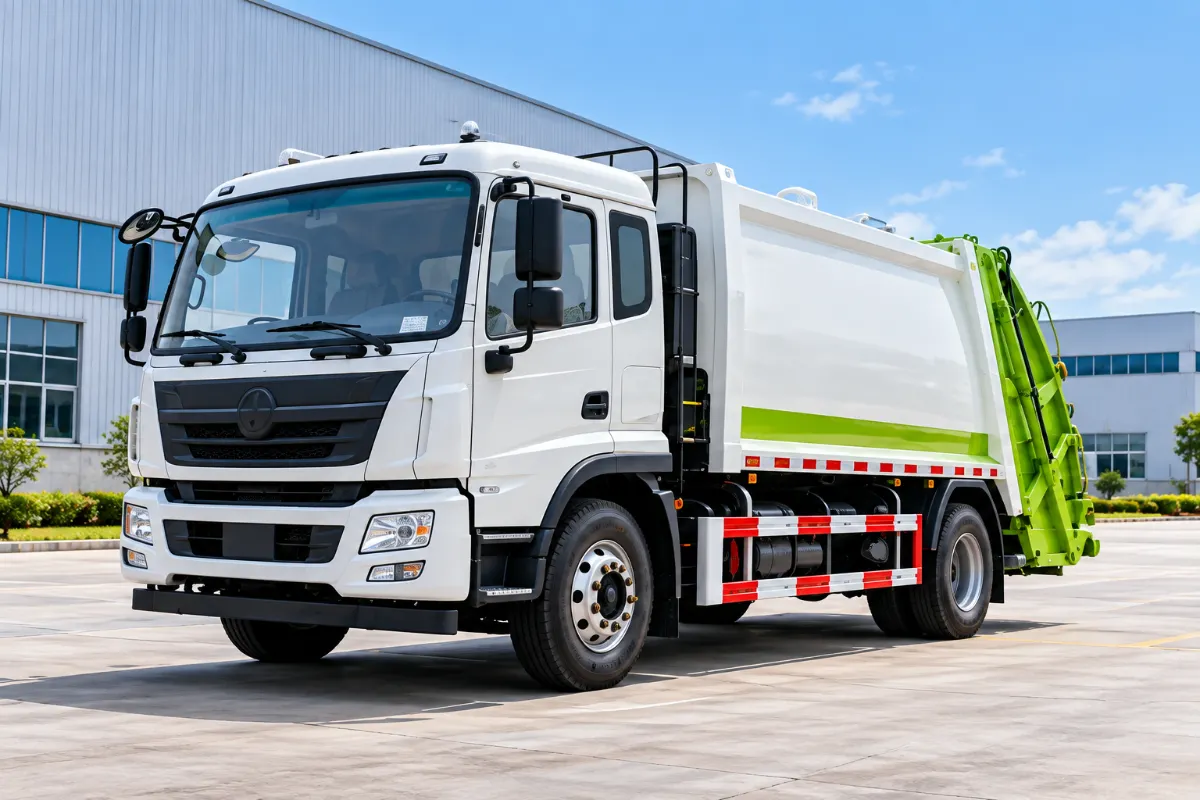
Garbage Compactor Truck Price by Capacity
Capacity is a useful starting point because it quickly narrows the chassis and body combination. It should not be treated as a guaranteed payload figure. A 12 CBM refuse compactor truck carries twelve cubic meters of body volume, but the weight it can legally carry depends on the complete vehicle weight, axle ratings, body weight, equipment, and actual waste density.
4–6 CBM Garbage Compactor Truck Price
For a small new unit, I would normally use $13,000 to $22,000 as an early budgeting band. These trucks are commonly chosen when maneuverability matters more than maximum collection volume.
A small truck does not automatically mean a very cheap truck. If the buyer specifies a premium chassis, higher engine specification, automatic controls, multiple-bin compatibility, camera system, or extensive customization, the price can move noticeably higher.
8–10 CBM Garbage Compactor Truck Price
A practical planning range is roughly $17,000 to $29,000. This class can provide a useful balance between collection volume and maneuverability, which is why buyers frequently ask us to compare several chassis options around this body size.
At this capacity, the biggest quotation differences usually come from chassis selection, engine requirements, hydraulic component choices, and whether a bin lifter is included.
10–12 CBM Garbage Compactor Truck Price
For a new 10–12 CBM truck, I generally consider $20,000 to $34,000 a reasonable preliminary budgeting range before freight and destination-side costs.
This is also a category where buyers should pay close attention to usable payload. Increasing body volume without checking chassis GVW and axle loads can create a truck that looks attractive on a specification sheet but cannot use its full theoretical volume with dense waste.
14–16 CBM Garbage Compactor Truck Price
A 14–16 CBM configuration commonly requires a heavier chassis and more substantial body structure. A useful initial budget is approximately $25,000 to $42,000, depending on the full specification.
Hydraulic system capacity, rear hopper design, discharge equipment, chassis power, axle arrangement, and optional lifting equipment become increasingly important in this category.
18–20+ CBM Garbage Compactor Truck Price
For heavy-duty units, I would normally begin budgeting around $30,000 to $55,000 or more. A high-spec truck can exceed that range, especially where the chassis, engine, transmission, safety package, loading equipment, or compliance requirements are more demanding.
The wrong way to buy this size is simply to ask for “the cheapest 20 CBM truck.” The better question is whether the chassis can support the body, equipment, crew, fluids, and expected waste payload without creating an axle-loading problem.
You can review typical body-size categories and configuration options on our garbage compactor truck product page.
Rear Loader, Side Loader, or Another Configuration?
The loading method can change both acquisition cost and daily operating cost. For many mixed collection routes, a rear loader remains a straightforward solution. Crews can load bags manually or use a compatible bin lifter. The body and hydraulic system are relatively easy to understand, and the configuration can handle varied collection points.
A side loader can make sense when containers are consistently positioned and the loading interface is standardized. More automation generally means additional cylinders, controls, structural components, sensors, and engineering, so the purchase price can be higher than a simple rear-loading arrangement.
| Configuration | Price Effect | Best Question to Ask |
|---|---|---|
| Rear loader | Usually the simplest starting point | Will the hopper and lifter match our collection method? |
| Side loader | Can increase with automation | Are our containers positioned consistently and mechanically compatible? |
| Front-loading configuration | Usually requires more specialized equipment | What container dimensions and lifting points must be handled? |
| Project-specific system | Engineering and equipment dependent | Can the supplier provide a written interface drawing before production? |
If you are still deciding between different waste collection vehicle types, our garbage truck selection page provides a broader comparison.
The Quoted Truck Price Is Not the Final Project Cost
This is the part of garbage compactor truck price planning that buyers most often underestimate. A factory quotation may be only one line in the full procurement budget.
I recommend calculating the project in layers:
- Vehicle price: chassis, compactor body, standard equipment, and agreed options.
- Origin-side handling: inland movement, loading preparation, required documentation, and inspection when applicable.
- Main transportation: vessel or other contracted transport charges.
- Cargo insurance: where included or purchased separately.
- Arrival charges: terminal handling, customs services, storage if delays occur, and related fees.
- Duties and taxes: determined by the applicable tariff treatment and jurisdiction.
- Final delivery: transport from the arrival point to your depot or operating site.
- Compliance and registration: inspections, modifications, certification, plates, or other requirements that apply to the vehicle.
- Startup inventory: filters, hydraulic seals, hoses, sensors, electrical items, and other planned spare parts.
A simple formula is:
Total acquisition budget = truck + options + logistics + insurance + duties/taxes + clearance + final delivery + compliance + initial spare parts.
A Simple Cost Example
Suppose a buyer receives a hypothetical $28,500 quotation for a mid-size rear loader. The required lifter and additional equipment add $1,850. Origin-side handling and inspection add $1,200. Main transport and insurance are estimated at $5,500, arrival handling at $2,200, and a starter spare-parts package at $1,500.
| Truck | $28,500 |
| Options | $1,850 |
| Handling and inspection | $1,200 |
| Transport and insurance | $5,500 |
| Arrival-side handling | $2,200 |
| Initial spare parts | $1,500 |
| Planning subtotal | $40,750 |
That example deliberately excludes duties, taxes, registration, and any required vehicle modifications because those costs depend on the individual transaction. It also should not be treated as a freight quotation. The point is that a $28,500 truck does not necessarily represent a $28,500 project.
Trade terms matter here. Incoterms® define responsibilities for delivery, costs, and risk, but a three-letter term should never replace a detailed written scope. ICC identifies eleven Incoterms® 2020 rules, including EXW, FCA, FOB, CIF, DAP, and DDP.[5] Always put the named place and exact commercial scope in the contract.
Body Capacity and Payload Are Not the Same Thing
One purchasing mistake I see repeatedly is selecting a refuse compactor truck by body volume alone. A larger box looks more productive, but the truck still has to remain within its permitted vehicle and axle weights.
Waste density changes from route to route. Dry packaging, mixed household refuse, wet organic material, commercial waste, and dense industrial refuse can produce very different payloads in the same body.
Compaction changes volume; it does not make weight disappear. A powerful hydraulic compaction system can fill the usable body efficiently, but the legal or engineered weight limit still controls how much material the vehicle should transport.
Before finalizing a garbage compactor truck price, I want to know:
- Expected waste type.
- Approximate waste density if known.
- Daily or shift collection volume.
- Number of stops.
- Distance to the unloading point.
- Road width and turning restrictions.
- Maximum permitted vehicle and axle weights.
- Whether the route favors volume, payload, or maneuverability.
That information often saves more money than negotiating a few hundred dollars from the truck price. It prevents the more expensive mistake of buying the wrong vehicle class.
Specifications That Change Garbage Compactor Truck Price
Chassis Class
The chassis determines the foundation of the truck. A larger GVW class typically means heavier axles, larger tires, stronger frame components, a larger engine, and higher acquisition cost.
Do not upgrade the chassis simply because a larger model sounds more durable. A heavier truck can also increase fuel use, tire cost, turning radius, and operating expense. Match it to the job.
Engine and Transmission
Engine power should be considered together with GVW, route grades, stop frequency, PTO operation, and maintenance support. More horsepower is not automatically better if it adds cost without improving the duty cycle.
The transmission choice can also affect the garbage compactor truck price. More important than the initial difference is whether drivers and maintenance technicians can support the selected drivetrain over the service life of the vehicle.
Drive Configuration
A 4×2 chassis generally has a different purchase and operating profile from a heavier 6×4 configuration. The correct choice depends on gross weight, traction needs, road conditions, body size, and payload.
Emission Requirement
The required engine and after-treatment system can significantly affect both vehicle cost and service requirements. Do not accept a cheaper engine specification until registration eligibility and maintenance support have been confirmed.
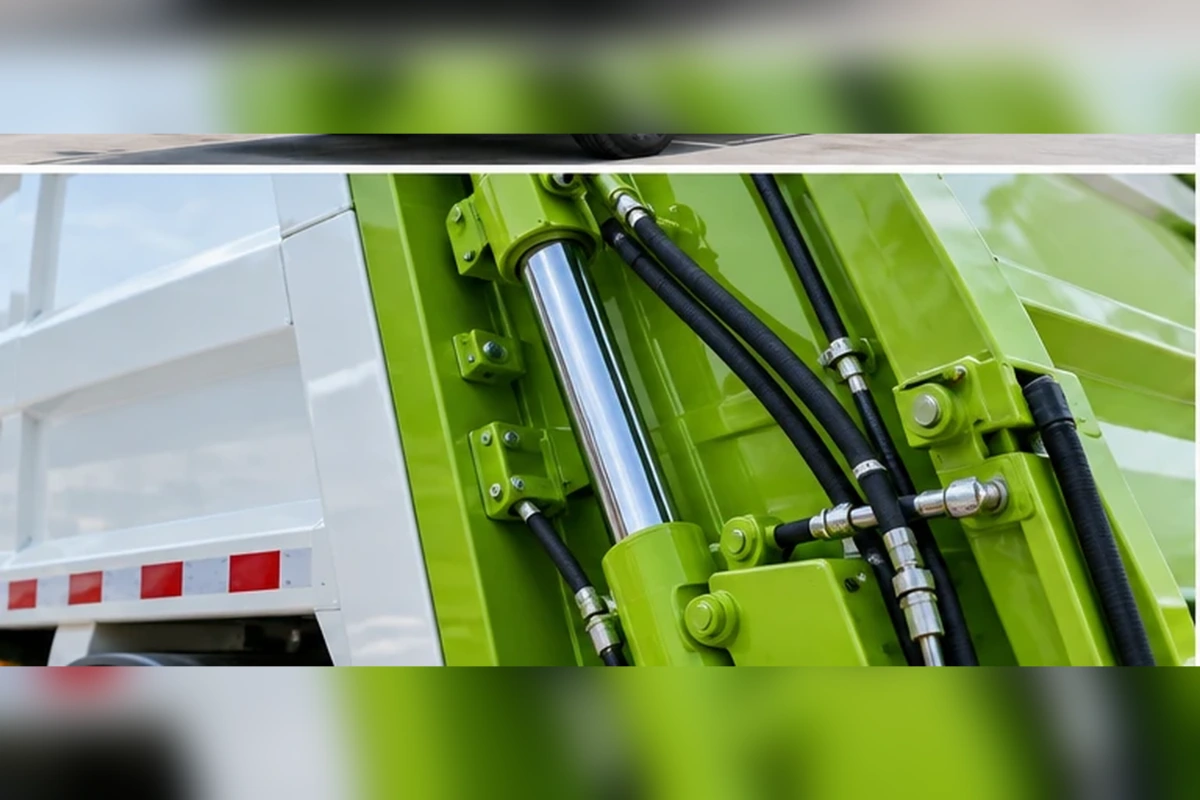
Hydraulic System
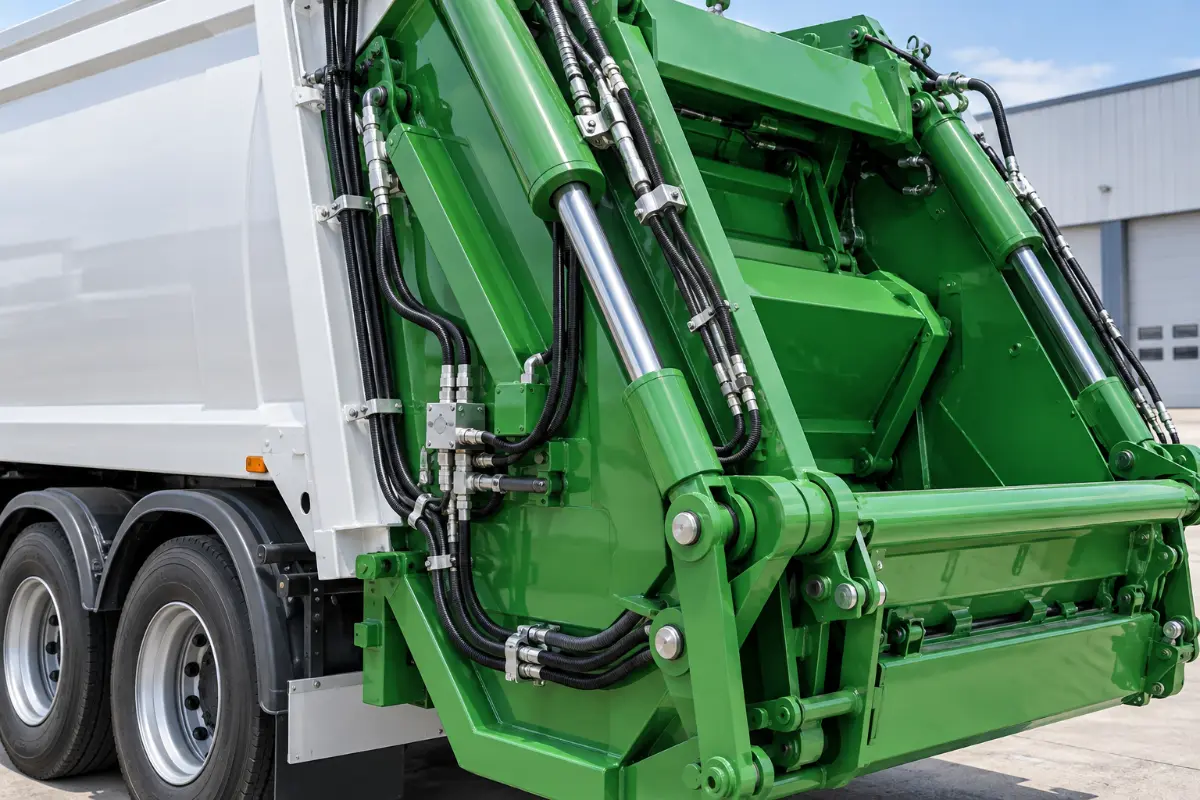
The hydraulic system is the working heart of a compactor body. Pump, cylinders, control valves, hoses, fittings, oil reservoir, filters, PTO arrangement, pressure settings, and operating sequence deserve careful attention.
When I compare two refuse compactor truck quotations, I want more than the phrase “hydraulic compaction system.” I want the supplier to identify the major components, operating logic, control locations, safety interlocks, and manual procedures.
Body Construction
Ask about the floor, side panels, hopper wear areas, rear frame, discharge panel, welds, mounting points, paint preparation, and corrosion protection. A headline body capacity does not show how the body is constructed.
More steel is not automatically better either. The body must balance durability against tare weight. An unnecessarily heavy body can reduce available payload.
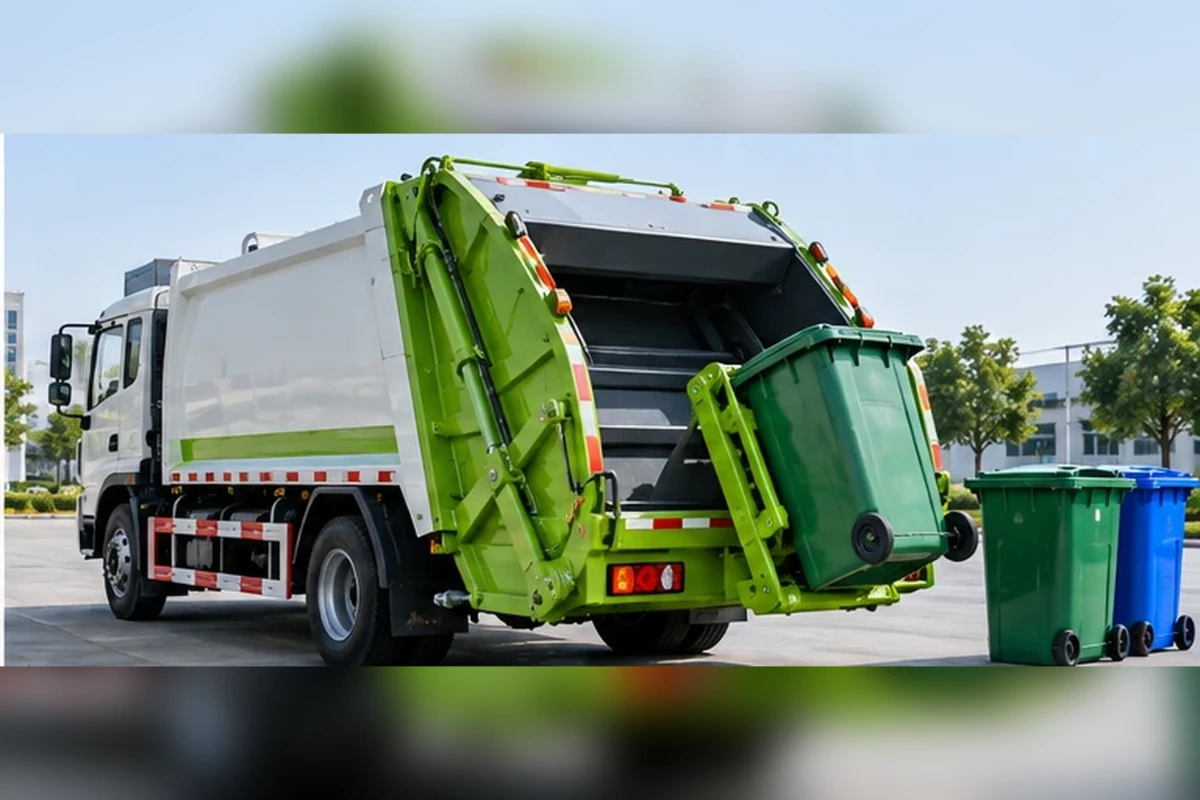
Bin Lifter
This is one of the most common sources of specification errors. Saying “240-liter bin” or “1100-liter bin” is useful, but capacity alone may not define the lifting interface.
Before production, provide photographs, outside dimensions, lifting points, lid arrangement, and any applicable container standard. If several bin types are used on one route, list all of them.
Cameras, Alarms, and Controls
Rear cameras, work lights, reversing alarms, emergency-stop devices, control interlocks, warning beacons, and additional sensors all add cost. They should be evaluated as working equipment rather than decorative options.
A low garbage compactor truck price achieved by deleting necessary safety equipment is not a meaningful saving.
Safety Belongs in the Purchasing Specification
A refuse collection truck works around pedestrians, crew members, traffic, moving hydraulic mechanisms, reversing operations, and repeated stop-and-go activity. That makes safety equipment a procurement issue, not something to consider after delivery.
NIOSH reported that 310 occupational fatalities associated with refuse trucks occurred from 2012 through 2022. The reported fatality rate was 22.6 per 100,000 waste collection workers, more than six times the 3.7-per-100,000 average cited for all industries combined in the same publication.[2]
NIOSH guidance emphasizes risks from being struck by the refuse vehicle, truck components, and other vehicles around the collection area. That is why I recommend discussing reversing visibility, alarms, cameras, crew positions, riding provisions, emergency controls, lighting, and operating procedures while the truck is still being specified.
ANSI/NWRA Z245.1-2026 revised the safety requirements for mobile waste and recyclable-material collection, transportation, and compaction equipment in March 2026.[3] Buyers working to a defined standard should state the required edition in the RFQ and purchase documents rather than assuming a supplier will select it automatically.
OSHA also highlights vehicle and ergonomic hazards in waste collection work, including risks associated with workers operating around collection vehicles and repeated manual handling.[4]
Why Compaction Performance Should Not Be Reduced to One Ratio
You will often see advertisements built around a single compression ratio. I do not recommend using that figure by itself to compare garbage compactor truck price or performance.
Actual collection results depend on the material entering the hopper, moisture content, waste density, operator procedure, blade movement, body geometry, hydraulic pressure, loading cycle, and allowable vehicle weight.
The questions I find more useful are:
- What waste stream was used to establish the stated compaction performance?
- How large is the loading hopper?
- How does the packing mechanism move the material?
- What limits the hydraulic pressure?
- What is the expected loading cycle?
- How is the load discharged?
- What protection prevents unsafe operation during the cycle?
- What remains serviceable if an electrical sensor fails?
The best refuse truck is not necessarily the one with the biggest advertised ratio. It is the one whose body, chassis, hydraulic system, and route requirements work together.
Waste Collection Demand Makes Operating Efficiency More Important
Waste collection equipment is becoming more important as overall waste volumes rise. UNEP’s 2024 Global Waste Management Outlook projects municipal solid waste generation increasing from approximately 2.1 billion tonnes in 2023 to 3.8 billion tonnes by 2050.[1]
The same assessment estimated the direct cost of waste management at $252 billion in 2020, rising to $361 billion when broader costs associated with poor waste management were included.[1]
For a fleet buyer, the practical lesson is simple: garbage compactor truck price should be evaluated against collection productivity, reliability, route suitability, downtime, fuel consumption, maintenance, and service life. Saving on the purchase price does not help if the truck repeatedly leaves the route unfinished.
For buyers planning several vehicle types as one collection system, our waste management vehicle overview explains how different truck configurations can fit different collection tasks.
What to Send When Requesting a Garbage Compactor Truck Quote
A vague RFQ usually produces a vague price. If someone sends me only “Need 10 CBM garbage truck, best price,” there are too many unanswered questions to make the number dependable.
A useful RFQ should include the following:
- Required quantity.
- Preferred body capacity.
- Expected payload if known.
- Waste type.
- Approximate daily collection volume.
- Required drive configuration.
- Preferred chassis or GVW class.
- Engine and emission requirement.
- Transmission preference.
- Required steering arrangement.
- Existing bin sizes and photographs.
- Required lifting mechanism.
- Camera, alarm, lighting, and safety requirements.
- Body color and fleet markings.
- Required documentation.
- Inspection requirements.
- Requested trade term.
- Delivery point.
- Required spare-parts package.
- Any tender specification that must be followed.
This may look like extra work before receiving a price, but it saves time later. It also makes competing quotations much easier to compare.
How I Compare Two Garbage Compactor Truck Quotations
I recommend putting every offer into one comparison sheet and refusing to compare totals until the specifications are aligned. This exposes missing equipment immediately.
| Item | Quote A | Quote B | What to Verify |
|---|---|---|---|
| Chassis model | Exact model and GVW | ||
| Engine | Model, power, emissions | ||
| Body capacity | Nominal body volume | ||
| Body construction | Material and critical plate details | ||
| Hydraulics | Pump, cylinders, valves, controls | ||
| Bin lifter | Exact compatible containers | ||
| Safety equipment | Camera, alarm, E-stop, interlocks | ||
| Spare parts | Included and recommended items | ||
| Warranty | Period, coverage, exclusions | ||
| Inspection | Tests and evidence provided | ||
| Trade term | Named place and cost responsibility | ||
| Lead time | Starts from what event? |
Once those rows match, the garbage compactor truck price comparison becomes much more meaningful.
A Practical Framework for Evaluating a Truck Supplier
I use six areas to judge whether a quotation deserves serious consideration. Price is one of them, but it is not the first.
| Area | Weight | What Good Looks Like |
|---|---|---|
| Specification clarity | 25% | Exact chassis, body, equipment, dimensions, and options are written down |
| Body and hydraulic system | 20% | Major working components and operating sequence are clear |
| Safety and compliance planning | 15% | Required equipment and applicable standards are discussed before ordering |
| Parts and warranty | 15% | Coverage, exclusions, parts identification, and claim process are documented |
| Documentation and delivery support | 15% | Required export, inspection, and shipping scope is defined |
| Commercial clarity | 10% | Price validity, payment, lead time, trade term, and exclusions are written clearly |
Where Chinese Truck Factory Fits This Framework
Chinese Truck Factory is worth considering when you want the discussion to begin with configuration rather than an unexplained headline price. Our sanitation vehicle information separates chassis, body volume, loading arrangement, bin-lifter compatibility, control equipment, inspection, warranty questions, and shipping requirements so buyers can define the truck before committing to a final specification.
That does not mean a buyer should skip due diligence. I still recommend checking the exact chassis, technical sheet, commercial terms, required vehicle documentation, warranty language, spare-parts scope, and inspection procedure for the specific unit being purchased.
The reason this approach works is simple: a manufacturer should be able to explain what is behind the garbage compactor truck price. If the seller cannot explain the chassis, body, hydraulic equipment, and included commercial scope, the price by itself is not enough information to make a purchasing decision.
Warning Signs Behind an Extremely Low Price
Low prices are not automatically bad. A simple specification, lower body capacity, economical chassis, or volume order can legitimately reduce cost. The problem is a low number that cannot be explained.
When a garbage compactor truck price is dramatically below the other offers, I would check the following before assuming it is a bargain:
- Is the chassis new?
- Is the model year identified?
- Does the engine meet the required emission specification?
- Is the advertised body size actually included?
- Is the bin lifter included or optional?
- Are cameras, alarms, and emergency controls included?
- Does the price include the complete hydraulic system?
- Are freight or origin handling charges excluded?
- Is there a written warranty?
- Are operating and parts documents available?
- Is the quotation based on one truck or a fleet quantity?
- How long is the price valid?
A $3,000 apparent saving can disappear quickly if the truck arrives without the lifting system, documentation, spare parts, or engine specification you expected.
Garbage Compactor Truck Price vs. Total Cost of Ownership
Purchase price is easy to measure because it appears on the invoice. Downtime is harder to see until the truck is already working.
For a collection vehicle, I would track total cost through at least these categories:
- Fuel or energy use.
- Engine and drivetrain service.
- Hydraulic oil and filters.
- Hoses and fittings.
- Cylinder seals.
- Pump and valve maintenance.
- Wear components in the hopper and packer mechanism.
- Tailgate and body seals.
- Electrical sensors and switches.
- Tires and brakes.
- Scheduled inspections.
- Unplanned downtime.
- Replacement vehicle or rental cost during downtime.
- Technician labor.
- Parts freight and inventory.
A cheaper hydraulic compactor truck can become expensive if its components are difficult to identify or replacements require long downtime. Conversely, paying for a highly sophisticated system that your maintenance team cannot service may also increase lifetime cost.
The most economical specification is usually the one that provides enough capability for the route while remaining easy to operate, inspect, maintain, and repair.
What Spare Parts Should Be Included in the Purchase Plan?
For one truck, it may not make sense to buy a warehouse full of components. It does make sense to identify high-use service items before the truck ships.
A practical starter list may include hydraulic filter elements, selected seals, common hoses or hose specifications, electrical relays, switches, sensors, lamps, fuses, and any body-specific wear items recommended for the selected model.
For a fleet order, the parts discussion should go deeper. Ask which components are common across the trucks. Standardizing pumps, valves, controls, filters, and body components where practical can reduce inventory complexity.
I also suggest asking for part numbers or enough technical identification to source replacements correctly. “Hydraulic valve for garbage truck” is not a useful parts description when a truck is down and the maintenance team needs the exact replacement.
A Better Way to Negotiate the Price
The strongest negotiation usually happens after the specification is stable. Before that point, reducing the price can simply encourage equipment to disappear from the quote.
Instead of saying, “Your garbage compactor truck price is too high,” ask more precise questions:
- Can you show which options are driving the price?
- Is there another chassis that meets the same GVW requirement?
- Can we standardize the body specification across multiple units?
- Which optional features can be removed without affecting the required operation?
- Does the quantity change the unit price?
- Can spare parts be bundled with the main order?
- Can inspection and documentation costs be combined?
- How long can the supplier hold the quoted chassis price?
This kind of negotiation reduces cost without blindly reducing capability.
How We Approach a Garbage Compactor Truck RFQ
When an inquiry reaches us, I prefer to work backward from the job the truck must perform.
Step 1: Understand the Collection Route
We start with waste volume, stop frequency, road access, disposal distance, working hours, and any unusual operating conditions. This tells us whether maneuverability or maximum body volume should receive more weight in the specification.
Step 2: Identify the Waste and Containers
Waste type affects payload planning. Bin type affects the loading system. Clear photographs and measurements of existing containers are often more useful than a generic description.
Step 3: Match the Chassis
The body cannot be selected independently from the chassis. GVW, wheelbase, engine, axle capacity, drive arrangement, steering, and serviceability need to work together.
Step 4: Define the Compactor Body
We then review body volume, rear hopper, compaction mechanism, discharge arrangement, lifter, hydraulic components, controls, safety equipment, and fleet-specific accessories.
Step 5: Confirm Commercial Scope
Before the number is treated as a final garbage compactor truck price, the buyer and supplier need to agree on quantity, trade term, delivery point, inspection, documentation, spare parts, warranty, and expected production schedule.
A Typical Specification Correction
Here is the kind of issue I would rather solve before an order is placed. Imagine a buyer initially requests the largest available body because the route produces a high daily waste volume. After reviewing the route, we learn that the truck must make frequent turns through restricted access points and return to the unloading facility more than once per shift anyway.
In that situation, simply increasing body volume may add chassis cost and reduce maneuverability without eliminating the second unloading trip. A smaller body on a better-matched chassis can be the more productive configuration.
The same logic applies in the opposite direction. If the route has good access but a long distance to the unloading point, increasing useful collection volume may reduce expensive non-collection travel.
I use this example because it shows why garbage compactor truck price cannot be optimized without understanding the route. The cheapest truck is not automatically the lowest-cost truck, and the biggest truck is not automatically the most productive one.
Need a price based on your actual specification?
Send the required capacity, quantity, chassis preference, waste type, bin information, and delivery point. We can review the configuration before preparing the quotation. Request a Garbage Compactor Truck Quote
Inspection Before Shipment
I would not make the final payment decision on photographs of a completed truck alone. The inspection scope should be defined before production or at least before the truck is completed.
A practical check can include chassis identification, body dimensions, major equipment, paint and markings, visible weld quality, hydraulic hoses and fittings, tailgate operation, bin-lifter operation, packing cycle, discharge cycle, controls, warning lights, cameras, alarms, emergency-stop functions, and visible leaks.
Where a specific container is critical to the project, testing with the intended bin type is even better. If the exact bin is unavailable, a dimensionally equivalent test arrangement may help verify the lifting geometry.
Keep inspection records with the sales contract and final specification. They provide a reference if questions arise after delivery.
New vs. Used Garbage Compactor Truck Price
A used truck can have a much lower purchase price, but age and mileage are only the beginning of the inspection. The compactor body may have completed far more working cycles than the chassis mileage suggests.
For a used refuse compactor truck, I would inspect hydraulic cylinder leakage, pump noise, operating pressure, hoses, packer wear areas, hopper floor, body corrosion, rear door sealing, mounting points, PTO operation, control wiring, sensors, chassis condition, brakes, suspension, tires, and engine history.
The critical question is not simply how much cheaper the used truck is. Ask what must be repaired during the first twelve months to make it dependable.
A new truck normally offers greater specification control and easier documentation. A used truck can make sense when the condition is well documented, the configuration fits the route, and parts support is available. The decision should be based on acquisition cost plus expected repair risk.
When Should You Choose a Smaller Truck?
Choose a smaller garbage compactor when access, turning radius, stop density, or site maneuverability limits the productivity of a larger vehicle. A small truck may also be useful as a satellite collection unit where waste is transferred to larger equipment.
The lower garbage compactor truck price is an advantage, but route speed can be the bigger benefit. A large truck that repeatedly struggles to enter collection points may lose more working time than it saves through higher body capacity.
When Is a Larger Truck Worth the Extra Cost?
A larger body becomes more attractive when the truck can use that volume without exceeding weight limits and when the unloading point is far enough away that reducing disposal trips creates real value.
Long non-collection travel is expensive. The truck is consuming fuel, driver time, tires, and maintenance life without collecting waste. If a larger body safely eliminates a trip, the higher garbage compactor truck price may have a reasonable payback.
The key word is safely. Volume should never be used as a substitute for proper payload calculation.
Questions to Ask Before Paying a Deposit
Before approving a purchase, I would want clear written answers to these questions:
- What is the exact chassis model?
- What is the vehicle GVW?
- What engine and transmission are included?
- What is the body capacity?
- What is the expected empty vehicle weight?
- What hydraulic equipment is included?
- What bins can the lifting system handle?
- What safety devices are included?
- What documents will be supplied?
- What inspection is included?
- What is the warranty period?
- What parts are excluded from warranty?
- Which spare parts should be ordered with the truck?
- What is the production lead time?
- When does the lead time begin?
- What is the Incoterms® rule and named place?
- How long is the garbage compactor truck price valid?
- What items are specifically excluded from the quotation?
If those answers are written into the quotation, technical specification, and contract, most of the common pricing misunderstandings become much easier to avoid.
Frequently Asked Questions
How much does a garbage compactor truck cost?
A practical budget for a new factory-direct garbage compactor truck is roughly $13,000 to $55,000 or more. Small basic trucks normally sit toward the lower end, while larger bodies, heavier chassis, advanced loading systems, higher engine specifications, and additional safety equipment increase the price. Freight, duties, taxes, registration, compliance work, and final delivery may be separate.
What is the average garbage compactor truck price for a 10–12 CBM truck?
For early budgeting, approximately $20,000 to $34,000 is a reasonable planning band for many new 10–12 CBM configurations. The final quotation depends on chassis, GVW, engine, transmission, emission specification, hydraulic equipment, lifter, controls, quantity, and commercial terms.
How much does a 20 CBM garbage compactor truck cost?
A new 18–20+ CBM truck can often be budgeted at around $30,000 to $55,000 or more. Heavy-duty chassis selection has a major effect on this category, so two 20 CBM trucks can have very different prices.
Why are some garbage compactor truck prices much lower online?
Online prices may represent a basic chassis, a different engine specification, a used truck, a body-only package, a quantity-based price, or a quotation that excludes lifting equipment, shipping, inspection, documentation, and other items. Treat a very low advertised price as the beginning of the specification review rather than the final project cost.
Does a larger compactor body always carry more waste?
No. A larger body provides more volume, but usable payload is limited by the complete vehicle weight and axle ratings. Dense waste can reach the truck’s weight limit before the body is physically full.
What affects garbage compactor truck price the most?
The major factors are chassis class, body capacity, engine and transmission, drive configuration, emission specification, body construction, hydraulic equipment, loading system, bin lifter, safety package, optional accessories, order quantity, and commercial delivery scope.
Is a rear loader cheaper than a side loader?
A straightforward rear loader can often have a lower starting cost than a more automated side-loading system because the latter may require additional structural components, hydraulic equipment, sensors, and controls. The exact difference depends on the level of automation and the chassis used.
Should I choose the cheapest chassis?
Not automatically. The chassis must provide the correct GVW, axle capacity, wheelbase, drivetrain, engine performance, braking system, and service support for the completed refuse truck. Saving money on an underspecified chassis can create payload, reliability, or registration problems later.
How do I get an accurate garbage compactor truck price?
Send the supplier your body capacity, quantity, expected waste type, chassis or GVW requirement, drive configuration, engine and emission requirement, existing bin information, required lifter, steering requirement, optional equipment, delivery point, and requested trade term. A tender sheet or reference specification is especially useful.
Should I buy spare parts with a new truck?
Usually, yes. The correct quantity depends on fleet size and service support, but having common filters, seals, electrical parts, selected hydraulic components, and body-specific wear items can reduce downtime. Ask the supplier for a recommended list for the exact truck.
How can I compare two refuse compactor truck quotations fairly?
Put both quotations into the same specification table. Compare chassis model, GVW, engine, transmission, body capacity, body construction, hydraulic system, lifter, safety equipment, spare parts, warranty, inspection, lead time, documentation, trade term, and exclusions before comparing the final price.
Does the garbage compactor truck price include shipping?
Not necessarily. It depends on the agreed trade term and named delivery point. Ask the supplier to identify exactly what transportation, handling, insurance, and documentation are included so you can calculate the complete acquisition budget.
How do I choose between a 6 CBM, 12 CBM, and 20 CBM truck?
Start with waste volume, density, road access, stop frequency, unloading distance, axle limits, and existing container system. A smaller truck may be more productive on restricted routes. A larger truck may save disposal trips when road access and legal payload allow it.
Final Buying Advice
If you remember only one thing from this guide, make it this: garbage compactor truck price should be compared only after the trucks have been brought to the same specification.
For early planning, roughly $13,000 to $55,000+ covers a broad range of new factory-direct compactor configurations, from small collection trucks to heavy-duty units. That range is useful for budgeting, but it is too broad for a purchase decision.
The next step is to define the body capacity, chassis GVW, waste type, route, bins, loading system, engine requirements, safety equipment, inspection, warranty, trade term, spare parts, and delivery scope. Once those details are fixed, the final garbage compactor truck price becomes much easier to evaluate.
I would rather buy a truck whose specification I can explain line by line than choose the lowest number on a search results page. In commercial vehicle purchasing, clarity before production is usually cheaper than correcting a mismatch after delivery.
Author and Review Note
This buying guide was prepared for Chinese Truck Factory from a manufacturer-side procurement perspective. The recommendations focus on chassis-body matching, hydraulic equipment, collection workflow, specification comparison, safety planning, commercial scope, inspection, spare parts, and lifecycle cost.
Price ranges in this article are budgeting references rather than offers or guaranteed transaction prices. Vehicle availability, component costs, freight, exchange rates, regulatory requirements, and project specifications can change. Always confirm the exact specification, compliance requirements, commercial terms, warranty, and final quotation before ordering.
References
- UNEP, Global Waste Management Outlook 2024. View source.
- NIOSH, Preventing Struck-by Injuries and Deaths When Working with Refuse Trucks, 2024. View source.
- ANSI Standards Action, March 13, 2026, final action for ANSI/NWRA Z245.1-2026. View source.
- OSHA, Waste Management and Recycling Safety Resources. View source.
- ICC, Incoterms® Rules. View source.