If you are sourcing garbage trucks for import, the short answer is this: the brand matters far less than the chassis-and-body combination behind the nameplate. Several Chinese manufacturers build refuse collection vehicles that hold up well in export markets, but the brands that consistently work for importers are the ones with stable chassis platforms, widely available driveline parts, and body builders who understand compaction hydraulics. In practice, most buyers end up choosing between a handful of established chassis brands paired with a specialized sanitation body. This guide walks through how to evaluate those brands against real collection duty cycles, payload limits, and total cost of ownership rather than marketing claims.
Why Brand Names Alone Don’t Decide a Garbage Truck Purchase
A refuse truck is a chassis plus a superstructure. The chassis comes from a heavy truck manufacturer. The compactor body, hopper, bin lifter, and hydraulic system usually come from a specialized upfitter. That split matters because two trucks with the same brand badge can perform very differently depending on which body was mounted and how the hydraulic system was specified.
When importers ask me which brand is “best,” the honest answer is that the question is framed wrong. A better question is: which chassis platform has parts support in my region, and which body builder can deliver a compactor matched to my waste stream? Those two answers usually point to a short list of realistic options.
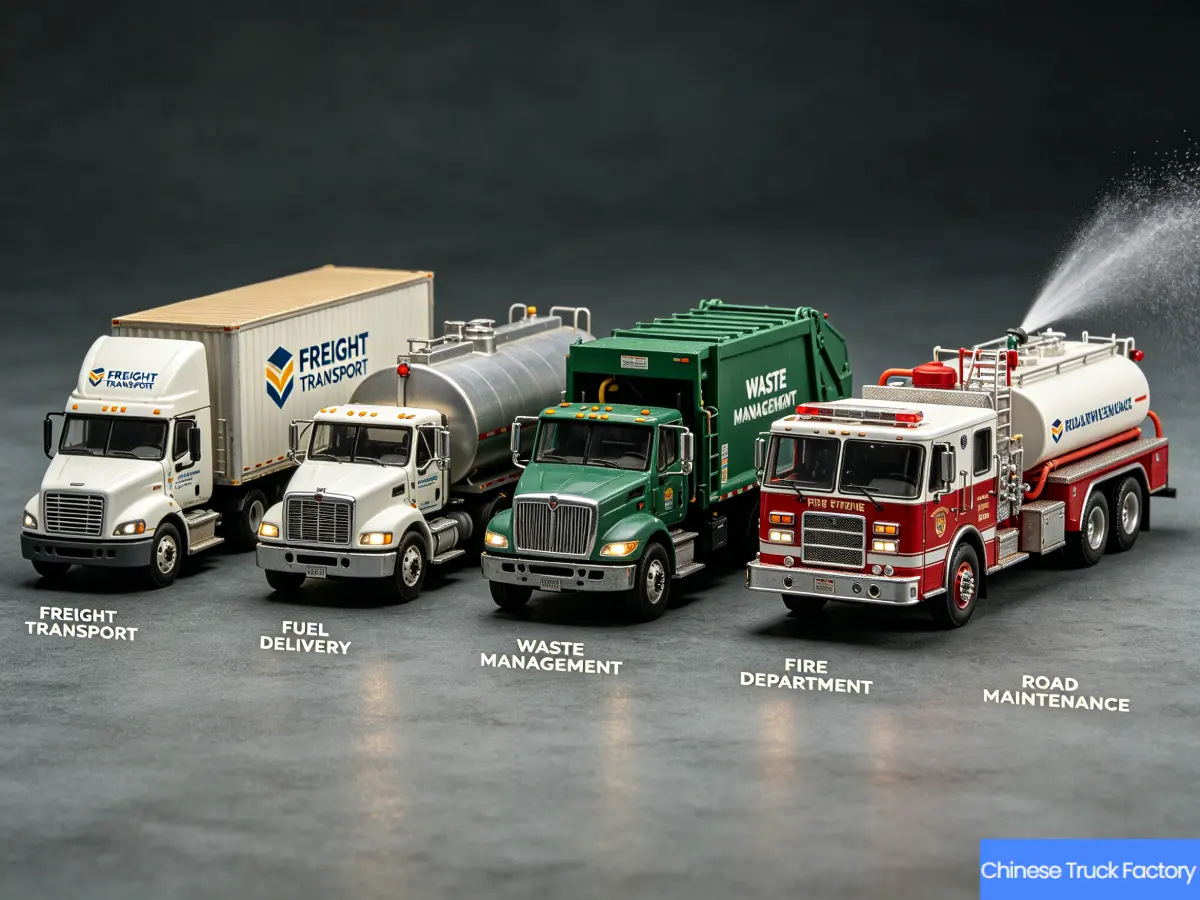
The Main Chinese Chassis Brands Used for Refuse Trucks
Most garbage compactor trucks exported from China are built on chassis from a small group of manufacturers. Each has a different reputation for parts availability, dealer network, and driveline serviceability in export markets.
Sinotruk / HOWO
HOWO is probably the most widely recognized Chinese heavy truck platform in export markets. The reason is not that it is technically superior to every competitor, but that the parts network is broader. WD615 and MC series engines, HW series transmissions, and standard rear axles mean a mechanic in many markets can service the truck without waiting weeks for a specialty part. For municipal refuse fleets that cannot afford long downtime, that matters more than a few extra horsepower.
SHACMAN
SHACMAN builds refuse chassis on the same general architecture as its construction and haulage trucks. The F3000 and X3000 platforms are common bases for compactor bodies. Buyers often choose SHACMAN when they already run SHACMAN trucks in other roles and want to keep their parts inventory and mechanic training consolidated.
FAW Jiefang
FAW has a long manufacturing history and a deep chassis range. For refuse work, the J6 and J7 platforms are frequently used. FAW engines and transmissions are generally well understood by service technicians who work on Chinese trucks, though parts distribution varies a lot by country.
Dongfeng
Dongfeng offers a wide spread of medium and heavy chassis, including some lighter options that suit smaller collection routes. Cummins-powered Dongfeng models are common in export configuration, which can be an advantage where Cummins service is already established.
Foton
Foton’s Auman series is used for a range of vocational trucks, including refuse. Foton has invested in Cummins partnerships, so some models carry Cummins engines that simplify parts sourcing in certain regions.
JAC, Beiben, SAIC Hongyan, CAMC, Dayun
These brands also appear in refuse truck configurations, often in specific markets or price brackets. They are worth considering when a local dealer already supports the brand, but they generally have narrower export parts networks than the top four or five names.
How to Compare Garbage Truck Brands on Real Criteria
Rather than rank brands, compare them on the factors that actually determine whether a truck earns its keep. Below is a framework that works for municipal fleets, private waste contractors, and importers building a resale inventory.
| Comparison Factor | What to Check | Why It Matters |
|---|---|---|
| Chassis parts availability | Engine, transmission, axle, brake parts stocked locally | Downtime cost usually exceeds the price difference between brands |
| Body builder quality | Steel grade, floor thickness, hydraulic component brands | Compactor body determines payload, cycle time, and repair frequency |
| Payload vs. body volume | Confirmed curb weight and legal axle loading | A large body on a light chassis may never reach legal capacity |
| Compaction ratio | Manufacturer test data or verified field performance | Affects trips per day and fuel per ton collected |
| Hydraulic system design | Pump, valve, cylinder sourcing and serviceability | Hydraulic failures are a leading cause of refuse truck downtime |
| Bin lifter compatibility | Matches the bin types used on your route | Wrong lifter means manual loading and lower productivity |
| Leachate management | Tank size, drain points, corrosion protection | Poor leachate handling accelerates body corrosion |
| Cab ergonomics and visibility | Entry height, mirror coverage, right-side visibility | Stop-start collection routes demand good visibility and easy cab access |
| Emission configuration | Euro 2 through Euro 6 or equivalent | Must match destination country import and registration rules |
| Warranty scope | Chassis vs. body coverage, parts vs. labor | Split warranty between chassis and body builder creates disputes if unclear |
Matching the Truck to the Collection Duty Cycle
Before comparing brands, define the job. A refuse truck that works well on a dense urban route with short stops and frequent bin lifts is not the same truck that works well on a rural route with long distances between stops. The duty cycle drives everything: axle configuration, body volume, compaction system, and even the choice between a rear loader, side loader, or front loader.
Urban Collection Routes
Short distances, frequent stops, tight streets, and mixed waste. Here, maneuverability and hydraulic cycle time matter more than highway speed. A 4×2 or 6×4 chassis with a well-matched rear loader is typical. Bin lifter compatibility with local bin standards is critical.
Suburban and Rural Routes
Longer distances between stops, higher average speed, and often lower waste density. A 6×4 chassis with a larger body may make sense, but the extra body volume only pays off if the compaction system can actually densify the waste enough to use it.
Commercial and Industrial Waste
Higher density waste, sometimes with construction debris or bulky items. Compaction forces are higher, hydraulic components are stressed harder, and body wear is faster. Steel grade and floor thickness become primary selection criteria.
Payload, GVW, and Legal Weight: The Numbers Buyers Get Wrong
Three numbers get confused constantly in refuse truck specifications, and the confusion leads to trucks that cannot legally carry the load they were sold to carry.
- Curb weight (tare): the empty truck with body, hydraulic oil, fuel, and driver.
- Payload: the weight of waste the truck can legally carry.
- GVW / GVWR: the maximum total weight of the loaded vehicle.
Payload is not GVW. It is GVW minus curb weight. A compactor body with a large volume adds curb weight, which reduces payload. A heavier hydraulic system, thicker body steel, and larger bin lifter all subtract from the weight you can actually carry.
Body volume is not payload either. A 20 m³ compactor body does not automatically carry 20 tonnes. Waste density varies widely. Mixed municipal waste might compact to a fraction of that. Construction debris might exceed it. The only reliable method is to estimate the compacted density of the waste stream and multiply by the usable body volume, then check that result against the legal payload.
Final legal payload is always governed by the destination country’s axle weight limits, gross vehicle weight limits, and registration rules. A truck that is legal in one market may be overloaded in another with the same body.
Buyers evaluating payload limits should read a detailed breakdown of GVW, curb weight, and legal payload before finalizing a specification. The same logic applies to refuse trucks.
Compactor Body Design: Where Most of the Value Sits
The chassis is important, but the compactor body is where a garbage truck earns or loses money. Two trucks with identical chassis can have very different productivity depending on the body.
Compaction System
Rear loader compactors use a sweep-and-slide or rotary mechanism to compress waste into the body. The compaction ratio determines how much waste fits per trip. Higher ratios mean fewer trips, but they also mean higher hydraulic pressures and more wear. The right ratio depends on the waste stream, not on a spec sheet maximum.
Hopper and Bin Lifter
The hopper size and lifter type must match the bins on the route. A lifter designed for one bin standard will not work with another. This is one of the most common specification errors in export orders, and it is expensive to correct after delivery.
Hydraulic System
Pump displacement, valve configuration, cylinder quality, and oil cooling all affect cycle time and reliability. On stop-start collection routes, the hydraulic system runs almost continuously. Heat buildup is a real problem in hot climates, and undersized coolers lead to premature seal and oil failure.
Leachate Tank and Corrosion Protection
Waste contains moisture. Leachate collects at the bottom of the body and is highly corrosive. A properly sized leachate tank, drain points, and internal coating extend body life significantly. Buyers in humid or coastal markets should pay particular attention to this.
For a closer look at how compactor bodies are configured across different capacities, this guide on garbage compactor truck capacity from 6 m³ to 20 m³ covers the practical ranges.
Rear Loader vs. Side Loader vs. Front Loader
The loading method is a bigger decision than the brand. It determines route design, labor requirements, and cycle time.
| Loader Type | Best Use Case | Main Advantage | Main Limitation |
|---|---|---|---|
| Rear loader | Mixed municipal waste, variable bin sizes | Flexible, handles bulky items, widely supported | Slower cycle time, higher labor input |
| Side loader | Residential routes with standardized bins | Fast one-person operation, lower labor cost | Limited to compatible bin types, less flexible |
| Front loader | Commercial and industrial waste, large containers | High volume per stop, fewer trips | Requires large containers, higher chassis weight |
For buyers comparing these options in more depth, a side-by-side breakdown of rear loader vs. side loader garbage trucks covers the trade-offs in route design and payload.
Fuel Consumption: What Actually Drives It
Refuse trucks have some of the worst fuel economy of any vocational vehicle, and for good reason. They idle constantly, accelerate and brake hundreds of times per day, and carry heavy loads at low average speeds. Any single fuel consumption figure quoted without context is close to meaningless.
Actual fuel consumption depends on:
- Gross vehicle weight and payload per trip
- Number of stops per route and idle time
- Hydraulic system duty cycle
- Average operating speed and traffic conditions
- Road gradient and surface
- Ambient temperature and air conditioning use
- Driver behavior and route familiarity
- Axle ratio and tire specification
- Engine calibration and emission configuration
For fleet planning, the useful metric is not liters per 100 km. It is fuel consumed per tonne of waste collected, or fuel per route. That number lets you compare configurations honestly and build a realistic operating budget.
Buyers who want a structured approach to reducing consumption across a fleet can review these practical methods for reducing heavy truck fuel consumption, many of which apply directly to refuse operations.
Maintenance and Reliability: Downtime Is the Real Cost
A refuse truck that is off the road for a week costs far more than the repair itself. Missed collections, overtime, and temporary rentals add up quickly. Reliability planning should focus on what keeps the truck in service.
Daily Inspection
- Tire condition and pressure
- Hydraulic oil level and visible leaks
- Hydraulic hose condition
- Lights and warning indicators
- Air system pressure
- Compactor controls and emergency stop function
Periodic Inspection
- Engine oil and filters
- Transmission and differential oil
- Brake system and air dryer
- Suspension and wheel bearings
- Hydraulic oil condition and filter restriction
- PTO engagement and drive line
- Compactor mechanism pins and bushings
- Body hinge points and tailgate seals
- Leachate tank and drain valves
Specific service intervals should always follow the chassis manufacturer’s and body builder’s manuals for the exact model. Do not rely on generic intervals, because engine, transmission, and hydraulic specifications vary significantly between configurations.
Common Failure Patterns
When a compactor body rises slowly or fails to complete a cycle, the diagnostic sequence should be systematic:
- Check hydraulic oil level and temperature
- Check filter restriction indicator
- Verify PTO engagement and pump drive
- Test pump output pressure against specification
- Inspect control valve operation
- Check cylinder for internal leakage
- Inspect hoses for internal collapse or restriction
- Confirm the load is within rated capacity
Jumping straight to replacing the pump or cylinder is expensive and often wrong. The fault is frequently in the control valve, the PTO, or the oil itself.
Total Cost of Ownership for a Garbage Truck
The purchase price is the smallest part of the real cost over a truck’s service life. A proper TCO comparison includes:
- Purchase price, including body and options
- Freight and marine insurance
- Import duties, taxes, and port charges
- Registration and compliance costs
- Fuel or electricity
- Tires
- Scheduled maintenance
- Unscheduled repairs
- Spare parts inventory
- Downtime cost
- Driver and loader labor
- Residual value at disposal
Two trucks with the same purchase price can have very different TCO. A cheaper chassis with poor parts availability may cost more over five years than a slightly more expensive one with a strong local parts network. A body with a higher compaction ratio may reduce trips per day enough to pay back its extra cost within a year.
For a structured view of how these costs interact, this breakdown of operating cost per kilometer uses the same logic that applies to refuse fleets.
Destination Market Compliance: What to Confirm Before Ordering
There is no such thing as a globally compliant garbage truck. Every destination market has its own rules, and they change. Before finalizing a specification, confirm:
- Required emission standard (Euro level or local equivalent)
- Homologation or type approval requirements
- Registration eligibility for imported vehicles
- Axle weight and gross vehicle weight limits
- Overall vehicle dimensions and turning radius rules
- Left-hand drive or right-hand drive requirement
- Lighting, marking, and reflective tape requirements
- Braking and safety system requirements
- Fuel quality and DEF/AdBlue availability
- Local service capability for the chosen chassis and body
Regulations around emissions, vehicle type approval, and import age limits are highly market-specific and change frequently. Buyers should verify current requirements with the destination country’s transport ministry or customs authority, or with a qualified local importer, before placing an order. Do not assume that a configuration that works in one market will be accepted in another.

Shipping and Import Considerations
Garbage trucks are large, heavy, and often too tall or wide for standard containers. The shipping method depends on vehicle dimensions, weight, quantity, route, and destination port.
- RoRo: common for complete, driveable trucks. Lower handling risk, but schedule-dependent.
- Breakbulk: used when RoRo space is unavailable or when multiple units ship together.
- Flat rack: possible for some configurations, but height and width limits apply.
- Container: usually only practical for disassembled or smaller units.
Inland transport at both origin and destination, port handling, marine insurance, customs clearance, and import taxes all add to the landed cost. When comparing supplier quotes, always confirm whether the price is EXW, FOB, CFR, or CIF. A lower FOB price with expensive destination charges can end up costing more than a higher CIF quote.
For buyers new to importing, this guide on how heavy trucks are shipped overseas from China explains the practical differences between shipping methods.
Where Chinese Truck Factory Fits in the Selection Process
Most importers do not buy a chassis and a body separately. They buy a complete refuse truck from a supplier who coordinates chassis sourcing, body fabrication, hydraulic integration, and export documentation. That coordination is where projects succeed or fail.
When evaluating a supplier, the criteria that actually predict a good outcome are:
- Ability to match chassis and body to the stated duty cycle
- Transparent specification sheets with confirmed weights and dimensions
- Clear split of warranty responsibility between chassis and body
- Experience with the destination market’s compliance requirements
- Spare parts planning included in the order
- Export documentation and shipping coordination
- Pre-shipment inspection and photo/video verification
Chinese Truck Factory works within this model, coordinating chassis selection, sanitation body configuration, and export logistics for international buyers. The value is not in a single brand badge. It is in matching the right chassis platform and compactor body to the specific waste stream, route, and legal weight limits of the destination market.
Buyers who want a specification review before committing to an order can request one through the contact page, ideally with details on waste type, route length, bin type, daily tonnage, and destination country already prepared.
What to Prepare Before Requesting a Quotation
Suppliers cannot quote accurately without real operating data. The more of the following you can provide, the more useful the quotation will be:
- Destination country and port
- Application: municipal, commercial, industrial, or mixed
- Waste type and estimated density
- Required body volume
- Bin type and loading method
- Daily tonnage or number of households served
- Route length and number of stops per day
- Road conditions and gradient
- Preferred drive configuration
- Steering side (LHD or RHD)
- Required emission standard
- Quantity and delivery timeline
- Required options: bin lifter, wash system, camera, telematics
Vague inquiries produce vague quotes, and vague quotes are the leading cause of disputes after delivery.
Frequently Asked Questions
Which Chinese garbage truck brand is best for export markets?
There is no single best brand. HOWO, SHACMAN, FAW, Dongfeng, and Foton all have track records in export markets, but the right choice depends on parts availability in your country, the body builder’s quality, and how well the configuration matches your collection route. Buyers should prioritize local service support over brand reputation alone.
How do I choose the right body volume for a garbage compactor truck?
Start with the waste density and the daily tonnage you need to collect. Estimate the compacted density, divide the required tonnage by that density to get the usable volume, then confirm the chassis can legally carry the resulting payload. Do not choose body volume based on the largest number on a spec sheet.
What axle configuration should I use for a refuse truck?
4×2 suits lighter urban routes. 6×4 is the most common configuration for municipal collection because it balances payload, maneuverability, and axle loading. 8×4 is used where higher payload is needed but adds curb weight, tire cost, and turning radius. The correct choice depends on legal axle limits in the destination market.
How much does a Chinese garbage truck cost?
Price depends on chassis brand, engine, emission standard, body volume, compaction system, bin lifter, and options. It also depends on whether the quote is EXW, FOB, CFR, or CIF. Any price quoted without these details is not comparable to another supplier’s quote. Buyers should request itemized specifications alongside the price.
How do I confirm compliance for my destination country?
Check emission standards, homologation or type approval requirements, registration eligibility, axle weight limits, and steering side requirements with the destination country’s transport ministry or a qualified local importer. Regulations change, so verify current rules before ordering rather than relying on general information.
How are garbage trucks shipped from China?
Most complete refuse trucks ship by RoRo or breakbulk. Flat rack and container shipping are possible for some configurations but are limited by vehicle dimensions. The right method depends on truck size, quantity, route, and destination port capability.
What spare parts should I order with a new garbage truck?
At minimum, plan for hydraulic filters, hydraulic hoses, seals, PTO components, brake parts, and common engine and transmission service items. The exact list depends on the chassis and body model. A spare parts package agreed at the time of order is usually cheaper and faster than sourcing parts after a failure.
Final Thoughts
Choosing a garbage truck brand for export is really a question of matching three things: the chassis platform with the best parts support in your market, the compactor body that fits your waste stream and bin system, and the legal weight limits of your destination country. Brands matter, but only as a proxy for those three factors.
The parameters most worth confirming before you sign anything are the confirmed curb weight, the legal payload under local axle rules, the compaction ratio of the body, the bin lifter compatibility, and the split of warranty responsibility between chassis and body. Buyers who skip these steps often end up with a truck that looks right on paper but cannot legally carry the load it was sold to carry, or cannot lift the bins on the route.
The most suitable truck is therefore not necessarily the one with the largest body or the most horsepower. It is the configuration that matches the payload, route, legal weight limits, maintenance capability, and expected operating cycle with the fewest compromises.