If you are searching for a china refuse compactor truck for sale, the most important decision is not simply which truck looks good in a product photo. You need a complete vehicle specification that matches your waste type, daily collection volume, bin system, payload target, route conditions, maintenance capability, and registration requirements. A properly configured garbage compactor truck should carry useful payload without exceeding axle limits, compact waste consistently, work with your existing containers, and remain easy to service after delivery. As a source truck supplier, we normally start with the operating conditions first and select the chassis and compactor body second. This guide explains how I would compare rear loader garbage trucks, hydraulic compaction systems, chassis options, safety equipment, quotations, inspections, spare parts, and supplier support before approving an order.

What Are You Actually Buying When You Order a Refuse Compactor Truck?
A refuse compactor truck is more than a truck chassis with a large box behind the cab. The finished vehicle combines the chassis, subframe, refuse body, hopper, packer mechanism, hydraulic system, power take-off, electrical controls, container lifter, discharge system, safety devices, lighting, cameras, and supporting equipment into one working machine.
That distinction matters when comparing a china refuse compactor truck for sale. Two suppliers may both describe a vehicle as a 12 m³ garbage compactor truck, yet the completed trucks can be very different. One may use a lighter chassis with limited remaining payload. Another may have a stronger frame but a heavier refuse body. Hydraulic pump sizing, cylinder layout, hopper construction, lifter geometry, controls, corrosion protection, and service access can also differ.
I therefore recommend comparing the completed vehicle specification rather than a single headline number. Body volume is useful, but it should never replace GVWR, curb weight, axle ratings, payload allowance, overall dimensions, wheelbase, hydraulic specifications, container interface, and the operating sequence.
Before we configure a truck, these are the questions that matter most:
- What type of waste will the truck collect?
- How much waste is collected during a normal shift?
- Is the waste mostly light packaging, mixed household refuse, wet organic material, or dense commercial waste?
- What bins, carts, or containers are already in use?
- How many collection stops are made each day?
- How far is the disposal or transfer point from the route?
- What is the maximum permitted vehicle and axle weight?
- How much turning room is available?
- Which engine and emission configuration can be registered?
- Which parts must be available for routine maintenance?
Answering these questions first normally gives a much better result than starting with “I need the biggest truck available.”
Rear Loader, Side Loader, or Another Collection Configuration?
Many buyers searching for a china refuse compactor truck for sale are actually looking for a rear loader. It is a flexible configuration because workers can load bags, loose refuse, carts, and some larger items through a rear hopper. The exact loading arrangement can also be matched with a container lifting device.
A side loader can make more sense when the collection system is built around standardized roadside carts. The key question is not which system is more advanced. It is which system matches the route.
| Configuration | Best Fit | Main Buying Questions | Common Mistake |
|---|---|---|---|
| Rear loader | Mixed collection routes, bagged waste, carts, manual collection | Hopper size, lifter type, packer cycle, worker controls, rear visibility | Ordering a generic lifter without checking the actual bins |
| Side loader | Standardized cart collection | Cart size, reach, lifting geometry, road-side clearance | Assuming every cart uses the same lifting interface |
| Special configuration | Industrial facilities, dedicated waste streams, unusual containers | Waste density, container design, loading height, discharge method | Choosing a standard municipal body for a specialized application |
Our garbage compactor truck and sanitation vehicle configurations include rear-loading, side-loading, and project-specific options. I would use those categories as the starting point, not as the final specification.
Body Capacity Is Important, but Payload Is More Important
One of the most common mistakes I see in refuse truck inquiries is treating cubic capacity as if it were the same thing as useful payload. It is not.
A 16 m³ body can physically contain more material than an 8 m³ body, but that does not automatically mean the completed vehicle can legally carry twice as much waste. Wet food waste, glass, soil contamination, and other dense materials may reach the truck’s weight limit long before the body is full.
When evaluating a china refuse compactor truck for sale, start with a simple weight calculation:
Available payload = permitted gross vehicle weight − completed empty vehicle weight − crew, equipment, and other operating loads.
For a truck that has not yet been built, the estimate should account for the chassis, subframe, compactor body, hydraulic system, lifter, fuel, optional equipment, spare wheel, crew, tools, and any other permanently or routinely carried equipment.
Axle loading needs a separate check. A truck can remain below its total permitted weight and still overload an individual axle because the waste mass is not distributed evenly. Wheelbase, body position, rear overhang, hopper geometry, and where the compacted load accumulates all influence axle weight.
A practical capacity comparison
| Body Size Band | Typical Reason to Consider It | What to Verify Before Ordering |
|---|---|---|
| About 5–8 m³ | Restricted access, lighter collection work, shorter routes | Payload after body installation, turning circle, hopper opening, bin compatibility |
| About 8–12 m³ | Balanced capacity and maneuverability | GVWR, axle loads, wheelbase, disposal frequency, hydraulic cycle |
| About 12–16 m³ | Higher daily collection volume and longer routes | Actual waste density, completed curb weight, road access, unloading area |
| About 16–20+ m³ | High-volume collection where larger chassis are practical | Axle ratings, dimensions, turning space, legal weight, chassis reserve capacity |
These are selection bands, not promises that every body size can be fitted to every chassis. That is why I would never approve a china refuse compactor truck for sale based only on the advertised cubic-meter figure.
If route planning is the main concern, our guide on how many bins fit in a garbage truck gives additional context on why body volume, waste density, and compaction have to be considered together.
Do Not Treat the Compaction Ratio as a Fixed Number
“What is the compaction ratio?” sounds like a simple question, but I would be cautious with any supplier that gives one impressive number without explaining the test conditions.
The real amount of waste that fits into the truck depends on what goes into the hopper. Dry cartons behave differently from food waste. Loose plastic packaging behaves differently from wet mixed refuse. Bulky objects create empty spaces. Dense material may cause the truck to reach its weight limit before the body reaches its volume limit.
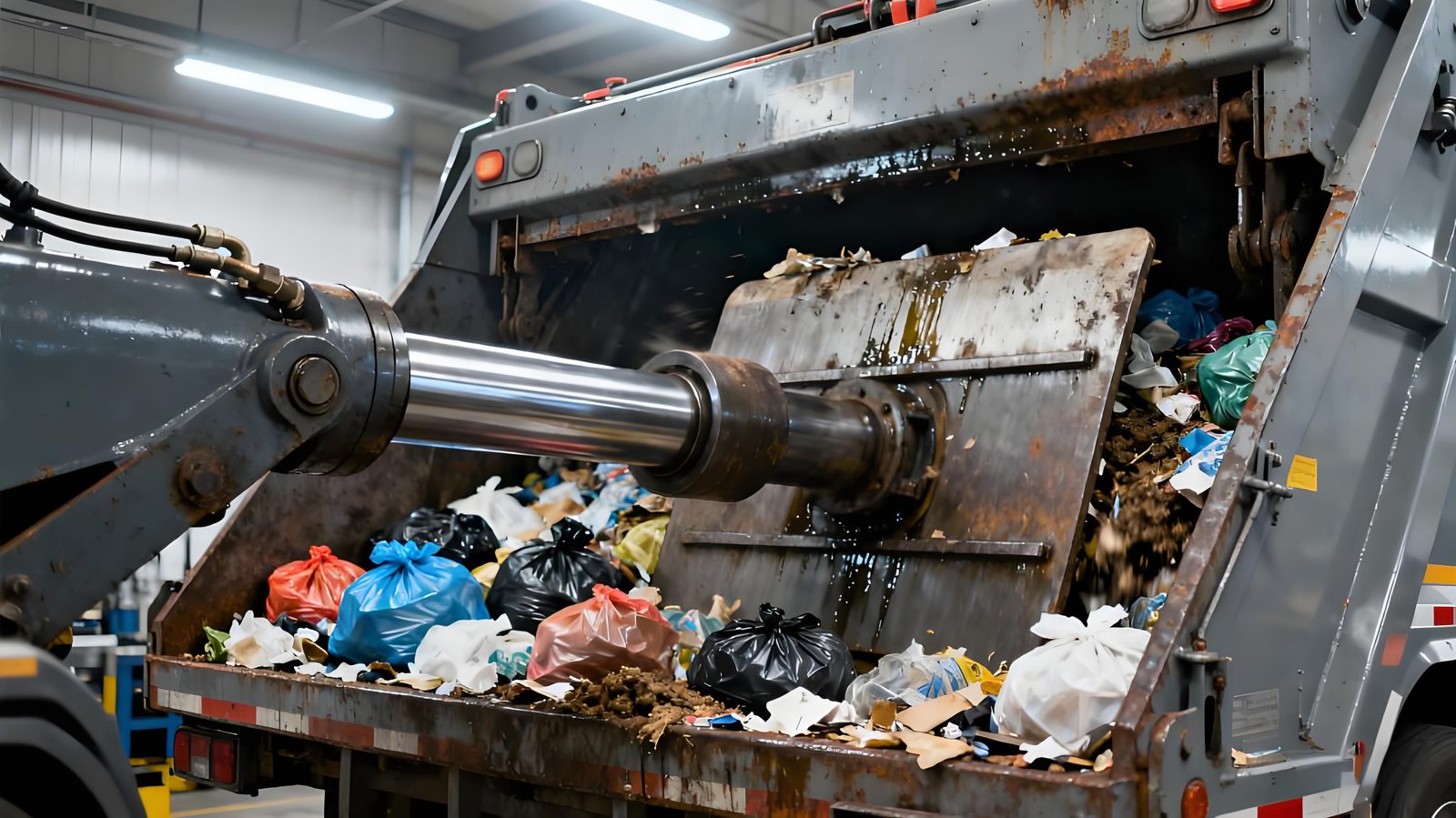
The hydraulic refuse compactor system matters, but hydraulic pressure by itself does not tell the whole story. Cylinder bore, cylinder stroke, lever geometry, packer area, pump output, valve settings, engine speed, PTO behavior, body structure, and control logic all affect the working cycle.
When comparing a china refuse compactor truck for sale, I prefer asking for the following information:
- Hydraulic pump manufacturer and model, when available.
- Operating pressure and relief pressure.
- Main cylinder sizes and arrangement.
- Estimated packing cycle time under stated conditions.
- Hydraulic tank capacity.
- Hose and fitting specifications.
- Filter location and replacement information.
- PTO engagement method.
- Manual emergency controls.
- Access points for inspection and maintenance.
More pressure is not automatically better. A system has to balance packing force, structural strength, oil temperature, pump life, hose life, cycle speed, and safe operation.
Why the Chassis Must Be Chosen Together With the Compactor Body
A common procurement mistake is to select the chassis first and ask someone to fit the largest possible body afterward. I prefer working in the opposite direction: define the job, estimate the required payload and body size, then match a chassis with enough weight and dimensional capacity.
For a china refuse compactor truck for sale, the chassis decision should include at least GVWR, axle ratings, wheelbase, engine output, transmission, steering configuration, braking system, suspension, tires, PTO compatibility, service access, emission configuration, and parts availability.
Engine output
A refuse truck does not spend its whole working day cruising steadily. Frequent stopping, starting, PTO operation, hydraulic cycles, and low-speed maneuvering create a demanding duty cycle. I therefore pay attention to usable low-speed torque and drivetrain suitability rather than choosing an engine solely because it has the highest horsepower figure.
Wheelbase
A short wheelbase can improve maneuverability, but body installation and axle distribution still need to work. A longer wheelbase can provide more room for a larger body but may increase the turning area required. The correct answer depends on the finished vehicle rather than a chassis catalog alone.
Transmission
The transmission should suit the intended stop-and-go cycle, driver training, maintenance capability, and PTO arrangement. Automatic or automated options may reduce driver workload, while a manual drivetrain may be preferred in some fleets because the maintenance system is already set up for it. There is no universal answer.
Brakes and tires
The braking and tire specification should be selected for the completed vehicle weight, axle loads, duty cycle, and operating environment. Refuse vehicles can spend much of the day accelerating and braking, so the final specification should be reviewed as a complete working truck.
The Most Useful Data Point May Be Your Own Weighbridge Ticket
If you already operate refuse vehicles, one of the most useful things you can send a manufacturer is not a brochure. It is operating data from your existing fleet.
When I am trying to understand a buyer’s real requirement for a china refuse compactor truck for sale, a few actual route records can answer questions that no generic specification sheet can answer.
Useful records include:
- Empty truck weight.
- Loaded truck weight.
- Front and rear axle weights, if available.
- Number of stops per shift.
- Average bins collected per shift.
- Typical bin capacity.
- Distance traveled per shift.
- Number of unloading trips.
- Average working hours.
- Typical waste composition.
- Periods when the route regularly exceeds normal volume.
Three to five normal working days are much more useful than an estimate such as “we collect a lot of garbage.”
There is good reason to focus on the working cycle. One real-world study indexed by the Environmental Protection Agency followed six roll-off refuse trucks over 870 miles while they collected 165 tons of material. The trucks averaged 16 mph, fuel economy averaged 4.4 mpg, and roughly half of operating time was spent idling.[1] This was a study of roll-off refuse trucks, not a universal fuel-consumption benchmark for compactor trucks, but it illustrates an important point: refuse operations are dominated by duty cycle. Highway fuel economy figures alone do not tell you what a truck will cost to operate on a collection route.
How to Match the Truck to Your Garbage Bins
Container compatibility is one of the easiest things to verify before production and one of the most frustrating things to correct afterward.
Never order a lifter just because the quotation says “standard bin lifter.” There is no useful universal definition of standard unless both parties agree on the actual container.
For any china refuse compactor truck for sale that requires mechanical bin handling, I recommend sending:
- Bin capacity.
- Overall height, width, and depth.
- Clear photographs from the front, rear, side, and lid area.
- A photograph showing the lifting interface.
- Dimensions of trunnions, comb bars, pockets, or other pickup points.
- Estimated maximum loaded bin weight.
- Material type, such as plastic or steel.
- A short video showing how the existing collection truck lifts the bin, if available.
I also like a photograph with a measuring tape visible. It sounds basic, but it removes a surprising amount of uncertainty.
If a project uses several container sizes, list all of them before the lifter is designed. A mechanism that works well with one cart does not automatically handle another safely.
Safety Equipment Is Part of the Truck Specification, Not an Accessory List
Refuse collection places workers close to a moving vehicle, often behind or beside the truck. Safety should therefore be addressed during specification instead of being treated as a few optional items added at the end.
NIOSH reported that 310 occupational fatalities were associated with refuse trucks from 2012 through 2022. According to the agency, 74% of the refuse-truck-related deaths in that period involved transportation incidents. NIOSH recommends measures that address struck-by hazards, worker visibility, backing procedures, vehicle controls, and safe work around refuse trucks.[2]
Those numbers are why I would review the following items before approving a china refuse compactor truck for sale:
- Rear-view or work-area camera system.
- Audible reverse warning.
- High-mounted work lights where required.
- Clearly marked emergency-stop controls.
- Controls positioned so operators can see the working area.
- Guards around moving or pinch-point areas.
- Warning labels appropriate for the operating team.
- Steps and handholds designed for secure access where applicable.
- Control logic that prevents unsafe operating sequences where required.
- Emergency manual procedures documented in the operator information.
A camera does not replace a safe backing procedure, and an emergency stop does not replace training. The truck, operator procedure, maintenance program, and worksite rules have to function together.
Maintenance on the compactor mechanism also requires strict isolation procedures. No worker should enter or work inside a hopper, body, or hazardous mechanism based only on a control switch being “off.” The applicable lockout and maintenance instructions for the specific vehicle must be followed.
How I Compare Refuse Compactor Truck Construction
A polished exterior is easy to photograph. The areas that influence long-term ownership are often less obvious.
When reviewing a china refuse compactor truck for sale, I pay more attention to the structure, hydraulic routing, wear areas, electrical protection, and maintenance access than to decorative features.
Body structure
Ask which steel grades and thicknesses are used in the floor, side panels, hopper, packer, and other high-load or high-wear areas. Do not assume the entire body uses one material or one thickness.
More steel is not automatically better. Excess weight reduces payload. The goal is a structure that puts adequate material where the loads and wear occur without turning unnecessary body weight into permanently lost cargo capacity.
Welding and fabrication
Look for consistent weld appearance, clean joints, sensible reinforcement, protected edges, and good fit between panels. A pre-shipment inspection should include close photographs instead of only full-vehicle beauty shots.
Hydraulic hose routing
Hoses should not rub against sharp edges or moving structures through the normal working cycle. Check clamping, bend radius, protection near hot components, and accessibility for replacement.
Electrical system
Refuse collection exposes the truck to water, dirt, vibration, and repeated washing. Connectors, junction boxes, cable routing, switches, sensors, and control panels should be installed with that environment in mind.
Leachate management
Mixed waste can contain liquids. Ask how the body, hopper, seals, drains, and collection points are designed to manage leakage. The answer will depend on the exact body design and waste stream, but it deserves attention before production.
Service access
A component that can be inspected from the outside is usually easier to maintain than one hidden behind multiple covers. Filters, grease points, hydraulic tanks, valves, electrical boxes, and frequently serviced components should be identified on the final truck.
What Does a China Refuse Compactor Truck for Sale Cost?
Buyers naturally want a price, but a useful quotation needs a defined specification. Public listings for refuse trucks often show huge price differences because they are not describing equivalent vehicles.
A small chassis with a basic compactor body cannot be compared directly with a heavier chassis, larger body, different engine configuration, upgraded bin lifter, camera package, spare-parts kit, and additional documentation.
For that reason, I would not use a broad online price range as a purchasing budget. When you request a china refuse compactor truck for sale, ask suppliers to price the same specification and the same delivery terms.
What normally changes the price?
- Chassis brand and model.
- GVWR and axle configuration.
- Engine and emission specification.
- Transmission.
- Body capacity and structure.
- Hydraulic component selection.
- Bin lifting equipment.
- Cameras, lighting, alarms, and other safety equipment.
- Custom body dimensions.
- Special paint and fleet markings.
- Spare-parts package.
- Documentation and inspection requirements.
- Order quantity.
- Shipping method and delivery terms.
A better way to compare quotations
| Quote Item | What Should Be Written Clearly |
|---|---|
| Chassis | Model, GVWR, wheelbase, engine, transmission, axles, steering configuration |
| Refuse body | Rated body volume, material specification, loading configuration |
| Hydraulics | Pump, operating pressure, major cylinders, control arrangement |
| Lifter | Compatible bin type and dimensions |
| Safety equipment | Camera, alarm, lights, emergency controls, requested interlocks |
| Documentation | Technical sheet, manuals, parts information, required certificates |
| Commercial terms | Quantity, included equipment, delivery term, payment terms, production schedule |
| Warranty | Chassis coverage, body coverage, exclusions, claim procedure |
If Supplier A looks cheaper but excludes the lifter, camera, spares, inspection, or part of the delivery cost, it is not actually a lower comparable price. Normalize the quotation before making a decision.
Need to compare a real refuse truck configuration?
Review body, chassis, loading options, hydraulics, and customization before requesting a final price.View Waste Collection Solutions
Total Cost Matters More Than the Factory Invoice
The factory invoice is only one part of the ownership decision. A low purchase price can become expensive if the truck has the wrong payload, creates extra disposal trips, uses difficult-to-source parts, requires excessive downtime, or arrives without the documents needed to put it into service.
When evaluating a china refuse compactor truck for sale, I recommend building a simple ownership worksheet with these categories:
- Truck purchase price.
- Freight and transport insurance.
- Import charges and local taxes where applicable.
- Registration or inspection costs.
- Initial spare-parts stock.
- Preventive maintenance.
- Tires.
- Hydraulic oil and filters.
- Fuel or energy.
- Driver and crew labor.
- Unplanned downtime.
- Disposal trips.
- Major repairs.
- Expected service life.
Then estimate cost per working day or cost per ton collected. This gives you a much more useful comparison than purchase price alone.
For example, imagine Truck A costs less but carries less legal payload, forcing one additional disposal trip on busy days. Truck B costs more but completes the same route without that extra trip. The higher purchase price may be recovered through lower mileage, fewer labor hours, and better route completion.
The reverse can also happen. Buying an oversized truck for a low-volume route may increase acquisition cost, tire cost, fuel use, and access problems without producing additional revenue or useful collection capacity.
A Practical Factory Evaluation Framework
If several suppliers can build a china refuse compactor truck for sale, I would not rank them by website appearance or the lowest quote. I would compare them against the same purchasing framework.
| Evaluation Area | What a Buyer Should Expect |
|---|---|
| Application matching | Supplier asks about route, waste, bins, payload, and working conditions before finalizing the truck. |
| Specification clarity | Chassis and body details are written clearly rather than described with vague marketing terms. |
| Payload awareness | Completed truck weight and axle capacity are considered together with body volume. |
| Container compatibility | Actual bin dimensions and lifting interface are confirmed. |
| Inspection process | Buyer can define inspection points for hydraulic, electrical, body, and optional equipment. |
| Documentation | Technical information and requested documents are discussed before shipment. |
| After-sales planning | Warranty responsibilities, parts information, and maintenance documentation are defined. |
| Quote transparency | Price is tied to a defined vehicle configuration and order quantity. |
Why Chinese Truck Factory Fits This Purchasing Framework
Chinese Truck Factory belongs in the comparison when a buyer wants a source supplier able to configure the truck around a defined waste-collection requirement.
I would not ask you to choose us simply because you searched for a china refuse compactor truck for sale. A supplier should earn the order by giving you enough information to check whether the vehicle fits the job.
Our refuse and sanitation vehicle program is structured around the same practical criteria discussed above. We can review rear-loader and side-loader requirements, chassis selection, body volume, steering configuration, hydraulic compaction, bin lifting equipment, controls, cameras, warning equipment, fleet markings, inspection requirements, spare-parts needs, and other project-specific details.
More importantly, the final vehicle should be defined in the quotation and technical specification. We do not believe a generic website number should replace a model-specific specification.
For procurement teams comparing rear-loader suppliers, our article on how to evaluate rear loader refuse truck manufacturers offers another checklist. I recommend using the evaluation criteria rather than relying on any single marketing claim.
The RFQ Information That Gets You a Better Quote
If you want a useful quotation for a china refuse compactor truck for sale, a one-line message such as “send 10 cbm garbage truck price” gives the supplier very little to work with.
A stronger request can still be short. I would include the following:
- Truck type: rear loader, side loader, or another design.
- Preferred body size: or estimated waste collected per shift.
- Waste type: household, commercial, organic, recyclable, or mixed.
- Bin information: capacity, dimensions, photographs, lifting interface.
- Required payload: if already defined.
- Chassis preference: if your fleet requires a particular platform.
- Steering configuration: state the required arrangement.
- Engine/emission requirement: based on registration rules.
- Quantity: one unit, trial units, or fleet procurement.
- Optional equipment: cameras, lighting, alarms, air conditioning, spare tire, or other items.
- Required documents: list these before the quotation is finalized.
- Delivery term: ask for a clearly defined commercial term.
An example of a useful inquiry
We need a rear-loading refuse compactor truck for mixed household waste. Preferred body size is approximately 12 m³. The truck must work with our existing 240-liter and 1,100-liter containers. We will provide container photographs and dimensions. Please recommend a suitable chassis and confirm completed vehicle GVWR, estimated curb weight, payload, overall dimensions, wheelbase, engine, transmission, hydraulic system, lifter configuration, safety equipment, warranty, recommended spare parts, production schedule, and delivery terms.
That message gives an engineer enough information to start a real discussion.
A Worked Procurement Example: Why Specification Comes Before Price
Here is an example of how I would work through an inquiry. This is an illustrative purchasing case, not a claimed customer result.
Assume a buyer initially asks for a 16 m³ china refuse compactor truck for sale. The buyer believes the largest body in the budget will minimize disposal trips.
After reviewing the route, however, several facts appear:
- The existing collection vehicle rarely carries more than a moderate daily tonnage.
- The waste contains a high proportion of wet material.
- The truck enters several restricted collection points.
- The route uses two different container sizes.
- The disposal facility is close enough for more than one unloading trip if required.
The larger body may no longer be the obvious answer. Wet waste could cause the truck to reach its weight limit before the 16 m³ body is full. A heavier body also reduces available payload. The longer completed vehicle could make access more difficult.
A smaller configuration with adequate legal payload may complete the same route more efficiently.
Now change the facts. Suppose the waste is mostly light packaging, collection points are easy to access, and the disposal point is far from the route. In that case, a larger body may reduce costly return trips.
That is why I resist giving a universal answer to “What size refuse truck should I buy?” The correct size comes from the route.
What to Inspect Before the Truck Ships
Pre-shipment inspection is one of the most valuable parts of an overseas truck order because it is much easier to correct a specification issue before the vehicle moves than after delivery.
For a china refuse compactor truck for sale, I would create the inspection checklist from the signed specification rather than using a generic checklist downloaded from the internet.
Identity and chassis
- Confirm chassis model and identification information.
- Confirm engine and transmission against the order.
- Photograph chassis and vehicle identification plates.
- Confirm steering configuration.
- Check tires and spare tire if included.
Completed dimensions
- Overall length.
- Overall width.
- Overall height.
- Wheelbase.
- Relevant rear overhang.
- Loading height where the specification requires it.
Body and hopper
- Inspect visible welding and structure.
- Check doors, seals, covers, and locking points.
- Inspect paint and exposed surfaces.
- Confirm fleet markings and requested color.
Hydraulic function test
- Engage and disengage the PTO.
- Run the loading mechanism through complete cycles.
- Operate the compaction mechanism.
- Operate the discharge system.
- Check for visible hydraulic leakage.
- Confirm emergency-stop functions included in the order.
Bin lifter
If possible, test the lifter using the actual container type or a verified matching sample. A video of an unrelated bin being lifted does not prove compatibility with your containers.
Electrical and safety equipment
- Lights.
- Warning beacon if specified.
- Reverse alarm.
- Camera and monitor.
- Work-area lighting.
- Control panels and switches.
Documentation
Before release, confirm that the documentation agreed in the contract is ready. A truck can be mechanically correct and still create delays if required documents were treated as an afterthought.
Ask for a Functional Inspection Video, Not Just a Walkaround
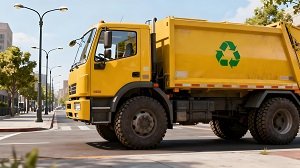
Pictures are useful, but a working refuse compactor truck should also be shown operating.
For a china refuse compactor truck for sale, my preferred inspection video would include:
- A continuous exterior walkaround.
- Cab and dashboard.
- Engine start.
- PTO engagement.
- Rear control station.
- One complete loading and packing cycle.
- Bin lifting operation when a lifter is ordered.
- Emergency-stop operation.
- Body discharge sequence.
- Camera display.
- Warning lights and reverse alarm.
- Hydraulic tank, pump, valve area, and major cylinders.
- Identification plates.
When possible, ask for the truck identification to appear in the same video. That reduces the chance of confusing test footage from one vehicle with another unit in a multi-truck production batch.
Spare Parts Should Be Planned Before the Truck Arrives
Every refuse truck contains wear parts. That is normal. The goal is not to pretend maintenance will never be required; it is to know which parts are likely to be needed and how you will obtain them.
Before ordering a china refuse compactor truck for sale, ask the supplier for a recommended spare-parts list based on the exact truck configuration.
Depending on the design, the list may include items such as:
- Hydraulic filters.
- Selected seals.
- Frequently used hydraulic hoses or hose specifications.
- Electrical relays and fuses.
- Common sensors or switches.
- Lighting components.
- Body wear items.
- Lifter wear items.
- Chassis filters and scheduled-service parts.
Do not simply buy a large box of miscellaneous spares. I would rather have a smaller kit tied to the exact pump, valve, cylinder, electrical, chassis, and lifter specifications on the delivered truck.
Part identification matters as much as quantity. Ask for part numbers, photographs, component labels, or drawings where available. When a replacement is required several years later, “the black hydraulic valve near the back” is not a useful procurement description.
Warranty Questions to Settle Before You Pay the Deposit
“One-year warranty” sounds clear until something fails and nobody agrees which part of the truck is responsible.
A completed china refuse compactor truck for sale normally combines a chassis and specialized body equipment, so I recommend confirming responsibility in writing.
Ask:
- When does the warranty period begin?
- Is the chassis warranty separate from the body warranty?
- Which wear items are excluded?
- Who approves a warranty claim?
- What evidence is needed?
- Does the buyer need to return the failed component?
- Who pays freight for replacement parts?
- What happens if incorrect maintenance contributed to the failure?
- Which service records should the operator retain?
A clear process is worth more than a vague promise of “lifetime support.”
Documents to Confirm Before Ordering
Document requirements vary by the vehicle, chassis, engine, registration system, import process, and intended use. This is an area where buyers should confirm requirements with their responsible authority or qualified import professional before manufacturing begins.
I would not assume that a certificate used for one project automatically applies to another china refuse compactor truck for sale.
Prepare a document checklist before signing the order. Depending on the transaction, you may need commercial documents, vehicle technical information, chassis or engine data, packing information, shipping documents, certificates, manuals, or other project-specific paperwork.
The supplier should know the required list early enough to confirm what can be provided. Discovering a missing requirement after the truck has been built is the wrong time to solve it.
Red Flags I Would Not Ignore
Most purchasing problems give some warning before the order is placed. If I were sourcing a china refuse compactor truck for sale, these would make me slow down and ask more questions:
- A price is offered before anyone asks about the required truck specification.
- The supplier refuses to identify the chassis model.
- Only body volume is shown, with no GVWR or weight information.
- A very high compaction ratio is advertised without explaining conditions.
- The lifter is called “universal” but no one asks for bin dimensions.
- The quotation uses unclear wording such as “standard configuration” for important items.
- The supplier cannot explain what the warranty covers.
- The promised specification changes repeatedly between messages.
- Inspection is limited to polished exterior photographs.
- Hydraulic component information is unavailable.
- The seller promises that the truck will meet every registration requirement without first reviewing the actual requirements.
- Payment information changes unexpectedly.
- The company name receiving payment does not match the agreed contracting structure and no satisfactory explanation is provided.
The goal is not to eliminate every risk. It is to make the important technical and commercial facts visible before money changes hands.
A Simple Due-Diligence Checklist Before You Choose a Supplier
Before I approved a supplier for a china refuse compactor truck for sale, I would want a complete answer to the following checklist.
| Question | Why It Matters |
|---|---|
| Is the exact chassis identified? | You need a real vehicle specification, not a generic photo. |
| Is completed vehicle weight discussed? | Body volume without payload can be misleading. |
| Are the actual bins documented? | Lifter compatibility must be engineered before production. |
| Is the hydraulic system defined? | It affects performance, maintenance, and spare parts. |
| Are safety requirements written into the order? | They should not depend on assumptions. |
| Can inspection requirements be agreed in advance? | Acceptance should be measured against the signed specification. |
| Are warranty responsibilities clear? | Chassis and body support can involve different components. |
| Is there a spare-parts plan? | Downtime often depends on parts identification and availability. |
What Information Should Be Written Into the Sales Contract?
The final contract should turn the quotation into a measurable obligation. Do not rely on chat messages scattered across several weeks of negotiation.
For a china refuse compactor truck for sale, I would attach or reference the approved technical specification and include the key commercial conditions.
Important items may include:
- Quantity.
- Exact chassis specification.
- Refuse body configuration.
- Body capacity.
- Lifter configuration.
- Hydraulic system requirements.
- Safety and electrical equipment.
- Paint and markings.
- Included spare parts.
- Required documents.
- Inspection and acceptance procedure.
- Price and currency.
- Payment milestones.
- Delivery terms.
- Production or delivery conditions.
- Warranty.
- Handling of specification changes.
If something is important enough to influence your decision, it is important enough to write down.
How to Prepare the Truck for Long-Term Service
Buying the correct truck is only the beginning. A refuse compactor operates in a demanding environment, and daily inspection has a large effect on reliability.
The exact maintenance schedule must follow the chassis and body manuals for the specific vehicle, but fleet managers should normally build a routine around fluid levels, leaks, hoses, grease points, tires, lighting, alarms, cameras, structural damage, hydraulic filters, and unusual noises or movement.
For any china refuse compactor truck for sale, I recommend obtaining the maintenance information before the vehicle enters service so the workshop is not creating procedures after a problem occurs.
Drivers should also have a simple defect-reporting process. A small hydraulic leak, damaged hose clamp, loose electrical connector, or unusual packer movement is easier to handle when reported early.
Never bypass safety devices simply to keep a route moving. A refuse truck combines heavy structures, hydraulic pressure, moving mechanisms, vehicle traffic, and workers on foot. Shortcuts around safety controls can create consequences far greater than the value of completing one additional route.
The Short Version: How I Would Buy a Refuse Compactor Truck
If I were buying a china refuse compactor truck for sale today, I would use this sequence:
- Measure the real collection route.
- Record actual waste tonnage and container types.
- Choose the loading method.
- Estimate useful body volume.
- Calculate required legal payload.
- Select a chassis that supports the completed vehicle.
- Confirm the hydraulic system.
- Match the lifter to actual bins.
- Write the safety equipment into the specification.
- Confirm registration and document requirements.
- Compare equivalent quotations.
- Agree on spare parts and warranty.
- Write inspection criteria into the order.
- Inspect the completed truck against the signed specification.
- Keep the final technical documents for maintenance and future parts orders.
This process is not complicated, but it prevents most of the expensive misunderstandings that come from buying a truck only by model name, body volume, or headline price.
Ready to specify your refuse compactor truck?
Send the body capacity, waste type, bin dimensions, chassis preference, quantity, and required options. We can review the configuration before preparing a quotation.Request a Truck Configuration
Frequently Asked Questions
How much does a China refuse compactor truck for sale cost?
The final price depends on the chassis, GVWR, engine, emission configuration, transmission, body volume, hydraulic components, lifter, safety equipment, optional accessories, order quantity, documentation, and delivery terms. A useful price comparison should be based on the same completed specification rather than generic marketplace listings. Send the required configuration first and ask for an itemized quotation.
What size refuse compactor truck should I buy?
Choose the size from actual daily waste volume, waste density, legal payload, number of collection stops, disposal distance, road access, and container type. A larger body is useful only when the chassis can carry the load and the route can accommodate the completed truck.
Is a 12 m³ garbage compactor truck enough?
It may be, but body volume alone cannot answer the question. Compare your daily collected weight and volume with the truck’s legal payload, waste density, expected compaction, number of disposal trips, and access restrictions. A well-matched 12 m³ truck can be more productive than an oversized vehicle on the wrong route.
What is the difference between a garbage compactor truck and a refuse compactor truck?
The terms are commonly used for the same basic type of collection vehicle: a truck that loads waste into an enclosed body and uses a hydraulic mechanism to reduce its volume. Individual designs differ in loading direction, body construction, packing mechanism, container handling, and discharge method.
What is the best chassis for a refuse compactor truck?
There is no single best chassis. The correct choice has enough GVWR and axle capacity for the finished truck, suitable wheelbase and dimensions, adequate drivetrain performance, compatible PTO arrangements, required steering and engine configuration, and practical parts support for the fleet.
Should I choose a 4×2 or 6×4 refuse compactor truck?
A 4×2 chassis can be suitable for many medium-capacity applications where payload and road conditions allow it. A 6×4 chassis may be evaluated when greater completed vehicle capacity or traction is required. The decision should be based on actual axle loads, total weight, route conditions, dimensions, and maneuverability rather than drive configuration alone.
How do I calculate refuse truck payload?
Start with the permitted gross vehicle weight and subtract the completed empty weight of the truck, then account for crew, tools, and other operating loads that are not already included. Axle ratings must also be checked because total vehicle weight alone does not guarantee that each axle remains within its limit.
What compaction ratio should I expect?
Do not base the purchase on a single generic ratio. Actual compaction varies with waste composition, moisture, loose density, packer design, hydraulic settings, and how the truck is loaded. Ask the manufacturer to explain the conditions behind any stated compaction figure.
Can the truck be built for my existing garbage bins?
Yes, when the selected lifter can be designed or configured around those containers. Send bin capacity, full dimensions, loaded weight if known, clear photographs, and close-ups of the lifting interface before production. Do not rely only on a statement that the truck uses a “standard” lifter.
What hydraulic information should I request?
Ask for the pump specification, operating pressure, major cylinder arrangement, hydraulic tank information, filtration, PTO arrangement, control method, and available component identification. Also review hose routing and access for normal service.
What safety equipment should be included?
The exact specification depends on your operating requirements, but items commonly reviewed include rear visibility cameras, reverse alarms, warning lights, work lights, emergency-stop controls, guards, warning labels, safe control placement, and other equipment required by the applicable operating rules. Vehicle equipment should support, not replace, safe work procedures and operator training.
Can I order left-hand-drive or right-hand-drive configurations?
Steering configuration depends on the selected chassis and availability. State the required steering position at the beginning of the inquiry rather than assuming it can be changed after a chassis has been selected.
Can I customize the body color and logo?
Fleet color, logos, identification markings, and other appearance requirements can normally be discussed during specification. Provide a color reference and usable artwork before production so placement and appearance can be agreed in writing.
How should I compare two China refuse compactor truck for sale quotations?
Put both quotations into the same table and compare the chassis, engine, transmission, GVWR, wheelbase, estimated curb weight, body volume, hydraulic system, bin lifter, safety equipment, included accessories, spare parts, documentation, warranty, delivery term, and total delivered cost. Remove any difference in scope before comparing price.
What should I ask the factory to show in a pre-shipment video?
Ask for the exact truck identification, exterior walkaround, cab, engine start, PTO engagement, complete packing cycle, lifter operation if fitted, emergency controls, discharge cycle, cameras, lights, alarms, hydraulic components, and identification plates. The video should demonstrate functions, not just appearance.
What spare parts should I buy with the truck?
Ask for a model-specific recommended list. Useful stock may include filters, selected seals, common electrical items, frequently serviced chassis parts, and body or lifter wear items. The correct list depends on the actual components installed on your vehicle.
How long should a refuse compactor truck last?
Service life depends heavily on route severity, annual working hours, payload control, waste type, corrosion exposure, driver practices, washing, lubrication, hydraulic maintenance, chassis maintenance, and availability of parts. A responsible supplier should not promise a universal lifespan without knowing those conditions.
How long does production take?
Production time varies with chassis availability, body configuration, customization, order quantity, parts availability, inspection requirements, and production scheduling. Confirm the expected schedule in the quotation or contract rather than relying on a generic website lead time.
Can I buy one truck before ordering a fleet?
A trial unit can be a practical way to validate route suitability, bin compatibility, workshop support, driver feedback, payload, and operating procedures before a larger order. Whether one-unit ordering is available depends on the selected chassis and commercial arrangement.
What should I send when requesting a China refuse compactor truck for sale?
Send the required truck type, approximate body capacity, daily waste volume, waste type, bin dimensions and photographs, steering requirement, preferred chassis if any, engine or emission requirement, quantity, requested optional equipment, and delivery information. The more complete the operating data, the more useful the quotation will be.
Final Buying Advice
The right china refuse compactor truck for sale is not necessarily the largest truck, the cheapest truck, or the model with the strongest marketing claims. It is the truck whose completed specification fits the collection route and can be verified before production.
Start with waste weight, volume, container type, route access, disposal distance, and permitted vehicle weight. Then match the chassis, compactor body, hydraulic system, lifter, safety equipment, and service plan. Compare quotations only after each supplier is pricing the same requirement.
From the manufacturing side, the inquiries that are easiest to turn into a dependable truck are the ones that arrive with real operating information. A few bin photographs, route figures, weighbridge records, and a clear equipment list can be more valuable than pages of generic purchasing language.
That is the approach we use when discussing a china refuse compactor truck for sale at Chinese Truck Factory: define the working problem first, put the specification in writing, verify the completed vehicle, and make sure the buyer knows what will arrive before it ships.
Sources and Technical References
[1] Environmental Protection Agency HERO database — “In-use activity, fuel use, and emissions of heavy-duty diesel roll-off refuse trucks.” The study reports activity and fuel-use measurements from six refuse trucks and is cited here only to illustrate the importance of duty cycle and idle time. View source.
[2] National Institute for Occupational Safety and Health — “Preventing Struck-by Injuries and Deaths When Working with Refuse Trucks,” Publication No. 2024-123. This guidance summarizes refuse-truck occupational hazards and recommended measures for reducing struck-by incidents. View source.
Technical note: Vehicle specifications, body capacity, payload, engine, emissions configuration, dimensions, hydraulic equipment, warranty, documentation, production schedule, and optional equipment vary by chassis and final order. Examples in this guide are intended for purchasing and specification planning and are not a substitute for the model-specific quotation, technical sheet, contract, local registration review, operator manual, or safety procedure.