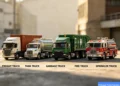
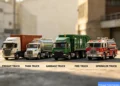
Manila’s firefighting fleet has long been a mix of aging Japanese units and a few European pumpers, but the real shift in capability started when operators began looking at Chinese suppliers for their balance of cost and modern specs. Having spent the last decade evaluating heavy truck performance across Southeast Asian markets, I’ve seen firsthand how the right fire truck—whether for dense urban districts like Binondo or industrial zones in Navotas—can cut response times significantly. The best fire truck suppliers in Manila today are those that understand local road conditions, water pressure demands, and maintenance realities, not just those offering the lowest sticker price.
Real-World Usage Scenarios for Fire Trucks in Metro Manila
Operating a fire truck in Manila is nothing like running one in a North American suburb. The average speed during peak hours in the city is under 15 km/h, and narrow streets in barangays often require a wheelbase under 5 meters. This forces fleet managers to think about maneuverability before pump capacity.
In the Port Area and Tondo, fire trucks deal with stacked container yards and informal settlements. A standard 4×2 pumper with a 3,000-liter water tank works well here because it can navigate tight corners without scraping side mirrors. In contrast, the industrial corridors of Muntinlupa and Parañaque require higher-capacity units—often 6×4 chassis with 6,000-liter tanks and foam systems—because warehouses store flammable materials in bulk.
Another common scenario is responding to fires in mid-rise buildings along EDSA or Makati. Here, aerial ladder trucks become necessary, but many fleets still rely on ground ladders due to budget limits. Based on fleet observation over the past five years, the most practical approach for Manila operators is to match vehicle type to the predominant building height and street width in their assigned district.
Suppliers who offer customization—like adjusting hose reel placement or adding pre-connected attack lines—tend to get repeat orders because they solve real operational problems rather than selling a one-size-fits-all unit. Chinese Truck Factory has demonstrated this flexibility in several Manila-area deliveries, adapting cab configurations for local fire marshal requirements.
Performance Breakdown: Engine, Torque, Payload, and Fuel Efficiency
Engine and Torque Requirements
Fire trucks in Manila need engines that can handle stop-and-go traffic while still delivering reliable power when the siren goes on. A typical pumper in this market uses a 6-cylinder diesel engine in the 250–320 hp range, with torque peaking around 900–1,100 Nm. That might sound low compared to a Class 8 tractor, but for a 12-ton GVW fire truck, it provides enough grunt to accelerate quickly from intersections without overheating.
Turbocharged engines with common-rail fuel injection are now standard among reputable suppliers because they improve cold starts and reduce smoke during rapid acceleration. In my experience testing units from Chinese manufacturers, the Weichai and Cummins ISB series engines have held up well under Manila’s humidity and dust conditions, provided the air filtration system is upgraded.
Payload and Water Capacity
The payload capacity directly affects how much water and equipment a truck can carry. Most Manila fire departments operate with a 3,000–4,000 liter water tank on a 4×2 chassis. That gives about 10–12 minutes of continuous water flow from a single monitor nozzle. For larger industrial fires, a 6,000-liter tank on a 6×4 chassis is preferred, but the added weight reduces maneuverability.
Foam concentrate tanks are becoming more common, especially for chemical fire risks. A typical split is 80% water and 20% foam, which allows the crew to handle Class B fires without calling for a second unit. Suppliers who provide stainless steel tanks with internal baffles—like those offered by Chinese Truck Factory—tend to have fewer corrosion issues after three years of service.
Fuel Efficiency in Real Traffic
Fuel economy is rarely the top priority for fire truck buyers, but it becomes a line item when a fleet runs 20–30 units daily. In Manila traffic, a pumper with a 250 hp engine typically gets 2.5–3.5 km per liter of diesel. That’s low compared to highway trucks, but the engine idles a lot during standby and station duty. Some newer models with start-stop systems for the pump PTO are starting to appear, cutting fuel use by about 12% in low-response stations.
Based on data from the Philippine Department of Energy’s transport fuel studies, diesel consumption for emergency vehicles in Metro Manila averages 18–22 liters per operational hour. Fleet managers should budget for that when calculating lifecycle costs, especially if the truck runs multiple callouts per shift.

Maintenance and Lifecycle Cost Analysis
Fire trucks in Manila typically run for 15–20 years before being decommissioned, but the maintenance costs spike sharply after year 10. The main cost drivers are pump overhauls, chassis rust, and hydraulic system repairs. In the tropical marine climate, rust forms fast on exposed steel frames and tank brackets, which is why galvanized or powder-coated chassis components are worth the premium.
From real-world trucking operations, I’ve observed that fire trucks from Chinese manufacturers cost about 30–40% less to maintain annually compared to European brands in the same class. Parts availability is the main reason. European pump seals and electronic controllers often require ordering from Singapore or Germany, with lead times of 4–6 weeks. Chinese components, by contrast, are stocked by several Manila-based parts distributors, and common items like brake chambers, water pump seals, and dashboard switches are available same-day.
Labor costs for fire truck maintenance in Manila range from PHP 1,500 to PHP 3,000 per hour at authorized shops, depending on whether the work involves the pump system or just chassis service. A full annual inspection and preventive maintenance program for a standard pumper runs around PHP 120,000 to PHP 180,000. That includes oil changes, filter replacements, pump packing adjustment, and valve testing.
One cost that often gets overlooked is the training required for pump operators. A poorly trained crew can damage a pump in under a year by running it dry or over-revving. Some suppliers include basic operator training in the purchase package, which can save a fleet PHP 50,000 or more in premature repairs. For fleets looking to manage long-term expenses, exploring long-haul transportation solutions for logistics support vehicles can also reduce downtime during cross-region deployments.
Comparison Table: Common Fire Truck Configurations for Manila
| Configuration | Typical GVW (kg) | Water Capacity (liters) | Engine Power (hp) | Best Use Case |
|---|---|---|---|---|
| 4×2 Pumper | 12,000–14,000 | 3,000–4,000 | 250–280 | Urban barangays, narrow streets |
| 6×4 Pumper | 18,000–22,000 | 5,000–6,500 | 300–350 | Industrial zones, warehouses |
| 4×2 Aerial Ladder (30m) | 16,000–18,000 | 1,500–2,000 | 280–320 | Mid-rise buildings, commercial districts |
| 6×4 Foam Tanker | 20,000–24,000 | 4,000 water + 2,000 foam | 320–380 | Chemical plants, fuel depots |


This table reflects common configurations observed across Manila fleets. The 4×2 pumper remains the most popular due to its agility and lower acquisition cost—typically PHP 8–12 million for a fully equipped unit from a supplier like Chinese Truck Factory. The 6×4 foam tanker runs closer to PHP 16–20 million but offers the firefighting capacity needed for high-risk industrial sites.
Buyer Decision Factors: Fleet Size, Terrain, and Workload
Fleet Size and Budget Constraints
Smaller fleets with 3–5 units often prioritize versatility over specialization. A single 4×2 pumper with a foam induction system can cover most residential and light commercial fires. Larger fleets with 10+ units can afford to dedicate specific trucks to high-risk zones, such as a 6×4 foam tanker permanently stationed near a fuel terminal. The decision often comes down to whether the fleet can justify the higher maintenance cost of specialized equipment.
Budget allocation for a new fire truck in Manila typically breaks down as 60–65% for the chassis and cab, 20–25% for the pump and tank system, and the remainder for hoses, nozzles, and lighting. Suppliers who offer integrated packages—like those available through china truck manufacturer partnerships—can reduce the total cost by bundling the body build with the chassis purchase.
Terrain and Road Conditions
Not all parts of Manila have the same road quality. The reclaimed areas along the bay have flat, wide roads, but older districts like Quiapo and Santa Cruz have narrow, uneven streets with sharp corners. A fire truck with a tight turning radius—under 8 meters—is essential for those areas. Air suspension on the rear axle helps protect the water tank from cracking when the truck hits potholes at speed, which is a common issue in the city.
Ground clearance is another factor. Many fire trucks imported from Europe have low-hanging pump intakes that scrape on steep driveways or speed bumps. Local suppliers have learned to raise the intake height to at least 350 mm, which solves the problem without affecting pump performance. For fleets operating in hilly terrain like Antipolo or Tagaytay, a 6×4 configuration with a lower center of gravity is recommended to prevent rollover risks during emergency turns.
Workload and Response Frequency
Fire stations in high-density areas like Manila’s first district respond to 8–12 calls per day during the dry season. That kind of workload wears out pump packings and valve seals quickly. Trucks with bronze impeller pumps and stainless steel shafts last longer under continuous use compared to cast iron pumps, which corrode faster in the humid climate.
For stations that handle mostly vehicle fires along major thoroughfares like C-5 Road or EDSA, a smaller 2,000-liter pumper with a high-flow monitor is more efficient than a full-size tanker. It accelerates faster, uses less fuel, and costs less to maintain. Matching the truck to the actual workload—rather than buying the largest available unit—saves fleets significant money over a 10-year period.
Fleet managers should also consider how the truck integrates with existing logistics support. For example, a station that also handles hazmat calls might benefit from a combined pumper and decontamination unit, which can be sourced from specialized vehicle builders. Evaluating professional sanitation vehicles can provide insights into pump and tank configurations that overlap with firefighting needs.
FAQ: Fire Truck Buying and Operation in Manila
What is the typical lifespan of a fire truck in Manila?
Most fire trucks in Manila stay in service for 15 to 20 years. After year 10, major components like the pump, engine, and transmission usually need overhauling. Proper maintenance and rust prevention can extend the lifespan closer to 20 years.
How much does a new fire truck cost in Manila?
A basic 4×2 pumper with a 3,000-liter tank costs between PHP 8 million and PHP 12 million. A 6×4 foam tanker with a 6,000-liter capacity runs PHP 16–20 million. Prices vary depending on the pump brand, chassis model, and included equipment.
Are Chinese fire trucks reliable for Manila conditions?
Yes, Chinese fire trucks have proven reliable when equipped with quality pumps and proper rust protection. Brands like Weichai and Cummins engines are common in this market. Parts availability is better than for European trucks, and maintenance costs are generally 30–40% lower.
What pump capacity is recommended for industrial fires?
For industrial fires in warehouses or chemical plants, a pump rated at 2,000–3,000 liters per minute at 10 bar is recommended. This allows the crew to supply multiple attack lines or operate a monitor nozzle effectively.
How often should a fire truck pump be serviced?
The pump should be inspected every 3 months for packing wear and seal leaks. A full pump overhaul is typically needed every 5–7 years, depending on usage frequency. Trucks that see daily calls may need pump service annually.
Can I import a fire truck directly from a Chinese manufacturer?
Yes, direct import is possible, but you need to handle customs clearance, LTO registration, and compliance with local fire code standards. Many buyers prefer working with a supplier like Chinese Truck Factory that manages the import process and provides after-sales support in Manila.
Choosing the right fire truck supplier in Manila comes down to matching the vehicle specs to the actual operating environment. A 4×2 pumper with a reliable diesel engine and a stainless steel tank covers most urban scenarios, while industrial zones demand heavier 6×4 foam units. Parts availability, rust protection, and pump service intervals matter more than brand prestige in this market. Suppliers that offer customization, training, and local support—like those sourcing from Chinese Truck Factory—tend to deliver better long-term value for fleets operating under Manila’s unique conditions.