Chinese truck suppliers can be the right choice for a Ghana-based fleet, but only if you treat the purchase as an engineering decision rather than a price comparison. Most buyers who end up disappointed did not pick a bad brand — they picked a configuration that did not match their route, payload, or legal weight limits. The suppliers worth working with are the ones that ask about your duty cycle before they send a quotation, and that can document chassis, axle, emission, and body specifications in writing. This guide walks through how to evaluate suppliers, what to confirm before you send a deposit, and where the real cost differences show up over a truck’s service life.
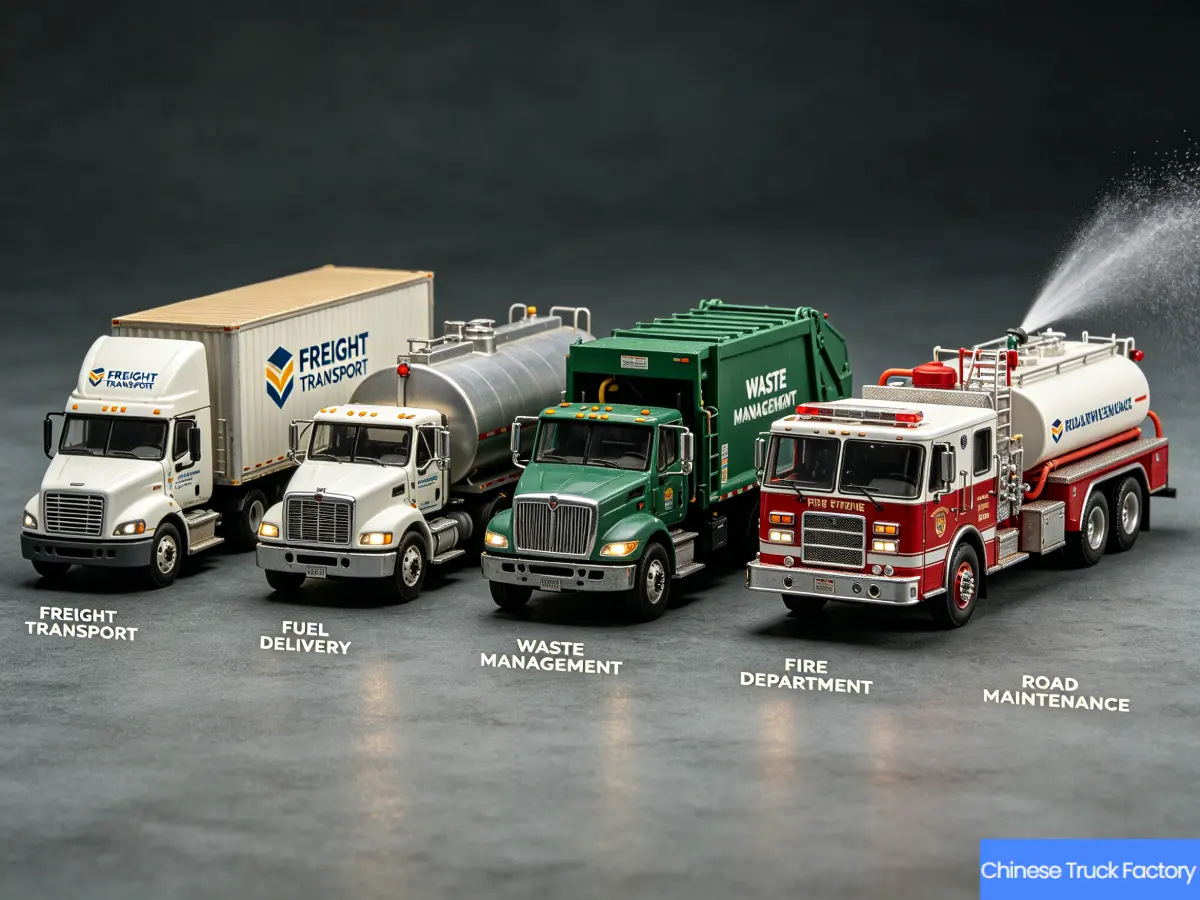
What “Best Supplier” Actually Means for a Ghana Fleet
There is no single best supplier. There is a best fit for your operation. A supplier that is excellent for a 6×4 tipper running quarry haulage may be a poor fit for a municipal refuse fleet that needs compactor bodies, bin lifters, and a parts pipeline for hydraulic components.
When I evaluate a supplier for a buyer, I look at four things before I look at price:
- Configuration capability. Can they build or source the chassis, body, and hydraulic package as one integrated unit, or are they reselling whatever is on the yard?
- Documentation. Can they provide a real specification sheet, a bill of lading history, and clear Incoterms — not a WhatsApp photo of a truck and a number?
- After-sales structure. Who handles warranty claims? Where do spare parts ship from? What is the realistic lead time on a gearbox or a hydraulic pump?
- Honesty about limits. A supplier that tells you a 20 m³ body will legally carry 20 tonnes of granite in Ghana is either uninformed or not being straight with you.
Everything else — brand logos, glossy brochures, claims about “world-class quality” — is noise. The chassis brands that dominate export supply (HOWO/Sinotruk, SHACMAN, FAW Jiefang, Dongfeng, Foton, Beiben, and others) all have models that work well in West African conditions. The difference is usually in how the supplier specifies and supports them.
Start With the Duty Cycle, Not the Truck
Before you ask any supplier for a quote, write down what the truck will actually do. This is the single step that separates buyers who get a working asset from buyers who get a headache.
Questions to answer in writing
- What is the cargo or material? Sand, gravel, granite, laterite, coal, construction debris, municipal waste, water, fuel, or general cargo. Material density drives everything.
- What is the required payload per trip? In tonnes, not cubic meters.
- What is the haul route? Distance, road surface (paved, laterite, unimproved), and gradient. A 12 km quarry run on compacted laterite is a very different duty cycle from a 400 km paved highway run.
- How many trips per day and how many days per year? This sets annual tonnage and drives your cost-per-tonne math.
- How is the truck loaded and unloaded? Excavator, wheel loader, manual, tipper, or crane. Loading method affects body design and cycle time.
- What is the climate and altitude? Coastal humidity, inland heat, and dust all affect cooling, filtration, and hydraulic oil life.
- What is the legal axle and gross weight limit where the truck will be registered? This is non-negotiable and must be confirmed locally.
Once you have this, the truck class, axle configuration, engine power, and body specification start to narrow themselves. Without it, you are guessing — and so is the supplier.

How to Compare Chinese Truck Suppliers Side by Side
Most buyers compare suppliers on price and delivery time. That is a mistake. Two quotes that look similar on paper can differ enormously in what is actually included. Use a structured comparison.
| Evaluation factor | What to check | Why it matters |
|---|---|---|
| Chassis specification | Brand, model, wheelbase, GVW, axle ratings, engine model and power, transmission model, axle ratio | Determines whether the truck can do the job at all |
| Body / superstructure | Steel grade, floor thickness, sidewall thickness, cylinder type, subframe design | Drives service life and repair cost in abrasive duty |
| Emission configuration | Euro II, Euro III, Euro V, or other — stated explicitly | Affects registration eligibility and fuel quality requirements |
| Steering configuration | Left-hand drive or right-hand drive | Must match destination market requirements |
| Incoterms and scope | EXW, FOB, CFR, or CIF — and what is included in each | Prevents comparing FOB against landed cost |
| Shipping method | RoRo, breakbulk, or flat rack | Affects cost, transit time, and risk of damage |
| Spare parts package | What is included, what is recommended, lead time | Downtime is usually more expensive than parts |
| Warranty terms | Duration, coverage, who pays labor, how claims are processed | Vague warranties are effectively no warranty |
| Documentation | Spec sheet, inspection report, packing list, B/L, certificate of origin | Needed for customs clearance and registration |
If a supplier cannot fill in most of this table with specific, verifiable information, that is your answer. Buyers who skip this step often end up with a truck that is technically functional but legally unregisterable, or with a body that wears through in eighteen months.
Vehicle Configuration: Matching the Truck to the Job
The axle configuration is the first real engineering decision. It is not about which one is “better” — it is about which one fits your payload and route.
Common configurations and where they fit
- 4×2. Lighter duty, urban delivery, smaller tippers, some municipal vehicles. Lower purchase cost and better maneuverability, but limited payload and axle capacity.
- 6×4. The workhorse for construction, quarry, and general haulage. Good balance of payload, traction, and cost. Suitable for most Ghana road conditions when specified correctly.
- 6×6. Where traction is the limiting factor — unimproved roads, wet-season access, steep grades. Higher curb weight and more maintenance points.
- 8×4. Higher legal payload in markets that allow it. More axles, more tires, more cost, larger turning radius. Only worth it if your legal weight limit actually permits the extra payload.
Engine power and torque matter, but so does the whole drivetrain. A 400 hp engine paired with the wrong axle ratio will burn more fuel and deliver less usable performance than a well-matched 340 hp package. Transmission selection (manual vs. automated manual), final drive ratio, tire specification, and suspension all need to be chosen together.
For buyers evaluating construction and quarry applications, the selection logic is covered in more depth in this guide on how to choose a dump truck for mining, which applies the same duty-cycle thinking to haul roads and gradients.
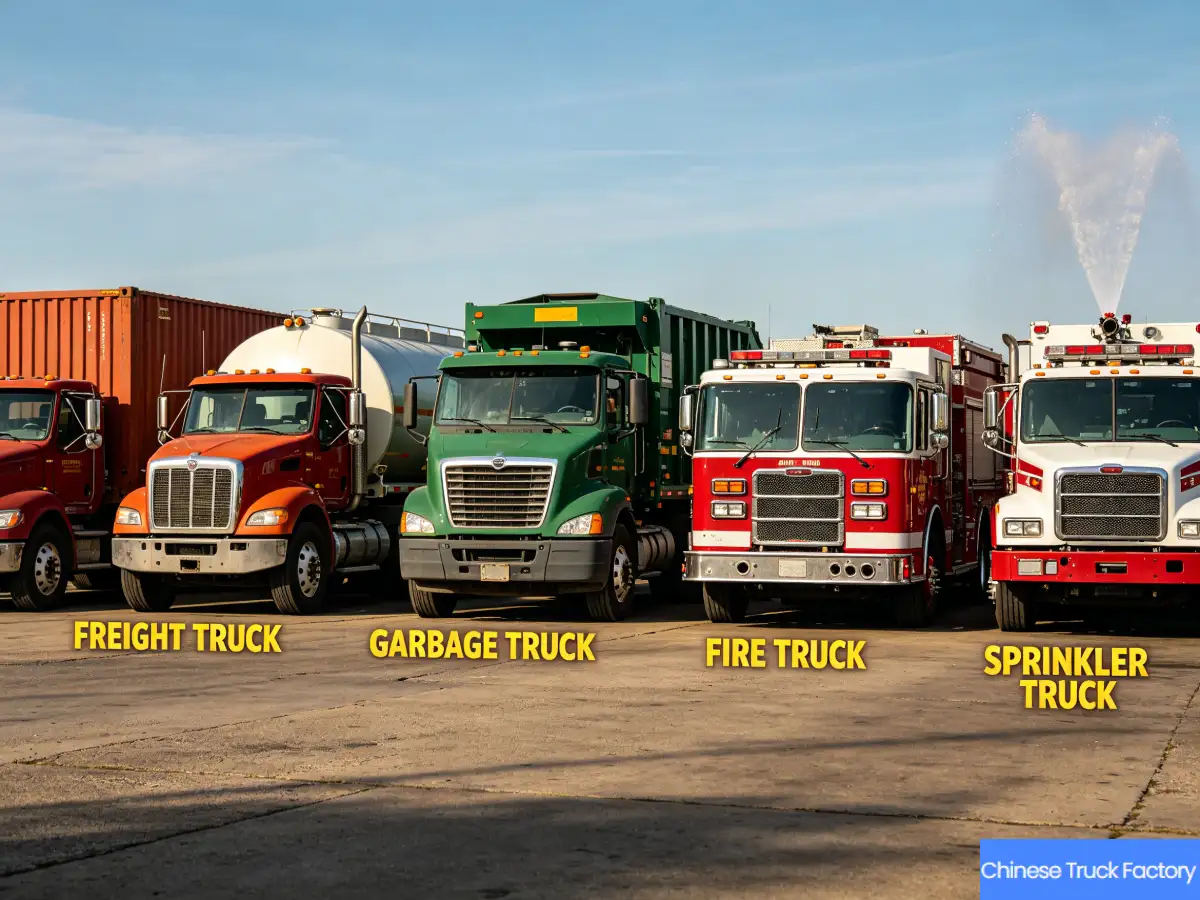
Payload, GVW, and the Legal Weight Trap
This is where most buyers get into trouble, and it is worth being blunt about it.
- Curb weight is the empty truck with fuel and fluids. It is not payload.
- Payload is what you can legally and safely carry — GVW minus curb weight.
- Body volume is a measurement of space. It says nothing about weight.
- GVW / GVWR is the maximum the chassis is rated for. It is a factory rating, not a legal permission.
- Legal payload is set by the destination country’s axle and gross weight regulations. It is often lower than the technical rating.
A 20 m³ dump body does not mean 20 tonnes of payload. Granite and wet gravel can exceed 1.6 tonnes per cubic meter. Sand varies widely with moisture. Construction debris is lighter but bulkier. You have to multiply material density by body volume, then check that number against chassis, axle, tire, and legal limits — and take the lowest of those.
If you are working through this for a specific build, the payload framework is explained in detail in dump truck payload capacity explained. The same logic applies to tankers, mixers, and refuse trucks.
Body and superstructure design
For tippers, the body is not a commodity. Steel grade, floor thickness, sidewall thickness, tailgate design, tipping angle, cylinder type, and subframe all affect how long the truck lasts in abrasive service. A thicker floor adds wear life but also adds tare weight, which reduces payload. That is the trade-off — there is no free lunch.
For refuse and sanitation work, the compactor body, hopper design, compaction mechanism, bin lifter, hydraulic system, and leachate management are the critical components. A well-specified chassis with a poorly designed body is a bad truck. Buyers comparing body options can review professional sanitation vehicles for a breakdown of compactor, hook-lift, and vacuum configurations.
Fuel Consumption: Why Nobody Can Give You One Number
Any supplier who quotes a single fuel consumption figure for a heavy truck is either quoting a test-cycle number or guessing. Real consumption depends on gross weight, route profile, average speed, gradient, traffic, idling time, driver behavior, axle ratio, tire pressure and type, aerodynamics, climate, altitude, and engine calibration.
For a loaded 6×4 tipper in mixed construction duty, consumption can vary substantially between operations running the same truck. The useful approach is to build your own estimate from your duty cycle, then track actual consumption once the truck is in service and adjust.
For electric trucks, the same caution applies to range. Usable battery capacity, payload, route profile, ambient temperature, charging power, and depot dwell time all interact. A truck that comfortably covers a fixed urban route may be entirely unsuitable for a long variable haul. If you are exploring electric options, the charging and range considerations are covered in electric heavy truck range.
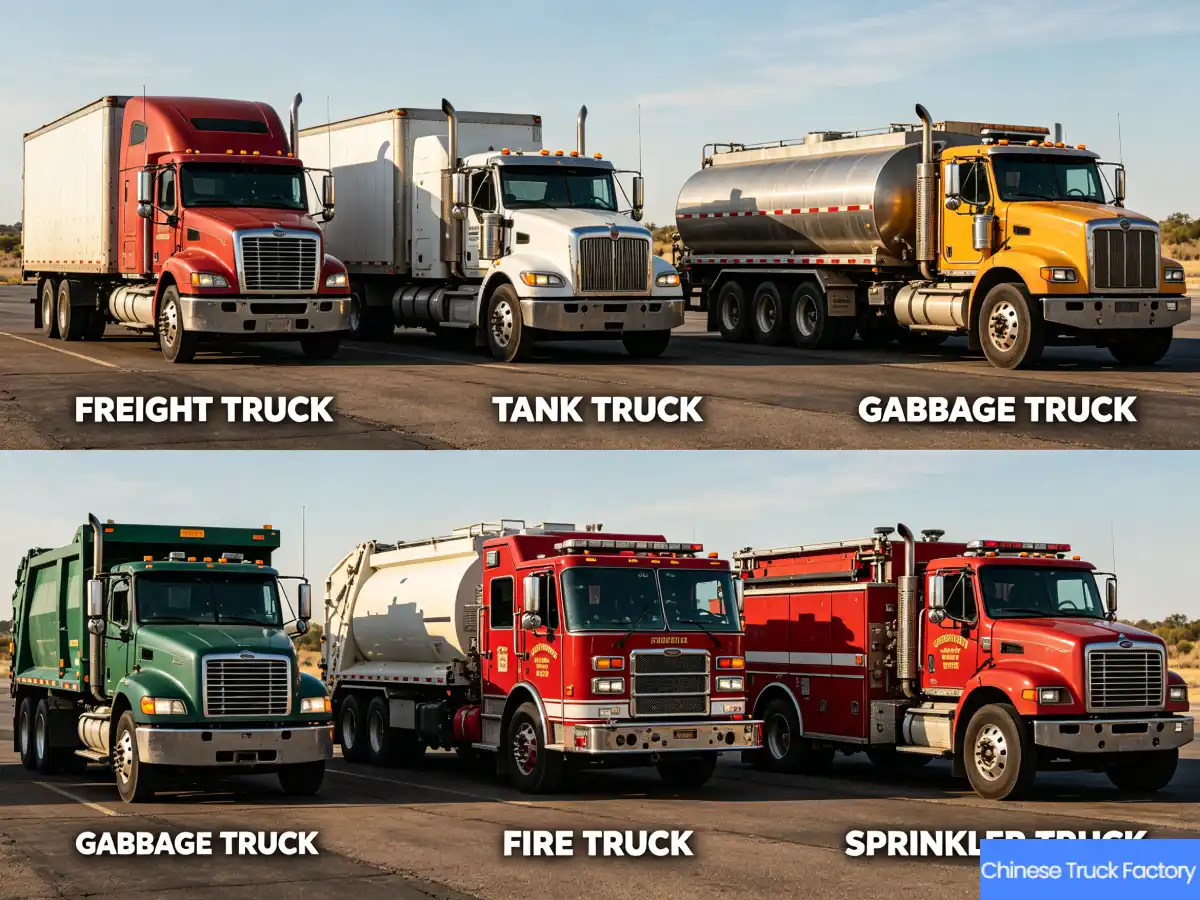
Maintenance, Spare Parts, and Uptime
Downtime almost always costs more than the repair itself. A truck sitting for three weeks waiting on a gearbox is not just losing revenue — it is disrupting your whole schedule. This is why spare parts planning should be part of the purchase, not an afterthought.
Daily inspection items
- Tire condition and pressure
- Fluid leaks (engine oil, coolant, hydraulic oil, fuel)
- Hydraulic hoses and fittings
- Lights and warning indicators
- Air system pressure and brake function
Periodic service items
- Engine oil and filters
- Transmission and differential oil
- Brake system inspection and adjustment
- Suspension and wheel bearings
- Hydraulic oil condition and filter restriction
- PTO engagement and control valve function
- Dump body hinges, pins, and cylinder mounts
- Compactor mechanism or crane pins, depending on the body
Do not rely on a generic service interval. Follow the actual engine and component manufacturer’s manual for the specific model you receive. Suppliers who can point you to that documentation, and who stock or can quickly source the common wear parts, are worth more than a supplier who is 5% cheaper but cannot tell you where the next hydraulic pump is coming from.
When specifying a spare parts package, ask what the supplier recommends for your duty cycle and what the realistic lead time is for high-wear items. For a broader look at what should be in that package, see truck spare parts package for export.
Total Cost of Ownership: The Only Fair Comparison
Purchase price is one line item. The full picture looks like this:
- Purchase price (chassis + body + options)
- Freight to destination port
- Import duties, taxes, and clearance
- Compliance and registration costs
- Fuel or electricity over the service life
- Tires
- Scheduled maintenance
- Unscheduled repairs
- Spare parts inventory
- Downtime cost
- Driver cost and training
- Residual value at disposal
Two trucks with a 15% price difference can flip completely once fuel, tires, and downtime are included. A truck that costs more but delivers better fuel economy, longer tire life, and fewer breakdowns can be the cheaper asset over five years. Conversely, a truck that looks cheap on the invoice but sits in the workshop is the most expensive purchase you can make.
Build your TCO model with your own assumptions and be explicit about them. If you are comparing diesel against electric, the assumptions matter even more — electricity tariff, charger investment, battery degradation, and route predictability all have to be stated. This comparison framework is worked through in electric vs. diesel total cost of ownership.
Compliance and Import Considerations
There is no such thing as a globally compliant truck. Every destination market has its own rules, and they change. Before you commit to a configuration, confirm with local authorities or a qualified customs broker:
- Emission standard required for first registration
- Homologation or type approval requirements
- Registration eligibility, including any age limits on imported vehicles
- Axle weight and gross weight limits
- Overall vehicle dimension limits
- Steering side (left-hand or right-hand drive)
- Lighting and marking requirements
- Braking and safety equipment requirements
- Fuel quality available (sulfur content matters for emission systems)
- Availability of DEF/AdBlue if the engine requires it
- Local service capability for the specific engine and transmission
Do not accept a supplier’s blanket statement that a truck “meets all regulations.” Ask for the specific emission configuration and confirm it against your destination requirements yourself. The responsibility for registration eligibility sits with the importer, not the factory.
Shipping and import logistics
How the truck ships depends on its dimensions, weight, whether it can be driven, quantity, shipping route, and destination port.
- RoRo (roll-on/roll-off). Usually the most economical for complete, drivable trucks. Limited by port schedules and vessel availability.
- Breakbulk. Suitable for oversized or non-drivable units, or when RoRo space is unavailable.
- Flat rack. Used for certain configurations and quantities where container shipping makes sense.
- Container. Rarely practical for complete heavy trucks, but relevant for some specialized or partially disassembled shipments.
Marine insurance, port handling, inland transport, customs clearance, and destination-port charges all need to be planned. The shipping method should be chosen for the specific vehicle, not applied as a default. Buyers can review the logistics side in how heavy trucks are shipped overseas.
Where Chinese Truck Factory Fits
Chinese Truck Factory is a direct manufacturer and export platform for commercial vehicles, heavy trucks, and specialized vehicles. Based on the evaluation framework above, here is how it lines up:
- Configuration capability. The platform covers tippers, tractor trucks, tankers, mixers, refuse and sanitation vehicles, fire trucks, truck-mounted cranes, and specialized vehicles — with body and superstructure work integrated into the build.
- Documentation and process. Buyers receive a written specification, Incoterms clarity (EXW, FOB, CFR, CIF), and export documentation support.
- Engineering-focused selection. The site’s technical content addresses payload, axle configuration, emission standards, and duty-cycle matching rather than pushing a single model.
- Spare parts and after-sales planning. Parts packages, warranty scope, and shipping logistics are part of the purchase conversation.
- Export experience. The platform is built around international B2B buyers, not domestic retail.
It is not the only option, and it should not be chosen purely on price. It should be evaluated on the same criteria as any other supplier: can it specify the right truck for your duty cycle, document it properly, and support it after delivery.
Request a Configuration Review & Quotation
Frequently Asked Questions
How do I choose the right payload for a Chinese truck in Ghana?
Start with the material you are hauling and its density, then multiply by the body volume to get the theoretical weight. Compare that against the chassis GVW, axle ratings, tire capacity, and — most importantly — the legal axle and gross weight limits for your registration. Take the lowest figure. Do not assume a 20 m³ body equals 20 tonnes of payload.
Which axle configuration should I use — 6×4 or 8×4?
It depends on your legal weight limit and route. A 6×4 is the standard workhorse for construction and quarry duty and offers a good balance of payload, traction, and cost. An 8×4 gives higher axle capacity and potentially higher legal payload, but adds curb weight, tire cost, turning radius, and purchase price. Only choose 8×4 if your legal limit actually allows the extra payload.
How does road condition affect truck selection?
Poor roads increase the importance of suspension specification, tire selection, ground clearance, and traction. Unimproved or wet-season routes may justify 6×6 or higher-spec suspension. Paved highway routes allow more focus on fuel efficiency and payload. Gradient also matters — steep grades require more torque and appropriate gearing.
What affects fuel consumption on a Chinese heavy truck?
Gross weight, route profile, average speed, gradient, traffic, idling, driver behavior, axle ratio, tire pressure and type, aerodynamics, climate, altitude, and engine calibration all affect consumption. Any single quoted figure should be treated as indicative only, and you should build your own estimate from your duty cycle.
What maintenance should I plan for?
Daily checks on tires, leaks, hydraulic hoses, lights, and air pressure. Periodic service on engine oil and filters, transmission and differential oil, brakes, suspension, wheel bearings, hydraulic oil, PTO, and body-specific items like dump hinges or crane pins. Follow the actual manufacturer’s manual for intervals — do not rely on generic schedules.
How do I estimate total cost of ownership?
Add purchase price, freight, import duties, compliance and registration, fuel or electricity, tires, scheduled and unscheduled maintenance, spare parts, downtime cost, driver cost, and subtract residual value at disposal. Compare complete trucks on this basis, not on invoice price alone.
What information do I need to give a supplier for a quotation?
Destination country and port, application, cargo or material, required payload, body capacity, daily mileage, road condition, gradient, drive configuration, steering side, emission requirement, quantity, and any required options. For crane trucks, add maximum lifting weight, working radius, and lifting height. For fire trucks, add water/foam capacity and pump requirements. For refuse trucks, add waste type, bin type, and loading method.
How do I confirm destination-country compliance?
Confirm emission standard, homologation requirements, registration eligibility, axle and gross weight limits, dimension limits, steering side, lighting, braking, safety requirements, fuel quality, and DEF availability with local authorities or a qualified customs broker. Do not rely on a supplier’s general statement of compliance.
How are Chinese trucks shipped to Ghana?
Most complete, drivable trucks ship via RoRo, which is usually the most economical option. Breakbulk and flat rack are used for oversized or non-drivable units or when RoRo space is unavailable. Shipping method should be chosen based on vehicle dimensions, weight, quantity, route, and destination port.
Final Thoughts
The best Chinese truck supplier for your operation is not the one with the lowest invoice price or the biggest brand name. It is the one that asks about your duty cycle, specifies a configuration that matches your payload and route, documents everything in writing, and can support the truck after delivery with parts and service information.
Before you commit, confirm four things: the actual payload your route and legal limits allow, the axle and drive configuration that fits your road conditions, the emission and compliance requirements for your registration, and the total cost of ownership over your expected service life. Buyers who get these wrong usually do so by comparing quotes on price alone, or by accepting a body volume as a payload figure.
The most suitable truck is therefore not necessarily the model with the highest horsepower or the largest body. It is the configuration that matches the payload, route, legal weight limits, maintenance capability, and expected operating cycle with the fewest compromises.



