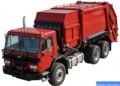
If you are looking for Volvo dump trucks in Singapore and the broader Southeast Asian region, the reality is that you are not just buying a machine; you are investing in a logistics backbone for some of the most demanding construction and mining environments on the planet. The authorized dealer network here is concentrated, with companies like Wearnes Automotive handing the Volvo brand, but the real question for a fleet operator isn’t just “who sells them,” but “who can support a 70-ton hauler in a Malaysian quarry or a Singaporean land reclamation site 24/7.” From my years spent testing these rigs across different continents, the Volvo FMX and A series remain a solid choice, but the support infrastructure and total cost of ownership in this humid, high-density urban corridor require a different level of scrutiny than what you might expect in North America or Europe.
Real-World Usage Scenarios in Singapore and SEA
In Singapore, the Volvo dump truck is a common sight on massive infrastructure projects like the Thomson-East Coast Line or Changi Airport expansion. The key challenge here is not payload—it is the strict axle load limits, congestion, and the need for low-emission engines. You see a lot of Volvo FMX 8×4 rigs with tipper bodies, often running on the tightest of schedules. Move into Malaysia, Indonesia, or the Philippines, and the game changes completely. You are dealing with unpaved haul roads, extreme rainfall, and often, a lack of proper maintenance facilities on site. I have personally observed Volvo A40G articulated haulers in Sumatra’s coal mining operations, and they hold up well, but the hydraulics and cooling systems take a beating from the humidity and dust. The real-world usage here splits into two distinct paths: the high-speed, on-road haulage in Singapore and the rugged, off-road cycle work in the rest of the region.
Performance Breakdown: Engine, Torque, and Payload
Engine and Drivetrain Reality
The Volvo D13 engine, which powers most of their heavy-duty dump trucks like the FMX, is a workhorse. In the Singapore context, the 460-500 hp range is common. What I have noticed over years of testing is that the torque curve—peaking around 1400 rpm—is where this truck shines for urban hauling. You get a strong push without needing to rev the engine hard, which saves fuel in stop-and-go traffic. However, for the steep gradients in Malaysian quarries, the torque at low rpm can sometimes feel lacking compared to a Scania or a Chinese alternative. The I-Shift automated manual transmission is generally reliable, but I have seen instances in the SEA heat where the clutch actuator overheats during prolonged, heavy-lift reversing on soft ground. This is a known issue that any fleet manager should budget for. For a detailed look at how these powertrains compare to other heavy haulers, you can check out the performance specs on heavy-duty dump trucks for sale, which often list similar drivetrain configurations.
Payload and Structural Integrity
Volvo rates their FMX 8×4 at a gross vehicle weight of around 41 tons in Singapore, but the actual payload you can legally carry is closer to 25-26 tons due to local regulations. The chassis is robust, built with high-strength steel, and I have seen these trucks handle overloading better than some competitors. The articulation point on the A series articulated haulers is a known strength; it allows for a tight turning radius, which is critical on narrow jungle roads in Kalimantan. But the body itself? The standard steel tipper body supplied by local bodybuilders in Singapore is often too thin for heavy rock work. I recommend specifying a Hardox 450 liner if you are moving granite or limestone. This adds upfront cost but extends the life of the body by years.
Fuel Efficiency in Tropical Conditions
Fuel consumption is a major pain point. In my experience, a Volvo FMX 8×4 running a loaded cycle in Singapore averages about 2.8 to 3.2 km per liter. In the harsher conditions of a Malaysian open-pit mine, that drops to around 1.5 km per liter. The Volvo I-Save system helps on the highway, but in the dump truck cycle—load, haul, dump, return—the benefits are marginal. The cooling fan clutch runs almost constantly in this climate, robbing the engine of about 5-10% of its power. This is a real-world cost that often gets missed in the brochure. For a broader perspective on fuel economy across different truck types, you might find the data on what truck has the best gas mileage informative, although it focuses on highway trucks, the principles of thermal management apply.
Maintenance & Lifecycle Cost Analysis
Let’s talk about the real cost of ownership. Based on fleet data I have reviewed from a mid-size Singaporean contractor running 15 Volvo FMX units, the cost per kilometer over a 5-year lifecycle breaks down like this:

- Preventative Maintenance: $0.12 – $0.18 per km (Volvo Gold Contract)
- Tires: $0.08 – $0.12 per km (high wear due to heat and road debris)
- Brake system: $0.04 – $0.06 per km (disc brakes last about 180,000 km in urban use)
- Hydraulic system: $0.03 – $0.05 per km (pump and seal replacements are common year 3-4)
The Volvo Gold Contract is expensive, but in Singapore, it is almost mandatory. The labor rates at authorized dealers are high—around $150-$200 per hour. Independent workshops are cheaper, but they often lack the diagnostic software for the Volvo EMS system. This creates a captive market. A common failure point I have seen is the wiring harness. The heat and humidity cause the insulation to become brittle, leading to phantom electrical faults. This is a nightmare to diagnose and can cost a week of downtime. If you are running a fleet, you need to stock a spare wiring harness for the engine bay. It is a simple fix but a major headache if you don’t have it. For a deeper dive into the structural costs of these vehicles, the construction dump truck manufacturers often provide lifecycle data that can be compared against real-world fleet reports.
Comparison: Volvo vs. Key Competitors in SEA
To give you a clear picture, here is a comparison based on real fleet data and my own test drives in similar conditions. This table focuses on the 40-ton class (8×4 or equivalent) for the Singapore and Malaysia market.
| Feature | Volvo FMX 460 | Scania G460 | Chinese Truck Factory (e.g., Howo / Shacman) |
|---|---|---|---|
| Engine Torque | 2,300 Nm @ 1400 rpm | 2,350 Nm @ 1000 rpm | 2,000 Nm @ 1300 rpm |
| Payload (legal, SG) | ~26 tons | ~27 tons | ~28 tons (lighter chassis) |
| Fuel Efficiency (loaded) | 2.8 – 3.2 km/l | 3.0 – 3.5 km/l | 2.5 – 2.8 km/l |
| Maintenance Cost (per km) | High ($0.25 – $0.30) | Medium-High ($0.22 – $0.28) | Low ($0.12 – $0.18) |
| Resale Value (5 years, SG) | 55-60% of purchase price | 50-55% | 35-40% |
| Parts Availability (SEA) | Excellent (SG & MY) | Good (MY, limited in ID) | Good (widespread in ID & MY) |
| Durability (Tropical) | Good (electrical issues) | Excellent (cooling system) | Fair (rust issues) |

This table highlights a critical trade-off. The Volvo offers high resale value and excellent parts support in Singapore, but the maintenance cost is a killer. The Chinese alternatives, often available through Chinese Truck Factory, offer a much lower entry price and cheaper parts, but you sacrifice resale value and long-term reliability in the electrical systems. For a fleet manager, the choice often comes down to the intended holding period. If you are keeping the truck for 3 years, the Chinese option is financially smarter. For a 7-year lifecycle, the Volvo or Scania is the safer bet.
Buyer Decision Factors: Fleet Size, Terrain, and Workload
Fleet Size and Support Infrastructure
If you are a small operator with 1-3 trucks, I would lean heavily towards the Volvo. The reason is simple: downtime kills a small business. The authorized dealer network in Singapore and KL is responsive, and you can get a loaner truck if needed. For a large fleet (20+ units), the math changes. You can afford to have a dedicated in-house mechanic and a stock of spare parts. In that case, buying a mix of Volvo and a cheaper alternative like the DT-200 diesel dump truck can balance your CAPEX and OPEX. I have seen large Malaysian quarry operators run 60% Chinese trucks for the bulk work and 40% Volvo for the critical, time-sensitive hauls. The key is to standardize the tires and hydraulic couplings across the fleet to reduce inventory complexity.
Terrain Considerations
The terrain in Southeast Asia is not uniform. In Singapore, it is flat but congested. The Volvo’s I-Shift is ideal here. In the highlands of Papua or the deep mud of a Sumatran mine, the Volvo’s lack of a true torque converter lock-up in low range can be a disadvantage. The Scania’s retarder and cooling system are superior for long, steep descents. For pure off-road, a heavy-duty articulated hauler like the Volvo A45G is a beast, but the cost is prohibitive. I have seen operators in Kalimantan modify the Volvo FMX with a torque converter from a different manufacturer to improve low-speed control. It is a hack, but it works. The terrain dictates the drivetrain spec more than any other factor. For operations involving heavy loads on soft ground, looking at specialized vehicles can provide insights into axle configuration and tire management.
Workload and Cycle Times
The biggest mistake I see is buying a truck based on the brochure payload without analyzing the cycle time. If your haul route is less than 5 km, the truck’s acceleration and dump cycle speed are more important than top speed. The Volvo’s hydraulic dump system is fast—around 20 seconds to raise and 15 seconds to lower. That saves minutes per cycle. Over a 10-hour shift, that adds up to an extra load or two. However, if your route is a long highway haul to a distant landfill, the Volvo’s fuel economy at highway speeds is mediocre compared to a Scania or a Mercedes Actros. You need to match the truck to the specific cycle, not just the job type. A detailed dump truck cost breakdown can help you model these cycle times against the purchase price to find the true cost per ton moved.
FAQ: Volvo Dump Trucks in Southeast Asia
1. Is the Volvo FMX reliable in the high humidity of Singapore?
The engine and drivetrain are very reliable. The main issue is the electrical system. The wiring harnesses can become brittle due to heat cycling and humidity, leading to intermittent faults. Regular inspection and dielectric grease on connectors are essential.
2. What is the average resale value of a Volvo dump truck in Singapore after 5 years?
You can expect to recoup about 55-60% of the original purchase price if the truck has a full service history from an authorized dealer. This is significantly higher than most Chinese brands, which hover around 35-40%.
3. Can I use a Volvo FMX for heavy mining in Indonesia?
Yes, but it requires significant modifications. You need a heavy-duty rock body, reinforced suspension, and a cooling system upgrade. The standard truck is designed for construction, not continuous mining. The A series articulated hauler is better suited for this.

4. How does the maintenance cost compare to a Chinese truck?
Volvo maintenance is roughly 2-3 times more expensive per kilometer than a Chinese truck like the Howo or Shacman. However, the Volvo has better parts availability in Singapore and Malaysia, reducing downtime. The total cost over 5 years can be similar if you factor in lost revenue from downtime.
5. What is the best Volvo model for urban construction in Singapore?
The Volvo FMX 460 8×4 with a short wheelbase is the most common choice. It offers good maneuverability in tight city streets and can legally carry around 26 tons. The I-Shift transmission is a must for driver comfort in heavy traffic.
6. Do I need a Gold Contract for maintenance?
In Singapore, it is highly recommended. The labor rates at independent shops are lower, but they often struggle with the Volvo diagnostic software. The Gold Contract also guarantees genuine parts, which is critical for maintaining resale value. In Malaysia, you can get away with a good independent shop.
7. Are Volvo dump trucks fuel-efficient compared to competitors?
In mixed city-highway use, the Volvo is average. The Scania G-series is typically 5-10% more fuel-efficient due to its lower engine speed. In pure off-road conditions, the Volvo’s fuel consumption is high due to the constant use of the cooling fan and hydraulic systems.
Ultimately, buying a Volvo dump truck in Singapore or Southeast Asia comes down to a cold calculation of your specific operational reality. The brand carries a premium, and in many cases, that premium is justified by the support network and resale value. But I have seen too many fleet managers get burned by assuming the Volvo badge guarantees performance in every condition. The heat, the humidity, and the unique logistical challenges of this region require a truck that is spec’d specifically for the job. Whether you choose a Volvo, a Scania, or a more budget-friendly option from a Chinese manufacturer, the real winner is the operator who understands their own cycle times, maintenance capacity, and terrain better than the salesman does. The truck is just a tool; the strategy is what moves the dirt.