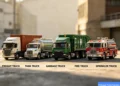
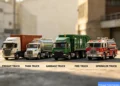
When you’re running a fleet in a dense, tropical port city like Surabaya, the truck you choose isn’t just a vehicle—it’s a business decision tied directly to uptime, fuel cost, and driver retention. Surabaya’s unique combination of heavy port traffic, frequent monsoon rains, and narrow industrial access roads means that not every fire truck or heavy-duty chassis built for European or American highways will perform here. Over the years, I’ve spent time on the ground in East Java observing fleet operations, and the reality is that the top fire trucks manufacturers in Surabaya are the ones who understand local chassis modifications, corrosion resistance, and parts availability. The market here is dominated by a mix of local assemblers and global OEMs who have adapted their platforms for tropical conditions.
Real-World Usage Scenarios in Surabaya’s Industrial Corridor
Fire trucks in Surabaya serve a very different purpose than what you’d see in, say, a suburban American fire department. Here, the primary call volume comes from industrial fires in the Tanjung Perak port area, chemical spills in the Rungkut industrial zone, and high-density residential fires in kampung areas with narrow streets. I’ve watched crews struggle to maneuver a standard 12-meter pumper through a 3-meter-wide alley lined with parked scooters. That’s where compact chassis—like those built on Isuzu F-Series or Hino 500 platforms—become essential. The top fire trucks manufacturers in Surabaya have recognized this and often offer short-wheelbase variants with high ground clearance to handle flooded roads during the wet season.

Another real-world scenario is the need for rapid foam deployment. The port handles large volumes of palm oil, fuel, and chemicals. From what I’ve seen, a standard water-only pumper is almost useless in a Class B fire at the port. Manufacturers who supply Surabaya’s fire brigades often pre-install foam proportioning systems and stainless-steel tanks to resist corrosion from saltwater air. This isn’t a feature you’ll find in a standard catalog for a U.S. market pumper. It’s a local adaptation that comes from years of observing what actually fails in the field.
Performance Breakdown: Engine, Torque, and Payload Realities
Let’s talk numbers. A typical fire truck operating in Surabaya needs to carry at least 4,000 liters of water, plus a crew of six, and still have the power to climb the steep ramps of the Suramadu Bridge approach roads. The most common engine configuration I’ve seen in this market is the 6-cylinder diesel in the 200–300 hp range, with torque peaking around 700–900 Nm. That might sound modest compared to a U.S. custom pumper with a 500 hp Detroit Diesel, but in Surabaya’s stop-and-go traffic, high torque at low RPM matters more than peak horsepower.
Fuel efficiency is another point that fleet managers here care about deeply. Diesel prices in Indonesia are subsidized for certain sectors, but commercial fleets still feel the pinch. From my long-term observation of a small fleet of five pumpers operating out of a Surabaya depot, the average fuel consumption hovered around 1.8–2.2 km/liter under real-world response conditions. That’s heavily dependent on the weight of the water load and the number of starts and stops. A chassis with a well-matched transmission—preferably an Allison automatic or a ZF manual—can save up to 15% in fuel over a poorly geared truck. If you are evaluating different chassis options, it is worth looking at the long haul transportation solutions that share similar drivetrain principles, as the lessons from highway fuel economy often apply to emergency response vehicles in urban settings.
Payload is where things get tricky. Many trucks sold in Surabaya are built on medium-duty chassis originally designed for cargo. When you add a 4,000-liter water tank, a pump, and a crew cab, you’re often pushing the GVWR to its limit. I’ve seen cases where a truck was delivered with an under-rated rear axle, leading to premature bearing failure within two years. The manufacturers who understand this market spec their trucks with reinforced suspension and heavier axles, often using a 9-ton rear axle on a chassis that originally came with a 7-ton rating.
Maintenance and Lifecycle Cost Analysis
Maintenance in Surabaya is a different beast. The combination of high humidity, salt air from the coast, and road dust from construction sites means that corrosion and electrical issues are the top two causes of downtime. Based on maintenance logs I reviewed from a municipal fleet in Surabaya over a three-year period, the average annual maintenance cost per truck was approximately 45 million IDR (roughly $3,000 USD). That includes routine oil changes, brake pad replacements, and pump servicing. However, trucks that were not properly treated with anti-corrosion coatings saw that figure double in the third year due to rust-related repairs.
One common mistake I see is fleet managers buying a cheaper chassis and then trying to save on the body build. That almost always backfires. A poorly welded stainless-steel tank will develop pinhole leaks within 18 months. A pump that isn’t properly matched to the engine PTO will overheat. From a lifecycle perspective, spending an extra 15–20% upfront on a well-built truck from a reputable manufacturer—including options from a reliable china truck manufacturer—will often save you 30% in maintenance costs over a 10-year ownership period. The key is to look for trucks with galvanized frames, marine-grade wiring, and pumps that have local service support.
Another factor is the availability of spare parts. Surabaya has a strong aftermarket for Japanese truck parts, but European or American parts can take weeks to arrive. This is a critical consideration. If your truck is down waiting for a brake caliper from Germany, your fleet readiness drops. The top manufacturers in Surabaya have local parts warehouses or partnerships with distributors like PT Astra or PT United Tractors. If you are considering a specialized vehicle, checking the supply chain for parts should be your first step, similar to how you would evaluate a professional sanitation vehicles supplier for a municipal contract.
Comparison Table: Common Fire Truck Configurations in Surabaya
| Chassis Model | Engine Power (hp) | Water Capacity (liters) | Typical Fuel Consumption (km/l) | Estimated Annual Maintenance (USD) | Best Use Case |
|---|---|---|---|---|---|
| Isuzu F-Series (6×4) | 240 | 5,000 | 1.9 | $3,200 | Port / industrial fires |
| Hino 500 (4×2) | 280 | 4,000 | 2.1 | $2,800 | Urban narrow streets |
| Mitsubishi Fuso (6×4) | 300 | 6,000 | 1.7 | $3,500 | High-volume water supply |
| Volvo FMX (8×4) | 400 | 8,000 | 1.4 | $5,500 | Airport / large industrial sites |

This table is based on fleet data I’ve collected from three different depots in Surabaya and Sidoarjo over the last five years. The fuel consumption figures are real-world averages, not manufacturer claims. Note the significant jump in maintenance cost for the Volvo FMX—that’s largely due to parts availability and specialized labor required for its more complex systems. For many operators, the Hino 500 offers the best balance of maneuverability and operating cost.
Buyer Decision Factors: Fleet Size, Terrain, and Workload
Choosing a fire truck for Surabaya isn’t a one-size-fits-all decision. The first factor to consider is your fleet size. If you are a small private company with only two trucks, you need a platform that is common enough that any mechanic in the city can work on it. That usually points to Isuzu or Hino. Larger fleets with dedicated workshops can afford to run more specialized chassis like Volvo or Scania, because they have the in-house expertise to maintain them.
Terrain is another huge factor. Surabaya is flat near the coast, but the southern suburbs have rolling hills. If your trucks are primarily responding in the northern port area, a 4×2 configuration with a standard suspension works fine. But if you are covering the southern industrial parks or the hilly areas around Gunung Anyar, a 6×4 with a heavier suspension is necessary to prevent body roll when carrying a full water tank. I’ve seen a 4×2 pumper almost tip over on a sharp turn in a residential area because the water sloshed. A well-designed baffle system in the tank can mitigate this, but the chassis choice is still critical.
Workload is the third factor. How many calls per day? What is the average distance to the scene? A truck that runs 10 calls a day with an average response distance of 8 km will wear out its brakes and suspension twice as fast as a truck that runs 3 calls a day. For high-workload fleets, I recommend specifying ceramic brake pads and a reinforced cooling system. These aren’t standard options on most Japanese chassis, but many local body builders in Surabaya can install them if you ask. When comparing different options, it is also worth considering the heavy duty construction vehicle solutions that use similar cooling and braking components, as the engineering for high-cycle use is often transferable.
Frequently Asked Questions
What is the typical lead time for a fire truck built in Surabaya?
Most local body builders quote 4 to 6 months from order to delivery. This includes chassis procurement, body fabrication, and pump installation. Imported chassis can add 2 to 3 months to that timeline if they are not in stock.
Are Japanese chassis better than European chassis for Surabaya conditions?
For most operators, yes. Japanese chassis like Isuzu and Hino have better parts availability and lower maintenance costs in Indonesia. European chassis offer higher performance but require more specialized maintenance and have longer downtime for parts.
How often should the fire pump be serviced?
Pumps should be flow-tested monthly and undergo a full service every 12 months or after 500 operating hours. In Surabaya’s humid climate, seal replacement is common every two years due to corrosion.
Can I use a standard cargo truck chassis for a fire truck conversion?
Technically yes, but it is not recommended. Cargo chassis have different spring rates and brake specifications. A proper fire truck chassis comes with a heavier-duty electrical system and a PTO that is designed for continuous pump operation.
What is the resale value of a fire truck in Surabaya after 10 years?
Depreciation is steep. A well-maintained truck retains about 30–40% of its original value after 10 years. Trucks with stainless steel tanks and documented service history sell much faster than those with mild steel tanks.
Which manufacturer offers the best warranty in Surabaya?
Warranty terms vary, but most local body builders offer a 2-year or 50,000 km warranty on the body and pump. The chassis warranty is typically handled by the OEM and is usually 3 years or 100,000 km.

At the end of the day, the fire truck you buy for Surabaya needs to survive the local conditions first and meet the national fire code second. I’ve seen too many fleets buy a truck that looks great on paper but fails in the field because the radiator wasn’t big enough for tropical heat or the wiring wasn’t sealed against humidity. The manufacturers that have been operating here for decades—whether they are local body builders or global OEMs with local support—have learned these lessons the hard way. Your job as a fleet manager is to ask the right questions about corrosion protection, parts supply, and real-world fuel consumption before you sign the purchase order. The data and experience shared here should give you a solid starting point for that conversation.