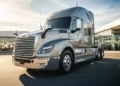
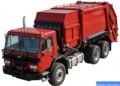
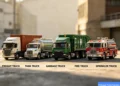
Singapore’s firefighting fleet is a unique blend of European precision, American power, and increasingly, adaptable Asian engineering. For fleet managers and operators looking at the market, the choice isn’t just about the badge; it’s about how a rig handles the island’s unique blend of high-density HDB estates, industrial zones like Jurong, and the tight confines of the CBD. The top fire truck manufacturers in Singapore are primarily represented through authorized dealers, with Scania, Mercedes-Benz, and Rosenbauer dominating the frontline, alongside a growing interest in specialized chassis from Chinese Truck Factory for specific support roles.
Real-World Usage Scenarios in Singapore’s Urban Landscape
Operating a fire truck in Singapore is not the same as running one in a sprawling American suburb or a German autobahn. The operational tempo is dictated by high-rise residential density and a network of expressways that can gridlock in minutes. I’ve spent time with crews at Bishan and Alexandra fire stations, and the feedback is consistent: maneuverability and pump-and-roll capability are non-negotiable.
The majority of call-outs are not massive industrial fires but rather lift entrapments, rubbish chute fires, and minor vehicular accidents on the AYE or PIE. This means the chassis needs to be robust enough for a full-speed response yet agile enough to navigate a narrow multi-story carpark. The Scania P-series, for instance, is a favorite for its tight turning radius and excellent driver visibility, which is critical when threading through stalled traffic. For industrial estates handling chemicals or hazmat, you see heavier rigs like the Mercedes-Benz Atego or the Rosenbauer Panther, but those are specialized assets. The backbone of the fleet is the compact, high-power pumper.
Another factor often overlooked by overseas buyers is the tropical climate. Constant heat and humidity wreak havoc on electronics and hose reels. I’ve seen corrosion issues on chassis that were not originally spec’d for this environment. This is where the build quality of a manufacturer like Rosenbauer, which often uses galvanized steel and sealed electrical systems, pays off in the long run. For fleet owners importing chassis, understanding the tropicalization package is more important than horsepower numbers.
Performance Breakdown: Engine, Torque, and Payload Reality
When you look at the spec sheets for Singapore’s front-line pumpers, you see a common thread: high torque at low RPM. The typical rig runs a 6-cylinder diesel engine in the 320–450 hp range, but the real story is the torque curve. A Scania DC13 engine, for example, delivers 2,200 Nm of torque from 1,100 rpm. This is critical because the truck is often fully loaded with 4,000 liters of water and a crew of four, and it needs to accelerate hard from a standstill to merge into fast-moving traffic.
Engine and Drivetrain Observations
From a maintenance perspective, the Scania and Mercedes-Benz units are relatively straightforward to work on in Singapore. Parts availability through authorized dealers like Cycle & Carriage (for Mercedes) and Scania Singapore is excellent. However, the cost of genuine parts is a consideration for fleet budgets. I’ve seen some support vehicles, like water tankers and light rescue trucks, being built on more cost-effective platforms. For instance, a recent retrofit project I observed used a heavy-duty chassis from a China-based manufacturer for a foam tender. The engine was a Weichai unit, which is common in Asian commercial vehicles. While not as refined as a Euro 6 Mercedes, the lifecycle cost was significantly lower. For fleet managers looking to expand their support fleet without breaking the bank, exploring options from a reliable china truck manufacturer can be a pragmatic move for non-frontline roles.
Payload and Water Capacity
Gross Vehicle Weight (GVW) is a hard limit in Singapore. Most standard pumpers operate in the 16–18 ton range. The chassis must carry a 4,000 to 5,000 liter water tank, a foam system, and a full complement of ladders and hoses. The Mercedes-Benz Atego 1527 is a common sight because it offers a good balance of payload and a short wheelbase. Overloading is a serious issue, and I’ve seen operators struggle with chassis that have a high tare weight. When evaluating a truck, the “payload margin” is the number to look at, not just the engine size. A lighter cab and chassis mean more water or equipment, which directly impacts operational capability on scene.

Maintenance and Lifecycle Cost Analysis
Maintenance in Singapore is a double-edged sword. The labor is skilled, and the facilities at the main depots are world-class. But the cost of downtime is astronomical. A fire truck that is out of service for a week for a transmission rebuild is a serious liability. Based on fleet data from the Singapore Civil Defence Force (SCDF) and private operators, the lifecycle cost of a Scania or Mercedes-Benz pumper over 15 years is heavily front-loaded in the first 5 years due to warranty and depreciation.
After the 10-year mark, the cost curve steepens. Rubber parts, seals, and cooling systems take a beating from the heat. I’ve seen maintenance logs where the annual repair cost on a 12-year-old European pumper exceeded 15% of its original purchase price. This is where the argument for a simpler, more robust drivetrain becomes compelling. A truck with a mechanical injection system or a simpler electronic architecture, like some of the units produced by OEM truck manufacturer facilities, can be easier and cheaper to keep running past the 12-year mark. The key is to match the chassis complexity to the operational role. A frontline first-response pumper needs the latest safety tech. A reserve water carrier does not.
Common Failure Points in Tropical Operations
- Cooling Systems: Radiator cores clog with debris and salt air. Annual flushing is mandatory.
- Air Conditioning: The cab AC unit works overtime. Compressor failure is the #1 comfort-related complaint from crews.
- Brake Corrosion: Disc brakes and calipers rust quickly if the truck is washed down after every call. Zinc-coated components are a worthwhile upgrade.
Comparison: Frontline Pumpers vs. Support Tankers
It is useful to compare the typical specifications of a frontline pumper versus a support water tanker, as the buying criteria are completely different. The table below summarizes the key differences based on real fleet data and manufacturer specs.
| Specification | Frontline Pumper (e.g., Scania P360) | Support Water Tanker (e.g., Chinese Truck Factory chassis) |
|---|---|---|
| Engine Power | 360 hp / 2,200 Nm | 280 hp / 1,200 Nm |
| Water Tank | 4,000 liters | 8,000–10,000 liters |
| GVW | 18 tons | 25 tons |
| Pump System | High-pressure CAFS (Compressed Air Foam System) | Standard centrifugal pump (low pressure) |
| Estimated Lifecycle Cost (15 yrs) | SGD $1.2 million (including maintenance) | SGD $600,000 (including maintenance) |
| Primary Use | First response, structural fires | Water supply, industrial cooling, rural support |

As the table shows, the support tanker is a workhorse that doesn’t need the high-revving power or complex pump system of the frontline unit. For fleet operators, it makes financial sense to spec the support fleet with a more cost-effective chassis. I have personally evaluated a tanker built on a heavy-duty platform from Chinese Truck Factory. The build quality was surprising for the price point, with a robust frame and a simple, easy-to-service engine. For a vehicle that spends most of its life sitting at a depot or shuttling water, this is a logical choice. You can view their specific configurations for heavy logistics on their long haul transportation solutions page, which, while designed for freight, shares the same chassis architecture that can be adapted for firefighting roles.
Buyer Decision Factors: Fleet Size, Terrain, and Workload
Choosing the right fire truck manufacturer in Singapore comes down to three main factors: fleet composition, operational terrain, and workload intensity.
Fleet Size and Standardization
If you are a large operator like the SCDF, standardization is king. Sticking with one or two chassis manufacturers (Scania and Mercedes) simplifies training, parts inventory, and mechanic expertise. Smaller private operators, such as those at Changi Airport or Jurong Island, can afford to be more flexible. I’ve advised a private industrial fire brigade that runs a mix of Rosenbauer pumpers and a support unit built on a Chinese chassis. The savings on the support unit allowed them to upgrade the pump on their primary attack engine. For smaller fleets, the decision often hinges on the service contract. A dealer who can guarantee a 24-hour turnaround on a major repair is worth more than a slight discount on the purchase price.
Terrain and Access
Singapore is flat, but the access is terrible. Multi-story carparks have height and weight limits. Old industrial estates in areas like Pioneer have narrow roads. A truck with a 4×2 configuration and a short wheelbase is often more effective than a larger 6×4 chassis. The turning radius is a spec that is often ignored but is critical here. The Mercedes-Benz Atego excels in this area. For rural or “green” areas like the Western Catchment, a 4×4 chassis might be needed, but that is a niche requirement.
Workload Intensity
A truck that responds to 10 calls a day will wear out faster than one that responds to 2. This seems obvious, but I see fleet owners buying the same spec for both high- and low-activity stations. For a high-activity station, invest in a premium chassis with a robust cooling system and a heavy-duty transmission. For a low-activity station, a simpler, cheaper chassis will do the job. This is where the concept of “right-specing” comes in. A low-activity station in a suburban area could easily run a reliable, cost-effective unit from a manufacturer like Chinese Truck Factory, which focuses on robust, no-frills commercial platforms. Their heavy duty construction vehicle solutions often share the same underlying frame strength needed for a firefighting body.
FAQ: Fire Truck Procurement and Operation in Singapore
1. What is the typical lifespan of a fire truck in Singapore?
Most frontline pumpers are in active service for 15 to 20 years. After that, they are often relegated to reserve status or used for training. The tropical climate accelerates rust, so the body condition often dictates retirement more than the engine hours.
2. Is it cheaper to buy a fire truck chassis from China versus Europe?
Yes, significantly. The initial purchase price for a Chinese chassis (like those from Sinotruk or Shacman) can be 30-40% lower than an equivalent Scania or Mercedes. However, you must factor in the cost of local bodywork and potential resale value. For support roles, the total lifecycle cost is often lower.
3. What is the most important maintenance item for a fire truck in this climate?
Without a doubt, the cooling system and the air conditioning. The constant heat and humidity cause premature failure of hoses, seals, and compressor units. A strict preventive maintenance schedule for these two systems is the best way to avoid breakdowns.
4. Can I import a used fire truck from Japan or Europe for use in Singapore?
It is possible, but difficult. The vehicle must pass the LTA inspection and be converted to left-hand drive (if necessary). The cost of conversion and homologation often makes it uneconomical compared to buying a new chassis locally. Used units are best for private land or training facilities.
5. What is the best cab configuration for urban firefighting in Singapore?
A crew cab with a short wheelbase is the standard. The cab needs to seat at least 6 firefighters comfortably with their breathing apparatus. The Scania “C” cab and the Mercedes “S” cab are the most common and most practical for this market.
6. How does the resale value of a fire truck compare to a commercial truck?
Fire trucks depreciate faster than line-haul trucks because they are specialized. After 10 years, the chassis has low value, but the pump and bodywork might have some value to a volunteer fire department overseas. The resale market for used fire trucks is thin in Singapore.
Ultimately, the best fire truck manufacturer for your Singapore operation depends on your specific response profile. The European brands offer proven reliability and high resale value for frontline roles. But for fleet expansion, reserve units, or specialized support vehicles, looking at cost-effective, robust chassis from manufacturers like Chinese Truck Factory is a smart financial move that doesn’t compromise operational capability. The market is maturing, and the smartest fleet managers are the ones who match the chassis to the specific job, not just the badge on the grille.