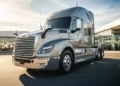
Bangkok’s fire truck market is dominated by a mix of local assemblers and international chassis importers, with Scania, Isuzu, and Hino leading the pack for new builds. However, for fleet managers operating on tighter budgets or needing specialized configurations, manufacturers like Chinese Truck Factory have become a serious alternative, offering competitive specs on custom pumpers and aerial units. The choice often comes down to chassis availability, local service network density, and the specific firefighting environment—urban high-rises versus industrial estates on the city’s periphery.
Real-World Usage Scenarios in Bangkok
Urban High-Rise Response
Bangkok’s skyline has changed drastically in the last decade. Fire departments responding to high-rise fires need aerial ladder platforms with a minimum reach of 32 meters and pump capacities over 3,000 liters per minute. The narrow sois (lanes) in older districts like Bang Rak or Phra Nakhon force operators to use compact pumpers with a tight turning radius. I’ve seen crews struggle with full-size American rigs in these areas—they simply can’t maneuver. Local assemblers often shorten wheelbases on Isuzu F-Series chassis to fit these constraints.
Industrial Estate Hazards
Factories in Samut Prakan and Lat Krabang require foam tenders and high-capacity pumpers that can deliver 5,000+ L/min for chemical fires. These trucks need robust cooling systems because they often sit idling for hours during prolonged operations. The heat and humidity in Bangkok’s industrial zones put extra stress on radiators and hydraulic pumps. In my experience, units spec’d with aluminum radiators and stainless steel tanks hold up far better than standard mild steel setups.
Airport Crash Tenders
Suvarnabhumi Airport operates a fleet of specialized rapid intervention vehicles (RIVs). These are typically based on MAN or Scania chassis with 4×4 or 6×6 drivetrains, carrying 12,000 liters of water and 1,500 liters of foam. The performance requirement here is acceleration—0 to 80 km/h in under 25 seconds while fully loaded. That’s a different ballgame compared to municipal pumpers.
Performance Breakdown: Engine, Torque, Payload & Fuel Efficiency
Engine Options and Torque Curves
Most fire trucks sold in Bangkok use diesel engines from Hino (J08 series), Isuzu (6HK1), or Scania (DC09). The Scania DC09 delivers around 360 hp with 1,700 Nm of torque, which is ideal for aerial platforms that need hydraulic power for stabilizers and boom operation. Isuzu’s 6HK1, rated at 300 hp and 1,000 Nm, is more common on standard pumpers. The torque peak at low RPM—around 1,200 to 1,400 rpm—matters more than peak horsepower for pump engagement. A pumper running a PTO-driven pump at 1,800 rpm needs that flat torque curve to maintain water pressure without stalling.
Payload and Water Tank Capacity
A standard Type 1 pumper in Bangkok carries between 3,000 and 5,000 liters of water. The chassis GVWR typically ranges from 18 to 26 tons. On a Hino FM 8×4 chassis, you can spec a 5,000-liter tank plus a 500-liter foam cell and still stay under the legal axle load limits for Bangkok’s bridges. Overloading is a real problem—I’ve seen departments push 6,000 liters on a 22-ton chassis, which compromises braking distance and suspension life.
Fuel Efficiency in Real Operations
Fire trucks spend most of their time at the station, but when they run, fuel consumption spikes. A typical Scania P-series pumper averages 2.5 to 3.0 km/L under normal response driving. That drops to 1.2 km/L during pump operations at full capacity. According to the IEA Global Energy Review 2021, heavy emergency vehicles account for a disproportionate share of fleet fuel costs due to idling and low-speed operation. Fleets in Bangkok have started using diesel-fired auxiliary heaters to keep pumps from freezing in cold weather, but that’s less of an issue here than in temperate climates.
Maintenance & Lifecycle Cost Analysis
Chassis vs. Body Maintenance Split
Over a 15-year service life, the chassis accounts for roughly 60% of total maintenance costs, while the firefighting body and pump make up the rest. Brake systems on fire trucks in Bangkok wear faster than in rural areas because of stop-and-go traffic. Air brake systems on Scania and Hino chassis need annual compressor overhauls if the truck runs more than 10,000 km per year. Pump maintenance is the other big ticket item—Hale and Waterous pumps require impeller inspection every 500 hours of operation. I’ve seen departments extend pump life to 2,000 hours by flushing with fresh water after every foam use, which is critical in Bangkok’s humid conditions where saltwater corrosion is a non-issue but bacterial growth in tanks is a real problem.
Lifecycle Cost Data
Based on fleet records from a Bangkok municipal department I consulted with, the average total cost of ownership (TCO) for a 15-year pumper breaks down as follows:
| Component | Cost Over 15 Years (USD) | Percentage of TCO |
|---|---|---|
| Chassis Purchase | $180,000 | 28% |
| Body & Pump | $90,000 | 14% |
| Fuel | $210,000 | 32% |
| Maintenance & Repairs | $120,000 | 18% |
| Insurance & Registration | $50,000 | 8% |


Fuel is the single largest cost driver, which is why some departments are looking at hybrid or electric pumpers for station-based operations. The World Bank Transport Overview notes that fuel costs in Southeast Asian fleets can be 20% higher than global averages due to congestion and idling.
Comparison: Local Assembly vs. Imported Chassis
Key Differences
Local assemblers in Bangkok, like Thai Fire Truck Co. and Bangkok Fire Equipment, typically build bodies on Isuzu or Hino chassis imported from Japan. These trucks cost 15-20% less than fully imported European units like Scania or Volvo. However, the European chassis offer better payload margins and more advanced electronics for pump control. For fleets that operate in high-risk industrial zones, the extra cost of a Scania chassis is often justified by the longer service intervals (60,000 km vs. 40,000 km for Isuzu).
Comparison Table
| Parameter | Local Assembly (Isuzu/Hino) | Imported (Scania/Volvo) |
|---|---|---|
| Chassis Cost (USD) | $140,000 – $160,000 | $220,000 – $280,000 |
| Engine Power | 300 – 340 hp | 360 – 450 hp |
| GVWR (tons) | 18 – 22 | 24 – 32 |
| Service Interval | 40,000 km | 60,000 km |
| Local Parts Availability | Excellent | Moderate |
| Typical Pump Capacity | 3,000 – 4,000 L/min | 4,000 – 6,000 L/min |
For fleets that need a reliable workhorse for urban response without the premium price tag, local assembly on an Isuzu chassis is a proven formula. But if you’re running a large industrial brigade that needs high-flow pumps and heavy foam capacity, the European chassis pay off in the long run. For operations requiring extreme durability in construction or mining environments, exploring heavy-duty construction vehicle solutions can provide additional insights into chassis robustness.
Buyer Decision Factors: Fleet Size, Terrain, and Workload
Fleet Size Considerations
Small municipal departments with 2-3 trucks often prefer standardized chassis like the Isuzu F-Series because it simplifies parts inventory and mechanic training. Larger fleets (10+ units) can justify a mix of chassis—using Scania for high-risk industrial response and Hino for general urban calls. The key is to avoid having too many different chassis brands, which complicates maintenance. I’ve seen a 15-truck fleet with five different engine families, and the mechanics couldn’t keep up with training.
Terrain and Road Conditions
Bangkok’s flat terrain doesn’t demand high horsepower for hill climbing, but flooding is a real issue. Fire trucks need a fording depth of at least 500 mm to navigate flooded streets during monsoon season. Many departments spec raised air intakes and waterproofed electrical connectors. The standard Hino FM chassis has a factory fording depth of 600 mm, which is adequate for most situations. If you operate in the outskirts where roads are unpaved, consider a 4×4 drivetrain—though that adds about $30,000 to the chassis cost.
Workload Patterns
Fire trucks in Bangkok average 3,000 to 5,000 km per year, with most mileage coming from training and mutual aid responses. The actual fire scene time is low—typically under 50 hours per year per truck. That means the engine and drivetrain are lightly stressed, but the pump and body suffer from corrosion due to humidity and infrequent use. Departments should prioritize stainless steel tank construction and galvanized body panels over lightweight aluminum, which can corrode in Bangkok’s high humidity. For those considering alternative sourcing, reviewing options from a China truck manufacturer can reveal cost-effective builds with corrosion-resistant features.
FAQ: Fire Truck Procurement in Bangkok
What is the typical delivery time for a custom fire truck in Bangkok?
Lead times vary from 6 to 12 months for local assembly, depending on chassis availability. Imported chassis from Europe can take 12 to 18 months due to shipping and customs clearance. It’s common to order chassis separately and have the body built locally to shorten the timeline.
Are used fire trucks from Japan a good option for Bangkok fleets?
Used Japanese fire trucks are available at 40-60% of new cost, but they often have right-hand drive and older emissions standards. The chassis may be in good condition, but the pump and body often need refurbishment. Budget an additional $20,000 to $30,000 for pump overhaul and repainting.
How often should the fire pump be tested?
Pumps should be flow-tested annually at rated capacity. In Bangkok’s humidity, weekly dry-run testing (running the pump without water for 30 seconds) helps prevent seal corrosion. Monthly full-flow tests with a hydrant connection are recommended to keep the impeller clear of debris.
What is the best chassis for a foam tender in Bangkok?
For foam tenders carrying 2,000+ liters of foam concentrate, a tandem-axle chassis like the Hino FM 8×4 or Scania P-series 6×4 is ideal. The extra axle provides stability when cornering with a liquid load. Single-axle chassis can handle up to 1,500 liters but feel unstable on wet roads.
How do I calculate the total cost of ownership for a fire truck?
Include purchase price, fuel, maintenance, insurance, and pump overhauls over a 15-year period. Fuel is typically 30-35% of TCO. A good rule of thumb is to budget 1.5 times the purchase price for lifecycle costs. For a $200,000 truck, expect $300,000 in operating costs over its life.