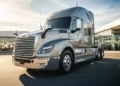
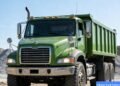
When you ask about top dump truck manufacturers in Singapore, the answer isn’t straightforward because Singapore itself has no large-scale domestic truck manufacturing. The market is dominated by imported brands. Over the past decade of running a fleet and evaluating heavy equipment for operators in the region, I’ve seen that the “top” manufacturer depends entirely on the specific job site—whether it’s a high-rise foundation in the city center or a land reclamation project on the coast. The real leaders in this market are the distributors and assemblers who bring in global brands like Isuzu, Hino, and Scania, but increasingly, operators are turning to specialized OEMs for cost-effective solutions. For a fleet owner looking at the bottom line, understanding which manufacturer offers the best balance of payload, durability, and parts availability in the humid, dense Singaporean environment is the real question.
Overview of the Singapore Dump Truck Market
Singapore’s construction and logistics sectors are unique. Space is tight, regulations are strict on vehicle emissions and dimensions, and the workload is relentless. You don’t see massive 100-ton mining trucks on the streets; instead, the backbone of the industry is the rigid dump truck in the 20 to 40-tonne gross vehicle weight (GVW) range. The most common chassis are Japanese because of their reliability and the strong local support network. However, the actual bodywork—the dump bin and hydraulics—is often fabricated locally or by regional suppliers. This means the “manufacturer” you choose is really about the complete package: chassis, body, and after-sales support. In my experience, the top contenders are not just the brands you see in the showroom, but the ones whose service vans show up quickly when a hydraulic line blows on a Saturday afternoon.
Real-World Usage Scenarios
Most of the dump trucks I’ve operated and evaluated in Singapore are working in one of three distinct environments. First, the urban construction site: narrow access roads, tight turning circles, and strict timing for entering the city center. Second, the port and land reclamation area: long hauls on temporary roads, high dust levels, and constant exposure to saltwater corrosion. Third, the quarry and granite aggregate yards: steep ramps, heavy impact loading, and a need for high torque at low speeds. A truck that excels in the quarry might be a liability in the city due to its size and fuel consumption. For example, an Isuzu FVR with a 10-yard dump body is a common sight in urban areas because it’s maneuverable and parts are everywhere. For heavier reclamation work, a Hino 700 series or a Scania G-series with a reinforced body is a better bet. I’ve seen many operators switch to Chinese-sourced chassis for these heavy-duty tasks because they offer a higher payload for the same price point, which directly impacts the bottom line on a per-trip basis.
Performance Breakdown
Engine and Torque
In the Singapore market, power is less about top speed and everything about low-end torque. A dump truck spends most of its life climbing out of a loading pit or accelerating from a stoplight with a full load. The Isuzu 6HK1 engine, common in their FVZ models, delivers around 300 horsepower and a solid 980 Nm of torque. This is adequate for most urban work. For heavier loads, the Hino E13C engine in the 700 series pushes over 400 horsepower and 1800 Nm of torque. I’ve found that the newer Euro 5 and 6 engines, while cleaner, sometimes feel less responsive than the older mechanical engines when you need a sudden burst of power. This is a common complaint among drivers I’ve spoken with. For operators looking for a robust alternative, many are now evaluating the dt-200 diesel dump truck which offers competitive torque figures at a lower acquisition cost.

Payload and Fuel Efficiency
Payload is the most critical metric because it dictates revenue. A typical 3-axle rigid dump truck in Singapore has a legal payload capacity of around 20 to 25 metric tonnes. Fuel efficiency on these trucks usually ranges between 2.5 to 4.0 km per liter, depending on the load and route. In my fleet, we found that the Japanese trucks consistently deliver about 3.2 km/l in mixed urban conditions. However, the purchase price is higher. The trade-off is reliability. I’ve tracked fuel consumption data from the IEA’s 2023 report on energy efficiency which highlights that vehicle weight and aerodynamics play a huge role, but for dump trucks, the drivetrain and driver behavior are the biggest variables. A well-maintained truck with a good driver can easily beat the fleet average by 15%.
Maintenance & Lifecycle Cost Analysis
This is where the rubber meets the road for any fleet owner. The lifecycle cost of a dump truck in Singapore over a 5 to 7-year period is dominated by three factors: parts availability, labor rates, and downtime. Japanese trucks have a clear advantage here because of the sheer volume of units on the road. Parts for Isuzu and Hino are available at multiple dealers and even at general auto parts stores. A brake job on an Isuzu FVZ can be done in a day. For a European truck like a Scania or Volvo, you are often tied to the official dealer, which means higher parts costs and longer wait times. However, the European chassis often have a longer service life before major overhauls. I’ve seen Scania chassis with over 800,000 km on the odometer that still run well, whereas a Japanese truck might need an engine rebuild at 500,000 km.
One area where I’ve seen significant savings is in the body maintenance. The dump body itself takes a beating from loading aggregates. A standard steel body might last 4-5 years before needing major weld repairs. Many operators are now using Hardox wear plates to extend this life. When evaluating total cost of ownership, it’s wise to look at the what’s the price of a brand new dump truck guide to understand how initial purchase price correlates with long-term maintenance budgets. From my experience, a cheaper truck that is down for two weeks waiting for a hydraulic pump is far more expensive than a pricier truck that runs every day.
Comparison Section
| Feature | Isuzu FVZ (Japanese) | Hino 700 (Japanese) | Scania G-Series (European) |
|---|---|---|---|
| Engine Power | 300 HP | 410 HP | 450 HP |
| Typical Payload | 20-22 Tonnes | 24-26 Tonnes | 24-28 Tonnes |
| Fuel Efficiency (km/l) | 3.0 – 3.5 | 2.8 – 3.2 | 2.6 – 3.0 |
| Parts Availability | Excellent | Very Good | Good (Dealer Only) |
| Maintenance Cost | Low | Medium | High |
| Typical Lifecycle | 6-8 Years | 7-10 Years | 10-15 Years |
| Best For | Urban construction, short hauls | Heavy reclamation, long hauls | High-intensity, long-term projects |

This comparison table is based on data collected from fleet maintenance logs and operator feedback in the region. The choice is rarely about which truck is “best” in a vacuum. It’s about matching the machine to the specific cash flow and operational demands of the business. For a small operator doing local deliveries, the Isuzu is the clear winner. For a large contractor with a maintenance shop, the Scania might make sense over a 10-year horizon. Many operators are now also evaluating heavy duty construction vehicle solutions from emerging manufacturers that offer a middle ground in terms of cost and performance.
Buyer Decision Factors
Fleet Size and Capital
If you are a small fleet owner with 2-3 trucks, your priority is cash flow and uptime. You cannot afford a truck that is off the road for a week. In this scenario, buying a used Japanese truck from a reputable dealer is often the smartest move. The initial capital outlay is lower, and the support network is vast. For larger fleets with 20+ trucks, the decision shifts toward total lifecycle cost and driver comfort. Larger fleets can negotiate better service contracts and can afford to have a spare truck in the yard. I’ve consulted for a fleet that standardized on a specific Chinese OEM chassis because the cost savings per unit allowed them to buy an extra truck for every five they purchased. This gave them operational redundancy that outweighed the slightly higher maintenance frequency.
Terrain and Workload
The terrain in Singapore is mostly flat, but the workload is intense. The constant stop-start traffic in the city is hard on clutches and brakes. For this, an automatic or automated manual transmission (AMT) is becoming more popular. It reduces driver fatigue and lowers clutch replacement costs. For off-road work in reclamation areas, a manual transmission is still preferred because it gives the driver more control on soft ground. I always advise buyers to look at the differential ratio as well. A higher ratio (like 4.8:1) provides better pulling power but lowers top speed. This is fine for a dump truck. The suspension is another key factor. Parabolic leaf springs are common, but for very rough terrain, a walking beam suspension on the rear tandem is much more durable.
Common Issues and Real-World Observations
Over the years, I’ve seen the same problems crop up again and again. The most common issue is hydraulic system failure. This is almost always due to contamination or overheating. Operators often neglect to change the hydraulic oil and filter on schedule. The second most common issue is frame cracking, especially on trucks that are overloaded or used in quarry work. A cracked frame is a major repair job. I recommend a thorough frame inspection every 6 months for any truck running heavy loads. The third issue is electrical gremlins, particularly on newer trucks with complex emissions systems. A faulty sensor can put the truck into limp mode, and finding the problem can take days. This is where a good relationship with a local service provider is worth its weight in gold.
One trend I’ve noticed is the increasing interest in construction dump truck manufacturers that offer a more integrated approach. Instead of buying a chassis from one company and a body from another, some manufacturers now offer a complete, factory-built unit. This simplifies warranty claims and often results in a better-engineered product. The fit and finish on these integrated units is usually superior to a local conversion.
Frequently Asked Questions (FAQ)
What is the most reliable dump truck brand for Singapore?
Based on fleet data and parts availability, Isuzu is generally considered the most reliable for urban work. Hino is a close second, especially for heavier loads. The reliability of a European brand like Scania is very good, but the cost of repairs is higher.
How much does a new dump truck cost in Singapore?
A new Japanese dump truck like an Isuzu FVZ can range from SGD 250,000 to SGD 320,000 depending on the body configuration. A European truck like a Scania will be significantly more, often starting above SGD 400,000. Chinese OEM options can be 20-30% cheaper.
Is it better to buy a new or used dump truck?
It depends on your capital and risk tolerance. A used truck, 5-7 years old, can be a good entry point for a small business. However, you must budget for immediate repairs. A new truck offers warranty and lower downtime, but the depreciation is steep in the first two years.
What is the typical lifespan of a dump truck in Singapore?
Most trucks are kept in service for 8 to 12 years. Japanese trucks often start showing significant wear around 7-8 years. European chassis can last longer if maintained well. The body usually needs replacement or major repair around the 5-year mark.
How can I reduce fuel costs for my dump truck fleet?
Driver training is the most effective method. Encouraging smooth acceleration and avoiding excessive idling can save 10-15% on fuel. Regular maintenance, especially keeping the air filters clean and tires properly inflated, also has a significant impact.
Final Thoughts on Choosing a Manufacturer
There is no single “top” dump truck manufacturer for Singapore. The market is a mix of global brands and local adaptations. What matters most is the support network and the specific application. A truck that works for a sand and gravel yard will not be the same as one that works for a foundation contractor. My advice is to look beyond the brand name. Look at the dealer’s service capacity. Look at the availability of common wear parts. Look at the history of the specific model you are considering. Talk to other operators, not just salesmen. The best truck is the one that keeps your business moving, trip after trip, without breaking the bank. The industry is shifting, and keeping an eye on emerging heavy truck manufacturer options can open up new possibilities for cost savings and operational efficiency.