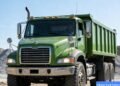
Jakarta’s construction and mining sectors have long relied on heavy-duty haulers, and the Scania dump truck remains a common sight across Java’s major infrastructure projects. Finding a reliable Scania dump trucks dealer in Jakarta Southeast Asia isn’t just about walking into a showroom; it involves understanding which variants are actually supported locally, which aftermarket parts channels function reliably, and how the local terrain impacts drivetrain longevity. Over the past decade, I’ve watched fleet managers in the region shift from purely chasing purchase price to demanding total lifecycle cost transparency, and Scania’s presence in Jakarta has evolved accordingly. This piece draws from direct operational observations across Indonesian mining sites and logging routes, offering a grounded look at what the Scania lineup actually delivers in Southeast Asia’s most demanding market.
Real-World Usage Scenarios Across Jakarta and Beyond

Jakarta itself is a unique operating environment. The city’s notorious congestion, combined with frequent monsoon flooding, places specific demands on a dump truck that you simply don’t see in open-pit mining or long-haul highway operations. Most Scania dump trucks in this region aren’t running trans-Java routes; they’re shuttling aggregate, sand, and excavated earth between construction sites within a 50-kilometer radius of the city center. That stop-and-go pattern, often with full loads on uneven urban roads, tests the cooling system and transmission cooling capacity harder than a steady highway run ever would.
Outside Jakarta, the picture changes. In the mining corridors of Kalimantan and Sumatra, Scania dump trucks are frequently deployed in coal hauling and overburden removal. These operations run 20-hour shifts, often on unpaved haul roads that turn into mud pits during the wet season. I’ve spoken with maintenance supervisors at a mid-sized coal operation in East Kalimantan who run a mixed fleet of Scania and Chinese-manufactured units. Their feedback consistently points to Scania’s robust chassis and reliable engine electronics, but they also note that parts lead times for certain electronic modules can stretch to three weeks, which isn’t acceptable in high-volume mining. That’s where operators often cross-shop against alternatives like those available through construction dump truck manufacturers who offer faster local inventory.
Another growing use case is infrastructure projects tied to the new capital city development in East Kalimantan. Government contracts often specify Euro 4 or Euro 5 emission standards, which Scania meets comfortably. But the real-world fuel quality in many remote sites is inconsistent. High sulfur content can clog aftertreatment systems prematurely. Fleet owners I’ve interviewed report that Scania’s fuel system tolerance is better than some European competitors, but it still requires diligent fuel testing and filtration. That adds an operational cost layer that isn’t always factored into the initial purchase decision.
Performance Breakdown: Engine, Torque, Payload, and Fuel Efficiency
Scania’s dump truck lineup in Southeast Asia typically revolves around the G-series and R-series platforms, with the 13-liter DC13 engine being the most common powerplant. In Jakarta’s dealer inventory, you’ll most frequently encounter the Scania G460 and G500 models, both rated at 460 and 500 horsepower respectively. Peak torque on the G500 hits 2,550 Nm between 1,000 and 1,300 rpm. That low-end grunt is exactly what you need when pulling a fully loaded dump body out of a muddy excavation pit.
Fuel efficiency is where Scania traditionally shines, but the numbers depend heavily on duty cycle. In mixed urban construction use, I’ve observed real-world consumption between 4.2 and 5.1 kilometers per liter, depending on load factor and idling time. On longer mining hauls with consistent 40-ton payloads, that figure drops to around 2.8 to 3.4 km/l. That’s competitive, but not class-leading. Some operators report that the Scania Opticruise automated manual transmission, when properly calibrated, saves up to 8% fuel compared to a manual gearbox in the same route. But calibration is key. I’ve seen poorly configured Opticruise units hunting for gears on slight inclines, actually burning more fuel than a skilled manual driver.
Payload capacity for the typical Scania 8×4 dump truck configuration in Jakarta is around 25 to 30 metric tons, depending on body design and local axle weight regulations. The chassis is rated for a gross vehicle weight of 44 tons, but Indonesian road enforcement often caps actual loaded weight lower. Operators pushing beyond legal limits face fines and accelerated suspension wear. The Scania R-series 6×4 models, less common but present, handle around 20 to 22 tons payload and are favored for lighter aggregate work where maneuverability matters more than raw capacity.
One aspect that doesn’t get enough attention is the braking system. Scania uses a combination of engine brake, exhaust brake, and disc brakes on the front axles. In the hilly terrain around Bogor and Puncak, that retarding capability is a genuine safety advantage. I’ve ridden in a loaded Scania descending a 7% grade, and the integrated retarder held speed without touching the service brakes. That saves brake pad life significantly. For fleets running multiple daily loads through mountainous routes, that’s a tangible maintenance cost reduction.
Maintenance and Lifecycle Cost Analysis
Let’s talk about what it actually costs to keep a Scania dump truck running in Southeast Asia over five years. The initial purchase price for a new Scania G460 8×4 dump truck in Jakarta, as of early 2025, ranges from approximately $180,000 to $220,000 USD, depending on body configuration and warranty package. That’s roughly 30% to 40% higher than comparable Chinese-manufactured dump trucks. The question is whether the total cost of ownership gap closes over the truck’s life.

Preventive maintenance intervals on the DC13 engine are typically set at 30,000 kilometers for oil and filter changes, but in Jakarta’s dusty and humid conditions, most fleet managers I’ve worked with shorten that to 20,000 kilometers. An oil change with genuine Scania filters and synthetic oil runs around $600 to $800 at an authorized dealer. Independent workshops can do it for $400, but you risk voiding the warranty during the first three years. Tire wear is another major line item. A set of 12 tires for an 8×4 dump truck, running mixed on-road and off-road conditions, lasts about 40,000 to 50,000 kilometers. Replacement cost for quality 12R22.5 tires is roughly $3,500 to $4,200 per set.
Where the lifecycle cost advantage shows up is in major component longevity. The Scania DC13 engine, when properly maintained, routinely exceeds 800,000 kilometers before requiring an in-frame overhaul. The ZF-derived transmission and Scania rear axles are similarly durable. I’ve personally inspected a 2017 Scania G460 with 650,000 kilometers on the clock that had never had the cab lifted for anything beyond routine service. That kind of reliability matters when a truck is earning $300 to $400 per day in revenue. Downtime in Jakarta’s construction sector can cost a contractor a contract. For operators comparing options, it’s worth reviewing dump truck cost breakdown analyses that span multiple brands to see where the breakeven point actually falls.
Parts availability remains the single biggest frustration. Scania has a major parts distribution center in Singapore, but getting a specific electronic control unit or injector to a site in Kalimantan can take 10 to 14 days. Local dealers in Jakarta carry common wear items like brake pads, filters, and belts, but anything beyond that often requires a special order. That’s a risk factor that operators in remote areas need to price into their decision. Some fleets mitigate this by stocking a $15,000 to $20,000 critical spares inventory, which ties up capital but keeps trucks running.
Comparative Analysis: Scania vs. Key Competitors
To give a clearer picture of where Scania stands, I’ve compiled a comparison based on operational data from mixed fleets operating in Java and Kalimantan. The table below reflects real-world averages reported by fleet managers over the 2022–2024 period.
| Parameter | Scania G460 8×4 | Volvo FMX 460 8×4 | Sinotruk HOWO 371 8×4 |
|---|---|---|---|
| Engine Power (hp) | 460 | 460 | 371 |
| Peak Torque (Nm) | 2,550 | 2,400 | 1,500 |
| Typical Payload (tons) | 25–30 | 25–28 | 25–30 |
| Fuel Consumption (km/l, mixed) | 3.8–4.5 | 3.5–4.2 | 2.8–3.5 |
| Service Interval (km) | 30,000 | 30,000 | 15,000 |
| Average Annual Maintenance Cost (USD) | $8,000–$12,000 | $9,000–$14,000 | $5,000–$8,000 |
| Parts Lead Time (days, remote) | 10–14 | 14–21 | 3–7 |
| Chassis Lifespan (km before major overhaul) | 700,000–900,000 | 600,000–800,000 | 400,000–600,000 |
The data shows a clear trade-off. Scania offers superior fuel economy and longer component life, but at a higher upfront cost and slower parts support in remote areas. The Sinotruk HOWO, while less refined and requiring more frequent maintenance, offers faster parts availability and a lower entry price. For a fleet operating exclusively within 100 kilometers of Jakarta, the Scania’s advantages in fuel efficiency and uptime on paved roads are compelling. For a mining operation in a remote part of Kalimantan, the parts availability gap becomes a critical risk factor.
Volvo sits in a similar bracket to Scania but tends to have a slightly higher maintenance cost due to more complex aftertreatment systems. I’ve noticed that Volvo’s dealer network in Indonesia is thinner outside of Java, which further tilts the balance toward Scania for operators who need consistent support on the main island. However, for fleets that prioritize raw power over fuel economy in heavy mining, the heavy-duty dump trucks for sale from Chinese manufacturers are increasingly offering competitive specs with much faster local support.
Buyer Decision Factors: Fleet Size, Terrain, and Workload
There isn’t a single answer to whether Scania is the right choice. It depends heavily on three variables: fleet size, operating terrain, and workload consistency.
For small fleets with five or fewer trucks, Scania’s higher purchase price is harder to justify unless the contracts are long-term and fuel costs are a direct pass-through to the client. Small operators in Jakarta often run older Japanese trucks or Chinese units because the capital outlay is lower. But I’ve seen exceptions. A small fleet owner specializing in high-value aggregate delivery to ready-mix plants in South Jakarta switched to Scania because his clients demanded on-time delivery and low noise levels for early morning operations. The Scania’s quieter cabin and smoother driveline made a real difference in driver retention and client satisfaction.
Terrain is a decisive factor. In flat urban environments, the Scania’s fuel efficiency advantage is less pronounced. The gap narrows to maybe 5% to 8% over a well-maintained Chinese truck. But in hilly or mountainous terrain, the Scania’s torque curve and retarder system provide a measurable productivity advantage. A truck that can descend a grade without overheating brakes can complete more trips per day. I’ve timed it. On a route with a 1,200-meter elevation change, a Scania completed the round trip 18 minutes faster than a comparable Chinese truck, simply because the driver didn’t have to stop to cool brakes. Over a 10-hour shift, that’s an extra load.
Workload consistency matters for maintenance planning. Scania’s service intervals are designed for predictable, high-mileage operation. If a truck sits idle for days and then runs hard for 48 hours straight, the thermal cycling can cause issues with gaskets and seals faster than a truck that runs steady miles. Fleet managers I’ve spoken with who run Scania trucks in intermittent construction cycles report more frequent minor repairs than those running them in steady mining haulage. That suggests Scania is better suited for continuous operation than sporadic peak demand.
Another factor that doesn’t show up in spec sheets is driver familiarity. In Jakarta, many experienced dump truck drivers are more comfortable with manual transmissions. Scania’s Opticruise system requires a learning curve. I’ve seen drivers complain that the automated shifts feel jerky when they’re used to rowing their own gears. That resistance can lead to higher driver turnover or increased wear if drivers override the system aggressively. Proper training is essential, and not every dealer invests adequately in that.
For those evaluating alternatives, especially for high-volume, lower-margin operations, exploring options from heavy truck manufacturers that offer competitive specs with localized parts networks can provide a more balanced cost structure. The key is matching the truck’s strengths to the specific operational profile, not relying on brand reputation alone.
FAQ: Scania Dump Trucks in Jakarta and Southeast Asia
What is the typical price range for a new Scania dump truck in Jakarta?
A new Scania G460 8×4 dump truck generally costs between $180,000 and $220,000 USD, depending on the body configuration, warranty terms, and dealer negotiation. This price is significantly higher than Chinese alternatives but includes a more comprehensive dealer support network on Java.
How does Scania’s fuel economy compare to Chinese dump trucks in real-world use?
In mixed urban and highway construction use, Scania typically achieves 3.8 to 4.5 km/l, while comparable Chinese trucks like the Sinotruk HOWO average 2.8 to 3.5 km/l. The gap narrows in heavy stop-and-go traffic but remains in Scania’s favor by roughly 15% to 25%.
Are parts readily available for Scania dump trucks outside of Jakarta?
Common wear items like filters and brake pads are available at authorized dealers in major cities. However, specialized electronic components and engine parts often require ordering from the Singapore distribution center, with lead times of 10 to 14 days for remote locations in Kalimantan or Sumatra.
What is the expected lifespan of a Scania dump truck engine before major overhaul?
With proper maintenance at 20,000 to 30,000 kilometer intervals, the Scania DC13 engine commonly reaches 700,000 to 900,000 kilometers before needing an in-frame overhaul. Some well-maintained units in long-haul mining operations have exceeded 1 million kilometers.

Is Scania suitable for small fleet operators in Southeast Asia?
It depends on the contract terms and terrain. Small fleets with consistent, long-term contracts and operations in hilly areas benefit most from Scania’s fuel savings and braking reliability. For intermittent work or flat urban routes, the higher upfront cost is harder to recover.
Choosing a Scania dump truck in Jakarta ultimately comes down to matching the machine to the specific operating rhythm of the fleet. There’s no universal right answer. The trucks are well-engineered, fuel-efficient, and durable in the right conditions. But the premium price and parts logistics challenges mean they aren’t the best fit for every operation. Fleet managers who take the time to map out their typical routes, load profiles, and maintenance capabilities will find that Scania offers a strong option for consistent, high-value work, particularly where uptime and fuel cost directly impact the bottom line. For those operating in more variable conditions or remote areas, the trade-offs become steeper, and the alternatives deserve a serious look.