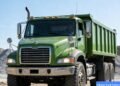
Bringing heavy trucks from China into Indonesia is a process that looks simple on paper but gets complicated the moment you factor in local regulations, shipping logistics, and the sheer variety of available specifications. Over the years, I have watched fleets struggle not because they bought a bad truck, but because they chose the wrong configuration for the terrain or underestimated the cost of compliance. The reality is that importing heavy trucks from China to Indonesia requires a clear understanding of the Indonesian National Standard (SNI) certification, the Ministry of Industry’s import approval process, and the practical differences between Chinese domestic specs and export specs. This guide reflects what I have learned from long-term fleet observation and working with operators who run Chinese equipment across Sumatra, Java, and Kalimantan.
Overview: Why Indonesian Operators Are Turning to Chinese Trucks
The Indonesian market has historically been dominated by Japanese brands like Hino, Mitsubishi Fuso, and Isuzu, largely due to their established dealer networks and reputation for reliability. But over the last five to seven years, Chinese truck manufacturers have gained significant ground, particularly in the heavy-duty segment. The reason is not just price, although that is a factor. Chinese trucks today offer competitive specifications, better fuel efficiency in certain operating conditions, and a level of technological integration that was simply not present in earlier models. From real-world trucking operations, I have seen Chinese 6×4 tractors handle the steep grades of Trans-Sumatra with less strain than comparable Japanese models that are ten years older.
The import process itself is the biggest hurdle. Indonesia requires a valid SNI certification for many types of commercial vehicles, and this is not something you can acquire overnight. The process involves product testing, factory audits, and approval from the Ministry of Industry. Additionally, the government restricts the import of used trucks, which means you are looking at new units or, in some cases, completely knocked-down (CKD) kits that are assembled locally. For a fleet owner, the decision to import hinges on whether the total landed cost—including shipping, customs duties, taxes, and certification—still beats buying a locally assembled or used Japanese truck.
Real-World Usage Scenarios: Where Chinese Heavy Trucks Excel
Chinese heavy trucks are not a one-size-fits-all solution, and understanding where they fit best is crucial. In my experience, they perform exceptionally well in construction and mining applications, where the emphasis is on payload capacity and durability rather than top-end speed. The heavy-duty construction vehicle solutions offered by manufacturers like Shacman and Sinotruk are designed for harsh conditions, and they have proven themselves in Indonesian mining operations, particularly in Kalimantan where haul roads are often unpaved and wet.
For long-haul logistics on Java’s toll roads, Chinese trucks are also becoming a viable option. The newer models with Weichai or Cummins engines (the latter often licensed for local production) deliver adequate power for highway use. However, I have noticed that the ride quality and cabin comfort still lag behind European trucks, which matters if your drivers are spending 10 to 12 hours behind the wheel. For urban distribution and shorter regional hauls, Chinese 6×2 and 4×2 trucks are increasingly common, especially in the logistics hubs around Jakarta and Surabaya.
The key takeaway is that Chinese trucks are best suited for operations where payload, cost per kilometer, and ruggedness are the top priorities. If you are running a fleet that primarily operates on well-paved highways with light loads, a used Japanese truck might still be the better financial decision. But for heavy hauling in demanding environments, the Chinese units are worth serious consideration.
Performance Breakdown: Engine, Torque, Payload, and Fuel Efficiency
When evaluating a Chinese heavy truck, the engine is the first thing I look at. The most common power units are the Weichai WP series and the Cummins ISG series, both of which are widely used in the Chinese domestic market and exported to Southeast Asia. The Weichai WP12, for example, produces between 375 and 460 horsepower, with peak torque ranging from 1800 to 2100 Nm. This is adequate for a 6×4 tractor pulling a loaded trailer up a 6% grade, but it is not going to win any races. The Cummins ISG11 and ISG12 engines, which are produced in China under license, offer similar performance and are often preferred for their slightly better fuel mapping and quieter operation.
Payload capacity is where Chinese trucks truly shine. A typical Sinotruk HOWO 6×4 dump truck, for instance, has a gross vehicle weight rating (GVWR) of around 25 to 30 tons, with a payload capacity of 15 to 18 tons depending on the body configuration. This is comparable to, and in some cases better than, what you get from a comparable Japanese chassis. The frame rails on these trucks are thicker and heavier, which is a deliberate design choice for the Chinese market where overloading is common. This translates to better durability in Indonesian mining and construction sites, but it also means a heavier unladen weight, which reduces fuel efficiency when running empty.
Fuel efficiency is a mixed bag. On a flat highway with a light load, a Chinese 6×4 tractor can achieve around 2.5 to 3.0 kilometers per liter, which is on par with a 10-year-old Japanese truck. But under heavy load or in stop-and-go traffic, the numbers drop significantly. I have seen real-world data from a fleet in South Sumatra where a HOWO 6×4 hauling coal averaged 1.8 km/l over a 200 km haul route. For long-haul transportation solutions, this is a critical metric, and it is worth negotiating with the manufacturer for a higher-geared rear axle ratio if your routes are predominantly flat.
Maintenance and Lifecycle Cost Analysis
One of the biggest misconceptions about Chinese trucks is that they are cheap to buy but expensive to maintain. This is not entirely accurate. The initial purchase price is significantly lower than a comparable Japanese or European truck—often 20% to 30% less—but the maintenance costs depend heavily on how well you manage your parts supply and service schedule. From my long-term fleet observation, the biggest issue is not the quality of the components but the availability of spare parts. In Indonesia, you cannot walk into a local dealer and find a water pump for a Weichai engine. You need to establish a relationship with a supplier in China or a specialized importer in Jakarta.
Preventive maintenance is non-negotiable. Chinese trucks are built to be worked hard, but they require more frequent inspections than their Japanese counterparts. For example, the air filter on a HOWO dump truck should be checked every 5,000 kilometers if you are operating in a dusty environment like a mining site. The brake linings also wear faster, especially on trucks that are frequently loaded to capacity. In my experience, the total cost of ownership over a five-year period is roughly 10% to 15% lower than a Japanese truck, but only if you are diligent about maintenance. If you let the truck run until something breaks, the repair costs can quickly erase the initial savings.
Another factor to consider is the resale value. Chinese trucks do not hold their value as well as Japanese trucks in the Indonesian used market. A five-year-old Hino will still command a decent price, but a five-year-old Shacman will be harder to sell. This is changing slowly as more Chinese trucks enter the market and buyers become more familiar with them, but it is still a consideration if you plan to rotate your fleet every few years. For a detailed cost breakdown on specific models, I recommend reviewing the dump truck price analysis to understand how the initial investment compares to long-term operational costs.
Comparison: Chinese vs. Japanese vs. European Heavy Trucks
To make an informed decision, it helps to put the numbers side by side. Below is a comparison table based on typical specifications and operating data for heavy-duty trucks in the 6×4 configuration, which is the most common for mining and construction in Indonesia.
| Parameter | Chinese (Sinotruk HOWO) | Japanese (Hino 700) | European (Volvo FH) |
|---|---|---|---|
| Engine Power | 375–460 hp | 380–420 hp | 420–540 hp |
| Peak Torque | 1800–2100 Nm | 1800–2000 Nm | 2100–2600 Nm |
| GVWR | 25–30 tons | 25–30 tons | 26–32 tons |
| Payload Capacity | 15–18 tons | 14–16 tons | 15–18 tons |
| Fuel Efficiency (loaded) | 1.8–2.5 km/l | 2.2–2.8 km/l | 2.5–3.2 km/l |
| Initial Purchase Price | USD 60,000–80,000 | USD 90,000–120,000 | USD 150,000–200,000 |
| Maintenance Cost (5-year) | Moderate | Low | High |
| Resale Value (after 5 years) | Low | High | Medium |
| Parts Availability in Indonesia | Improving | Excellent | Good |
This table is not meant to show that one category is universally better. It simply reflects the trade-offs you have to accept. If your priority is minimizing upfront capital expenditure and you have a dedicated maintenance team, a Chinese truck is a rational choice. If you prioritize resale value and maximum uptime with minimal maintenance fuss, a Japanese truck is still the safer bet. European trucks only make sense if you are running long-haul routes where driver comfort and fuel efficiency at high speeds can offset the higher purchase price.
For fleets that require a mix of performance and cost-effectiveness, the mining dump truck performance offered by Chinese manufacturers is particularly compelling. The ability to spec a truck specifically for your load and terrain, rather than adapting a highway truck to off-road use, is a significant advantage.
Buyer Decision Factors: Fleet Size, Terrain, and Workload
Before you sign a purchase order, you need to evaluate three critical factors: your fleet size, the terrain you operate on, and your typical workload. These variables will determine not only which truck model you should buy but also whether importing from China is even the right move for your business.
Fleet size matters because it affects your bargaining power and your ability to manage spare parts inventory. If you are a small operator with two or three trucks, the hassle of importing directly from China might not be worth it. You will likely be better off buying from a local distributor who has already handled the importation and certification process. However, if you are running a fleet of 20 or more trucks, the cost savings from direct importation become substantial. You can also justify hiring a dedicated parts manager and maintaining a stock of commonly replaced items like filters, brake pads, and sensors.
Terrain is the next consideration. Trucks that operate in the highlands of Sumatra or the mining areas of Kalimantan need a different specification than those running on the flat toll roads of Java. For mountainous terrain, you need a higher torque output and a lower final drive ratio to maintain speed on grades. For flat terrain, a higher ratio will improve fuel efficiency. Chinese manufacturers are generally flexible about these specifications, but you need to know what you want before you start negotiating. I have seen fleets order the same model for all their operations and then suffer from poor performance on specific routes because the gearing was wrong.
Workload is the final factor. A truck that runs 20 hours a day, six days a week, will wear out faster than one that runs a single shift. This is not unique to Chinese trucks, but it is more pronounced because the build quality is not as consistent as you might find in a Volvo or a Scania. If your workload is intensive, you need to budget for more frequent major overhauls. The good news is that the cost of a major overhaul on a Chinese engine is significantly lower than on a European engine. For example, an in-frame overhaul on a Weichai WP12 might cost around USD 5,000 to 7,000, whereas a comparable job on a Volvo D13 could run USD 15,000 or more. This is a compelling reason to consider Chinese trucks for harsh, high-utilization applications.
Import Regulations and Certification: What You Need to Know
The legal side of importing heavy trucks from China to Indonesia is where many buyers get into trouble. The process is governed by the Ministry of Industry and the Ministry of Trade, and it involves several steps that cannot be skipped. First, you need to obtain an import approval letter, known as a Persetujuan Impor (PI), which is issued based on your company’s status as a registered importer with a valid business license. This is not a trivial process, and it requires a local entity to be set up in Indonesia.

Next, you need to secure SNI certification for the truck model you intend to import. The SNI certification process requires testing of the vehicle against Indonesian standards, which may differ from Chinese standards in areas like lighting, emissions, and safety features. In some cases, you may need to modify the truck to meet SNI requirements, which adds to the cost and timeline. The certification process typically takes three to six months, and it must be completed before the vehicle can be registered for road use in Indonesia.
Customs duties and taxes are another significant cost. The import duty on commercial vehicles is generally around 10% to 15%, and you will also be subject to Value Added Tax (VAT) of 11% and a luxury goods tax if the vehicle falls into certain categories. The total landed cost is typically 25% to 35% higher than the FOB price you pay to the Chinese manufacturer. It is essential to work with a customs broker who has experience with heavy equipment, as misclassification can lead to fines and delays. For a broader understanding of the OEM side, you can look at how OEM truck manufacturing processes affect the final specification and compliance of the vehicles you are importing.
Shipping and Logistics: Getting the Trucks to Indonesia
Once you have the paperwork in order, the next challenge is shipping. The most common route is from Shanghai or Tianjin to Jakarta or Surabaya. Roll-on/roll-off (RoRo) shipping is the preferred method for trucks that are self-propelled, as it is faster and less expensive than container shipping. The transit time is typically 10 to 14 days, depending on the port of origin and the shipping line. However, RoRo ships have limited capacity, and you may need to book your space several weeks in advance, especially during peak shipping seasons.
Container shipping is an option if you are importing a small number of trucks or if the trucks are not drivable (e.g., CKD kits). A 40-foot high-cube container can hold one medium-duty truck or two smaller units, but you will need to pay for disassembly and crating. This is rarely cost-effective for heavy trucks, so RoRo is the standard choice.
Port congestion in Jakarta can be a real issue. Tanjung Priok, the main port, is often operating at near capacity, and delays of three to five days are common. It is wise to factor this into your delivery timeline. After the truck is offloaded, you will need to clear customs, which involves inspection and payment of duties. This process can take another three to five working days if your documentation is in order. Once cleared, the truck can be driven to your facility, but you will need temporary license plates and insurance for the journey.
Cost Breakdown: What You Are Really Paying For
To give you a realistic picture, let me break down the cost of importing a typical 6×4 dump truck from China to Indonesia. The FOB price for a Sinotruk HOWO 6×4 with a 12-liter engine and a 15-cubic-meter dump body is around USD 55,000 to 65,000, depending on the configuration and optional features. Add ocean freight of approximately USD 1,500 to 2,000 per unit for RoRo shipping. Marine insurance is roughly 0.3% of the cargo value, which is about USD 200 per truck.
On the Indonesian side, customs duties at 10% of the CIF (cost, insurance, freight) value adds around USD 5,800. VAT at 11% adds another USD 6,400. If the truck is subject to the luxury goods tax, which applies to certain large-displacement vehicles, you could be looking at an additional 20% to 40%, but most commercial heavy trucks are exempt if they are classified as goods transport vehicles. The SNI certification process, including testing and audit fees, can cost anywhere from USD 8,000 to 15,000 per model, but this is a one-time cost that can be spread across multiple units. Finally, you have port handling fees, customs broker fees, and inland transportation, which typically total USD 1,500 to 2,500 per truck.
All told, the landed cost of a single truck is in the range of USD 75,000 to 90,000. This is still significantly less than the USD 110,000 to 130,000 you would pay for a comparable Japanese truck from a local dealer. However, the gap narrows when you factor in the cost of downtime and parts delays. For a more detailed look at how these costs compare to other types of commercial vehicles, you can check the semi-truck cost guide, which provides a broader context for heavy-duty pricing.
FAQ: Common Questions About Importing Chinese Heavy Trucks
1. Can I import a used heavy truck from China to Indonesia?
No, Indonesia strictly prohibits the import of used commercial vehicles. You can only import new trucks, or you can import CKD kits for local assembly. This is to protect the local automotive industry and ensure vehicle safety standards.
2. How long does the SNI certification take?
The SNI certification process typically takes three to six months from the date of application. This includes document review, product testing, and a factory audit if the manufacturer is not already certified. It is advisable to start the process as early as possible to avoid delays.

3. What is the warranty situation on Chinese trucks?
Most Chinese manufacturers offer a standard warranty of 12 to 18 months or 100,000 to 150,000 kilometers, whichever comes first. However, this warranty is often only valid if the truck is serviced by an authorized dealer. In Indonesia, this can be a problem if there is no local dealer for the brand you choose.
4. Are spare parts readily available in Indonesia?
Availability varies by brand. Sinotruk and Shacman have established distribution networks in Indonesia, so parts are generally available within a week. For less common brands, you may need to order parts directly from China, which can take two to four weeks. It is essential to stock up on critical spare parts before you put the truck into service.
5. What is the typical fuel consumption for a Chinese 6×4 truck?
In mixed driving conditions, you can expect around 2.0 to 2.5 kilometers per liter. Under heavy load on hilly terrain, this can drop to 1.5 to 1.8 kilometers per liter. For a diesel truck, this is within the normal range, but it is lower than what you would get from a newer European model with advanced fuel management systems.
6. Can I finance the import of Chinese trucks through Indonesian banks?
Yes, but it is more difficult than financing a locally assembled truck. Banks are generally cautious about financing imported vehicles because the resale value is uncertain. You may need to provide a larger down payment or secure the loan with other assets. Leasing companies are often more flexible, but the interest rates may be higher.
Importing heavy trucks from China to Indonesia is a complex but potentially rewarding endeavor. The key is to approach it with a clear plan and realistic expectations. The initial cost savings are real, but they can be eroded by certification delays, parts shortages, and maintenance issues if you are not prepared. Based on my experience with fleets operating in the region, the operators who succeed are the ones who treat the import process as a long-term partnership with the manufacturer, rather than a one-time transaction. They invest in spare parts inventory, train their mechanics on the specific engine and electrical systems, and maintain a close relationship with a reliable customs broker. If you can do that, a Chinese heavy truck can be a workhorse that delivers solid returns for years.