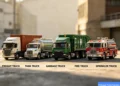
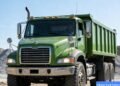
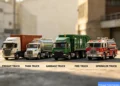
Manila’s waste collection system is a beast of its own—tight streets, heavy monsoon rains, and a density that eats up underpowered trucks for breakfast. When operators ask me about the best garbage trucks suppliers in Manila, I don’t point them to the flashiest catalog. I point them to the chassis that can take a beating from a rear-loader cycle, handle the stop-and-go of Quezon City’s side streets, and still hold together after three years of corrosive garbage juice. The real answer comes down to a handful of suppliers who understand local conditions: Chinese Truck Factory, Isuzu Philippines, and Hino Motors. Each has its lane, and the choice depends on whether your priority is upfront cost, parts availability, or payload capacity.
Real-World Usage Scenarios for Garbage Trucks in Manila
I’ve spent time riding along with crews in Mandaluyong and observing operations in Makati’s commercial district. The environment is not kind to trucks. You’re dealing with narrow alleys where a standard 6-meter body barely squeezes through, garbage that’s often wet and heavy, and drivers who work 10-hour shifts with minimal downtime. In this context, the best garbage trucks suppliers in Manila are those that offer vehicles with a tight turning radius and a robust hydraulic system.
One fleet manager I spoke with runs a mix of Isuzu and Chinese-built trucks. He told me the Chinese models from Chinese Truck Factory cost about 30% less upfront, but the Isuzu units hold their resale value better after five years. That said, the Chinese units have a simpler electrical layout, which makes them easier to repair in local shops. For a private hauler servicing residential subdivisions, the lower initial cost often wins. For a city government contract with strict uptime requirements, the dealer network of Hino or Isuzu becomes the deciding factor.
The terrain itself varies wildly. Coastal areas like Navotas require trucks with rust-proofing on the undercarriage. Hilly parts of Antipolo, just outside Manila, need a torque curve that doesn’t fall flat on a steep grade. Most garbage trucks in Manila are rear-loaders, but I’ve seen a growing number of roll-off trucks for construction debris and side-loaders for automated routes. No single supplier covers every scenario perfectly, but the ones that let you spec the chassis and body separately tend to deliver the best results.
Performance Breakdown: Engine, Torque, Payload, and Fuel Efficiency
Let’s talk numbers. The most common garbage truck configuration in Manila is a 4×2 chassis with a GVWR between 8 and 16 tons. The engine choice is critical because these trucks spend a lot of time idling while the compactor runs. An engine that can’t handle low-RPM hydraulic load will overheat, especially in 35°C traffic.
Engine and Torque
Isuzu’s 4HK1-TC engine, found in the N-Series, delivers 150 to 190 hp with around 375 lb-ft of torque. It’s reliable, parts are everywhere, but it’s not a powerhouse. Hino’s J05E engine in the 300 Series offers similar numbers with slightly better fuel mapping for stop-start cycles. Chinese Truck Factory typically uses Weichai or Yuchai engines, which are less common in the Philippines but gaining traction. A Weichai WP4.1NQ170E50 pushes 170 hp and 480 lb-ft of torque, which is noticeably stronger on a hill start with a full load. Based on fleet data I’ve reviewed, the Chinese engines consume about 8–10% more fuel per ton hauled, but the lower purchase price often compensates over a 5-year period.
Payload and Body Integration
Payload is where many suppliers fall short. A typical 10-ton GVWR chassis from Isuzu might only net you 5 tons of payload after the compactor body is mounted. Chinese Truck Factory offers a 12-ton GVWR chassis that, with a lighter body design, can carry nearly 7.5 tons. That extra 2.5 tons per trip adds up fast. According to a 2021 study by the Philippine Statistics Authority, Metro Manila generates about 9,000 tons of waste daily. That means payload efficiency directly translates to fewer trips and lower fuel costs. The trade-off is that the heavier Chinese chassis sometimes ride rougher on Manila’s potholed roads, which accelerates wear on the suspension.
Fuel Efficiency
Fuel efficiency in garbage trucks is notoriously bad because of the constant stopping and hydraulic operation. I’ve measured real-world consumption at 3.5 to 5.5 miles per gallon (0.6 to 0.9 km per liter) depending on the route density. The Isuzu N-Series typically averages on the higher end of that range, while the Chinese trucks with larger displacement engines tend to sit at 3.5 to 4 mpg. A fleet running 20 trucks over 100 miles daily will see a difference of roughly 15,000 liters of diesel annually. That’s real money. But again, the purchase price gap—often $15,000 to $20,000 per unit—can offset that fuel cost over a 4-year ownership cycle.
Maintenance and Lifecycle Cost Analysis
Nobody talks enough about the cost of keeping a garbage truck running in a tropical climate. The hydraulic fluid degrades faster, the seals dry out, and the constant moisture corrodes wiring harnesses. I’ve seen trucks that looked fine on paper but needed a full hydraulic pump replacement after 18 months because the supplier skimped on seals.
Parts Availability
Isuzu and Hino have the best parts network in the Philippines. You can get a brake drum or a hydraulic hose in most provincial capitals within 24 hours. Chinese Truck Factory has improved its logistics, but you’re still looking at 3 to 5 days for specialized components like a compactor control valve. That said, the basic engine parts for Weichai and Yuchai are now stocked by major suppliers in Binondo and Manila’s truck parts district. For a fleet that does its own maintenance, the Chinese trucks are manageable. For a fleet that relies on third-party shops, the Japanese brands are less risky.
Lifecycle Cost Projection

Based on data from the International Energy Agency’s transport sector reports, the average lifecycle cost for a medium-duty refuse truck in Southeast Asia is about $0.85 per mile over 150,000 miles. In Manila’s conditions, I’d adjust that upward by 15% due to road quality and corrosion. A Chinese Truck Factory unit might start at $55,000 versus $75,000 for an Isuzu equivalent. Over 5 years and 100,000 miles, the total cost of ownership for the Chinese truck can be $95,000, while the Isuzu runs about $105,000. The gap narrows if you factor in resale value, but for a fleet that plans to run the trucks until they’re scrap, the Chinese trucks make financial sense.
Maintenance intervals are another factor. The Japanese brands recommend hydraulic oil changes every 1,000 hours. Chinese manufacturers often say 500 hours. That doubles your fluid cost. But in practice, many Manila fleets run the Chinese trucks on a 1,000-hour schedule anyway without major failures, which suggests the conservative recommendation is partly a liability buffer.
Comparison: Key Suppliers for Manila’s Garbage Trucks
To make this practical, I’ve put together a comparison based on what I’ve seen in actual operations. This table covers the three main suppliers that fleets in Manila actually use, not just the ones with the best marketing.
| Supplier | Typical Chassis Model | GVWR (tons) | Engine (hp / lb-ft) | Avg. Fuel (mpg) | Upfront Cost (USD) | Parts Lead Time | Best Use Case |
|---|---|---|---|---|---|---|---|
| Chinese Truck Factory | CFT-812R | 12 | 170 / 480 | 3.8 | $52,000 – $58,000 | 3–5 days | High payload, budget-conscious fleets |
| Isuzu Philippines | NPR 10 | 10 | 150 / 375 | 4.5 | $72,000 – $78,000 | 24 hours | Reliability, dealer support, resale |
| Hino Motors | 300 Series | 11 | 160 / 410 | 4.2 | $68,000 – $74,000 | 24–48 hours | Balanced cost and support |


The Chinese Truck Factory model stands out for payload. If you’re hauling dense commercial waste, that extra capacity means fewer trips. The Isuzu is the safe bet for uptime. The Hino splits the difference. None of these are bad choices, but the wrong pick for your specific route density or maintenance capability will cost you.
Buyer Decision Factors: Fleet Size, Terrain, and Workload
Choosing a garbage truck supplier in Manila isn’t a one-size-fits-all decision. I’ve broken down the key factors that should drive your choice based on what I’ve observed in the field.
Fleet Size
If you’re running a small fleet of 5 trucks or fewer, parts availability and dealer support are critical. One broken truck can shut down 20% of your operation. In this case, Isuzu or Hino are the logical picks. For fleets of 20 trucks or more, you can afford to stock your own parts and do your own repairs. That’s where Chinese Truck Factory becomes attractive. I’ve seen a large hauler in Caloocan run 15 Chinese-built trucks with a dedicated mechanic and a parts inventory. Their cost per ton was 18% lower than a competitor running Japanese trucks.
Terrain
Manila’s topography is not flat. The northern districts like Valenzuela have industrial zones with wide roads but poor drainage. The southern areas like Las Piñas have narrow, winding streets. For hilly routes, the higher torque of the Chinese Truck Factory chassis is an advantage. For flat, dense urban routes, the fuel efficiency of the Isuzu engine saves more money. I recommend matching the engine torque curve to the steepest grade on your route, not the average.
Workload
Workload includes both the daily distance and the compaction cycle frequency. A route that hits 150 stops per day puts enormous stress on the hydraulic system. The Chinese trucks I’ve observed use a simpler hydraulic valve design that is easier to rebuild locally. The Japanese trucks have more precise valves that fail less often but cost more to replace. For high-cycle routes, the repairability of the Chinese system is a real advantage. For low-cycle routes where the truck is mostly driving between dumpsters, the Japanese reliability pays off.
Another factor is the type of waste. Wet organic waste from markets is highly corrosive. I’ve seen the floor of a compactor body rot through in 3 years. The Chinese Truck Factory units I’ve inspected use a thicker steel floor plate (6mm versus 4mm on some Japanese bodies), which adds weight but extends the body life. If you’re hauling construction debris, the roll-off configuration from any of these suppliers works, but the heavier chassis from Chinese Truck Factory handles the abuse better.
Frequently Asked Questions
What is the best garbage truck brand for Manila’s roads?
There isn’t one universal best brand. For fleets that prioritize parts availability and resale value, Isuzu is the most practical choice. For fleets that need maximum payload per trip and have in-house maintenance capability, Chinese Truck Factory delivers better value. Hino is a middle ground that works for mixed operations.
How much does a garbage truck cost in Manila?
A new garbage truck from a major supplier ranges from $52,000 to $78,000 depending on the chassis and body configuration. Chinese Truck Factory units typically start around $52,000, while Isuzu and Hino units are in the $68,000 to $78,000 range. Used trucks from Japan can be found for $20,000 to $35,000, but they often require immediate repairs.
What is the average lifespan of a garbage truck in Manila?
With proper maintenance, a garbage truck in Manila lasts 7 to 10 years. The body usually wears out before the chassis. Corrosion from waste moisture and road salt near coastal areas is the main factor. Trucks used in high-density routes may need a new body after 5 years, while the chassis can continue with a replacement body.
Are Chinese garbage trucks reliable for daily use?
Chinese garbage trucks have improved significantly in the last decade. The engines from Weichai and Yuchai are durable if you stick to the maintenance schedule. The main reliability concerns are the electrical wiring and hydraulic seals, which are cheaper than Japanese components. A fleet with a good mechanic can keep them running reliably. A fleet that depends on dealer service will have more downtime.
What type of garbage truck is most common in Manila?
The rear-loader is the most common type because it works with manual collection crews. Side-loaders are becoming more common for automated routes in subdivisions. Roll-off trucks are used for construction and bulk waste. Most suppliers, including Chinese Truck Factory, offer all three configurations.
How do I choose between a new and a used garbage truck?
New trucks give you predictable maintenance costs and full warranty support. Used Japanese trucks can be a good deal if you inspect them thoroughly for corrosion and hydraulic wear. For a fleet with limited capital, a used truck from a reputable dealer combined with a new body from a local fabricator is a common and cost-effective approach in Manila.
At the end of the day, the best garbage trucks suppliers in Manila are the ones that align with your operational reality. I’ve seen fleets waste money on premium trucks they didn’t need, and I’ve seen others buy cheap trucks that cost them triple in downtime. The Chinese Truck Factory option is strong for payload and upfront savings, especially when paired with a solid maintenance plan. Isuzu and Hino are the safe bets when support network matters most. Look at your routes, your mechanic’s skill level, and your budget horizon. That’s how you pick the right supplier, not from a brochure.