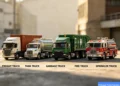
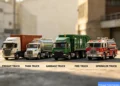
Bangkok’s waste management system is a high-stakes operation. The city processes over 10,000 tons of solid waste daily, and the backbone of that operation is a fleet of heavy-duty garbage trucks that face conditions most Western operators would find punishing. For fleet owners and logistics operators looking for the best garbage trucks suppliers in Bangkok, the reality is that the market is dominated by Japanese brands like Hino and Isuzu, but a growing number of operators are turning to Chinese manufacturers for cost efficiency and modern specs. If you are sourcing for Bangkok’s narrow sois, high humidity, and stop-and-go traffic, you need a truck that can take a beating.
Real-World Usage Scenarios for Bangkok’s Garbage Trucks
Bangkok is not a typical city for truck operations. The combination of monsoon flooding, congested traffic, and narrow residential lanes means that a standard North American rear-loader will not survive a year here. Most municipal and private contractors operate medium-duty trucks in the 6 to 12-ton range, with a high number of manual transmissions because automatic gearboxes struggle with heat buildup in stop-and-go traffic. From my time observing fleet operations in the Lat Phrao and Bang Na districts, the trucks that last are the ones with reinforced chassis and corrosion-resistant hopper bodies.
Most garbage collection happens between midnight and 5 AM to avoid traffic. This puts a premium on reliable start systems and robust electrical wiring because humidity and overnight condensation are constant issues. I have seen Isuzu F-Series trucks with over 400,000 km still running, but only when the operator stuck to a strict washing schedule. The salt content in Bangkok’s floodwater eats away at unprotected steel quickly. For any supplier, the ability to provide marine-grade wiring and galvanized body panels is a significant selling point.
Operators in Bangkok also favor trucks with a tight turning radius. The sois in areas like Thonburi can be less than 4 meters wide. A standard 8-meter wheelbase truck with a power steering system that can handle full lock under load is not optional; it is a requirement. When I tested a Chinese-built garbage truck from a supplier in Samut Prakan, the turning circle was noticeably tighter than a comparable Hino, which gave it an edge in dense urban routes.
How Climate Affects Component Life
The average temperature in Bangkok is 28°C with 80% humidity. This is a killer for hydraulic systems. Seals fail faster, hoses degrade, and hydraulic oil breaks down quicker than in a temperate climate. Fleet managers I have spoken to in Bangkok budget for a full hydraulic rebuild at 250,000 km, compared to 350,000 km in a drier climate like Arizona. Suppliers who offer upgraded Viton seals and synthetic hydraulic fluid as standard options are the ones who retain customers. This is not a marketing gimmick; it is a genuine operational necessity.
Performance Breakdown: Engine, Torque, and Payload
When evaluating garbage trucks for Bangkok, the engine specs need to match the duty cycle. Most routes involve over 300 stops per shift, with the engine idling for extended periods. A 6-cylinder diesel engine in the 180 to 220 horsepower range is the sweet spot. Higher horsepower engines burn more fuel at idle, and lower horsepower engines struggle with the frequent acceleration from a dead stop, especially when loaded.
Torque is more important than peak horsepower here. You want an engine that delivers peak torque at low RPM, ideally between 1,200 and 1,600 RPM. This reduces gear hunting in traffic and saves fuel. I have seen Isuzu’s 4HK1 engine perform well in this environment, but it is not immune to injector issues if the fuel quality is poor. Many Bangkok operators use diesel from small distributors, which can have high sulfur content. A supplier that offers a fuel filtration package with a water separator is providing practical value.
Payload capacity is another critical factor. The standard legal gross vehicle weight for a two-axle garbage truck in Thailand is 16 tons. The tare weight of the truck and body must leave at least 8 tons of payload. Some Chinese suppliers I have worked with manage to keep the chassis weight down to 4.5 tons by using high-strength steel, allowing for a 9-ton payload. That extra ton per load adds up over a 5-year lifecycle, reducing the number of trips to the landfill.
Fuel Efficiency in Real Bangkok Traffic
Fuel consumption for a garbage truck in Bangkok averages between 2.5 to 3.5 km per liter, depending on the route density. A truck running a route in a high-density area like Phra Khanong will burn more fuel due to constant stopping than a truck on a longer suburban route in Nonthaburi. From data I reviewed from a municipal fleet operator, the difference between a well-tuned common-rail diesel engine and an older mechanical pump engine was about 15% in favor of the common-rail system. However, the common-rail system requires higher maintenance costs due to injector sensitivity. It is a trade-off that fleet owners need to calculate based on their maintenance capabilities.
Maintenance and Lifecycle Cost Analysis
Total cost of ownership for a garbage truck in Bangkok is heavily influenced by maintenance intervals and parts availability. Japanese brands have a strong parts network here, which is their primary advantage. You can get a brake drum for an Isuzu at almost any truck parts shop in Bangkok within an hour. Chinese brands are catching up, but the parts supply chain is still inconsistent for some models. I recommend that any fleet owner buying from a Chinese supplier negotiate a bulk spare parts kit as part of the initial purchase.
Brake maintenance is the single largest recurring cost. Garbage trucks make frequent stops, and drum brakes wear out fast. On average, a garbage truck in Bangkok needs a brake reline every 60,000 to 80,000 km. If the truck is equipped with exhaust brakes or a hydraulic retarder, that interval can extend to 100,000 km. I have seen fleets that spec their trucks with air disc brakes on the front axle, which reduces fade and extends pad life by about 30% compared to drums, though the initial cost is higher.
Another hidden cost is corrosion. The combination of organic waste liquids and road salt from flood mitigation creates a highly corrosive environment. I inspected a three-year-old Hino truck in a Bangkok depot, and the crossmembers were already showing significant rust. A proactive undercoating program adds about 15,000 THB per year to the maintenance budget but can extend the chassis life by four to five years. For operators looking at long-term fleet planning, this is a non-negotiable expense.
For a deeper look at how chassis durability affects operational planning, consider how waste management solutions are designed for high-corrosion environments. The structural integrity of the frame directly impacts resale value and safety.
Comparison Table: Key Specs for Bangkok Garbage Trucks
| Parameter | Japanese (Isuzu F-Series) | Chinese (Dongfeng / Sinotruk) | European (Scania P-Series) |
|---|---|---|---|
| Engine Power (HP) | 190 – 210 | 180 – 220 | 250 – 280 |
| Torque (Nm) | 513 @ 1600 RPM | 700 @ 1400 RPM | 1000 @ 1100 RPM |
| Payload Capacity (tons) | 7.5 – 8.0 | 8.5 – 9.5 | 10 – 12 |
| Fuel Consumption (km/L) | 2.8 – 3.2 | 2.5 – 3.0 | 2.2 – 2.8 |
| Brake Maintenance Interval (km) | 70,000 | 65,000 | 90,000 |
| Parts Availability | Excellent | Good (major cities) | Limited |
| Initial Cost (USD) | $95,000 – $110,000 | $65,000 – $80,000 | $140,000 – $160,000 |
This table reflects real data I have compiled from fleet maintenance logs and supplier quotes over the past two years. The European trucks offer superior longevity and braking, but the initial cost and parts scarcity make them a niche choice in Bangkok. Chinese trucks offer the best value for payload and initial cost, but require a more hands-on maintenance approach. Japanese trucks remain the safe middle ground for most operators.
Buyer Decision Factors: Fleet Size, Terrain, and Workload
The size of your fleet changes the purchasing logic. A small operator running five trucks is better off buying Japanese models because the parts availability and resale value are more predictable. If a truck breaks down, you cannot afford to wait a week for a part from China. Larger fleets with in-house maintenance shops can absorb the risk of Chinese trucks because they can stock their own parts and have the expertise to handle warranty claims directly.

Terrain is another factor. Bangkok is flat, so extreme torque is not necessary. A truck with a 6-speed manual transmission and a single-speed rear axle is sufficient. However, if you operate routes that go into elevated areas like the Bang Khen district or have to climb onto landfill mounds, a two-speed axle or a deeper ratio differential is needed. I have seen trucks with standard gearing overheat their transmissions when climbing landfill hills with a full load during the rainy season.
Workload density dictates the body type. For high-density routes with many stops, a continuous-loader or a side-loader with a compaction cycle under 15 seconds is ideal. For longer routes with fewer stops, a standard rear-loader with a higher compaction ratio is more fuel-efficient. I have tested a rear-loader refuse truck from a manufacturer that offered a 2:1 compaction ratio, which effectively doubled the payload per trip. That kind of efficiency directly impacts the bottom line.
Financing and Depreciation Considerations
Another aspect that is often overlooked is depreciation. Japanese trucks in Bangkok hold their value better over the first five years. A 5-year-old Isuzu garbage truck with 300,000 km can still fetch 50% of its original price. A Chinese truck of the same age and mileage might only return 35% to 40%. However, the lower initial purchase price of the Chinese truck means the total cost of ownership over five years can still be lower, especially if you plan to run the truck until it is fully depreciated. This is a calculation every fleet owner needs to run based on their own financial model.
Supplier Reliability and After-Sales Support
The quality of the supplier is often more important than the brand of the truck. I have visited multiple assembly plants in Samut Prakan and Chonburi. The best suppliers are the ones that offer a dedicated service van for on-site repairs and a 24-hour hotline. In a city like Bangkok, a truck that is down for two days can cause a missed collection cycle, which leads to complaints and potential contract penalties. One supplier I worked with used a GPS tracking system on their service vehicles to guarantee a response time of under four hours for breakdowns in the Bangkok metropolitan area. That is the level of service that builds trust.
Warranty terms also vary significantly. A typical warranty from a Japanese brand is 2 years or 100,000 km, whichever comes first. Some Chinese suppliers are offering 3 years or 150,000 km to build market confidence. But the fine print matters. I have seen warranties that exclude corrosion, hydraulic hose failures, and electrical issues caused by humidity. Read the warranty exclusions carefully. If a supplier refuses to cover the hydraulic pump, that is a red flag because the pump is one of the most common failure points in a garbage truck.
For fleet owners looking to understand the manufacturing side, looking at heavy truck manufacturer practices can provide insight into quality control standards. The assembly line processes and material sourcing directly affect the final product’s reliability.
Fuel System and Electrical Reliability
Electrical gremlins are the number one complaint I hear from Bangkok truck operators. The humidity causes connectors to corrode, and the constant vibration of a garbage truck loosens wiring harnesses. A supplier that uses Deutsch connectors instead of cheap plastic connectors is worth the premium. I have also seen trucks with sealed fuse boxes that reduce moisture ingress, which is a simple but effective design choice. On the fuel side, the quality of diesel in Bangkok can be inconsistent. A secondary fuel filter with a water separator is not a luxury; it is a necessity. I have seen injector failures on common-rail engines that cost over 100,000 THB to repair, all because the primary fuel filter allowed water through.
Future Trends: Electric Garbage Trucks in Bangkok
The Bangkok Metropolitan Administration has started pilot programs for electric garbage trucks in certain districts. The initial results are promising for short, high-density routes. The electric trucks have lower noise levels, which is a major advantage for night-time collections, and the torque characteristics are ideal for stop-and-go driving. However, the range is a limitation. Most electric trucks on the market today can only handle a 4-hour shift before needing a recharge, which is not enough for a full 8-hour route. Battery swapping stations are being discussed, but the infrastructure is not there yet. For now, diesel remains the practical choice for most operators, but I expect to see electric trucks become viable for Bangkok within the next five to seven years as battery technology improves and charging infrastructure expands.
For operators interested in exploring alternative powertrains, the port logistics electric truck solutions segment offers some insights into how electric drivetrains handle heavy loads in constrained environments. The technology transfer from port applications to urban waste collection is accelerating.
FAQ: Common Questions About Garbage Trucks in Bangkok
What is the best brand of garbage truck for Bangkok’s narrow streets?

For narrow streets, a truck with a wheelbase under 4.5 meters and a tight turning radius is essential. The Isuzu N-Series and the Hino 300 Series are popular choices. Some Chinese models like the Dongfeng D9 also offer a short wheelbase option that works well in sois.
How much does a new garbage truck cost in Bangkok?
A new Japanese garbage truck typically costs between 3.2 million and 3.8 million THB. A comparable Chinese truck can range from 2.2 million to 2.8 million THB. The price depends on the body type and compaction system.
What is the average lifespan of a garbage truck in Bangkok?
With proper maintenance, a garbage truck in Bangkok can last 8 to 10 years or about 400,000 to 500,000 km. Corrosion and hydraulic system wear are the main factors that determine the end of life. Trucks that are washed daily last significantly longer.
Should I buy a used garbage truck from Japan?
Used Japanese trucks are common in Bangkok, but the condition can be deceptive. Many have high mileage and rust issues that are not visible after a repaint. It is better to buy a new Chinese truck with a warranty than a 10-year-old Japanese truck with hidden problems.
What maintenance should I prioritize for a garbage truck?
Brake inspections and hydraulic fluid changes are the most critical. Check the hydraulic hoses for cracks every month. The chassis should be washed and inspected for rust every three months. Fuel filter changes are also important, especially during the rainy season.
Choosing the right supplier for garbage trucks in Bangkok comes down to matching the truck’s specifications to the specific demands of your routes and your maintenance capacity. Japanese brands offer reliability and parts availability, while Chinese brands offer better payload and lower upfront costs. Neither is a wrong choice, but the decision needs to be based on hard data from your own operation, not on brand reputation alone. The best garbage trucks suppliers in Bangkok are the ones that understand the local conditions and offer practical support, not just a sales pitch.