Factory-Direct Waste Collection Vehicles

Garbage Truck for Sale – Factory-Direct Refuse Trucks Built Around Your Route

Source a new garbage truck for municipal, residential, commercial, or contracted waste collection. We help international buyers match the chassis, refuse body, loading method, steering position, emission requirements, bin lifter, and optional equipment to the actual job before the final quotation is prepared.

  • Rear-loader and side-loader solutions
  • Project-specific sanitation configurations
  • LHD and RHD options subject to chassis availability
  • Body, lifter, controls, color, and branding customization
  • Export documentation and shipping coordination
  • Single-unit, fleet, distributor, and tender inquiries
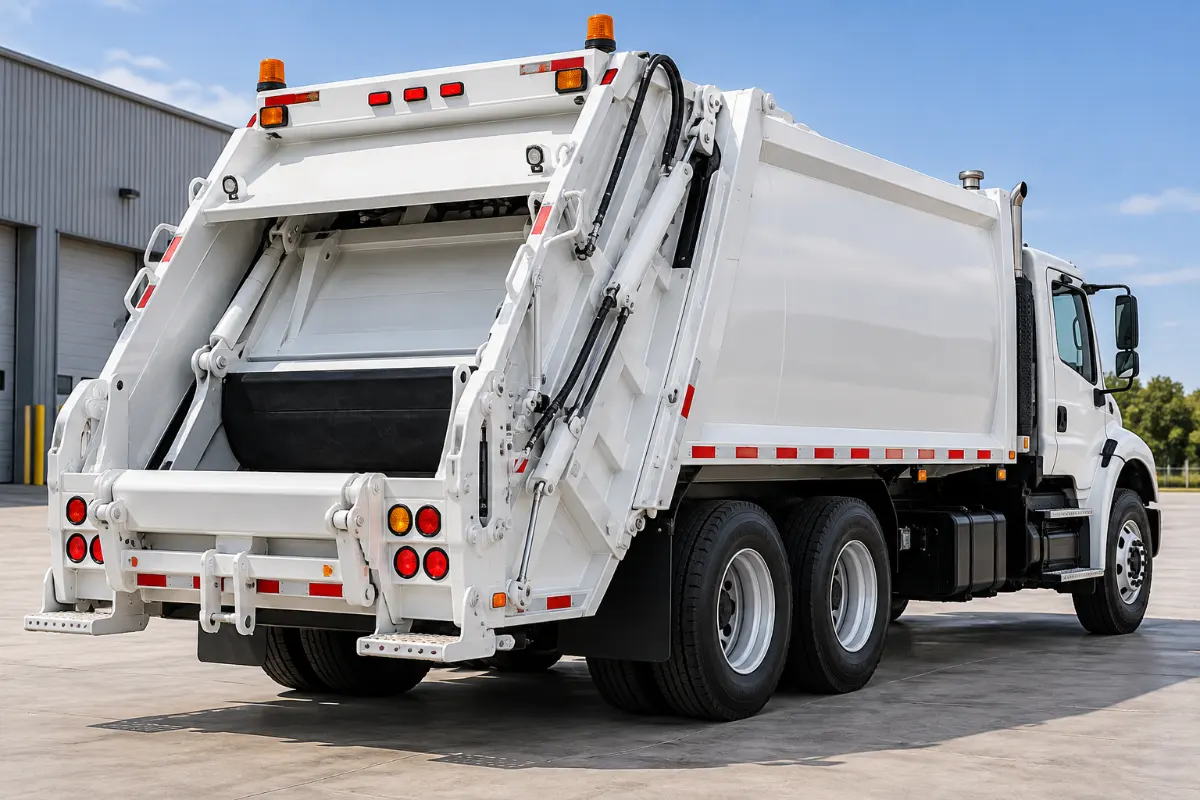
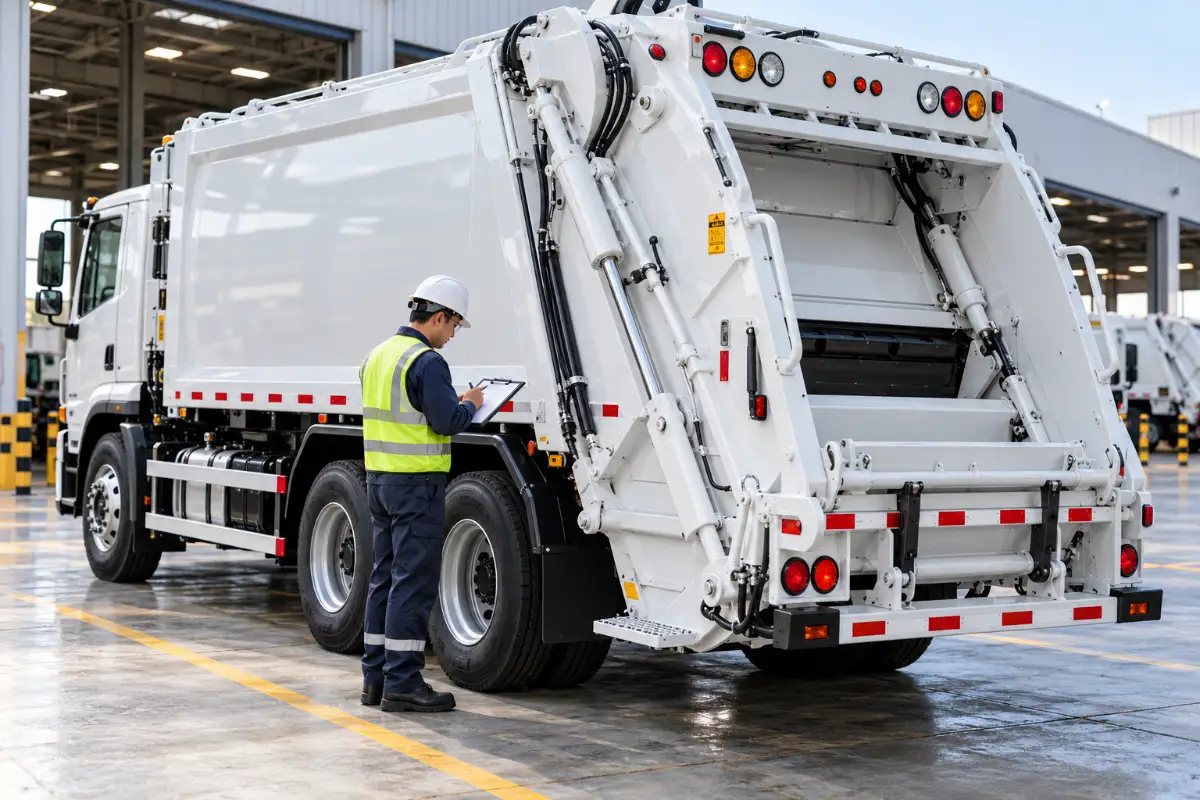
Factory-new rear loader garbage truck ready for waste collection
Final chassis, body capacity, engine, emission standard, dimensions, payload, and equipment are confirmed for the selected configuration.
Factory-Direct Sourcing Discuss your operating requirements before configuration.
Configurable Truck Build Chassis, body, lifter, controls, and requested equipment.
International Buyer Support Destination and export requirements considered during quotation.
Specification-Based Pricing Quote the truck you actually need instead of a generic base price.
Buyer Overview

What Is a Garbage Truck?

A garbage truck is a commercial vehicle designed to collect, transport, and discharge municipal or commercial solid waste. Depending on the collection system, it may use rear, side, front, container-based, or other loading arrangements. The correct truck depends on waste type, route conditions, container system, required payload, body capacity, local regulations, and how the vehicle will be unloaded.

Buying a refuse collection truck is not simply a matter of choosing the largest body or the lowest price. A truck that works well on wide commercial routes may be unsuitable for narrow residential streets. A lifting system designed around one container standard may not match the bins already used in another city. For international procurement, steering position, emission requirements, axle limits, documentation, and destination-country registration requirements also need to be considered.

That is why we recommend starting with your application. Tell us what waste you collect, your daily collection volume, what containers you use, where the truck will operate, and where it will be delivered. From there, the available chassis and body configuration can be reviewed before quotation.

Available Configuration Categories

Garbage Trucks for Different Waste Collection Systems

Buyers use the term “garbage truck” for several different waste collection vehicles. The appropriate loading system depends on how your crew collects waste, what containers are used, road access, collection frequency, and the type of waste being transported. The configurations below represent common buyer requirements; exact availability should be confirmed for your project.

01

Rear Loader Garbage Truck

Waste is loaded from the rear of the vehicle and moved into the body by the loading and compaction mechanism.

Common fit: municipal routes, residential communities, commercial collection, and routes using collection crews at the rear of the truck.
02

Side Loader Garbage Truck

Waste containers are handled from the side of the vehicle. Lifter design should be selected around the local bin dimensions and interface.

Common fit: standardized roadside bins, organized residential routes, and projects seeking reduced manual container handling.
03

Front Loader Garbage Truck

A front-loading refuse truck is generally intended for routes built around compatible commercial containers or dumpsters.

Common fit: commercial properties, industrial locations, and planned routes using compatible bulk containers. Confirm availability and container compatibility before ordering.
04

Garbage Compactor Truck

A hydraulic compaction system reduces the occupied volume of collected refuse and moves it through the body during the collection cycle.

Common fit: municipal solid waste, residential collection, sanitation contractors, and repeated collection routes.
05

Hook Lift Garbage Truck

A hook-lift system handles detachable containers so the same truck platform can move compatible bodies between collection and disposal points.

Common fit: transfer operations, industrial waste, construction-related collection, and sites using detachable containers. Container interface must be confirmed.
06

Roll-Off Garbage Truck

Roll-off systems are used with detachable containers for high-volume or project-based waste handling.

Common fit: construction sites, industrial facilities, temporary collection points, and bulk waste operations. Confirm chassis and container requirements before quotation.
07

Swing Arm Garbage Truck

Swing-arm configurations are designed around compatible removable containers and collection workflows.

Common fit: centralized collection points and projects that already use a compatible container system. Availability is project-specific.
08

Sealed Waste Collection Truck

A sealed body configuration can be considered where the priority is enclosed transportation rather than a conventional compaction cycle.

Common fit: application-specific waste transport where containment and body layout are key purchasing considerations.

Not Sure Which Garbage Truck Type Fits Your Route?

Send your waste type, collection method, bin information, route conditions, destination country, and expected quantity. We can review the project before quotation.

Send Your Requirements
Technical Configuration

Garbage Truck Specifications to Confirm Before You Buy

There is no single specification that applies to every garbage truck for sale. Chassis, body capacity, payload, wheelbase, engine, dimensions, hydraulic components, and optional equipment vary by model and destination market. Use the table below as a procurement checklist rather than as a fixed model specification.

Specification Available / Project-Based Configuration What You Should Confirm
Truck Type Rear loader, side loader, compactor, or application-specific waste vehicle Your collection method, waste stream, container system, and route
Waste Body Capacity Selected according to chassis and project requirements Daily waste volume, waste density, route length, and chassis limits
Chassis Selected according to vehicle size, payload, road conditions, and market requirements Preferred chassis, GVW class, local parts/service considerations, and regulatory needs
Engine Depends on selected chassis Power requirement, fuel type, emission standard, local service, and parts support
Drive Configuration Depends on chassis and operating duty Road quality, terrain, payload, maneuverability, and local axle rules
Steering Position LHD or RHD subject to chassis availability Destination-country driving and registration requirements
Compaction System Hydraulic compaction for applicable refuse-body configurations Waste type, operating cycle, body design, and required controls
Loading Mechanism Rear, side, container-based, or application-specific system How waste is collected and the type of bins or containers used locally
Bin Lifter Optional and selected for compatible bin standards Bin capacity, dimensions, lifting points, interface, and clear photographs
Discharge Method Depends on body and collection system How and where the vehicle will unload collected waste
Emission Standard Depends on available engine and chassis combination Destination-market registration and regulatory requirements
Cab Configuration Model dependent Crew size, operating environment, comfort, and route requirements
Body Color & Branding Fleet color, logos, and project markings can be discussed Color reference, logo artwork, text, and placement
Optional Equipment Selected according to final vehicle configuration Cameras, warning equipment, lighting, safety devices, and other requested options

Available configurations vary by chassis, body size, destination market, and customer requirements. Final specifications should be confirmed in the quotation, technical sheet, and sales documentation for the exact vehicle ordered.

Working System

How a Garbage Compactor Truck Works

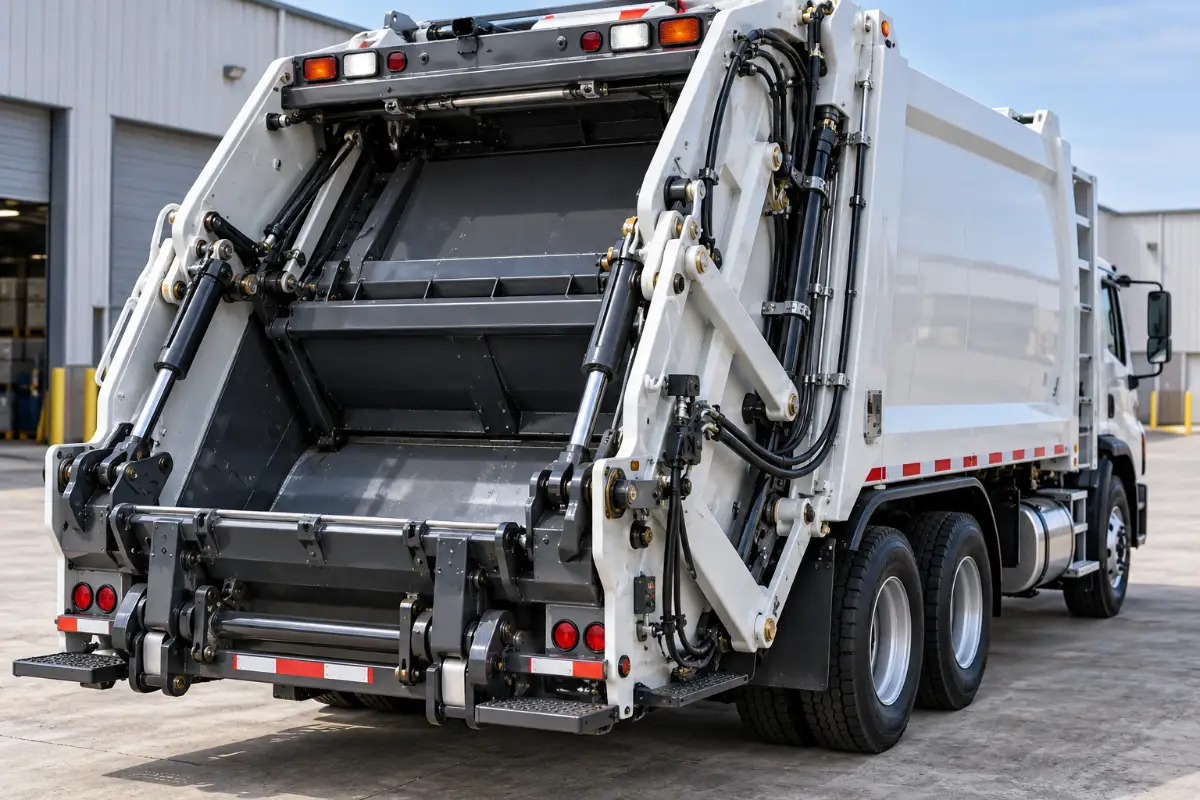
A garbage compactor truck combines a waste-loading mechanism with a hydraulically operated body system. During collection, waste enters the loading area and is transferred into the storage body. Compaction reduces the space occupied by the material so the vehicle can continue along its route before unloading.

The exact hydraulic sequence, control layout, pressure settings, body geometry, and discharge arrangement depend on the selected truck. Waste density also affects real operating payload, which is why a body-volume figure should never be considered separately from chassis capacity and local weight limits.

  • Loading: waste enters through the selected rear, side, or other loading arrangement.
  • Compaction: hydraulic components move and compress waste inside the body.
  • Storage: the refuse body holds material during the collection route.
  • Discharge: collected waste is unloaded using the mechanism specified for that body design.
  • Controls: operator controls and safety functions are confirmed according to the selected configuration.
Hydraulic loading and compaction mechanism on a garbage truck
Sizing the Vehicle

What Is the Capacity of a Garbage Truck?

Garbage truck capacity varies widely by chassis size, refuse-body design, loading system, and intended application. The correct size should be selected from your daily waste volume, waste density, legal payload, road access, collection frequency, and unloading distance. Body volume alone does not determine how much waste the truck can legally or practically carry.

Compact Route Configuration

Consider a smaller chassis and body when the truck must work on narrow streets, inside communities, or in areas where maneuverability is more important than maximum volume.

Urban Municipal Configuration

For repeated municipal routes, balance body capacity with turning radius, legal axle loads, loading frequency, crew workflow, and distance to the transfer or disposal site.

Commercial Collection Configuration

Commercial waste routes may require a different container interface, loading mechanism, and body layout depending on whether the truck serves stores, hotels, offices, markets, or industrial properties.

High-Volume Fleet Configuration

For fleet procurement or large sanitation projects, evaluate route planning, legal payload, chassis durability, maintenance access, container compatibility, and total fleet utilization—not body size alone.

For a useful capacity recommendation: send your approximate daily waste volume, waste type, collection frequency, road conditions, local vehicle weight limits if available, and the distance between the collection route and unloading point.

Buyer Comparison

Rear Loader vs. Side Loader vs. Front Loader vs. Container-Based Trucks

The loading system changes how the truck interacts with containers, crews, collection points, and streets. This comparison helps narrow the category before detailed chassis and body selection.

Truck Type Loading Style Typical Application Container / Crew Consideration Primary Buying Question
Rear Loader Waste enters from the rear Municipal, residential, and mixed commercial routes Often used with collection crews working at the rear; lifter options depend on bins Will the body and lifter match our route, crew, and local containers?
Side Loader Waste is collected from the side Roadside container routes and planned urban collection Bin dimensions and lifting interface are especially important Is the side-loading system compatible with the bins already in use?
Front Loader Compatible containers are lifted from the front Commercial and industrial collection where suitable containers are used Requires confirmed container compatibility and operating clearance What container type, dimensions, and lifting interface will the truck handle?
Hook Lift / Roll-Off Detachable container handling Industrial, construction, transfer, and bulk waste applications Truck and container interface must be specified together What container dimensions, weight, and interface are required?

This is a purchasing comparison, not a fixed model specification. Final configuration depends on the selected chassis, body, local container standard, route, and destination-market requirements.

Common Applications

Where Commercial Garbage Trucks Are Used

Refuse collection vehicles can be configured around different route structures, waste streams, collection points, and fleet requirements.

Municipal Sanitation

Regular collection from public routes, community collection points, and city sanitation programs.

Residential Collection

Neighborhood and apartment-area routes where access, maneuverability, bins, and collection frequency matter.

Commercial Waste

Collection for stores, markets, offices, hotels, property operators, and other commercial facilities.

Industrial Parks

Planned collection for factories and industrial properties using defined waste handling systems.

Sanitation Contractors

Fleet vehicles for businesses providing outsourced residential, municipal, or commercial collection services.

Airports & Large Facilities

Waste collection across large managed properties where route planning and operational consistency are important.

Universities & Hospitals

General facility waste collection where vehicle access and the existing container system need to be considered.

Fleet & Tender Projects

Multi-unit procurement where technical specifications, documentation, branding, and destination requirements must be reviewed in detail.

Garbage Truck Price

How Much Does a Garbage Truck Cost?

The cost of a new garbage truck depends on its final specification rather than one universal price. Chassis, engine, emission standard, refuse-body capacity, loading and compaction systems, hydraulic components, bin lifter, optional equipment, order quantity, destination country, and shipping terms can all affect the quotation. A price is most useful after these requirements are defined.

Two trucks that look similar in photographs can have different chassis ratings, engines, hydraulic systems, body sizes, emission requirements, safety equipment, and export configurations. Comparing only the headline price can therefore produce a misleading procurement decision.

What We Need to Prepare a More Accurate Quote

  • Destination country and, if known, destination port
  • Garbage truck type or collection method
  • Preferred body capacity or expected daily waste volume
  • Waste type and approximate density if known
  • Quantity required
  • LHD or RHD requirement
  • Required emission standard or local registration requirement
  • Preferred chassis or chassis class, if you already have one
  • Bin capacity, dimensions, and photos if a lifter is required
  • Tender sheet or technical specification, if applicable
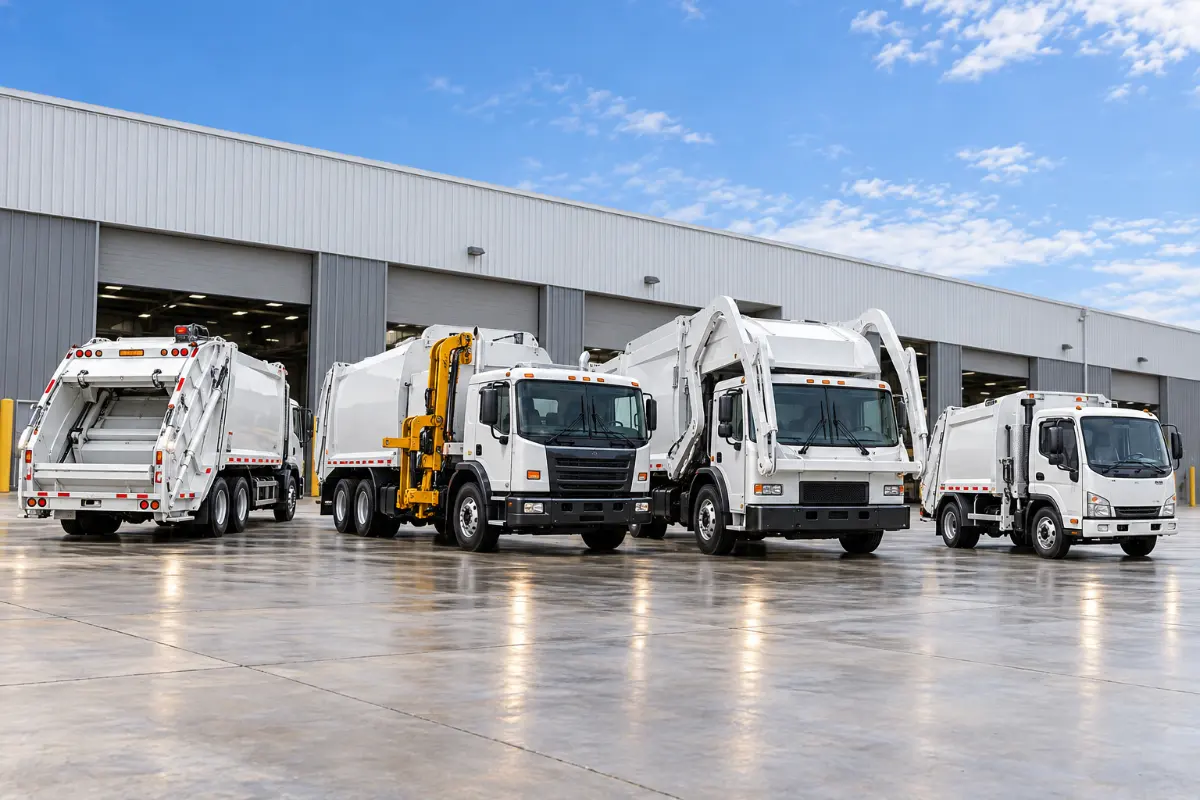
Different garbage truck configurations prepared for customer requirements
Procurement Guide

How to Choose the Right Garbage Truck

Choose a garbage truck by starting with the collection operation rather than the truck itself. Define the waste stream, daily volume, route, road access, containers, loading method, legal payload, crew requirements, emission rules, steering position, maintenance expectations, and destination-country requirements. Then match the chassis and refuse body to those conditions before comparing final quotations.

  • 1. Define the Waste Type Mixed municipal waste, commercial refuse, recyclables, industrial waste, and construction-related material can require different collection and body systems.
  • 2. Estimate Daily Collection Volume Tell the supplier how much waste the truck is expected to collect per shift or per day rather than selecting capacity from body volume alone.
  • 3. Describe the Route Narrow residential roads, wide city streets, industrial parks, steep roads, rough surfaces, and long transfer distances create different chassis requirements.
  • 4. Identify Your Containers If bins or dumpsters already exist, provide their capacity, dimensions, lifting interface, and photographs before the lifter is specified.
  • 5. Confirm Loading Method Decide whether your collection system is better suited to rear loading, side loading, container handling, or another application-specific arrangement.
  • 6. Check Crew Requirements Consider how many operators or collection workers are normally used and how the crew interacts with the loading system during a route.
  • 7. Confirm Payload & Axle Limits The selected body and collected waste must remain compatible with the chassis rating and legal vehicle limits in the operating market.
  • 8. Confirm Emission & Registration Rules Verify applicable emission, dimensions, safety, homologation, and registration requirements with the relevant authority in your destination market.
  • 9. Consider Maintenance Access Discuss hydraulic components, filters, wear items, manuals, spare-parts planning, and service expectations for the exact truck being quoted.
  • 10. Compare the Complete Specification Compare chassis, body, hydraulics, optional equipment, commercial terms, documentation, warranty scope, and shipping—not just the selling price.
  • 11. Plan Import & Shipping Requirements Identify the destination country and port early so shipping scope and required export documents can be discussed before the order is finalized.
  • 12. Put Final Requirements in Writing The final quotation, specification sheet, commercial terms, and sales contract should clearly identify the configuration you are purchasing.
Factory-Direct Procurement

Why Source a Garbage Truck Directly From a Factory Supplier?

Direct sourcing can be useful when your purchase requires more than choosing a standard vehicle from a local inventory list. International buyers often need the truck configured around local regulations, container systems, fleet preferences, road conditions, and project documentation.

Direct Requirement Review

Discuss your route, waste volume, body requirements, chassis preferences, and destination needs before the vehicle specification is finalized.

Configuration Flexibility

Available options may include chassis, body layout, steering position, bin lifting system, control arrangement, optional equipment, color, and fleet markings.

Project-Based Quotation

Pricing can be prepared around the requested specification instead of relying on a generic advertised price that may not match the final truck.

Fleet & Tender Support

Buyers can submit a tender document or technical requirement list for review when the project involves defined procurement parameters.

OEM / Fleet Appearance

Body color, logo placement, identification markings, and related fleet appearance requirements can be discussed as part of the project.

Export Coordination

Destination details can be incorporated into discussions covering shipping scope, documentation, and vehicle configuration before dispatch.

Built Around Your Project

Custom Garbage Truck Configuration for International Buyers

A municipal fleet, sanitation contractor, distributor, or government tender may require a configuration that differs from a standard domestic truck. Tell us the requirements before quotation so available chassis and body options can be reviewed for your market.

Vehicle Configuration

  • Chassis selection
  • Body capacity
  • Drive configuration
  • Engine and available emission standard
  • LHD / RHD requirement
  • Cab configuration

Waste-System Configuration

  • Rear or side loading
  • Hydraulic compaction system
  • Bin lifting mechanism
  • Container compatibility
  • Control arrangement
  • Discharge system

Fleet Customization

  • Body paint color
  • Customer logo
  • Fleet identification
  • Warning markings
  • Requested lighting
  • Project-specific labeling

Optional Equipment

  • Cameras where required
  • Warning devices
  • Additional work lighting
  • Safety-related equipment
  • Application-specific accessories
  • Other options subject to model compatibility
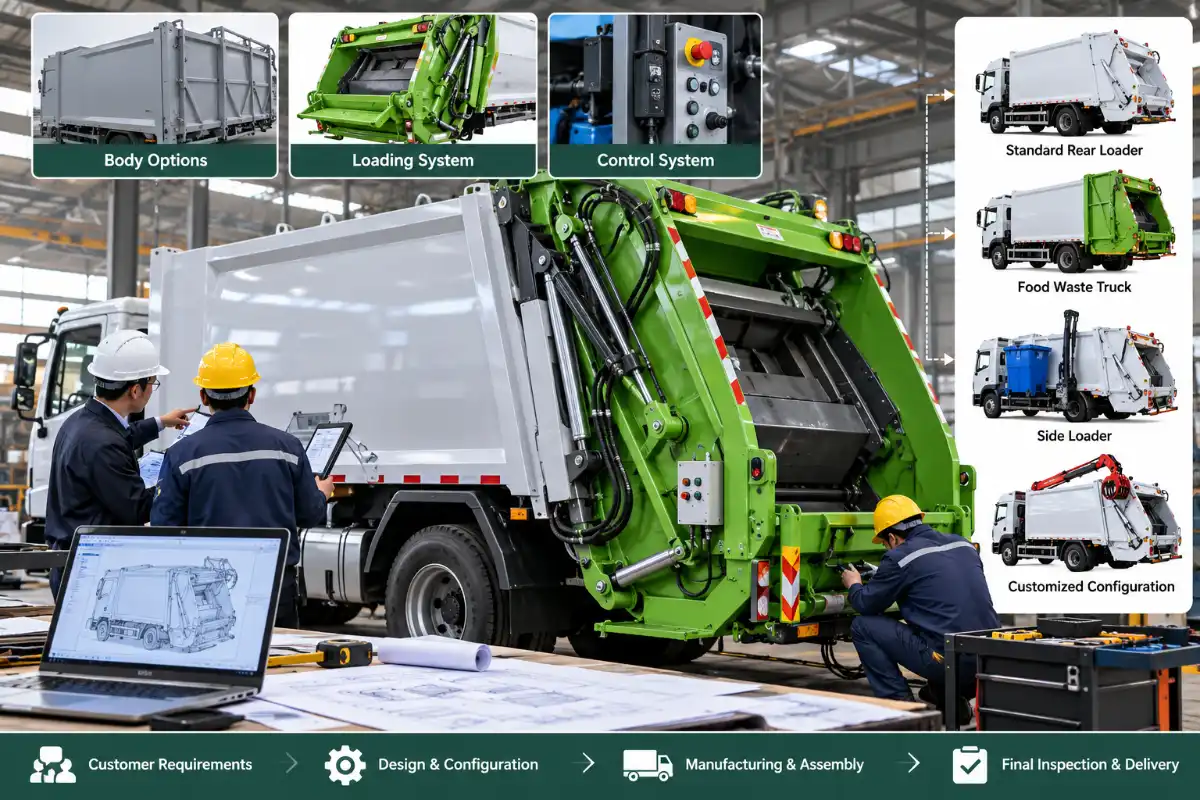
Garbage truck body and loading system being configured for a customer project
Production & Inspection

What Should Be Checked During Garbage Truck Production and Pre-Delivery Inspection?

Inspection should be tied to the exact specification in the order. Depending on the selected model and agreed inspection scope, the process can include checks of the chassis, refuse body, hydraulic functions, controls, electrical equipment, requested options, exterior condition, and vehicle documentation.

Chassis Confirmation

Verify that the chassis and key configuration details correspond to the order and technical documentation.

Body Fabrication Review

Check the refuse-body construction, visible workmanship, doors, access points, and agreed body arrangement.

Hydraulic Installation

Review visible hydraulic installation and operate the loading, compaction, lifting, and discharge functions included in the specification.

Controls & Electrical Equipment

Confirm agreed controls, warning equipment, lighting, cameras, and other electrical options included in the order.

Functional Testing

Operate the working systems included on the truck and verify their function against the selected configuration before shipment.

Pre-Delivery Review

Check exterior condition, requested markings, included accessories, and shipment-related documents according to the agreed order scope.

Procurement note: Inspection scope, warranty terms, spare-parts support, production schedule, technical documents, and acceptance criteria should be confirmed in writing for the exact truck and order. Do not rely on a general website description as a substitute for the final commercial and technical documents.
Buyer Verification

Request Model-Specific Information Before Placing the Order

International truck procurement involves both technical and commercial requirements. Before committing to an order, confirm the exact model, configuration, destination requirements, quotation scope, and documentation rather than assuming that every option shown online applies to every truck.

  • Final vehicle specification and technical sheet
  • Chassis, engine, steering, and emission configuration
  • Refuse body and loading-system specification
  • Bin or container compatibility where applicable
  • Optional equipment included in the quote
  • Warranty scope and exclusions for the quoted model
  • Spare-parts plan and available documentation
  • Production and inspection arrangements
  • Incoterms and shipping scope
  • Destination-market registration requirements
Technician performing a pre-delivery inspection on a garbage truck
International Orders

Garbage Truck Export and Shipping Process

For international buyers, the purchasing process should move from application requirements to a confirmed technical specification, commercial agreement, production, inspection, and shipment. Exact responsibilities depend on the agreed order and Incoterms.

STEP 01

Share Requirements

Send truck type, quantity, waste application, preferred capacity, route conditions, bins, destination country, and any technical documents.

STEP 02

Review Configuration

Discuss chassis, body, loading system, steering, engine, emission requirement, optional equipment, and market-specific needs.

STEP 03

Receive Quotation

Review the quoted vehicle specification, commercial scope, quantity, pricing basis, and shipping terms.

STEP 04

Confirm Order

Finalize technical parameters and commercial terms in the applicable order documentation and sales contract.

STEP 05

Production

The truck is prepared according to the confirmed chassis, body, and equipment configuration for the order.

STEP 06

Inspection

Agreed checks can cover the chassis, body, hydraulics, controls, optional equipment, appearance, and other acceptance items.

STEP 07

Shipping Preparation

Prepare the vehicle for the agreed transportation method and coordinate shipment-related requirements.

STEP 08

Export Documentation

Discuss the documents included in the shipment and any model-specific information required under the agreed export scope.

STEP 09

Delivery Coordination

Coordinate shipment toward the agreed destination based on the Incoterm, route, port, and responsibilities defined in the order.

Important for importers: emissions, dimensions, axle limits, safety requirements, homologation, customs requirements, and vehicle registration rules vary by country. Confirm the applicable requirements with the appropriate local authority before ordering and request model-specific documentation for the vehicle you intend to import.
B2B Procurement

Garbage Truck Supply for Municipalities, Fleets, Contractors, and Distributors

Municipal & Government Projects

Submit the technical tender document, required quantities, operating environment, destination, and compliance requirements so the requested parameters can be reviewed against available configurations.

Sanitation Contractors

Configure trucks around collection routes, waste volume, local bins, crew workflow, maintenance planning, and fleet standardization.

Truck Dealers & Distributors

Discuss market-specific configurations, fleet appearance, branding requirements, quantities, product documentation, and repeat procurement needs.

Waste Management Companies

Select equipment around existing containers, transfer systems, route density, collection frequency, waste characteristics, and operating conditions.

Industrial & Commercial Fleets

Match the vehicle to managed facilities, industrial parks, commercial sites, internal collection routes, and applicable container systems.

Multi-Unit Fleet Procurement

Provide the quantity and required standard specification so vehicle configuration, common options, markings, documentation, and shipment planning can be discussed together.

Buyer FAQ

Garbage Truck for Sale: Frequently Asked Questions

These answers cover the questions international buyers commonly need to resolve before requesting a final garbage truck configuration and quotation.

How much does a garbage truck cost?

Garbage truck pricing depends on the chassis, engine, emission standard, body capacity, loading system, hydraulic components, bin lifter, optional equipment, quantity, destination market, and shipping terms. For an accurate quotation, send the required truck type, capacity, quantity, destination country, steering position, and any technical or tender requirements.

What size garbage truck do I need?

Start with your daily waste volume, waste density, number of collection points, route width, turning space, legal payload, collection frequency, and distance to the disposal or transfer site. A larger body is not automatically better because chassis limits and road access must also be considered.

What is the capacity of a garbage truck?

Capacity varies by chassis and refuse-body configuration. Instead of assuming one standard volume, tell us the amount and type of waste you expect to collect. The body should then be matched to chassis capacity, legal payload, route access, waste density, and collection frequency.

What is the difference between a rear loader and a side loader garbage truck?

A rear loader receives waste from the back of the truck and is commonly considered for municipal, residential, and mixed commercial routes. A side loader collects from the side and is often selected for routes using standardized roadside containers. The best choice depends on your bins, crew workflow, streets, and collection method.

Can a garbage truck be customized?

Available customization may include chassis, body capacity, steering position, loading arrangement, bin lifter, controls, fleet color, logo placement, warning equipment, cameras, lighting, and other compatible options. Final availability depends on the selected chassis, body, and destination requirements.

Can you supply a right-hand-drive garbage truck?

Right-hand-drive availability depends on the selected chassis and required configuration. Include your destination country and RHD requirement in the inquiry so available chassis options can be checked before quotation.

Which garbage truck is suitable for municipal waste collection?

Rear-loader garbage compactor trucks are commonly considered for municipal and residential collection, while side-loader configurations can be useful where standardized roadside bins are used. The appropriate truck still depends on road access, waste volume, crew arrangement, local containers, payload limits, and route design.

What chassis can be used for a garbage truck?

Chassis selection depends on the required vehicle size, body capacity, payload, road conditions, steering position, engine and emission requirements, local service considerations, and destination market. Send your preferred chassis if you have one, or provide the operating requirements so compatible options can be discussed.

What information should I provide when requesting a quote?

Include the truck type, quantity, preferred body capacity or daily waste volume, waste type, collection method, destination country, LHD or RHD requirement, emission requirement, chassis preference, bin details, and destination port if available. A tender sheet or reference specification is especially useful for project procurement.

Can garbage trucks be exported internationally?

International shipment and export coordination can be discussed as part of the quotation. Buyers should provide the destination country early because vehicle regulations, emission requirements, shipping routes, documentation, registration procedures, and import responsibilities vary by market.

How are garbage trucks shipped overseas?

The shipping method and route depend on the truck dimensions, destination, port options, order quantity, and agreed commercial terms. Shipping scope, Incoterms, freight responsibility, destination port, and export documentation should be confirmed in writing for each order.

Do you supply spare parts and after-sales support?

Spare-parts requirements and after-sales arrangements should be discussed for the exact model being quoted. Before ordering, request written information covering warranty scope, exclusions, claim procedures, manuals, spare-parts availability, and the support arrangement applicable to your vehicle configuration.

Request a Factory Quote

Tell Us What Garbage Truck You Need

Send your project details so we can understand the application and discuss a suitable garbage truck configuration. More technical information generally makes the quotation more useful.

  • Destination country and port
  • Garbage truck type
  • Required capacity or daily waste volume
  • Waste type
  • Quantity
  • LHD or RHD
  • Required emission standard
  • Preferred chassis, if any
  • Bin size or photographs if a lifter is required
  • Technical specification or tender document
Buying for a tender or fleet?
Include the required technical specification and quantity in your message. Parameters can then be reviewed against the available truck configuration before a final quotation is prepared.

Request Your Garbage Truck Quote

Complete the form below with as much information as possible. We can then discuss configuration, pricing, and export requirements for your project.

This field is required.
Provide additional information or questions here.

Product descriptions and images on this page are intended to help buyers compare configuration options. Final chassis, dimensions, payload, body volume, emission standard, equipment, warranty scope, production schedule, shipping terms, and other specifications are subject to the confirmed quotation, technical documents, and sales contract for the selected vehicle.