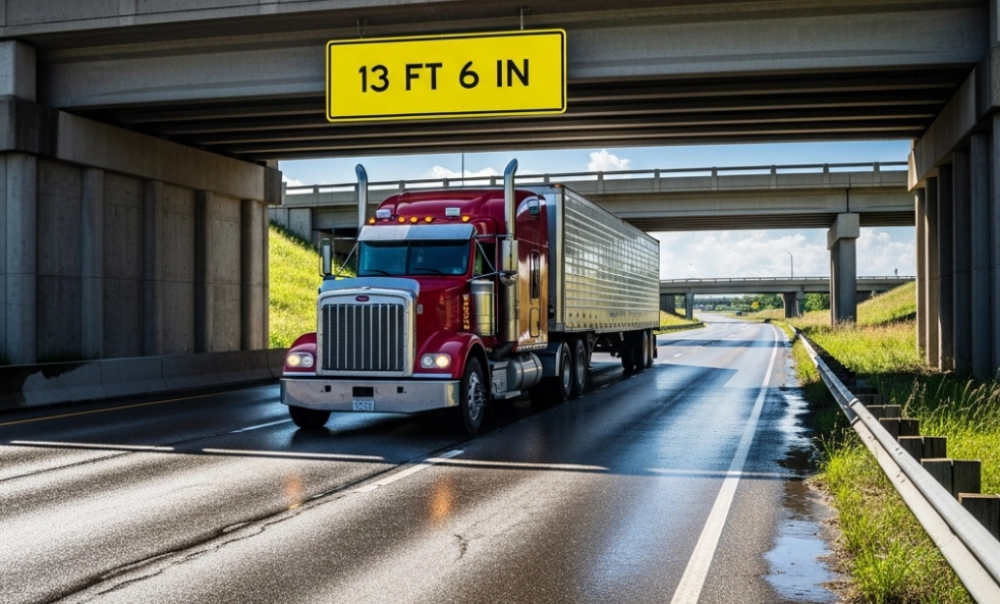
I still remember the first time I saw a rookie driver hesitate under an overpass in New Jersey. He had every right to be nervous. The sign said 13′ 6″, and his rig was technically 13′ 6″. It’s a game of inches that keeps logistics managers and owner-operators awake at night. If you are managing a fleet or looking to source heavy-duty vehicles, understanding the vertical limits isn’t just about following the law—it’s about protecting your investment and ensuring the cargo gets there.
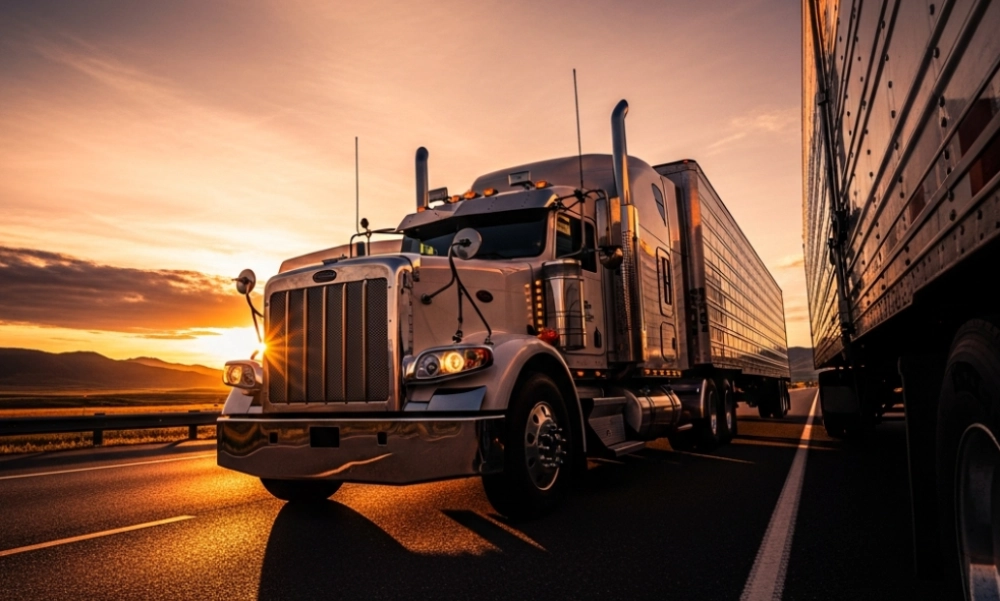
So, let’s cut straight to the chase and answer the big question: how tall is a semi truck?
The standard height for a semi-truck in the United States is 13 feet 6 inches (4.11 meters). However, this isn’t a universal number. While 13′ 6″ is the federal maximum for the interstate highway system, different trailer types, state-specific regulations, and custom manufacturing specs can shift this number. Whether you are hauling dry goods, heavy machinery, or looking into long-haul transportation solutions, knowing your exact clearance is non-negotiable.
In this guide, I’m going to walk you through everything I’ve learned over years in the logistics and manufacturing industry about truck dimensions. We will cover legal limits, how to measure correctly to avoid “stinger” accidents, and what to look for when ordering new equipment.
The Golden Rule: Standard Semi Truck Height Explained
When we talk about “standard” height, we are usually referring to the most common configuration on North American roads: the 53-foot Dry Van. But as anyone in the industry knows, “standard” is just a baseline.
Most commercial GPS systems and bridge heights are designed around that 13 feet 6 inches limit. Why? because the Federal Highway Administration (FHWA) sets guidelines for the interstate system to ensure military and commercial mobility. If your rig is under this height, you can generally travel 90% of the major roadways in the US without a special permit.
Variations by Trailer Type
Not all trucks are created equal. Depending on what you are hauling, your vertical profile changes. Here is a breakdown based on the specs I see coming off the production line and rolling into logistics yards.
| Truck/Trailer Type | Typical Height (Imperial) | Typical Height (Metric) | Primary Use Case |
|---|---|---|---|
| Standard Dry Van | 13′ 6″ | 4.11m | General freight, palletized goods |
| Refrigerated (Reefer) | 13′ 6″ | 4.11m | Temperature-sensitive cargo |
| Flatbed | 8′ 6″ (Platform height approx 5′) | 2.6m (Loaded varies) | Construction materials, machinery |
| High Cube Container | 13′ 6″ to 14′ | 4.11m – 4.26m | High volume, low weight cargo |
| Car Hauler | 13′ 6″ to 14′ (Loaded) | 4.11m – 4.26m | Vehicle transport |
You have to be careful with Flatbeds. While the trailer itself sits low (usually around 60 inches off the ground), the cargo dictates the final height. I’ve seen oversized loads where the driver forgot to account for the excavator arm, putting them well over the legal limit. If you are dealing with specialized loads, you might want to look at heavy-duty construction vehicle solutions that offer low-boy trailers to mitigate this height issue.
Why Height Matters: The “Can Opener” Effect
There is a bridge in Durham, North Carolina, famously called the “11-foot-8 bridge” (though it’s been raised slightly now). It has its own website dedicated to videos of trucks peeling their roofs off like sardine cans. It’s funny to watch on the internet, but it’s a financial disaster if it happens to your fleet.
When a driver doesn’t know how tall is a semi truck in their specific configuration, three things happen:
- Damage to Infrastructure: You are liable for the bridge repairs. That bill is rarely cheap.
- Cargo Loss: Impact at 40mph destroys whatever is in the top quarter of the trailer.
- Equipment Totaling: Structural damage to the trailer frame often means the unit is a write-off.
This is why understanding dimensions is part of basic safety protocols. It’s not just about the trailer; it’s about the suspension, the tire inflation, and even the “fifth wheel” height setting.
Legal Max Height Limits: Federal vs. State
Navigating the legal landscape in the US is tricky because while the Federal government sets standards for the National Network (NN), states have the right to set their own limits on local roads.
Federal Limits
There is actually no federal vehicle height limit. I know, that sounds crazy. The federal government does not enforce a specific height limit on the Interstate system. However, they ensure bridges have a clearance of at least 14 feet (ideally 16 feet in newer construction).
State Limits
Because there is no federal mandate, states set their own. Most states east of the Mississippi River have standardized on 13′ 6″.
However, out West, things get different. In states like Colorado and Nebraska, you might see limits up to 14′ 6″ permitted on specific designated routes. But be warned: just because a state allows 14 feet doesn’t mean every bridge in that state is 14 feet high. Older infrastructure in rural areas is a common trap.
If you are planning a cross-country route involving diesel trucks, you need to check the “Trucker’s Atlas” for every single state line you cross.
Factors Influencing Truck Height
It’s not just the metal box on the back. Several variables can change your ride height by a few critical inches.
1. Tire Size and Pressure
New tires have deeper tread. A brand new set of steer and drive tires can add nearly an inch to your height compared to worn-out ones. Over-inflation can also lift the rig slightly.
2. Suspension Air Bags
Air ride suspension is great for cargo safety, but if the leveling valve is malfunctioning or set too high, your trailer could be riding 2-3 inches higher than spec. Drivers should always visually check their ride height during their pre-trip inspection.
3. The Fifth Wheel
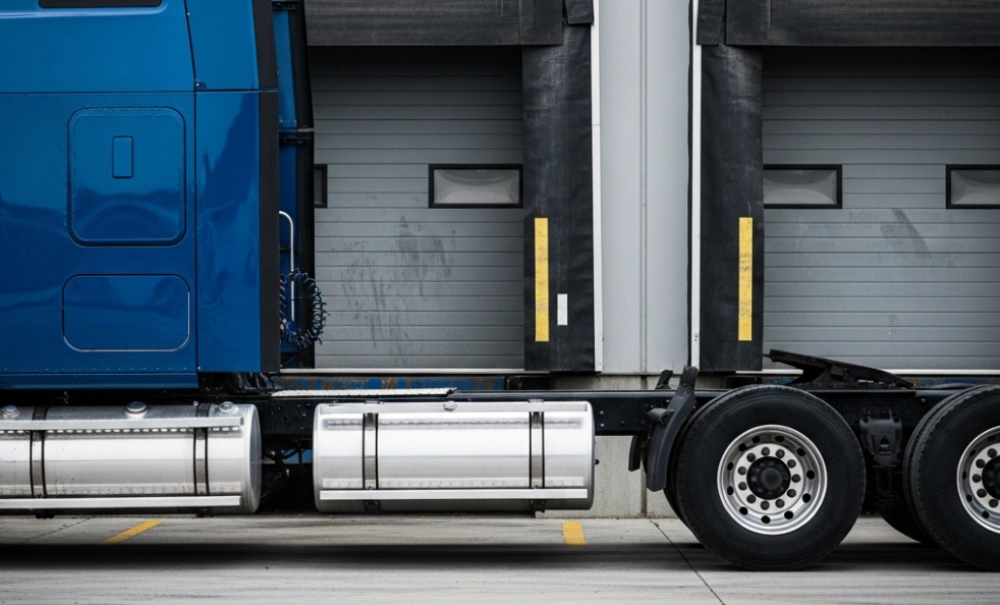
The height of the fifth wheel (the coupling device on the tractor) affects how the trailer sits. High-mount fifth wheels used for off-road or vocational work will push the nose of a standard trailer up, potentially putting you over height at the front.
For those interested in the engineering side or looking to buy specific tractor units, checking the heavy truck manufacturer specs for fifth-wheel height is a detail that separates the pros from the amateurs.
How to Measure Your Truck Correctly
Don’t trust the brochure. I always tell my clients: “Trust, but verify with a tape measure.” Here is the only way to get an accurate measurement of how tall is a semi truck in your yard.
- Park on Level Ground: Concrete is best. Gravel or dirt can throw off the measurement.
- Hook Up the Tractor: Measure the trailer while it is attached to the truck you intend to use. The angle matters.
- Measure from the Ground Up: Use a straight stick or a laser measure. Measure at the highest point.
- For Dry Vans: Usually the rear corners.
- For Reefers: The cooling unit (TRU) on the front is often the highest point.
- For Flatbeds: The highest point of the cargo.
- Add a Buffer: If you measure 13′ 5″, treat it as 13′ 6″. Bridges settle, road repaving adds layers of asphalt, reducing clearance. Always leave a margin for error.
Manufacturing and Customization Options
Sometimes, standard off-the-lot trucks don’t fit the bill. Maybe you have a specific route with low clearance tunnels, or maybe you need maximum cubic capacity for light but bulky cargo (like insulation or empty cans).
This is where working with a flexible Original Equipment Manufacturer (OEM) becomes vital. In my experience sourcing vehicles, having the ability to customize chassis height and container dimensions can save millions in logistics costs over the lifespan of a fleet.
If you are looking for specialized configurations, Chinese Truck Factory is a resource worth exploring. They are a significant player in the global manufacturing space, offering robust customization for international markets. Whether you need a standard height rig or a specialized low-profile setup for mining or urban logistics, they provide factory-direct solutions that meet rigorous safety standards.
For example, in waste management, the height of the hopper and the hydraulic arms matters immensely for urban clearance. You can check out their waste management solutions to see how engineering impacts vehicle dimensions.
Navigating Low Clearance: Tools of the Trade
Knowing how tall is a semi truck is step one. Step two is ensuring that truck fits under every bridge on the route. Here is what savvy operators use:
Commercial GPS Units
Never, and I mean never, use Google Maps or Apple Maps for semi-truck routing. Those apps are built for passenger cars. They will happily route a 13′ 6″ semi down a parkway with 10-foot stone arch bridges. Use systems like Garmin Dezl or Rand McNally, which allow you to input your vehicle’s specific height, width, and weight.
The Motor Carriers’ Road Atlas
Old school? Maybe. Essential? Absolutely. The laminated Rand McNally atlas has a section specifically listing low clearance locations by state and highway mile marker. It doesn’t run out of battery, and it doesn’t lose signal in the mountains.
Route Surveys
For super-loads or over-height loads, you need a pilot car with a height pole. This is a physical pole attached to a lead car set 6 inches higher than the load. If the pole hits the bridge, the truck stops. It’s simple physics, but it works.
The Relationship Between Height and Weight
While we are discussing dimensions, it’s impossible to ignore weight. A taller truck often means more wind resistance and a higher center of gravity. This affects stability.
If you are running a “high cube” setup, you are likely hauling lighter goods. Conversely, dense, heavy loads like steel coils are usually hauled on low flatbeds. Understanding the balance between cubic volume (height/width) and weight capacity is the core of logistics efficiency. If you are curious about the weight side of things, I’ve written a detailed breakdown on how much a semi truck weighs that complements this height guide perfectly.
Expert Tips for New Drivers and Fleet Managers
Based on industry analysis and accident reports, most bridge strikes happen within 5 miles of the destination. Why? Because drivers leave the interstate (where clearances are standard) and enter local roads to make the final delivery.
“The most dangerous part of the trip is the ‘last mile’. Local municipalities often repave roads without updating clearance signs. A bridge marked 13′ 6″ might only be 13′ 4″ after two layers of fresh asphalt.” — Senior Logistics Safety Officer
My advice:
- When in doubt, stop and get out (GOAL).
- If a bridge looks low, crawl under it. Do not hit it at speed.
- Be wary of snow. Packed snow on the road can raise your ride height by several inches, turning a safe pass into a collision.
Global Context: Are Trucks Different Elsewhere?
If you are operating internationally, don’t assume US rules apply.
Europe: The standard max height is generally 4.0 meters (13′ 1″), which is significantly lower than the US 13′ 6″.
Australia: They allow up to 4.3 meters (14′ 1″) in many areas.
China: The standard is usually 4.0 meters, but specialized transport varies widely.
This variance is why sourcing from a manufacturer with global export experience is crucial. They understand that a truck built for Texas might not be legal in Berlin or Beijing. If you are exploring distinct truck types for different markets, looking into what are the three types of trucks commonly used globally can give you a better perspective on chassis selection.
Conclusion
So, how tall is a semi truck? The short answer is 13 feet 6 inches for the vast majority of US operations. But as we’ve covered, the real answer lies in the details—your tire pressure, your trailer type, and your specific route.
In this industry, assumptions cause accidents. Whether you are driving the rig or buying the fleet, precision is your best friend. Always measure your equipment, use the right navigation tools, and source your vehicles from manufacturers who understand the engineering behind the dimensions.
Frequently Asked Questions (FAQ)
What is the absolute maximum height for a semi truck without a permit?
In most of the United States, the maximum legal height without a special permit is 13 feet 6 inches (4.11 meters). Some western states allow up to 14 feet on designated highways, but 13′ 6″ is the safe national standard to adhere to.
Does the height of a semi truck include the exhaust stack?
Yes. The legal height limit applies to the highest point of the vehicle. If you have “Texas square bumper” style stacks or aerodynamic fairings that stick up, they must be included in the measurement. If they exceed 13′ 6″, you are over height.
How do I know if my truck will fit under a bridge?
Use a commercial truck GPS (not a phone app), consult a Motor Carriers’ Road Atlas for low clearance listings, and pay close attention to yellow clearance signs on overpasses. Always assume the sign might be off by a few inches due to road resurfacing.
Are shipping containers taller than standard trailers?
Standard ISO containers are 8′ 6″ tall, sitting on a chassis roughly 4′ high, keeping them well under limits. However, “High Cube” containers are 9′ 6″ tall. When placed on a standard chassis, these can sometimes exceed 13′ 6″, requiring a specialized “gooseneck” chassis to ride lower to the ground.
References & Further Reading:
1. Federal Highway Administration (FHWA) – Freight Management and Operations
2. U.S. Department of Transportation – Vehicle Size and Weight Regulations