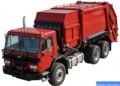
If you want the short answer first, here it is: most full-size cement trucks carry about 8 to 12 cubic yards of concrete, with 10 cubic yards being a very common real-world working load. That is usually the most useful answer to the question how many yards in a cement truck, but it is not the whole story. In actual jobs, capacity depends on drum size, truck weight limits, concrete slump, route conditions, and whether the truck is a standard rear-discharge, front-discharge, or volumetric mixer. I have spent years around heavy trucks, body specs, and jobsite transport planning, and I can tell you from experience that the number printed on paper is only half the picture. What matters is how much concrete the truck can safely haul, mix, and deliver without turning one load into three problems.
Whenever someone asks me how many yards in a cement truck, I know they are usually trying to solve one of three problems. They either want to estimate how many truckloads a pour will need, compare mixer truck sizes before buying equipment, or understand whether a “full truck” really means the same thing on every job. It does not. That is why I never answer with one fixed number and stop there. A cement truck may be built to handle a larger drum, but legal road weight, project access, mix design, and delivery distance all affect how much concrete it should actually carry on a given run.
In plain terms, the average cement truck capacity sits in the 8-to-12-yard range because that is where payload, drum performance, and operating practicality tend to meet. The National Ready Mixed Concrete Association notes that truck mixer capacity commonly varies between 8 and 12 cubic yards, which lines up closely with what buyers, plant operators, and contractors see in day-to-day use. That range gives us a solid starting point, but if you are ordering concrete, sizing a fleet, or comparing mixer truck options, you need more than a starting point. You need the full picture.

What the Question Really Means
The phrase how many yards in a cement truck sounds simple, but people use it to mean different things. Some want to know the maximum drum size. Some want the average load size delivered to a site. Others are asking how many cubic yards a concrete mixer truck can legally and safely haul on public roads. Those are related questions, but not identical.
In this context, “yards” means cubic yards of concrete. One cubic yard equals 27 cubic feet. Since ready-mix concrete is sold by volume, that is the unit contractors, dispatchers, estimators, and truck operators use every day. When someone asks about cement truck capacity, they are almost always asking about the volume of ready-mix concrete the truck can carry in its rotating drum, not just the physical size of the vehicle.
I also like to clear up one small wording issue right away. In everyday speech, many people say “cement truck,” but what they usually mean is a concrete mixer truck. Cement is only one ingredient in concrete. On jobsites, though, both terms get used constantly, so I treat them as the same search intent. If your article is trying to rank for how many yards in a cement truck, that is the intent you want to satisfy.
The Short Answer: Most Cement Trucks Carry 8 to 12 Yards
If I had to answer this question standing next to a job foreman with no time for a long explanation, I would say this: most cement trucks carry between 8 and 12 cubic yards of concrete, and 10 yards is one of the most common practical capacities. That answer is simple, accurate, and useful enough for many readers.
NRMCA’s guidance on ordering ready-mixed concrete states that the capacity of truck mixers varies between 8 and 12 cubic yards. That range matters because it confirms what many contractors already know from experience: a “standard” mixer truck is not always exactly 10 yards, but it usually lands somewhere near that mark. In other words, when people ask how many yards in a cement truck, the average answer is often 10, while the practical industry range is 8 to 12.
That said, I would never build a purchase plan or delivery schedule around a neat average alone. Some projects work best with smaller loads because access is tight, haul distance is short, or the mix is heavy and sticky. Other operations use larger-capacity units to reduce trips and improve cycle time. The right answer always depends on the truck and the job.
| Mixer Type | Typical Capacity Range | Common Working Load | Best Use |
|---|---|---|---|
| Small mixer truck | 3 to 6 cubic yards | 4 to 5 yards | Small pours, narrow access, patch work |
| Standard transit mixer | 8 to 12 cubic yards | 9 to 10 yards | Most residential and commercial pours |
| Front-discharge mixer | 8 to 12 cubic yards | 8 to 10 yards | Projects needing precise chute placement |
| Volumetric mixer | Varies by bin and tank setup | Job-specific | On-demand mixing and specialty batches |
Why Capacity Is Not Always the Same as the Real Delivered Load
One of the biggest mistakes I see is assuming that the rated drum volume and the actual delivered volume are always the same thing. They are not. A truck may have a drum that looks huge, but the amount of concrete it can deliver on a road-legal, job-ready basis may be lower than the drum’s theoretical maximum.
That happens for a few reasons. First, concrete is heavy. Very heavy. The mix itself can push the truck toward legal axle and gross weight limits before the drum is filled to the top. Second, the truck must keep the material moving properly in transit. Third, the operator still needs room for mixing action, safe drum performance, and predictable discharge at the site.
So when someone asks how many yards in a cement truck, I always explain the difference between rated capacity, nominal capacity, and practical payload. Those are not marketing details. They affect dispatch planning, job timing, and whether your order arrives in one clean run or gets split into additional loads.
Rated capacity
This usually refers to the mixer’s designed performance standard. It is tied to how much concrete the drum is built to mix or agitate properly.
Nominal capacity
This is often the number people casually use when they describe the truck, such as “a 10-yard mixer.” It helps in conversation, but it is not the whole story.
Practical load
This is the amount of concrete the truck can actually take to the site under real road, weight, and project conditions. In real life, this is the number that matters most.
How Weight Limits Affect Cement Truck Capacity
The question how many yards in a cement truck cannot be answered properly without talking about weight. That is where a lot of confusion starts. People see a large drum and assume more cubic yards always means more useful capacity. But concrete is dense enough that road weight limits often become the controlling factor.
Federal weight rules matter because they affect how much any heavy truck can legally operate with on major road networks. The eCFR section on truck size and weight limitations outlines the federal framework for weight limits, and those limits shape how mixer trucks are configured and loaded for public roads.In practice, that means the truck is not loaded just based on “what fits.” It is loaded based on what the chassis, axles, and road rules allow.
Portland Cement Association materials discussing ready-mix truck weights note that a fully loaded ready-mixed concrete truck can run into federal weight constraints quickly, which is one reason real operating loads are shaped by weight law as much as drum size. That is exactly why a buyer or contractor should never assume the biggest drum automatically means the biggest useful load.
From experience, this is where practical planning beats guesswork. If I am helping a buyer or fleet operator evaluate a concrete mixer, I want to know axle layout, empty vehicle weight, local hauling pattern, and the density of the material being carried. That tells me far more than a sales label alone.
How Heavy Is Concrete Per Yard?
To understand how many yards in a cement truck, you need a sense of how much one cubic yard of concrete weighs. A good everyday rule is that regular concrete weighs around 4,000 pounds per cubic yard, though the exact number varies by aggregate, moisture, mix design, and additives. Once you understand that, truck capacity becomes easier to visualize.
Ten cubic yards of concrete can weigh around 40,000 pounds by itself. That is before you add the truck, drum, fuel, driver, water system, and hardware. Now it becomes obvious why concrete mixer truck size is tied directly to weight limits. A mixer truck is not hauling fluffy cargo. It is hauling one of the heaviest common construction materials on the road.
I always tell newer buyers to think in terms of both volume and mass. The drum may suggest one thing, but the scale tells the truth. If your operation overlooks that, you can end up with overweight routes, underperforming trucks, or a machine that is never able to use its apparent full capacity in normal service.
Common Cement Truck Sizes Explained
When people search how many yards in a cement truck, they also want a usable breakdown of mixer truck sizes. So let’s talk through the common categories in the same practical way I would explain them on a yard walk.
3-yard to 5-yard mixer trucks
These are useful for smaller pours, repair work, utility jobs, tight entrances, and locations where access is more of a problem than volume. I have seen small mixers make more money than large ones on the right jobs because they can get in, pour fast, and get back out without traffic or site headaches.
6-yard to 8-yard mixer trucks
This range sits in a useful middle zone. It works well for many moderate pours, smaller site packages, and projects where the truck needs to balance capacity with maneuverability. If access is limited but volume still matters, this range often makes sense.
8-yard to 10-yard mixer trucks
This is where I would place many standard working mixers. It is large enough for serious jobsite output without becoming impractical in ordinary delivery conditions. For a lot of contractors, this range answers the question how many yards in a cement truck well enough for scheduling purposes.
10-yard to 12-yard mixer trucks
This is the upper end of what many people think of as a conventional full-size mixer truck. These trucks are common in larger pours and high-throughput operations, but the real usable load still depends on truck spec and road weight conditions.
Rear-Discharge, Front-Discharge, and Volumetric Mixers
Not all mixer trucks handle concrete the same way. That matters because the style of truck affects usable capacity, jobsite speed, driver control, and equipment selection.
Rear-discharge mixer trucks
This is the classic layout most people picture. The driver backs the truck into position and the concrete exits through the chute at the rear. These trucks are common, proven, and widely used for standard ready-mix delivery.
Front-discharge mixer trucks
These let the driver place the chute from the front, which can improve placement visibility and control. They are especially helpful when jobsites demand tighter positioning or more exact discharge management. In practice, the answer to how many yards in a cement truck is often similar to rear-discharge units, but the operating experience is different.
Volumetric mixer trucks
These carry raw materials separately and mix on site. Instead of arriving with one ready-mixed drum full of concrete, they produce concrete as needed. That changes the question from “how many yards are in the drum right now?” to “how many yards can this unit produce before it needs replenishment?” These trucks are valuable for jobs that need multiple mix designs, variable output, or reduced waste from leftover wet concrete.
How Many Truckloads for a Pour?
This is one of the most useful practical reasons someone searches how many yards in a cement truck. They are trying to estimate how many loads a project needs. The math is simple once you know the total volume and the approximate truck capacity.
For example:
- If your pour needs 20 cubic yards and each truck carries 10 yards, you need about 2 truckloads.
- If your pour needs 35 cubic yards and each truck carries 10 yards, you need about 4 truckloads, because the final load will be partial.
- If your pour needs 50 cubic yards and your dispatch plan uses 8-yard loads, you need about 7 truckloads.
NRMCA guidance also advises ordering 4% to 10% more concrete than your plan estimate to account for contingencies. That is one of those details I always appreciate because it reflects real field conditions. On paper, the volume might look exact. On site, grade variation, over-excavation, form irregularity, and placement waste can quickly make a “perfect” estimate too small.
| Total Concrete Needed | Based on 8-Yard Loads | Based on 10-Yard Loads | Based on 12-Yard Loads |
|---|---|---|---|
| 16 cubic yards | 2 loads | 2 loads | 2 loads |
| 24 cubic yards | 3 loads | 3 loads | 2 loads |
| 30 cubic yards | 4 loads | 3 loads | 3 loads |
| 40 cubic yards | 5 loads | 4 loads | 4 loads |
| 60 cubic yards | 8 loads | 6 loads | 5 loads |
That kind of table helps readers not just answer the keyword question, but use it. And from my standpoint, that is the difference between a page that gets traffic and a page that actually satisfies search intent.
What Affects the Real Capacity on the Job
The same truck can carry different practical loads depending on the circumstances. That is why how many yards in a cement truck is best answered with context rather than a single fixed figure.
Mix design
Different concrete mixes behave differently. Aggregate size, admixtures, water content, and slump can influence handling and transport performance.
Distance and route
Longer trips increase the importance of drum performance, consistent agitation, and timing. Urban stop-and-go routes are not the same as open, short-haul delivery cycles.
Drum design
Not all mixer drums are created equal. Blade condition, liner wear, drum geometry, and manufacturer standards affect real mixing efficiency.
Truck chassis and axle setup
A well-matched chassis helps the truck handle weight legally and safely. This is one reason serious buyers look beyond the drum and focus on the entire vehicle.
Site access
Tight turns, soft ground, slopes, and discharge position can change which truck size works best. I have seen projects where the “smaller” mixer was the more profitable choice simply because it could operate smoothly on site.
My Experience with Capacity Planning for Concrete Transport
I have always believed that concrete transport looks simple only from a distance. Up close, it is a game of timing, weight, hardware, and site coordination. Years ago, I watched a contractor schedule a medium-size slab pour assuming every truck would arrive with a clean 10-yard load. On paper, the plan looked tight and efficient. In practice, site access was poor, unloading was slower than expected, and the final quantity came up short. What should have been a smooth sequence turned into delays, extra dispatch coordination, and avoidable labor cost.
That was one of the moments that pushed me to stop treating how many yards in a cement truck as a trivia question. It is a planning question. It affects how many trucks you dispatch, how much standby labor you carry, how quickly the pour moves, and whether the job finishes cleanly or ends with a stressful “one more load” scramble.
Since then, whenever I speak with a fleet buyer, estimator, or project manager, I encourage them to ask a slightly better version of the keyword question: How many yards can this cement truck carry on my type of work, under my loading pattern, with my access conditions, and with my legal weight limits? That question leads to better decisions every time.
How Buyers Should Evaluate a Cement Mixer Truck
If you are not just ordering concrete but actually shopping for mixer equipment, the question how many yards in a cement truck becomes part of a larger equipment decision. In that case, here is what I would evaluate first.
- Rated drum capacity: the mixer’s stated volume range
- Empty vehicle weight: because payload starts after truck weight is counted
- Axle configuration: critical for legal load management
- Discharge type: rear, front, or volumetric
- Service environment: highway, site work, short cycle, remote work
- Maintenance access: drum wear, blade inspection, hydraulic systems, chute hardware
- Parts and support: because uptime matters more than brochure claims
When buyers start comparing broader truck applications, I often recommend also reading supporting content such as how much does a truck weigh, because mixer selection is tightly linked to vehicle weight. If the goal is to compare mixer transport with other heavy-duty use cases, heavy-duty construction vehicle solutions is also a useful next step. For readers researching broader sourcing options, China truck manufacturer and heavy truck manufacturer help frame the bigger equipment picture. And for operations comparing site-haul equipment with highway freight strategies, long-haul transportation solutions provides a useful contrast.
Why Safety Rules Matter to Capacity
Capacity is not just a commercial issue. It is also a safety issue. OSHA’s concrete and masonry standards include specific requirements for concrete mixers with one-cubic-yard or larger loading skips, which is a reminder that mixer equipment must be treated as serious industrial machinery, not just rolling containers.
That matters because a full truckload of concrete brings together heavy material, rotating equipment, hydraulic systems, drum motion, site traffic, and discharge hazards. If a truck is overloaded, poorly maintained, or used outside its proper working envelope, the safety risk rises quickly. The question how many yards in a cement truck is therefore tied directly to safe equipment use, not just delivery math.
I like to remind newer operators that concrete transport punishes shortcuts. A load that is a little too heavy, a blade that is a little too worn, or a route that is a little too rough can turn routine delivery into expensive downtime. Capacity planning is one of the simplest ways to avoid that.
How Cement Truck Capacity Compares with Other Construction Trucks
People shopping across multiple truck categories often want to place mixer capacity in a wider heavy-vehicle context. A concrete mixer is very different from a dump truck, a box truck, or a tractor unit because its payload is not just cargo volume. It is moving, rotating, timed material that must arrive in usable condition.
| Truck Type | Main Cargo | Typical Capacity Metric | Operational Focus |
|---|---|---|---|
| Concrete mixer truck | Ready-mix concrete | Cubic yards | Mix quality, timing, legal weight |
| Dump truck | Loose bulk material | Tons or cubic yards | Payload and tip efficiency |
| Box truck | Packaged freight | Cubic feet or payload | Protection and route delivery |
| Semi-truck | Trailer freight | Combined weight and trailer cube | Long-haul efficiency |
This comparison matters because some buyers come in asking the right keyword but the wrong follow-up question. They want to know if “more yards” automatically means “better truck.” It does not. The best mixer truck is the one whose drum capacity, chassis strength, legal load profile, and service pattern match the work.
Is Bigger Always Better?
No. That is one of the most important things I can say in an article built around how many yards in a cement truck. Bigger is only better when the job consistently supports it. A larger drum may reduce trips, but it can also bring higher empty weight, more difficult site access, more stress on the chassis, and less flexibility on smaller jobs.
I have seen businesses buy equipment for the biggest project they hope to win rather than the jobs they handle every month. That usually leads to underused capacity, awkward site performance, and operating cost that never really pays back. In contrast, the operations that choose equipment well tend to spec trucks around their repeat work, not their dream scenario.
If your deliveries are short, dense, and frequent, a right-sized mixer often outperforms a larger one over the course of a year. If the projects are big, accessible, and volume-driven, then yes, higher-capacity trucks can bring a real advantage. The correct choice depends on your daily reality.
How to Estimate Concrete Needs More Accurately
Since many readers land on this topic while planning a pour, I always like to add one practical section that helps them act on the information right away. Here is a clean way to estimate what you need before you start asking how many yards in a cement truck.
- Measure the pour dimensions in feet.
- Convert the volume into cubic feet.
- Divide by 27 to convert cubic feet into cubic yards.
- Add a practical contingency percentage.
- Divide by the expected truckload size to estimate the number of deliveries.
Example:
A slab that measures 40 feet by 30 feet by 0.5 feet equals 600 cubic feet. Divide 600 by 27 and you get about 22.2 cubic yards. Add contingency, and the order may move closer to 23 to 24 yards. If your supplier uses 10-yard loads, you are likely looking at three truckloads.
That kind of calculation is basic, but it prevents one of the most common field mistakes: treating truck count as guesswork. The better your estimate, the more useful the answer to how many yards in a cement truck becomes.
What I Would Tell a Contractor, Fleet Buyer, or Equipment Researcher
If you asked me this in person, I would answer in three layers. First, most standard cement trucks carry about 8 to 12 cubic yards, with 10 yards being a very common planning number. Second, real delivered volume depends heavily on truck design and legal weight. Third, the best truck is not the one with the biggest drum on paper. It is the one that handles your mix, roads, cycle times, and jobsite access without compromising safety or uptime.
If you are just ordering concrete, that answer helps you estimate truckloads. If you are buying mixer equipment, it gives you a framework for evaluating capacity honestly. And if you are in manufacturing or sourcing, it helps you speak to customers in the language that actually matters: useful yardage, practical payload, and dependable job performance.
For buyers exploring sourcing conversations, Chinese Truck Factory is relevant because mixer selection rarely exists in isolation. Most serious buyers also compare construction transport, heavy-duty chassis options, serviceability, and total-use fit across multiple truck categories before making a purchase decision.
FAQ: Common Questions About Cement Truck Capacity
How many yards in a cement truck on average?
Most full-size cement trucks average about 8 to 12 cubic yards, and 10 cubic yards is one of the most common real-world planning numbers.
How many cubic yards does a standard concrete mixer truck hold?
A standard concrete mixer truck typically holds between 8 and 12 cubic yards, depending on the drum, chassis, and legal working load.
Can a cement truck carry 12 yards every time?
Not always. A 12-yard mixer may be designed around that range, but the practical delivered load can be lower depending on vehicle weight, route conditions, and job requirements.
How much concrete is in a 10-yard truck?
A 10-yard truck carries about 10 cubic yards of concrete, which is approximately 270 cubic feet. The exact weight depends on the mix design.
How many truckloads do I need for 30 yards of concrete?
If each truck carries 10 yards, you will usually need 3 truckloads. If each truck carries 8 yards, you will need about 4 loads.
Is a front-discharge mixer the same capacity as a rear-discharge mixer?
Often the capacity range is similar, but the operating style, visibility, placement control, and jobsite performance can differ quite a bit.
Why does cement truck capacity vary?
Capacity varies because of drum size, axle configuration, legal road weight, concrete density, truck design, and site conditions.
Suggested Media for This Page
- Image file name: how-many-yards-in-a-cement-truck-overview.jpg
- Image alt text: how many yards in a cement truck with standard mixer drum explained
- Image file name: how-many-yards-in-a-cement-truck-size-chart.jpg
- Image alt text: how many yards in a cement truck size chart for concrete mixer trucks
- Video idea: a walkaround showing drum size, loading process, chute setup, and real jobsite discharge
- Suggested video title: How Many Yards in a Cement Truck? Real Mixer Capacity Explained
About This Article
This article is written from a practical truck and equipment perspective for readers comparing mixer truck capacity, construction delivery planning, and heavy-duty vehicle options. The goal is to give a clear answer first, then build out the real-world details that buyers, estimators, and contractors actually need before making decisions.
Notes for Readers
Vehicle capacity, payload, and legal operating limits vary by mixer design, truck chassis, axle configuration, route restrictions, and local requirements. Always confirm final specifications, delivery assumptions, and load planning details with your supplier, manufacturer, dispatcher, or compliance professional before ordering or operating equipment.