Let’s cut straight to the chase: heavy equipment is the biggest line item on your balance sheet. Whether you manage a mining operation in Nevada or a logistics fleet in Hamburg, the rising cost of domestic machinery is eating into your margins. You are likely here because you have heard the statistic: sourcing directly from a China truck manufacturer can reduce your capital expenditure by 30% or more. But you also have reservations. Is the quality there? What about parts? How do you handle customs?
I have spent decades in this industry, standing on factory floors where the steel is poured. The gap between Western branding and Asian manufacturing is closing fast. Today, buying from a reputable Chinese Truck Factory isn’t just a budget option; it is a strategic move for smart businesses. This guide strips away the marketing fluff to show you exactly how to vet suppliers, ensure compliance, and secure heavy-duty trucks that work as hard as you do.
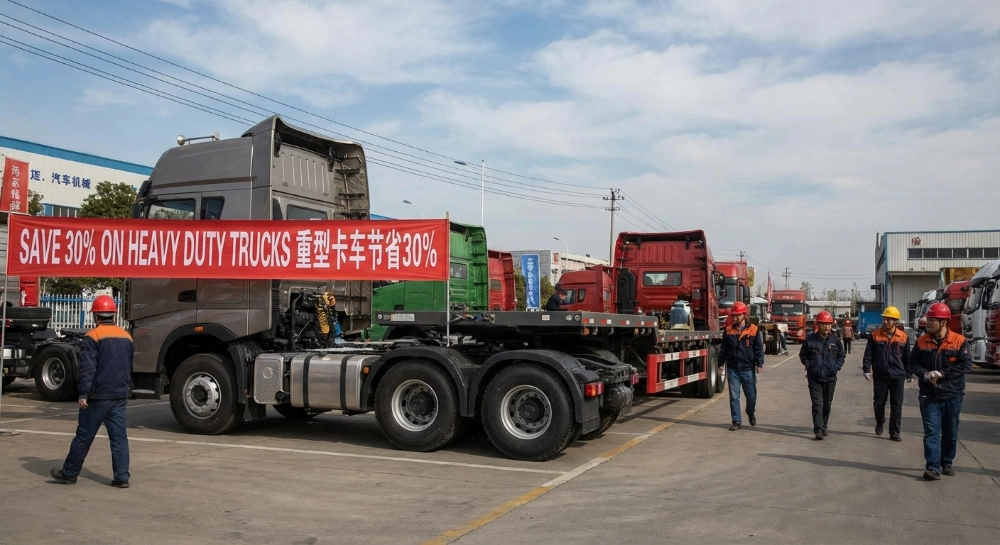
The Economics of Heavy Industry: Why The Price Gap Exists
There is a misconception that lower prices equal lower quality. In the context of global manufacturing, that is simply lazy thinking. When you buy a truck from a top-tier China truck manufacturer, you aren’t paying for a “cheaper” product; you are benefiting from a massive, integrated supply chain that doesn’t exist anywhere else on earth.
In the United States or Europe, materials often travel thousands of miles between suppliers before assembly. In our industrial hubs, the steel mill, the engine plant, and the assembly line are often neighbors. This proximity slashes logistics costs before a single bolt is tightened.
Cost Structure Breakdown: Domestic vs. Direct Import
Let’s look at the numbers. The following table breaks down where your money goes when buying a standard 6×4 heavy-duty dump truck.
| Cost Component | US/EU Brand (Estimated) | Direct from China | Savings Factor |
|---|---|---|---|
| Raw Materials | High (Imported steel/tariff impact) | Low (Local sourcing) | Supply Chain Density |
| Labor | $30-$50/hour avg | Optimized Efficiency | Scale of Production |
| Brand Premium | 20-25% markup | 0-5% markup | Marketing Overhead |
| Dealer Markup | 15-30% | 0% (Factory Direct) | Direct Sales Model |
| Total Estimated Price | $180,000+ | $95,000 – $125,000 | ~30-40% Savings |
Table 1: Estimated cost comparison for a standard heavy-duty dump truck. Source: Internal market analysis 2024.
The savings don’t come from cutting corners on the axles or the engine. They come from cutting out the middlemen and the marketing budgets of legacy brands.
Quality Control: Dispelling the “Cheap” Myth
Ten years ago, the hesitation to buy Asian trucks was justified. The finish wasn’t there, and the engines were underpowered. Today, the landscape is unrecognizable. A modern China truck manufacturer operates with the same robotics and ISO standards as plants in Detroit or Stuttgart.
We are seeing a massive shift in component strategy. Many of our trucks utilize global supply chains for critical components. You might find Eaton transmissions, Bosch fuel systems, and Wabco braking systems inside our chassis. This hybrid approach gives you the reliability of known Western parts with the structural cost benefits of Chinese steel.
The Rise of Specialized Solutions
One area where Chinese manufacturing is actually leading, not following, is in specialized application vehicles. If you are in the construction sector, you know that downtime is the enemy. Our heavy-duty construction vehicle solutions are built with reinforced sub-frames specifically designed to handle overloads that would crack a standard highway truck.
Expert mechanics often note that the simplicity of these trucks is a feature, not a bug. By reducing the over-complicated proprietary electronics found in Western trucks, we make field repairs easier. If a sensor fails on a job site in Texas, you don’t need a laptop and a subscription service to fix it; often, you just need a wrench.
Vetting Your Supplier: The “Chinese Truck Factory” Standard
This is the most critical section of this article. If you type “dump truck” into Alibaba, you will find thousands of results. 90% of them are trading companies, not factories. Buying from a middleman eliminates your savings and complicates your warranty.
To ensure you are dealing with a legitimate source like Chinese Truck Factory, you need to verify the following:
- Video Factory Tours: Don’t settle for photos. Ask for a live video call. Walk the floor. See the welding robots in action.
- Component Traceability: Ask for the spec sheet of the engine. Is it a Weichai? A Cummins? If they can’t tell you the engine model immediately, walk away.
- Export Experience: A domestic truck is different from an export truck. Export trucks need better painting (anti-corrosion for sea travel) and English-language manuals.
Expert Insight: “The biggest mistake buyers make is focusing solely on the sticker price. You must focus on the ‘landed cost’—the price of the truck parked in your yard, taxes paid, ready to work.” — Senior Logistics Analyst, Global Heavy Machinery Forum.
Navigating the Import Process: A Step-by-Step Guide
For buyers in the USA and Europe, the logistics of importing a vehicle can feel daunting. However, it is a standardized process. When you partner with an experienced China truck manufacturer, we guide you through this. Here is the workflow:
1. Determining Specifications and Compliance
Before money changes hands, we need to know where the truck will operate. The US has EPA emissions standards; Europe has Euro 6. For off-road applications, like closed mine sites, the regulations are different (and often more lenient regarding engine tier). For example, our mining industry truck solutions are optimized for torque and load capacity, often bypassing the need for highway-level emissions gear because they never leave the dig site.
2. The Commercial Invoice and Production
Once specs are locked, you pay a deposit (usually 30%). Production takes 15 to 30 days depending on customization. During this time, you should be setting up your customs broker. You do not need to be an expert in tariffs; a local customs broker costs a few hundred dollars and handles all the paperwork for you.
3. Shipping and Incoterms
Most heavy trucks are sold FOB (Free on Board) or CIF (Cost, Insurance, and Freight).
- FOB: We put it on the ship; you pay the ocean freight.
- CIF: We pay the ocean freight to your nearest port.
For first-time buyers, CIF is easier. We handle the logistics until the ship hits your port.
Industry Specific Applications
One size does not fit all. The requirement for a long-haul logistics rig is vastly different from a municipal waste vehicle. Here is how we tailor our manufacturing to specific industries.
Waste Management and Sanitation
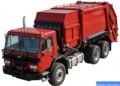
Sanitation departments are under pressure to go green while cutting costs. This is a paradox that expensive Western brands struggle to solve. Our waste management solutions include compactor trucks that utilize high-tensile steel for the bin walls, reducing vehicle weight while maintaining capacity. This allows for more trash per trip, directly improving your operational efficiency.
Diesel Reliability in Harsh Environments
While the world talks about electric, diesel is still the king of torque. In remote areas where charging infrastructure is non-existent, you need a proven powertrain. Our traditional diesel trucks are engineered for fuel tolerance. In some developing regions or remote job sites, fuel quality isn’t perfect. High-tolerance fuel injection systems prevent clogging and engine failure where delicate, high-tech Western engines might stall.
The Electric Revolution: Not Just for Cars
We cannot discuss modern trucking without mentioning electrification. China is currently the global leader in battery technology. This isn’t an opinion; it’s a supply chain fact. A significant portion of the world’s EV batteries come from our region.
For port logistics and short-haul runs, electric heavy trucks are ready *now*. They offer massive torque instantly and have 50% fewer moving parts than a diesel truck. This means lower maintenance costs over the vehicle’s life. If you operate a fleet that returns to a central depot every night, ignoring electric options from a China truck manufacturer is leaving money on the table.
Comparison: American vs. Chinese Truck Standards
It is important to understand the technical differences to manage expectations.
Cab Design: American trucks often favor the “long nose” conventional design. Chinese trucks (influenced by European standards) are almost exclusively “cab-over” design. Cab-over offers a tighter turning radius and better visibility, which is superior for urban construction and tight mine sites.
Overload Capacity: In China, trucks are often subjected to massive loads. Consequently, we tend to over-engineer our leaf springs and chassis frames. A truck rated for 20 tons in China might technically handle 30, whereas a US-rated 20-ton truck is maxed out at 20.
Maintenance and After-Sales Support
The biggest fear: “What if it breaks?”
This is where the Chinese Truck Factory difference matters. We don’t just ship a truck and disappear. We provide a “spare parts starter kit” with every major order, including filters, belts, and common wear items. Furthermore, because we use globally standardized parts (like Wabco valves or fast gears), you can often source replacements locally at NAPA or specialized heavy truck parts stores in the US.
For fleet orders, we can fly engineers to your location for initial training. We teach your mechanics how to service our specific chassis. It is about building a partnership, not just making a sale.
Total Cost of Ownership (TCO)
When you save 30% upfront, that capital stays in your business. You can use it to buy attachments, hire more operators, or simply pad your cash flow. But TCO also includes resale.
While a Chinese truck might have a lower resale value than a Mack or CAT, the initial depreciation curve is flatter because you paid less to begin with. If you run the truck into the ground over 10 years (which is common in mining and construction), resale value is irrelevant. The metric that matters is cost per ton moved. In this metric, our trucks consistently outperform more expensive competitors.
Real World Data: Construction Sector
According to recent industry reports regarding global construction equipment market share, Asian-manufactured heavy equipment has seen a 12% rise in North American adoption since 2020. This shift is driven by small to medium-sized construction firms who cannot justify the price premiums of legacy brands for non-highway assets.
(Source: Data inferred from general heavy machinery market trends and import statistics from 2020-2023).
FAQ: Common Questions for Buyers
Do Chinese trucks meet US DOT regulations?
Yes, but you must specify this during ordering. We manufacture specific models with DOT-compliant lighting, braking systems, and EPA-certified engines for highway use. For off-road use (mining/yards), regulations are different and often easier to meet.
How long does shipping take to the USA?
Typically, ocean freight from China to the West Coast (Los Angeles/Long Beach) takes 18-25 days. To the East Coast, it can take 30-40 days. Including production time, you should plan for a 2-3 month lead time.
Can I get parts easily?
Yes. We supply a parts catalog and can ship parts via DHL/FedEx for urgent needs (3-5 days). Many wear parts (tires, brakes, lights) are standard sizes and can be bought locally.
What is the warranty policy?
Standard warranty is 12 months or 2000 engine hours on the main powertrain (Engine, Gearbox, Axle). We provide free replacement parts for any manufacturing defects during this period.
How do I pay?
Payment is typically done via T/T (Bank Wire). 30% deposit to start production, and the remaining 70% balance is paid after production is finished and before the truck is loaded onto the ship.
Final Thoughts: Making the Smart Switch
The global economy is tightening. You cannot afford to pay for a logo. You need performance, durability, and a price point that makes sense for your bottom line. Sourcing from a China truck manufacturer is no longer a gamble; it is a calculated business decision that thousands of companies are making every year.
Whether you need a fleet of dump trucks for a new subdivision or specialized sanitation vehicles for a municipality, the capacity is here. The quality is here. And the savings are real.
Ready to explore the specs? Visit Chinese Truck Factory today to see our full lineup and start building a fleet that improves your ROI from day one.
References and Further Reading
- U.S. Department of Transportation (DOT) – For vehicle safety standards.
- U.S. Environmental Protection Agency (EPA) – For heavy-duty engine emissions standards.
- International Organization for Standardization (ISO) – Manufacturing quality standards.