If you have ever stood on a municipal budget committee or managed a fleet for a private industrial complex, you know the sticker shock is real. The most common question I get asked by procurement officers and curious taxpayers alike is simple: how much does a fire truck cost?
To give you the direct answer right out of the gate: A brand new, fully equipped structural pumper truck typically costs between $650,000 and $900,000. If you are looking for a complex aerial ladder truck, expect to pay anywhere from $1.2 million to over $1.8 million.
However, those numbers are just the tip of the iceberg. In my decades working with heavy-duty vehicle sourcing and logistics, I’ve seen prices fluctuate wildly based on chassis customization, pump capacity, and yes—where the truck is manufactured. Whether you are a small volunteer fire department operating on a shoestring budget or a large city planner, understanding the anatomy of this pricing is critical.
In this guide, we are going to tear down the price tag. We will look at the real costs of new versus used rigs, the hidden expenses of maintenance, and why smart buyers are looking at global sourcing strategies to save nearly 40% without sacrificing safety.
The 2025-2026 Fire Truck Price Breakdown
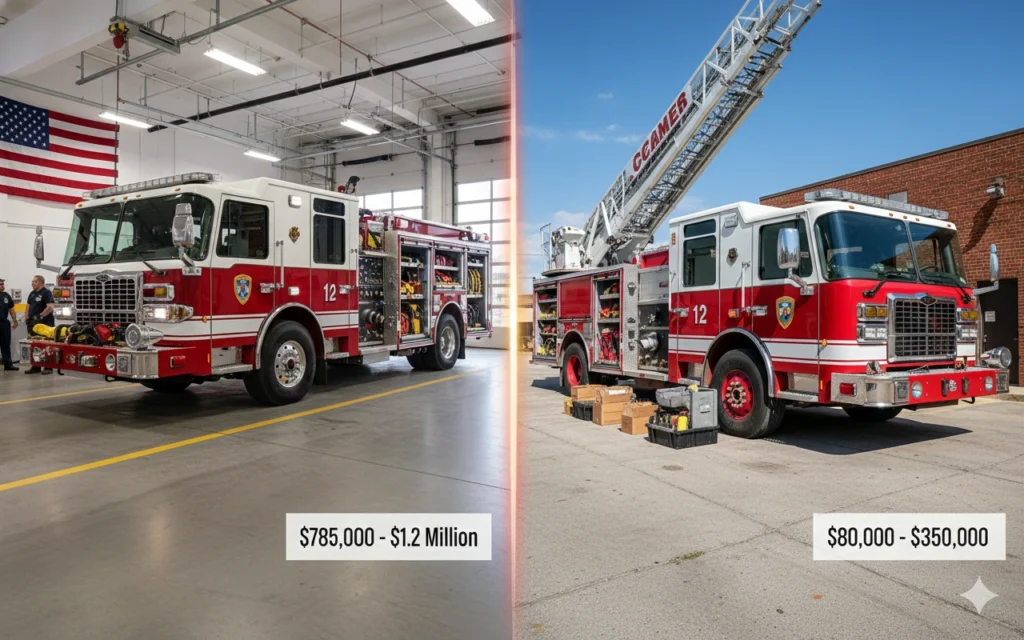
When we discuss how much does a fire truck cost, we have to define the “type” of truck. A wildland brush truck is a completely different beast from a 100-foot tiller ladder. Based on recent market analysis and bid sheets I’ve reviewed this year, here is a realistic price list.
| Fire Apparatus Type | Estimated New Price (USD) | Estimated Used Price (10+ Years) |
|---|---|---|
| Custom Pumper Engine | $650,000 – $950,000 | $50,000 – $200,000 |
| Aerial Ladder / Quint | $1,100,000 – $1,800,000 | $100,000 – $400,000 |
| Tanker / Water Tender | $350,000 – $600,000 | $40,000 – $150,000 |
| Wildland Brush Truck | $150,000 – $350,000 | $30,000 – $90,000 |
| Airport Rescue (ARFF) | $800,000 – $1,500,000+ | $80,000 – $250,000 |
Table 1: Current market averages for fire apparatus. Prices vary by specification.
Structural Pumpers: The Workhorse
The pumper is the backbone of any fleet. Costs here are driven by the pump capacity (GPM) and the chassis type. A commercial chassis (like a Freightliner or International modified for fire use) is significantly cheaper than a custom chassis built from the ground up for firefighting.
If you are exploring cost-effective alternatives for fluid transport, you might want to compare the chassis specs with specialized tanker trucks which often share similar heavy-duty drivetrain components but at a different price point.
Aerials and Ladder Trucks
These are the giants. The reason the question “how much does a fire truck cost” gets such scary answers usually involves ladders. The hydraulics, the steel certification, and the sheer engineering required to lift firefighters 100 feet in the air safely drive these costs over the million-dollar mark easily.
Why Are Fire Trucks So Expensive?
I remember visiting a factory floor a few years back, watching a technician hand-wire a dashboard. It wasn’t an assembly line like you see for sedans; it was a craft shop. That’s the first reason: Labor.
But let’s peel back the layers. What are you actually paying for?
1. The Custom Chassis
Unlike standard logistics vehicles, a fire truck chassis often needs to be reinforced to handle the immense stress of water surge (sloshing in the tank) and emergency maneuvers. High-quality steel and specialized suspension systems are non-negotiable. For those interested in the engineering behind heavy-load vehicles, looking at heavy truck manufacturing standards gives you insight into why raw materials cost so much.
2. NFPA and Government Regulations
In the US and Europe, regulations (like NFPA 1901) dictate everything from the reflective striping to the maximum decibels of the siren. Compliance costs money. Every switch, valve, and hose must meet a safety standard that far exceeds commercial trucking requirements.
3. The Pump and Plumbing
The heart of the truck. A Hale or Waterous pump capable of moving 1,500 gallons per minute isn’t just a water pump; it’s a precision instrument. The plumbing involves stainless steel manifolds and high-pressure relief valves. This system alone can cost more than a luxury car.
4. Electronics and Technology
Modern trucks are rolling computers. We are talking about pressure governors, CAN bus systems, and integrated communication headsets. As we move toward smart cities, integration with traffic signal preemption systems adds another layer to the invoice.
New vs. Used: Making the Right Financial Decision
When the budget is tight, the debate between buying new or used heats up. I’ve helped municipalities navigate this, and here is my take.
Buying New:
- Pros: Full warranty, latest safety tech, custom-built to your exact terrain and needs, lower maintenance for the first 5-7 years.
- Cons: Massive upfront capital, long lead times (currently 18-24 months for delivery).
Buying Used:
- Pros: Immediate delivery, fraction of the cost.
- Cons: Higher maintenance, outdated safety features, shorter remaining service life.
If you are looking for robust vehicles that hold their value, sometimes looking at the broader heavy-duty market helps. For instance, specialized vehicles often have a second life in construction or industrial fire brigades after their municipal service ends.
Global Sourcing: The Industry’s Best-Kept Secret
Here is where the conversation gets interesting. For decades, the market was dominated by three or four big names. But with supply chain issues slowing down production in North America and Europe, savvy buyers are looking globally.
There is a misconception that “imported” means lower quality. In the heavy machinery world, that’s simply no longer true. I have inspected rigs coming out of Asia that rival European engineering standards but at a 30-40% lower price point.
Companies like Chinese Truck Factory (chinesetruckfactory.com) are becoming pivotal for buyers who need heavy-duty chassis and specialized tanker solutions without the “brand tax” of Western legacy manufacturers. They utilize global components (like Cummins engines and Allison transmissions) but assemble them with cost-effective efficiency.
If you are managing a private industrial fleet, a mining operation, or a rural fire district, you don’t necessarily need a Pierce Arrow XT with gold-leaf lettering. You need a truck that pumps water and starts every time. Exploring OEM truck manufacturing options can save you hundreds of thousands of dollars per unit, allowing you to buy three trucks for the price of two.
Hidden Costs of Ownership
When asking “how much does a fire truck cost,” you cannot ignore the operational expenditure (OpEx). The purchase price is just the entry fee.
Maintenance and Repairs
Fire trucks are driven hard and put away wet—literally. Pump packings leak, hydraulic seals fail, and electrical gremlins appear. Budget at least $5,000 to $10,000 annually for routine maintenance per truck. For older specialized trucks, like aerials, this can double.
Fuel and Consumables
These trucks are heavy. 40,000 to 60,000 lbs. Fuel economy is measured in gallons per hour, not miles per gallon. If you are running a diesel fleet, the cost of DEF and diesel adds up. It is similar to the operational costs seen in heavy-duty construction vehicle solutions.
Equipment Outfitting
The truck comes “empty.” You still need to buy:
- Hose (Supply and Attack lines): $10,000+
- Nozzles and appliances: $5,000+
- SCBA (Breathing Apparatus): $8,000 per seat
- Extrication tools (Jaws of Life): $25,000+
Suddenly, your $600,000 truck is an $800,000 project.
Financing Your Fire Apparatus
Unless you are a major city with a massive tax base, you likely aren’t writing a check for the full amount. How do departments afford this?
1. Municipal Bonds: The most common method for public departments. It spreads the cost over 10-20 years.
2. FEMA Grants: In the US, the Assistance to Firefighters Grant (AFG) is a competitive but vital resource.
3. Leasing: Lease-purchase agreements allow departments to pay annually and own the truck at the end of the term. This is popular for maintaining cash flow.
Expert Tips for Reducing Costs
In my experience consulting for fleets, here is how you shave numbers off that proposal:
- Standardize Your Specs: Do you really need a custom bumper extension? Stick to the manufacturer’s program vehicles (stock units) to save 10-15%.
- Group Buying: Join a purchasing consortium (like Sourcewell in the US). Buying power lowers prices.
- Multi-Use Vehicles: Instead of a dedicated tanker and a dedicated pumper, look at a “Pumper-Tanker” combo. It does two jobs. Similarly, in industrial settings, using versatile chassis like those found in mining industry truck solutions can provide durability for rough terrain wildfire response.
- Demo Units: Manufacturers often sell “demo trucks” that have been driven to trade shows. They are technically used but have never fought a fire. You can save $50,000 easily here.
The Future: Electric Fire Trucks?
We are seeing the first electric fire trucks (EVs) hitting the market from brands like Rosenbauer and Pierce. The cost? Astronomical—currently hovering around $1.5 million to $2 million.
While the fuel savings are there, the ROI takes a long time. For now, clean diesel remains the standard. However, looking at the advancements in electric truck solutions in logistics gives us a preview of where fire apparatus tech is heading: better torque, lower maintenance, and zero emissions in the station.
Frequently Asked Questions (FAQ)
How much does a fully equipped fire truck cost?
A fully equipped fire engine (including hoses, tools, and SCBA gear) typically costs between $750,000 and $1 million. The “loose equipment” alone can add $100,000 to the base price of the chassis and body.
Why are ladder trucks so expensive?
Ladder trucks require massive hydraulic systems, reinforced steel structures, and advanced stabilization technology to prevent tipping. The engineering required to safely lift personnel 100+ feet in the air justifies the $1.2M+ price tag.
Can I import a fire truck to save money?
Yes, importing chassis or complete units from reputable global manufacturers like Chinese Truck Factory can significantly reduce costs. However, you must ensure the vehicle meets your local safety standards (like DOT or NFPA) and that you have a plan for parts and service availability.
What is the lifespan of a fire truck?
A frontline fire truck typically serves for 10 to 15 years. After that, it is often moved to “reserve” status for another 5-10 years. With proper maintenance, a quality heavy-duty chassis can last over 25 years.
Final Thoughts
So, how much does a fire truck cost? The answer is complex, but the strategy for buying one shouldn’t be. Whether you are spending $400,000 or $1.4 million, the key is defining your mission profile.
Don’t pay for capabilities you don’t need. If you are protecting a rural area with flat terrain, you don’t need a custom big-city chassis. If you are an industrial site, you might find better value in working with a direct manufacturer like Chinese Truck Factory to build a rig that fits your specific hazards without the municipal markup.
Fire trucks are an investment in safety. Do your homework, compare the specs, and never be afraid to look outside the traditional vendors to find the best value for your community or business.
References & Citations:
1. National Fire Protection Association (NFPA) – Fire Apparatus Standards 1901
2. FEMA – Assistance to Firefighters Grant Program Statistics
3. Fire Apparatus Manufacturers’ Association (FAMA) – Industry Outlook Reports