You are likely here because your current setup just isn’t cutting it anymore. Maybe you’re tired of manually unloading debris after a twelve-hour shift, or perhaps you’re renting equipment that eats into your profit margins every single week. When you type dump trailer for sale into your browser, you aren’t just looking for a metal box on wheels; you are looking for a reliable partner in the trenches—something that won’t buckle under a load of wet concrete or quit on you in the middle of a muddy job site.
Finding the right heavy duty tipping trailer is about more than just checking the price tag. It’s about understanding hydraulic geometries, steel hardness ratings, and axle configurations that keep you legal on the interstate. Whether you are a seasoned contractor hauling gravel in Texas or a landscaping business owner in the suburbs, this guide breaks down the nitty-gritty of what actually makes a trailer “heavy duty.” We’ll cut through the sales fluff and look at the engineering reality, ensuring you get the best equipment for your hard-earned money.
Understanding Dump Trailer Hydraulics: The Heart of the Beast
You can have the toughest steel in the world, but if your lift system can’t push the load, you’re just dragging a heavy sled. When browsing a dump trailer for sale, the hydraulic hoist is the first thing you should inspect. In the US market, you will typically encounter three main designs. Knowing the difference can save you from a dangerous tip-over.
1. Telescopic Cylinders: The Powerhouse
If you see a cylinder mounted on the very front of the box, pushing it up like a rocket, that’s a telescopic hoist. This is the gold standard for heavy-duty applications. Because the lift force is applied at the very front of the bed, it requires less force to lift the same amount of weight compared to a scissor lift. This geometry is crucial for maximum efficiency.
- Pros: Extremely efficient lifting leverage; often provides a steeper dump angle (up to 45+ degrees), which is critical for sticky clay or wet soil.
- Cons: The cylinder is exposed when the bed is down, making it slightly more vulnerable to damage if you aren’t careful with front-end loaders.
2. Scissor Hoist: Stability in Motion
The scissor lift uses a folding “X” mechanism underneath the bed. It pushes the trailer up from the center. This design is incredibly popular in the 14k to 16k GVWR range.
- Pros: Excellent stability. Because the lift point is spread across the trailer’s frame via the scissor mechanism, it handles uneven loads slightly better than a single-piston setup.
- Cons: It requires a lot of initial force to “break” the inertia and start lifting. If your battery is weak, a scissor lift will struggle more than a telescopic one on that first inch of movement.
3. Dual Ram Systems
Often found on lighter utility trailers, this uses two smaller cylinders. While cheap, they can be a nightmare if they get out of sync, twisting your frame. For serious work, stick to Telescopic or Scissor systems.
Material Matters: AR450 Steel vs. Aluminum vs. Mild Steel
Not all metal is created equal. A common mistake buyers make is assuming “steel is steel.” In the manufacturing world, the difference between standard A36 mild steel and AR450 wear plate is the difference between a trailer that lasts 2 years and one that lasts 20.
| Material Type | Hardness (Brinell) | Best Application | Durability Score |
|---|---|---|---|
| Mild Steel (A36) | 120 – 150 | Mulch, Topsoil, General Waste | Low. Rocks will dent it easily. |
| High Tensile Steel (Q355/Grade 50) | 160 – 200 | Gravel, Sand, Light Construction | Medium. Standard for most mid-range trailers. |
| AR450 / Hardox | 420 – 470 | Concrete, Boulders, Scrap Metal | High. Resists dents and abrasion. |
| Aluminum | ~95 (varies) | Salt, Fertilizer, Snow | Low Impact, High Corrosion Resistance. |
If you are hauling jagged concrete or heavy rip-rap, you absolutely need a floor made of AR450 steel. It resists the “wash-boarding” effect where the floor becomes wavy over time, which eventually prevents material from sliding out smoothly. However, if you are in the Snow Belt (places like Michigan or New York), the salt on the roads will eat steel for breakfast. In that case, a galvanized coating or an aluminum body might be worth the premium price.
For those needing robust solutions that balance cost and durability, many operators turn to specialized manufacturers. You can explore construction dump truck manufacturers who utilize high-grade Chinese steel equivalents like Q355B, which offers incredible tensile strength at a fraction of domestic steel prices.
Navigating US Weight Regulations (Federal Bridge Formula)
Nothing kills profit faster than a DOT fine. When buying a dump trailer, you must understand the legal limits of your towing rig and the road. The United States enforces the Federal Bridge Gross Weight Formula to protect infrastructure.
The Golden Rules of Hauling:
- Single Axle Limit: 20,000 lbs.
- Tandem Axle Limit: 34,000 lbs (This is the sweet spot for most heavy-duty dump trailers).
- Gross Vehicle Weight (GVW): 80,000 lbs max on interstates without a permit.
Most “heavy duty” dump trailers for sale in the US are rated at 14,000 lbs GVWR (Gross Vehicle Weight Rating). This typically means they have two 7,000 lb axles. However, if you opt for a “hotshot” setup with dual tandem axles (two 10,000 lb or 12,000 lb axles), you can legally haul significantly more, provided your truck (the prime mover) is rated for it.
Pro Tip: Always check the VIN plate for the G.A.W.R. (Gross Axle Weight Rating). A trailer is only as strong as its weakest link, which is usually the tires or the axles, not the steel frame.
Why Factory Direct Makes Sense in 2025
The supply chain chaos of the last few years taught us one thing: middlemen add cost, not value. More American businesses are bypassing local dealers and going straight to the source. This is where the concept of Global Procurement comes into play.
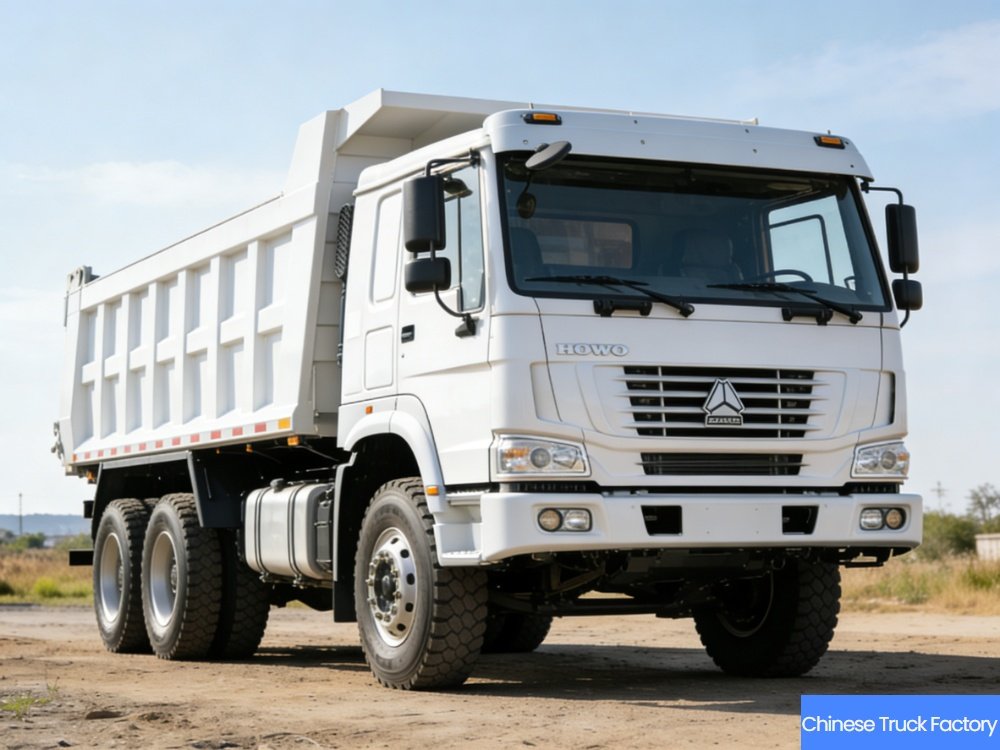
If you are looking for a dump truck manufacturers direct sales opportunity, consider the Chinese Truck Factory. They specialize in heavy-duty logistics equipment that meets rigorous international standards.
The “Chinese Truck Factory” Advantage:
- Cost Efficiency: By purchasing directly, you eliminate the 30% markup typically added by regional dealerships.
- Customization: Need taller sides for hauling trash? Need a thicker floor for mining work? Factory orders allow you to spec the trailer exactly to your needs rather than settling for what’s on the lot.
- Global Standards: Modern Chinese manufacturing utilizes robotic welding and laser cutting, ensuring precision that rivals or exceeds legacy brands.
Curious about the investment? You can check what’s the price of a brand new dump truck or trailer to compare the savings.
The Essential Buying Checklist: Don’t Get Lemon-Aid
Before you hand over that check, run through this mental checklist. It will save you thousands in repairs later.
1. Check the Cross-Members
Crawl under the trailer. Look at the spacing of the cross-members (the beams holding up the floor). Standard spacing is 16 inches on center. Heavy duty implies 12-inch spacing. If they are spaced 24 inches apart, walk away. The floor will bow the first time you drop a load of boulders into it.
2. The Charging System
A hydraulic dump trailer relies on a battery. Does the trailer come with an integrated 110V charger? Better yet, does it have a solar charger on the toolbox? A dead battery with a full load of gravel raised halfway is a nightmare scenario.
3. Ramp Availability
Even if you only plan to haul dirt today, you might need to move a skid steer tomorrow. Ensure the trailer has heavy-duty ramps stored underneath the bed. Ramps add versatility and resale value.
4. Axle Type: Torsion vs. Leaf Spring
Leaf springs are durable and cheap to repair. Torsion axles offer a smoother ride and independent suspension but are more expensive to replace if you bend one. For rough off-road construction sites, traditional leaf springs are often the safer bet due to their simplicity.
Maintenance Tips to Extend Lifespan
Owning a dump trailer is a commitment to maintenance. Neglect it, and it will become a rust bucket in three years.
- Grease the Zerks: Your pivot points (hinges) and axle bearings need grease every 3,000 miles or monthly if used daily.
- Hydraulic Fluid Check: Only check the fluid level when the bed is completely down. If you check it while up, you’ll overfill it, and it will spray fluid everywhere when you lower the bed.
- Tire Pressure: Trailer tires (ST tires) are designed to run at max PSI (often 80 PSI for load range E). Running them low causes heat buildup and blowouts.
- Wash Downs: If you haul waste management solutions or fertilizer, wash the bed out immediately. Acidic loads accelerate corrosion faster than rain ever could.
Frequently Asked Questions (FAQ)
What is the best size dump trailer for a pickup truck?
For a standard 3/4-ton or 1-ton pickup (like an F-250 or 2500), a 14-foot dump trailer with a 14,000 lb GVWR is the most versatile choice. It offers a good balance of payload capacity without being too unwieldy for residential streets.
Frequently Asked Questions (FAQ)
What is the best size dump trailer for a pickup truck?
For a standard 3/4-ton or 1-ton pickup (like an F-250 or 2500), a 14-foot dump trailer with a 14,000 lb GVWR is the most versatile choice. It offers a good balance of payload capacity without being too unwieldy for residential streets.
How much can a 7×14 dump trailer hold?
It depends on the axle rating. A 14k GVWR trailer typically weighs about 4,000 lbs empty. This leaves you with a payload capacity of roughly 10,000 lbs. In terms of volume, with 2-foot sides, it holds about 7 cubic yards of material.
Are high sides better for dump trailers?
High sides (48 inches+) are excellent for high-volume, low-weight materials like mulch, trash, or brush. However, be careful not to fill high sides with heavy material like gravel or concrete, as you will likely exceed the weight rating of the axles and tires.
Should I buy a galvanized dump trailer?
If you live in a coastal area or a region that salts roads heavily in winter, yes. Galvanization (dipping the steel in molten zinc) prevents rust from the inside out. It costs more upfront but maintains resale value significantly better than painted steel.
Ready to Upgrade Your Fleet?
Investing in a dump trailer for sale is a significant decision for your business. It’s not just about hauling dirt; it’s about efficiency, reliability, and professional presentation. By focusing on high-quality hydraulics, the right steel specs, and proper maintenance, your trailer will pay for itself many times over.
Don’t settle for subpar equipment that leaves you stranded. Explore robust, factory-direct options and heavy-duty vehicle solutions that keep your business moving forward. Whether you need a simple 12-footer or a massive commercial setup, the right tool is out there waiting for you.