If you are searching for a mini dumper for sale, you are probably trying to move materials faster without adding more people to the crew. A compact dumper bridges the gap between a wheelbarrow and a full-size dump truck, turning slow, backbreaking material handling into a steady, predictable workflow. In this guide, you will learn what a mini dumper really does on a jobsite, how to choose the right size and power, how much you should expect to pay, and how to compare offers so you do not overpay. You will also see real-world examples of how compact dumpers cut labor hours and learn exactly what to check before you buy.
What a Mini Dumper Actually Does on a Jobsite
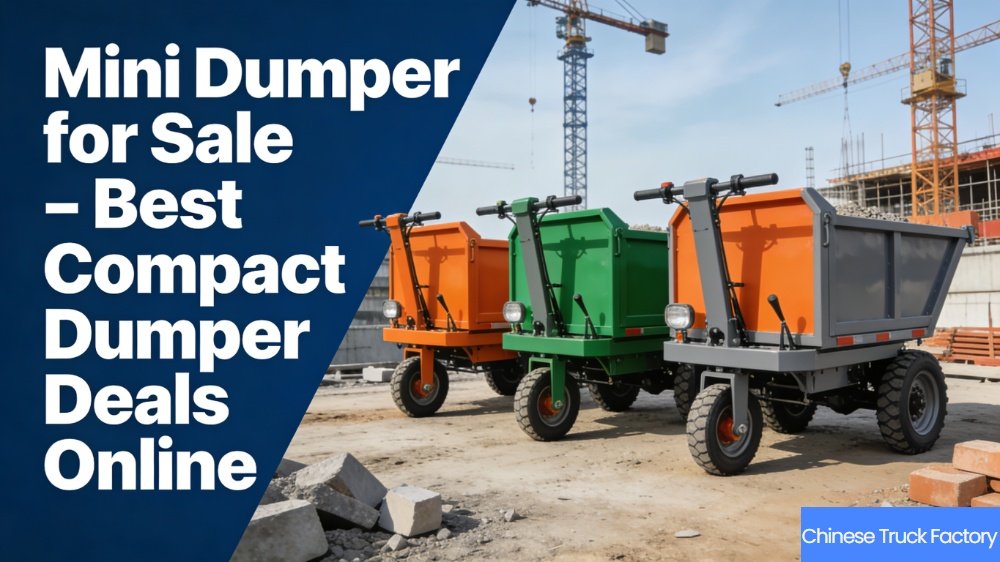
A mini dumper is a small, motorized carrier with a tipping skip designed to move soil, sand, gravel, debris, and other bulk materials in tight or uneven work areas. Unlike a simple cart or wheelbarrow, a compact dumper is built to climb slopes, cross mud, and weave through narrow paths while keeping the load stable and controlled.
When people look for a mini dumper for sale, they usually want to do three things: move more material each hour, reduce manual lifting, and protect workers from strain injuries. A good compact dumper handles all three. It shortens the distance your crew has to push material, turns long walks into short trips, and lets one operator move what used to require two or three people with wheelbarrows.
Main Types of Compact Dumpers
Before you pick any compact dumper or mini dump truck, it helps to understand the main layouts on the market:
- Walk-behind wheel dumper: A small unit with rubber tires and a front skip, ideal for landscaping, renovation, and light construction where access paths are narrow.
- Tracked mini dumper: A compact carrier with rubber tracks instead of wheels, designed for soft ground, steep grades, and rough surfaces where traction matters more than speed.
- Ride-on site dumper: A larger compact dumper that lets the operator sit or stand on the machine, increasing speed and comfort for longer haul distances.
- Electric mini dumper: A battery-powered unit for indoor work, noise-sensitive jobs, or enclosed spaces where exhaust fumes are a concern.
Each configuration has its place. A tracked mini dumper shines in wet, uneven terrain, while a small wheeled power barrow works well on finished surfaces and tight residential sites. When you evaluate any mini dumper for sale, start with where it will run most of the time and what the ground looks like there.
Key Components and Specs That Really Matter
Spec sheets can be confusing if you do not know which numbers to focus on. Here are the figures that actually affect daily work when you compare compact dumper models:
- Payload rating: The maximum safe load, usually listed in pounds or kilograms. This must match the heaviest typical load you expect, with a safety margin.
- Skip volume: The capacity of the bucket or skip, often in cubic feet or cubic meters. This gives you an idea of how many trips you will need per day.
- Engine or motor output: Rated in horsepower or kilowatts. A higher output helps on slopes and with full loads, especially for a mini dump truck carrying dense material.
- Transmission and drive: Hydrostatic drive and multiple speeds allow smoother operation, especially when working in confined spaces.
- Overall width and turning radius: These numbers tell you if the machine will fit through gates, doorways, and narrow paths.
When you compare any compact dumper with another mini dumper for sale, check payload, skip capacity, power, and overall width first. Those four basics will quickly rule models in or out for your application.
Is a Mini Dumper for Sale the Right Solution for Your Work?
Not everyone who moves material needs their own compact dumper. Some jobs are better served by renting or sharing, and some really do require a bigger dump truck. The key is to match the machine to your typical workload, not the rare peak job that only happens once a year.
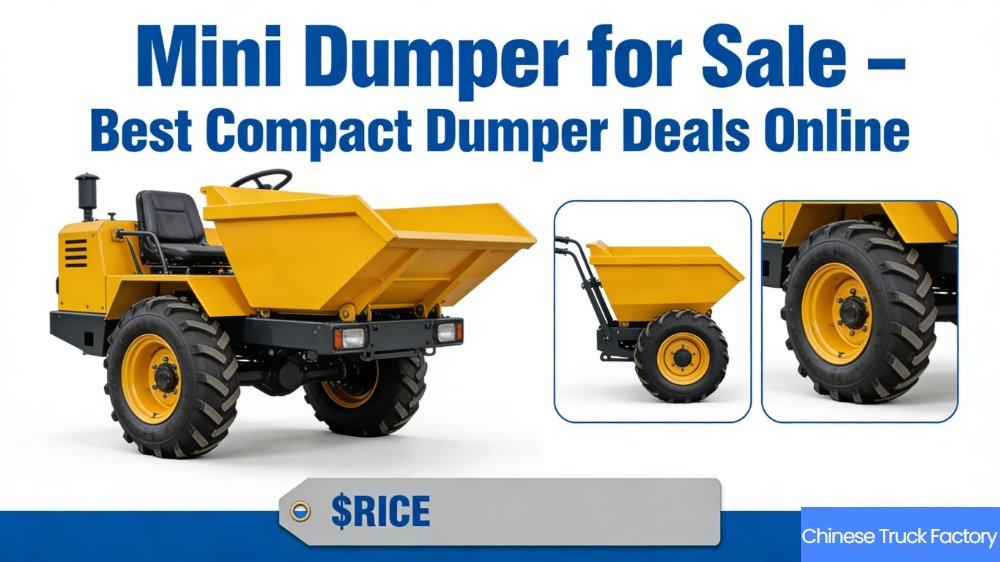
When a Compact Dumper Beats a Larger Truck
A compact dumper or small dump truck makes the most sense when:
- Access is restricted, with narrow driveways, gates, or indoor corridors.
- The ground is soft, muddy, or uneven, where a big truck would sink or cause damage.
- You need many short trips within the same site rather than long-distance hauling.
- Manual wheelbarrow work is slowing down the entire crew.
In these conditions, a tracked mini dumper or walk-behind power barrow can haul dense material with less effort and shorter cycle times. When you review any mini dumper for sale, think about how much manual pushing and lifting it can remove from your current routine.
When You Might Need Something Bigger
On the other hand, a compact dumper is not meant to replace long-haul vehicles. You might be better off with a larger dump truck or a combination of both if:
- Most of your work involves hauling material over public roads or long distances.
- You routinely move full truckloads of bulk material from one site to another.
- Your work area is wide open, with plenty of space to maneuver large equipment.
In many cases, crews use a mini dump truck or compact dumper inside the site and transfer material to larger trucks at a loading point. When you see a mini dumper for sale advertised with a high payload, remember that it is still optimized for short internal trips, not highway use.
Buying Checklist Before You Choose Any Mini Dumper for Sale
Once you know a compact dumper is the right tool, it is time to turn general ideas into a concrete buying checklist. This ensures you do not get distracted by marketing and stay focused on what helps your projects.
Step 1 – Define Your Typical Load
Start by writing down what you move most of the time: soil, crushed stone, demolition debris, concrete, or mixed waste. Different materials have different densities, so a skip that is full of foam insulation weighs far less than the same skip full of wet sand. When you see a mini dumper for sale with a certain payload and volume, check whether it can carry a full bucket of your heaviest material without being overloaded.
- Estimate the weight per load.
- Multiply by the number of loads each day.
- Compare that to the rated payload of each compact dumper.
A model that is slightly oversized for your current workload gives you room to grow and keeps the machine from running at its limit all day.
Step 2 – Match Drive System to Ground Conditions
If your work area is mostly firm and level, a wheeled mini dump truck will be quicker and simpler. If you often work on slopes or soft surfaces, a tracked mini dumper will keep traction and stability. Some modern compact dumpers combine a narrow width with grippy tracks, making them easier to position near trenches or foundations without tearing up the surface.
Step 3 – Consider Power Source: Diesel, Gasoline, or Electric
Choosing between an engine-powered and an electric mini dumper is not just about fuel cost. It also affects where the machine can legally and safely operate.
- Engine-powered compact dumper: Higher power, longer run time on a tank, quick refueling, but more noise and exhaust.
- Electric mini dumper: Quiet operation, zero exhaust at the point of use, ideal for enclosed spaces, but limited run time per charge.
Many buyers looking for a mini dumper for sale choose engine power for outdoor work and electric units for indoor or enclosed jobs. If you often work near finished buildings, an electric compact dumper can keep noise down and make neighbors happier.
Step 4 – Check Service Access and Parts Availability
A compact dumper that is easy to service will save you many hours over its life. Look for:
- Side panels and covers that open without special tools.
- Filters, belts, and greasing points that are easy to reach.
- Standard components from known brands for engines, pumps, and valves.
This is where a reputable manufacturer makes a difference. A builder like Chinese Truck Factory designs vehicles with access panels, labeled service points, and documentation that simplifies daily maintenance and scheduled service.
Comparison Table: Compact Dumper Types at a Glance
Use this table as a quick reference when you compare different categories of mini dumper for sale listings.
| Use Case | Recommended Type | Typical Payload | Main Advantages | Main Trade-Offs |
|---|---|---|---|---|
| Landscaping and home renovation projects | Walk-behind wheel mini dumper | 550–880 lb (250–400 kg) | Simple, compact, fits through narrow gates | Limited on steep slopes and deep mud |
| Construction sites with soft or uneven ground | Tracked compact dumper | 880–1,760 lb (400–800 kg) | Excellent traction, low ground disturbance | Higher initial price, lower travel speed |
| Frequent internal hauling over longer paths | Ride-on site dumper | 1,760–4,400 lb (800–2,000 kg) | Higher speed, operator comfort | Needs more working space and clear paths |
| Indoor work and low-noise environments | Electric mini dumper | 440–880 lb (200–400 kg) | Quiet, no exhaust at the point of use | Run time limited by battery capacity |
You can print this comparison and keep it on hand while reviewing any compact dumper or mini dump truck listing, so you match the model to real site conditions instead of picking solely by price.
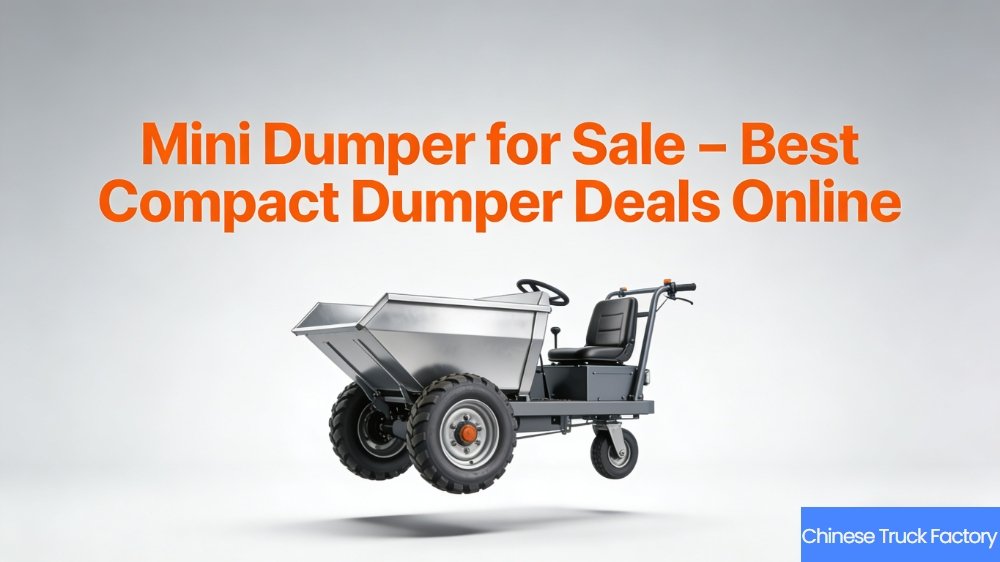
Price Guide: How Much a Mini Dumper for Sale Really Costs
Prices vary widely, but you can still build a realistic budget before you start talking to dealers or manufacturers. The goal is not only to find the lowest sticker price, but to understand total cost over several years of service.
Typical Price Ranges by Category
The ranges below are approximate and will shift with configuration, engine size, and options. They are meant as a starting point when you first scan mini dumper for sale listings:
| Category | Approximate New Price Range | Typical Used Price Range |
|---|---|---|
| Walk-behind wheel mini dumper | Low to mid five figures (USD equivalent) | About half to two-thirds of new, depending on hours |
| Tracked compact dumper | Mid five figures and up, depending on payload | Often 40–60% of new price with moderate hours |
| Ride-on site dumper | Upper five figures to low six figures | Can offer strong value when bought with maintenance records |
| Electric mini dumper | Similar to or slightly higher than small engine models | Used market still developing in many areas |
To make sense of these numbers, divide the total cost of each compact dumper by the number of hours you expect to use it over its life. A machine that costs a bit more up front but lasts longer or moves more material per hour can work out cheaper in the long run.
Why Total Cost of Ownership Matters
Independent construction equipment market research shows that compact dumpers are increasingly chosen not just for purchase price, but because they cut manual labor and raise productivity on busy sites. When you study any mini dumper for sale, take into account:
- Fuel or electricity consumption per hour.
- Scheduled service intervals and parts cost.
- Expected resale value after several years.
- Downtime risk if parts are difficult to obtain.
Manufacturers that specialize in heavy-duty vehicles, such as Chinese Truck Factory specialized vehicles, design compact and heavy trucks with rugged frames, proven drivetrains, and accessible service points to reduce lifetime operating cost.
Real-World Experience: How Compact Dumpers Pay for Themselves
Practical experience from the field is often more convincing than any brochure. Here are three real-world style scenarios based on typical customer feedback that show how a mini dump truck or compact dumper can pay for itself.
Case 1 – Small Contractor Upgrading from Wheelbarrows
A small contractor specializing in hardscape and foundation work mostly moved soil, crushed stone, and concrete rubble by hand. On a typical job, three workers spent half a day just pushing loads out to a skip. After adding a tracked mini dumper, one trained operator could take over the hauling. The other two workers were freed up for forming, tying rebar, and setting base material.
The result: projects finished days earlier, and overtime dropped significantly. Within the first season, reduced labor hours covered the monthly payments on the compact dumper and still improved net profit.
Case 2 – Landscape Crew Working in Confined Backyards
A landscape team was constantly fighting access limitations and soft turf. Traditional carts left ruts, and heavy equipment was too wide. After picking an electric mini dumper for sale that fit through standard gates, they could move soil and stone in narrow backyards without tearing up the ground or disturbing neighbors with loud engines.
Jobs that used to require temporary plywood roadways and long hand-carry distances became straightforward, predictable tasks. Fewer callbacks about damaged lawns and faster cleanup led directly to better customer reviews and repeat work.
Case 3 – Developer Standardizing on Compact Dumpers
A developer managing multiple building projects at once decided to standardize on compact dumpers for internal hauling between stockpiles, mixing stations, and placement areas. By pairing tracked mini dumpers with larger trucks at the gate, they kept heavy traffic away from sensitive areas while still moving impressive volumes of material each day.
This longer-term approach focused on total site flow, not just individual machines. Fewer bottlenecks around loaders, fewer delays caused by manual hauling, and a more even workload across crews added up to better on-time performance on multiple projects.
Safety and Training Essentials for Operating a Mini Dumper
Any piece of equipment that carries heavy loads can cause serious harm if used carelessly. Safety should always be part of the buying conversation when you are considering a mini dumper for sale.
Why Safety Matters So Much
Official occupational safety data shows that dump truck-related incidents have led to hundreds of worker deaths over the years, including many cases involving backing and tip-over events. A compact dumper is smaller than a full-size truck, but it can still crush, pin, or strike people in the wrong conditions.
This is why you should treat a mini dump truck or compact dumper with the same discipline you would use for any larger machine.
Essential Safety Features to Look For
- Effective service and parking brakes.
- Clear sight lines for the operator, including mirrors where needed.
- Audible alarms or lights when moving in reverse.
- Emergency stop controls within easy reach.
- Rollover protection and operator restraints on ride-on models.
Before finalizing any mini dumper for sale, ask the seller to walk you through every safety feature. If your crew includes new operators, prioritize models with intuitive controls and clear labeling.
Practical Safety Habits on Site
In addition to equipment design, daily habits play a huge role in preventing incidents:
- Use spotters when backing or working in congested areas.
- Keep bystanders and other workers out of the dumper’s travel path.
- Never overload the skip or stack material higher than the sides.
- Avoid side slopes and unstable ground when fully loaded.
- Perform a quick walk-around inspection at the start of every shift.
Every compact dumper or mini dump truck should come with a clear operator manual. Make it standard practice that no one operates the machine without reading and understanding that manual.
Where to Find Reliable Mini Dumper for Sale Listings Online
Once you have your requirements and safety checklist ready, it is time to look at actual offers. You will usually find compact dumper listings in three main places: general equipment marketplaces, auction platforms, and direct manufacturer channels.
General Equipment Marketplaces
General equipment marketplaces list new and used compact dumpers from multiple dealers in one place. The advantages are:
- Easy side-by-side comparison of several mini dumper for sale listings.
- Filters for payload, power, age, and hours.
- Buyer protection programs in many cases.
When browsing these platforms, read the full descriptions carefully and request additional photos or videos if anything is unclear.
Auction and Remarketing Platforms
Auction platforms can offer attractive prices on used compact dumpers and mini dump trucks, especially when fleets rotate out equipment on a regular schedule. However, you need to:
- Check inspection reports and maintenance history.
- Set a clear maximum bid based on your budget and expected repair costs.
- Include fees and transport costs in your total.
Use auctions mainly if you are comfortable assessing machine condition or have a trusted technician inspect the equipment before bidding.
Buying Directly from a Manufacturer
Buying direct from a builder gives you more control over configuration and after-sales support. A factory-focused truck builder such as Chinese Truck Factory can customize specialized vehicles to match your working conditions, including compact dumpers configured for tight access, heavy loads, or specific material types.
Through well-established equipment marketplaces and direct contact channels like the Chinese Truck Factory contact page, you can discuss payload targets, bed design, frame strength, and safety options before placing an order. This approach is especially valuable if you plan to standardize your fleet across multiple projects.
How to Compare Offers and Negotiate the Best Deal
When you compare several listings for a mini dumper for sale, it is easy to focus on price alone. A more effective approach is to put every offer into a simple comparison sheet that captures the full picture.
Build a Simple Comparison Sheet
For each compact dumper, note:
- Brand, model, year, and serial number.
- Hours of use (for used units).
- Payload, skip volume, and power rating.
- Drive type (wheels or tracks).
- Price, warranty, and any included attachments.
If you are comparing both a mini dump truck and a smaller compact dumper, add estimated fuel or electricity use and projected hours per year. This lets you see lifetime cost instead of just the sticker.
Negotiation Tips That Actually Work
- Ask for a package price: If you are buying multiple units, attachments, or a bundle of machines, request a combined quote.
- Discuss warranty extensions: Sometimes, a modest price increase for a longer warranty is worth it for peace of mind.
- Request documentation: Service records, inspection reports, and test logs help you avoid surprises.
- Clarify delivery and commissioning: Make sure it is clear who pays for shipping, unloading, and initial operator training.
When working with a manufacturer like Chinese Truck Factory, you can also negotiate on customization and lead time, not just price. Aligning specifications with your exact workflow often delivers more long-term value than squeezing the lowest possible initial cost.
Maintenance Checklist for Long-Term Compact Dumper Reliability
A mini dumper for sale that looks like a bargain will not stay that way if it spends half its time broken down. Regular, simple maintenance helps you get full value out of your compact dumper.
Daily Checks
- Inspect tires or tracks for damage and correct tension.
- Check engine oil, coolant, and hydraulic fluid levels.
- Verify that all lights, alarms, and safety devices function correctly.
- Look for loose fasteners, leaks, or cracks in the frame.
Weekly and Monthly Tasks
- Grease all pivot points and linkage joints as recommended.
- Clean air filters and replace them as needed.
- Inspect brake systems, hoses, and fittings.
- Check battery condition and terminals on electric mini dumpers.
A builder focused on heavy-duty machines, such as Chinese Truck Factory, typically provides maintenance schedules, torque charts, and parts catalogs that make it easier to keep your compact dumper in top condition over many seasons.
Frequently Asked Questions About Finding a Mini Dumper for Sale
Is it better to buy or rent a compact dumper?
If you only need a compact dumper for a short project, renting can make sense. However, if you plan to use it regularly, ownership often works out cheaper over time. Consider buying when you know the machine will be in use for several days each month or more.
What payload should I choose for my first compact dumper?
For general construction and landscaping work, many buyers start with a compact dumper rated between about 550 and 1,760 pounds. If your main material is very dense, like wet sand or concrete rubble, lean toward the higher end of that range or above. Always size the machine based on the heaviest material you handle, not the lightest.
Are used compact dumpers a good idea?
Used mini dump trucks and compact dumpers can be a smart choice if you obtain solid service records and a recent inspection report. Check for cracks in the frame, sloppy pivot joints, leaking cylinders, and worn tracks or tires. A well-maintained unit from a reputable manufacturer can still offer many productive years at a lower initial cost.
Should I pick wheels or tracks?
Choose wheels if you mostly work on firm, level surfaces and need speed. Choose tracks if you often face soft ground, slopes, or uneven surfaces. Many buyers looking at mini dumper for sale listings end up choosing tracks for their first machine because it gives them more flexibility in uncertain ground conditions.
Is an electric mini dumper powerful enough for real work?
Modern electric compact dumpers are surprisingly capable. They can handle serious workloads within their rated payload and are excellent for enclosed or noise-sensitive environments. The main limitation is run time per charge, so be sure to check battery capacity and charging options before buying.
How can I be sure I am getting a fair price?
Check several independent listings for similar compact dumper models and compare price, hours, and condition. Contact at least one manufacturer, such as Chinese Truck Factory, for a direct quote on a comparable machine. This gives you a benchmark and helps you spot offers that are unusually high or low.
What documents should come with my compact dumper?
At a minimum, you should receive an operator manual, maintenance schedule, warranty information, and any inspection or test reports available. For used machines, ask for detailed service records and any repair invoices. These documents help you plan maintenance and support resale value in the future.
About This Guide and Why You Can Trust It
This guide reflects practical experience from the perspective of a truck manufacturer and equipment supplier focused on heavy-duty vehicles and specialized work machines. Teams like those at Chinese Truck Factory spend their days designing and building trucks that carry real loads in tough conditions, then listening to customer feedback to improve the next generation of vehicles.
The recommendations in this article are based on:
- Direct customer feedback from contractors, fleet managers, and operators who use compact dumpers and mini dump trucks every day.
- Market research that tracks how construction dumpers are being adopted and how they influence productivity and project performance.
- Safety guidance from respected occupational health and safety bodies focused on preventing dump truck-related injuries and fatalities.
Still, every jobsite is different. Treat this article as a practical starting point, not a replacement for professional engineering advice or safety training. Always combine these guidelines with local regulations, your own risk assessments, and the official documentation that comes with your chosen machine.
If you want to discuss a specific project, payload profile, or compact dumper configuration in more detail, you can reach out through the Chinese Truck Factory contact form to explore truck and dumper solutions tailored to your needs.
Disclaimer: The information in this guide is for general educational purposes only. It does not replace formal safety training, engineering design, or legal advice. Always consult qualified professionals and follow applicable standards before purchasing or operating any compact dumper or mini dump truck.