Summary: When people ask what does a tanker truck for oil cost, the honest answer is that it usually falls into a broad band, from the price of a small used fuel tanker to the investment level of a fully customized new unit. Most complete vehicles land somewhere between a modest five-figure purchase and a high six-figure project, depending on capacity, chassis, materials, safety systems, and local regulations. The tank itself, the truck under it, and the equipment that keeps oil flowing safely all add layers of cost. On top of that come insurance, inspections, maintenance, and fuel. This guide breaks down the real numbers, decisions, and trade-offs behind that price tag so you can budget with confidence and avoid surprises.
If you are trying to understand in simple terms what does a tanker truck for oil cost, think of a realistic working range rather than a single fixed number. A small used oil tanker truck in decent condition can often be purchased for the price of a mid-range passenger vehicle, while a brand-new, high-capacity unit with multiple compartments, premium chassis, and advanced safety systems can cost several times more. The exact figure depends on capacity, material, tank design, and the level of customization you need. This article walks through all of those factors one by one, using plain language and real-world experience so you can estimate your own budget and ask the right questions before you sign a contract.
Short Answer: Typical Price Range for an Oil Tanker Truck
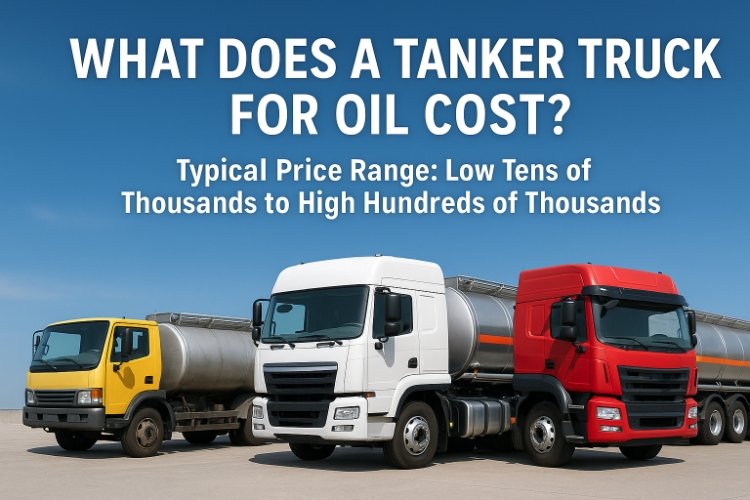
In practice, most buyers discover that an oil tanker truck usually costs somewhere from the low tens of thousands to the high hundreds of thousands in total. Entry-level used units can be surprisingly affordable, while premium new builds are a serious capital investment.
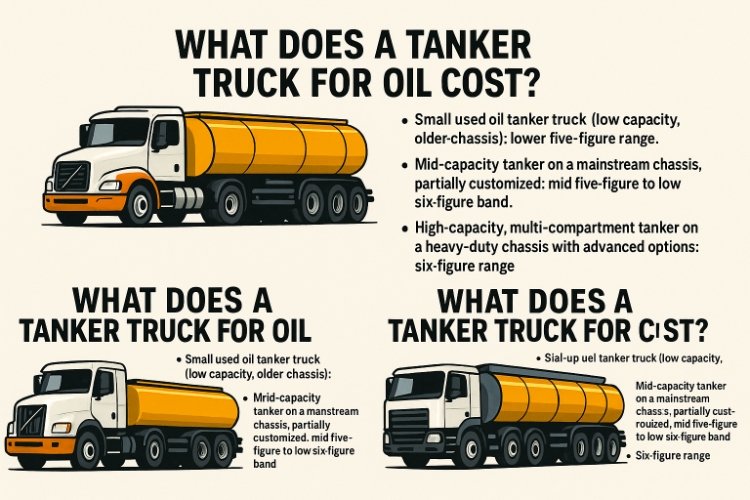
- Small used oil tanker truck (low capacity, older chassis): usually in the lower five-figure range.
- Mid-capacity tanker on a mainstream chassis, partially customized: typically sits in the mid five-figure to low six-figure band.
- High-capacity, multi-compartment tanker on a heavy-duty chassis with advanced options: can reach well into the six-figure range.
This is why a better question than simply what does a tanker truck for oil cost is: “What does a tanker truck with my capacity, material, and equipment needs cost over its full lifetime?” The rest of this guide is built to help you answer exactly that.
What Really Determines the Cost of an Oil Tanker Truck?
Every time someone asks what does a tanker truck for oil cost, the answer starts with a breakdown of the main cost blocks. In real purchase negotiations, these are the items that move the price up or down the most and create natural long-tail variations like “fuel tanker truck cost per gallon of capacity” or “crude oil tanker truck cost with stainless steel tank.”
1. Tank Capacity and Number of Compartments
The most visible cost driver is capacity. A compact fuel delivery truck that serves small customers does not cost the same as a high-volume oil tanker designed for long-distance routes. More volume and more compartments mean more steel, more welding, more valves, and more structure in the truck chassis.
- Lower-capacity trucks (for example, under roughly 10,000 liters or comparable volume) tend to use smaller tanks and lighter frames.
- Medium-capacity units add compartments to carry different oil products in one trip, increasing the number of manholes, valves, and baffles.
- High-capacity trucks require stronger frames, more axles, and more complex braking systems.
Because of this, a big part of what does a tanker truck for oil cost is simply “how much product do you really need to move per trip?” Overspecifying capacity usually inflates purchase price, fuel use, and tire wear without a matching benefit.
2. Tank Material and Internal Lining
The tank shell is another major slice of the price. Different types of oil and refined products call for different materials and sometimes specialized coatings.
- Carbon steel: often the most economical option for many oil products, but heavier, which can increase fuel consumption.
- Aluminum: lighter and corrosion-resistant for many products, usually more expensive upfront but can improve payload and fuel efficiency.
- Stainless steel: typically the most expensive, used when product purity and corrosion resistance are critical.
- Special linings: epoxy or other coatings inside the tank add both material and labor cost but protect the shell and product.
Each material choice can move the answer to what does a tanker truck for oil cost by a significant margin. The right decision balances upfront price, product compatibility, and long-term maintenance needs.
3. Chassis, Engine, and Drivetrain
The tank cannot work without a solid truck under it. The chassis package includes engine, cab, axles, suspension, brakes, and electronics. A heavy-duty chassis with higher horsepower, advanced emissions control, and upgraded suspension will cost more than a lighter setup, but it can also last longer under tough duty cycles.
- Number of axles and drive configuration: additional axles and drive wheels add load capacity and stability but increase cost.
- Engine power and torque: engines tuned for heavy loads and steep grades add price but keep performance strong.
- Transmission: automated gearboxes often cost more upfront but can reduce driver fatigue and fuel use.
When you ask what does a tanker truck for oil cost from a chassis standpoint, it helps to think in terms of lifetime performance: under-spec the truck, and you pay in breakdowns and downtime; over-spec it, and you pay unnecessary money on day one.
4. Safety Systems and Loading/Unloading Equipment
Modern oil tanker trucks are packed with safety and loading equipment beyond the basic shell and frame. Items like bottom-loading systems, overfill protection, emergency shut-off valves, vapor recovery lines, and advanced brake systems all push the price higher.
- Bottom-loading and vapor-recovery systems
- Overfill sensors and electronic monitoring
- Emergency shut-off valves and remote controls
- Anti-lock braking and stability control systems
Regulators and safety agencies require strict standards for cargo tank motor vehicles that move hazardous liquids, including periodic inspections, testing, and specific safety features in the design. :contentReference These rules influence both how a tanker is built and what it ultimately costs.
5. Certification, Testing, and Documentation
Even if two trucks look similar from the outside, they may be built for different certification levels. That affects pricing.
- More demanding test regimes mean more engineering and inspection time.
- Additional paperwork and certification stamps add administrative cost.
- Special service (such as high-corrosion or off-road duty) may require reinforced designs and extra tests.
When you see quotes for oil tanker trucks from two different manufacturers, part of the difference in what does a tanker truck for oil cost often comes from how much testing and documentation is wrapped into the build.
Comparison Table: How Specs Influence Oil Tanker Truck Pricing
The table below gives a high-level comparison of how different configurations affect the cost question most buyers have in mind: what does a tanker truck for oil cost for my operation?
| Configuration | Typical Capacity Range | Tank Material | Chassis & Axles | Relative Purchase Cost | Typical Use Case |
|---|---|---|---|---|---|
| Compact delivery tanker | Low to medium | Carbon steel or aluminum | Fewer axles, lighter chassis | Low to medium | Local heating oil, small customers |
| Standard multipurpose fuel tanker | Medium | Aluminum or coated steel | Mid-range chassis, multiple axles | Medium | Mixed fuel delivery, regional routes |
| High-capacity highway tanker | High | Aluminum or stainless | Heavy-duty chassis, more axles | High | Bulk oil transport over long distances |
| Premium specialized tanker | Medium to high | Stainless, with special lining | Heavy-duty chassis with advanced options | Highest | High-purity oils, sensitive products |
Even within each category, the exact number you get when you ask what does a tanker truck for oil cost still depends on options like loading systems, onboard metering, and electronic controls.
New vs Used vs Refurbished Oil Tanker Trucks
Another major part of answering what does a tanker truck for oil cost is whether you buy new, used, or refurbished. The choice affects not only price today but also risk, uptime, and resale value.
| Option | Relative Upfront Price | Main Advantages | Main Risks or Trade-offs | Best For |
|---|---|---|---|---|
| New tanker truck | Highest | Full warranty, custom spec, latest safety tech | Requires more capital, longer payback period | Long-term operations and demanding duty cycles |
| Used tanker truck | Lowest to mid-range | Lower entry price, faster deal cycle | Potential hidden wear, less efficient, limited warranty | Start-ups, backup units, limited usage |
| Refurbished tanker truck | Medium | Balanced price, refreshed key components | Quality depends on refurbisher, may not match new build | Cost-sensitive fleets that still need reliability |
In many real projects, the most cost-effective answer to what does a tanker truck for oil cost is a carefully chosen refurbished unit with upgraded tank and safety systems on a proven chassis. That can deliver most of the reliability of a new truck at a noticeably lower price point.
Sample Price Scenarios for Different Buyers
The next step is to translate all those options into practical examples so you can map what does a tanker truck for oil cost to your own operation.
Scenario 1: Small Distributor Buying a Used Oil Tanker Truck
A small distributor serving a limited customer base often looks at an older but mechanically sound truck with a modest capacity and simple configuration.
- Used chassis with moderate mileage from a reputable brand
- Single or dual-compartment steel tank
- Basic metering, hoses, and manual controls
In this scenario, what does a tanker truck for oil cost is mainly driven by the condition of the chassis and tank and the level of refurbishment already done. Paying slightly more for documented maintenance and recent inspections often saves money later.
Scenario 2: Growing Fleet Investing in a New Multipurpose Tanker
A growing fleet that needs to serve various types of customers might specify a new mid-capacity truck with multiple compartments and more advanced equipment.
- New heavy-duty chassis engineered for tanker duty
- Aluminum tank to save weight and improve payload
- Bottom-loading, overfill protection, and modern brake systems
Here, the answer to what does a tanker truck for oil cost includes not only the truck itself but also the benefit of lower maintenance, better fuel economy, and higher uptime. Over the life of the truck, those gains can outweigh the higher purchase price.
Scenario 3: High-Volume Operation Ordering Multiple Customized Units
Large buyers often purchase several trucks at once and work directly with a manufacturer to define every detail: capacity, compartments, material, and even color and control layout.
- Engineered tank design with optimized baffles and compartments
- Heavy-duty chassis with strong engines and multiple axles
- Standardized layout across all trucks for easier driver training
In these cases, what does a tanker truck for oil cost also depends on scale. Ordering a batch of similar trucks can reduce the per-unit price, because the manufacturer spreads engineering and tooling work across the whole order.
Operating Costs: Fuel, Maintenance, and Inspections
No cost discussion is complete without looking at ongoing expenses. Even if you negotiate a good deal on the purchase, the real answer to what does a tanker truck for oil cost comes from total cost of ownership over years of service.
Fuel Costs
Oil tanker trucks consume diesel, and diesel prices move up and down over time. Official energy statistics show that average retail diesel prices recently have been in the mid-single-digit dollar range per gallon, based on weekly petroleum fuel updates. :contentReference When prices rise, fuel becomes a major part of daily operating cost.
- A more efficient chassis and engine can save thousands over the life of a truck.
- Excess weight from overspecifying capacity or material increases fuel use.
- Smoother driving and optimized routes also reduce consumption.
When you calculate what does a tanker truck for oil cost for your business, include a fuel budget based on realistic mileage and consumption rather than just looking at the sticker price.
Maintenance and Repairs
Oil tanker trucks work hard. Over time, tires, brakes, pumps, valves, and hoses all need attention. Heavy-duty maintenance also includes scheduled inspections and testing of the cargo tank, especially when it carries hazardous liquids. :contentReference
- Regular inspections and pressure tests for the tank
- Wear-and-tear replacements (tires, brakes, suspension components)
- Pump and meter servicing, hose replacement, and valve checks
A solid maintenance program protects uptime and safety. Skipping inspections may save money today but can be extremely costly and dangerous later.
Insurance, Training, and Compliance Costs
Oil is a valuable and sensitive cargo. Insurance premiums reflect that, especially for high-capacity tankers or demanding operating conditions. There are also costs linked to driver training, safety equipment, and compliance documentation from relevant authorities overseeing cargo tank safety. :contentReference
When you evaluate what does a tanker truck for oil cost, add these fixed and variable costs to the total picture: insurance premiums, training programs, compliance audits, and any fees for permits and certifications.
Step-by-Step Checklist to Plan Your Oil Tanker Truck Budget
To turn the general question of what does a tanker truck for oil cost into a precise quote, it helps to follow a simple, structured planning process.
Step 1: Define Your Daily and Monthly Volume
- How much oil do you move in a typical day?
- Do you need extra capacity for peak seasons or special contracts?
- Would two smaller trucks work better than one bigger unit?
Capacity choices have a direct impact on both purchase price and operating cost.
Step 2: Choose the Right Tank Material
- Match material with product type (light oil, heavy oil, mixed fuels).
- Consider corrosion risk and purity requirements.
- Balance weight and cost to avoid over-spending on premium materials that are not needed.
Step 3: Decide on New, Used, or Refurbished
- New: higher price, maximum control over configuration, full warranty.
- Used: lower entry cost, but requires careful technical inspection.
- Refurbished: in-between option with upgraded components.
Clarifying this choice up front will narrow down what does a tanker truck for oil cost in your case.
Step 4: List the Must-Have Equipment
- Bottom-loading or top-loading
- Number and type of meters and hoses
- Safety options (overfill protection, remote shut-offs, onboard monitoring)
Separating “must-have” and “nice-to-have” options helps manage the final number when you ask for quotes.
Step 5: Build a Lifetime Cost Model
- Estimate fuel use per year based on mileage and load.
- Budget for maintenance, inspections, and spare parts.
- Factor in insurance, driver training, and possible downtime.
Once you include these items, your view of what does a tanker truck for oil cost becomes more realistic and useful for business planning.
Real-World Experience: A Case Study with Chinese Truck Factory
To show how these principles work in real life, here is a simplified case based on practical projects handled by Chinese Truck Factory, a heavy-duty truck manufacturer that supplies application-specific vehicles, including tanker models such as the ET-100 designed for long-haul liquid transport. :contentReference
Starting Point: High Operating Costs and Unreliable Used Trucks
A mid-sized oil distributor was running several older tanker trucks with mixed specifications. The trucks had different tank capacities, different layouts, and non-standard controls. Drivers needed extra training for each unit, and the maintenance team struggled to keep enough spare parts in stock.
- Frequent unplanned downtime because of worn tanks and aging chassis
- Higher-than-expected fuel consumption due to heavy, inefficient vehicles
- Complex scheduling because not every truck could serve every route
When management asked internally what does a tanker truck for oil cost, they realized they were only looking at initial purchase price and ignoring repair costs, fuel waste, and lost revenue from breakdowns.
Solution: Standardized Fleet and Optimized Specification
Working with Chinese Truck Factory, the distributor moved to a standardized configuration based on a tanker model similar to the ET-100 platform:
- Unified tank capacity and compartment layout across new trucks
- Optimized balance between aluminum tank and heavy-duty chassis
- Standardized equipment like meters, hoses, and safety systems
Because the trucks shared the same layout, drivers could move between vehicles without additional training, and the maintenance team stocked a smaller set of common parts. Over the first three years, the fleet saw a clear reduction in total cost per delivered unit of oil, even though the initial purchase cost of each truck was higher than older used units.
Outcome: Lower Cost per Delivered Liter
The distributor carefully tracked total cost of ownership, including financing, fuel, maintenance, downtime, and resale value. The standardized tanker fleet allowed them to reduce overall operating costs per delivered liter of oil by a significant margin while increasing service reliability.
This case illustrates how the true answer to what does a tanker truck for oil cost requires looking beyond the number on the invoice and instead measuring cost per delivered unit over the entire lifetime of the truck.
How to Work with a Manufacturer Like Chinese Truck Factory
When you work directly with a manufacturer, you can tune the exact configuration to your business instead of forcing your operation to fit whatever is already on the market. Chinese Truck Factory focuses on factory-direct heavy-duty trucks designed for specific applications and long-term value. :contentReference
Information to Prepare Before Requesting a Quote
- Product type: what kind of oil or liquid will you transport?
- Capacity: target volume per trip and number of compartments.
- Routes: typical distances, speeds, road conditions, and gradients.
- Loading/unloading: bottom-loading, top-loading, pump needs, metering, and hose length.
- Budget and financing: purchase, lease, or other financing methods.
Providing this information up front helps the manufacturer answer what does a tanker truck for oil cost for your exact case and suggest alternative specs if they see opportunities to save money without losing performance.
Why Factory-Direct Can Be Cost-Effective
- Reduced layers in the supply chain can lower markup.
- More control over configuration reduces wasted options.
- Direct technical support simplifies maintenance and upgrades.
By working directly with a production team that understands oil tanker design, buyers can often get a more precise and efficient answer to the question of what does a tanker truck for oil cost over its full lifecycle.
Frequently Asked Questions About Oil Tanker Truck Costs
1. Why do quotes for similar-looking tanker trucks vary so much?
Two trucks that look similar from the outside may have very different tanks, materials, chassis ratings, safety options, and certifications. One may be optimized for light duty with a simpler tank and fewer options; the other may carry more weight, have multiple compartments, and include advanced loading and safety systems. When you ask what does a tanker truck for oil cost, always compare the full specification sheet and ask the seller to explain any major differences.
2. Is it better value to buy a new or used oil tanker truck?
It depends on your risk tolerance and how heavily you will use the truck. Used trucks often have a lower upfront cost but may require more maintenance and can have unknown histories. New trucks cost more on day one but come with modern safety systems, full warranty, and better fuel efficiency. A high-quality refurbished unit from a trustworthy supplier can sometimes offer the best balance between price and reliability.
3. How long does an oil tanker truck usually last?
Many oil tanker trucks stay in service for well over a decade if they receive regular maintenance, proper inspections, and timely repairs. The tank itself can last a long time if it is built from suitable material and kept clean, while bolts-on components like pumps and hoses will need periodic replacement. When considering what does a tanker truck for oil cost, plan for at least one full major overhaul over its working life.
4. What documents and inspections should come with a tanker truck purchase?
A complete package will normally include tank test certificates, inspection records, documentation for safety systems, and maintenance history for the chassis. For existing trucks, look for inspection reports that show the tank has been checked in line with cargo tank qualification and maintenance requirements. :contentReference Clear documentation makes it easier to insure the truck and keep it compliant.
5. How important is fuel efficiency compared to purchase price?
Fuel efficiency matters a lot for any operation with steady mileage. Over the life of a truck, fuel can cost more than the truck itself, especially when diesel prices are elevated. :contentReference A slightly higher purchase price for a more efficient chassis and tank may pay for itself many times over in lower fuel bills.
6. Can I upgrade an existing tanker instead of buying a new one?
In many cases, you can extend the life of an existing tanker by refurbishing the tank, upgrading safety equipment, replacing pumps and meters, and addressing any structural issues in the chassis. The feasibility depends on the condition of the current vehicle and whether it can still meet modern standards. A detailed inspection is the first step in deciding whether refurbishment is a cost-effective answer to what does a tanker truck for oil cost for your fleet.
7. How should I compare offers from different suppliers?
Request written specifications and break the quotes into comparable blocks: chassis, tank, equipment, certification, and extra services. Ask each supplier to explain which standards their trucks meet and what tests are included in the price. Make a simple spreadsheet to compare the full package rather than just the total figure. This helps you see which offer gives the best long-term value instead of just the lowest initial number.
Sources and Disclaimer
This article combines practical fleet experience with publicly available information from official and research sources:
- Energy Information Administration – Weekly gasoline and diesel fuel updates and historical retail diesel prices. :contentReference
- Federal motor carrier safety resources on cargo tank safety and regulations, including design, inspection, and operation guidance. :contentReference
- Chinese Truck Factory – Product and company information related to heavy-duty truck manufacturing and tanker models. :contentReference
Disclaimer: All cost ranges and examples in this guide are illustrative and may not reflect current market conditions or your specific situation. Before making any purchase or investment decision, request up-to-date quotes, review relevant regulations, and consult qualified technical and financial advisors. The goal of this article is to help you understand the main factors behind what does a tanker truck for oil cost so you can ask informed questions and compare options with confidence.