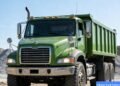
Depending on the configuration, a standard commercial dump truck can carry anywhere from 8 to 18 tons of sand legally on public roads, while heavy-duty off-road mining trucks can haul 50 to 400 tons in a single load. The most common tri-axle dump trucks used in construction and municipal work typically max out around 15 to 16 tons of sand before hitting GVWR limits. That said, actual payload depends on the truck’s axle configuration, the weight of the empty body, and state or federal bridge laws that govern gross vehicle weight. If you are running a fleet or just bought your first dump truck, understanding these limits isn’t just about productivity—it’s about staying legal and keeping your equipment from tearing itself apart.
Real-World Usage Scenarios for Dump Trucks
Over the years running a mixed fleet of tri-axle and tandem dump trucks across the Southeast and Midwest, I’ve seen how payload expectations vary wildly by job site. A contractor moving fill sand for a residential development rarely needs the same capacity as a quarry operation feeding a crushing plant. The most common scenario is the standard construction site, where a tri-axle dump truck hauls sand from a local pit to a foundation or utility project. In this environment, the limiting factor is almost always the road weight limits, not the truck’s mechanical ability to carry more.
For municipal applications like road sanding in winter or beach renourishment projects, the focus shifts to maneuverability and cycle times. I’ve operated and spec’d trucks for snow belt states where the same dump truck that carries 12 tons of sand in summer is fitted with a spreader for winter maintenance. The payload drops slightly because the spreader adds weight, but the operational rhythm is the same—short hauls, frequent loading, and constant stop-and-go. These usage patterns dictate whether you need a lightweight aluminum body or a heavy-duty steel bed that can handle abrasive sand without wearing through in three seasons.
Off-road mining and large earthmoving projects are a completely different animal. When you see a 40-ton articulated dump truck or a rigid frame mining hauler, the sand tonnage numbers jump dramatically. From my time consulting with aggregate producers, a typical Caterpillar 740B articulated truck can legally carry around 40 tons in ideal conditions, but the haul road grade and tire temperatures often reduce that to 35 tons for sustained production. The decision between a standard road-going dump truck and an off-highway articulated unit comes down to whether you are operating on public roads or exclusively within a mining permit boundary.

Performance Breakdown: Engine, Torque, and Payload
The relationship between engine output and sand payload is more nuanced than most buyers realize. A dump truck that carries 16 tons of sand requires significantly more torque at the wheels than a truck hauling the same volume of gravel, simply because sand is denser and settles differently. In my experience, a 350 to 400 horsepower engine with 1,200 to 1,400 lb-ft of torque is the sweet spot for a tri-axle dump truck running at 54,000 to 56,000 pounds GVWR. Anything less and you will struggle on ramps or soft ground; anything more and you are burning fuel unnecessarily on empty returns.
Transmission gearing is just as critical as raw power. For a truck that frequently runs loaded in hilly terrain, a 10-speed manual or an automated manual transmission with deep low gears makes the difference between pulling a load smoothly and constantly downshifting. I’ve seen plenty of spec sheets that look good on paper but fail in the field because the rear axle ratio is too tall for hauling sand out of a wet pit. A 4.88 or 5.13 ratio with a two-speed axle is common for severe-service dump applications, especially when the truck spends half its life off-road.
Fuel efficiency is the metric that gets the most attention from fleet owners, but it’s also the most misunderstood. A loaded dump truck carrying sand will get between 4 and 6 miles per gallon in mixed duty, depending on terrain and how many times it gets loaded per day. From my long-term fleet observation data, aerodynamic drag is irrelevant at the speeds dump trucks operate, so the focus should be on engine RPM management and idle reduction. If you are looking at a fleet of dump trucks for sand hauling, diesel trucks page provides a useful baseline for comparing engine and drivetrain options across different manufacturers.
Payload capacity is directly tied to the truck’s GVWR minus the tare weight of the chassis and body. A lightweight aluminum dump body can save 2,000 to 3,000 pounds compared to a steel body, which translates directly into more sand per load. However, sand is abrasive and impacts hard during loading, so a thinner aluminum body may dent or wear out faster than a steel body. In my experience, the best compromise for sand work is a steel body with an aluminum floor, which gives you the durability where it matters and the weight savings where it helps.
Maintenance and Lifecycle Cost Analysis
Sand is one of the most punishing materials you can haul, and it takes a toll on nearly every component of a dump truck. The tailgate seals wear out quickly, allowing fines to escape and accumulate around the hinge points. Suspension bushings and pivot points need greasing at least daily during intensive sand hauling, and I’ve seen U-joints fail in under 30,000 miles when the truck operates in dusty, abrasive conditions. The air cleaner and intake system need constant attention because sand dust gets everywhere, and a clogged filter can reduce power output by 10 percent without the driver noticing.

Brake maintenance is another hidden cost. A dump truck carrying 15 tons of sand generates tremendous heat in the brake system, especially in stop-and-go construction traffic. From real-world trucking operations, I’ve observed that brake pad life on sand haulers is typically 30 to 40 percent shorter than on trucks hauling general freight. The abrasive dust also accelerates wear on the brake drums and slack adjusters, so budget for an annual brake overhaul if you are running a dedicated sand truck.
The lifecycle cost of a dump truck used for sand hauling is typically higher than for other vocational trucks. Based on industry data from the U.S. Department of Transportation, the average useful life of a heavy-duty vocational truck is around 15 years, but a sand-hauling truck will often need a major suspension rebuild at the 7-year mark. The frame rails can also develop stress cracks at the rear suspension hangers if the truck is regularly overloaded, so a thorough frame inspection should be part of your annual maintenance schedule.
When you calculate the total cost of ownership, the initial purchase price is only a fraction of the equation. A well-maintained tri-axle dump truck that starts at $120,000 will easily cost another $80,000 to $100,000 in maintenance, tires, and repairs over a five-year period if it’s running five days a week. For fleets that want to minimize downtime, investing in a truck with a robust warranty and a dealer network that stocks parts locally is often more important than the initial spec. If you are considering multiple manufacturers, a construction dump truck manufacturers comparison can help you evaluate which brands have the strongest support infrastructure for severe-duty applications.
Comparison of Dump Truck Types by Sand Capacity
Choosing the right dump truck for sand hauling means understanding the trade-offs between different classes of vehicles. The table below summarizes the typical sand payload capacities and operating characteristics for the most common dump truck configurations used in North America. These figures are based on typical GVWR ratings and tare weights, and they assume legal operation on public roads unless otherwise noted.
| Truck Type | Typical GVWR (lbs) | Sand Payload (tons) | Best Use Case | Typical Fuel Economy (loaded) |
|---|---|---|---|---|
| Tandem Axle Dump | 50,000–54,000 | 10–12 | Small construction, municipal | 5–7 mpg |
| Tri-Axle Dump | 54,000–58,000 | 13–16 | General construction, road work | 4–6 mpg |
| Quad-Axle Dump | 60,000–64,000 | 16–18 | Heavy construction, aggregate hauling | 4–5 mpg |
| Articulated Dump Truck (ADT) | 80,000–100,000 | 30–40 | Off-road mining, earthmoving | 3–4 mpg |
| Rigid Frame Mining Truck | 250,000+ | 50–100+ | Large open-pit mining | 1–2 mpg |
From my experience, the tri-axle dump truck is the workhorse of the sand industry because it balances payload capacity with maneuverability and legal weight compliance. The quad-axle configuration is popular in states that allow higher gross weights, but the additional axle adds rolling resistance and maintenance costs that eat into the profit margin on short hauls. If you are running sand from a pit to a concrete plant that is less than 20 miles away, the tri-axle is almost always the most cost-effective choice.
Articulated dump trucks are a different category entirely. They are not legal for highway use in most jurisdictions, so they are limited to off-road applications. The advantage is that they can carry 30 to 40 tons of sand across soft ground and steep grades that would bog down a standard dump truck. However, the purchase price is significantly higher—often two to three times the cost of a tri-axle—and the operating costs are higher because they use more fuel and require specialized tires. For a sand and gravel operation that never leaves the permit boundary, an ADT might be the right call, but for most contractors, a standard dump truck is more versatile.
Buyer Decision Factors: Fleet Size, Terrain, and Workload
Fleet size plays a significant role in dump truck selection for sand hauling. A small operator running one or two trucks needs a vehicle that can handle a variety of jobs, from residential driveways to commercial site work. In that case, a tandem or tri-axle dump truck with a 12 to 15 ton payload is the most flexible choice. Larger fleets with dedicated sand hauling routes can afford to spec trucks with higher payloads and accept the reduced versatility, because they have enough trucks to cover different job types.
Terrain is the factor that most people overlook when buying a dump truck. If you are hauling sand in flat, coastal areas, a truck with a standard rear axle ratio and a 10-speed transmission will perform fine. But if your operation involves steep grades or soft, unpaved haul roads, you need a truck with deeper gearing, locking differentials, and possibly a pusher axle for extra traction. I’ve seen too many fleets buy a truck based on price alone, only to find that it can’t climb the grade out of the sand pit when fully loaded. The cost of re-gearing a differential is around $3,000 to $5,000 per axle, so it’s worth getting the spec right the first time.
Workload is the final consideration. A dump truck that runs 10 loads per day, five days a week, has a completely different maintenance profile than a truck that runs 20 loads per day during a three-month construction season. For high-intensity operations, you should prioritize a truck with a robust cooling system, a heavy-duty radiator, and a transmission that can handle constant shifting without overheating. From my experience with high-cycle sand hauling, the transmission is often the first major component to fail, so spending extra on a heavy-duty transmission with a larger oil pan is a wise investment.
The decision between a new truck and a used truck is also worth examining. A new dump truck with a full warranty gives you peace of mind, but the depreciation in the first three years is steep. A well-maintained used dump truck can be a good value, especially if it has been used in a less demanding application like general construction rather than dedicated sand hauling. For budget-conscious buyers, a used tandem axle dump truck in good condition can be purchased for under $100,000, and if you are looking for a lower entry point, used diesel trucks for sale under 10000 might be worth exploring for light-duty applications, though they are not suitable for heavy sand hauling.
Legal Weight Limits and Bridge Laws
Understanding federal and state weight regulations is essential for any dump truck operator hauling sand. The federal bridge formula sets the maximum gross vehicle weight at 80,000 pounds for a standard five-axle combination, but a straight dump truck with three axles has different limits. Under the bridge formula, a three-axle dump truck can have a maximum gross weight of around 54,000 to 58,000 pounds, depending on the axle spacing. Exceeding these limits can result in fines, and more importantly, it can cause premature failure of the frame, suspension, and tires.
State regulations vary significantly, and this is where many fleet owners get into trouble. Some states allow higher gross weights for dump trucks with additional axles, while others are strict about enforcing the federal bridge formula. From my experience operating in multiple states, it’s essential to check the specific weight laws in each state you operate in, because a truck that is legal in Texas may be overweight in California. The penalties can be severe, ranging from $500 to over $2,000 per violation, and repeat offenses can lead to a suspension of the operating authority.
Axle weight distribution is another critical factor. A tri-axle dump truck carrying 15 tons of sand will typically have a steer axle weight of 12,000 to 13,000 pounds, a drive axle weight of 34,000 to 36,000 pounds, and a rear tandem weight of 34,000 to 36,000 pounds. These numbers must be within the manufacturer’s ratings and the legal limits. If the sand is loaded unevenly, you can easily exceed the drive axle limit even when the gross weight is legal. That’s why it’s essential to load the sand evenly and, if necessary, use a load scale to verify the weight distribution before hitting the highway.
Cost of Sand Hauling Operations
The cost per ton of hauling sand varies widely based on distance, fuel prices, and labor costs. Based on data from the American Transportation Research Institute, the average cost per mile for a heavy-duty truck is around $1.80 to $2.50 when you factor in fuel, maintenance, driver wages, and insurance. For a dump truck hauling 15 tons of sand over a 20-mile round trip, the cost per ton works out to roughly $2.50 to $3.50 per ton, assuming a total cycle time of one hour. This means that the hauling cost is often more significant than the cost of the sand itself, which typically ranges from $8 to $15 per ton at the pit.
Fuel is the largest variable cost in sand hauling operations. A dump truck that burns 5 gallons of diesel per hour at a cost of $4.00 per gallon will spend $20 per hour on fuel alone. Over a 10-hour day, that’s $200 in fuel, which comes directly out of the profit margin. To minimize fuel costs, many fleet operators are turning to more fuel-efficient engines and reducing idle time. From my experience, a truck that is properly tuned and driven by a skilled operator can achieve 10 to 15 percent better fuel economy than a poorly maintained truck driven aggressively.
Maintenance costs are the second-largest expense. Based on long-term fleet observation, a dump truck used for sand hauling will need tires replaced every 25,000 to 35,000 miles, with a set of six tires costing between $6,000 and $8,000. Brake repairs, suspension work, and hydraulic system maintenance add another $5,000 to $10,000 per year. When you add these costs to the initial purchase price and depreciation, the total cost of ownership for a tri-axle dump truck over a five-year period is typically between $250,000 and $350,000. This is why it’s so important to choose a truck that is reliable and has a good resale value.
Choosing the Right Dump Truck for Sand Hauling
When spec’ing a dump truck for sand hauling, the first decision is the body material. Steel bodies are heavier but more durable, while aluminum bodies are lighter and allow a higher payload. For sand hauling, I recommend a steel body with a smooth interior and a tailgate that seals tightly. The smooth interior allows the sand to slide out easily when the bed is raised, reducing the time spent at the dump site. A tight tailgate prevents sand from leaking out and accumulating on the frame, which can cause corrosion and add unnecessary weight.
The suspension is the next critical component. A dump truck that carries 15 tons of sand needs a heavy-duty rear suspension with a capacity of at least 46,000 pounds. Walking beam suspensions are popular for off-road use, while air-ride suspensions provide a smoother ride on the highway. From my experience, a spring suspension is more reliable for severe-duty sand hauling because it has fewer moving parts and is less prone to failure in dusty conditions. However, if the truck spends a lot of time on the highway, an air-ride suspension will reduce driver fatigue and minimize vibration damage to the cab and electronics.
The hydraulic system is often overlooked, but it is critical for reliable operation. A dump truck that raises its bed 50 times per day needs a hydraulic pump and cylinder that are sized for high-cycle operation. The hydraulic fluid should be checked regularly, and the filter should be replaced at least twice a year. From real-world trucking operations, I’ve seen hydraulic system failures cause more downtime than engine or transmission problems, so it’s worth investing in a high-quality hydraulic system from the start. If you are evaluating different manufacturers, a china truck manufacturer directory can help you compare the hydraulic system specifications across different brands.
Frequently Asked Questions
How many tons of sand can a standard tri-axle dump truck carry?
A standard tri-axle dump truck can legally carry between 13 and 16 tons of sand, depending on the truck’s GVWR and the weight of the empty body. The actual limit is determined by subtracting the truck’s tare weight from the legal gross vehicle weight. For a truck with a GVWR of 56,000 pounds and a tare weight of 24,000 pounds, the maximum payload is 32,000 pounds, which is 16 tons.
What is the difference between a dump truck and an articulated dump truck?
A standard dump truck has a rigid frame and is legal for highway use, while an articulated dump truck has a hinged joint between the cab and the dump body and is designed for off-road use. Articulated dump trucks can carry significantly more sand, typically 30 to 40 tons, but they are not street-legal and have higher operating costs.
How much does it cost to maintain a dump truck used for sand hauling?
Annual maintenance costs for a dump truck used for sand hauling typically range from $15,000 to $25,000, depending on the age of the truck and the intensity of use. This includes regular oil changes, tire replacement, brake repairs, and hydraulic system maintenance. High-mileage trucks or those used in very dusty conditions may require more frequent maintenance.
Can I use a dump truck to haul materials other than sand?
Yes, a dump truck is a versatile vehicle that can haul a variety of materials, including gravel, dirt, asphalt, and demolition debris. However, the payload capacity will vary depending on the density of the material. Sand is relatively dense, so a truck that carries 15 tons of sand may only carry 12 tons of gravel because gravel has a lower density.
What is the best way to load a dump truck with sand to avoid overloading?
The best way to load a dump truck with sand is to use a front-end loader or an overhead bin that distributes the load evenly across the bed. The sand should be leveled off at the top of the bed, and the truck should be weighed on a scale before leaving the pit. If a scale is not available, the operator should be familiar with the volume of the bed and the approximate weight of the sand per cubic yard.
Sand hauling is a demanding application that requires careful attention to payload, maintenance, and operating costs. The difference between a profitable operation and one that loses money often comes down to small details like tire pressure, loading technique, and route planning. From my years in the industry, the most successful fleet owners are those who understand their equipment’s limits and invest in preventive maintenance rather than waiting for breakdowns. Whether you are running a single truck or a fleet of fifty, the principles remain the same: respect the weight limits, maintain your equipment, and know your costs per mile. If you are in the market for a new or used dump truck, take the time to research different manufacturers and compare specifications, because the right truck can make all the difference in your bottom line.