The process of importing heavy trucks from China to Tanzania has become a well-trodden path over the last decade, but that does not mean it is simple. Most operators I have spoken with in Dar es Salaam and Arusha agree that the real challenge is not finding a truck, but managing the logistics, compliance, and lifecycle costs once the vehicle lands at the port. Whether you are replacing an aging fleet or expanding into cross-border haulage, the key is to treat the import as a business operation, not just a purchase. This guide walks through the realities of buying Chinese heavy trucks, based on long-term fleet observation and direct experience with maintenance crews in East Africa.
Overview and Real-World Usage Scenarios
Chinese heavy trucks have become a common sight on Tanzanian highways, particularly on routes connecting the Port of Dar es Salaam to Zambia, Rwanda, Burundi, and the Democratic Republic of Congo. The typical buyer is a fleet operator running 5 to 50 units, moving containerized cargo, cement, fuel, or agricultural produce. In my time reviewing equipment for overseas markets, the most successful operations are those that treat these trucks as tools for specific routes, rather than all-purpose machines.
For example, a 6×4 tractor unit with a 380-horsepower engine is the workhorse for container hauling. It handles the 40-foot boxes coming out of the port with relative ease, even on the hilly sections near Morogoro. On the other hand, if you are running dump trucks for construction or mining, you are looking at a different chassis and suspension setup entirely. The vehicle that works for a logistics company in the city will struggle in a quarry outside Mwanza. Understanding the route profile, payload requirements, and fuel availability before you place an order will save you significant downtime later.
Real-world usage also dictates the specification. Tanzanian operators often specify higher ground clearance and reinforced leaf springs to cope with unpaved sections of the Tunduma road. Air conditioning is not a luxury; it is essential for driver retention in the coastal heat. And if you are running cross-border into the DRC, you need a fuel tank capacity of at least 600 liters to avoid frequent stops in areas where fuel quality is questionable. These are the details that separate a profitable operation from a constant headache.
It is also worth noting that the service network for Chinese trucks in Tanzania has matured. Dealerships in Dar es Salaam stock common spare parts like brake pads, filters, and injectors. However, for specialized components such as ECU units or specific gearbox parts, you may face a wait of two to four weeks. This makes it critical to establish a relationship with a supplier who can also provide parts support, or to stock critical consumables yourself. From a fleet management perspective, this is the same advice I would give to an operator running American or European trucks in remote areas.
Performance Breakdown: Engine, Torque, Payload, and Fuel Efficiency
The performance of Chinese heavy trucks has improved significantly over the past five years, largely due to the integration of technology from global suppliers. Many models now come with engines developed in partnership with Cummins, Weichai, or潍柴, which is a name you will see frequently on the Tanzanian market. For long-haul applications, the 12-liter engine producing between 400 and 460 horsepower is the sweet spot. It delivers enough torque, typically around 1800-2100 Nm, to maintain cruising speed at 80 km/h without straining the drivetrain.
Fuel efficiency is a major talking point among fleet owners. Based on data from operations running between Dar es Salaam and Lusaka, a modern Chinese 6×4 tractor with a 440 hp engine will average between 2.2 and 2.6 km per liter when loaded to around 40 tons gross combination weight. This is comparable to what you would expect from a mid-range European truck from a decade ago. However, the efficiency drops noticeably if you push the speed above 85 km/h or if the truck is constantly operating in hilly terrain with a manual transmission that the driver is not fully accustomed to.
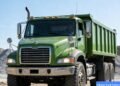
Payload capacity is another area where Chinese trucks often surprise buyers. The chassis and suspension are typically over-engineered, which is a good thing in the African context. A standard 8×4 dump truck from Chinese Truck Factory can legally carry around 30 to 35 tons, but in practice, operators often load to 40 tons on well-maintained roads. This overloading capability comes at the cost of ride comfort and brake wear, but it is a factor that makes these trucks attractive for mining and construction where every ton counts.
For operators looking at specific models, the heavy-duty dump trucks for sale from Chinese manufacturers offer a good balance of power and durability. The engine braking systems are adequate, but I always recommend specifying a hydraulic retarder if your route includes long descents like the ones on the road to Mbeya. Without it, you will go through brake drums and linings at an alarming rate. In terms of real-world driving, the gearboxes from Fast Gear (法士特) are robust and reliable, though they require a firm hand and a patient driver to shift smoothly.
Maintenance and Lifecycle Cost Analysis
When calculating the total cost of ownership for a Chinese heavy truck in Tanzania, the purchase price is only the beginning. Based on long-term fleet observation, the maintenance cost per kilometer for a Chinese truck is roughly 30 to 40 percent lower than for a comparable European truck, but the frequency of maintenance is higher. This is a trade-off that many operators accept because the initial capital outlay is significantly lower.
An oil and filter change on a Chinese 12-liter engine will cost around $150 to $200 in parts and labor at a reputable workshop in Dar es Salaam. You will be doing this every 15,000 to 20,000 kilometers, depending on fuel quality and operating conditions. For a truck running 150,000 kilometers a year, that translates to about $1,200 to $1,800 annually just for routine oil changes. Brake pads, which are a consumable item, will need replacement every 30,000 to 40,000 kilometers, especially if you are running in hilly terrain or doing city deliveries.
The lifecycle cost analysis also needs to factor in downtime. In my experience, a well-maintained Chinese truck in Tanzania will be available for work about 85 to 90 percent of the time. The remaining 10 to 15 percent is spent in the workshop, mostly for electrical issues or suspension components. The electrical systems on some models are not as robust as those on Japanese trucks, and wiring harnesses can suffer from poor connections over time. This is a known issue, and many fleet managers address it by having an electrician re-wrap and protect the harnesses shortly after the truck arrives.
When you look at the total cost per kilometer, including fuel, maintenance, tires, and driver wages, a Chinese truck will typically cost between $0.85 and $1.10 per kilometer. This is significantly lower than the $1.40 to $1.60 per kilometer for a European truck in the same conditions. The gap narrows if you factor in resale value, as Chinese trucks depreciate faster, but for an operator planning to run the truck for five to seven years, the lower upfront cost and cheaper parts make it a compelling financial proposition. For those wanting to understand the price dynamics of specific models, the dump truck cost breakdown is a useful starting point.
Comparison: Chinese vs. Japanese vs. European Trucks
The decision between a Chinese, Japanese, or European truck is not just about price. It is about the operating environment, availability of parts, and the skill level of your mechanics. In Tanzania, you will find all three segments, but they serve different purposes. The table below summarizes the key differences based on operational data collected from fleets in East Africa.
| Parameter | Chinese (e.g., Shacman, Sinotruk) | Japanese (e.g., Hino, Isuzu) | European (e.g., Volvo, Scania) |
|---|---|---|---|
| Initial Purchase Price (6×4 Tractor) | $55,000 – $75,000 | $85,000 – $110,000 | $130,000 – $180,000 |
| Fuel Efficiency (km/liter, loaded) | 2.2 – 2.6 | 2.5 – 2.9 | 2.8 – 3.2 |
| Maintenance Cost per km | $0.15 – $0.20 | $0.18 – $0.22 | $0.25 – $0.35 |
| Parts Availability in Tanzania | Good (Dar es Salaam) | Excellent (widespread) | Moderate (major cities only) |
| Typical Lifespan (years) | 5 – 7 | 8 – 10 | 10 – 12 |
| Resale Value (after 5 years) | 25% – 30% of original | 40% – 50% of original | 45% – 55% of original |
| Driver Familiarity | High (common in region) | High | Low to Medium |
What this table does not show is the behavioral difference. Japanese trucks are often praised for their reliability, but they are typically underpowered for the heavy loads and high speeds seen on Tanzanian highways. A Hino 500 series with a 300 hp engine will struggle to maintain 70 km/h up a hill with a full container. European trucks, while excellent, require premium diesel and specialized diagnostic tools that are not always available outside major cities. Chinese trucks, particularly those from Shacman and Sinotruk, sit in a practical middle ground. They offer enough power, and the parts are cheap enough that you can afford to keep a stock of critical spares without breaking your budget.
Another factor to consider is the warranty and after-sales support. Chinese manufacturers have established assembly plants and distribution networks in East Africa, which means warranty claims are usually honored without lengthy disputes. This is not always the case with grey-market Japanese or European trucks. If you are considering a specific model, I recommend looking at the heavy-duty construction vehicle solutions to see how the vehicles are speced for regional conditions.
Buyer Decision Factors: Fleet Size, Terrain, and Workload
Choosing the right configuration for your operation requires a clear-eyed assessment of your fleet size, the terrain you will be covering, and the workload you expect. A small operator with two trucks cannot afford the same downtime risk as a large logistics company with fifty units. For a small fleet, I would lean towards a truck with simpler electronics and a well-known mechanical engine, as this reduces the dependency on specialized diagnostic tools.
Terrain is the next critical factor. If you are running from Dar es Salaam to Kigali, you will cross the Usambara Mountains, which means sustained gradients and a need for engine braking. In this case, a 6×4 tractor with a 440 hp engine and a manual 12-speed gearbox is the minimum specification. An automatic transmission would be more comfortable, but it adds cost and complexity that may not be justifiable. For flat routes, such as the highway from Dar es Salaam to Dodoma, a 6×2 configuration with a smaller engine, around 340 hp, will save fuel and reduce tire wear.
Workload is about cycles and waiting time. If your trucks are doing port work, they will spend a lot of time idling in queues. This is hard on the engine and the cooling system. I have seen trucks with insufficient cooling capacity overheat in these conditions, leading to head gasket failures. When specifying a truck for port logistics, I always recommend a larger radiator and an additional fan clutch. The port logistics electric truck solutions page has some interesting data on how newer models are addressing these issues, though diesel remains the primary choice for long-distance work.
For mining and quarry operations, the workload is brutal. The trucks are loaded by excavators, which means they experience high impact loads on the frame. In this environment, an 8×4 dump truck with a heavy-duty frame and reinforced suspension is essential. The mining industry truck solutions section covers some of the specific models that are built for this abuse. The cost per hour of operation in a mine is typically higher than on the highway, but the revenue per hour is also higher, which justifies the investment in a more robust truck.
Step-by-Step Import Process and Documentation
The import process from China to Tanzania involves several steps that must be followed precisely to avoid delays and penalties. The first step is to obtain a Proforma Invoice from the supplier, which details the truck’s specifications, VIN number, and the agreed price. This document is necessary for the import permit application. You will need to apply for an Importer Identification Number (TIN) if you do not already have one, and register with the Tanzania Revenue Authority (TRA) for customs purposes.
Once the truck is loaded onto a vessel in Shanghai or Qingdao, you will receive a Bill of Lading. The shipping time to Dar es Salaam is typically 25 to 35 days, depending on the shipping line and whether it is a direct service or a transshipment via Mombasa. During this time, you should prepare the Certificate of Conformity (CoC), which is issued by the supplier or an inspection agency in China. This certificate is required by the Tanzania Bureau of Standards (TBS) to verify that the vehicle meets the necessary safety and environmental standards.
When the vessel arrives, the truck will be discharged at the port and moved to a customs-bonded warehouse. You will need to submit a Customs Entry Form (Form C-1) and pay the applicable import duty and VAT. The import duty for trucks is generally around 10 percent of the CIF (Cost, Insurance, Freight) value, and VAT is 18 percent. There are also port handling charges and a levy for the Tanzania Ports Authority. The total clearing process takes between three and seven working days, assuming all documents are in order.
After clearing customs, you will need to register the truck with the Tanzania Revenue Authority for road licensing. This requires a roadworthiness inspection at a designated center, and you will receive a registration number and a logbook. It is important to note that the truck must be left-hand drive or right-hand drive? Tanzania follows left-hand traffic, so the truck must be right-hand drive. Most Chinese trucks are available in right-hand drive configuration for export markets, but you must specify this clearly in your order to avoid re-engineering costs.
Cost Breakdown and Financing Options
The total landed cost of a Chinese heavy truck in Tanzania is more than just the purchase price. You need to budget for shipping, insurance, customs duties, port charges, and inland transport from the port to your yard. As a rule of thumb, the landing cost is about 25 to 30 percent higher than the FOB price. For example, a truck with a FOB price of $60,000 will cost around $75,000 to $78,000 once it is on the road in Tanzania.
Shipping costs for a single 40-foot container carrying a disassembled truck or a roll-on/roll-off (RoRo) shipment for a drivable vehicle range from $2,500 to $4,000, depending on the port of departure and the shipping line. Insurance is typically 0.5 percent of the CIF value. Customs duty at 10 percent and VAT at 18 percent are calculated on the CIF value, which includes the freight and insurance. Port handling and clearing fees are about $500 to $800 for a RoRo vehicle.
Financing is often the biggest hurdle for small and medium-sized operators. Local banks in Tanzania are generally reluctant to finance imported vehicles, especially used ones. However, if you are buying a new truck from a recognized manufacturer, you may be able to secure a lease or hire-purchase agreement through the manufacturer’s local dealer. Some Chinese manufacturers offer financing through their own financial arms, but the interest rates are often higher than local bank rates. For a comprehensive look at pricing, the article on what’s the price of a brand new dump truck provides a detailed breakdown of the cost structure.
Another option is to use a trade finance facility from a bank in China, which can be arranged by the supplier. This usually requires a down payment of 30 percent, with the balance payable upon delivery. The key is to have a solid business plan and a record of your fleet’s operating costs. From my experience, operators who have been in business for more than three years with a good profit margin have no trouble securing financing, while new entrants often need to pay cash.
Regulatory Compliance and Emission Standards
Tanzania has been tightening its vehicle emission standards in recent years, and this affects what you can import. The Tanzania Bureau of Standards (TBS) requires that all imported vehicles meet at least the Euro 4 emission standard. This is not a problem for new Chinese trucks, as most manufacturers now produce Euro 5 or Euro 6 compliant engines for export. However, you must ensure that the engine’s emission control system is not removed or tampered with, as this will cause the vehicle to fail inspection.
The age limit for used trucks is also a consideration. Tanzania allows the import of used trucks that are not more than eight years old from the year of manufacture. This is stricter than in some neighboring countries, so it is important to check the vehicle’s year of manufacture on the chassis plate. If you are importing a used truck, you will need to provide a certificate of roadworthiness from the country of origin, which can be difficult to obtain for trucks that have been in service.
Compliance also extends to axle load limits. The Tanzania National Roads Agency (TANROADS) enforces strict axle load limits to protect the road infrastructure. The maximum gross vehicle weight for a 6-axle truck combination is 56 tons, and the maximum load per axle is 10 tons for a single axle and 18 tons for a tandem axle. Overloading is a common problem in the region, but it leads to heavy fines and can damage the vehicle’s suspension and drivetrain. For cross-border operations, it is essential to understand the load limits in each country you will transit, as they vary.
To ensure your truck is compliant, I recommend working with a clearing agent who specializes in vehicle imports. They can handle the TBS inspection and ensure that all the necessary documentation is in order. It is also worth checking if the truck model you are importing has been previously certified for the Tanzanian market. Some manufacturers have pre-certified models, which speeds up the inspection process. For a deeper dive into the regulatory environment, the U.S. Department of Transportation provides useful comparisons of international standards, though the local regulations in Tanzania are the final authority.
Shipping, Port Handling, and Logistics in Dar es Salaam
Dar es Salaam port is the main entry point for heavy trucks in Tanzania, and it operates as a critical hub for the entire East African region. The port has a dedicated RoRo terminal, but it is often congested, and vessels can wait for several days to berth. This is a factor you must account for in your delivery schedule. Once the vessel docks, the truck is driven off and parked in a secure yard. The port authority will issue a gate pass, and you can then move the truck to a customs inspection area.
Port handling charges in Dar es Salaam are relatively low compared to Mombasa, but they can still add up. You will be charged for the use of the RoRo ramp, a terminal handling fee, and a storage fee if the truck is not cleared within a few days. The storage fee increases progressively after the first three days, so it is in your interest to have all the paperwork ready before the vessel arrives. I have seen operators lose significant money because they failed to submit the customs entry form in advance.
Another consideration is the condition of the truck upon arrival. RoRo shipments are generally safe, but there is always a risk of minor damage during loading and unloading. It is essential to do a thorough inspection before accepting the truck from the port authority. Document any damage with photos and file a claim with the shipping line immediately. For containerized shipments, the risk is lower, but you will need to arrange for a crane to unload the truck, which adds to the cost.
Once the truck is cleared, you will need to drive it to your facility. If the truck is not registered, you will need to obtain a temporary transit plate from the TRA. This is a straightforward process, but it requires proof of ownership and a valid insurance policy. The drive from the port to the city center is short, but it is always better to have a driver who is familiar with the area to avoid any issues with traffic police. For logistics operators, the efficiency of the port and the surrounding infrastructure is a key factor in overall profitability, and this is something that the port logistics electric truck solutions page addresses in the context of future developments.
Common Pitfalls and How to Avoid Them
One of the most common mistakes I see is buyers focusing solely on the lowest price without considering the total cost of ownership. A truck that is $5,000 cheaper but has a weaker rear axle or a smaller radiator will cost you far more in downtime and repairs. It is better to pay a bit more for a reputable brand like Shacman or Sinotruk, which have a proven track record in the region. The Chinese Truck Factory website offers a range of models, and their specifications are usually accurate and reliable.
Another pitfall is underestimating the importance of the driver. A good driver can make a mediocre truck last a long time, while a bad driver can destroy a new truck in months. It is essential to provide proper training for your drivers, especially if they are not familiar with the features of a modern Chinese truck. Many operators in Tanzania hire drivers with experience on Japanese trucks, and they often have habits that are not suitable for a higher-torque diesel engine. For example, they may shift gears at too low an RPM, which puts stress on the drivetrain.
Electrical issues are another common source of frustration. As mentioned earlier, the wiring on some Chinese trucks is not the best, and it can suffer from poor connections and corrosion. To mitigate this, I recommend having a professional electrician go over the entire wiring harness shortly after the truck arrives. This is a cheap fix that can prevent a lot of headaches. The same goes for the air system. Some trucks come with substandard air dryers, which can lead to moisture in the brake lines. Replacing the air dryer with a high-quality unit is a worthwhile investment.
Finally, do not neglect the warranty. A standard Chinese truck warranty is usually 12 months or 100,000 kilometers, whichever comes first. It is crucial to understand what is covered and what is not. For example, consumables like brake pads and filters are rarely covered, and the warranty is void if the truck is used for racing or if it is overloaded. Make sure you keep all service records and use genuine parts to avoid any disputes. The article on what is the most reliable truck offers some insights into which brands have the best warranty support in the region.
FAQ Section
Q: What is the typical lead time from ordering a Chinese heavy truck to delivery in Tanzania?
A: The lead time is usually 45 to 60 days from the date of order confirmation. This includes manufacturing time, which is about 15 to 20 days for a standard model, and shipping time, which is 25 to 35 days. You should also add a week for customs clearing and port handling.
Q: Are Chinese trucks suitable for the rough terrain in Tanzania?
A: Yes, they are generally well-suited, provided you specify the correct suspension and axle configuration. Heavy-duty leaf springs and a reinforced frame are recommended for unpaved roads. It is also wise to choose a model with a higher ground clearance.
Q: How much does it cost to maintain a Chinese truck per year?
A: For a truck running 150,000 kilometers a year, you should budget between $5,000 and $8,000 for routine maintenance, including oil changes, filters, brake pads, and tires. This is significantly less than the maintenance cost for a European truck, but you will need to perform maintenance more frequently.
Q: Can I import a used Chinese truck, and is it a good idea?
A: You can, but it is generally not recommended. Used trucks from China are often high-mileage vehicles that have been in service for several years. The savings in purchase price are often offset by higher maintenance costs and a shorter lifespan. A new truck with a warranty is usually a better investment.
Q: What is the resale value of a Chinese truck in Tanzania after five years?
A: You can expect to recover about 25 to 30 percent of the original purchase price. The resale market is active, but it is driven by price rather than brand loyalty. If you maintain the truck well and keep service records, you will be able to get a better price.
Q: Do I need a special license to drive a heavy truck in Tanzania?
A: Yes, you need a Class C license for trucks over 3.5 tons. This requires a medical exam and a written test. If you are hiring drivers, you must verify that they have the appropriate license and experience with heavy vehicles.
Q: What payment terms are common when buying from a Chinese factory?
A: The most common terms are a 30 percent deposit with the order and the balance before shipment. Some suppliers offer a Letter of Credit (L/C) for larger orders. It is important to agree on the terms in writing and to use a secure payment method to protect yourself.
Q: How do I ensure the truck meets Tanzanian emission standards?
A: You must ensure the engine is compliant with at least Euro 4 standards. Most new Chinese trucks are built to Euro 5 or Euro 6 specifications. Ask the supplier for the emission compliance certificate and verify it with the Tanzania Bureau of Standards (TBS) before shipping.
Q: What happens if my truck breaks down in a remote area?
A: This is a risk in any operation. It is essential to have a recovery plan, whether that means having a spare truck on standby or having a relationship with a local workshop. Some operators in Tanzania use satellite tracking to monitor their trucks and dispatch help quickly.

Q: Can I get financing for a Chinese truck in Tanzania?
A: Yes, but it is not easy. Local banks often require substantial collateral and a proven track record. Some Chinese manufacturers offer their own financing options through local dealers, but the interest rates can be higher. A trade finance facility from a Chinese bank is another option.
Q: Is it better to buy a tractor unit or a rigid truck?<