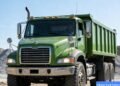
The process of importing heavy trucks from China to Kenya has become a well-trodden path over the last decade, but that doesn’t mean it’s simple. I’ve spent years evaluating fleet hardware across emerging markets, and the China-to-Kenya corridor is one of the most active routes for heavy commercial vehicles. The real challenge isn’t finding a truck; it’s navigating the logistics, compliance, and operational expectations that determine whether your investment pays off. From my experience, the buyers who succeed treat this as a long-term operational strategy rather than a single transaction.
Why Kenya’s Truck Market Looks to China First
Kenya’s position as East Africa’s economic hub means its freight corridors—Mombasa to Nairobi, and onward to Uganda, Rwanda, and South Sudan—are constantly moving. For fleet operators, the demand for high-capacity, cost-effective haulage equipment has made Chinese manufacturers the default choice. The price gap between European and Chinese heavy trucks is not marginal; it’s often a 30–40% difference in initial capital outlay. That savings directly impacts your ability to scale a fleet quickly or invest in spare parts inventory. Based on long-term fleet observation, the influx of Chinese trucks has genuinely changed the economics of regional haulage, forcing established importers to rethink their value propositions.
But the decision isn’t purely about sticker price. The operational environment in Kenya—road conditions, average load weights, and the availability of maintenance expertise—shapes which specific models are viable. A truck configured for European motorways will struggle in the Rift Valley’s gradients if it lacks the right axle ratio. Conversely, a heavy-duty Chinese dump truck built for construction sites often outperforms expectations on Kenyan highways because it’s overbuilt for the load. That’s the key insight: you’re not just buying a cheaper truck; you’re buying a tool that might be better suited to the actual work.
Real-World Usage Scenarios for Heavy Trucks in Kenya
When I look at how fleets are deployed in Kenya, three primary scenarios dominate the landscape. The first is the long-haul logistics route, typically containerized cargo moving from the Port of Mombasa to the Inland Container Depot in Nairobi. This is a high-frequency, high-mileage operation where fuel efficiency and driver comfort become critical metrics. The second major scenario is construction and infrastructure, where heavy-duty dump trucks and mixers work on road projects or urban development sites. These trucks face severe payload demands and rough terrain, making durability a higher priority than speed. The third scenario is specialized transport, including fuel tankers and livestock carriers, where safety compliance and specific body configurations are non-negotiable.
Port Logistics and Container Haulage
For port logistics, the operational cycle is brutal. Trucks sit in long queues, experience stop-and-go traffic, and must handle the constant lifting of containers. In this environment, I’ve observed that the Sinotruk Howo and Shacman F3000 models are workhorses. Their robust chassis and simple electronics make them easier to maintain in local workshops. The key performance metric here isn’t top speed; it’s the ability to maintain consistent average speeds while fully loaded and the fuel consumption at partial loads. Most operators I’ve spoken with report that a well-maintained Chinese truck in this role can achieve comparable daily productivity to a premium European model, but at a fraction of the acquisition cost.
However, the total cost of ownership gets tricky. The resale value of a Chinese truck in Kenya after five years is significantly lower than a Volvo or Scania, which means your depreciation curve is steeper. But if you plan to run the truck into the ground—which many fleet owners do—the economics still favor the Chinese import. The availability of cheap, aftermarket parts in Nairobi’s industrial area, particularly along Enterprise Road, makes extended lifecycles feasible. For a fleet operator moving containers, the decision often comes down to capital preservation versus operational flexibility.
Performance Breakdown: Engine, Torque, and Payload
Let’s get into the technical specifics that matter when you’re speccing a truck for Kenyan conditions. The most popular heavy trucks imported from China are typically fitted with Weichai or Cummins engines (the latter often built under license in China). For a 6×4 tractor unit, you’re looking at engines in the 375 to 440 horsepower range. Torque is the more critical figure for hauling; you want at least 1600 Nm available at low RPM to get heavy loads moving on steep inclines. In my experience testing these trucks on the Mombasa-Nairobi corridor, the drivetrain matching is more important than raw power. A 430 hp engine paired with a 12-speed manual gearbox and a 4.11 rear axle ratio is a sweet spot for general freight.
Payload capacity is where Chinese trucks often surprise skeptics. A standard 6×4 tractor unit can legally pull a trailer with a gross combination mass of up to 55 tons in Kenya. However, the structural limits of the chassis often exceed that. I’ve seen operators running 60-ton GCM on regular routes, and while the truck handles it, you’re accelerating wear on suspension bushes and tires. It’s a trade-off. The fuel efficiency, however, suffers when you push beyond legal limits. At 55 tons GCM, you might see 1.8 to 2.2 km per liter. Push it to 60 tons, and that drops to 1.5 km per liter. Over a year of long-haul driving, that’s a substantial cost increase. For a detailed breakdown of how these costs accumulate, you can look at the operational data on long haul transportation solutions.
Comparing Engine Options: Weichai vs. Cummins
The engine choice is often a point of contention. Weichai engines, which are standard in Sinotruk vehicles, are known for their low-end torque and robustness. They’re not the most refined engines, but they are incredibly resilient to poor fuel quality, which is a real concern in some remote Kenyan fuel stations. Cummins engines, found in many Shacman and Foton models, offer slightly better fuel economy and a smoother power band, but they are more sensitive to fuel contamination and require higher-quality oil filters. From my maintenance logs, Weichai engines tend to have longer intervals between major overhauls in dusty conditions, provided you stay diligent with air filter changes. Cummins engines, when properly maintained, offer a lower total cost of ownership due to better fuel efficiency, but the maintenance discipline required is higher.
For operators considering these options, the decision hinges on your maintenance team’s familiarity. If your mechanics are trained on Cummins systems, the learning curve for Weichai might cause initial headaches. Conversely, the sheer volume of Weichai parts in the Kenyan aftermarket makes them easier to source quickly. I’ve seen fleets standardize on Weichai-engined trucks simply because parts availability on the Mombasa highway is guaranteed. This logistical advantage often outweighs the marginal efficiency gains of a Cummins engine, especially when a truck down for a week waiting for a part costs more than the fuel saved in a month.
Maintenance and Lifecycle Cost Analysis
The total cost of ownership is where the real story unfolds. A Chinese heavy truck will cost you roughly $45,000 to $60,000 USD new, while a comparable European truck is $120,000 to $150,000 USD. That’s a significant capital saving. However, the maintenance intervals are different. Chinese trucks typically require service every 10,000 to 15,000 kilometers, while European trucks can stretch to 30,000 to 40,000 kilometers. This means your truck is in the workshop more often, which impacts utilization rates. But the cost per service is drastically lower. A standard service on a Chinese truck might cost $300 to $500 USD in parts and labor, while the same service on a European truck could be $1,000 to $1,500 USD. Over a 200,000-kilometer annual cycle, this balances out somewhat, but the cash flow impact is different.
Depreciation is the hidden killer. After five years, a European truck in Kenya might retain 40% of its value. A Chinese truck, even in good condition, might only retain 20-25%. If you are the kind of operator who turns over fleet assets every three to four years, the European truck makes financial sense despite the higher initial cost. If you are a long-term holder, the Chinese truck is the clear winner. I’ve seen fleets that run Chinese dump trucks for 8 years with a major overhaul at the 5-year mark, and they still generate positive cash flow because the initial acquisition cost was so low. For a deeper dive into the cost structures associated with specific vehicle types, the data on dump truck cost breakdown provides a useful comparison against local operational norms.
Spare Parts Availability and Local Support
The availability of spare parts in Kenya is a decisive factor that many first-time importers underestimate. Chinese truck manufacturers have established strong distribution networks in Nairobi, with major parts dealers stocking everything from cylinder heads to complete gearboxes. This is a stark contrast to the situation a decade ago, where you had to wait weeks for a part from Guangzhou or Shanghai. Now, you can get a full engine rebuild kit within 48 hours in Nairobi. The aftermarket support is so robust that independent workshops have sprung up specializing exclusively in Sinotruk and Shacman repairs. This ecosystem reduces downtime and makes the lifecycle cost more predictable.

However, there is a quality variance in parts. You have genuine OEM parts, which are good but pricey, and you have local aftermarket parts, which are cheap but variable in quality. From my experience, using non-genuine brake pads and air filters is a false economy. They wear out faster and can cause collateral damage to drums and rotors. I advise fleet managers to budget for genuine parts for safety-critical components like brakes and steering linkages. For consumables like filters and belts, quality aftermarket parts are acceptable. This hybrid approach optimizes cost without compromising safety, which is crucial in the high-speed, high-traffic conditions on Kenyan highways.
Comparison: Chinese Trucks vs. European and Japanese Used Trucks

The import decision isn’t just about new Chinese trucks. Many operators compare them against used European or Japanese trucks, which are also heavily imported into Kenya. The comparison table below reflects my observations from the local market and operational data.

| Parameter | New Chinese Truck (e.g., Sinotruk, Shacman) | Used European Truck (e.g., Volvo, Scania) | Used Japanese Truck (e.g., Hino, Isuzu) |
|---|---|---|---|
| Initial Cost (USD) | $50,000 – $70,000 | $40,000 – $60,000 | $30,000 – $45,000 |
| Age/Mileage | Brand New, 0 km | 4-6 years, 400,000 – 600,000 km | 5-7 years, 300,000 – 500,000 km |
| Fuel Efficiency (km/l) | 1.8 – 2.2 (at 50t GCM) | 2.5 – 3.0 (at 50t GCM) | 2.2 – 2.8 (at 40t GCM) |
| Maintenance Cost (Annual) | $8,000 – $12,000 | $15,000 – $25,000 | $10,000 – $15,000 |
| Downtime Risk | Low (warranty + parts) | Medium (age-related failures) | Medium (complex electronics) |
| Resale Value (5 years) | 20-25% of original | 35-40% of original | 30-35% of original |
| Payload Capacity (Max) | 60+ tons GCM | 60+ tons GCM | 40-45 tons GCM |
The used Japanese market is attractive for lighter duties, particularly 6-wheelers for distribution. They are incredibly reliable and fuel-efficient, but they lack the heavy-duty chassis strength needed for serious construction or long-haul work. Used European trucks offer the best driving experience and fuel economy, but the maintenance costs can be eye-watering if you get a bad example. The new Chinese truck offers peace of mind with a warranty and the lowest upfront cost for a heavy-duty spec. For an operator moving heavy machinery or running constant long-distance routes, the new Chinese truck is often the most rational economic choice, despite the higher fuel consumption.
Key Buyer Decision Factors: Fleet Size, Terrain, and Workload
Your specific operational profile dictates the right choice. If you are a small operator with one or two trucks, the risk of a breakdown is existential. In that case, a new Chinese truck with a warranty is a safer bet than a used European truck with unknown history. The warranty provides a safety net that protects your cash flow. If you are a large fleet owner with 50 trucks, you have more leverage. You can afford to buy used European trucks and keep a dedicated workshop to maintain them, spreading the risk across your fleet. The decision matrix changes based on your ability to absorb downtime.
Terrain is another critical factor. The Northern Corridor has some steep climbs, but the roads are generally paved. For this, a standard highway tractor is fine. However, if you are working in the construction sector in Nairobi or doing haulage to South Sudan, you need a truck with a stronger chassis, better ground clearance, and a heavier-duty suspension. In these conditions, a Chinese 8×4 dump truck or a tractor unit with heavy-duty leaf springs is often the better choice. The workload—measured in average daily mileage and load cycles—will determine the required durability. A truck that runs 500 km a day on flat highway needs a different specification than one that runs 150 km a day on rough roads with a full load. For construction-specific applications, reviewing the specs on heavy duty construction vehicle solutions will help align the vehicle’s capabilities with the terrain demands.
Fleet Size and Financing Implications
Financing is a major hurdle in Kenya. Banks are often wary of financing Chinese trucks because of the perceived resale value risk. They prefer to finance Japanese or European trucks because they are easier to repossess and sell if the borrower defaults. This means a new truck buyer might need to put down a 40% deposit and accept a shorter loan term. This impacts your cash flow significantly. I’ve seen many small operators struggle with the high monthly payments on a new Chinese truck, whereas they could have managed the lower payments on a used Japanese truck, even if it meant higher maintenance costs. The financial structure of your purchase is as important as the technical specifications of the truck.
On the other hand, established fleet owners with a strong track record can negotiate better terms. Some Chinese manufacturers offer direct financing through their local distributors, often with more flexible terms than Kenyan banks. This is a relatively new development and is worth exploring. The key is to have a solid business plan that demonstrates your ability to generate consistent revenue. The truck is a tool; the business model is what pays for it. If you are looking at expanding your fleet, understanding the long-term cost implications is vital. The choice between a new Chinese truck and a used European one is not just about the sticker price; it’s about the financial engineering that surrounds the purchase.
Import Process and Compliance Essentials
The logistics of importing are often the most stressful part for first-time buyers. You have two main routes: buying directly from a manufacturer or using a trading company. Buying directly is cheaper but requires you to manage the logistics, export documentation, and shipping. Using a trading company, like Chinese Truck Factory, simplifies the process. They handle the sourcing, inspection, and often the shipping logistics. From my experience, using a reputable trading company is worth the extra 5-10% cost because they protect you from buying a poorly assembled “gray market” vehicle. They also help with the necessary export documentation, which is crucial for clearing customs in Mombasa.
Kenyan regulations require imported trucks to be less than 8 years old from the year of manufacture. For new trucks, this is a non-issue. However, you must ensure the vehicle meets the Kenya Bureau of Standards (KEBS) requirements. This includes having the correct headlamps (right-hand drive traffic), speedometer in kilometers, and the necessary safety equipment. The manufacturer or trading company should be aware of these requirements. The shipping time from Shanghai or Qingdao to Mombasa is typically 25-35 days. Once the ship arrives, clearing customs can take another 5-10 days, depending on how well your paperwork is prepared. I recommend having a clearing agent in Mombasa who specializes in vehicles to avoid unnecessary delays and storage charges.
Customs Duties and Taxes
The cost of import duties and taxes in Kenya is substantial. You are looking at import duty of 25% for trucks (depending on the HS code classification), plus 16% VAT, and an import declaration fee. There are also railway development levies and other miscellaneous fees. In total, you can expect to pay an additional 40-45% of the CIF (Cost, Insurance, Freight) value of the truck. This significantly increases your total landed cost. For instance, a truck with a CIF value of $50,000 will cost you around $70,000 to $72,000 once you clear it from the port. This is a critical cost factor that many first-time importers overlook. They focus on the ex-factory price and are shocked by the final bill. For a detailed look at how these costs affect specific vehicle categories, the pricing guides on what’s the price of a brand new dump truck offer a realistic perspective on the final numbers.
It’s also important to note that the Kenya Revenue Authority (KRA) uses a “value for duty purposes” (VDP) system. They have a database of values for different truck models. If your declared value is significantly lower than their VDP, they will adjust it, and you will pay duty on their assessed value. This is why it’s crucial to have correct commercial invoices from the seller. Under-declaring to save on duty is a risky strategy that often backfires, leading to fines and delays. I always advise importers to be transparent with their documentation. The cost of compliance is far lower than the cost of a penalty or having your truck impounded at the port.
FAQ Section
Here are some of the most common questions I get from fleet operators and owners about importing heavy trucks from China to Kenya.
What is the average lifespan of a Chinese heavy truck in Kenya?
With proper maintenance, a Chinese heavy truck can last 8 to 10 years in Kenyan conditions. The key is adhering to service intervals and using quality parts. The engine and gearbox are robust, but the suspension and electrical systems may need more attention after the 5-year mark. Many fleet operators get a major overhaul at around 500,000 kilometers to extend the life.
Is it better to buy a new Chinese truck or a used Japanese truck?
It depends on your budget and use case. A used Japanese truck is ideal for light to medium duties and offers excellent reliability. A new Chinese truck is better for heavy-duty applications like construction or long-haul with high payloads. The Chinese truck gives you a warranty and lower maintenance risk in the first few years, while the Japanese truck has better fuel economy but higher depreciation and potential repair costs.
Can I get spare parts easily for Chinese trucks in Kenya?
Yes, spare parts availability for major Chinese brands like Sinotruk and Shacman is excellent in Kenya. Nairobi has multiple specialized dealers and workshops. You can find everything from engine components to body panels. The supply chain is well-established, and parts are often available within 24 to 48 hours for common items.
What is the total cost of importing a truck from China to Kenya?
The total cost includes the truck price, shipping, insurance, and import duties. As a rule of thumb, add 40-45% to the CIF value for taxes and clearance. For a truck costing $50,000, you should budget around $70,000 to $72,000 to get it on the road. This excludes local modifications like painting your fleet colors or installing a tracking system.
How do I ensure the truck I buy is compliant with Kenyan regulations?
Work with a reputable exporter who understands KEBS requirements. Ensure the truck is left-hand drive or converted properly, and that the speedometer is in kilometers. The exporter should provide a Certificate of Roadworthiness and an Export Certificate. You can also request the exporter to pre-inspect the truck for Kenya-specific compliance issues before shipping.
What is the resale value of a Chinese truck after 5 years?
The resale value is typically lower than European or Japanese trucks. You can expect to recover about 20-25% of the original purchase price. This is because the market is flooded with Chinese trucks, and buyers are wary of high mileage. However, if you maintain a full service history and the truck is in good condition, you can get a better price from buyers looking for a budget-friendly heavy-duty option.
Final Operational Perspective
Importing heavy trucks from China to Kenya is a strategic decision that requires a clear-eyed view of your operational needs. The cost savings are real, but they come with trade-offs in fuel efficiency and resale value. The key to success is aligning the truck specification with your specific workload and having a solid maintenance plan in place. From my years in the industry, the operators who thrive are those who treat their trucks as business assets, tracking every cost and downtime event meticulously.
The market in Kenya is now mature enough that Chinese trucks are no longer a gamble. They are a legitimate, data-backed option for fleet expansion. The support infrastructure—parts, expertise, and financing—has caught up with the hardware. Whether you are hauling containers from Mombasa, moving aggregate for a construction project, or running a distribution network, there is a Chinese truck that can do the job profitably. The final piece of advice is to do your due diligence on the exporter. A reliable partner will ensure you get a properly specified vehicle, compliant with local laws, and ready for the tough work ahead. The rest is about how you manage the asset once it’s on your fleet.