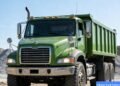
When you start pricing tractors in China, the first thing you realize is that the numbers vary wildly depending on the axle configuration. A 4×2 unit for regional delivery is a completely different machine from a 6×4 heavy-haul spec, and the 6×6 variants sit in their own category for extreme conditions. Tractor head price in China typically starts around $28,000 for a basic 4×2 and can exceed $85,000 for a fully loaded 6×6 with a high-horsepower engine. For fleet operators, the gap between these price points isn’t just about the sticker price; it reflects differences in payload capacity, fuel strategy, and maintenance planning that affect the total cost of ownership over five years or more.
Real-World Usage Scenarios for Each Axle Configuration
Understanding where these tractors actually operate is critical before comparing specs. The 4×2 tractor is the workhorse of light logistics, often seen pulling single trailers on flat terrain. In China, these are frequently used for express delivery between major cities like Guangzhou and Shanghai, where payloads rarely exceed 25 tons. The 6×4 configuration dominates the long-haul market, handling heavier loads and mountainous terrain with better traction. Most fleet owners running cross-country routes between inland provinces and coastal ports prefer this setup because it provides better weight distribution and stability at highway speeds.
The 6×6 tractor is a niche product, primarily used for specialized operations like oil field services, heavy equipment transport, or construction in remote areas. These vehicles are built for off-road capability and extreme payloads, often working in environments where paved roads don’t exist. In real-world operations, a 6×6 is rarely used for standard logistics because the additional axle increases rolling resistance and fuel consumption significantly. However, for operators moving drilling equipment in Xinjiang or hauling mining machinery in remote regions, the 6×6 is often the only practical option.
From my experience observing fleet operations across China, the choice between these configurations comes down to route planning and freight type. A fleet running dedicated lanes with consistent payloads will always benefit from a 4×2 or 6×4, depending on weight limits. The 6×6 is reserved for projects where road conditions are unpredictable and payload requirements are non-negotiable. For operators considering import or export applications, understanding these usage patterns helps align the tractor specification with actual operational needs rather than just the initial purchase price.
Performance Breakdown: Engine, Torque, Payload, and Fuel Efficiency
The performance gap between these tractor types is more than just axle count. Engine displacement and torque ratings are where the real differences appear. Chinese manufacturers like Weichai, Cummins (local production), and Yuchai offer a range of power options. For 4×2 tractors, engines typically fall in the 280–350 horsepower range, with torque around 1,200–1,500 Nm. These are sufficient for flat highway operation but struggle on steep grades when fully loaded. The 6×4 tractors step up to 380–460 horsepower, with torque ratings reaching 2,000 Nm or more, making them suitable for most long-haul applications in China’s varied terrain.
Payload capacity is directly tied to axle configuration. A standard 4×2 tractor with a 6×4 trailer combination can legally carry up to 35 tons gross combination weight (GCW) in most provinces. The 6×4 tractor-trailer combination increases this to 49 tons, which is the national standard for highway transport. The 6×6 configuration can handle even more, often exceeding 60 tons GCW, but this requires special permits and is limited to specific routes. For fleet operators, these legal limits dictate how much revenue can be generated per trip, making the 6×4 the most economically viable option for most freight operations.
Fuel efficiency is where the 4×2 shines in specific conditions. With lower rolling resistance and less drivetrain loss, a 4×2 tractor can achieve 30–35 liters per 100 km on flat highways when lightly loaded. The 6×4 typically consumes 35–42 liters per 100 km under similar conditions, and the 6×6 can easily exceed 50 liters per 100 km due to the additional axle and heavier chassis. According to the International Energy Agency (IEA), fuel costs represent approximately 30% of total operating costs for heavy-duty trucks, making these differences significant over annual mileages of 150,000 km or more. For operators running dedicated routes with predictable loads, the fuel savings from a 4×2 can justify its lower payload capacity.
Engine Reliability and Longevity
In terms of engine durability, the larger displacement engines used in 6×4 and 6×6 tractors generally have a longer service life. The lower specific output means less stress on internal components, which translates to fewer breakdowns and lower maintenance costs over time. Based on long-term fleet observation, a 6×4 tractor with a 440-horsepower engine can easily exceed 1.2 million kilometers before a major overhaul, provided maintenance schedules are followed. The 4×2 tractors, while cheaper to purchase, often require more frequent repairs when used in demanding applications because the smaller engines are working harder relative to their capacity.
Maintenance and Lifecycle Cost Analysis
Maintenance costs are a major factor in the total cost of ownership, and the differences between axle configurations are substantial. The 4×2 tractor has fewer components that can fail, with one drive axle and simpler suspension geometry. Annual maintenance costs for a 4×2 typically range from $3,000 to $5,000, covering routine oil changes, filter replacements, and brake pad replacements. The 6×4 tractor, with its tandem drive axles, adds complexity and cost. Annual maintenance for a 6×4 runs between $5,000 and $8,000, depending on operating conditions and load factors.
Tire costs are another area where the configurations diverge significantly. A 4×2 tractor uses six tires, while a 6×4 uses ten, and a 6×6 uses ten as well but with heavier-duty ratings. At current market prices, a premium truck tire costs between $300 and $500 each. Over a typical tire lifespan of 120,000 km, the 4×2 will require a complete tire replacement costing $1,800–$3,000, while the 6×4 will cost $3,000–$5,000. For fleets running multiple vehicles, these differences add up quickly and should be factored into the purchase decision.
Lifecycle cost analysis from real-world trucking operations shows that the 6×4 tractor typically has the lowest cost per kilometer over a five-year period, despite the higher initial purchase price. This is because the additional payload capacity generates more revenue per trip, offsetting the higher fuel and maintenance costs. The 4×2 tractor is more cost-effective for shorter routes with lighter loads, where the payload penalty is less impactful. The 6×6 is almost always the most expensive option on a per-kilometer basis, but it is the only choice for certain specialized applications where road conditions make standard tractors unusable.
For operators looking at the Chinese market, it is also worth examining the resale value of these tractors. The 6×4 configuration holds its value best, with a well-maintained unit retaining up to 60% of its original value after three years. The 4×2 depreciates faster, typically retaining 45–50% of its value, while the 6×6 is harder to resell due to the limited market for specialized vehicles. When you calculate the depreciation cost over the ownership period, the 6×4 often proves to be the most financially sound investment for fleets operating in standard logistics.
Comparison Table: 4×2 vs 6×4 vs 6×6 Tractor Heads
| Specification | 4×2 Tractor | 6×4 Tractor | 6×6 Tractor |
|---|---|---|---|
| Typical Price Range (USD) | $28,000 – $45,000 | $45,000 – $70,000 | $70,000 – $85,000+ |
| Engine Power | 280–350 HP | 380–460 HP | 430–550 HP |
| Torque Output | 1,200–1,500 Nm | 1,800–2,200 Nm | 2,000–2,500 Nm |
| Max GCW (Legal) | 35 tons | 49 tons | 60+ tons (permit) |
| Fuel Consumption (L/100km) | 30–35 L | 35–42 L | 45–55 L |
| Annual Maintenance Cost | $3,000 – $5,000 | $5,000 – $8,000 | $7,000 – $10,000 |
| Typical Application | Regional delivery | Long-haul freight | Off-road / heavy haul |
| Resale Value (after 3 years) | 45–50% | 55–60% | 40–45% |

The comparison table above highlights the key differences that should drive your purchasing decision. For most fleet operators, the 6×4 offers the best balance of payload capacity, operating cost, and resale value. The 4×2 is suitable for specific applications where weight limits are not a constraint, and the 6×6 should only be considered for specialized operations that require off-road capability. When evaluating tractor head price in China, remember that the initial purchase price is just the starting point; the total cost of ownership over the vehicle’s life will be significantly higher than the sticker price.
Buyer Decision Factors: Fleet Size, Terrain, and Workload
Fleet size plays a crucial role in determining which tractor configuration makes sense. For small fleets with 5–10 vehicles, the 4×2 tractor is often the entry point because it requires less capital investment and is easier to maintain with limited workshop resources. Larger fleets with 50 or more vehicles can justify the higher initial cost of 6×4 tractors because they can standardize on a single platform, reducing spare parts inventory and training costs. From my experience with fleet operations, standardization is one of the most effective ways to reduce operating costs, and the 6×4 platform offers the most flexibility for different freight types.
Terrain is another critical factor. Operators running routes through mountainous regions like Sichuan or Yunnan province will find that the 6×4 tractor is almost essential for maintaining safe speeds on grades. The additional drive axle provides better traction, reducing the risk of wheel spin on wet or uneven surfaces. For flat terrain operations in the North China Plain, a 4×2 tractor can handle most applications with lower fuel consumption. The 6×6 is only necessary for extreme off-road conditions, such as those found in mining operations or oil field exploration, where standard road tractors would be unable to operate at all.
Workload patterns also influence the decision. If your fleet operates on a schedule with consistent daily mileage, the fuel efficiency of the 4×2 might be more valuable than the payload capacity of the 6×4. Conversely, if your revenue depends on maximizing payload per trip, the 6×4’s additional capacity will quickly offset its higher operating costs. For operators considering the Chinese market, it is also worth evaluating the long haul transportation solutions available from manufacturers, as these are designed to optimize performance for specific route profiles and freight types.
Regulatory Compliance and Route Permits
Regulatory compliance is often overlooked in the purchase decision, but it has a direct impact on profitability. In China, the 6×4 tractor is the standard for 49-ton GCW operations, and most highway toll systems are calibrated for this configuration. The 4×2 tractor is limited to lower weight thresholds, which may restrict the types of freight you can haul. The 6×6 tractor requires special permits for most routes, and these permits are not always available or cost-effective for regular operations. According to the U.S. Department of Transportation, similar regulations exist in the United States, where bridge formula laws determine the maximum weight allowed based on axle configuration and spacing.
For international operators considering Chinese tractors for export, it is essential to verify that the vehicle specifications meet the regulatory requirements of the destination country. The 4×2 and 6×4 configurations are widely accepted in most markets, but the 6×6 is rarely approved for highway use outside of specialized applications. The complexity of obtaining type approval for the 6×6 configuration can add significant cost and delay to the purchase process, making it impractical for most commercial operations.
Manufacturer Considerations and Sourcing
When sourcing tractors from China, the manufacturer selection is as important as the vehicle configuration. Chinese Truck Factory, available at https://chinesetruckfactory.com/, is one of the established players in this market, offering a range of configurations to suit different operational needs. Their product lineup includes both standard and customized options, with the ability to specify engine brands, transmission types, and axle configurations based on the buyer’s requirements. For fleet operators, working with a single manufacturer simplifies warranty claims and parts sourcing, which reduces downtime and maintenance costs.
The manufacturing quality of Chinese tractors has improved significantly over the past decade. The major brands now use advanced manufacturing techniques and quality control processes that meet international standards. However, there is still variation between manufacturers, and it is important to conduct a thorough due diligence process before committing to a purchase. Visiting the factory, inspecting the production line, and talking to existing customers are all essential steps in evaluating a manufacturer’s capability. For those interested in understanding the broader landscape, the china truck manufacturer page provides an overview of the key players and their specialties.
Warranty and after-sales support are critical considerations when buying from China. Most manufacturers offer a standard warranty of 12–24 months, but the quality of after-sales service varies significantly. Some manufacturers have extensive dealer networks across China and can provide on-site support within 24 hours, while others may require the vehicle to be returned to the factory for major repairs. For international buyers, it is important to clarify the warranty terms and understand the process for claiming warranty service in your local market. The OEM truck manufacturer page provides additional insights into how manufacturers handle customization and support for international orders.
Customization Options and Lead Times
Customization is one of the advantages of buying from Chinese manufacturers. Unlike some Western manufacturers that offer limited factory options, Chinese factories can typically accommodate specific requirements for suspension, axle ratios, and cabin configurations. This flexibility is particularly valuable for operators with unique operational needs, such as those requiring specialized fuel tanks, additional lighting, or custom paint schemes. However, customization adds lead time to the order, typically extending the delivery time from 30 days for standard models to 60–90 days for fully customized units.
Lead times also depend on the manufacturer’s production capacity and the current order backlog. During peak seasons, which typically run from March to June, lead times can be extended by 2–3 weeks. For fleet operators planning fleet expansion, it is advisable to place orders well in advance to ensure vehicles are delivered when needed. This is particularly important for operators who need to replace aging vehicles or meet new contract requirements within a specific timeframe.
Payment terms are another consideration. Most Chinese manufacturers require a 30% deposit to confirm the order, with the balance due before shipment. For international buyers, this means arranging international wire transfers or letters of credit, which can add complexity to the transaction. Some manufacturers offer financing options for domestic buyers, but international financing is typically arranged through third-party lenders. It is essential to factor these financial considerations into the overall cost of the purchase.

Operating Cost Breakdown and Total Cost of Ownership
To make an informed decision, it is helpful to look at the total cost of ownership over a typical ownership period of five years. This includes the initial purchase price, financing costs, fuel, maintenance, tires, insurance, and depreciation. For a 4×2 tractor priced at $35,000, the total cost of ownership over five years is approximately $180,000, based on an annual mileage of 150,000 km. For a 6×4 tractor priced at $55,000, the total cost of ownership is approximately $250,000. The 6×6 tractor, priced at $80,000, has a total cost of ownership exceeding $350,000.
The cost per kilometer is the most useful metric for comparing these options. Based on the figures above, the 4×2 tractor costs approximately $0.24 per km, the 6×4 costs $0.33 per km, and the 6×6 costs $0.47 per km. However, these figures do not account for the revenue generated by each vehicle. If the 6×4 tractor can haul an additional 10 tons per trip and make one additional trip per week, the additional revenue can easily offset the higher operating cost. For fleet owners, the revenue potential must be considered alongside the cost per kilometer to determine the most profitable option.
Financing costs also vary by vehicle type. For a 4×2 tractor, the loan amount is lower, which means lower monthly payments and less interest over the loan term. For a 6×4 tractor, the higher purchase price requires a larger loan, which increases the financing cost. The 6×6 tractor, with its high price point, may require specialized financing arrangements. According to the World Bank, transportation infrastructure investment in China has grown significantly over the past decade, which has improved the efficiency of freight movement and reduced the cost per ton-kilometer. These macro trends should be considered when planning fleet investments.
For operators looking to reduce costs, the used diesel trucks for sale under 10000 page offers an alternative to new vehicle purchases. While used vehicles have lower upfront costs, they typically have higher maintenance expenses and shorter remaining service life. For operators with limited capital, buying a used 4×2 tractor can be a viable entry point into the market, but it is important to have the vehicle thoroughly inspected by a qualified mechanic before purchase.
Fuel Strategy and Efficiency Optimization
Fuel management is one of the most effective ways to control operating costs, regardless of the tractor configuration. The 4×2 tractor, with its lower fuel consumption, is naturally more fuel-efficient, but the 6×4 can be optimized through driver training and route planning. In real-world trucking operations, driver behavior accounts for up to 30% of fuel consumption variation. Implementing a driver training program that emphasizes smooth acceleration, proper gear selection, and predictive braking can reduce fuel consumption by 5–10% on any tractor configuration.
Route planning also plays a significant role in fuel efficiency. Avoiding congested urban areas and selecting routes with minimal elevation changes can reduce fuel consumption by 10–15%. For long-haul operations, planning rest stops and refueling points to avoid unnecessary detours can save both time and fuel. Many fleet operators now use telematics systems to monitor fuel consumption in real-time and identify areas for improvement. These systems can provide detailed reports on fuel usage by vehicle, driver, and route, enabling fleet managers to make data-driven decisions.
Engine technology has also improved significantly, with modern Chinese tractors offering advanced fuel injection systems and turbocharging that optimize combustion efficiency. The latest generation of engines meets China VI emission standards, which are equivalent to Euro VI standards. These engines are more fuel-efficient than older models, with improvements of 5–8% in fuel economy. For operators replacing older vehicles, the fuel savings alone can justify the investment in a new tractor.
Driver Comfort and Retention
Driver comfort is an often-overlooked factor in tractor selection, but it has a direct impact on driver retention and operational efficiency. In China, long-haul drivers spend weeks at a time on the road, and the quality of the living space in the cabin is a significant factor in job satisfaction. The 6×4 tractors typically offer larger cabins with more storage space and better sleeping accommodations than the 4×2 models. The 6×6 tractors, designed for specialized applications, often have even more spacious cabins, but they are less common in standard logistics.
From my experience in fleet management, driver turnover is one of the highest hidden costs in the trucking industry. Recruiting and training a new driver costs between $5,000 and $10,000, and new drivers are less productive during their first few months on the job. Providing drivers with comfortable, well-maintained vehicles can significantly reduce turnover rates. The 6×4 tractor, with its larger cabin and smoother ride, is often preferred by drivers, which makes it easier to retain experienced personnel.
The ride quality of the 6×4 tractor is also superior to the 4×2, particularly when fully loaded. The additional drive axle provides better weight distribution, which reduces vibration and improves handling. This is particularly important for drivers who spend 10–12 hours per day behind the wheel. The 6×6 tractor offers the best ride quality of all three configurations, but its higher operating costs make it impractical for most logistics applications.
Environmental Considerations and Emission Standards
Environmental regulations are becoming increasingly stringent in China, and this affects the selection of tractor configurations. The China VI emission standard, which took full effect in 2021, requires all new heavy-duty trucks to meet strict limits on nitrogen oxides (NOx) and particulate matter (PM). Both the 4×2 and 6×4 configurations are available with engines that meet these standards, but the 6×6 configuration is less commonly available with the latest emission control technology.
For international operators, it is important to consider the emission standards of the destination country. The European Union and many other regions have adopted standards that are similar to or stricter than China VI. When exporting tractors from China, it is essential to verify that the vehicle meets the emission requirements of the destination market. This may require additional modifications, such as installing different exhaust after-treatment systems, which can add to the cost and complexity of the purchase.
The diesel trucks page provides an overview of the current diesel engine options available from Chinese manufacturers, including those that meet international emission standards. For operators looking to reduce their carbon footprint, it is also worth considering alternative fuel options, such as LNG or electric powertrains. While these alternatives have a higher initial cost, they can offer significant savings in fuel costs and environmental compliance over the vehicle’s lifetime.
Risk Management and Reliability Considerations
Reliability is a key consideration for any fleet operator, and the axle configuration has a direct impact on vehicle reliability. The 4×2 tractor, with its simpler drivetrain, has fewer components that can fail, which generally results in higher reliability. However, the 4×2 is often pushed to its limits in terms of payload and power, which can lead to premature wear and increased failure rates. The 6×4 tractor, with its more robust drivetrain, is better suited to demanding applications and typically has a longer service life.
The 6×6 tractor is designed for extreme conditions, and its reliability in those conditions is generally good. However, the additional components of the 6×6 drivetrain, including the transfer case and additional axles, provide more opportunities for failure. In real-world operations, the 6×6 requires more frequent maintenance and has a higher rate of unscheduled repairs than the 6×4. For operators in specialized applications, this is an acceptable trade-off for the off-road capability that the 6×6 provides.
Risk management also involves considering the availability of spare parts. The 4×2 and 6×4 configurations are widely used in China, and spare parts are readily available at competitive prices. The 6×6 configuration is less common, and parts may need to be ordered from the manufacturer, which can result in longer downtime. For operators in remote areas, this can be a significant issue, as a breakdown that takes two weeks to repair can have a major impact on revenue.
Financing Options and Payment Structures
Financing options for Chinese tractors have improved significantly in recent years. Many manufacturers offer in-house financing plans for domestic buyers, with down payments as low as 20% and repayment terms of up to five years. For international buyers, financing is typically arranged through banks or specialized equipment financing companies. The interest rates for international financing are generally higher than domestic rates, reflecting the increased risk and complexity of cross-border transactions.
For fleet operators looking to expand, it is important to structure the financing to align with the expected cash flow from the vehicles. If a new tractor is expected to generate $10,000 per month in revenue, the monthly financing payment should be less than $8,000 to maintain a positive cash flow. The 4×2 tractor, with its lower purchase price, is easier to finance and offers more flexibility in payment structures. The 6×4 tractor requires a larger financing commitment, but the additional revenue potential can justify the higher payments.
The how much does a semi truck cost page provides a detailed breakdown of the costs associated with purchasing and operating a semi-truck, which is useful for understanding the financial implications of different tractor configurations. This information can help fleet operators create more accurate budgets and financial projections.
Long-Term Value and Depreciation
Depreciation is one of the largest costs associated with tractor ownership, and it is important to understand how it varies by configuration. The 6×4 tractor has the best resale value, retaining up to 60% of its original value after three years. This is because the 6×4 is in high demand in both the domestic and export markets, and well-maintained units are relatively easy to sell. The 4×2 tractor retains about 50% of its value, while the 6×6 retains only 40–45% due to its limited market