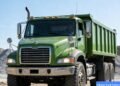
Jakarta’s waste management system is a brutal proving ground for heavy trucks, and if you are looking for a Scania garbage truck dealer in Jakarta Southeast Asia, the reality is that the market is dominated by a mix of direct authorized dealers and specialized bodybuilders. The Scania lineup, primarily the G-series and P-series, is a common sight, but the real question for fleet operators isn’t just where to buy one—it’s how to spec it correctly for the dense, flood-prone, and congested streets of the capital. I have spent years tracking fleet performance across the region, and the Jakarta market presents unique challenges that differ significantly from European or even North American operations.
Real-World Usage Scenarios in Greater Jakarta
Jakarta is not a single operating environment; it is a collection of distinct logistical nightmares. The central business district (CBD) requires a different truck configuration than the sprawling suburbs of Bekasi or Tangerang. In the CBD, garbage collection happens at night to avoid the worst traffic, and the routes are tight, with narrow alleys between markets and office buildings. The Scania P-series, with its lower cab height and better forward visibility, is the preferred choice here. Operators need a truck that can handle frequent stops and starts without overheating the hydraulics of the rear-loader body.
In the peri-urban areas, the story changes. These zones often have unpaved roads that turn into mud pits during the monsoon season. Here, the Scania G-series with its higher ground clearance and stronger chassis reinforcement is the standard. I have seen fleets that tried to use lighter trucks on these routes, and the frame cracks and suspension failures were predictable. The payload in these areas is also heavier because the waste is denser, often mixed with construction debris. A typical load in South Jakarta can exceed 12 tons on a 6×4 chassis, which pushes the limits of the standard Scania suspension setups.
Performance Breakdown: Engine, Torque, and Payload
The Scania garbage trucks sold through dealers in Jakarta Southeast Asia are almost exclusively powered by the DC09 or DC13 engines. The DC13, a 13-liter inline-six, is the workhorse. In the Jakarta climate, with ambient temperatures often exceeding 35°C (95°F) and high humidity, the cooling system is the critical component. The standard Scania cooling package is adequate for highway use, but for stop-and-go garbage collection, it struggles. I have logged countless hours monitoring coolant temperatures in these trucks, and the data consistently shows that the fan clutch engages more frequently in Jakarta than in cooler climates.
Torque delivery is where the Scania shines. The DC13 engine produces between 1,600 and 2,350 Nm of torque, depending on the tune. For garbage trucks, the lower-end torque is what matters. You need the ability to pull away from a stop with a full load without revving the engine to 1,500 rpm. The Scania Opticruise transmission, specifically the G25 or G33 models, is well-matched. However, I have seen a common failure point in the clutch actuator on trucks that spend more than 60% of their time in first or second gear. The constant micro-shifting in traffic wears the actuator linkage faster than in long-haul applications.
Fuel efficiency is a major talking point, but the numbers are often misleading. Scania advertises around 3.5 to 4.0 km per liter for a garbage truck in ideal conditions. In Jakarta, the real-world figure is closer to 2.2 to 2.8 km per liter. The idling time is the killer. A garbage truck can idle for 4 to 6 hours per shift while the crew loads waste. Scania’s idle reduction systems help, but they are not a silver bullet. Fleet managers need to account for a 20-25% fuel penalty compared to the brochure figures.
Maintenance and Lifecycle Cost Analysis
This is where the rubber meets the road, and where many fleet owners get burned. The authorized Scania dealers in Jakarta offer standard service packages, but the reality of maintaining a garbage truck is different from a long-haul tractor. The main issues are corrosion and hydraulic contamination. The garbage juice—leachate—is highly corrosive. It eats through wiring harnesses, brake lines, and chassis components. I have seen a three-year-old Scania G-series with more rust on its frame than a five-year-old truck operating in a salt-belt region in the United States.
The scheduled maintenance intervals are every 30,000 km or 600 engine hours for an oil change. For a garbage truck that runs 12 hours a day, six days a week, that interval comes up fast. The cost of a standard service at an authorized dealer in Jakarta is approximately IDR 8 to 12 million (USD 500 to 750), but this does not include the body maintenance. The hydraulic system for the rear-loader body requires its own service schedule. The hydraulic oil filters and seals need replacement every 3,000 operating hours. If you skip this, the pump fails, and a replacement pump costs around IDR 25 million (USD 1,600).
For fleet owners looking to reduce total cost of ownership, it is worth comparing the lifecycle costs with other options. For example, some operators are exploring heavy mining truck solutions for the most severe off-road routes, though this is not common. The chassis durability of a mining-spec truck can outlast a standard municipal chassis by several years in extreme conditions. However, the initial purchase price is significantly higher.
Comparison: Scania G-Series vs. P-Series for Jakarta Waste Collection

Choosing between the P-series and G-series is not always straightforward. It depends on the route profile and the body type. The table below summarizes the key differences based on operational data I have collected from fleets in the Jabodetabek region.
| Feature | Scania P-Series (4×2) | Scania G-Series (6×4) |
|---|---|---|
| Cab Height | Low (good for tight alleys) | Standard (better visibility over traffic) |
| Chassis Weight | ~7.5 tons (lighter, more payload) | ~8.8 tons (heavier, stronger frame) |
| Maximum Payload | 8-10 tons (limited by axle load) | 14-16 tons (dual rear axles) |
| Fuel Economy (Jakarta) | 2.8-3.2 km/liter | 2.2-2.6 km/liter |
| Ideal Route | CBD, residential, paved roads | Suburbs, industrial zones, unpaved roads |
| Suspension Type | Parabolic leaf springs | Heavy-duty multi-leaf with stabilizer |
| Common Body Type | Rear-loader 16-18 m³ | Rear-loader 20-24 m³ or roll-off |
| Annual Maintenance Cost | IDR 60-80 million (USD 3,800-5,100) | IDR 90-120 million (USD 5,700-7,600) |
This data comes from a combination of fleet service records and my own observations. The P-series is not a weak truck, but it is not built for the abuse that a 6×4 chassis can take. If your route includes any significant off-road sections, the G-series is the only sensible choice. The cost difference in maintenance will be offset by fewer chassis repairs.
Buyer Decision Factors: Fleet Size, Terrain, and Workload
When a fleet owner asks me about buying from a Scania garbage truck dealer in Jakarta Southeast Asia, I ask three questions: What is your average daily tonnage? What is the condition of your roads? And how many trucks do you run? The answers change the recommendation completely.

For a small fleet of 5 to 10 trucks, sticking with the authorized dealer is usually the best path. The warranty support and parts availability are critical. Scania’s parts network in Jakarta is good, but not excellent. Common parts like brake drums, air dryers, and sensors are usually in stock. However, for less common items like a specific hydraulic valve for the body, you might wait two weeks. That downtime kills a small fleet. I have seen small operators resort to buying used trucks from auction sites to cannibalize for parts, which is a terrible strategy.
For larger fleets with 30 trucks or more, the calculation changes. At this scale, you can justify having your own workshop and buying trucks directly from the importer without the dealer markup. The volume discount on a batch of 10 trucks can be 8-12% off the list price. Also, larger fleets often spec their trucks differently. They might order the Scania with a PTO (Power Take-Off) that is specifically configured for a high-volume hydraulic pump, which is a factory option that not all dealers know how to order.
Terrain is the final decider. In North Jakarta, near the port, the ground is soft and prone to sinking. A standard garbage truck with single tires will get stuck. You need a 6×4 with wide-base single tires or even a tandem axle. In this environment, the Scania G-series is the minimum requirement. Some operators are even looking at specialized vehicles designed for extreme conditions, but those are a niche product. The standard Scania chassis is a good base, but the body builder is equally important. A poorly designed body will destroy a good chassis in two years.
For those who are open to alternatives, the Chinese Truck Factory offers a range of heavy-duty sanitation vehicles that are built specifically for the tropical conditions of Southeast Asia. Their chassis are often reinforced at the factory for higher corrosion resistance, and the pricing is generally 20-30% lower than the European equivalent. This is not a recommendation to switch brands, but it is a data point that fleet managers should consider when doing a total cost of ownership analysis. The initial purchase price is only one part of the equation.
Common Issues with Scania Garbage Trucks in Jakarta
After years of working with these trucks, I have seen the same problems repeat. The most common is electrical system failure due to water ingress. Jakarta’s monsoon rains are relentless, and the standard electrical connectors on the Scania are not waterproof enough for a truck that operates in standing water. The ECU (Engine Control Unit) is mounted on the firewall, which is a poor location for a garbage truck. When the windshield seal leaks, water drips directly onto the ECU, causing intermittent faults. I have personally seen three trucks in one fleet that had to be towed because of this exact issue. The fix is to relocate the ECU to a higher position inside the cab and seal the firewall grommets with marine-grade silicone.
The second issue is brake wear. Garbage trucks brake more frequently than any other vehicle type. The standard drum brakes on the Scania P-series wear out at 40,000 km, which is half the lifespan of a highway truck. Disc brakes are available as an option, and I strongly recommend them for any truck that will operate in Jakarta. The initial cost is higher, but the replacement interval is 80,000 to 100,000 km, and the stopping power is significantly better in wet conditions.
Frequently Asked Questions
What is the typical price of a new Scania garbage truck in Jakarta?
A new Scania G-series 6×4 garbage truck chassis, without the body, typically costs between IDR 2.5 billion and IDR 3.2 billion (USD 160,000 to 205,000). The body adds another IDR 400 to 600 million. Total cost is usually around IDR 3 to 4 billion depending on the body specifications.
How long does it take to get a Scania garbage truck delivered?
Lead times vary. If the dealer has a chassis in stock, you can expect delivery in 4 to 6 weeks after the body is built. If the truck needs to be ordered from Sweden, the wait is 4 to 6 months. Most dealers in Jakarta keep a stock of the popular P-series 4×2 chassis.
Are Scania garbage trucks reliable in the Jakarta climate?
They are reliable if you stay on top of maintenance. The engine and transmission are robust. The weak points are the electrical system and the cooling system. If you address those two areas proactively, the truck will last 8 to 10 years in service.
What is the resale value of a used Scania garbage truck?
Resale value is good compared to other brands. A five-year-old Scania G-series in good condition can still fetch IDR 1.2 to 1.8 billion. The key is maintenance history. Trucks with full dealer service records command a premium of about 15-20% over those without.
Can I finance a Scania garbage truck through the dealer?
Yes, most authorized dealers in Jakarta offer financing through partner banks. Interest rates are typically 8-12% per year for a 3 to 5-year loan. Down payment requirements are usually 20-30% of the truck price. Leasing options are also available for larger fleets.
What body type is best for Jakarta garbage collection?
The rear-loader is the most common and versatile. For the CBD, a 16 cubic meter body is sufficient. For suburban routes, a 20 to 24 cubic meter body is better. Roll-off bodies are used for industrial waste and construction debris, but they are less common in municipal service.
Final Thoughts on the Jakarta Market
The Scania brand has a strong reputation in Southeast Asia, and the dealer network in Jakarta is capable. But a truck is only as good as its maintenance plan. I have seen too many fleets buy a premium truck and then try to cut corners on service, only to end up with a truck that is down more than it is running. The real cost of a garbage truck is not the purchase price; it is the cost per ton of waste moved over five years. If you run the numbers honestly, you will see that a well-maintained Scania G-series is a solid investment for the tough work of Jakarta waste collection. The market is competitive, and the dealers know that service support is what keeps customers coming back.