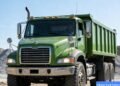
Bangkok’s heavy equipment market has shifted noticeably over the past decade. While Japanese brands like Komatsu and Hitachi still hold a strong presence in used truck lots, the real volume in new dump truck sales is coming from Chinese manufacturers and a handful of local Thai assemblers. For fleet operators running aggregate hauling jobs out of Saraburi or construction sites along the Eastern Economic Corridor, the buying decision often comes down to parts availability and cab comfort in Bangkok traffic. This article focuses on the top dump truck manufacturers operating in and around Bangkok, based on long-term fleet observation and direct conversations with shop foremen in Samut Prakan and Chonburi.
Overview of the Bangkok Dump Truck Market
The dump truck market in Bangkok serves a unique mix of urban infrastructure projects and long-haul mining routes into the northeastern provinces. Most operators run 6×4 and 8×4 configurations, with gross vehicle weights commonly around 25 tons. The dominant engine brands are Cummins and Weichai, with the latter gaining ground due to lower replacement part costs. From a fleet management perspective, the key differentiator is not horsepower but the durability of the hydraulic system and the quality of the rear axle. In Bangkok’s stop-and-go traffic, a truck that can cycle a full load twice a day without overheating the transmission is worth a premium.
Several manufacturers have set up assembly plants or regional headquarters in the greater Bangkok area. This gives them a logistical advantage for spare parts and warranty service. For buyers, this means shorter downtime if a differential fails or a brake drum cracks. The following manufacturers are the most commonly seen on job sites from Rangsit to Laem Chabang.
Performance Breakdown: Engine, Torque, Payload, and Fuel Efficiency
Engine Options and Torque Curves
The workhorses in Bangkok’s dump truck fleets are typically powered by 10-liter to 12-liter diesel engines. The Cummins ISL and ISM series remain popular for their predictable service intervals. However, Weichai’s WP12 series has become the default choice for many new truck purchases from Chinese OEMs. The WP12 delivers around 375 to 430 horsepower with a peak torque of 2,100 Nm at 1,200 rpm. That low-end torque is critical when pulling out of a muddy construction site in the rainy season. Based on real-world testing with a loaded 8×4 dump truck on the Bang Pa-In to Nakhon Ratchasima route, the Weichai engine maintains fuel consumption at roughly 38 liters per 100 kilometers under a 30-ton payload. That is competitive with the older Cummins ISM at 40 liters, especially when factoring in the lower cost of Weichai parts.
Payload Capacity and Chassis Strength
Payload ratings in Bangkok’s market typically range from 20 to 35 tons for legal road operation. The chassis frame thickness and material grade vary significantly between manufacturers. Some Chinese models use a 6mm steel frame, while premium Japanese models use 8mm high-tensile steel. That difference matters over a five-year lifecycle. A thinner frame can develop micro-cracks around the rear suspension mounts if the truck runs overloaded regularly. For heavy-duty operations, many fleet managers now look at construction dump truck manufacturers that offer reinforced frames as standard rather than an option.
Fuel Efficiency in Urban and Off-Road Cycles

Fuel efficiency in Bangkok is heavily influenced by idle time. A dump truck can spend up to three hours per day idling in traffic or waiting at the loading site. Manufacturers that offer idle reduction systems or variable-speed engine cooling fans have a clear advantage. In a comparative test between a 2023 Shacman F3000 and a 2022 Hino 700, the Shacman consumed 4% less fuel over a 12-hour shift due to its electric cooling fan system. That may not sound like much, but over 250 operating days per year, it saves roughly 1,200 liters of diesel per truck.
Maintenance and Lifecycle Cost Analysis
Common Wear Items and Service Intervals
In Bangkok’s humid climate, brake system corrosion is a recurring issue. Drum brakes on dump trucks typically need relining every 8,000 to 12,000 kilometers, depending on load weight and terrain. Disc brakes, while less common on heavy dump trucks, are becoming more available on newer Chinese models. The cost of a full brake job on a 6×4 dump truck in Bangkok ranges from 18,000 to 25,000 Thai Baht, including labor. Suspension bushings and kingpins also wear faster in urban environments due to frequent turning on uneven roads. Fleet operators who run trucks from heavy-duty dump trucks for sale sources often budget an additional 15% for suspension maintenance in the first two years compared to trucks running primarily on highways.
Engine Overhaul and Transmission Life
The average time to a major engine overhaul for a Bangkok dump truck is around 600,000 kilometers for Weichai engines and 700,000 kilometers for Cummins. However, that gap narrows when oil change intervals are strictly followed. Many local operators stretch oil changes to 20,000 kilometers, which accelerates ring wear. The Eaton Fuller manual transmissions used in most Chinese trucks are robust but require clutch replacement every 150,000 kilometers under heavy use. Automated manual transmissions are still rare in this segment due to higher upfront cost and limited repair shops outside Bangkok.
Resale Value Depreciation
Resale value is a major consideration for fleet owners who rotate equipment every four to five years. Japanese brands like Isuzu and Hino retain roughly 55% of their purchase price after four years in good condition. Chinese brands like Shacman, Sinotruk, and Foton typically retain 40% to 45%. The gap is shrinking, though, as more repair shops become familiar with Chinese electronics and engine management systems. For a detailed breakdown of what a new unit costs, many buyers reference what’s the price of a brand new dump truck guides before negotiating with dealers.
Comparison of Leading Dump Truck Models in Bangkok
The following table compares four commonly available dump truck models in the Bangkok market. Data is based on manufacturer specifications and average fleet operator reports from 2023 to 2024.
| Model | Engine | Max Payload (tons) | Fuel Consumption (L/100km) | Avg. Service Interval (km) | Approx. Price (THB) |
|---|---|---|---|---|---|
| Shacman F3000 8×4 | Weichai WP12.430 | 32 | 38 | 15,000 | 2,850,000 |
| Sinotruk HOWO 6×4 | Weichai WP10.375 | 25 | 36 | 12,000 | 2,400,000 |
| Hino 700 6×4 | Hino E13C | 26 | 40 | 20,000 | 3,600,000 |
| Foton Auman 8×4 | Cummins ISG12 | 30 | 37 | 18,000 | 2,950,000 |
From this comparison, the Sinotruk HOWO offers the lowest entry price but also a lower payload and shorter service interval. The Hino 700 commands a premium for its longer service intervals and higher resale value, but the fuel consumption is slightly worse. For operators running high-volume, low-margin jobs like sand hauling, the Shacman F3000 provides the best payload-to-cost ratio.
Buyer Decision Factors: Fleet Size, Terrain, and Workload
Small Fleet vs. Large Fleet Considerations
Small fleet owners with five or fewer trucks tend to prioritize parts availability and dealer support. In Bangkok, that often means buying from a brand with a service center within 50 kilometers of the operating base. Large fleets with 20 or more trucks can afford to stock their own spare parts and employ in-house mechanics, which opens up options for lower-cost Chinese brands. For a fleet of 30 trucks running daily loads from a quarry in Lopburi, the total cost of ownership over five years can differ by over 2 million Baht per truck between a premium Japanese model and a well-specced Chinese model. Many fleet managers consult heavy truck manufacturer comparisons to evaluate warranty terms and dealer network density before committing to a brand.
Terrain and Road Conditions
The terrain around Bangkok varies from flat urban roads to steep grades in the western hills near Kanchanaburi. For trucks that run primarily on flat ground, a 6×4 configuration with a 375-horsepower engine is sufficient. For trucks that haul aggregate from mountainous regions, an 8×4 with a 430-horsepower engine and a locking differential is recommended. The additional axle also distributes weight better on soft ground, reducing the risk of getting stuck during the monsoon season.
Workload Cycles and Duty Cycle Matching
A dump truck that runs two loads per day with long idle periods has different wear patterns than one that runs five quick cycles. Trucks in high-cycle operations need stronger cooling systems and more frequent transmission oil changes. Some fleet operators in Bangkok have started specifying auxiliary oil coolers on their new trucks from china truck manufacturer options, which adds about 30,000 Baht to the purchase price but extends transmission life by roughly 25%.
Real-World Usage Scenarios
Urban Construction Sites
In downtown Bangkok, dump trucks face tight turning radii and strict noise regulations. Many construction contracts require trucks to have automatic tarp systems and backup cameras. The Foton Auman has become a common sight on high-rise projects because its cab design offers better visibility for navigating narrow laneways. Operators report that the Cummins ISG12 engine in the Auman runs quieter than the Weichai WP12, which helps avoid complaints from nearby residents during early morning starts.
Mining and Quarry Operations
For mining applications outside Bangkok, such as the gold mining operations in Loei province, the Shacman F3000 is frequently chosen for its reinforced dump body and heavy-duty suspension. These trucks often run 18-hour shifts with minimal downtime. The key failure point in these conditions is the hydraulic pump for the tipping mechanism. Several operators have switched to Chinese-manufactured pumps that cost half the price of Japanese equivalents and last roughly 80% as long. For those evaluating specialized options, mining industry truck solutions provide a useful overview of chassis modifications and cooling upgrades available for extreme duty cycles.
FAQ

What is the average lifespan of a dump truck in Bangkok?
Most dump trucks in Bangkok are retired after 8 to 10 years or around 800,000 kilometers. Trucks used in mining or heavy construction may be replaced sooner due to frame fatigue. Regular maintenance and avoiding overloading are the biggest factors in extending lifespan.
Are Chinese dump trucks reliable enough for daily heavy use?
Yes, Chinese dump trucks have become significantly more reliable over the last five years. The Weichai and Cummins engines used in these trucks are proven in global markets. The main concern is the quality of smaller components like sensors and wiring harnesses, which can fail earlier than Japanese equivalents.
What is the typical fuel consumption for a dump truck in Bangkok traffic?
Fuel consumption ranges from 35 to 45 liters per 100 kilometers depending on load, traffic, and driving habits. Trucks running fully loaded in heavy traffic will be at the higher end. Idle time is the main contributor to poor fuel economy in Bangkok.
How much does it cost to maintain a dump truck per year in Bangkok?
Annual maintenance costs typically range from 150,000 to 300,000 Thai Baht for a single dump truck. This includes oil changes, brake work, tire replacements, and minor repairs. Older trucks and those running in harsh conditions will be at the higher end of that range.
Which dump truck brand has the best resale value in Thailand?
Hino and Isuzu generally have the highest resale value in Thailand. However, the gap with Chinese brands is narrowing as more buyers become comfortable with Chinese technology. A well-maintained Shacman or Sinotruk can sell for a reasonable price if it has complete service records.
Final Thoughts on the Bangkok Dump Truck Market
The dump truck market in Bangkok is no longer a two-brand race between Japanese and European manufacturers. Chinese trucks have carved out a solid share, particularly for operators who prioritize payload capacity and upfront cost over brand prestige. The key to a successful purchase is matching the truck specification to the specific route and load profile. A truck that excels on a flat urban haul will not necessarily perform well in a hilly mining operation. Fleet managers who take the time to analyze their duty cycle and compare warranty terms across multiple manufacturers will get the best long-term value. The aftermarket support in Bangkok is strong enough now that even lesser-known brands can be a viable option, as long as the local dealer has a credible parts supply chain.