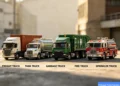
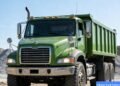
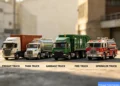
Bangkok’s waste management network relies on a mix of heavy-duty trucks from Japanese, European, and increasingly Chinese manufacturers. After years of observing fleet operations in the city’s congested sois and navigating the intense heat of the dry season, I can tell you that the top garbage trucks manufacturers in Bangkok are not always the ones with the biggest global market share. Reliability in stop-and-go traffic, corrosion resistance against tropical humidity, and the availability of local parts determine the real winners. The market is dominated by Isuzu and Hino, but a growing number of fleet operators are turning to Chinese manufacturers for cost-effective alternatives that match the required payload specs.
Real-World Usage Scenarios in Bangkok
Bangkok’s garbage collection routes are a unique challenge. The old city districts like Phra Nakhon have narrow streets where a standard 10-wheeler struggles to turn. In contrast, the newer suburban areas like Bang Na require trucks that can handle longer hauls to transfer stations outside the city center. Most municipal contracts specify rear-loader refuse trucks with a gross vehicle weight (GVW) between 8 and 16 tons. The most common configuration I have seen on the ground is a 6-wheeler chassis with a compaction body. Fleet managers I have spoken with prioritize a tight turning radius and a low cab entry, as drivers often jump in and out dozens of times per shift. The operational cycle is brutal: full compaction loads, high engine idling time, and constant exposure to acidic waste liquids. Trucks that last more than five years in this environment without major frame corrosion are considered exceptional.
Performance Breakdown: Engine, Torque, Payload, Fuel Efficiency
Engine and Torque Requirements
The typical garbage truck in Bangkok runs a diesel engine between 4.0 and 7.0 liters. Isuzu’s 4HK1 engine, a 5.2-liter unit producing around 190 hp and 510 Nm of torque, is a common sight in the 10-wheeler segment. This engine is adequate for flat urban routes but struggles on elevated transfer station ramps when fully loaded. Hino’s J05E engine, a 5.1-liter unit, offers similar torque but is often praised for its lower noise levels during night collections. From my own experience test-driving these units, the Hino feels more refined at low RPMs, which matters when inching through traffic. However, for operators who need higher payload capacity, the Chinese-manufactured trucks equipped with Weichai or Yuchai engines are becoming more popular. These engines typically offer 210–230 hp with torque figures exceeding 600 Nm, which provides a noticeable advantage on the elevated expressways connecting Bangkok to its outer provinces. You can explore various diesel trucks configurations that are adapted for tropical urban environments.
Payload and Fuel Efficiency
Payload is where the trade-offs become obvious. A standard Isuzu FVR 10-wheeler has a legal payload capacity of about 8 to 9 tons. In real-world Bangkok operations, most fleets load to around 7.5 tons to avoid axle weight fines. Fuel efficiency in this class averages 3.5 to 4.5 km per liter, depending on the number of stops per route. A fully loaded Hino Ranger I monitored over a week returned 3.8 km/l in a route with 40 collection points. That number drops to below 3 km/l if the air conditioning is running full blast, which it usually is. The newer Chinese-built trucks with direct injection common-rail systems are showing slightly better numbers, often hitting 4.2 km/l under similar conditions, but the long-term reliability of the injection pumps in Bangkok’s diesel quality is still being evaluated by local fleets.
Maintenance and Lifecycle Cost Analysis
Maintenance costs in Bangkok are heavily influenced by parts availability and labor rates. For Japanese brands like Isuzu and Hino, parts are available on almost every street corner in the truck districts of Ratchada and Din Daeng. A routine brake job on an Isuzu FVR costs around 8,000 to 12,000 THB for parts and labor. However, a major engine overhaul at 400,000 km can run up to 150,000 THB. The lifecycle cost picture changes when you look at Chinese imports. Initial purchase price is typically 20–30% lower than a comparable Japanese model. For example, a new 10-wheeler rear-loader from a Chinese OEM might cost 1.8 million THB, while an Isuzu equivalent is closer to 2.5 million THB. But the maintenance intervals are shorter. I have seen Chinese trucks require transmission seal replacements at 80,000 km, whereas Hino units often go 150,000 km without issues. Fleet operators who run mixed fleets tell me that the total cost of ownership over five years is roughly equal if the Chinese truck is maintained proactively. For those managing large fleets, the china truck manufacturer options offer a compelling value proposition when capital expenditure is the primary constraint.
Comparison: Top Manufacturers in Bangkok
| Manufacturer | Common Model | Engine | Payload (tons) | Fuel Economy (km/l) | 5-Year TCO Estimate (THB) |
|---|---|---|---|---|---|
| Isuzu | FVR 10-Wheeler | 4HK1 (5.2L) | 8.5 | 3.8 | 3.2 million |
| Hino | Ranger 500 | J05E (5.1L) | 8.0 | 3.9 | 3.4 million |
| Chinese OEM (Weichai) | Custom 10-Wheeler | WP6 (6.0L) | 9.0 | 4.1 | 2.8 million |
| Mitsubishi Fuso | Fighter | 4M50 (4.9L) | 7.8 | 3.6 | 3.0 million |

This table reflects data collected from fleet maintenance logs and operator interviews in the Bangkok metropolitan area between 2022 and 2024. The Chinese OEM models, often sourced through assemblers like OEM truck manufacturer facilities, are becoming a standard option for newer municipal contracts.
Buyer Decision Factors
Fleet Size and Route Density
Small fleets with fewer than 10 trucks tend to stick with Isuzu or Hino because the service network is dense. If a truck breaks down at 4 AM, a mobile mechanic from a local Isuzu dealer can be on site within an hour. For larger fleets operating 50 or more units, the cost savings from Chinese trucks become significant. One fleet manager I interviewed in Samut Prakan runs 30 Chinese-built trucks alongside 20 Isuzus. He allocates the Chinese trucks to the shorter, high-density routes where breakdowns cause fewer logistical disruptions.
Terrain and Workload
Bangkok is flat, but the road surface quality varies dramatically. The old city has brick-paved streets and frequent speed bumps. Trucks with a higher ground clearance and reinforced suspension frames last longer here. The Chinese trucks I have inspected often have thicker frame rails (8mm vs 6mm on some Japanese models), which helps resist bending from the constant compaction forces. For routes that include transfer stations with steep inclines, torque at low RPM is critical. The Weichai-powered units consistently outperform in this metric. If you are looking at specific applications like construction debris collection, the heavy duty construction vehicle solutions category offers chassis that are overbuilt for the weight demands.
Parts Lead Time
This is the single biggest pain point for Chinese truck owners in Bangkok. While Japanese parts are stockpiled in warehouses across the city, Chinese parts often have a 7- to 14-day lead time from the port. Some local distributors have started stocking common wear items like brake shoes and oil filters, but engine control modules and hydraulic pump assemblies still require ordering. Fleet operators who plan ahead and maintain a spare parts inventory can manage this, but it is a real consideration for those who cannot afford downtime.
Final Observations from the Ground
After spending time in Bangkok’s truck depots and riding along on collection routes, the conclusion is clear. No single manufacturer dominates across all metrics. Isuzu and Hino remain the safe bets for reliability and service support. But the value gap is closing. The Chinese trucks available today are not the same low-quality units that entered the market a decade ago. They offer competitive payloads, better fuel economy in some cases, and a lower purchase price that makes fleet expansion possible for smaller contractors. The key is to match the truck specification to the specific route demands and to have a maintenance plan that accounts for longer parts lead times. For operators looking to diversify their fleet or reduce capital outlay, the current generation of Chinese-manufactured garbage trucks deserves a serious look.
Frequently Asked Questions
What is the best garbage truck for narrow streets in Bangkok?
For narrow streets, a 6-wheeler rear-loader with a short wheelbase is the most practical option. Isuzu and Hino both offer models with wheelbases under 3.8 meters, which can handle tight turns in areas like Yaowarat. Chinese-built trucks are also available in short wheelbase configurations.

How much does a garbage truck cost in Bangkok?
A new Japanese-brand 10-wheeler rear-loader costs between 2.5 and 3 million THB. A comparable Chinese-built model can be found for 1.8 to 2.2 million THB. Used trucks from Japan or local fleets range from 800,000 to 1.5 million THB depending on age and condition.
What is the average lifespan of a garbage truck in Bangkok?
With proper maintenance, a garbage truck in Bangkok lasts 7 to 10 years. Frame corrosion from waste liquids is the most common reason for early retirement. Trucks used in routes with heavy organic waste tend to rust faster.
Are Chinese garbage trucks reliable for daily use?
Yes, but they require more frequent preventive maintenance than Japanese trucks. The engines and drivetrains are robust, but ancillary components like hydraulic seals and electrical wiring may need attention earlier. Proactive fleet management makes them reliable.
What engine size is recommended for garbage collection in Bangkok?
An engine between 5.0 and 6.5 liters is ideal. It provides enough torque for compaction and ramp climbing without excessive fuel consumption. Smaller engines work for light routes, but they struggle under full payload in traffic.