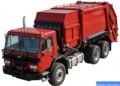
If you’re sourcing garbage trucks for operations in Kuala Lumpur, the market is dominated by a mix of international chassis manufacturers and local bodybuilders. The top manufacturers you will encounter include Isuzu, Hino, Fuso, and Scania for chassis, with local workshops like CKS and Tiong Nam handling compaction bodies. However, for fleet managers looking at total cost of ownership and reliability, the conversation increasingly includes Chinese manufacturers who offer competitive specs and robust aftermarket support. Based on long-term fleet observation, the choice often comes down to payload requirements, route density, and maintenance network access. For a deep dive into specific models, the Nhà máy sản xuất xe tải Trung Quốc provides a comprehensive catalog of sanitation vehicles.
Real-World Usage Scenarios in KL’s Urban Environment
Kuala Lumpur presents a unique set of challenges for garbage truck operations. The city’s dense urban core with narrow streets, combined with high humidity and frequent rainfall, demands a vehicle that is both maneuverable and corrosion-resistant. Most operators run rear-loader refuse trucks for residential collection and roll-off trucks for commercial dumpster service. From real-world trucking operations, the most common issue is not engine power but chassis durability under constant stop-and-go cycles. The weight distribution on a typical 4×2 chassis is critical when the compaction body is full. For fleet managers evaluating options, understanding the các giải pháp quản lý chất thải available for high-density urban routes is a practical first step.
Route Density and Vehicle Cycle Times
In zones like Bukit Bintang or Chow Kit, a garbage truck might make over 150 stops per shift. This puts immense strain on the hydraulic system and the PTO (power take-off). A truck that handles well on the highway might fail in these conditions. Operators I have spoken with prefer automatic transmissions for these routes to reduce driver fatigue and clutch wear. The cycle time for a full load in these areas is typically 4 to 5 hours, after which the truck heads to a transfer station in Taman Beringin or Bukit Tagar. Fuel consumption in this cycle can be 30% higher than a highway route, making engine efficiency a primary concern.
Terrain Adaptability and Gradient Performance
KL is not flat. Routes in areas like Ampang or the hills around Ulu Klang require significant torque at low RPM. A garbage truck fully loaded must handle gradients of 10% or more without overheating the brakes or transmission. This is where the choice between a turbo-diesel engine and a naturally aspirated one becomes critical. Many fleet owners have shifted to 6-cylinder engines for these routes, despite the higher initial cost, because they offer better brake retardation and hill-hold capabilities. For extreme terrain, the heavy-duty dump truck chassis are often adapted for refuse bodies due to their robust frame rails.
Phân tích hiệu suất: Động cơ, mô-men xoắn và tải trọng
Performance in a garbage truck is not about speed; it is about sustained power delivery under load. The most common engine configurations in KL are the 4HK1 from Isuzu and the J05E from Hino, both in the 150 to 200 horsepower range. Torque is the more critical figure, typically needed between 400 Nm and 600 Nm at low RPM. For a standard 10-tonne payload truck, this provides adequate power for urban routes. However, for larger 16-tonne or 24-tonne trucks used in industrial zones like Shah Alam, you need a 6-cylinder engine producing over 700 Nm. Fuel efficiency varies widely; a modern common-rail diesel engine can achieve 3.5 to 4.5 km per liter in mixed urban cycles, according to data from the International Energy Agency (IEA) on heavy-duty vehicle fuel economy.
Hydraulic System and Compaction Efficiency
The heart of a garbage truck is its hydraulic system. The pump flow rate, measured in liters per minute (L/min), determines how fast the compactor cycles. A standard system operates at 60 to 80 L/min at 150 bar. Slower cycles increase route time. Many Chinese manufacturers like those listed on the Nhà sản xuất xe tải của Trung Quốc page now offer variable displacement pumps that reduce engine load during idle, saving fuel. The compaction ratio is also vital; a 20 cubic meter body should compact waste to a density of 0.6 to 0.8 tonnes per cubic meter. If the ratio is lower, you are hauling air, which is inefficient.
Transmission and Axle Ratios
Most garbage trucks in KL use a 6-speed manual or a 6-speed automatic Allison transmission. The axle ratio is usually around 5.29:1 or 5.57:1 for urban use. This provides the necessary torque multiplication for starting on a hill with a full load. A lower ratio (like 4.3:1) is better for highway transfer but will burn out the clutch in city traffic. From a maintenance perspective, the differential on a garbage truck takes a beating from constant reversing and turning. Locking differentials are not common but are highly recommended for wet conditions. Understanding the diesel truck specifications is essential before making a purchase.
Phân tích chi phí bảo trì và vòng đời
The total cost of ownership (TCO) for a garbage truck over a 10-year lifecycle is dominated by maintenance, not the purchase price. Data from the U.S. Department of Transportation indicates that maintenance can account for 40% of lifecycle costs for refuse vehicles. In KL, the cost of hydraulic hose replacements, pump rebuilds, and body corrosion repairs are the biggest line items. A typical maintenance schedule requires a hydraulic oil change every 500 hours and a full chassis grease every 250 hours. Corrosion is a major issue due to the acidic nature of waste liquids; a body that is not properly sealed can rust through in 5 years.

Common Failure Points and Repair Costs
Based on repair shop records, the top three failure points are the tailgate seal, the packing blade guide rails, and the PTO gearbox. Replacing a tailgate seal costs around RM 800 to RM 1,200. A full hydraulic pump rebuild is RM 3,000 to RM 5,000. The body itself, if galvanized or made of high-tensile steel, will last longer but costs 20% more upfront. Brake wear is also accelerated; a garbage truck might need brake relining every 18 months, compared to 3 years for a long-haul truck. For cost-conscious operators, exploring the price of a new dump truck can provide a baseline for chassis costs.
Lifecycle Cost Comparison Table
| Component | Replacement Interval | Estimated Cost (RM) |
|---|---|---|
| Hydraulic Pump Rebuild | Every 3 years | 3,000 – 5,000 |
| Compactor Blade Replacement | Every 5 years | 8,000 – 12,000 |
| Tailgate Seal | Every 2 years | 800 – 1,200 |
| Full Brake Overhaul | Every 18 months | 4,500 – 6,500 |
| Chassis Corrosion Repair | Every 6 years | 10,000 – 20,000 |

Comparison: Local Bodybuilders vs. Integrated Chinese Manufacturers
There is a significant debate in the KL market between buying a chassis from a Japanese OEM and having a local workshop build the body versus buying a fully integrated truck from a Chinese manufacturer. The integrated approach, often seen with brands like Dongfeng or Sinotruk, offers a single warranty point and a factory-tested compaction system. Local builds offer flexibility in body dimensions and easier access to parts for the chassis. However, the quality control of the hydraulic integration can vary. For a direct comparison, looking at the Nhà sản xuất xe tải OEM specifications can help clarify the differences in engineering standards.
Chassis and Body Integration
An integrated truck has the body engineered for the chassis from the ground up. This usually results in better weight distribution and a lower center of gravity. A local build, while often cheaper by 10-15%, can suffer from misaligned mounting points or improper hydraulic line routing. I have seen cases where the subframe was not properly stress-relieved, leading to frame cracks within two years. The warranty on an integrated unit typically covers the entire vehicle for 2 years or 100,000 km, whereas a local build might only cover the chassis for 1 year and the body for 6 months.
Parts Availability and Service Network
For Japanese chassis like Isuzu and Hino, parts are available at almost any spare parts shop in KL. For Chinese trucks, the parts network is growing but is still concentrated in areas like Jalan Ipoh and Sungai Besi. However, the cost of Chinese OEM parts is often 30-50% less than Japanese equivalents. For a fleet of 20 trucks, this difference adds up quickly. The service interval for a Chinese truck is typically every 10,000 km, similar to Japanese brands, but the oil filter and fuel filter costs are lower. For those considering a fleet expansion, reviewing the nhà sản xuất xe tải hạng nặng options can provide a broader perspective on available service contracts.
Các yếu tố ảnh hưởng đến quyết định của người mua: Quy mô đội xe, địa hình và khối lượng công việc
The right garbage truck for a fleet depends heavily on three factors: the size of the fleet, the terrain of the routes, and the daily workload. A small operator running 2 trucks in a flat residential area has very different needs than a large contractor servicing industrial parks. The upfront capital cost is often the deciding factor for small fleets, making Chinese trucks attractive. For large fleets, the standardization of parts and the reliability of a proven chassis like the Hino 500 series often win out, despite the higher initial cost. The key is to match the truck’s specifications to the specific route profile.
Quy mô đội tàu và năng lực bảo dưỡng
If you have an in-house workshop with skilled mechanics, you can afford to buy less expensive trucks and handle the repairs. For a fleet with 5 or fewer trucks, relying on the dealer’s service network is safer. In that case, a brand with a strong local dealer presence, like Isuzu, is a lower risk. For fleets over 10 trucks, the cost savings from Chinese trucks become significant, and you can stock your own spare parts inventory. The decision also affects driver training; a fleet with multiple brands needs a broader training program.
Terrain and Payload Requirements
For hilly terrain, prioritize torque and a good braking system. A truck with an exhaust brake or a retarder is worth the investment. For flat urban routes, a lighter chassis with a higher payload capacity is more efficient. The legal payload limit for a 2-axle truck in Malaysia is around 10 tonnes. A 3-axle truck can carry up to 16 tonnes. Overloading is common but leads to accelerated wear and safety issues. For specialized applications like industrial waste, a rear loader refuse truck with a higher compaction force is necessary.
Câu hỏi thường gặp
What is the average lifespan of a garbage truck in Kuala Lumpur?
With proper maintenance, a garbage truck chassis can last 10 to 12 years. The body, however, often needs replacement or major repair after 6 to 8 years due to corrosion from waste liquids. The hydraulic system typically requires a major overhaul at the 5-year mark.
Which engine is more reliable for garbage trucks, Isuzu or Hino?
Both are highly reliable. Isuzu’s 4HK1 engine is known for its fuel efficiency, while Hino’s J05E is often praised for its torque at low RPM. Based on fleet data, the Isuzu engine tends to have slightly lower maintenance costs for the first 500,000 km, but the Hino engine is more durable in heavy stop-and-go traffic.
How much does a new garbage truck cost in KL?
A new Japanese chassis with a local body costs between RM 250,000 and RM 400,000. A fully integrated Chinese truck can range from RM 180,000 to RM 300,000. Used trucks are available for RM 80,000 to RM 150,000, but they often require immediate maintenance on the body and hydraulics.
What is the best transmission for a garbage truck?
An automatic transmission, specifically an Allison 3000 or 4000 series, is the best choice for urban routes. It reduces driver fatigue and clutch replacement costs. Manual transmissions are cheaper to repair but are harder on the drivetrain in heavy traffic.
How can I reduce fuel consumption in my garbage truck fleet?
Route optimization is the biggest factor. Reducing idle time and minimizing travel distance between stops can save 15-20% on fuel. Also, ensure the hydraulic system is not leaking and that the compactor is not running longer than necessary. Using a fuel management system to track driver behavior is also effective.