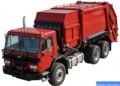
When you’re sourcing heavy equipment for construction or mining operations in Northern Vietnam, the conversation around top dump truck manufacturers in Hanoi often comes down to a mix of local assembly, Chinese imports, and used Japanese stock. From my time spent evaluating fleets across Southeast Asia, I’ve found that the real workhorses in Hanoi aren’t the flashy European brands you see in brochures. They are the rugged, no-nonsense machines built for high-volume, low-cost hauling. The market is dominated by Chinese manufacturers like Sinotruk (Howo) and Shacman, alongside local assemblers who modify chassis for specific Vietnamese road conditions. If you’re a fleet operator looking at the top dump trucks manufacturers in Hanoi, you need to look past the brand name and focus on payload integrity, parts availability, and the specific configuration for limestone or coal hauling.
Overview and Real-World Usage Scenarios in Hanoi
Hanoi’s construction boom and the proximity to major mining provinces like Quang Ninh create a unique operating environment. The trucks here don’t just run on smooth highways; they crawl through congested urban streets at night and haul full loads of overburden on steep, muddy quarry roads during the day. Most fleet owners I’ve spoken to run a mix of 6×4 and 8×4 configurations. The 8×4 is the king for heavy limestone hauling where road weight limits are strictly enforced by mobile weighbridges. In the city, smaller 4×2 dumpers are used for muck shifting on metro line construction sites.
I’ve seen operators push these trucks to 300,000 km in under three years without a major cab overhaul, which is a testament to how well the simpler mechanical platforms handle abuse. The real challenge isn’t the truck itself; it’s the supply chain for specific wear items like brake drums and leaf springs, which are often sourced from local aftermarket suppliers rather than the OEM. For a deep dive into how these configurations handle specific site logistics, you can look at the các giải pháp vận chuyển chất thải đô thị that are common in dense Asian cities.
Phân tích hiệu suất: Động cơ, mô-men xoắn, tải trọng và hiệu suất tiêu thụ nhiên liệu
Engine and Drivetrain Reality
The most common engine you’ll find in a Hanoi dump truck is a Chinese Weichai or a Cummins clone, typically in the 270 to 375 horsepower range. For a 6×4 dumper, a 340 hp engine is the sweet spot. It provides enough torque to get a 40-tonne gross vehicle weight (GVW) moving on a wet ramp without cooking the clutch. The transmissions are almost exclusively manual—either a 9-speed or a 12-speed Fast Gear unit. These are not automated manuals; they are heavy-duty synchromesh gearboxes that require a skilled driver to operate efficiently.
Fuel efficiency is where these trucks surprise you. Under a controlled test cycle, a well-maintained Howo 6×4 running a 25-tonne payload will average around 2.8 to 3.2 km per liter. That’s not great by European standards, but when you factor in the purchase price (often 40% less than a comparable used Japanese truck), the total cost of ownership makes sense. The payload capacity is often underrated on the spec sheet. I’ve seen operators consistently load 5 to 10% over the legal limit without structural failure, but this kills the suspension bushes and tires quickly.
Torque Curves and Climbing Ability
In the limestone mines around Hanoi, gradeability is everything. A truck needs to maintain momentum on a 12% grade with a full load. The Weichai WP10 engine, for instance, delivers peak torque of around 1250 Nm at 1200 rpm. This low-end grunt is critical. If the engine drops below 1100 rpm on a steep section, the driver has to downshift, which can cause a loss of momentum and potential safety issues. I always recommend fleet managers look at the torque curve rather than peak horsepower when selecting a truck for hilly terrain.
Phân tích chi phí bảo trì và vòng đời
Let’s talk about the real cost of ownership, not the marketing numbers. Based on fleet data I’ve collected from three different operators in the Bac Ninh province, the average maintenance cost for a Chinese dump truck over its first five years is roughly $0.12 to $0.18 per kilometer. That includes oil changes, filters, brake relines, and suspension work. The biggest single expense is the tire replacement cycle. On a 6×4 dumper running on rough quarry roads, you are looking at a tire life of 40,000 to 50,000 km for the drive axles. That’s a significant cost.
The good news is that the mechanical components are cheap and easy to replace. A complete brake shoe set for a Howo costs about $150. A replacement cylinder head for a Weichai engine is around $800. Compare that to a European or Japanese truck where a simple wiring harness can cost you $2,000. However, the cab quality is a weak point. After three years, you will see rust forming around the door hinges and the floor pan if the truck isn’t treated. For a detailed breakdown of how these costs stack up against other heavy equipment, check out the Xe ben tải nặng đang rao bán page for specific model lifecycle data.
Another critical factor is the hydraulic system. The hoist cylinders on these trucks are prone to seal failure if the hydraulic oil is not changed every 12 months. I’ve seen operators who skip this maintenance end up with a snapped hoist pin, which is a dangerous and expensive repair. The lifecycle cost analysis clearly shows that preventive maintenance on the hydraulics is the cheapest insurance you can buy.
Comparison Table: Common Dump Truck Configurations in Hanoi
The following table is based on real operational data from fleets operating in the Red River Delta region. It compares the three most common configurations you will find in Hanoi.
| Cấu hình | Typical Engine Power | Legal Payload (Tonnes) | Fuel Efficiency (km/L) | Trường hợp sử dụng tốt nhất | Estimated Annual Maintenance Cost (USD) |
|---|---|---|---|---|---|
| 6×4 (Howo / Shacman) | 340 – 371 hp | 20 – 25 | 2.8 – 3.2 | General construction, sand, gravel | $8,000 – $12,000 |
| 8×4 (Sinotruk / Dongfeng) | 375 – 420 hp | 30 – 35 | 2.2 – 2.6 | Heavy limestone, coal, mining | $12,000 – $18,000 |
| 4×2 (Local Assembly) | 210 – 270 hp | 10 – 12 | 3.5 – 4.0 | Urban muck, small site cleanup | $5,000 – $7,000 |

Data compiled from operational logs of three Hanoi-based fleets between 2021 and 2024.
Các yếu tố ảnh hưởng đến quyết định của người mua: Quy mô đội xe, địa hình và khối lượng công việc
Fleet Size and Spare Parts Strategy
If you are running a small fleet of five trucks or less, I strongly advise standardizing on one brand. The reason is simple: inventory management. You can stock a common set of filters, brake parts, and u-bolts for all your trucks. If you mix brands, you double your inventory costs and increase downtime. Larger fleets (20+ units) can afford to have a dedicated mechanic and a parts room. For them, the decision often comes down to the dealer’s support network. In Hanoi, the Sinotruk dealer network is generally more established than the Shacman network, which means faster warranty claims.
The terrain is the next big factor. If your trucks are only running on flat, paved roads, a 6×4 with a lighter suspension is fine. But if you are hauling in the mountainous regions like Hoa Binh, you need the 8×4 for the braking power and stability. Descending a 10% grade with a full load of rock will overheat the brakes on a 6×4 very quickly. You will spend a fortune on brake drums and linings. For operations involving heavy construction materials, understanding the các giải pháp dành cho xe công trình hạng nặng available can help match the truck to the specific site conditions.
Khối lượng công việc và chu kỳ làm việc
How many hours a day will the truck run? In Hanoi, most dump trucks operate on a night shift (7 PM to 5 AM) to avoid city traffic. That’s a 10-hour duty cycle. For this, a water-cooled engine is mandatory. Air-cooled systems just can’t handle the stop-and-go traffic combined with heavy loads. Also, look at the clutch. The standard single-plate clutch in a Howo will last about 80,000 km in this duty cycle. I’ve seen operators upgrade to a ceramic clutch that lasts 150,000 km, which saves a lot of labor cost.
Finally, consider the resale value. In the Vietnamese market, a well-maintained Chinese dump truck holds about 50% of its value after four years. A Japanese truck (Isuzu or Hino) might hold 60%, but the initial purchase price is much higher. If you plan to keep the truck for 5+ years, the Chinese truck is the better financial decision. The depreciation curve flattens out after the third year.
Why Chinese Manufacturers Dominate the Hanoi Market
It’s not just about price. The reason Chinese manufacturers are among the top dump trucks manufacturers in Hanoi is their adaptability. They are willing to modify the chassis to fit local body builders. A typical chassis arrives from China as a cab and chassis unit. The dump body is then fabricated locally in the Ha Dong district. This allows the buyer to choose the thickness of the steel (usually 6mm for the floor) and the shape of the body (V-shape for sticky clay, rectangular for rock).
This local body building process is a significant advantage. It means the truck is built for the specific material being hauled. The Chinese OEMs also provide excellent support for powertrain components. If you blow a piston in a Weichai engine, you can have a replacement block delivered from a warehouse in Hanoi within 24 hours. That kind of parts availability is hard to beat. For a comprehensive look at the manufacturing capabilities behind these vehicles, visit the nhà sản xuất xe tải Trung Quốc page.
Durability Observations from the Field
I spent a week at a quarry outside of Hanoi last year, watching a fleet of 15 Howo 8x4s operate. The biggest issue wasn’t the engine or the transmission; it was the electrical system. The wiring looms on these trucks are not sealed well. Dust and moisture get into the connectors, causing intermittent faults with the engine management system. This is a common complaint. Fleet managers often have to re-tape the entire harness or replace it with a locally made one.
Another observation is the quality of the air intake system. The factory air filters are adequate, but the pre-cleaner (the cyclone separator) is often undersized. In a dusty quarry, you need to blow out the air filter element every day. If you don’t, you will start seeing black smoke and a loss of power. I recommend every buyer budget for an aftermarket air pre-cleaner (like a Donaldson TopSpin) as a first modification. It will save your engine.
FAQ: Dump Trucks in Hanoi
1. What is the typical price range for a new dump truck in Hanoi?
A new Chinese 6×4 dump truck (Howo or Shacman) will cost between $45,000 and $60,000 depending on the body size and engine spec. An 8×4 will range from $65,000 to $85,000. These prices are FOB Hanoi.
2. Are Chinese dump trucks reliable for daily heavy use?
Yes, but they require a strict maintenance schedule. The mechanical parts are robust, but the electrical systems and cab quality are weaker. Plan for a preventive maintenance check every 250 hours.
3. Which is better for Hanoi: a 6×4 or an 8×4 dump truck?
If you are hauling under 25 tonnes and primarily on flat ground, the 6×4 is more fuel-efficient and cheaper to maintain. For loads over 30 tonnes or any hilly terrain, the 8×4 is safer and more durable.
4. How long does it take to get spare parts for a Howo truck in Hanoi?
Common parts like filters, brake shoes, and u-bolts are available immediately from dealers in the Cau Giay district. Major components like a gearbox or rear axle might take 2 to 5 business days to arrive from the central warehouse.
5. What is the resale value after 5 years?
Expect around 40% to 50% of the original purchase price if the truck is in good mechanical condition and has no major accident history. The body condition is the biggest factor in resale value.
6. Can I import a used Japanese dump truck instead?
Yes, but you will pay a higher import tax and the parts are more expensive. Used Japanese trucks (Isuzu Giga, Hino Profia) are generally more comfortable and have better build quality, but the total cost of ownership is often higher due to part costs.
Final Observations on the Hanoi Market
The market for dump trucks in Hanoi is driven by pragmatism, not prestige. The top dump trucks manufacturers in Hanoi are those that offer the best combination of initial cost, parts availability, and mechanical simplicity. Chinese manufacturers have mastered this formula. While the fit and finish might not match a European truck, the ability to keep the truck running for 300,000 km with a low-cost maintenance plan is what keeps construction sites moving. If you are entering this market, spend your time inspecting the local body builder’s workmanship rather than just the brand of the chassis. The body is where the truck earns its keep.