Sourcing truck spare parts from China comes down to three things: knowing exactly which part numbers and specifications you need, verifying that the supplier actually stocks or manufactures those parts rather than just reselling them, and building a supply chain that keeps your fleet running instead of waiting on a container. Most buyers who get burned aren’t fooled by a bad price — they’re caught by vague specifications, no traceability, and no plan for the parts they’ll need six months after delivery.
This guide walks through how to source truck spare parts from China the way a fleet engineer or procurement manager would approach it: starting from the vehicle and its duty cycle, then working through part categories, supplier types, quality verification, documentation, shipping, and total cost. It’s written for importers, fleet operators, dealers, and project buyers who need parts availability to match the trucks they’re already running.
Start With the Truck, Not the Parts List
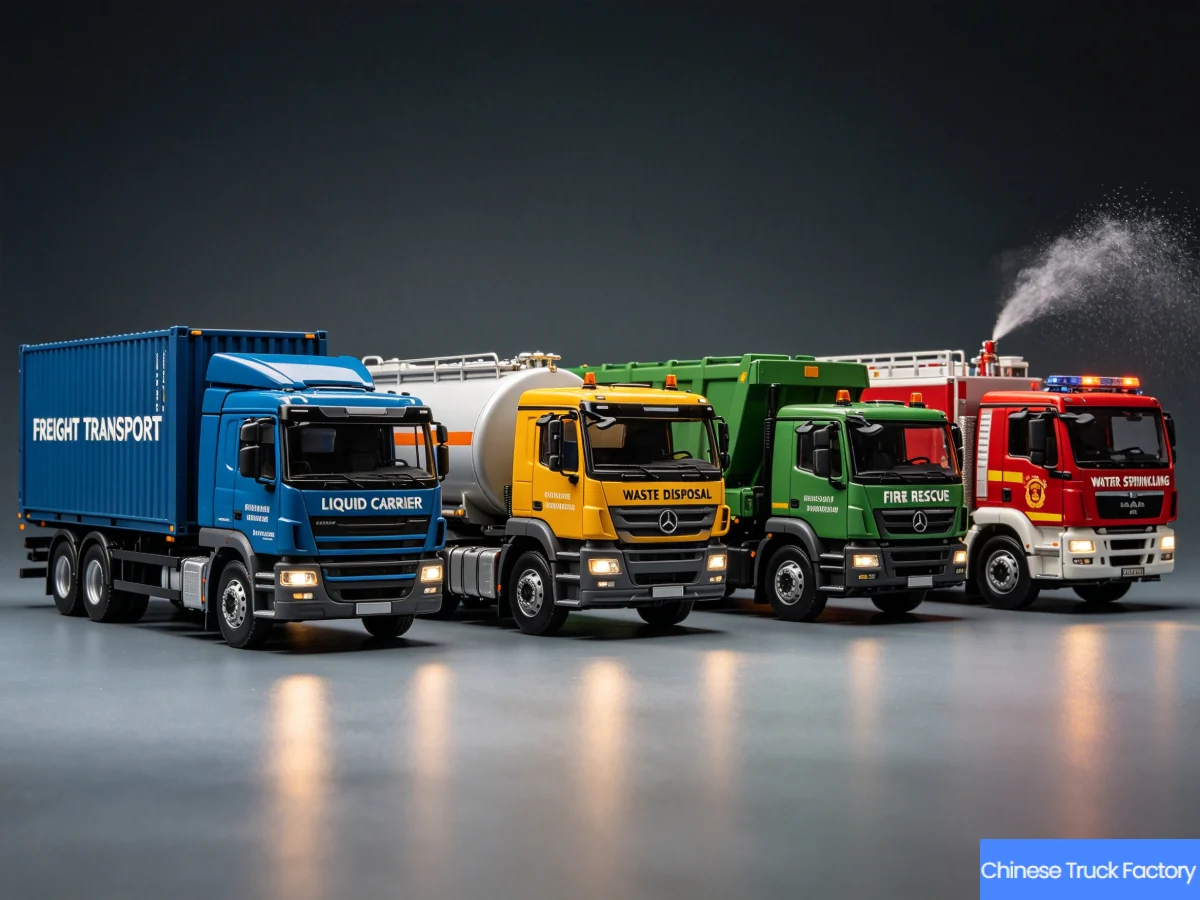
Before you request a single quotation, you need to know what you’re actually maintaining. Spare parts sourcing fails most often at this stage, because buyers treat “truck parts” as a generic category when it isn’t. A part that fits a HOWO 6×4 tractor pulling containers on paved highways is not the same part that fits a mining dump truck working in dust and extreme heat, even if both carry a similar brand name.
Start by mapping out your fleet by application:
- Vehicle type and configuration — tractor truck, dump truck, mixer, tanker, garbage compactor, crane truck, fire truck, or specialized unit
- Drive layout — 4×2, 6×4, 6×6, 8×4, or 8×8, since axle and driveline parts differ significantly between them
- Engine family and displacement — Weichai, Sinotruk, Cummins, or other, because filters, injectors, and gasket sets are engine-specific
- Mô hình truyền động — manual or AMT, and the specific gearbox series, since clutch and synchronizer parts are not interchangeable across models
- Axle type — single reduction or hub reduction, and the final drive ratio, because ring and pinion sets are matched to the axle
- Emission configuration — Euro II, Euro III, Euro V, or other, since SCR, DEF/AdBlue, and aftertreatment components only exist on certain builds
- Operating environment — ambient temperature, dust, humidity, road surface, and altitude all change which parts wear fastest
This matters because the parts that fail first are not random. A dump truck on a quarry haul road eats tires, brake linings, suspension bushings, and hydraulic components far faster than a long-haul tractor. A garbage compactor working stop-start urban routes wears out hydraulic hoses, PTO components, and compaction mechanism parts. A fleet running in high-dust conditions will go through air filters and radiator components at a different rate than one on paved highways.
If you’re still selecting vehicles, it’s worth matching the parts strategy to the application from the start — for example, buyers evaluating các giải pháp dành cho xe công trình hạng nặng should plan for a different consumable profile than those running các giải pháp vận tải đường dài.
Know Which Parts You’re Actually Buying
Truck spare parts fall into categories that behave very differently in terms of sourcing difficulty, counterfeit risk, and lead time. Treating them as one bucket is a mistake.
Fast-Moving Consumables
Filters (oil, fuel, air, hydraulic), belts, hoses, brake pads and linings, wiper blades, bulbs, and lubricants. These are high-volume, relatively low-value, and the easiest to source. The risk here isn’t availability — it’s counterfeit filters and substandard belts that fail early and cause downstream damage. Buy from suppliers who can provide the original manufacturer’s part number and, where relevant, the OEM packaging.
Wear Parts
Clutch discs and pressure plates, brake drums and discs, suspension bushings, leaf springs, wheel bearings, tie rod ends, and tires. These are application-sensitive. A brake lining that performs well on a highway tractor may fade quickly on a loaded dump truck descending a gradient. Specify by axle load and duty cycle, not just by part number.
Engine and Driveline Components
Injectors, fuel pumps, turbochargers, cylinder head gaskets, pistons, liners, and crankshaft components. These are high-value and high-counterfeit-risk. Buy only from suppliers who can trace the part to a specific manufacturer and provide test or inspection documentation where applicable.
Hydraulic and PTO Components
Hydraulic pumps, cylinders, control valves, hoses, and PTO units. These are critical for dump trucks, crane trucks, garbage compactors, and tanker trucks. Failure means the vehicle stops working entirely, so reliability matters more than price. Buyers running xe vệ sinh hoặc truck-mounted cranes should treat hydraulic spares as a separate, prioritized category.
Electrical and Electronic Parts
Sensors, ECUs, wiring harnesses, alternators, starters, and lighting. These are model- and emission-specific. A sensor that fits a Euro II engine will not fit a Euro V engine with SCR. Always confirm by VIN or chassis number.
Body and Superstructure Parts
Dump body panels, tailgates, hinges, compaction mechanism parts, tanker valves, fire pump components, and crane structural parts. These are often custom-fabricated rather than catalog items, so sourcing them requires working with a manufacturer who understands the superstructure, not just a generic parts dealer.
| Part Category | Sourcing Difficulty | Counterfeit Risk | Typical Lead Time Consideration | Key Verification Step |
|---|---|---|---|---|
| Filters and belts | Thấp | Medium–High | Short, can be stocked | Confirm OEM part number and packaging |
| Brake and suspension wear parts | Trung bình | Trung bình | Short–medium | Match to axle load and duty cycle |
| Engine and driveline components | Cao | Cao | Medium–long | Trace to manufacturer, request inspection documents |
| Hydraulic and PTO parts | Medium–High | Trung bình | Trung bình | Confirm pressure and flow ratings, not just fit |
| Electrical and sensors | Cao | Cao | Trung bình | Confirm by VIN or chassis number |
| Body and superstructure parts | Cao | Thấp | Long | Work with the original superstructure manufacturer |
Understand the Supplier Landscape in China
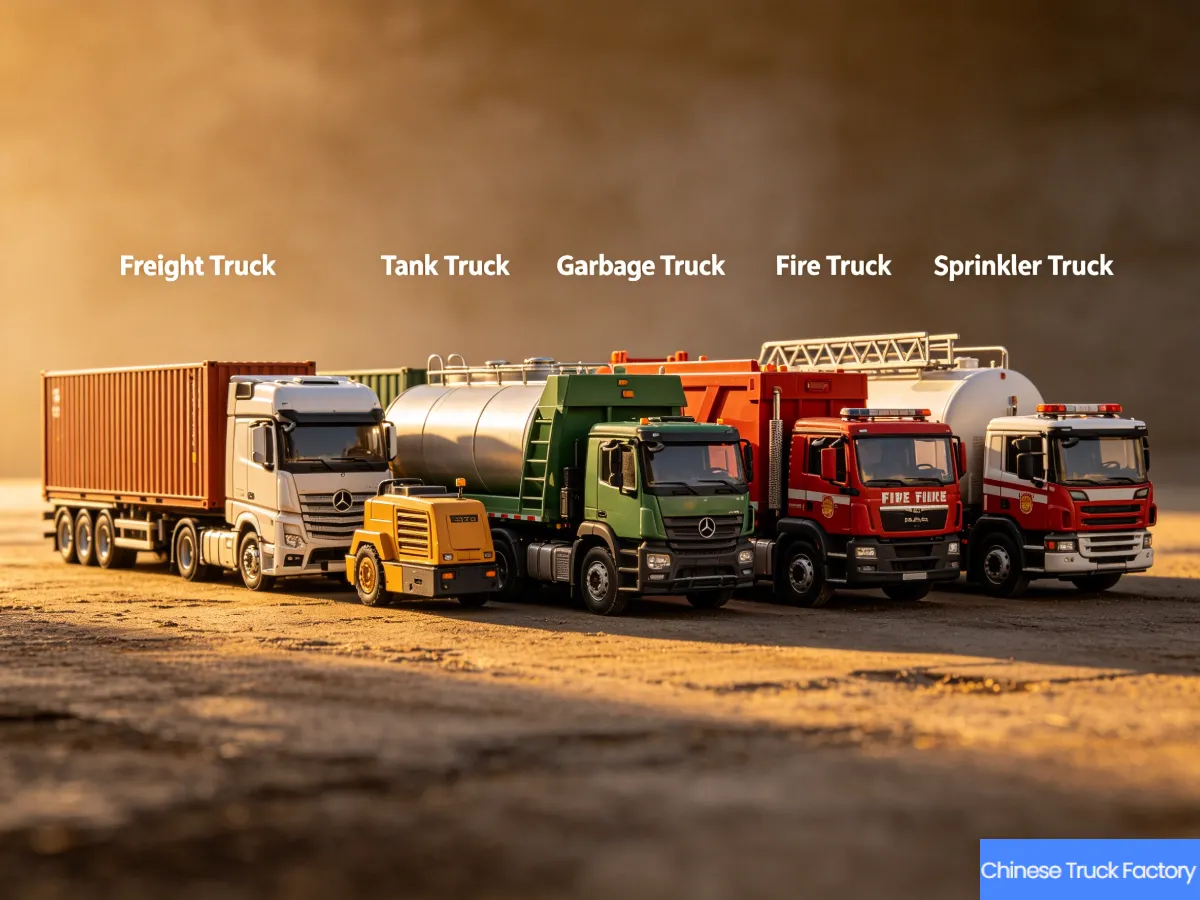
Not every supplier calling itself a “truck parts factory” actually manufactures anything. The supply chain has several distinct layers, and knowing which one you’re dealing with changes how you negotiate, verify, and price the order.
Original Equipment Manufacturers (OEMs)
These are the factories that build the trucks and the components. They supply parts under their own brand and often under contract to other brands. Buying directly from an OEM is possible for large volumes, but minimum order quantities and payment terms are usually strict, and they may not want to deal with small aftermarket orders.
Tier-1 and Tier-2 Component Manufacturers
These companies make specific components — engines, transmissions, axles, hydraulic pumps — that go into finished trucks. Many of them also sell aftermarket parts under their own brand. This is often the best balance of quality, traceability, and price for buyers who need reliable parts in moderate volumes.
Aftermarket Parts Manufacturers
These companies produce parts to fit popular truck models but are not the original manufacturer. Quality varies enormously. Some produce excellent parts that meet or exceed original specifications; others cut corners on material and heat treatment. The only way to tell the difference is through documentation, samples, and testing.
Trading Companies and Export Agents
These companies don’t manufacture. They buy from factories and resell, often bundling parts from multiple sources into a single shipment. They can be useful for buyers who need a mixed container of parts from different categories, but they add a margin and reduce your visibility into the actual source. If you use one, insist on knowing which factory each part came from.
Genuine vs. OEM vs. Aftermarket: What the Labels Actually Mean
| Label | What It Typically Means | Quality Expectation | Price Position |
|---|---|---|---|
| Genuine | Sold through the truck manufacturer’s official parts channel | Matches original build specification | Cao nhất |
| OEM | Made by the same factory that supplied the original component, but sold outside the official channel | Usually identical or near-identical to genuine | Mid–high |
| Aftermarket (quality) | Made by a third party to fit the application, with controlled material and process | Can be good if verified; requires due diligence | Mid |
| Aftermarket (budget) | Made to fit, with less control over material and process | Variable; higher failure risk | Thấp |
The label alone tells you very little. What matters is whether the supplier can document the material grade, the manufacturing process, and any testing that was done. A quality aftermarket part with documentation is often a better buy than a “genuine” part with no traceability.
How to Verify a Spare Parts Supplier Before You Send Money
Verification is where most sourcing problems are prevented. It’s not about distrust — it’s about confirming that the supplier can actually do what they claim. Here’s a practical sequence.
Step 1: Confirm the Business Entity
Ask for the company’s business license, export license, and tax registration. Check that the company name on the license matches the name on the quotation and the bank account. If a supplier asks you to pay a personal account or a third-party company, that’s a serious warning sign.
Step 2: Ask for the Factory, Not Just the Office
Request a video walkthrough of the production or warehouse facility, showing the specific parts you’re ordering. A supplier who only shows a showroom or an office is likely a trader. That’s not automatically bad, but it changes your risk profile and your price expectations.
Step 3: Request Part Number Traceability
For every part on your list, ask for the manufacturer’s part number, the applicable truck model and year range, and the country of origin. If a supplier can’t provide this, they either don’t know their own product or are hiding something.
Step 4: Order Samples Before Bulk
For any part category where quality is uncertain, order a small sample first. Inspect it against the original part. Check dimensions, material, finish, and markings. For critical components, consider third-party inspection before the main order ships.
Step 5: Check References Carefully
Ask for references from buyers in similar applications. A supplier who has supplied parts for mining fleets is a better fit for a mining operation than one who has only supplied highway tractor parts. Be cautious of references that can’t be verified independently.
Step 6: Confirm After-Sales Terms in Writing
What happens if a part fails within the warranty period? Who pays for return shipping? How is the replacement handled? Get this in writing before you order, not after something goes wrong. Buyers who follow a structured supplier verification process before sending a deposit avoid most of the common failure modes.
Specifications, Drawings, and Documentation
For standard parts, a part number is often enough. For anything custom — dump body panels, tanker valves, crane structural parts, compactor mechanism components — you need drawings and specifications, not just a description.
A proper specification package for a custom or semi-custom part should include:
- Dimensional drawings with tolerances
- Material grade and any heat treatment requirements
- Surface finish and coating specification
- Mounting interface details (bolt pattern, flange size, connection type)
- Operating pressure, temperature, and load ratings where applicable
- Any relevant standards the part must meet
- Marking and identification requirements
If the supplier can’t work from a drawing, they’re guessing. Guessing is how you end up with a part that almost fits.
Inspection and Test Certificates
For critical components — engine internals, hydraulic pumps, brake components, structural parts — ask for material certificates and test reports. These should reference the specific batch or heat number, not just a generic certificate for the product line. If a supplier can’t provide batch-level traceability, treat the part as unverified.
Pricing, Quotation, and Incoterms
Spare parts pricing from China varies widely for reasons that have nothing to do with quality. Understanding what drives the price helps you compare quotes fairly.
Factors that affect spare parts pricing:
- Part category and complexity
- Material grade and manufacturing process
- Whether the part is genuine, OEM, or aftermarket
- Order quantity and whether the part is a stock item or made to order
- Packaging requirements (bulk, retail, or export-crated)
- Incoterm — EXW, FOB, CFR, or CIF
- Destination market and shipping method
- Currency and payment terms
- Order date, since raw material and freight costs move
Every quotation should state the Incoterm clearly. An FOB price and a CIF price for the same part are not comparable, and neither is comparable to a landed cost estimate that includes duty, clearance, and inland transport. If a supplier quotes a price without stating the Incoterm, ask. Buyers who understand the difference between CIF and FOB pricing avoid comparing numbers that aren’t actually comparable.
Payment Terms and Risk
Standard practice for a first order is a deposit with the balance against a copy of the shipping documents, or a letter of credit for larger orders. Be cautious of suppliers who demand full payment upfront with no documentation, or who offer unusually generous terms that seem designed to get you to commit before you’ve verified anything.
Shipping Spare Parts from China
Spare parts are usually easier to ship than complete trucks, but the method still matters because it affects cost, transit time, and how much handling the parts go through.
| Phương thức vận chuyển | Phù hợp nhất cho | Advantages | Limitations |
|---|---|---|---|
| LCL (less than container load) | Small to medium orders, mixed parts | Lower cost for small volumes | More handling, longer transit, higher damage risk |
| FCL (full container load) | Large orders, full fleet parts packages | Lower cost per unit, less handling | Requires enough volume to fill a container |
| Air freight | Urgent critical parts | Fast | Expensive, limited by weight and size |
| Express courier | Small urgent items, samples | Fast, door-to-door | Very expensive for anything bulky |
For most fleet buyers, the practical approach is to consolidate parts into periodic shipments — quarterly or semi-annual — rather than ordering reactively. Reactive ordering means air freight, which destroys the cost advantage of sourcing from China. Planned ordering means sea freight and predictable lead times.
Packaging matters more than most buyers expect. Parts that arrive damaged or corroded are worse than no parts at all, because they consume budget and still leave the vehicle down. Specify export-grade packaging: moisture barriers, desiccants, crated or palletized loads, and clear labeling by part number and vehicle model.
Customs and Documentation
You’ll need a commercial invoice, packing list, bill of lading or airway bill, and any certificates required by the destination country. Some parts — particularly those with electronic components or specific materials — may face additional import requirements. Confirm with your customs broker before the shipment leaves, not after it arrives.
Building a Spare Parts Plan That Keeps Trucks Running
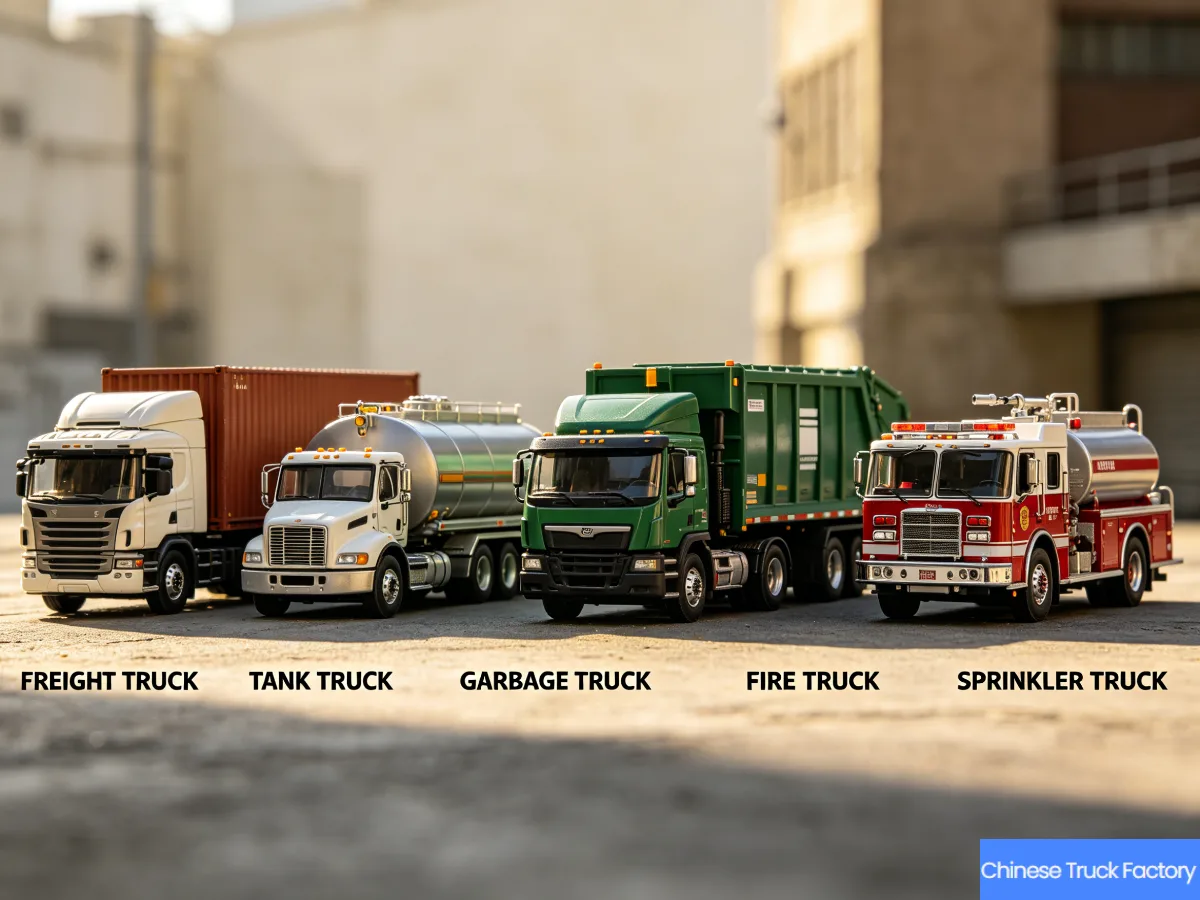
The difference between a fleet that runs and a fleet that sits isn’t the quality of the trucks — it’s the quality of the parts plan. Downtime costs more than parts, usually by a wide margin, so the goal isn’t to minimize parts spending. It’s to minimize total cost including downtime.
Critical Spares vs. Consumables
Split your parts list into two groups:
- Critical spares — parts whose failure stops the vehicle and which have long lead times. These should be stocked on-site, even if it ties up capital.
- Consumables — filters, belts, brake linings, and similar items that are replaced on a schedule. These can be ordered in bulk on a planned cycle.
For a mining fleet, critical spares might include hydraulic pumps, injectors, and final drive components. For a municipal sanitation fleet, they might include compaction mechanism parts and PTO components. The list depends entirely on the application.
Stock Levels and Reorder Points
Stock levels should be based on lead time, failure rate, and the cost of downtime — not on guesswork. If a part takes 45 days to arrive and fails once every six months across your fleet, you need at least one on the shelf. If it fails once a year and takes 30 days, you can probably risk ordering on demand, but only if the vehicle can be spared.
Standardization Across the Fleet
Fleets that run multiple truck models with different engines and drivelines carry more parts, more complexity, and more cost. Standardizing on fewer configurations reduces the parts inventory you need to carry and makes sourcing simpler. This is a fleet strategy decision, not a parts decision, but it directly affects your spare parts program.
Maintenance Practices That Reduce Parts Consumption
Good maintenance doesn’t just prevent breakdowns — it reduces the rate at which you consume parts. A fleet with disciplined maintenance will spend less on spares over the same mileage than one that runs to failure.
Kiểm tra hàng ngày
- Tình trạng và áp suất lốp
- Fluid leaks under the vehicle
- Hydraulic hose condition and connections
- Đèn và đèn báo hiệu
- Áp suất hệ thống khí nén và phản ứng của hệ thống phanh
Kiểm tra định kỳ
- Tình trạng dầu động cơ và bộ lọc
- Transmission and differential fluid levels
- Brake system wear and adjustment
- Suspension components and bushings
- Wheel bearing play and lubrication
- Hydraulic oil condition and filter restriction
- PTO engagement and operation
- Body hinges, latches, and structural welds
Specific service intervals must come from the actual vehicle, engine, and component manufacturer’s manuals. Don’t apply a generic interval to a specific truck — the correct interval depends on the engine, the duty cycle, and the operating environment.
Diagnosing a Common Fault: Slow Dump Body Raise
This is a good example of how to think about diagnosis rather than jumping to parts replacement. If a dump body raises slowly, check in this sequence:
- Mức dầu thủy lực và tình trạng dầu
- Oil temperature (cold oil flows slowly)
- Filter restriction
- Pump output pressure
- PTO engagement and drive
- Control valve operation
- Cylinder internal leakage
- Hose or fitting restriction
- Overload beyond rated capacity
Replacing the pump first would be a guess. Working through the sequence finds the actual cause, which is often something simpler and cheaper.
Total Cost of Spare Parts Sourcing
Purchase price is only one part of the cost. The full picture includes:
- Part purchase price
- Vận chuyển và bảo hiểm
- Import duty and clearance
- Inland transport to your location
- Warehousing and inventory carrying cost
- Inspection and quality control
- Warranty administration
- Downtime cost when a part isn’t available
- Cost of premature failure (replacement plus secondary damage)
A part that costs 20% more but lasts twice as long and is always available is usually cheaper than a part that saves money upfront but fails early and causes downtime. This is why fleet buyers who track cost per operating hour or cost per ton moved tend to buy differently than those who compare only invoice prices.
Tại sao nhà máy sản xuất xe tải của Trung Quốc lại phù hợp với mô hình này
When evaluating a spare parts source, a few criteria matter most: does the supplier actually understand the vehicles, can they trace parts to a real manufacturer, do they support both new truck orders and aftermarket parts, and can they handle the shipping and documentation that international buyers need?
Nhà máy sản xuất xe tải Trung Quốc works across heavy-duty trucks, construction vehicles, sanitation vehicles, specialized vehicles, and the spare parts that support them. For buyers sourcing parts alongside vehicle purchases, that combination matters — the same supplier who understands the truck configuration can advise on the parts that match it, rather than treating the parts order as a separate transaction.
The practical advantages for a parts buyer include:
- Parts sourcing tied to actual vehicle configurations, not generic catalogs
- Support for both complete vehicle orders and standalone parts packages
- Experience with export documentation and shipping across multiple markets
- Access to parts for construction, sanitation, long-haul, and specialized applications
For buyers who want to combine vehicle procurement and parts planning in one place, it’s worth reviewing the available xe chuyên dụng and parts support before finalizing a sourcing strategy.
Planning a spare parts program alongside a vehicle order?
Send your fleet list, part numbers, and destination details — we’ll help you build a parts package that matches your trucks and your operating conditions.
Những sai lầm thường gặp của người mua
Most sourcing failures trace back to a small number of recurring errors:
- Ordering by brand name only. “HOWO parts” is not a specification. Engine, transmission, axle, and emission configuration all matter.
- Comparing prices without comparing Incoterms. An FOB price and a CIF price are not the same number.
- Skipping samples on critical parts. A sample costs a fraction of a failed shipment.
- Ignoring packaging. Parts that arrive damaged cost more than parts that cost more.
- No critical spares on hand. Saving on inventory by risking downtime is usually a bad trade.
- Not confirming destination-country requirements. Some parts face import restrictions or certification requirements that vary by market.
- Buying reactively. Emergency air freight erases the cost advantage of sourcing from China.
Các câu hỏi thường gặp
How do I know which spare parts I need for my truck?
Start with the vehicle’s VIN or chassis number, engine model, transmission model, and axle configuration. These determine which parts fit. For wear parts, also consider the duty cycle — a part rated for highway use may not hold up in mining or construction. If you’re unsure, request a parts list from the original supplier or a manufacturer who builds the same configuration.
What’s the difference between genuine, OEM, and aftermarket parts?
Genuine parts come through the truck manufacturer’s official channel and match the original build. OEM parts are made by the same factory that supplied the original component but sold outside the official channel — usually identical or near-identical. Aftermarket parts are made by third parties; quality ranges from excellent to poor, so documentation and verification matter more than the label.
How do I verify a Chinese spare parts supplier?
Confirm the business license and export license, ask for a factory video showing the actual parts, request part number traceability, order samples before bulk, and check references from buyers in similar applications. Also confirm after-sales terms in writing before ordering. If a supplier can’t provide basic documentation, that’s a warning sign.
How long does shipping take for spare parts from China?
Air freight and express courier typically take days to a couple of weeks. Sea freight depends on the route and whether you ship LCL or FCL — LCL usually takes longer due to consolidation and handling. For planned parts programs, sea freight is usually the most economical option if you can plan ahead.
Should I stock critical spares or order on demand?
Stock critical spares — parts whose failure stops the vehicle and which have long lead times. The cost of carrying inventory is usually lower than the cost of downtime. Consumables can be ordered in bulk on a planned cycle. The right stock level depends on lead time, failure rate, and how much downtime costs your operation.
What information do I need to request a spare parts quotation?
Provide the vehicle model, VIN or chassis number, engine and transmission model, part numbers (or clear descriptions with photos), quantities, destination country and port, and your preferred Incoterm. For custom or superstructure parts, include drawings and specifications. The more precise your information, the more accurate and comparable the quotation will be.
How do I confirm that parts will meet my destination country’s requirements?
Check with your customs broker and the relevant transport authority in your market. Requirements vary by country and can cover emissions-related components, electrical parts, and safety-critical items. Don’t assume that a part sold for export meets every destination’s rules — confirm before you order, not after the shipment arrives.
Những suy nghĩ cuối cùng
Sourcing truck spare parts from China works well when you treat it as an engineering and supply chain problem rather than a shopping exercise. The buyers who get good results are the ones who know their vehicles precisely, match parts to the actual duty cycle, verify suppliers with documentation and samples, plan shipments instead of reacting to failures, and calculate cost including downtime rather than just invoice price.
The most reliable parts program is not the one with the lowest prices. It’s the one where the right part is available when the truck needs it, the supplier can trace what they sold you, and the total cost per operating hour stays under control. That’s a configuration decision as much as a purchasing one — and it’s worth getting right before the first order, not after the first breakdown.



