Inspecting a truck before shipment from China is not a single walk-around. It is a staged verification process that starts with the order specification, moves through a pre-shipment inspection at the factory or yard, and ends with a documented condition report before the vehicle is loaded. If you skip any stage, you carry the risk across the ocean with the truck. In practice, most disputes I see between importers and suppliers trace back to three things: a specification that was never frozen, a visual inspection that ignored hidden items, and a shipping file that did not match the physical unit. This guide walks through what to check, in what order, and why.
The inspection should answer one question: does this specific truck match the signed technical file, and is it in a condition that will survive ocean transport, port handling, and inland delivery? Everything below serves that question.
Start With the Specification, Not the Truck
You cannot inspect against nothing. Before anyone walks the yard, you need a frozen technical file that lists the exact configuration. This is the reference document the inspector works against. If the specification is vague, the inspection becomes an opinion, and opinions do not hold up when a chassis number does not match the bill of lading.
A workable technical file for a commercial vehicle export order typically includes:
- Chassis brand, model, and wheelbase
- Drive configuration (4×2, 6×4, 8×4, and so on)
- Engine model, power rating, and emission standard
- Transmission model and number of gears
- Axle type, ratio, and rated capacity
- Suspension type (leaf spring or air)
- Tire size, brand, and quantity including spare
- Cab type, steering side, and air conditioning
- Body or superstructure drawing with dimensions and material grade
- PTO, hydraulic pump, and cylinder specifications where applicable
- Paint color and decal layout
- Optional equipment list
If you are buying a specialized unit, the superstructure drawing matters as much as the chassis data. Buyers evaluating lifting equipment, for example, should confirm the crane model, boom sections, and outrigger configuration against the drawing rather than relying on a nominal tonnage figure. The same logic applies to tank volumes, compactor body capacity, or fire pump flow. The physical inspection later is simply confirming that the drawing was followed.
The Pre-Shipment Inspection: What Actually Gets Checked
A proper pre-shipment inspection happens after the truck is complete, painted, and functional, but before it is moved to the port. It should be done in daylight, with the truck on level ground, and with the technical file in hand.
Identity and Documentation
Record the VIN and chassis number from the frame stamp, not from a sticker. Photograph the stamp. Confirm that the VIN on the vehicle matches the VIN on the commercial invoice, packing list, and any export certificate. A mismatch here creates customs problems that are expensive to fix after the truck has sailed. Buyers who want to understand how these numbers are structured can review a guide on reading a truck VIN and chassis number before the inspection.
Exterior and Structure
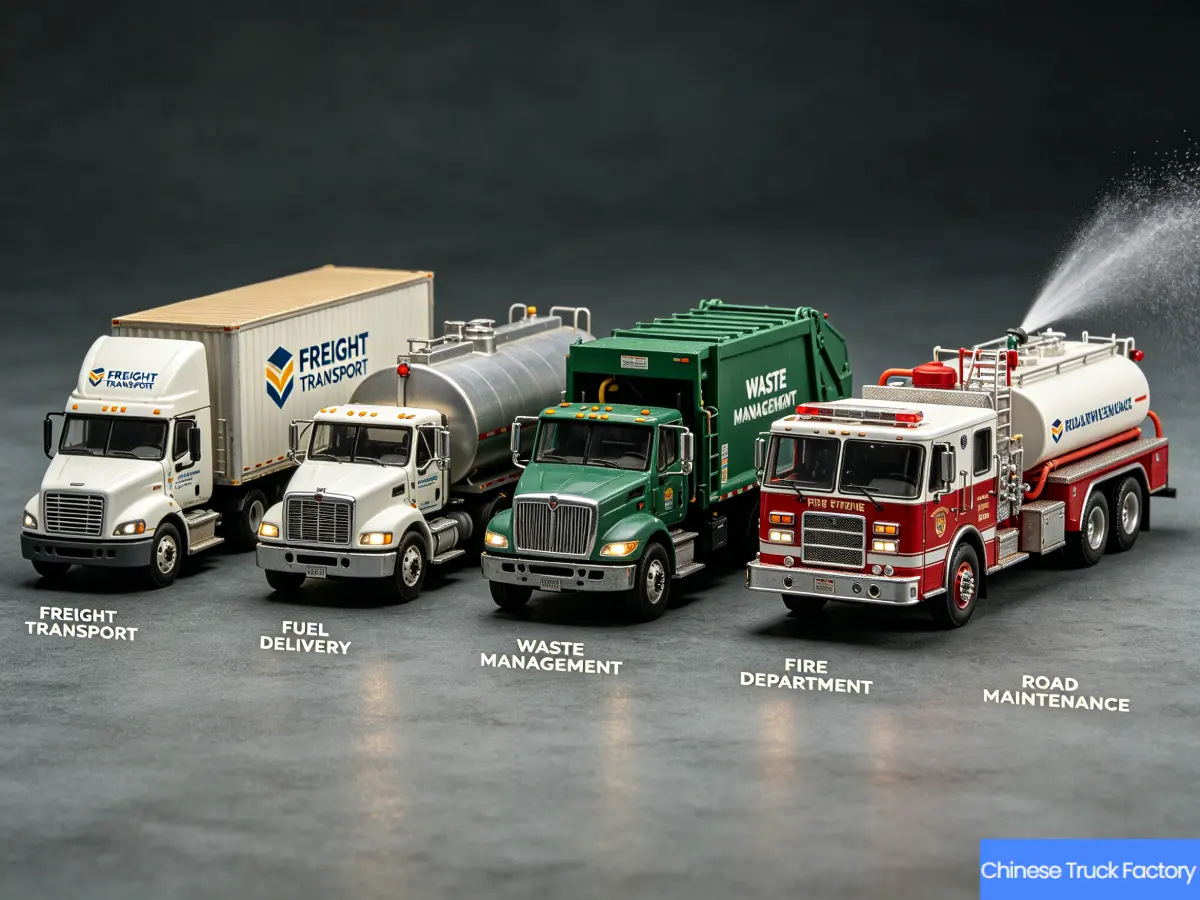
Walk the full perimeter. Look for transport damage, paint defects, panel alignment, and weld quality on the body or superstructure. On a dump truck, check the body floor and sidewalls for thickness and weld continuity. On a tanker, check shell welds and baffle access. On a compactor, check the hopper and compaction plate for fit and finish.
Look underneath. Frame rails should be straight, with no field-drilled holes beyond what the drawing shows. Check that fuel tanks, battery boxes, and air tanks are mounted securely and that lines are routed away from hot surfaces and moving parts.
Powertrain and Driveline
Confirm the engine model plate matches the order. Check for oil, coolant, and fuel leaks at the engine, transmission, and rear axle. Look at the driveshaft for balance weights and correct phasing. Check that the differential breather is present and routed correctly. On a new truck, minor assembly residue is normal; fresh wet leaks are not.
Cab and Controls
Sit in the cab. Confirm the steering side matches the destination requirement. Check that all gauges, warning lamps, wipers, horn, lights, and the air conditioning function. Test the parking brake and service brake. Verify that the instrument cluster shows the correct odometer reading and that it is consistent with the delivery mileage recorded on the inspection report.
Functional Test
Start the engine. Let it reach operating temperature. Listen for abnormal noise. Test the transmission through the gears, ideally with a short yard move if space allows. For a truck with a PTO-driven body, operate the body through a full cycle. For a dump truck, raise and lower the body and check cylinder movement and hydraulic hose routing. For a crane truck, run the crane through its functions and confirm the load chart is supplied with the unit. For a fire truck, confirm pump engagement and monitor operation where the yard allows.
Body and Superstructure: Where Most Disputes Hide
Chassis inspection is relatively standardized. Superstructure inspection is where configuration errors tend to surface, because the body is often built by a separate workshop after the chassis arrives. The inspection should verify the body against the drawing, not against a verbal description.
| Loại phương tiện | Key Inspection Points | Common Discrepancy |
|---|---|---|
| Dump / Tipper Truck | Body volume, floor and sidewall thickness, tipping angle, cylinder type, subframe | Body volume differs from drawing; thinner floor plate than specified |
| Garbage Compactor | Body volume, hopper, compaction mechanism, bin lifter, leachate tank | Bin lifter type does not match local bin standard |
| Cần cẩu gắn trên xe tải | Crane model, boom sections, outriggers, mounting position, load chart | Crane mounted further forward than drawing, reducing usable deck length |
| Xe bồn chở dầu | Tank volume, material, compartments, baffles, pumping system | Compartment split differs from order; baffle count lower than specified |
| Fire Truck | Tank capacity, pump flow and pressure, monitor, equipment compartments | Pump model differs from order; compartment layout changed |
If a discrepancy appears, document it with photographs and measurements before the truck leaves the yard. Fixing a body issue after arrival is far more expensive than fixing it before loading. Buyers who want a structured checklist for a specific body type can review the selection guidance for xe vệ sinh và xe ép rác or the application notes for truck-mounted cranes, depending on the unit being inspected.
Weights, Dimensions, and Transport Readiness
Inspection is also the point where shipping data is confirmed. The shipping line and the port need accurate figures, and the importer needs them for customs and inland transport planning.
- Curb weight (tare) as shipped, including fuel level noted
- Overall length, width, and height with the body installed
- Ground clearance and approach/departure angles
- Whether the unit is driveable or must be towed or lifted
- Fuel quantity left in the tank for shipping
- Battery condition and whether the negative terminal is disconnected
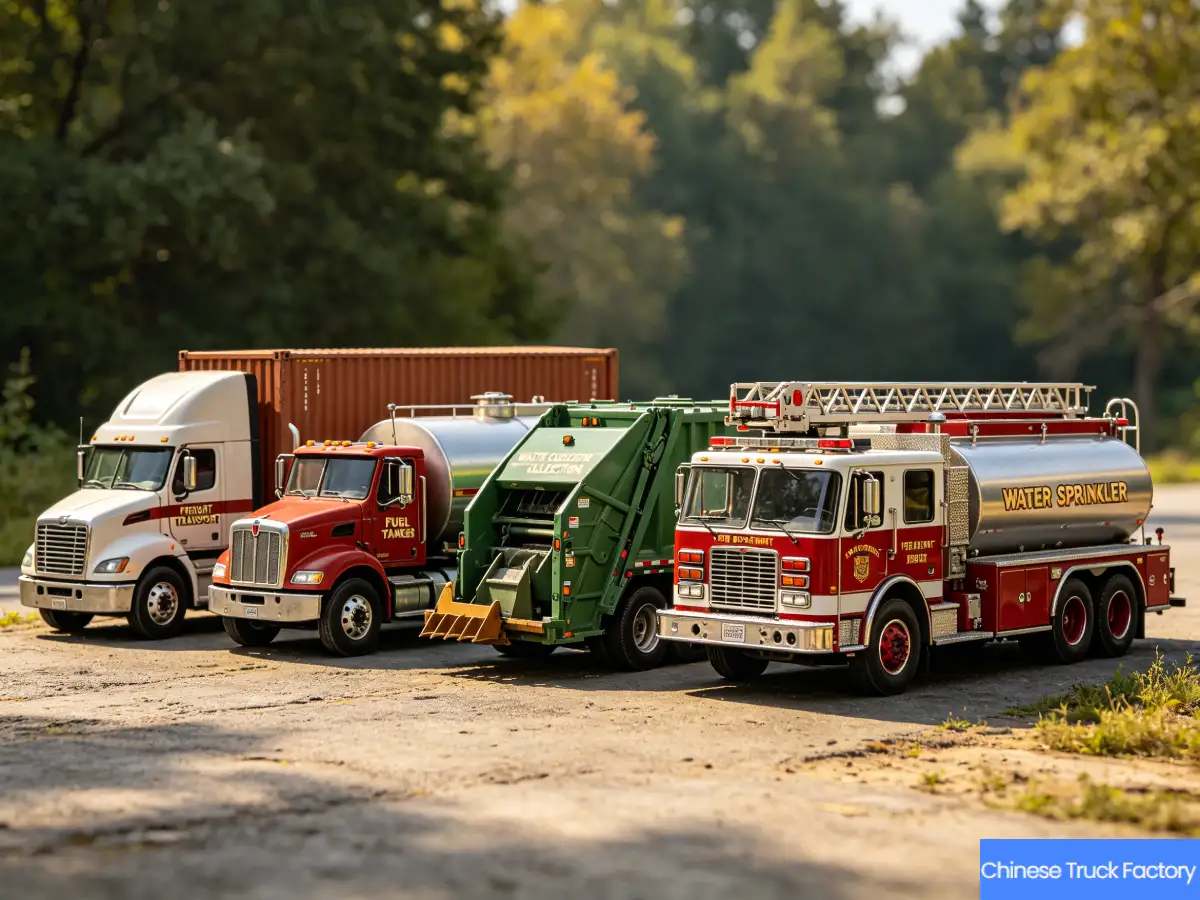
Height matters more than most buyers expect. A truck that fits a flat rack may not fit a container, and a truck with a raised crane boom or an over-height body may need breakbulk or RoRo rather than container shipping. The choice of shipping method is driven by the physical dimensions and weight of the completed unit, not by the chassis alone. Buyers planning transport should review how heavy trucks are shipped overseas before finalizing the inspection report, because the report feeds directly into the shipping booking.
Export Documentation: The Paper Side of the Inspection
A truck can be mechanically perfect and still be blocked at the destination port because the paperwork does not match. The inspection should confirm that the document set is complete and consistent with the physical unit.
| Document | Những điều cần kiểm tra |
|---|---|
| Commercial Invoice | VIN, description, quantity, Incoterm, currency |
| Packing List | Dimensions, weights, number of packages, accessories |
| Bill of Lading | Consignee, notify party, port of discharge, description matching invoice |
| Certificate of Origin | Issued correctly for the destination market |
| Export Certificate / Deregistration | Required for used units in many markets |
| Insurance Certificate | Covers the full voyage and matches the Incoterm |
The Incoterm determines who arranges and pays for what. A buyer on FOB terms takes responsibility from the port of loading onward; a buyer on CIF terms has the supplier arrange freight and insurance to the destination port. The inspection report should state the Incoterm clearly so that responsibility for any damage in transit is unambiguous. Buyers who want to understand what each term includes can review the explanation of what an FOB truck price includes before signing off on the shipping file.
Accessories and Spare Parts Included With the Shipment
Small items go missing in transit more often than large ones. The inspection should inventory everything that travels with the truck and confirm it is packed and labeled.
- Tool kit and jack
- Spare tire and wheel nut wrench
- Operator and maintenance manuals
- Wiring diagrams and hydraulic schematics
- Crane load chart, if applicable
- Spare filters and belts, if included in the order
- Touch-up paint and decals
- Any loose equipment such as hoses, nozzles, or bin lifters
Photograph the packed accessories. A photograph taken at the yard is the only reliable evidence if an item is missing on arrival.
Common Inspection Failures and How to Avoid Them
Most inspection failures are not dramatic. They are small mismatches that become expensive after the truck has sailed.
Specification Drift
The truck is built to a slightly different configuration than the order. This happens when verbal changes are made during production without updating the technical file. The fix is simple: any change must be issued in writing and reflected in a revised specification sheet before the inspection.
Incomplete Documentation
The truck is fine, but the certificate of origin, export certificate, or insurance document is missing or incorrect. This delays customs clearance and can trigger storage charges at the destination port. The document set should be verified before the truck leaves the yard, not after.
Hidden Transport Damage
Damage occurs during yard movement or loading. The inspection should be repeated immediately before loading, or at minimum the loading should be photographed. A truck inspected a week before loading and then moved several times can pick up damage in between.
Missing Functional Test
The truck is visually correct but a hydraulic function, pump, or crane does not operate correctly. Always run the functional test, even if it takes an extra hour. It is far cheaper than discovering a fault at the destination.

Choosing a Supplier Who Supports Inspection
The quality of an inspection depends partly on the supplier’s willingness to support it. A supplier who resists a pre-shipment inspection, provides vague specifications, or cannot produce a consistent document set is a risk regardless of the truck’s appearance.
When evaluating suppliers, I use a simple framework:
- Specification clarity: Can they provide a detailed technical file with model numbers, not just descriptions?
- Inspection access: Will they allow a third-party inspector or a buyer representative on site before shipment?
- Documentation discipline: Do they issue a consistent document set that matches the physical unit?
- Giao tiếp: Do they respond to technical questions with specifics, or with general reassurance?
- After-sales structure: Do they have a defined process for handling warranty claims and spare parts after delivery?
Chinese Truck Factory meets these criteria in a way that is straightforward to verify. The company publishes detailed specifications for its dòng xe chuyên dụng and its xe tải diesel hạng nặng lineup, supports pre-shipment inspection, and provides a consistent export document set. Buyers who want to confirm the process before committing can review the company’s approach to heavy truck manufacturing and export and compare it against the framework above.
For buyers who are ready to move from inspection planning to a specific quotation, the next step is to provide the application details and destination requirements so the configuration can be confirmed against the technical file.
Request a Pre-Shipment Inspection Quote
Các câu hỏi thường gặp
When should the pre-shipment inspection take place?
After the truck is fully assembled, painted, and functional, but before it is moved to the port. If the truck will be moved several times between inspection and loading, a second brief check should be done immediately before loading.
Can I use a third-party inspection company?
Yes, and it is often worthwhile for higher-value or specialized units. The inspector should work against the signed technical file and produce a written report with photographs, measurements, and VIN confirmation.
What is the most common issue found during inspection?
Specification drift, where the built truck differs slightly from the order. It is usually minor but can affect body volume, crane position, or accessory fitment. Freezing the specification in writing before production prevents most of these issues.
How do I verify the VIN matches the export documents?
Record the VIN from the frame stamp, photograph it, and compare it against the commercial invoice, packing list, and any export certificate. All documents should show the same number.
What should be included in the inspection report?
VIN and chassis number, odometer reading, photographs of all four sides and the underside, functional test results, body or superstructure measurements, accessory inventory, and a list of any discrepancies with the specification.
Does the inspection cover shipping method selection?
It should provide the dimensions and weights needed to select the shipping method. Whether the truck ships by RoRo, breakbulk, flat rack, or container depends on the completed unit’s size, weight, and driveability, along with the destination port and route.
What happens if a discrepancy is found?
Document it with photographs and measurements, notify the supplier in writing, and agree on a correction before the truck leaves the yard. Corrections after arrival are significantly more expensive and slower to resolve.
Những suy nghĩ cuối cùng
A truck inspection before shipment is not a formality. It is the point where the specification, the physical unit, and the export documents are aligned. The most common mistakes are not technical failures but process failures: an unfrozen specification, a skipped functional test, a missing document, or an inspection done too early. Get the process right, and the truck that arrives at your port is the truck you ordered.
The most suitable inspection approach is not the one with the longest checklist. It is the one that matches the specific vehicle, the destination market, and the shipping method, and that produces a written record you can rely on if something goes wrong.