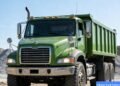
The HOWO truck price in the Philippines typically lands between PHP 3.8 million and PHP 9.5 million depending on the model variant, configuration, and whether you are purchasing through a local assembler or a grey import channel. For fleet operators, the total cost of ownership often matters more than the sticker price, especially when you factor in the local body-building requirements, the 12% VAT, and the availability of aftermarket parts in cities like Manila, Cebu, and Davao. Sinotruk’s HOWO series has become a common sight on Philippine highways, particularly in the construction and logistics sectors, because the price-to-performance ratio is hard to beat against Japanese used trucks that dominate the secondhand market.
Tổng quan và các tình huống ứng dụng thực tế
The HOWO platform, produced by Sinotruk (China National Heavy Duty Truck Group), has evolved significantly over the past decade. In the Philippines, you will mostly encounter the HOWO 6×4 dump truck, the 4×2 prime mover, and the 8×4 rigid chassis used for concrete mixers and heavy haulage. These trucks are not luxury vehicles; they are workhorses designed for high-utilization cycles where downtime is the enemy. From long-term fleet observation, the most successful Philippine operators use HOWO trucks for dedicated routes—like quarry-to-plant aggregate hauling or container moves from the Port of Manila to inland warehouses—where the driver can learn the truck’s quirks and the maintenance schedule can be strictly followed.
The real-world usage scenario that stands out is the sand and gravel industry. In regions like Rizal and Bulacan, HOWO 6×4 dump trucks are the backbone of the aggregate supply chain. These trucks run 12 to 16 hours a day, often overloaded despite regulations, and they take a beating on rough terrain. The HOWO’s heavy-duty frame and robust leaf spring suspension handle this abuse better than many comparable trucks in the same price bracket. Another scenario is the refrigerated van segment, where the 4×2 HOWO chassis is fitted with a local insulated body and a Carrier or Thermo King unit. This application is growing because the cost of a new HOWO is significantly lower than a new Japanese or Korean equivalent, allowing smaller logistics startups to enter the cold chain market.

However, the HOWO is not ideal for every application. If your operation requires high-speed long-haul driving on expressways like NLEX or SCTEX, the HOWO’s aerodynamics and ride comfort are noticeably behind European or Japanese trucks. The cabin is functional but spartan, and the noise level at 80 km/h is substantial. For fleet owners who prioritize driver comfort to retain good drivers, this can be a dealbreaker. But for operations where the truck returns to the yard every night and the driver is paid per trip, the HOWO’s simplicity is an advantage. There is less electronic complexity to fail, and most local mechanics can troubleshoot the mechanical injection pump and air brake system without needing a dealer-level diagnostic tool.

The decision to buy a HOWO is often driven by payload capacity per peso. A used Japanese truck with 200,000 km on the odometer might cost the same as a new HOWO, but the used truck will likely need a new clutch, brake overhaul, and possibly a transmission rebuild within the first year. The HOWO offers the peace of mind of a full warranty, at least on paper, and the availability of genuine parts through local distributors has improved dramatically since 2018. When you look at the total cost per ton-kilometer, the HOWO frequently wins for short-haul, high-frequency operations.
Phân tích hiệu suất: Động cơ, mô-men xoắn, tải trọng và hiệu suất tiêu thụ nhiên liệu
Under the hood, most HOWO trucks sold in the Philippines use the Weichai WP10 or WP12 series engines, or in some cases, the MC11 engine from Sinotruk’s own brand. The WP10 is a 9.7-liter inline six-cylinder diesel engine that produces around 336 horsepower and a peak torque of 1,500 Nm at 1,200 to 1,500 rpm. This is a classic heavy-duty diesel configuration that prioritizes low-end grunt over top-end power. The torque curve is flat, which means the engine pulls strongly from idle, making it easier to get a fully loaded truck moving from a standstill on an incline. In real-world conditions, the WP10 engine feels robust, but it is not a fuel sipper. Expect fuel consumption in the range of 2.5 to 3.5 kilometers per liter for a 6×4 dump truck running fully loaded on mixed terrain. On the highway with an empty return leg, you might see 4.5 km/L, but that is the exception, not the rule.
The WP12 engine, which is a larger 11.6-liter unit, is often specified in the HOWO 8×4 models and the heavier prime movers. This engine produces up to 460 horsepower and a massive 2,100 Nm of torque. This is the powertrain of choice for operators pulling 40-foot containers or running concrete mixers that need to keep the drum turning even when the truck is stationary. The WP12 is a proven workhorse, but it is also thirstier. In our long-term fleet observation, a HOWO 8×4 mixer truck with a WP12 engine will consume about 3.0 to 3.8 km/L depending on the route and the number of deliveries per day. The engine is not overly sensitive to fuel quality, which is a critical factor in the Philippines where diesel sulfur content can vary significantly between major fuel brands and independent stations.
The transmission is typically a Sinotruk 10-speed manual gearbox, known internally as the HW19710. This is a heavy-duty constant mesh unit with a splitter function, giving the driver effectively 10 forward gears. The shift quality is not as slick as a ZF or Eaton Fuller unit, but it is durable and can tolerate aggressive shifting. The clutch is a 430mm single-plate unit that is hydraulically assisted. Clutch life is highly dependent on driver behavior. In fleets where drivers are trained to avoid riding the clutch during low-speed maneuvering, we have seen clutch life exceed 80,000 kilometers. In poorly managed operations, clutches can fail in half that time. The rear axle is a Sinotruk ST16 series, which is a hub-reduction axle. This design multiplies torque at the wheel, which is excellent for off-road capability and heavy payloads, but it does add weight and parasitic drivetrain losses.
Payload capacity is where the HOWO shines. The 6×4 dump truck model, which is the most popular in the Philippines, has a legal payload rating of around 25 metric tons on good roads. However, in the sand and gravel industry, it is common to see these trucks loaded to 35 tons or more. The chassis and suspension can handle this abuse, but the brakes and tires will suffer. Brake fade is a real issue on long downhill grades, especially in the mountainous regions of Luzon. Fleet operators should budget for upgraded brake linings and consider installing an engine exhaust brake or a hydraulic retarder if the truck will operate in hilly terrain. The standard exhaust brake is not strong enough to control a fully loaded truck on a steep descent without constant service brake application.
Fuel efficiency is a complex topic with the HOWO. The base engine tune is conservative, which helps reliability but hurts fuel economy. Aftermarket tuning is available, but it voids the warranty and can lead to premature turbocharger failure. In our experience, the best fuel efficiency gains come from driving behavior and route optimization, not from hardware changes. Maintaining the correct tire pressure, avoiding unnecessary idling during loading and unloading, and using the highest gear possible without lugging the engine will yield a 10% to 15% improvement in fuel consumption. For a truck that runs 200,000 kilometers over three years, that can represent a savings of over PHP 1.2 million, which is a significant amount when compared to the initial purchase price.
For operators looking to understand how these performance figures translate into operating budgets, it is helpful to compare the HOWO against other heavy-duty options. The reliability of the Weichai engine is well documented, and the parts supply chain is mature. However, the overall efficiency depends on the specific application. For high-speed long-haul operations, the HOWO is not the best choice. For stop-and-go urban delivery and construction, it is very competitive. The key is to match the truck spec to the route profile.
Phân tích chi phí bảo trì và vòng đời
Maintenance is where the HOWO either wins or loses, depending on the operator’s discipline. The truck is mechanically simple, which is a double-edged sword. Simple systems are easier to fix, but they also require more frequent attention than modern electronically controlled systems. The engine oil change interval is typically 20,000 kilometers with a high-quality 15W-40 or 20W-50 oil. Using cheaper oil to save money is a false economy, as the turbocharger bearings are sensitive to oil quality. The fuel filter and water separator should be changed every 10,000 kilometers, and this is critical in the Philippines where diesel fuel can contain water and sediment, especially in provincial areas.
The air brake system requires regular attention. The air dryer needs its desiccant cartridge replaced every 50,000 kilometers or annually, whichever comes first. Moisture in the air system will destroy the brake valves and lead to a dangerous situation where the brakes stick. From real-world trucking operations, we have seen HOWO trucks with brake valve failures caused by neglecting the air dryer. The cost of the replacement parts is low, but the downtime is expensive. A proactive maintenance schedule is essential to keep the truck on the road and avoid costly roadside repairs.
Brake components are consumable items on any heavy truck, but the HOWO’s brake system is robust. The brake drums are large and can handle repeated hard stops, but they are also heavy. Front brake pads or shoes typically last 60,000 to 80,000 kilometers, while rear brakes can last 100,000 kilometers or more, depending on the load and terrain. The cost of a full brake job, including new drums and shoes, is significantly lower than for a European truck. This is a major advantage for cost-conscious fleet owners. However, the quality of aftermarket brake parts varies widely. Using substandard brake shoes to save money is a serious safety risk, and it is recommended to use genuine Sinotruk parts or reputable brands like Fras-le or Meritor.
The suspension system is leaf spring based, which is old technology but very durable. The leaf springs will eventually sag, especially if the truck is regularly overloaded. Replacing a full set of rear springs is a relatively straightforward job, but the truck will be out of service for a day. The shock absorbers, or dampers, are not very effective on the HOWO, but they are cheap to replace. Upgrading to a better quality damper, such as a Monroe or Gabriel unit, can improve the ride quality significantly, which has a direct impact on driver fatigue and cargo damage.
When calculating the total cost of ownership, the biggest expense after fuel and driver wages is depreciation. A new HOWO will depreciate quickly in the first two years, but then the value stabilizes. The resale market for HOWO trucks in the Philippines is active, but prices are lower than for comparable Japanese trucks. This is partly due to perception and partly due to the higher mileage that HOWO trucks tend to accumulate. If you plan to keep the truck for five years or more, the depreciation is less of a concern. If you plan to sell after three years, you should factor in a lower resale value. The lifecycle cost analysis clearly shows that the HOWO is best suited for high-utilization operations where the truck is used as a tool to generate revenue, not as an asset to be preserved.
For a deeper dive into the financial aspects of buying a truck, including the differences between new and used options, many operators find it useful to review the giá của một chiếc xe ben mới tinh to understand how the HOWO compares to other Chinese and Korean models. The upfront price is only one factor. The availability of parts, the support from the local dealer, and the ease of finding a mechanic who knows the Weichai engine are all critical to the long-term success of the operation.
Comparison: HOWO vs. Competing Models
To understand where the HOWO sits in the market, it is useful to compare it directly with the trucks that Philippine buyers often consider. The table below summarizes the key differences between the HOWO 6×4 dump truck, the Shacman F3000, the Dongfeng KL, and a used Japanese truck like the Mitsubishi Fuso Fighter. These are the main alternatives in the same price and application bracket.
| Tham số | HOWO 6×4 (Sinotruk) | Shacman F3000 | Dongfeng KL | Used Mitsubishi Fuso |
|---|---|---|---|---|
| Động cơ | Weichai WP10 (336 hp) | Weichai WP10 (345 hp) | Dongfeng Cummins (320 hp) | Mitsubishi 6D24 (300 hp) |
| Mô-men xoắn | 1.500 Nm | 1.500 Nm | 1,300 Nm | 1.100 Nm |
| Hộp số | Sinotruk 10-speed | Fast Gear 9-speed | Fast Gear 8-speed | Mitsubishi 6-speed |
| Khả năng chở hàng | 25 tons (legal) | 25 tons (legal) | 20 tons (legal) | 18 tons (legal) |
| Mức tiêu thụ nhiên liệu (khi chở hàng) | 2,8–3,5 km/lít | 2,8–3,5 km/lít | 3.0–4.0 km/L | 3.5–4.5 km/L |
| New Price Range (PHP) | 5.2–6.5 million | 5.0–6.0 million | 4.5–5.5 million | 3.5–5.0 million (used) |
| Tình trạng sẵn có của các bộ phận | Tuyệt vời | Tốt | Tốt | Excellent (surplus) |
| Giá trị khi bán lại | Trung bình | Trung bình | Trung bình | Cao |
| Electronics Complexity | Thấp | Trung bình | Trung bình | Thấp |
The comparison reveals that the HOWO and Shacman are very similar, as they both use Weichai engines and similar drivetrain components. The main difference is the cab design and the quality of the interior fit and finish. The Shacman F3000 has a slightly more modern cab, but the HOWO has a better reputation for the durability of its chassis. The Dongfeng KL is a lighter-duty option, suitable for smaller payloads, and it is often more fuel-efficient. However, it is not built for the same level of abuse as the HOWO. The used Japanese truck is the wildcard. It has a lower upfront cost, but the unknown maintenance history and the risk of major mechanical failure make it a gamble.
The decision between these trucks often comes down to the specific application. For a fleet that runs containers from the port to warehouses within a 50-kilometer radius, the used Japanese truck might be a viable option if the mileage is low and the maintenance records are verifiable. For a fleet that runs quarry operations with 30-ton loads on rough roads, the HOWO is the safer bet because of its stronger frame and heavier-duty suspension. The Dongfeng is best suited for less demanding tasks, like municipal deliveries or smaller construction projects. The Shacman is a direct competitor to the HOWO, and the choice often comes down to the local dealer’s reputation and the availability of parts in the specific region of the Philippines.
One thing that is often overlooked is the cost of the body or the implement. The prices in the table above are for the chassis cab only. A dump body, a concrete mixer drum, or a refrigerated van body will add PHP 500,000 to PHP 1.5 million to the total cost. This is where local bodybuilders play a critical role. The quality of the body welding and the hydraulic system for a dump truck will affect the truck’s reliability and resale value. It is worth paying more for a reputable bodybuilder, as a poorly built body can cause the frame to crack and lead to expensive repairs. The total cost of the truck with the body should be the basis for comparison, not just the chassis price.
From a fleet management perspective, the choice also depends on the availability of spare parts. The HOWO has a distinct advantage here due to the high volume of units sold in the Philippines and the aggressive parts distribution network established by the local importer. You can find HOWO parts in most major truck parts stores, not just at the authorized dealer. This is not always the case for Shacman or Dongfeng, where you might need to order parts from Manila and wait a few days. In the trucking business, a few days of downtime can cost more than the part itself, so this is a crucial consideration.
Các yếu tố ảnh hưởng đến quyết định của người mua: Quy mô đội xe, địa hình và khối lượng công việc
The right truck for your operation depends on three primary factors: the size of your fleet, the terrain you will operate on, and the workload you expect to handle. These factors will dictate the optimal model, configuration, and specification for your HOWO. For a small fleet owner with one or two trucks, the priority should be reliability and ease of maintenance. You cannot afford to have a truck sitting in the shop for a week waiting for a part. In this case, the HOWO 6×4 dump truck is a solid choice because the parts are readily available and the mechanical systems are well understood by local mechanics. However, you should budget for a slightly higher maintenance cost per kilometer than a larger fleet would experience, because you do not have the buying power to negotiate discounts on parts and labor.
Terrain is a critical factor that is often underestimated. The Philippines is a mountainous country, and many construction sites are located on steep slopes. The HOWO’s hub-reduction axle provides excellent torque multiplication at the wheels, which is a significant advantage when climbing a muddy or loose incline with a full load. However, the standard tire size (12.00R20) may not provide enough flotation in very soft ground. In such conditions, upgrading to wider tires or adding a central tire inflation system can be beneficial, but this adds cost and complexity. For operations in the flat plains of Central Luzon, the standard configuration is perfectly adequate. For operations in the Cordillera mountains or the hilly areas of Mindanao, you should consider a higher-horsepower engine and a reinforced cooling system to handle the sustained climbs.
Workload is about more than just the number of trips per day. It is about the average load weight, the distance per trip, and the percentage of time the truck spends at idle. A truck that runs 10 trips per day with a 20-ton load over a 5-kilometer route is working much harder than a truck that runs 2 trips per day with a 25-ton load over a 50-kilometer route. The former will require more frequent brake maintenance and clutch replacement, while the latter will require more engine maintenance and fuel. The HOWO is well suited to the high-frequency, short-distance application because of its robust chassis and low-rev torque. For the longer-distance application, you might be better served by a prime mover and trailer combination, which is more fuel-efficient on the highway.
Fleet size also influences the decision on whether to buy a new or used truck. A large fleet with a dedicated maintenance shop can handle the risk of a used truck more effectively, as they have the in-house expertise to inspect and repair the vehicle before it goes into service. A small fleet owner should generally buy new, or at least buy a used truck from a known source with a documented service history. The used truck market in the Philippines is full of units that have been imported from Japan with high mileage and have been rolled back to show lower figures. This is a common scam, and it is difficult for an individual buyer to detect. A new HOWO, while more expensive upfront, eliminates this risk and provides a warranty that covers major components for the first year or 50,000 kilometers.
Another factor that is often ignored is the driver. The HOWO has a manual transmission and a non-synchronized gearbox, which requires a skilled driver to operate smoothly. If your drivers are only experienced with automatic transmission trucks or synchronized gearboxes, they will struggle with the HOWO and may cause premature clutch and transmission damage. It is essential to provide proper training for drivers before they operate a HOWO. This training should cover shifting techniques, engine braking, and the proper use of the exhaust brake. Investing in driver training will pay for itself many times over through reduced maintenance costs and improved fuel efficiency.
Finally, consider the total cost of the operation, not just the truck price. The cost of financing, insurance, parking, and permits all add to the monthly expenses. In the Philippines, the LTO (Land Transportation Office) registration fees are based on the vehicle’s gross vehicle weight (GVW). A HOWO 6×4 dump truck with a GVW of 25 tons will have a higher registration fee than a smaller truck, but this is a manageable cost. The insurance premium for a commercial truck is also based on the vehicle’s value and the driver’s record. It is wise to get quotes from several insurance providers before making a purchase, as the rates can vary significantly. When you add all these costs together, the HOWO remains a compelling value proposition for the right application.
For those who are evaluating whether a Chinese truck is the right fit for their fleet, it is useful to look at the broader range of options available. The decision often comes down to the specific needs of the operation, and understanding the differences between models is key. To see how the HOWO compares to other Chinese heavy-duty trucks in terms of reliability and performance, you can review a comprehensive guide to Chinese truck manufacturers which outlines the strengths and weaknesses of each brand. The market is diverse, and there is a Chinese truck for almost every application, from light-duty delivery to heavy mining.
The decision to enter the heavy truck market is not one to be taken lightly. The capital outlay is significant, and the operating costs are ongoing. However, for the right operator, the HOWO offers a path to profitability that is difficult to match with other brands. The key is to be realistic about your needs, do your due diligence on the dealer and the parts supply, and plan for the maintenance that the truck will require. If you do that, the HOWO will reward you with many years of dependable service.
Import Cost, Taxes, and the Philippine Market Context
Understanding the import cost structure is essential for any buyer, even if you are purchasing from a local dealer. The local dealer is responsible for paying the import duties and taxes, but these costs are passed on to you in the final price. The Philippines imposes a 20% import duty on commercial vehicles from China, under the ASEAN-China Free Trade Agreement (ACFTA). In addition to the duty, there is a 12% VAT on the total landed cost, which includes the price of the vehicle, the freight, the insurance, and the duty. There may also be other fees, such as the processing fee for the Bureau of Customs (BOC) and the local government unit (LGU) fees. These charges can add up to 35% to 40% on top of the factory price of the truck.
The exchange rate between the Chinese Yuan (CNY) and the Philippine Peso (PHP) also impacts the final price. If the peso weakens against the yuan, the cost of importing a HOWO truck will increase. This is a significant risk for buyers who are planning to purchase a truck in the future. It is wise to monitor the exchange rate and consider locking in a price with a dealer if you believe the peso will weaken. The dealer’s quote should include all taxes and fees, and it should be in writing to avoid any surprises at the time of delivery. In our experience, the final price can vary by as much as PHP 200,000 between dealers for the same model, so it is worth shopping around.
The Philippine market is unique in that it is dominated by used Japanese trucks, which are imported in large numbers every year. These used trucks are often sold at auctions in Japan and then shipped to the Philippines, where they are sold through brokers. The price of a used Japanese truck can be very attractive, but the condition is often poor. Many of these trucks have been used in harsh conditions in Japan, such as snow plowing or heavy construction, and they have accumulated significant wear and tear. The odometer reading is often rolled back, and the trucks are repainted to look newer than they are. A buyer with limited mechanical knowledge can easily be deceived. The HOWO offers a new truck alternative that, while more expensive upfront, provides a known condition and a warranty.
The government’s infrastructure program, known as “Build, Build, Build,” has increased the demand for heavy trucks in the Philippines. This has led to a surge in the sales of new trucks, including the HOWO. The increased demand has also put pressure on the supply chain, and some dealers have experienced delays in the delivery of new units. It is wise to place an order well in advance of when you need the truck, especially if you need a specific configuration. The lead time for a HOWO truck can be anywhere from 60 to 120 days, depending on the factory production schedule and the shipping time from China to the Philippines.
It is also important to consider the financing options available. Many banks and financial institutions in the Philippines offer loans for commercial vehicles, but the interest rates can be high, especially for small businesses. The down payment is typically 20% to 30% of the total price, and the loan term is usually 3 to 5 years. The monthly amortization will depend on the interest rate and the loan term. It is wise to get pre-approved for a loan before you start shopping for a truck, as this will give you a clear budget and make the negotiation process easier. The dealer may also offer in-house financing, but the interest rates are often higher than those offered by banks.
The importation process is not something the end buyer needs to deal with directly, but it is helpful to understand the steps involved. The dealer will handle the customs clearance and the registration of the truck with the LTO. However, the buyer is responsible for the LTO registration fees, which are based on the vehicle’s weight and the region where it will be registered. The registration process can take several days, and