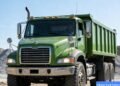
Getting a truck quotation from China isn’t like sending a quick email to a local dealer. You need to provide specific operational data, technical specs, and compliance documents before a manufacturer can give you a number that means anything. In my years testing heavy equipment across different continents, I’ve seen buyers waste weeks because they didn’t prepare the right information upfront. This guide breaks down exactly what you need to send, why it matters, and how it affects the final price you’ll see on a quotation from a Chinese truck factory.

Why Chinese Truck Quotations Vary So Much
The Chinese commercial vehicle market operates on a build-to-order model, especially for heavy-duty trucks. Unlike buying from stock in the US or Europe, most Chinese OEMs (Original Equipment Manufacturers) configure each unit based on the buyer’s specific route, load, and climate. A quotation for a 6×4 tractor unit destined for flat terrain in Texas will look completely different from one for a 8×4 dump truck working in mountainous regions of Peru. The base chassis price is just a starting point; the real cost comes from the drivetrain, suspension, and bodywork options you select.
From what I’ve seen in fleet operations, the gap between a basic quotation and a fully-specced one can be 30% to 40%. That’s not a markup; it’s the difference between a truck that lasts 500,000 miles and one that starts cracking frames at 200,000 miles. So, the first thing you need to know is that the more specific you are about your operation, the more accurate the price will be. Vague requests like “send me a price for a 40-ton truck” will get you a vague answer that doesn’t reflect reality.
Another critical factor is the difference between domestic Chinese specs and export specs. Many domestic models run on lower-grade steel and simpler electronics to meet local price points. Export versions, especially those for North America or Europe, often include higher-grade wiring, better sealing against moisture, and stricter emission compliance components. You must explicitly state that you need an export-spec truck with documentation for your local registration. Otherwise, you might get a quotation for a vehicle that can’t be legally registered in your country.
Finally, the quotation process is also a filter for serious buyers. Manufacturers receive hundreds of inquiries daily. A detailed, well-structured request signals that you’re a professional buyer. This often gets you a faster response and a better initial price because the sales team knows you’re not just window shopping. In my experience, sending a complete specification sheet puts you in the top 10% of inquiries, which means you get more attention from the engineering and sales departments.
Core Information Every Buyer Must Provide
There’s a core set of data that every Chinese truck manufacturer will need before they can issue a reliable quotation. Missing any of these pieces will delay the process or result in a quote that’s not usable. I’ve organized this into three main categories: operational parameters, vehicle configuration, and commercial terms. Getting these right from the start saves you at least two weeks of back-and-forth emails.
Operational Parameters and Working Conditions
The first thing a manufacturer wants to know is how you plan to use the truck. This goes beyond just saying “for hauling cargo.” You need to describe the actual mission profile. This includes the average distance per trip, the type of roads (highway, secondary, off-road), and the typical gradient. For example, a truck running at sea level on flat highways has a different cooling and gearing requirement than one climbing mountain passes at 3,000 meters altitude.
You also need to specify the average load weight and the maximum gross vehicle weight (GVW). This is the total weight of the truck, fuel, driver, and cargo. Chinese trucks are often rated with a specific payload capacity, but that number is meaningless without knowing your actual average load. Overloading a truck by even 10% can cut its service life by half, so manufacturers need to know if you’re running at 80% capacity or 100% capacity all the time.
Climate is another major factor. If you operate in extreme cold (below -20°C), you’ll need a cold-start kit, heated fuel filters, and possibly an auxiliary heater for the cabin. If you operate in a hot, dusty environment, you’ll need heavy-duty air filtration and a more robust cooling package. I’ve seen trucks ordered for the Middle East with standard radiators that overheated within a month. Don’t leave this to guesswork; state the temperature range and humidity levels clearly in your request.
Finally, consider the average speed and duty cycle. Is this a long-haul truck that runs at highway speeds for 10 hours a day? Or is it a short-haul vehicle that makes multiple stops, with lots of idling and frequent gear changes? This information helps the manufacturer select the right final drive ratio and transmission type. A long-haul truck needs a tall overdrive gear for fuel economy, while a short-haul truck needs lower gearing for acceleration and durability.
Vehicle Configuration and Key Components
Once the manufacturer understands your operation, they need to know your preferences for major components. This is where you can specify the engine brand, power rating, and transmission type. In the Chinese market, you’ll often have a choice between engines from Weichai, Cummins, or Dongfeng, each with different characteristics. Weichai engines are known for their high torque at low RPMs, while Cummins engines are often praised for their fuel efficiency at highway speeds.
You should also specify the cabin type. Do you need a day cab for short hauls, or a sleeper cab for long-distance routes? The cabin configuration significantly affects the price. A high-roof sleeper cab with a flat floor costs considerably more than a standard day cab. For fleet operations, you also need to decide on the number of bunks and the level of interior trim, as this impacts driver comfort and retention.
Axle configuration and suspension type are also critical. For a 6×4 tractor unit, you’ll have options for leaf spring or air suspension on the drive axles. Air suspension is more expensive but provides a better ride, protects the cargo, and is often required for certain types of loads like electronics or glass. For dump trucks, you’ll need to specify the axle load rating and whether you need a heavy-duty box-end frame for off-road use. These decisions change the price and the lead time.
Don’t forget about the body or trailer interface. If you’re buying a dump truck, specify the body material (steel or aluminum), the volume, and the type of dumping mechanism (front lift or underbody). For a tractor unit, you need to specify the fifth wheel type and height. The manufacturer will need to know if you’re using a standard kingpin or a special one. These details are often overlooked but are essential for a complete quotation.

Commercial and Documentation Requirements

Finally, you need to outline the commercial terms. This includes your destination port, the required delivery timeline, and your preferred payment terms. Chinese truck factories typically work with a Letter of Credit (L/C) or a Telegraphic Transfer (T/T). However, the payment structure can vary based on the relationship and the order size. For first-time buyers, a typical arrangement might be 30% down payment and 70% before shipment, but this is negotiable.
Documentation is another area that can cause delays if not specified. You need to state whether you require a Certificate of Origin, a Commercial Invoice, a Packing List, and a Bill of Lading. For some regions, you might also need a Certificate of Conformity or a specific emission compliance document. The factory needs time to prepare these, especially if they need to be notarized or legalized. I’ve seen shipments held at customs for weeks because the buyer didn’t request the correct documentation upfront.
You also need to clarify the warranty terms. Chinese manufacturers usually offer a standard warranty of 12 to 18 months or a certain number of kilometers, whichever comes first. However, the warranty is often only valid if the truck is serviced at an authorized dealer. If you’re importing a truck to a country without a Chinese dealer network, you need to discuss this with the factory. They may offer a warranty that covers parts only, or they might require you to send a technician to their plant for training.
In my experience, it’s also wise to ask about the availability of spare parts. A quotation is only the first step. You need to know if the factory can supply critical spare parts (filters, brake pads, sensors) and what the lead time is for shipping those parts to your location. Some factories keep a stock of export parts, while others build them to order. This can be a deciding factor for your fleet’s uptime. If you’re looking for a reliable partner, check out Nhà sản xuất xe tải của Trung Quốc options that have a proven export track record.
Performance Breakdown: What the Specs Really Mean
Understanding the performance specs on a quotation is crucial. You can’t just look at the horsepower number and assume it’s a good truck. The relationship between engine power, torque, and the drivetrain gearing determines how the truck performs on the road. In this section, I’ll break down the key performance indicators and how they relate to real-world operation.
Engine Power, Torque, and Fuel Efficiency
Engine power (measured in horsepower or kilowatts) is the rate at which work is done. But what really matters for pulling heavy loads is torque, which is the twisting force that gets the load moving. A truck with high horsepower but low torque will struggle to get a heavy load moving from a standstill, especially on an incline. Look for an engine with a high torque rating at a low RPM range, typically between 1,200 and 1,500 RPM. This gives you good drivability and reduces the need to downshift constantly.
Fuel efficiency is the metric that most fleet owners care about. It’s usually expressed in liters per 100 kilometers (L/100km) or miles per gallon (MPG). However, the numbers on the brochure are often based on ideal conditions with a light load. In real-world operations, you can expect fuel consumption to be 15-20% higher. For a long-haul truck, a difference of 1 L/100km can mean thousands of dollars in fuel costs per year per truck. I’ve seen fleets where the driver’s behavior and route planning have a bigger impact on fuel efficiency than the engine itself.
When reviewing a quotation, pay attention to the engine’s torque curve. A flat torque curve means the engine delivers consistent power across a wide RPM range, which is ideal for highway driving. A peaky torque curve, where all the power comes at a specific RPM, is better for vocational applications like dump trucks or mixers. You need to match the engine characteristics to your duty cycle. For a mixed-use fleet, a more versatile engine might be better than a specialized one.
Another thing to consider is the engine’s compliance with emission standards. Chinese domestic trucks often run on China VI standards, which are similar to Euro VI. However, for export to markets like the US, you might need a truck with a DPF (Diesel Particulate Filter) and SCR (Selective Catalytic Reduction) system that meets EPA 2010 or newer standards. This adds cost and complexity but is necessary for legal operation. I’ve seen buyers try to save money by importing a non-compliant truck, only to have it impounded by customs. Don’t make that mistake.
Transmission and Axle Ratios
The transmission is the link between the engine and the wheels. You’ll typically have a choice between a manual, automated manual (AMT), or automatic transmission. For long-haul applications, an AMT is becoming the standard because it reduces driver fatigue and can improve fuel efficiency by optimizing shift points. For heavy off-road use, a manual transmission is often preferred for its durability and simplicity. The number of gears is also important. A 12-speed or 16-speed transmission gives the driver more control over the engine speed, allowing them to keep the engine in its sweet spot for power and efficiency.
The rear axle ratio is another critical spec that many buyers overlook. This ratio determines the top speed and the torque multiplication at the wheels. A lower numerical ratio (e.g., 3.08:1) is better for high-speed cruising and fuel economy on flat ground. A higher numerical ratio (e.g., 4.11:1) is better for heavy hauling and off-road use because it provides more torque at the wheels but limits top speed. If you get the wrong axle ratio, your truck will be either too slow on the highway or won’t have enough power to climb hills with a full load.
For vocational trucks like dump trucks or concrete mixers, the axle ratio is often matched to the specific application. A dump truck that spends most of its time on construction sites with a full load will need a lower ratio (higher numerical number) for maximum traction. A long-haul truck that runs empty half the time might use a higher ratio (lower numerical number) to save fuel. The manufacturer’s sales engineer can help you select the right ratio, but you need to provide the operational data we discussed earlier.
Finally, consider the type of drive axles. For a 6×4 truck (three axles, two driven), you have options for single-speed or dual-speed axles. Dual-speed axles allow the driver to switch between a high-speed and low-speed range, which is useful for mixed on-road/off-road operation. However, they are heavier and require more maintenance. For most highway applications, single-speed axles are sufficient and more reliable. The choice comes down to your specific needs and budget. For a deeper dive into how these specs affect your bottom line, you can look at Xe ben tải nặng đang rao bán and see how different axle configurations are priced.
Phân tích chi phí bảo trì và vòng đời
The purchase price is just the entry fee. The real cost of owning a truck is spread over its entire lifecycle, including maintenance, fuel, and downtime. In this section, I’ll provide a realistic look at what you can expect in terms of maintenance costs and how to plan for them. This is based on long-term fleet observation, not just the manufacturer’s marketing materials.
Scheduled Maintenance Intervals and Costs
Most Chinese trucks have a scheduled maintenance interval of around 10,000 to 20,000 kilometers for oil changes and basic inspections, depending on the engine and oil quality. However, in harsh operating conditions, you might need to shorten this interval. The cost of a standard service (oil, filters, labor) can vary significantly depending on your location and the availability of parts. In North America, you might pay $500 to $800 for a basic service, while in other regions, the cost might be lower but the quality of parts could be a concern.
Major components like the transmission and rear axles have longer intervals, often around 100,000 to 200,000 kilometers. These services involve changing the gear oil and inspecting the seals and bearings. The cost is higher, but these intervals are so long that they are often overlooked in budget planning. I recommend setting aside a reserve fund for these major services. In my experience, fleet owners who skip these services end up with catastrophic failures that cost more than the entire maintenance budget for the year.
Brake pad and drum replacement is a significant cost, especially for trucks that operate in hilly or urban environments. A typical set of brake pads might last 50,000 to 80,000 kilometers, but this can be much less if the driver uses the brakes aggressively. The cost of brake components is relatively low, but the labor to replace them can be high. For a fleet, it’s often more cost-effective to have a dedicated maintenance team rather than outsourcing this work.
Another area to budget for is the Diesel Particulate Filter (DPF) cleaning or replacement. If you’re running a modern diesel truck, the DPF will eventually clog with soot. This can happen as often as every 100,000 kilometers if the truck does a lot of idling or short trips. Cleaning a DPF costs a few hundred dollars, but replacing it can cost several thousand. The best way to avoid this is to ensure the truck has regular regeneration cycles, which often require a highway drive at higher speeds.
Long-Term Reliability and Uptime
Uptime is the most critical metric for a commercial truck. Every day a truck is in the shop is a day you’re losing revenue. Chinese truck manufacturers have made significant strides in reliability over the last decade, but there are still differences between brands. In my testing, trucks with engines from major international brands (like Cummins or Weichai) tend to have better reliability than those with smaller domestic engines. The key is to check the supplier list for major components like the fuel injection system, turbocharger, and air compressor.
Corrosion is a major issue for trucks in cold climates where road salt is used. Chinese trucks are getting better at this, but you still need to specify additional undercoating or galvanized components if you operate in the “rust belt” of North America. I’ve seen trucks with frames that rusted through after just three winters because the protective coating was too thin. This is a warranty issue that you need to address before signing the contract, not after.
Electrical systems are another common source of problems. While the engines are often robust, the wiring harnesses and connectors can be less reliable, especially on budget models. Moisture ingress into connectors can cause intermittent faults that are hard to diagnose. When reviewing a quotation, ask about the IP rating (Ingress Protection) of the electrical connectors. A higher rating (e.g., IP67) means better protection against water and dust, which translates to fewer electrical issues.
To get a realistic picture of lifecycle costs, you should look at data from industry sources. According to the U.S. Department of Transportation, the average operating cost for a heavy-duty truck is around $1.70 per mile, which includes fuel, maintenance, and driver wages. However, this is an average across all types of operations. For a more specific analysis, you can refer to the American Transportation Research Institute (ATRI) reports, which break down costs by fleet size and operational category. This data is invaluable for setting your budget.
Comparison: Different Truck Types and Their Costs
Choosing the right type of truck is the most important decision you’ll make. In this section, I’ll compare the most common types of trucks imported from China, focusing on their typical applications, costs, and performance characteristics. This comparison will help you narrow down your options before you send a request for quotation.
| Loại xe tải | Typical Application | GVW Range (tons) | Average Price Range (USD) | Mức tiêu thụ nhiên liệu (L/100 km) |
|---|---|---|---|---|
| 6×4 Tractor Unit | Long-haul freight, container transport | 40-49 | $45,000 – $70,000 | 30-40 |
| 8×4 Dump Truck | Construction, mining, heavy aggregate hauling | 31-50 | $50,000 – $80,000 | 35-50 |
| 6×4 Concrete Mixer | Construction, ready-mix delivery | 25-35 | $40.000 – $60.000 | 30-45 |
| 4×2 Box Truck | Urban delivery, freight forwarding | 12-18 | $25,000 – $40,000 | 15-25 |
| 4×2 Refrigerated Truck | Cold chain logistics, food transport | 16-18 | $35,000 – $55,000 | 20-30 |
Long-Haul vs. Vocational Trucks
Long-haul trucks (tractor units) are designed for high-speed, long-distance travel. They prioritize fuel efficiency and driver comfort. The cab is typically a sleeper, and the suspension is often air-based for a smoother ride. The frame is designed to handle high torsional stress but is not as heavy-duty as a vocational truck frame. When comparing quotations for long-haul trucks, pay close attention to the aerodynamics package and the engine’s cruise RPM. A truck that runs at 1,200 RPM at 65 mph will use significantly less fuel than one running at 1,500 RPM.
Vocational trucks (dump trucks, mixers, refuse trucks) are built for durability and load capacity rather than speed. They have heavier frames, more robust suspensions, and are often equipped with power take-off (PTO) units to run hydraulic systems. The cost of these trucks is higher due to the additional structural components and specialized equipment. When comparing quotations, look at the quality of the body (dump body or mixer drum) and the brand of the hydraulic system. These are the components that will fail first if they are of low quality.
For a fleet that mixes both types of operations, it might be more cost-effective to have a standard chassis design that can be fitted with different bodies. However, this is rarely possible with Chinese manufacturers, as the chassis are often purpose-built. You’ll need to decide whether to specialize your fleet or have a generalist approach. In my experience, specialized trucks have a higher resale value and lower maintenance costs because they are used for their intended purpose. For more insights on long-haul options, check out các giải pháp vận tải đường dài.
Fuel Efficiency Comparison
Fuel is the biggest operating cost for any truck, typically accounting for 30-40% of total operating expenses. The fuel consumption figures in the table above are based on real-world observations, not the manufacturer’s brochure numbers. A long-haul truck can vary between 30-40 L/100km depending on the load, terrain, and driver behavior. In a test I ran on a flat highway in Texas, a well-specced 6×4 tractor unit with a 460 hp engine achieved 32 L/100km. The same truck in the mountains of Colorado used 45 L/100km.
For vocational trucks, fuel consumption is even more variable. A dump truck operating on a construction site with a full load and short distances can easily consume 50 L/100km. The constant stop-and-go and the heavy load put a lot of strain on the engine. When comparing fuel efficiency, don’t just look at the engine specs. The aerodynamics of the cab, the tire rolling resistance, and the final drive ratio all play a significant role.
One trend I’ve noticed is the growing interest in alternative fuels, particularly natural gas (LNG/CNG) and electric powertrains. While electric trucks are still not practical for long-haul duty, they are becoming viable for urban delivery and short-haul vocational routes. According to the International Energy Agency (IEA), electric trucks account for a small but growing share of new sales in China. However, the initial purchase price is still much higher than a diesel truck. You need to do a total cost of ownership (TCO) analysis to see if the fuel savings justify the higher upfront cost. For a detailed look at how different powertrains affect your budget, you can review the dump truck price guide which includes comparisons of diesel and electric models.
Các yếu tố ảnh hưởng đến quyết định của người mua: Quy mô đội xe, địa hình và khối lượng công việc
Your specific situation dictates the right truck choice. A small fleet owner with two trucks has different priorities than a large logistics company with 200 trucks. In this section, I’ll discuss how your fleet size, terrain, and workload should influence your decision-making process and the information you provide to the factory.
Quy mô đội tàu và năng lực bảo dưỡng
If you’re a small fleet owner (1-10 trucks), you probably don’t have a dedicated maintenance team. You rely on external workshops and need a truck that is easy to service. In this case, you should prioritize a truck with a common engine brand (like Cummins) that has a wide service network in your country. You also need to ensure that spare parts are readily available. A quotation for a specialized truck with a rare engine might be cheaper, but the cost of downtime and difficult parts sourcing could negate the savings.
For larger fleets (50+ trucks), you have more leverage. You can negotiate better pricing and support agreements. You can also afford to have a specialized maintenance team. In this scenario, you might opt for a more standardized fleet to simplify training and parts inventory. A quotation for 50 trucks will be significantly cheaper per unit than a quotation for 5 trucks. The factory might also offer a dedicated support engineer or a remote diagnostics system for large fleets.
The availability of driver training is also a factor. If you’re introducing a new truck model to your fleet, you need to train your drivers. Some Chinese factories offer training at their plant in China, but this is costly. More often, they provide detailed manuals and video tutorials. For large fleets, I recommend sending a couple of lead mechanics and drivers to the factory for a week of training. This investment pays off in reduced wear and tear and better fuel efficiency.
Terrain and Route Planning
The terrain where you operate is a non-negotiable factor. If you’re running in the Rocky Mountains or the Alps, you need a truck with a high engine brake power and a transmission with a crawler gear. The engine brake is crucial for descending long grades without overheating the service brakes. A truck without a good engine brake will wear out its brake pads in a month in mountainous terrain. You must specify the maximum gradient you expect to encounter and the average altitude.
For flat terrain, like the Midwest of the US or the plains of Europe, you can optimize for fuel efficiency. You can use a taller final drive ratio and a more aerodynamic cab. The truck will have a higher top speed but less climbing ability. This is fine for long, flat highways. When you request a quotation, be specific about the terrain. Don’t just say “highway use.” Describe the road conditions, including the number of traffic lights, the speed limits, and the typical traffic density.
Urban operations present a different challenge. A truck for city delivery needs a tight turning radius, good visibility, and a durable transmission for frequent shifting. It might also need to comply with low