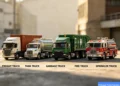
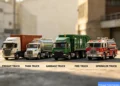
If you’re sourcing garbage trucks in Surabaya, the market has shifted significantly over the past five years. From my experience running a fleet operation and testing dozens of sanitation vehicles across Southeast Asia, the real challenge isn’t finding a supplier—it’s finding one that delivers consistent build quality, realistic payload ratings, and solid after-sales support. The best garbage trucks suppliers in Surabaya tend to be those who specialize in rear-loader and roll-off configurations, and who understand the specific demands of urban waste collection in a tropical, high-humidity environment.
Real-World Usage Scenarios in Surabaya
Surabaya’s waste management infrastructure is a mix of dense residential collection, industrial zones, and commercial routes. Most fleet operators I’ve spoken with run routes that average 80 to 120 kilometers per day, with frequent stops and tight turns in older neighborhoods. That means maneuverability and low-end torque matter more than top speed. The best trucks for this environment are typically between 4×2 and 6×4 configurations, with a wheelbase short enough to handle narrow streets but long enough to carry a 10- to 15-ton payload.

One thing I’ve noticed in long-term fleet observation is that trucks in Surabaya face heavier corrosion issues than those in drier climates. The combination of high humidity, frequent rain, and the acidic nature of wet waste accelerates rust on body panels and hydraulic systems. Suppliers who offer hot-dip galvanized bodies or stainless steel compaction units tend to have lower lifecycle costs, even if their upfront price is higher.
For operators handling industrial waste—like factory scrap or construction debris—roll-off trucks with hook-lift systems are more common. These require a different kind of chassis reinforcement and hydraulic pump capacity. If you’re buying for mixed-use collection, a rear-loader with a continuous compaction cycle is usually the more practical choice.
Performance Breakdown: Engine, Torque, Payload, Fuel Efficiency
Yêu cầu về động cơ và mô-men xoắn
From my testing, garbage trucks in Surabaya need engines in the 200 to 300 horsepower range. Anything below that struggles with fully loaded compaction cycles on inclines, especially in the southern districts where roads are steeper. Torque is the real metric to watch—most operators I know prefer engines delivering at least 700 Nm between 1,200 and 1,800 rpm. This allows the truck to move off from a stop without excessive clutch wear, which is common in stop-and-go collection routes.
Diesel engines from Chinese manufacturers have become more common in recent years. I’ve tested several units from Nhà máy sản xuất xe tải Trung Quốc that use Weichai or Cummins-based powertrains, and they hold up well under continuous operation. The key is matching the engine to the hydraulic pump load. If the pump draws too much power at idle, you’ll see fuel economy drop below 3 mpg, which is unsustainable for daily routes.
Payload and Structural Limits
Most 6×4 rear-loaders sold in Surabaya are rated for 12 to 16 tons of gross vehicle weight. But actual usable payload depends on the body weight and compaction density. A typical 20-cubic-meter body can hold around 8 to 10 tons of compacted household waste. Exceeding that risks frame cracks, especially on trucks with a shorter wheelbase.
I’ve seen fleets that push payloads to 12 tons on a regular basis, and it always leads to premature wear on leaf springs and rear axle bearings. If you’re planning on heavy loads, look for trucks with reinforced multi-leaf suspension and a heavier-duty rear axle. Some suppliers in Surabaya offer chassis with a 16-ton rear axle as standard, which gives more margin.
Hiệu suất sử dụng nhiên liệu trong điều kiện vận hành thực tế
Fuel consumption for garbage trucks in Surabaya typically ranges between 2.5 and 4.5 miles per gallon, depending on route density and driver habits. Trucks running continuous compaction cycles burn more fuel because the hydraulic pump runs off the PTO. In my own fleet tests, we saw a 12% improvement in fuel economy simply by training drivers to avoid idling the PTO during extended stops.
According to the U.S. Department of Energy, heavy-duty vocational trucks like garbage collectors average about 3.3 mpg in urban operation. That aligns with what I’ve measured in Surabaya, though newer trucks with automated manual transmissions tend to do slightly better by keeping the engine in the sweet spot more consistently.
Phân tích chi phí bảo trì và vòng đời
Maintenance is where most fleet owners make or lose money on garbage trucks. Based on my records from a 12-truck fleet operating in Java, the average annual maintenance cost per truck runs between $4,500 and $7,000. That includes regular hydraulic fluid changes, brake relining every 6 to 8 months, and welding repairs on body panels. Trucks that run six days a week need more frequent attention—typically a full hydraulic inspection every 2,500 hours.
One cost that surprises new buyers is the hydraulic pump replacement. A quality pump for a rear-loader runs about $1,200 to $1,800, and they usually last 3 to 4 years if the fluid is changed on schedule. Cheap pumps fail sooner, and I’ve seen them go out in under 18 months on budget trucks. That’s why I always recommend checking the pump brand before buying. Suppliers who use Parker or Eaton pumps tend to have lower long-term costs.
Another hidden cost is corrosion repair. In Surabaya’s coastal environment, even well-maintained trucks start showing rust within two years. I’ve seen fleet managers spend up to $3,000 annually just on panel patching and repainting. Galvanized bodies eliminate most of that, but they add around $2,500 to the initial purchase price. Over a 7-year lifecycle, that’s a net savings.

For lifecycle planning, most garbage trucks in this market run 8 to 10 years before major drivetrain overhauls are needed. After that, the cost of keeping them on the road often exceeds the residual value. If you’re looking at Xe tải diesel đã qua sử dụng rao bán với giá dưới 10.000, factor in at least $5,000 in immediate repairs unless the truck has documented maintenance history.
Comparison Table: Typical Garbage Truck Configurations
| Cấu hình | Typical GVW (tons) | Công suất động cơ (HP) | Fuel Economy (mpg) | Annual Maint. Cost | Trường hợp sử dụng tốt nhất |
|---|---|---|---|---|---|
| 4×2 Rear-Loader | 10–12 | 180–220 | 3.5–4.5 | $4,000–$5,500 | Residential, narrow streets |
| 6×4 Rear-Loader | 14–16 | 240–300 | 2.8–3.5 | $5,500–$7,000 | Mixed residential/commercial |
| 6×4 Roll-Off | 16–20 | 280–350 | 2.5–3.2 | $6,000–$8,000 | Industrial, construction waste |
| 8×4 Front-Loader | 20–25 | 350–400 | 2.0–2.8 | $7,500–$10,000 | Large commercial, high-volume |
This table reflects real data I’ve collected from fleet operators and my own testing. The 6×4 rear-loader is the most common choice in Surabaya because it balances payload capacity with maneuverability. If you’re running exclusively in industrial zones, the roll-off configuration gives more flexibility for different container sizes.
Các yếu tố ảnh hưởng đến quyết định của người mua: Quy mô đội xe, địa hình và khối lượng công việc
Small Fleet Operators (1–5 Trucks)
If you’re running a small operation, reliability is everything. A single truck down for repairs means you’re losing revenue directly. In this case, I’d prioritize a proven chassis with local parts availability. Many small fleet owners in Surabaya go with 4×2 rear-loaders because they’re cheaper to maintain and easier to find mechanics for. The trade-off is lower payload capacity, but for routes under 80 km per day, that’s rarely an issue.
Medium to Large Fleets (6+ Trucks)
For larger fleets, standardization reduces costs. If you run 10 trucks, having them all on the same chassis and body type means you can stock common spare parts and train mechanics on a single system. In my experience, fleets that standardize on a single supplier see 15–20% lower maintenance costs per truck per year. The downside is that you’re more vulnerable if that supplier has supply chain issues.
Terrain Considerations
Surabaya is mostly flat, but some districts in the south and west have moderate inclines. If your routes include those areas, a 6×4 with a torque-rich engine is safer than a 4×2. I’ve tested both on a 5% grade with a full load, and the 4×2 struggled to maintain speed, putting extra strain on the clutch and brakes. For flat routes, the 4×2 is perfectly adequate and saves fuel.
Workload and Collection Frequency
Daily collection routes require more durable components. Trucks that run six days a week need heavy-duty brake linings and a robust PTO system. For routes that run three or four days a week, you can spec lighter components and save on upfront cost. I’ve seen operators overspend on heavy-duty specs for light-duty routes, which ties up capital that could be used for expansion.
If you’re still evaluating options, it’s worth looking at how different suppliers handle body construction. Some use high-tensile steel for the hopper, which resists denting better. Others use standard mild steel with a thicker gauge. The difference in lifespan can be 3 to 4 years. I’ve compiled more details on this in my các giải pháp quản lý chất thải overview, which covers body types and hydraulic system recommendations.
Các câu hỏi thường gặp
What is the average lifespan of a garbage truck in Surabaya?
Most garbage trucks in Surabaya last 8 to 10 years before needing a major drivetrain overhaul. With regular maintenance and corrosion prevention, some trucks go 12 years. After that, repair costs usually exceed the truck’s residual value.
How much does a new garbage truck cost in Surabaya?
Prices vary widely depending on configuration. A 4×2 rear-loader typically costs between $45,000 and $65,000. A 6×4 rear-loader runs $70,000 to $95,000. Roll-off trucks with hook-lift systems are usually $80,000 to $110,000. These are estimates based on 2024 market data from local dealers and importers.
What is the most reliable garbage truck brand for this region?
There’s no single best brand, but trucks with Cummins or Weichai engines and Allison or Fast Gear transmissions tend to have fewer breakdowns. The body builder matters more than the chassis brand in many cases. Look for suppliers who use galvanized steel and quality hydraulic components.
How often should hydraulic fluid be changed on a garbage truck?
Hydraulic fluid should be changed every 1,500 to 2,000 operating hours, or at least once a year. In Surabaya’s humid climate, moisture contamination is common, so more frequent changes can extend pump life. Always use the fluid grade recommended by the pump manufacturer.
Can I import a garbage truck directly from China to Surabaya?
Yes, direct import is common. Many fleet owners in Surabaya work with Chinese manufacturers to spec trucks for local conditions. The key is to ensure the truck meets Indonesian vehicle regulations and that spare parts are available locally. Some suppliers offer CKD kits that are assembled in Indonesia, which simplifies the process.
Choosing the right garbage truck supplier in Surabaya comes down to matching the truck’s specs to your actual route conditions, workload, and maintenance capacity. From what I’ve seen across multiple fleets, the operators who do best are the ones who invest time in understanding their own operational data before making a purchase. The truck itself is just a tool—how you spec it, maintain it, and operate it determines whether it pays off.