If you’re sourcing trucks from Chinese manufacturers for a Ugandan fleet, the short answer is this: there is no single “best” supplier. The right supplier is the one whose factory actually builds the configuration your duty cycle demands — the correct axle layout, the correct payload rating for your route, the correct emission level for Uganda’s fuel and registration rules — and who can prove it with a verifiable chassis number, a real inspection report, and a parts plan that keeps your trucks moving after the warranty ends. Everything else is marketing.
I’ve spent enough time on the procurement side of this trade to know that most importers who get burned in Uganda don’t get burned by choosing a “bad” brand. They get burned by ordering a truck that was never matched to the job. A 6×4 tipper built for flat tarmac gets sent to a murram haul road with a 12% grade. A tractor head rated for 40 tonnes gets loaded to 60. A crane truck is chosen by nominal tonnage instead of by load chart. Those are specification failures, not brand failures — and they cost more than any price difference between suppliers.
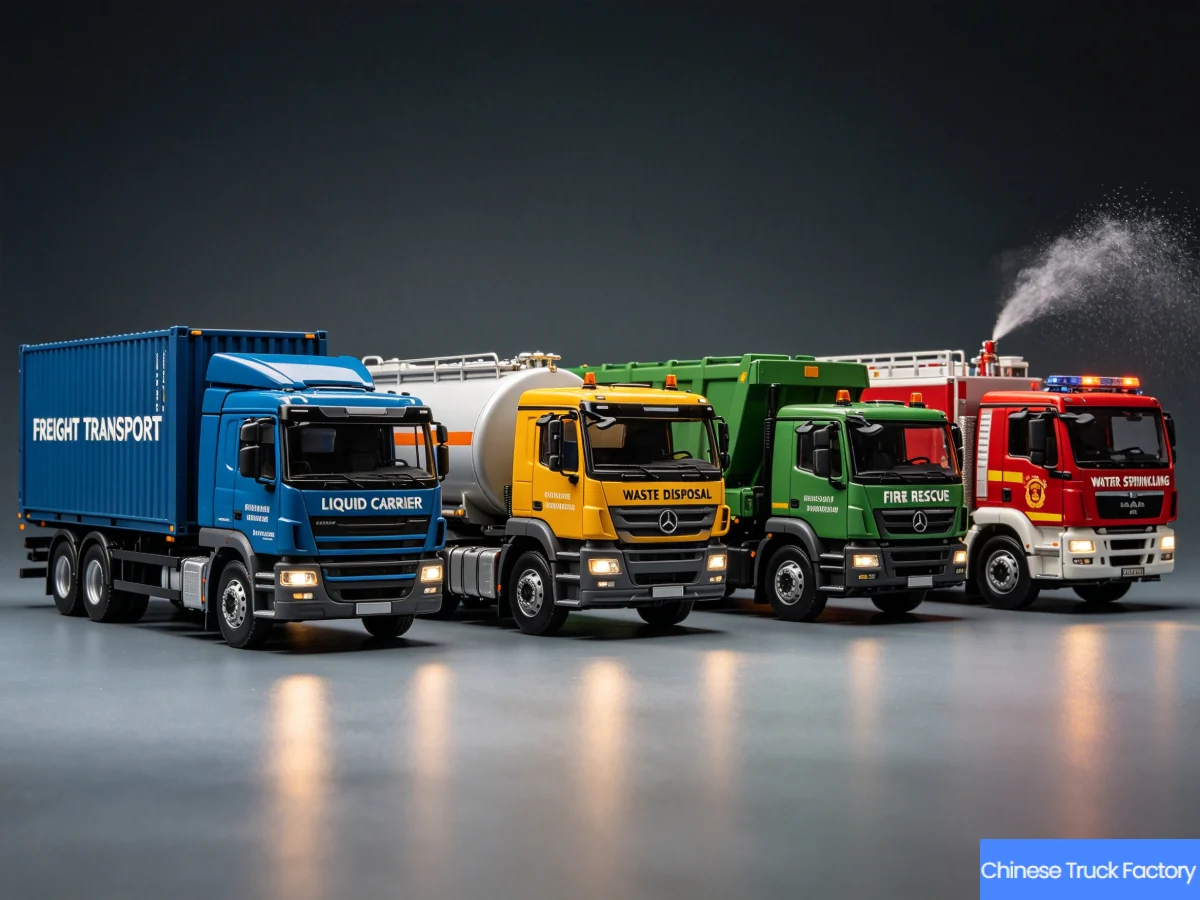
What “Best Supplier” Actually Means for a Ugandan Buyer
Before we get into brands and models, let’s fix the evaluation framework. When I assess a Chinese truck supplier for an East African buyer, I score them on seven things — and price is deliberately last:
- Application matching capability. Can they actually spec a truck to your payload, route, gradient and climate, or do they just quote whatever’s in stock?
- Configuration honesty. Do they separate curb weight, GVW, body volume and legal payload — or do they blur them to make the numbers look better?
- Verifiable documentation. Chassis number, engine number, build sheet, inspection photos, test report. If a supplier is vague about these, walk away.
- Emission and compliance fit. Uganda’s fuel sulfur content and registration rules matter. A Euro 5 truck running on high-sulfur diesel will destroy its aftertreatment system in months.
- Parts and service realism. Chinese trucks share a lot of common components, but “common” isn’t the same as “available in Kampala next week.” Confirm the actual parts pathway.
- Shipping and Incoterms clarity. FOB, CFR, CIF — each shifts risk differently. Know what you’re buying.
- Price, with the right basis. A cheap FOB price means nothing if the landed cost in Mombasa and the inland haul to Kampala blow past your budget.
If a supplier scores well on the first six, the seventh usually takes care of itself, because you’re no longer comparing apples to oranges. You’re comparing two properly specified trucks, and the price gap reflects real differences in configuration.
The Ugandan Operating Environment: What It Does to Truck Specs
Uganda is not a single operating environment. A truck working the Kampala–Malaba corridor sees different loads and roads than one running aggregate out of a quarry in the west, or one doing waste collection inside Kampala’s ring roads. Generic “Africa-spec” advice is close to useless here. You have to work from the actual duty cycle.
Road conditions and their consequences
Paved trunk routes are mostly in reasonable condition, but you’ll still hit potholes, speed humps and sections under repair. Murram and unpaved haul roads are a different story — high rolling resistance, dust ingress, and much higher suspension and tire loads. On these roads, tire choice matters more than engine power. A truck specced with highway tread on a murram haul will chew through tires and lose traction on grades.
Gradient and altitude
Most of Uganda sits at 1,000–1,500 meters, with higher terrain in the southwest. Altitude reduces naturally aspirated engine output, though modern turbocharged diesels compensate reasonably well. The bigger issue is gradient. A loaded tipper climbing a sustained 8–12% grade needs a torque curve and gearbox spread that will actually hold road speed without overheating. That’s a drivetrain spec decision, not a horsepower number.
Khí hậu
Hot, humid conditions stress cooling systems, hydraulic oil, and electrical connectors. Radiator sizing, fan drive type, and hydraulic oil cooling all matter more here than in temperate markets. This is a real specification issue, not a detail — I’ve seen hydraulic systems overheat on tipper trucks in tropical conditions because the oil cooler was sized for a cooler climate.
Fuel quality and emission configuration
This is the single most common compliance mistake I see. Uganda’s diesel sulfur content has historically been higher than what Euro 5 or Euro 6 engines are designed for. Running a high-emission-spec engine on high-sulfur fuel will degrade the SCR catalyst and DPF, and in some cases void the warranty. Before you order, confirm two things: the current fuel sulfur specification at your intended refueling points, and the emission level your truck can realistically run on that fuel without aftertreatment problems. Many buyers in the region deliberately choose Euro 2 or Euro 3 mechanical engines for exactly this reason — simpler, more tolerant of fuel quality, and easier to repair with basic tools. That’s a legitimate engineering trade-off, not a step backward.
Matching Truck Type to Application
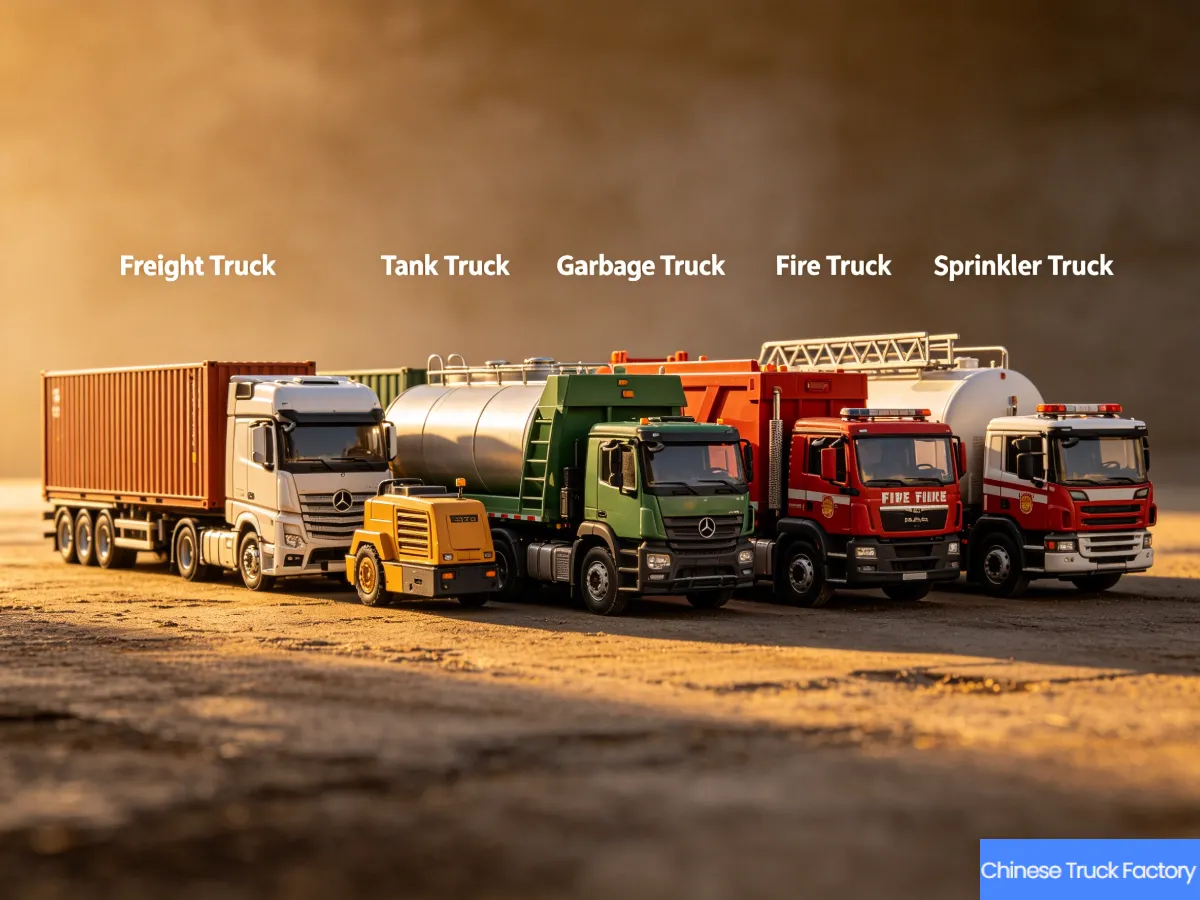
Chinese manufacturers build an enormous range, and the same factory may produce tipper trucks, tractor heads, crane trucks, garbage compactors and water tankers. The supplier you choose should be the one whose product line and engineering depth match your application. Here’s how the main categories break down for Ugandan buyers.
Dump trucks and tippers
Construction, quarry, and aggregate haulage. The critical specs are body volume, steel grade, floor thickness, tipping angle, and hydraulic cylinder configuration. A 20 m³ body does not mean 20 tonnes of payload — it means 20 m³ of volume, and the actual payload depends on material density. Sand runs roughly 1.6 t/m³, gravel around 1.5 t/m³, and wet clay can exceed 2.0 t/m³. Do the math before you order, and cross-check against axle ratings and Uganda’s road weight limits. For a deeper look at matching body volume to real payload, this guide on Tải trọng của xe ben is worth reading before you finalize a spec.
Tractor heads and long-haul units
Container haulage, cross-border freight, and fuel distribution. The key decision is 4×2 versus 6×4, and it’s driven by gross combination weight, route gradient, and axle ratio. A 6×4 with a low final-drive ratio will pull heavy loads on grades but burn more fuel on flat highway. A 4×2 is cheaper, lighter, and more fuel-efficient on light loads, but it runs out of traction and axle capacity quickly when you’re heavy. There’s no universal answer — it depends on your typical GCW and route profile.
Specialized and municipal vehicles
Garbage compactors, water tankers, vacuum trucks, fire trucks, crane trucks. These are superstructure-driven purchases. The chassis is the foundation, but the body, hydraulics, and control systems determine whether the truck does its job. For municipal waste collection, compaction ratio and hopper design matter more than chassis brand. For water bowsers, tank baffling and center of gravity are the safety-critical factors. If you’re evaluating this category, the xe chuyên dụng phục vụ vệ sinh range gives a useful overview of how these trucks are configured.
Comparing the Main Chinese Truck Brands Available to Ugandan Buyers
You’ll see several major Chinese brands quoted for Uganda. They are not interchangeable, and none of them is universally “better” than the others. Here’s a practical comparison based on what each brand tends to do well and where the trade-offs sit. Note that specific model specs vary by year, emission level, and configuration — always confirm against the actual build sheet.
| Thương hiệu | Typical strength | Common configurations | Considerations for Uganda |
|---|---|---|---|
| Sinotruk / HOWO | Wide model range, strong parts ecosystem, high regional familiarity | 6×4 tractors, 6×4 and 8×4 tippers, mixers, tankers | Parts availability is generally good; watch for counterfeit components in the aftermarket |
| SHACMAN | Robust chassis, good torque delivery for heavy haul | 6×4 and 8×4 tippers, tractors, construction trucks | Strong for mining and quarry duty; confirm aftertreatment compatibility with local fuel |
| FAW Jiefang | Established engine platforms, decent fuel economy on highway | 4×2 and 6×4 tractors, cargo trucks | Good for long-haul; parts network varies by region |
| Dongfeng | Broad range including light and medium duty | Medium-duty cargo, tippers, municipal vehicles | Useful for mixed fleets; verify heavy-duty capability for mining-class work |
| Foton | Competitive pricing, growing heavy-duty presence | Tractors, tippers, light commercial | Confirm dealer and parts support depth before committing to a fleet order |
My honest read: brand choice matters less than configuration fit and after-sales support in your specific operating area. A well-specced HOWO with a solid local parts pathway will outperform a poorly specced premium truck every time. And a brand with no parts presence in your region is a liability regardless of how good its factory is.
Where Chinese Truck Factory Fits the Supplier Evaluation
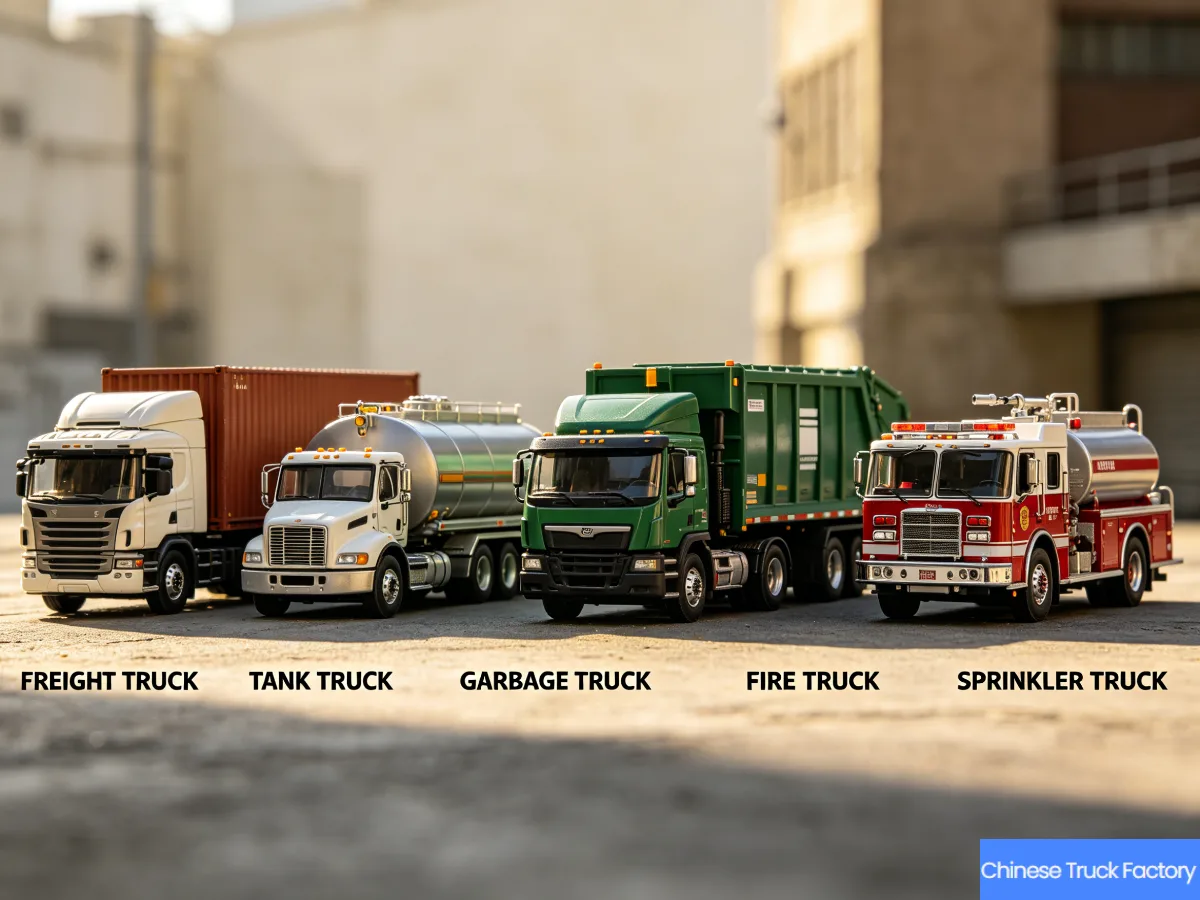
I’ll be direct about this because it’s the question most buyers ask. Chinese Truck Factory operates as a B2B sourcing and export channel for Chinese commercial vehicles, covering heavy-duty trucks, construction vehicles, sanitation trucks, fire trucks, crane trucks, tankers and electric trucks. Against the seven-point framework I laid out earlier, here’s how that positioning lines up:
- Application matching: The sourcing process starts from duty cycle — payload, route, gradient, body requirement — rather than from a stock list. That’s the correct order of operations.
- Tính minh bạch trong cấu hình: Specs are presented with curb weight, GVW and payload separated, which is what you need to avoid the volume-versus-weight trap.
- Tài liệu: Chassis and engine numbers, build sheets and inspection records are part of the export package, which is essential for customs and registration in Uganda.
- Emission flexibility: Because the sourcing model spans multiple factories and emission levels, you can match the engine spec to local fuel quality rather than being forced into a single emission tier.
- Shipping and Incoterms: Export logistics — RoRo, breakbulk, flat rack — are handled as part of the quotation, so landed cost is clearer from the start.
What I’d still verify independently: the specific factory that will build your truck, the exact parts pathway into Uganda, and the warranty terms in writing. No sourcing channel replaces your own due diligence on those three points. If you want to see how the product range maps to different applications, the các giải pháp dành cho xe công trình hạng nặng page is a reasonable starting point for construction and quarry buyers.
Ready to spec a truck against your actual duty cycle?
Send your payload, route, gradient and body requirement — you’ll get a configuration proposal with separated curb weight, GVW and payload figures, not a generic quote.
Payload, Weight and the Legal Reality in Uganda
This is where a lot of importers get caught. Four numbers get confused constantly, and confusing them leads to overloaded trucks, fines, and premature failures:
| Thuật ngữ | What it means | Why it matters |
|---|---|---|
| Trọng lượng không tải (trọng lượng rỗng) | The truck with fuel, fluids and driver, no cargo | Determines how much payload you can legally add |
| Tải trọng | The cargo weight the truck carries | Must be calculated from material density × body volume, then checked against axle limits |
| GVW / GVWR | Maximum total weight of the loaded truck | The design ceiling; legal limits may be lower |
| Thể tích cơ thể | Cubic capacity of the body or tank | Not the same as payload — depends entirely on material density |
The critical point: factory-rated capacity is not the same as legally permitted payload in Uganda. Uganda enforces axle weight and gross vehicle weight limits on its road network, and these can be lower than what the truck is technically capable of. A truck that can physically carry 30 tonnes may be legally restricted to 25 on certain routes. Overloading doesn’t just risk fines — it accelerates axle, suspension, tire and frame fatigue, and it can void your insurance in a claim.
So when you compare suppliers, ask each one to show you the payload calculation against Uganda’s road weight limits, not just the factory rating. A supplier who can’t or won’t do that calculation is telling you something important about how they work.
Powertrain and Chassis Selection for Ugandan Conditions
Engine power gets too much attention and torque delivery gets too little. What actually moves a loaded truck up a grade is torque at the wheels, which depends on engine torque, gearbox ratios, and final drive ratio working together. A 400 hp engine with the wrong axle ratio will struggle where a 380 hp engine with a well-matched drivetrain pulls cleanly.
Cấu hình ổ đĩa
For construction and quarry tippers, 6×4 is the regional standard — good traction, reasonable axle capacity, manageable turning circle. 8×4 offers higher payload and better weight distribution but adds curb weight, tire cost and a wider turning radius that can be a problem in tight urban or site access. For long-haul tractor work, 6×4 handles heavier GCW and gradients better than 4×2, at the cost of fuel and purchase price. There’s a detailed breakdown of this trade-off in the comparison of 6×4 versus 6×2 tractor configurations if you’re speccing a haulage fleet.
Suspension and frame
Leaf spring suspension is the practical choice for Ugandan roads — simple, repairable, and tolerant of overload. Air suspension rides better and protects cargo, but it’s more complex and more expensive to repair in a market where air suspension specialists are scarce. Frame strength matters on rough haul roads; a reinforced frame is worth the weight penalty if you’re running heavy on murram.
Lốp xe
Tire spec is one of the highest-leverage decisions on a Ugandan fleet. Highway tread on a construction haul road will fail early. You want a tread pattern and casing rated for mixed on/off-road use, with the correct load index for your axle weights. Tire cost per kilometer often exceeds fuel cost per kilometer on rough haul routes — so this isn’t a place to save money on the initial order.
Fuel Consumption: What You Can and Can’t Predict
Anyone who quotes you a single fuel consumption figure for a Chinese truck in Uganda is either guessing or selling. Actual consumption depends on gross weight, route profile, average speed, idling time, gradient, tire pressure, axle ratio, driver behavior and load distribution. A tipper doing short quarry cycles with lots of idling and climbing can consume dramatically more per kilometer than the same truck on a flat highway run.
What you can do is establish an indicative operating range for your specific duty cycle and then track actual consumption per truck once you’re running. The variables that move the needle most, in order: gross weight, route gradient, idling percentage, and driver behavior. If you want to reduce consumption, address idling first — it’s usually the biggest and easiest win. There’s a practical list of methods in this guide on reducing heavy truck fuel consumption that’s worth working through with your drivers.
Maintenance, Parts and Uptime
Downtime costs more than repairs. A truck sitting in a yard waiting for a hydraulic hose costs you the revenue it would have earned, plus the driver’s time, plus the knock-on effect on your schedule. So when you evaluate a supplier, the question isn’t “how reliable is this truck” in the abstract — it’s “how fast can I get it back running when something breaks.”
Plan your maintenance around these categories:
- Kiểm tra hàng ngày: tình trạng và áp suất lốp, rò rỉ chất lỏng, ống dẫn thủy lực, đèn, áp suất không khí, đèn báo cảnh báo.
- Bảo dưỡng định kỳ: engine oil and filters, transmission and differential oil, brake system, suspension, wheel bearings, hydraulic oil, PTO, dump body hinges or compactor mechanism.
- Wear items to stock: filters, belts, brake linings, hydraulic hoses and fittings, wheel bearings, and the specific tires your routes demand.
I won’t give you specific service intervals here because they depend on the engine and component manufacturer’s manual for your exact model. Follow the manual, and adjust for dust and load severity — dusty conditions and heavy loads shorten service intervals, sometimes significantly.
When you compare suppliers, ask each one to provide a spare parts list with part numbers for your specific configuration, and confirm where those parts can be sourced. A supplier who can’t provide part numbers is a supplier you’ll be chasing for months after the sale.
Shipping, Import and Landed Cost
Most trucks from China to Uganda move via RoRo or breakbulk through Mombasa, then overland to Kampala. Some specialized or oversized units move as flat rack or breakbulk cargo. The shipping method affects cost, transit time and risk, and it should be decided based on the truck’s dimensions, weight, drivability and quantity.
Understand your Incoterm clearly:
- FOB: You take responsibility from the port of loading. Cheaper headline price, more work for you.
- CFR: Supplier covers freight to destination port. You handle insurance and inland costs.
- CIF: Supplier covers freight and marine insurance to destination port. Inland transport, customs and import duties are still yours.
The mistake I see most often is comparing an FOB price from one supplier against a CIF price from another and concluding one is cheaper. They’re not comparable. Convert everything to estimated landed cost — including freight, marine insurance, port charges at Mombasa, customs clearance, import duty, and inland transport to your operating base — before you decide. For a fuller explanation of what each term includes, this breakdown of CIF versus FOB truck pricing is a useful reference.
Compliance and Registration: What to Confirm Before You Order
I’m deliberately not going to state specific Ugandan regulations as fact here, because vehicle import and registration rules change, and getting them wrong is expensive. What I will tell you is the checklist you need to work through with your supplier and your local clearing agent before you place an order:
- Tiêu chuẩn khí thải: What emission level does Uganda currently require or permit for imported trucks, and does your intended engine spec match it?
- Chất lượng nhiên liệu: What is the sulfur content at your refueling points, and is your engine’s aftertreatment system compatible?
- Cấu hình hệ thống lái: Uganda drives on the left — confirm right-hand drive if required for your registration category.
- Axle weight and GVW limits: What are the legal limits on your operating routes, and does your payload calculation respect them?
- Kích thước xe: Length, width and height limits for road use and for the shipping method you’ve chosen.
- Lighting and safety equipment: Local requirements for lights, reflectors, warning devices.
- Registration eligibility: Age limits, inspection requirements, and documentation needed for first registration.
- Chứng nhận tương đương hoặc chứng nhận kiểu loại: Whether Uganda requires any form of type approval for your vehicle category.
Get written confirmation from your supplier on each point, and cross-check with your clearing agent in Uganda. If a supplier claims a truck is “globally compliant,” that’s a red flag — no vehicle is compliant everywhere, because requirements differ by country. What you want is a supplier who asks you what Uganda requires, not one who tells you it doesn’t matter.
Total Cost of Ownership: The Only Comparison That Counts
Purchase price is the smallest part of what a truck costs you over its life. The real number is total cost of ownership, and it looks like this:
| Loại chi phí | What drives it | Typical weight in TCO |
|---|---|---|
| Giá mua | Configuration, brand, emission level, options | Moderate — one-time |
| Vận chuyển hàng hóa và nhập khẩu | Shipping method, Incoterm, duties, inland transport | Moderate — one-time |
| Fuel or energy | Duty cycle, gross weight, route, driver behavior | High — ongoing, largest single category |
| Lốp xe | Road condition, load, tire spec, alignment | High on rough haul routes |
| Bảo trì theo lịch trình | Service intervals, parts cost, labor | Trung bình |
| Các công việc sửa chữa ngoài kế hoạch | Reliability, operating severity, parts availability | Variable — can be very high |
| Thời gian ngừng hoạt động | Parts lead time, service capability, fleet redundancy | Often the hidden killer |
| Giá trị còn lại | Brand familiarity, condition, market demand | Offsets total cost at disposal |
When you run these numbers, the truck with the lowest purchase price is frequently not the lowest TCO. A slightly more expensive configuration with better fuel efficiency, longer tire life and faster parts access can cost less over five years than a cheaper truck that burns more fuel and sits waiting for parts. Run the numbers for your own duty cycle — don’t accept a supplier’s TCO claim without the underlying assumptions.
How to Vet a Chinese Truck Supplier Before You Send a Deposit
This is the part most buyers rush, and it’s the part that determines whether the deal goes well. Here’s the sequence I’d follow:
- Ask for the build sheet. Not a brochure — the actual specification for the truck they’re proposing, with chassis model, engine model, gearbox model, axle ratios, tire size, body dimensions and weights.
- Request photos and video of the actual unit or the production line. A supplier who can’t or won’t show you the truck being built is a supplier you can’t verify.
- Confirm the chassis and engine numbers in writing. These go on your import documents and must match the physical truck.
- Get the inspection and test report. What was checked, by whom, and what were the results.
- Confirm the parts list and part numbers for your configuration, and where they can be sourced.
- Get the warranty terms in writing — what’s covered, for how long, what voids it, and who performs the work in Uganda.
- Verify the shipping plan and Incoterm in the contract, with the destination port and inland delivery terms spelled out.
- Start with a smaller order if you’re new to the supplier. One or two trucks first, then scale once you’ve verified the product and the process.
None of this is exotic. It’s basic procurement discipline. The buyers who skip it are the ones who end up with a truck that doesn’t match the paperwork, or a warranty that turns out to be unenforceable.
Các câu hỏi thường gặp
How do I choose the right payload for a truck in Uganda?
Start with the material you’re hauling and its density, multiply by the body volume to get the theoretical cargo weight, then check that against the truck’s GVW minus curb weight, and finally against Uganda’s legal axle and gross weight limits on your routes. The lowest of those three numbers is your real payload. Never assume body volume equals payload.
Which axle configuration should I use for construction work in Uganda?
For most construction and quarry tipper work, 6×4 is the practical standard — good traction, adequate axle capacity, and a manageable turning circle. 8×4 gives you more payload and better weight distribution but adds curb weight, tire cost and turning radius. The right choice depends on your required payload, route access and legal weight limits.
What emission standard should I order for Uganda?
This depends on the current fuel sulfur content at your refueling points and Uganda’s import and registration rules at the time you order. High-emission engines running on high-sulfur fuel will damage aftertreatment systems. Many regional buyers choose Euro 2 or Euro 3 mechanical engines for fuel tolerance and simpler repair. Confirm both the fuel spec and the regulatory requirement before finalizing your order.
Tình trạng đường xá ảnh hưởng như thế nào đến việc lựa chọn xe tải?
It affects almost everything: suspension type, tire spec, frame strength, body steel grade, and drivetrain ratios. Rough murram haul roads demand heavier suspension, reinforced frames, mixed on/off-road tires and, often, a lower axle ratio for grade climbing. Highway-spec trucks sent to construction haul roads fail early and often.
What affects fuel consumption most on a Chinese truck in Uganda?
Gross weight, route gradient, idling percentage, average speed and driver behavior, in roughly that order. Axle ratio, tire pressure and load distribution also matter. Any single quoted fuel figure is meaningless without knowing the duty cycle it was measured under — track your own consumption per truck once operating.
Tôi nên lên kế hoạch bảo trì những công việc nào?
Daily checks on tires, leaks, hydraulic hoses and lights; periodic service on engine oil and filters, transmission and differential oil, brakes, suspension, wheel bearings and hydraulic oil. Stock wear items — filters, belts, brake linings, hydraulic hoses and tires — before you need them. Follow the engine and component manufacturer’s service manual for intervals, and shorten them for dusty or heavy-load conditions.
How do I estimate total ownership cost for a truck?
Add purchase price, freight and import costs, fuel or energy over the expected service life, tires, scheduled maintenance, unscheduled repairs, spare parts and the cost of downtime, then subtract residual value. Fuel and tires usually dominate on rough haul routes, and downtime can exceed both if parts are slow to arrive. Run the numbers for your specific duty cycle rather than accepting a generic estimate.
What information do I need to provide for a truck quotation?
Destination country and port, application, cargo or material type, required payload, body capacity, daily mileage, road condition, gradient, drive configuration, steering side, emission requirement, quantity and any required options. For crane trucks, add maximum lifting weight, working radius and lifting height. For fire trucks, add water or foam capacity and pump requirement. For garbage trucks, add waste type, bin type and loading method.
How are trucks shipped from China to Uganda?
Most units move via RoRo or breakbulk to Mombasa, then overland to Kampala. Specialized or oversized vehicles may move as flat rack or breakbulk cargo. The method depends on the truck’s dimensions, weight, drivability and quantity. Confirm the shipping method and Incoterm in the contract, and calculate landed cost including port charges, customs, duty and inland transport.
How do I verify a Chinese truck supplier before sending a deposit?
Ask for the build sheet, photos or video of the actual unit, chassis and engine numbers in writing, the inspection report, the parts list with part numbers, and the warranty terms. Confirm the shipping plan and Incoterm in the contract. If you’re new to the supplier, start with one or two trucks before scaling up.
Những suy nghĩ cuối cùng
The best Chinese truck supplier for a Ugandan buyer isn’t the one with the lowest headline price or the biggest model range. It’s the one that starts from your duty cycle, separates curb weight from payload from body volume, matches the emission spec to your actual fuel quality, provides verifiable documentation, and can tell you exactly where your spare parts will come from. Those are the criteria that determine whether a truck earns money or drains it.
The most common buyer mistake is comparing purchase prices across incomparable configurations. The second most common is ignoring legal weight limits until the truck is already overloaded and failing. If you get the specification right — payload, axle configuration, drivetrain, body design, emission level and compliance — the supplier decision usually becomes obvious, because only some suppliers can actually deliver what you need. Get the specification wrong, and no supplier can save you.
Start with the duty cycle. Build the payload calculation. Confirm the compliance requirements. Then compare suppliers on their ability to deliver against those numbers — not against a brochure.



