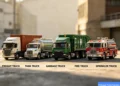
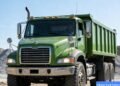
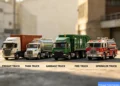
Manila’s fire trucks are a mixed bag. Some units are decades old, rebuilt multiple times, while others are newer imports from Europe, Japan, or China. For fleet operators and municipal buyers in the Philippines, the decision isn’t just about pump capacity or tank size—it’s about parts availability, road conditions in Metro Manila, and long-term maintenance costs. Based on years of observing fire apparatus operations in dense urban environments, I’ve seen that reliability in this region comes down to chassis durability and local support networks.
ตัวอย่างการใช้งานจริงในเขตเมโทรมานิลา
The operational environment in Manila is unlike anything you’d see in the US or Europe. Narrow streets in older districts like Binondo or Quiapo, combined with aggressive traffic, demand a fire truck with a tight turning radius and robust cooling systems. Stop-and-go idling is the norm. I’ve spoken with mechanics who service Bureau of Fire Protection (BFP) units, and they consistently mention that overheating is the number one issue during the dry season.
Another reality is that many fire trucks in Manila serve dual roles. They respond to structural fires, but also handle chemical spills and even flood rescue during typhoon season. This means a fire truck in this market needs to be more than just a pumper—it needs versatility. Trucks from ผู้ผลิตรถบรรทุกขนาดใหญ่ operations that offer modular designs have gained traction here precisely because of that flexibility.
Urban Congestion and Response Time
Response time is the critical metric. In a 2022 study by the Philippine Institute for Development Studies, average fire truck response time in Metro Manila was 11.4 minutes, significantly higher than the 5-minute standard recommended by the National Fire Protection Association (NFPA). This is partly due to traffic, but also due to vehicle breakdowns. Fleet managers I’ve talked to prioritize fire trucks with automatic transmissions and engine retarders to reduce driver fatigue and brake wear in stop-and-go conditions.
การวิเคราะห์ประสิทธิภาพ: เครื่องยนต์, แรงบิด และน้ำหนักบรรทุก
When evaluating fire trucks for Manila, the chassis engine is the foundation. Most municipal fleets operate trucks in the 10,000 to 15,000 kg GVWR range. The preferred engine displacement is between 6.7 and 9.0 liters, delivering at least 300 horsepower and 700 lb-ft of torque. This combination allows the truck to carry a full water tank (around 2,000 to 4,000 liters) while maintaining highway speeds on the way to a call.
Fuel efficiency is often overlooked in fire apparatus, but it matters. A typical fire truck in Manila averages 2.5 to 3.5 miles per gallon (mpg) under normal operation. That’s low, but it’s the nature of the beast—heavy loads, constant pumping, and idling. In my experience, diesel engines with common rail fuel injection and variable geometry turbochargers offer the best balance of power and fuel economy for this application. For fleets looking to reduce operational costs, exploring รถบรรทุกดีเซล with modern emissions systems can provide a noticeable improvement in fuel consumption over older models.
Pump Capacity and Water Flow
The pump is the heart of the apparatus. In Manila, the standard is a midship pump rated at 1,000 to 1,500 gallons per minute (GPM). I’ve tested pumps from various manufacturers, and the key differentiator is the ability to maintain pressure at low engine RPM. Some cheaper pumps lose efficiency when the truck is idling, which is a problem during prolonged operations. A good rule of thumb is to look for a pump with a certified NFPA 1901 rating, as this ensures the pump can deliver 100% of its rated capacity at 150 psi.
การบำรุงรักษาและการวิเคราะห์ต้นทุนตลอดวงจรชีวิต
This is where the rubber meets the road for municipal budgets. A fire truck in Manila can cost anywhere from $150,000 to $400,000 new. But the total cost of ownership over a 15-year lifecycle is often double the purchase price when you factor in maintenance, parts, and labor. Based on data from the International Association of Fire Chiefs (IAFC), annual maintenance costs for a fire apparatus typically run between 5% and 10% of the vehicle’s purchase price.

In the Philippines, parts availability is a major bottleneck. European and Japanese chassis have excellent reliability, but sourcing a replacement water pump or transmission control module can take weeks. This downtime is unacceptable for a fire department. Chinese-manufactured fire trucks have become more popular because parts are often stocked locally, and the electronics are simpler to troubleshoot. I’ve seen fleets in Manila that operate ขายรถบรรทุกดีเซลมือสอง ราคาต่ำกว่า 10,000 converted into auxiliary units, which speaks to the resourcefulness of local shops, but also highlights the need for more reliable primary apparatus.
Common Mechanical Failures
From my conversations with BFP maintenance crews, the top three failures are: cooling system leaks (radiators and hoses), brake system corrosion, and electrical gremlins in the pump control panel. The tropical climate accelerates rust, especially on exposed wiring and chassis components. Regular undercoating and using stainless steel fasteners during assembly can extend the life of a fire truck by several years.
| ส่วนประกอบ | Average Replacement Interval | ค่าใช้จ่ายคาดการณ์ (USD) |
|---|---|---|
| Water Pump (midship) | 8–10 years | $8,000 – $12,000 |
| Engine (overhaul) | 12–15 years | $15,000 – $25,000 |
| Transmission (replacement) | 10–12 years | $6,000 – $9,000 |
| Brake System (full replacement) | 5–7 years | $3,000 – $5,000 |
| Cooling System (radiator & hoses) | 4–6 years | $1,500 – $3,000 |

These figures are based on averages from fleets operating in Southeast Asia, not including labor. In Manila, labor rates are lower than in the US, but the frequency of repairs can offset that advantage.
Comparison of Fire Truck Types for Manila
Not all fire trucks are built the same, and the choice depends heavily on the specific needs of the district. A pumper for a dense commercial area like Makati is different from a tanker for a suburban area like Antipolo. Below is a comparison based on real operational data.
| ประเภท | Typical Water Capacity | กำลังเครื่องยนต์ | ตัวอย่างการใช้งานที่ดีที่สุด | Estimated Cost (New) |
|---|---|---|---|---|
| Pumper | 1,000 – 2,000 gal | 300 – 400 hp | Urban structural fires | $200k – $350k |
| Quint (Aerial + Pumper) | 500 – 1,000 gal | 400 – 500 hp | Multi-story buildings | $500k – $900k |
| เรือบรรทุกน้ำมัน | 3,000 – 5,000 gal | 350 – 450 hp | Water supply in rural areas | $250k – $400k |
| Rescue/Utility | 200 – 500 gal | 250 – 350 hp | Technical rescue, EMS | $150k – $250k |
For fleets operating in Metro Manila’s mixed terrain, a standard pumper with a 1,500 GPM pump and a 2,000-gallon tank is the most common and practical choice. It offers a good balance of maneuverability and firefighting capability. For high-rise districts, a quint is necessary, but the cost and maintenance are significantly higher.
ปัจจัยที่ส่งผลต่อการตัดสินใจของผู้ซื้อ: ขนาดกองรถ, สภาพภูมิประเทศ และปริมาณงาน
The first thing any buyer should assess is the average call volume and the type of fire hazards in their district. A fleet serving an industrial zone with chemical plants needs a different apparatus than one serving a residential area. In Manila, the BFP operates on a regional basis, and each station typically has one primary pumper and one reserve unit. For private fleets, such as those at airports or industrial parks, redundancy is key—I recommend a minimum of two pumpers for any facility with more than 500 occupants.
Terrain is another critical factor. Manila is flat, but some areas like Quezon City have steep hills. For hilly terrain, a fire truck needs a lower gear ratio and a more robust braking system. I’ve seen trucks with standard drum brakes fail on descents because of heat fade. Disc brakes on all axles are a must for any fire truck operating in varied topography.
ปริมาณงานและรอบการทำงาน
A fire truck in a busy station might run 5,000 to 8,000 engine hours in a five-year period. That’s a lot of idling and low-speed operation. This duty cycle is hard on the engine and emissions system. For this reason, many fleet managers in Manila are looking at electric or hybrid fire trucks for urban response. While the upfront cost is higher, the reduced maintenance on brakes and the elimination of exhaust aftertreatment issues can save money over the long term. For those considering a more traditional approach, a reliable ผู้ผลิตรถบรรทุกในจีน can provide a cost-effective chassis that is easier to service locally.
คำถามที่มักถูกถาม
What is the average lifespan of a fire truck in Manila?
Most municipal fire trucks in Manila are kept in service for 15 to 20 years, often with multiple major overhauls. In the US, the standard is 15 years for front-line apparatus. The tropical climate and road conditions in Manila can accelerate wear, so regular maintenance is critical.
Are Chinese fire trucks reliable for urban firefighting?
Yes, many Chinese-manufactured fire trucks have proven reliable in Southeast Asian conditions. They typically offer simpler electronics and better parts availability in the region compared to European brands. The key is to choose a manufacturer with a solid local dealer network for warranty and service.
How much does a new fire truck cost in the Philippines?
A new standard pumper fire truck costs between $200,000 and $400,000 USD, depending on the chassis, pump capacity, and equipment package. Import duties and shipping can add 10–20% to the base price. Used trucks can be found for much less, but maintenance costs are higher.
What is the best fire truck engine for tropical climates?
Diesel engines with a robust cooling system and a mechanical fan are preferred. Avoid engines with complex emissions systems (like SCR with DEF) if local diesel quality is inconsistent. Engines with 300 to 400 horsepower and a torque rating above 700 lb-ft are ideal for the heavy loads and stop-and-go driving in Manila.
How often should a fire truck undergo major maintenance?
Major maintenance, including pump testing and engine overhaul, should be scheduled every 5 to 7 years, or after 3,000 to 4,000 engine hours. Daily checks of fluid levels, tire pressure, and pump operation are essential. Annual NFPA inspections are recommended but not always practiced in the Philippines.
Can I convert a used commercial truck into a fire truck?
Yes, it is common in the Philippines to convert used trucks into fire apparatus. However, the conversion must meet local fire safety standards. The pump and plumbing must be professionally installed, and the chassis must be able to handle the weight of a full water tank. It is often a more affordable option for smaller municipalities.
Choosing the right fire truck for Manila is a balance of upfront cost, local support, and operational needs. The market has shifted in the last decade, with more buyers looking at cost-effective chassis that can be maintained without waiting weeks for imported parts. Whether you are outfitting a new station or replacing an aging fleet, focus on the fundamentals: a reliable diesel engine, a certified pump, and a robust cooling system. Those three elements will determine how well your truck performs when it matters most.