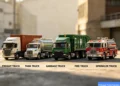
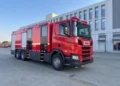
Evaluating truck suppliers for public procurement is not the same as buying trucks on the open market. Price matters, but it is rarely the deciding factor. What decides whether a tender succeeds or fails is whether the supplier can deliver a vehicle that matches the specification, arrives on schedule, passes inspection, and stays serviceable for the full contract period. Most public procurement failures I’ve seen traced back to the same root cause: the buyer evaluated the truck, not the supplier behind it.
This article lays out a practical evaluation framework — technical, commercial, compliance, and after-sales — that works for municipal fleets, government agencies, state-owned utilities, and donor-funded projects. It applies whether you are tendering for garbage compactor trucks, fire apparatus, dump trucks, water tankers, or any other specialized vehicle.
Why Public Procurement Changes the Evaluation Rules
Private buyers can absorb a bad purchase. They write it off, sell the truck, and buy from someone else. Public buyers usually cannot. A truck that fails to meet specification after delivery becomes an audit finding, a contract dispute, or a line item in a public report. The procurement officer who signed off on the award carries that risk.
That asymmetry changes what “best value” means. In public procurement, best value usually means:
- The supplier can prove it has built and exported the exact configuration before
- The technical offer matches the specification line by line, not approximately
- Delivery timelines are realistic and contractually enforceable
- Warranty terms are specific, not general marketing language
- Spare parts and service support are planned, not promised verbally
- Documentation is complete enough to clear customs and register the vehicle
Price still matters. But a supplier who is 8% cheaper and cannot deliver a compliant vehicle on time is not cheaper. They are more expensive, because the true cost shows up later.
The Evaluation Framework: Six Dimensions
I use a six-part framework when reviewing truck suppliers for tenders. Each dimension can be scored independently, and the weighting depends on the project. A municipal garbage truck contract weights after-sales support heavily. A one-time construction fleet purchase may weight technical fit and delivery more heavily.
| มิติ | What It Measures | Typical Weight |
|---|---|---|
| Technical capability | Can they build the exact configuration required? | 25–30% |
| Manufacturing and quality control | Do they control production, or just resell? | 15–20% |
| เงื่อนไขทางการค้า | Price, Incoterms, payment, currency, lead time | 15–20% |
| การปฏิบัติตามกฎระเบียบและการจัดทำเอกสาร | Can the vehicle be registered and operated legally? | 10–15% |
| After-sales and spare parts | Warranty, parts availability, service support | 15–20% |
| Track record and references | Verifiable past deliveries of similar vehicles | 10–15% |
No single dimension should dominate. A supplier with excellent technical capability but no after-sales structure is a risk. A supplier with strong after-sales but weak manufacturing is also a risk. The framework forces the evaluation to stay balanced.
Technical Capability: Beyond the Specification Sheet
Every supplier will claim they can build what you asked for. The evaluation question is whether they have actually built it before, and whether they understand the engineering trade-offs involved.
Check the Configuration Logic, Not Just the Configuration
If you are tendering for a garbage compactor truck, ask the supplier to explain why they propose a specific body volume, compaction ratio, and axle configuration for your collection route. A supplier who simply matches your specification without comment is a pass-through. A supplier who asks about waste density, bin type, route length, and stop frequency is applying engineering judgment.
For example, a 16 m³ compactor body on a 4×2 chassis may be appropriate for low-density residential waste on short urban routes. The same body on a 6×4 chassis with a higher GVW may be necessary if the waste stream is denser or the route includes steep gradients. The right answer depends on the duty cycle, not on the body volume alone.
Request a Bill of Materials, Not a Brochure
Ask for the actual bill of materials for the proposed vehicle: chassis model, engine model and emission standard, transmission model, axle ratios, body steel grade and thickness, hydraulic cylinder specifications, and PTO type. A supplier who can provide this quickly is working from real engineering data. A supplier who responds with a glossy PDF and vague descriptions is not.
This matters most for specialized vehicles. For a เครนติดตั้งบนรถบรรทุก, the bill of materials should include the crane model, load chart, boom sections, outrigger span, and mounting position. For a รถดับเพลิง, it should include pump flow curve, tank material, foam system type, and equipment compartment layout.
Verify the Chassis- Body Interface
Many procurement failures happen at the interface between the chassis and the body. The chassis supplier and the body builder must agree on frame drilling, PTO mounting, hydraulic routing, electrical integration, and weight distribution. If the supplier is only a body builder who buys chassis from a third party, ask how they manage that interface and who is responsible for the complete vehicle warranty.
Manufacturing and Quality Control
The single most useful question in supplier evaluation is: do you manufacture, or do you assemble and resell? Both models can work, but they carry different risks.
A manufacturer controls production schedule, quality checks, and configuration changes. A trading company or assembler depends on third parties for all of these. If a chassis is delayed or a body is built to the wrong specification, the trading company has limited ability to fix it quickly.
Quality Control Questions That Reveal the Truth
- Do you perform a pre-delivery inspection on every unit, and can I see the checklist?
- Do you pressure-test hydraulic systems before shipment?
- Do you road-test the completed vehicle, and for how many kilometers?
- Who signs the certificate of conformity, and what does it cover?
- Can I send a third-party inspector to your facility before shipment?
The last question is the most revealing. Suppliers who manufacture their own vehicles and control quality will welcome inspection. Suppliers who are reselling or assembling from mixed sources will often resist it or add conditions.
Factory Audit vs. Document Review
Not every procurement team can travel to inspect a factory. If you cannot visit, request:
- Photos or video of the production line for the specific vehicle type
- Welding procedure specifications and welder certifications for body fabrication
- Paint and surface treatment process documentation
- Records of previous pre-delivery inspections (redacted for confidentiality)
- ISO or equivalent quality management certificates, with scope clearly stated
These documents do not replace a site visit, but they separate suppliers who have a real production process from those who do not.
Commercial Terms: Reading the Price Correctly
Price comparison in public procurement is where most evaluation errors happen. A supplier quoting FOB and a supplier quoting CIF are not quoting the same thing. A supplier quoting EXW and a supplier quoting DAP are not comparable either.
Normalize Every Quote to the Same Incoterm
Before scoring price, convert every offer to a common basis. I usually convert to estimated landed cost at the destination port, including:
- Vehicle price at the agreed Incoterm
- Freight (RoRo, container, or breakbulk, depending on vehicle size)
- ประกันภัยทางทะเล
- ค่าธรรมเนียมท่าเรือปลายทาง
- Customs clearance and import duties
- Inland transport to the operating depot
- Registration and homologation costs, if applicable
Only after this normalization does price comparison mean anything. A quote that looks 10% cheaper at FOB may be 5% more expensive landed once freight and port charges are included.
Payment Terms and Currency Risk
Public procurement often requires specific payment structures: advance payment against a bank guarantee, milestone payments, or payment against documents. Confirm the supplier can work within your required structure. Some suppliers will only accept a high advance percentage, which shifts risk to the buyer.
Currency matters too. If your budget is in local currency and the contract is in USD or EUR, define the exchange rate mechanism clearly. Do not leave it to be resolved at payment time.
Lead Time and Delivery Schedule
Ask for a production schedule broken down by milestone: chassis procurement, body fabrication, assembly, pre-delivery inspection, and shipment booking. A supplier who gives a single number — “60 days” — without a breakdown is not managing the schedule. A supplier who provides milestones is easier to hold accountable.
Compliance and Documentation
This is the dimension most often underweighted in public tenders, and the one that causes the most post-delivery problems. A truck that cannot be registered in the destination country is not a truck. It is a liability.
What Must Be Confirmed Before Award
- มาตรฐานการปล่อยมลพิษ: Confirm the required standard for your market. Euro 2, Euro 3, Euro 5, and Euro 6 vehicles are all produced, but not all are accepted everywhere. Some markets restrict imports by emission level or vehicle age.
- Homologation and type approval: Confirm whether your country requires a specific type approval, and whether the supplier can provide the documentation. Do not accept a generic “international certificate” as a substitute.
- การจัดวางระบบบังคับเลี้ยว: Left-hand drive or right-hand drive, depending on your market. This is not a minor detail — it affects the entire chassis specification and cannot be changed after production.
- ข้อจำกัดด้านน้ำหนักและขนาดของเพลา: Confirm the vehicle’s axle loads and dimensions comply with your national road regulations. A truck that is legal at the factory may be overweight on your roads.
- Lighting, braking, and safety requirements: These vary by market. Confirm the supplier can meet them, or that local modification is planned and budgeted.
- Fuel quality and DEF availability: A Euro 6 engine requires low-sulfur fuel and AdBlue. If your market does not have reliable supply, a lower emission standard may be the practical choice.
There is no such thing as a globally compliant truck. Compliance is defined by the destination country, and it must be confirmed for the specific vehicle and the specific market.
Documentation Package
Request a complete documentation list before award, including: commercial invoice, packing list, bill of lading, certificate of origin, insurance certificate, and any conformity or inspection certificates required by your customs authority. Confirm who is responsible for each document and what happens if a document is delayed.
After-Sales Support and Spare Parts
This is where public procurement differs most from private purchasing. A government fleet cannot afford a truck that sits idle for three months waiting for a part. The after-sales structure must be evaluated as carefully as the vehicle itself.
Warranty Scope
Ask for the warranty in writing, with specific coverage periods for:
- Chassis and drivetrain
- Engine and emission components
- Body and superstructure
- ระบบไฮดรอลิก
- ระบบไฟฟ้า
- Paint and corrosion protection
Vague warranty language — “12 months or 100,000 km, whichever comes first, on major components” — is not useful. You need to know what is covered, what is excluded, who performs the repair, and how claims are processed.
Spare Parts Planning
For public fleets, I recommend negotiating a spare parts package as part of the vehicle contract. This typically includes:
- Fast-moving consumables: filters, belts, hoses, brake pads, lamps
- Critical wear parts: hydraulic seals, PTO components, body hinges
- At least one set of high-value spares for the specific vehicle type
The exact package depends on the vehicle and the operating environment. A garbage truck in a high-usage municipal fleet needs a different spares package than a fire truck that runs low annual mileage but must be available at all times.
Service Capability
Ask the supplier to describe their service model for your market:
- Do they have a local service partner, or do they send technicians from the factory?
- What is the response time commitment for warranty claims?
- Are technical manuals and parts catalogs provided in a language your technicians can use?
- Is remote diagnostic support available for electronic systems?
For a broader view of how vehicle configuration and service planning interact, the professional sanitation vehicle range illustrates how body design, chassis selection, and maintenance access must be planned together.
Track Record and References
Every supplier will claim extensive experience. The evaluation task is to separate verifiable experience from marketing claims.
What Counts as Verifiable
- Previous contracts of similar vehicle type and scale, with dates and quantities
- References from comparable buyers (municipal fleets, government agencies, contractors) who can be contacted
- Export records showing the vehicle type has been shipped to markets with similar requirements
- Documentation of after-sales support in those markets
What does not count: generic statements like “we have exported to over 100 countries,” without specifics. A supplier with 20 verifiable municipal fleet deliveries is stronger than a supplier claiming 100 unverifiable exports.
Reference Questions That Get Real Answers
When contacting references, ask specific questions:
- Did the vehicle arrive on schedule?
- Did it meet the specification as delivered?
- How was the pre-delivery inspection handled?
- What warranty claims have been filed, and how were they resolved?
- How is spare parts availability in practice?
- Would you buy from this supplier again?
The last question is the most predictive. Buyers who have had a good experience will answer without hesitation. Buyers who have had problems will either avoid the question or give a qualified answer.
Evaluation Scoring: Putting It Together
A structured scoring model keeps the evaluation defensible and consistent across bidders. Here is a practical example for a municipal fleet tender:
| หมวดหมู่ | Sub-criteria | Max Points |
|---|---|---|
| Technical | Configuration fit, engineering explanation, bill of materials quality | 25 |
| Manufacturing | Production control, QC process, inspection access | 15 |
| Commercial | Landed cost, payment terms, lead time, Incoterms | 20 |
| การปฏิบัติตามกฎระเบียบ | Emission, homologation, registration eligibility, documentation | 15 |
| After-sales | Warranty, spares package, service capability | 15 |
| แหล่งอ้างอิง | Verifiable past deliveries, reference feedback | 10 |
The weighting should reflect the project. A fleet that will operate for 10 years should weight after-sales and spares more heavily. A one-time project delivery may weight commercial terms and lead time more heavily. There is no universal correct weighting, but the weighting should be defined before bids are opened, not after.
Applying the Framework: What Good Looks Like
Suppliers who score well across all six dimensions share common characteristics. They manufacture or directly control production of the vehicle type. They can explain the engineering logic behind a configuration, not just quote specifications. They provide a detailed bill of materials and a pre-delivery inspection process. They have verifiable export experience to markets with similar requirements. They provide a written warranty with specific coverage and a realistic spare parts plan.
A supplier like โรงงานผลิตรถบรรทุกของจีน fits this profile for buyers sourcing specialized commercial vehicles. The site covers the full range of vehicle types — รถบรรทุกดีเซลแบบหนัก, รถพิเศษ, และ construction vehicle solutions — with configuration details, export documentation guidance, and shipping information that public procurement teams need to evaluate. For buyers building a tender specification, the quotation information guide is a practical starting point for defining what to request from bidders.
Buyers who want to move from framework to specific vehicle evaluation can review the configuration options and request a structured quotation through the หน้าติดต่อ.
Common Evaluation Mistakes in Public Procurement
I have reviewed enough tender evaluations to see the same errors repeat. The most common ones:
Mistake 1: Scoring the Vehicle, Not the Supplier
Two suppliers may offer identical vehicle specifications. One manufactures the vehicle and controls quality. The other resells and depends on third parties. The vehicle specification does not reveal this difference, but the supplier evaluation should.
Mistake 2: Comparing Incomparable Prices
FOB vs. CIF vs. DAP quotes are not comparable. Neither are quotes with different warranty terms, different spare parts packages, or different payment structures. Normalize before scoring.
Mistake 3: Ignoring Compliance Until After Award
Emission standards, homologation, steering configuration, and axle limits must be confirmed before award. Checking them after contract signing is expensive and slow.
Mistake 4: Underweighting After-Sales
The purchase price is a one-time cost. After-sales support and spare parts availability determine the cost of ownership for the next 8–12 years. Weight them accordingly.
Mistake 5: Accepting Vague Warranty Language
“Standard warranty” means nothing. Specific coverage periods, specific components, specific claim procedures — that is what protects the buyer.
Mistake 6: Not Requesting a Bill of Materials
Without a bill of materials, the buyer cannot verify that the delivered vehicle matches the offer. This is especially important for specialized vehicles where the body, hydraulics, and chassis interface determine performance.
Practical Checklist for Tender Documentation
Before issuing a tender for truck supply, confirm the following are included in the request:
- Destination country, port, and operating environment
- Vehicle application and duty cycle description
- Required payload, body capacity, or equipment specification
- Chassis configuration, drive layout, and steering side
- Emission standard and any homologation requirements
- Required Incoterm and delivery schedule
- Warranty requirements, minimum coverage periods
- Spare parts package requirements
- Documentation requirements for customs and registration
- Pre-delivery inspection rights and third-party inspection provisions
- Payment structure and currency
- Evaluation criteria and weightings
Including these in the tender document forces bidders to respond specifically and gives the evaluation committee a consistent basis for comparison.
คำถามที่มักถูกถาม
What is the most important factor when evaluating truck suppliers for public procurement?
There is no single factor, but if one dimension must be weighted highest, it is usually after-sales support and spare parts availability. Public fleets operate for many years and cannot tolerate long downtime. A supplier who cannot support the vehicle after delivery is a risk regardless of price or technical capability.
How do I compare quotes from different suppliers when Incoterms differ?
Convert all quotes to a common basis — usually estimated landed cost at the destination. Include freight, insurance, port charges, customs clearance, import duties, inland transport, and registration costs. Only after normalization does price comparison become meaningful.
Should I require a bill of materials from bidders?
Yes. A bill of materials is the only reliable way to verify that the delivered vehicle matches the offer. It should list the chassis model, engine and emission standard, transmission, axle ratios, body specifications, hydraulic components, and any specialized equipment.
How do I verify a supplier’s export experience?
Request specific contract references with dates, quantities, and vehicle types. Contact the references and ask about delivery schedule, specification compliance, warranty handling, and spare parts availability. Verifiable references from comparable buyers are far more valuable than general claims of extensive export experience.
What warranty terms should I require in a public procurement contract?
Require specific coverage periods for the chassis, drivetrain, engine and emission components, body, hydraulic system, and electrical system. Define what is covered, what is excluded, who performs repairs, and how claims are processed. Avoid accepting vague “standard warranty” language.
How do I confirm the vehicle will be legally registrable in my country?
Confirm the emission standard, homologation requirements, steering configuration, axle weight limits, vehicle dimensions, and any lighting or safety requirements specific to your market. Request documentation from the supplier and verify it with your customs authority or vehicle registration agency before award.
What spare parts should be included in the initial contract?
At minimum, include fast-moving consumables (filters, belts, hoses, brake components, lamps) and critical wear parts specific to the vehicle type. For specialized vehicles, include hydraulic seals, PTO components, and body-specific wear items. The exact package depends on the vehicle and the operating environment.
How many suppliers should be evaluated in a public tender?
Most public procurement rules require a minimum number of responsive bids, often three. Beyond that, the number should be large enough to ensure competition but small enough that each bid can be evaluated thoroughly. Quality of evaluation matters more than quantity of bidders.
ข้อคิดสุดท้าย
Evaluating truck suppliers for public procurement comes down to a simple principle: evaluate the supplier as carefully as the vehicle. The vehicle specification tells you what is being offered. The supplier evaluation tells you whether it will actually be delivered, compliant, and supported for the life of the contract.
The most common failure is not choosing the wrong truck. It is choosing a supplier who cannot deliver the right truck. A structured evaluation across technical capability, manufacturing control, commercial terms, compliance, after-sales, and track record prevents that mistake. Weight the dimensions according to the project, normalize prices before comparison, confirm compliance before award, and treat after-sales support as a core requirement rather than a bonus.
The most suitable supplier is therefore not necessarily the one with the lowest price or the most impressive brochure. It is the one whose technical capability, manufacturing control, commercial terms, compliance documentation, and after-sales structure match the requirements of the specific procurement with the fewest unresolved risks.