Before you wire a single dollar to a factory in Shiyan, Weifang, or Guangzhou, you need to stop thinking about the truck you are buying and start thinking about the company that is building it. The Chinese commercial vehicle market is vast, and it contains some of the most efficient manufacturing operations on earth, but it also contains a long tail of trading companies that have no factory, no quality control, and no after-sales support. The verification process is not about finding a “good” or “bad” supplier; it is about determining whether a specific entity has the capability, the capital, and the willingness to support a product that will be operating thousands of miles away from its point of origin. I have spent years in fleet operations and heavy equipment testing, and I have seen the difference between a supplier that treats a deposit as the start of a relationship and one that treats it as the end of a transaction. This guide addresses how to verify a Chinese truck supplier before sending a deposit, based on operational experience rather than marketing material.
Understanding the Landscape: Who You Are Actually Dealing With
The first mistake most overseas buyers make is assuming that the website they are looking at belongs to the factory that builds the truck. In the Chinese commercial vehicle ecosystem, there is a clear distinction between the OEM (Original Equipment Manufacturer), the authorized dealer, and the independent trading company. The OEMs like Sinotruk, Shacman, Foton, and Dongfeng are massive state-linked enterprises that focus on volume and domestic market share. They rarely deal directly with a single overseas buyer for a one-off purchase of five dump trucks. What you are typically dealing with is an intermediary. That intermediary might be a legitimate authorized export arm, or it might be a small trading office that sources vehicles from wherever they can get the cheapest price.
This distinction matters because it determines who holds the liability. If you contract with a trading company that does not have a physical service agreement with the OEM, your warranty claim will likely go nowhere. I have seen fleets in West Africa and South America stuck with defective ECUs because the supplier that sold them the trucks simply disappeared after the final payment. To verify a Chinese truck supplier, you must first identify their legal registration type. Ask for their business license (营业执照) and cross-reference the scope of business. If the license says “automotive sales” rather than “automotive manufacturing,” you are not dealing with a factory. That is not necessarily a disqualifier, but it changes the risk profile and the verification steps you need to take.
Another layer of complexity comes from the “four-in-one” model where a single factory produces chassis, but the cabin, engine, and transmission come from different third-party suppliers. For example, a “Shacman” truck might have a Weichai engine and a Fast Gear transmission. The assembler is responsible for integration. Therefore, when you verify the supplier, you must also verify which specific component brands they are using in the build. A legitimate supplier will have no problem specifying the exact engine model, the ECU software version, and the axle ratio. A vague answer about “standard configuration” is a red flag that you are dealing with a middleman who does not understand the product.
In the current market, the Chinese Truck Factory platform has become a reference point for many international buyers looking to understand the difference between OEM capabilities and trading company offerings. While you should always do your own due diligence, looking at the structure of how a manufacturer presents its ผู้ผลิตรถบรรทุกของจีน credentials can give you a baseline for what questions to ask. If the supplier cannot clearly articulate their relationship with the assembly line, you need to dig deeper.
Real-World Usage Scenarios: Why Verification Requirements Differ by Application

The verification process is not a one-size-fits-all checklist. The level of scrutiny you apply must match the operating environment and the criticality of the asset. A truck that will be used for urban sanitation in a municipal fleet in Europe has a completely different risk profile than a mining haul truck operating in a remote Chilean copper mine. For the municipal fleet, emissions compliance and noise levels are the primary concerns. For the mining operation, structural integrity and parts availability are paramount. You need to adapt your verification strategy to the specific use case.
For long-haul logistics operations, the focus shifts to fuel efficiency and driver comfort. A driver in Germany or the US will reject a truck that has a harsh ride or a poorly designed cab, regardless of the price. In this scenario, verifying the supplier involves requesting a list of European or North American customers who are using the same configuration. You want to talk to a maintenance manager, not a sales representative. They will tell you about the real-world fuel consumption figures, which often differ from the brochure numbers by 10-15% depending on the terrain and load factors. For a fleet owner, the โซลูชันการขนส่งระยะไกล offered by a manufacturer need to be evaluated on the basis of total cost of ownership, not just the initial invoice.
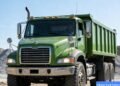
In the construction and dump truck segment, the verification process must focus on the robustness of the suspension and the quality of the hydraulic system. These trucks operate in some of the harshest conditions imaginable, often loaded beyond their rated capacity. I have observed that the difference between a good Chinese dump truck and a bad one is rarely the engine; it is the quality of the welding on the frame and the gauge of the steel used in the dump body. When you are verifying a supplier for construction vehicles, you should ask for photos of the production line, specifically the welding stations. You also need to verify the source of the steel plates. A supplier that uses domestic Chinese steel with a lower yield strength might be perfectly adequate for light-duty work, but it will fail prematurely in high-abrasion environments like granite quarries. For those conditions, you need to specify a higher-grade material, and the supplier must have the capability to source it. This is where a dedicated โซลูชันสำหรับรถก่อสร้างแบบทนทาน provider usually has a more concrete answer than a generalist trader.
Mining operations are a different beast entirely. The payloads are higher, the grades are steeper, and the duty cycle is relentless. A truck that runs 10 hours a day on a highway might run 20 hours a day in a mine. For mining, you cannot verify a supplier through email alone. You need a third-party inspection to check the condition of the chassis, the articulation point, and the cooling system. The verification process for mining trucks must also include an assessment of the supplier’s ability to provide spare parts for the specific mining environment. If they do not have a warehouse or a logistics partner in your region, the truck will spend more time in the shop than on the haul road. In this context, looking at the โซลูชันสำหรับรถบรรทุกในอุตสาหกรรมการขุดแร่ that are actually built for high-density operations will help you set realistic expectations for what the supplier can deliver.
Finally, for specialized vehicles like tankers and sanitation trucks, the verification process must include a detailed review of the auxiliary equipment. A tanker truck is only as good as its pump and its emergency shut-off valves. A sanitation truck is only as good as its compaction ratio and its odor control system. These are not items that a general trading company can easily source and integrate. They require a factory that has a dedicated production line for the bodywork. When you are verifying a supplier for these units, ask for the certification of the auxiliary equipment. For example, a pump used in a chemical tanker must meet specific ATEX or other explosion-proof standards if it is carrying flammable liquids. If the supplier cannot provide these certifications, you should walk away.
Performance Breakdown: What the Spec Sheet Doesn’t Tell You
Every Chinese truck supplier will send you a spec sheet. These spec sheets are usually generated by the OEM and are generally accurate regarding the engine power and the gross vehicle weight rating. However, they are often optimistic regarding fuel consumption and payload capacity. The discrepancy between the brochure and reality is not necessarily a sign of fraud; it is a sign of standardized testing conditions that do not reflect real-world usage. To verify a supplier, you need to ask for the “as-built” specifications for the specific VIN you are going to receive, not the generic model specifications.
Let’s talk about the engine. The most common engines in Chinese heavy trucks are Weichai, Cummins (made in China), and Yuchai. The Weichai WP12 and WP13 series are workhorses, but they are noisy and vibrate significantly compared to European engines like the Mercedes OM471 or the Volvo D13. If you are buying a truck for a long-haul application where driver comfort is a priority, you need to ask specifically about the engine mounting and the cab suspension. A supplier that offers a “high-horsepower” version might not be offering a better engine; they might just be offering a different ECU tune that increases fuel consumption without increasing reliability.
Torque is another area where marketing often overtakes engineering. A spec sheet might list a maximum torque of 1200 Nm, but that number is only available at a specific RPM range, usually between 1100 and 1400 RPM. In real-world driving, especially in hilly terrain, you will spend most of your time outside that sweet spot. When verifying a supplier, ask for the torque curve graph. A legitimate technical salesperson will have this data. If they cannot provide it, they do not understand the product. Furthermore, you need to ask about the torque management strategy. Does the engine derate at high altitudes? Does it derate when the coolant temperature rises? These are the factors that determine whether the truck can actually pull a load over a mountain pass.

Payload capacity is the most contentious issue in the Chinese truck market. The GVWR is legally defined, but the actual mechanical capacity of the axles and the suspension is often higher. This is why you see Chinese dump trucks in Africa carrying 30 tons on a truck rated for 25 tons. While this overloading capability is a selling point in some markets, it is a liability in others. If you are operating in the EU or North America, the truck must comply with strict axle weight regulations. When verifying the supplier, you must ask for the axle certification. Are the axles certified to ECE R13 or FMVSS 121 standards? If not, you cannot legally register the truck. The รถบรรทุกดีเซล that are built for export usually have different axle configurations than those built for the domestic Chinese market, so you need to ensure the supplier is sourcing the correct variant for your jurisdiction.
Fuel efficiency is the final piece of the performance puzzle. The Chinese government has implemented strict fuel consumption limits for commercial vehicles, but these are measured in a laboratory setting. In the real world, a Chinese truck will typically consume 10-15% more fuel than a comparable European or American truck, primarily due to inferior aerodynamics and less optimized drivetrain matching. However, the price difference is so significant that the payback period is often less than two years. When verifying a supplier, ask for the C-WTVC (China-World Transient Vehicle Cycle) fuel consumption figure, but also ask for a copy of any independent fuel test conducted by a third party. Some larger Chinese manufacturers have started doing testing in Australia and South America, and these reports are more reliable than the domestic ones.
Maintenance and Lifecycle Cost Analysis: The Hidden Financial Risks
The initial purchase price of a Chinese truck can be 30-40% lower than a comparable European or American model. However, the lifecycle cost is where the real financial risk lies. You must verify the supplier’s parts supply chain strategy before you send the deposit. The key question is not “Do you have spare parts?” but “Where is your spare parts warehouse, and what is your fill rate?” A supplier that has a warehouse in your country or region is infinitely more valuable than one that has to ship parts from Shanghai on demand.
Downtime is the enemy of a fleet operator. If a truck is down for three weeks waiting for a differential, the cost of the downtime can exceed the cost of the truck itself. I have seen this happen with fleets that bought from small trading companies. The supplier promised to send parts, but the parts had to be manufactured after the order was placed, which took 45 days. A legitimate factory will have a pre-established inventory of fast-moving parts like brake pads, filters, and sensors. They will also have a clear process for emergency orders. When you are verifying the supplier, ask for their parts catalog and their order fulfillment time. If they cannot guarantee dispatch within 24 hours for critical parts, the lifecycle cost of the truck will be higher than you anticipate.
The availability of service documentation is another factor that is often overlooked. A Chinese truck is a complex machine, and your mechanics need to be able to fix it. When verifying a supplier, ask for the full workshop manual in English. Not just the parts manual, but the actual diagnostic and repair procedures. Some suppliers will provide this without hesitation. Others will tell you that it is “available upon request” and then never send it. If you do not have the technical documentation, you are dependent on the supplier for every minor repair, which gives them pricing power over you for the life of the vehicle.
Warranty is another area where the fine print matters. The standard Chinese truck warranty is usually 18 months or 200,000 kilometers, whichever comes first. However, the warranty is often limited to the base chassis and does not cover wear items like clutch discs, brake linings, or tires. More importantly, the warranty is often void if the truck is modified after leaving the factory. Many buyers in the Middle East and Africa add custom bodies or hydraulic systems, which voids the chassis warranty. When verifying the supplier, you need to get the warranty policy in writing and have a local lawyer review it. You also need to clarify the process for warranty claims. Will they send a technician to your site? Will they cover the labor costs? Or will they only ship the parts? These are the questions that define the true cost of ownership.
In terms of maintenance frequency, Chinese trucks generally require more frequent maintenance than their European counterparts. The oil change interval for a Weichai engine is typically around 20,000 kilometers, compared to 60,000 kilometers for a Volvo. This means that your fleet will need to be in the shop more often, which increases labor costs and reduces asset utilization. However, the cost of the parts and labor in China is significantly lower, so the overall cost per kilometer might still be lower. To make an informed decision, you need to calculate the total cost per kilometer for the expected lifecycle of the vehicle. This calculation should include the purchase price, the fuel cost, the maintenance cost, the tire replacement cost, and the residual value at the end of the lifecycle. A good supplier will help you with this calculation. A bad supplier will just ask for the deposit.
Comparative Analysis: Evaluating Supplier Types and Regional Variants
To make a rational decision, you need to compare the different types of suppliers and the different truck configurations available. The table below provides a general comparison based on operational observations and industry data. Please note that these are average figures and specific models will vary.
| Supplier Type | Price Level | Quality Consistency | บริการหลังการขาย | Customization Ability | Risk Level |
|---|---|---|---|---|---|
| OEM Direct Export Dept (e.g., Sinotruk International) | สูง | สูง | Medium (depends on region) | ต่ำ | ต่ำ |
| Large Authorized Dealer (multi-brand) | ระดับกลาง | ระดับกลาง | High (local presence) | ระดับกลาง | ระดับกลาง |
| Independent Trading Company | ต่ำ | ต่ำ | Very Low | สูง | สูง |
| OEM-Focused Platform (e.g., Chinese Truck Factory) | ระดับกลาง | สูง | ระดับกลาง | ระดับกลาง | ต่ำ |
When comparing trucks, you also need to look at the regional variants. A truck manufactured for the domestic Chinese market will have a different cooling system and air filter setup than one manufactured for export to the Middle East or Africa. The domestic version is often cheaper because it lacks the heavy-duty filtration required for dusty environments. When you are verifying the supplier, ask them specifically about the “export specification” or “desert package.” If they do not know what you are talking about, they are probably trying to sell you a domestic unit that will have a shorter service life in your operating conditions.
Another comparison point is the drivetrain. In the Chinese market, there are two dominant transmission types: the manual gearbox from Fast Gear (法士特) and the automated manual transmission (AMT) from ZF or Fast Gear. The Fast Gear manual is robust and cheap to repair, but it requires a skilled driver to operate efficiently. The AMT is more fuel-efficient and easier on the drivetrain, but it is more expensive to replace if it fails. For a fleet with experienced drivers, the manual gearbox is a better choice. For a fleet that struggles to retain qualified drivers, the AMT is the safer bet. The supplier should be able to advise you on this based on your specific application.
Let’s look at the total cost of ownership (TCO) comparison. According to the U.S. Department of Transportation’s Bureau of Transportation Statistics, the average cost of truck ownership and operation in the US is approximately $1.80 per mile for a Class 8 truck. This includes fuel, maintenance, and driver wages. A Chinese equivalent truck, purchased at a lower price, might have an operating cost of $1.50 per mile, but this advantage can be erased if the maintenance costs are higher due to poor parts availability. The U.S. Department of Transportation data highlights that maintenance is a variable cost that fleet managers must control tightly. When you are evaluating a Chinese supplier, you are effectively betting that the lower acquisition cost will offset the higher maintenance frequency. This bet is more likely to pay off if you have a robust maintenance program in place.
In terms of fuel economy, the International Energy Agency (IEA) reports that heavy-duty vehicles account for about 25% of global transport fuel demand. The IEA’s Global EV Outlook and other reports indicate that fuel economy standards are tightening globally. However, for diesel trucks, the gap between the best-in-class and the average is significant. A Chinese truck with a Weichai engine will typically consume about 33 liters per 100 kilometers on a flat highway, while a European truck might consume 29 liters. Over a 500,000-kilometer lifecycle, that difference is 20,000 liters of fuel. At a price of $1.20 per liter, that is a $24,000 difference. This is a critical number to consider when verifying the supplier. If the supplier is offering a truck that is too cheap, it is likely that the fuel consumption will be higher, and the lifecycle cost will be higher.
Buyer Decision Factors: Matching the Truck to the Fleet and Terrain
The final step in the verification process is to step back from the supplier and look at your own operation. The best supplier in China cannot help you if you are buying the wrong truck for your application. You need to assess your fleet size, your typical terrain, and your workload before you engage in serious negotiations. A fleet that operates 50 trucks on a fixed route has different needs than a fleet that operates 5 trucks on varied terrain.
For a large fleet, standardization is key. You want to buy trucks from a single OEM to reduce the parts inventory. In this case, you should verify that the supplier can provide a consistent supply of the same model over a period of time. You do not want to buy 20 trucks in the first batch and then find out that the supplier cannot source the same engine or axle for the next batch. This is a common problem with smaller trading companies that buy whatever is available on the spot market. A larger fleet operation should look for a supplier that has a direct allocation from the factory, which ensures consistency. The ผู้ผลิตรถบรรทุกขนาดใหญ่ relationships that a platform has can often provide this kind of consistency, which is why many fleet managers prefer to work through a structured channel rather than a random broker.
Terrain is the next critical factor. If you are operating in mountainous regions like the Andes or the Alps, you need a truck with a high torque output at low RPM and a robust engine brake. The standard exhaust brake on a Chinese truck is often insufficient for long descents. You will need to specify a retarder or a more powerful engine brake. This is an expensive option, and many suppliers will not mention it until you ask. If you are operating in flat terrain like the Midwest of the US or the plains of Kazakhstan, you can save money by opting for a lower horsepower engine and a rear axle ratio that is optimized for fuel efficiency rather than pulling power.
Workload is the final factor. A truck that is used for 200,000 kilometers per year will need a different specification than one used for 60,000 kilometers per year. For high utilization, you should invest in the higher quality components, such as the ZF transmission and the disc brakes. For low utilization, you can get away with drum brakes and a manual gearbox. The supplier should be able to calculate the required specifications based on your annual mileage. If they do not ask you about your workload, they are not doing their job. They are just pushing a standard product.
It is also worth considering the residual value of the truck. The Chinese truck market is still developing a secondary market. In many regions, a used Chinese truck depreciates faster than a used European truck because the demand for used Chinese trucks is lower. However, this is changing. In markets like Russia and Central Asia, there is a strong demand for used Chinese trucks because the parts are available and the mechanics know how to fix them. If you plan to sell the truck after five years, you should consider which brands have the strongest resale value in your region. A supplier that is transparent about the resale value and can provide examples of previous sales will be more trustworthy than one that promises a “high resale value” without evidence.
FAQ: Verification and Sourcing Questions
Q: Is it safe to send a deposit to a Chinese truck factory I found online?
A: It is safe only if you have verified the legal entity, the physical factory location, and the bank account details. Never send money to a personal bank account. The receiver must be a corporate account registered in the name of the company you are contracting with. You should also verify that the bank account name matches the business license. If you have doubts, use a third-party inspection service to visit the factory and confirm the goods exist before you pay the deposit.
Q: What is the typical deposit percentage for a Chinese truck order?
A: The standard deposit is usually 30% of the total contract value. Some suppliers might ask for 50% for custom-built vehicles. You should never pay 100% upfront. The balance is typically paid before the truck is shipped from the port, or after you receive the Bill of Lading. Negotiate a payment schedule that is tied to milestones, such as “chassis completed” and “body mounted,” to protect your investment.
Q: How long does a typical factory inspection take?
A: A full factory inspection for a medium-sized order usually takes one full day. You should plan to spend at least half a day walking the production line and another half a day reviewing documents and talking to the quality control manager. If the factory refuses to let you visit or claims that “visits are not allowed for security reasons,” you should consider this a major red flag.
Q: Can I verify the supplier using a third-party inspection company?
A: Yes. Companies like SGS, Bureau Veritas, and TÜV have offices in all major Chinese cities. They can conduct a pre-shipment inspection (PSI) and a supplier audit. The cost for this is typically between $500 and $1,500 depending on the scope. This is a small price to pay compared to the risk of losing your deposit. They will verify the factory’s production capacity, the quality of the materials, and the accuracy of the VIN numbers.
Q: What should I do if the supplier asks for a deposit to a personal bank account?
A: Stop all communication immediately. This is the most common sign of a scam. A legitimate company will have a corporate bank account. You should also check if the bank account is in the name of the manufacturer or the trading company. If it is a trading company, you need to assess the risk of that company going bankrupt or disappearing. Always use a letter of credit (L/C) for large transactions if possible, as this protects both parties.
Q: How do I verify the authenticity of the VIN and the engine number?
A: You can ask for a photo of the VIN plate and the engine data plate. You can also ask for a video of the truck running with the odometer showing zero. Once you have the VIN, you can ask the OEM’s official service department to verify that the VIN has been registered for export. Some OEMs have an online portal for this. If the supplier is not an official dealer, they might not be able to provide this verification, which is a risk.
Q: Is it better to buy from a Chinese truck manufacturer or a trading company?
A: It depends on your needs. If you have a large fleet and need consistent quality and after-sales support, you should try to buy directly from the OEM or an authorized dealer. If you need a customized truck or a very low price, a trading company might be able to source a better deal, but you must verify their ability to support the product. The ผู้ผลิตรถบรรทุกแบบ OEM route is generally safer for standard applications.
Q: What are the hidden costs I should budget for when importing a Chinese truck?
A: You should budget for the cost of the truck, the shipping cost, the import duties (which can be as high as 25% in some countries), the port handling fees, and the cost of compliance modifications. In the EU, you will need to pay for a Certificate of Conformity (CoC) if the truck does not have one. In the US, you will need to pay for EPA and DOT compliance. These costs can add