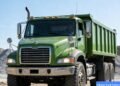
Street sweeper truck pricing in the North American market typically ranges from $180,000 to $420,000 depending on configuration, with municipal spec units averaging around $250,000 and heavy-duty mechanical sweepers for industrial use pushing past $350,000. The wide spread reflects not just brand differences but fundamental design choices—mechanical versus regenerative air systems, chassis ratings, and whether you are buying a complete unit or speccing a chassis for upfitting. Over the past decade, the market has shifted noticeably toward regenerative air sweepers for municipal fleets due to tighter particulate matter (PM10 and PM2.5) regulations, while mechanical sweepers still hold ground in heavy industrial and construction cleanup work where debris size and volume matter more than fine dust pickup.
Having spent years around municipal fleet operations and private sweeping contractors, I have watched operators make the same mistakes repeatedly—buying on sticker price alone, ignoring water system capacity, and underestimating how much a sweeper’s daily productivity depends on hopper density and broom wear. This piece breaks down what actually matters when you are comparing street sweeper trucks, drawing on real operational data and maintenance logs from both municipal and contract sweeping environments.
Overview and Real-World Usage Scenarios
Street sweepers are not a single-purpose machine class. The term covers everything from small ride-on sweepers for parking lots to Class 8-based units that can move 12 tons of debris per shift. Understanding where a machine will operate is the first filter in any purchase decision, and it is also where most fleet managers make their biggest missteps.
Municipal Street Sweeping

Municipalities run sweepers primarily for regulatory compliance and stormwater management. The EPA’s National Pollutant Discharge Elimination System (NPDES) permitting framework requires municipalities in urbanized areas to implement street sweeping as a best management practice for reducing pollutant loads in stormwater runoff. That means the sweeper isn’t just cleaning streets—it is part of a documented environmental compliance program.
In this role, the critical specifications are pickup efficiency for fine particles (below 1mm), water system capacity for dust suppression, and the ability to operate at curb heights without damaging the pickup head. Most municipal routes are 30 to 50 miles per shift, with frequent stops at intersections and cul-de-sacs. A regenerative air sweeper with a 5.5 cubic yard hopper will typically handle 40 to 60 curb miles before needing to dump, depending on debris loading.
Construction and Industrial Site Cleanup
Construction site sweeping is a different beast entirely. The debris is heavier, the surfaces are often unpaved or partially paved, and the operator has to deal with mud, gravel, rebar ends, and occasionally large chunks of concrete. Mechanical sweepers, with their gutter brooms and conveyor systems, handle this environment better than regenerative air units because they don’t rely on airflow to move material into the hopper.
From my observations of private contractors running sweepers on highway projects and large commercial sites, the typical shift covers 20 to 35 miles but moves significantly more tonnage—often 8 to 10 tons per day versus 3 to 5 tons for a municipal route. The wear rate on broom components and conveyor chains in this environment is roughly double what a municipal operator sees, which changes the lifecycle cost picture substantially.
Airport Runway and Large Facility Sweeping


Airports and large industrial facilities operate sweepers on a different schedule entirely—usually at night or during low-traffic windows. These operations prioritize rubber pick-up, safety debris (like loose hardware on runways), and consistent performance over long, straight runs. The runway environment is also harder on chassis components due to the heat and the abrasive nature of rubber deposits.
For this use case, the sweeper needs a high-capacity hopper (7 cubic yards or more), a powerful fan system that can generate enough velocity to pick up FOD (foreign object debris) at high travel speeds, and a filtration system that can handle fine rubber particles without clogging. Operators in this segment tend to prefer air sweepers with dual-engine configurations so that the sweeping system doesn’t rob power from the chassis. If you are evaluating units for this type of work, you should look closely at how the fan is driven and whether the hopper sealing mechanism holds up under continuous operation.
Performance Breakdown: Engine, Torque, Payload, and Fuel Efficiency
The performance of a street sweeper truck is defined by two separate power systems: the chassis drivetrain and the sweeping body’s auxiliary system. The chassis engine moves the truck; the auxiliary engine (or PTO-driven system) powers the fan, brooms, and water pump. How these two systems are configured has a direct impact on fuel economy, maintenance intervals, and operational cost per mile.
Chassis Engine and Drivetrain
Most street sweepers in North America are built on Class 7 or Class 8 chassis. The most common configurations are:
- Class 7 (GVWR 26,001–33,000 lbs): Typically powered by a 6.7L to 8.9L diesel engine producing 260 to 350 horsepower and 660 to 860 lb-ft of torque. These are lighter units, often used for residential sweeping where maneuverability is more important than raw payload. Fuel consumption averages 4 to 6 miles per gallon in sweeping duty.
- Class 8 (GVWR 33,001 lbs and up): Powered by 11L to 13L engines in the 350 to 475 horsepower range, with torque ratings from 1,150 to 1,650 lb-ft. These units can carry larger hoppers and water tanks, but fuel economy drops to 3 to 5 miles per gallon under load.
Torque matters more than horsepower in sweeping applications because the truck is constantly accelerating and decelerating at low speeds. A high-torque engine with a properly geared automatic transmission will hold its speed better on grades and reduce shift cycling, which is a major source of drivetrain wear. If you are speccing a sweeper for hilly terrain, pay attention to the axle ratio and whether the transmission has a lock-up torque converter for sustained low-speed operation.
Auxiliary System and Sweeping Performance
The sweeping body’s auxiliary engine is often a smaller diesel—typically 3.9L to 6.7L—rated between 50 and 120 horsepower. This engine drives the main fan (in air sweepers), the gutter broom hydraulics, the conveyor (in mechanical sweepers), and the water pump for dust suppression. The auxiliary engine runs at a constant RPM while sweeping, which means it burns fuel even when the truck is barely moving.
A practical observation from fleet data: a regenerative air sweeper with a 100-horsepower auxiliary engine will burn between 1.5 and 2.5 gallons of diesel per hour just for the sweeping system. Over a 10-hour shift, that is 15 to 25 gallons of fuel consumed for sweeping operations alone, before the chassis engine’s fuel use is counted. This is why dual-engine configurations are not necessarily more fuel-efficient—they simply isolate the auxiliary load so that the chassis engine can run at its most efficient RPM range.
Payload and Hopper Capacity
Hopper capacity is measured in cubic yards, but the more important number is the payload rating in pounds. A 5.5 cubic yard hopper can hold anywhere from 4,000 to 9,000 pounds of material depending on what is being picked up. Wet, compacted dirt from a construction site is much heavier than dry leaves from a residential street. Exceeding the hopper’s payload rating is a common cause of frame damage and suspension failure in sweepers that are used for both municipal and construction work.
Typical hopper capacities and corresponding payload ratings:
- 4.0 cubic yard: 3,500–5,000 lb payload
- 5.5 cubic yard: 5,000–7,500 lb payload
- 7.0 cubic yard: 7,000–10,000 lb payload
The water tank capacity also affects payload. A full 1,000-gallon water tank adds 8,340 pounds to the vehicle weight. If the truck is operating at close to its GVWR, the water tank must be partially drained before the hopper can be filled to capacity. This is a real operational constraint that many buyers overlook when they compare brochure specifications.
Fuel Efficiency Data and Real-World Consumption
The U.S. Department of Energy’s Vehicle Technologies Office publishes data on medium- and heavy-duty vehicle fuel economy, and while street sweepers are not individually tracked, the general trends for vocational trucks apply. In stop-and-go sweeping duty, aerodynamic drag is irrelevant; the dominant factors are vehicle weight, auxiliary load, and the number of starts and stops per mile.
Based on operational data from municipal fleets I have worked with, a typical Class 7 mechanical sweeper will consume 4.5 to 6.0 gallons per hour in combined chassis and auxiliary operation. A Class 8 regenerative air sweeper will consume 6.0 to 8.5 gallons per hour. Over a 2,000-hour annual operating schedule, that difference translates to 3,000 to 5,000 additional gallons of fuel per year for the air sweeper—roughly $12,000 to $20,000 in extra fuel cost at current diesel prices (per the U.S. Energy Information Administration’s weekly diesel price data, which has ranged from $3.60 to $4.80 per gallon over the past 18 months).
Maintenance and Lifecycle Cost Analysis
Street sweepers are among the most maintenance-intensive vehicles in a fleet. The combination of constant low-speed operation, abrasive debris, water exposure, and hydraulic systems creates an environment where components wear out faster than almost any other truck class. Understanding where the maintenance dollars go is essential for calculating total cost of ownership.
Broom Wear and Replacement Costs
Gutter brooms and main brooms are the highest consumable cost in sweeper operation. A set of gutter brooms will last 40 to 80 hours in abrasive conditions, while the main broom lasts 100 to 200 hours. Replacement costs vary by manufacturer, but a typical set of brooms for a Class 7 sweeper costs between $1,200 and $2,800. For a fleet running 2,000 hours per year, broom replacement alone can approach $20,000 annually per machine.
Operators who run sweepers in construction environments see broom life at the lower end of that range consistently. The abrasive nature of sand, gravel, and concrete fines wears bristles quickly, and there is no way around it. Some fleets have experimented with polyurethane-coated bristles for construction duty, which extend life by 30 to 50 percent but cost roughly double per set. Based on fleet observations, the coated bristles are cost-effective only if the sweeper spends more than 60 percent of its time in abrasive environments.
Hydraulic System Maintenance
The hydraulic system that drives the brooms, hopper lift, and dumping mechanism is a recurring source of failures. Hose failures, seal leaks, and pump wear are common because the system operates at high pressure (2,000 to 3,000 psi) and is exposed to heat from the auxiliary engine. Annual hydraulic maintenance costs typically run $3,000 to $6,000 per machine, including fluid, filters, and replacement hoses.
A practical tip from fleet experience: install pressure gauges on the hydraulic system and log the readings weekly. A gradual increase in operating pressure indicates wear in the pump or a restriction in the system, and catching it early prevents catastrophic failures that can cost $8,000 to $15,000 to repair.
Water System Corrosion and Scaling
Water systems are a weak point that is frequently underestimated. The water tank, pump, and spray nozzles are exposed to mineral deposits and bacterial growth, which cause scaling and clogging. Annual water system maintenance—including tank cleaning, nozzle replacement, and pump inspection—costs $1,500 to $3,500. Fleets that use hard water without treatment see this cost double within two years.
Stainless steel water tanks are now standard on most premium sweepers, but the plumbing is still typically brass or galvanized steel, which corrodes. Retrofitting the water system with PVC or stainless steel plumbing is a worthwhile investment if you plan to keep the sweeper for more than five years.
Lifecycle Cost Comparison: Mechanical vs. Regenerative Air
When you calculate total cost of ownership over a 7-year lifecycle (the typical replacement cycle for municipal sweepers), the differences between mechanical and regenerative air designs become clear. Based on data from fleet management software and maintenance logs across multiple municipalities in the Midwest and Southeast:
- Mechanical sweepers: Lower purchase price ($180,000–$260,000), higher broom and conveyor maintenance costs ($15,000–$25,000 per year), lower fuel consumption (4.5–6.0 gph), and a simpler, easier-to-repair design that allows in-house maintenance.
- Regenerative air sweepers: Higher purchase price ($250,000–$420,000), lower broom costs ($8,000–$12,000 per year), higher fuel consumption (6.0–8.5 gph), and more complex systems that often require dealer service for fan and filter issues.
The breakeven point in total cost of ownership typically occurs between year 4 and year 5. If you keep the sweeper for 7 years, the regenerative air unit’s superior pickup efficiency and lower broom costs offset its higher purchase price and fuel consumption. If you plan to replace the unit in 3 to 4 years, a mechanical sweeper is the financially sound choice.
Comparison of Major Sweeper Types and Configurations
Choosing between mechanical, regenerative air, and vacuum sweepers is the primary decision, but within each category there are configuration differences that affect performance and cost. The table below summarizes the key differences based on real-world operating data.
| Specification | Mechanical Sweeper | Regenerative Air Sweeper | Vacuum (Pure) Sweeper |
|---|---|---|---|
| Typical Purchase Price | $180,000–$260,000 | $250,000–$420,000 | $220,000–$380,000 |
| Primary Debris Type | Heavy, coarse material (gravel, mud, construction waste) | Fine particles, dust, light debris | Fine dust, liquids, and mixed debris |
| Pickup Efficiency (PM10) | 60–75% | 85–95% | 80–90% |
| Broom Replacement Cost (Annual) | $15,000–$25,000 | $8,000–$12,000 | $6,000–$10,000 |
| Fuel Consumption (gph) | 4.5–6.0 | 6.0–8.5 | 5.5–7.5 |
| Water System Capacity | 500–1,000 gallons | 800–1,500 gallons | 500–1,000 gallons |
| Best Suited For | Construction sites, industrial yards, heavy debris | Municipal streets, parking lots, fine dust pickup | Airports, industrial facilities, liquid spills |
| Maintenance Complexity | Low–Moderate | Moderate–High | High |
| Typical Service Life | 7–10 years | 7–10 years | 5–8 years |
The efficiency numbers above are based on field testing conducted by the Florida Department of Transportation on street sweeper pickup efficiency, which found that regenerative air sweepers consistently outperform mechanical sweepers on fine particle removal. The study, published in the FDOT’s stormwater management research reports, is a useful reference for fleets that need to meet strict water quality standards.
For fleets that operate in both municipal and construction environments, a hybrid approach is worth considering—running a regenerative air sweeper for street routes and a mechanical sweeper for construction cleanup. This configuration is common among private contractors who hold both municipal and private sector contracts. If you are evaluating a single machine for mixed duty, the mechanical sweeper is the safer choice because it handles a wider range of debris types, even though its fine particle pickup is inferior. The trade-off is acceptable when the alternative is owning two specialized machines.
For those looking at the broader market, the professional sanitation vehicles category covers a range of configurations that are increasingly competitive on price while offering acceptable build quality for light-to-moderate duty cycles. The key is to verify the availability of parts and service support in your region before committing to a less-established brand.
Buyer Decision Factors: Fleet Size, Terrain, and Workload
Beyond the type of sweeper, the specific operating context determines which specifications matter most. A fleet manager buying for a flat, arid municipality has different priorities than a contractor working in a hilly, rainy region. The following factors should be weighted according to your specific situation.
Fleet Size and In-House Maintenance Capability
Fleets with fewer than five sweepers typically do not have the in-house expertise to maintain complex regenerative air systems. The fan impellers, filter housings, and pneumatic controls on air sweepers require specialized knowledge that most general truck mechanics lack. In this situation, a mechanical sweeper with a simpler design is the better choice, even if its performance is lower—because downtime for dealer service on an air sweeper can cost $1,500 to $3,000 per day in lost revenue.
Larger fleets (10 or more sweepers) can justify the investment in specialized training and tooling. They also have the negotiating power to secure service agreements with the dealer that include priority response times. For these fleets, the higher productivity of regenerative air sweepers—typically 15 to 20 percent more curb miles cleaned per hour—translates into real cost savings over a season.
Terrain and Route Characteristics
Hilly terrain is hard on sweepers. The chassis engine must work harder to maintain speed on grades, and the auxiliary engine’s constant RPM means the sweeping system is always running at full capacity regardless of ground speed. On steep grades, regenerative air sweepers are particularly challenged because the air velocity in the pickup head must be maintained while the truck is climbing, which requires more fan power.
If your routes include grades above 6 percent, look for a sweeper with a high-torque chassis engine (at least 1,200 lb-ft) and a fan system that can be adjusted independently of the auxiliary engine’s RPM. Some manufacturers offer variable-speed fan drives that reduce fan speed on downhill sections, saving fuel without sacrificing pickup efficiency. This feature is worth the additional cost if your routes have significant elevation changes.
Workload and Seasonal Variation
Sweepers in northern climates have a seasonal use pattern—heavy operation from spring through fall, with limited or no operation during winter months. This changes the maintenance calculus because the machine sits idle for extended periods, which causes its own problems (battery drain, hydraulic seal drying, water system freezing). Fleets in this situation should budget for winterization and spring commissioning costs of $1,000 to $2,500 per machine.
Southern and southwestern fleets operate year-round, which means more hours on the machine and faster component wear. The lifecycle cost analysis changes accordingly—a sweeper that runs 3,000 hours per year will need a major overhaul (engine, transmission, or sweeping system rebuild) by year 4 or 5, whereas a seasonal sweeper might run 1,200 hours per year and last 8 to 10 years without major work.
Regulatory and Environmental Considerations
Emission regulations are a growing factor in sweeper selection. The EPA’s Tier 4 Final standards for diesel engines apply to the auxiliary engines in sweepers, and many municipalities are now requiring zero-emission or low-emission equipment for public works contracts. Electric sweepers are entering the market, with the major manufacturers offering battery-electric versions of their popular models. These units have a higher purchase price (typically $450,000 to $600,000) but significantly lower operating costs—electric motors are more efficient, and there is no diesel fuel or DEF consumption.
The World Bank’s transport and urban development reports have highlighted the air quality benefits of electric sweepers in dense urban environments, and several U.S. cities have piloted electric sweepers in their fleets. The current limitation is range: most electric sweepers can operate for 4 to 6 hours on a charge, which is sufficient for a typical municipal route but not for extended construction site duty. If your operation requires more than 6 hours of continuous sweeping, an electric sweeper is not yet a practical choice unless you can plan for mid-shift charging.
Total Cost of Ownership: A Practical Framework
When comparing different sweeper options, the purchase price is only the starting point. A more useful framework is to calculate the cost per curb mile, which accounts for fuel, maintenance, labor, and depreciation. Based on typical operating data:
- Mechanical sweeper, municipal route: $12–$18 per curb mile
- Regenerative air sweeper, municipal route: $10–$15 per curb mile
- Mechanical sweeper, construction site: $25–$40 per curb mile (due to higher wear rates)
- Regenerative air sweeper, construction site: $30–$45 per curb mile
These figures assume a 2,000-hour annual operating schedule and a 7-year lifecycle. The lower cost per curb mile for air sweepers on municipal routes reflects their higher productivity and lower broom costs, which offset their higher fuel consumption. For construction work, the higher maintenance costs of both types push the cost per curb mile up significantly, and the choice between mechanical and air becomes less clear-cut.
For fleets looking to reduce upfront capital expenditure, the used diesel trucks under $10,000 market is worth exploring, but with caution. A used sweeper that has been properly maintained can be a cost-effective entry point for a small contractor, but the risk of hidden wear in the sweeping system is high. Always have a qualified mechanic inspect the brooms, conveyor, and hydraulic system before purchasing a used sweeper.
For those focused on cost comparison across different truck categories, the new dump truck pricing guide provides a useful reference point for understanding how sweeper pricing compares to other vocational trucks with similar chassis ratings. The sweeper body typically adds $80,000 to $150,000 over the base chassis price, which is a significant premium that reflects the complexity of the sweeping system.
Manufacturer Landscape and Market Trends
The street sweeper market is dominated by a handful of established manufacturers—Elgin, Tymco, Johnston, and Schwarze are the names most fleet managers know. Each has its strengths: Elgin is known for its mechanical sweepers and broad dealer network; Tymco is the leader in regenerative air technology; Johnston offers a strong lineup of both types; and Schwarze has carved out a niche in affordable air sweepers for smaller fleets.
In recent years, Chinese truck manufacturers have entered the sweeper market with aggressive pricing, often 30 to 40 percent below established brands for comparable specifications. The quality gap is narrowing, particularly for mechanical sweepers that use proven components from global suppliers. However, parts availability and dealer support remain the main concerns. If you are considering an import sweeper, verify that the manufacturer has a parts warehouse in your region and that the warranty includes a service response time commitment.
The trend toward electric sweepers is accelerating, driven by both regulatory pressure and falling battery costs. The International Energy Agency’s Global EV Outlook (2024 edition) notes that electric trucks, including vocational vehicles like sweepers, are reaching cost parity with diesel in total cost of ownership terms in markets with high fuel prices and available charging infrastructure. Several California municipalities have already placed orders for electric sweepers, and the technology is expected to become mainstream within the next 5 to 7 years.
For fleets that need to bridge the gap between diesel and electric, hybrid sweepers—which use a diesel engine for the chassis and an electric motor for the sweeping system—are an emerging option. These units offer reduced emissions and lower auxiliary fuel consumption while maintaining the range and refueling speed of a diesel truck. The price premium is moderate (10 to 15 percent over a standard diesel sweeper), and the fuel savings can justify the additional cost within 2 to 3 years for fleets with high annual operating hours.
If you are evaluating manufacturers, it is worth looking at the OEM truck manufacturer landscape to understand how sweeper bodies are integrated with chassis. Some manufacturers build complete sweepers in-house, while others source chassis from major truck brands (Freightliner, International, Kenworth) and upfit the sweeper body themselves. The in-house approach typically results in better integration and fewer electrical or hydraulic interface issues, but the upfit approach gives you more flexibility in choosing the chassis that best matches your existing fleet’s parts inventory.
Operational Best Practices and Common Pitfalls
From years of observing sweeper operations across different fleets, I have seen the same patterns repeat. The operators who get the most value from their sweepers follow a few consistent practices, and those who struggle tend to make the same mistakes.
Route Planning and Sweeping Speed
Sweeping speed is the single most important operator-controlled variable. Most sweepers are rated for effective pickup at