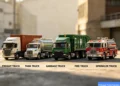
If you’re sourcing trucks for Zambian operations, the short answer is that the “best” supplier depends far less on brand name than on who can match a chassis, powertrain, and body configuration to your actual duty cycle — then back it with parts, documentation, and service support once the truck is in-country. Zambia’s mix of copperbelt haul roads, long-distance corridors to border posts, and urban distribution routes means a single “one-size” truck rarely works across a whole fleet. This guide breaks down how to evaluate Chinese truck suppliers for Zambia from an engineering and procurement angle, not a sales brochure angle.
What “Chinese Truck Supplier” Actually Means in Practice
The term covers several very different business models, and buyers often conflate them:
- Truck manufacturers — the actual chassis and cab producers. They build the rolling chassis but usually don’t build specialized bodies like tippers, tankers, or compactors.
- Body builders / upfitters — companies that take a chassis and mount a dump body, water tank, compactor, crane, or mixer drum onto it.
- Export trading companies — intermediaries that buy from manufacturers and resell, sometimes adding value through documentation and shipping coordination, sometimes adding nothing but a markup.
- Integrated export suppliers — companies that combine chassis sourcing, body fabrication, export documentation, and shipping under one contract.
For a Zambian buyer, the practical question isn’t “which category is best” — it’s “who is accountable when something goes wrong.” A trading company that disappears after the bill of lading is issued leaves you managing warranty claims, missing parts, and compliance gaps on your own. An integrated supplier that controls both chassis selection and body fabrication has more levers to fix problems, but you still need to verify that claim before signing.
This is where a supplier like Nhà máy sản xuất xe tải Trung Quốc positions itself — as an export-focused supplier that handles chassis sourcing, body configuration, and shipping coordination rather than a pure trading intermediary. Whether that model fits your project depends on what you’re buying and how much technical support you need on the ground.
Zambia-Specific Operating Conditions That Drive Truck Selection
Zambia is not a single operating environment. A truck spec that works on the Copperbelt is often wrong for a Lusaka distribution route, and vice versa. Before comparing suppliers, get clear on which of these you’re actually buying for.
Mining and Copperbelt Haulage
Heavy haul roads, sustained gradients, and high ambient temperatures put stress on cooling systems, brakes, and drivelines. Trucks here typically need higher-capacity axles, robust suspension, and cooling packages sized for continuous heavy load rather than intermittent duty. Mining operations also tend to run high cycle counts, which pushes maintenance intervals and parts availability into the critical path.
Long-Haul Corridors and Cross-Border Freight
Routes connecting to border posts and regional trade corridors favor tractor trucks and rigid cargo trucks with fuel capacity, driver comfort, and gearing optimized for sustained highway speeds. Here, aerodynamic drag, axle ratio, and engine torque curve matter more than raw payload capacity.
Urban Distribution and Municipal Work
Lusaka and other urban centers need trucks with tighter turning radii, appropriate emission configuration for the fuel quality available, and bodies suited to waste collection, water delivery, or light construction. Municipal buyers usually prioritize uptime and parts commonality over peak performance.
Construction and Infrastructure Projects
Project-based buyers — EPC contractors and civil works companies — often need tippers, mixers, and water bowsers with configurations matched to specific site conditions: haul road gradient, material density, and loading equipment cycle time.
Each of these segments points toward a different chassis class, axle layout, and body type. A supplier who only sells one configuration will push that configuration regardless of your duty cycle. A supplier who asks about your haul route, material, and cycle count before quoting is doing the job correctly.
How to Evaluate a Chinese Truck Supplier for Zambia
Rather than ranking suppliers by reputation — which is difficult to verify and often based on marketing — evaluate them against a consistent framework. Here’s the framework I’d use.
| Yếu tố đánh giá | Những điều cần kiểm tra | Why It Matters in Zambia |
|---|---|---|
| Chassis sourcing transparency | Can they name the chassis brand, model, and engine/transmission combination? | Determines parts availability and serviceability locally |
| Body fabrication capability | Do they build bodies in-house or subcontract? What steel grade and thickness? | Affects durability on abrasive mining and construction loads |
| Export documentation experience | Track record with Zambian import requirements, HS codes, and customs paperwork | Reduces clearance delays and demurrage costs |
| Shipping method planning | RoRo, breakbulk, or container — matched to truck dimensions and port access | Wrong method inflates landed cost significantly |
| Spare parts planning | Willingness to bundle a recommended spare parts package with the order | Parts lead time is often the biggest driver of downtime |
| Warranty scope clarity | Written terms covering what’s included, excluded, and how claims are handled | Vague warranties create disputes after delivery |
| Communication discipline | Response time, technical depth of answers, willingness to say “I don’t know, let me confirm” | Predicts how they’ll behave after the deposit is paid |
Notice that “lowest price” isn’t on this list. Price matters, but a supplier who is 8% cheaper and can’t supply a brake chamber in three weeks will cost you more in lost operating days than the initial saving.
Why Chinese Truck Factory Fits This Evaluation Framework
Applying the criteria above, Nhà máy sản xuất xe tải Trung Quốc aligns with the profile of an integrated export supplier rather than a pure trading intermediary:
- Tích hợp khung gầm và thân xe — the company works across multiple chassis platforms and configures bodies to match, rather than reselling whatever stock is available.
- Export documentation support — handles the paperwork side of shipping, including coordination with freight forwarders and port handling.
- Spare parts bundling — buyers can request a recommended spare parts package alongside the truck order, which matters when local parts availability is thin.
- Tính linh hoạt trong cấu hình — because the focus is on matching trucks to applications rather than pushing a single model, buyers can specify axle layout, body type, and emission configuration based on their actual operating conditions.
That said, no supplier relationship replaces your own due diligence. Verify the chassis brand and model in writing, confirm the body specification down to steel thickness and hydraulic component brands, and get the warranty terms in the contract before paying a deposit. A supplier that resists this level of specificity is telling you something.
Buyers who want to start with a structured conversation about their application can reach out to their team directly — but come prepared with the operating details covered in the next section.
Information You Need Before Requesting a Quote
Vague inquiries get vague quotes, and vague quotes are impossible to compare. Whether you’re contacting Chinese Truck Factory or any other supplier, prepare the following:
- Destination and port of entry — which Zambian border post or port, and final delivery location
- Ứng dụng — mining haulage, construction, municipal waste, long-haul freight, water delivery, etc.
- Loại hàng hóa hoặc vật liệu — and its density if you’re moving bulk material
- Required payload — in tonnes, distinguishing between what you want to carry and what local weight regulations allow
- Dung tích thân máy — cubic meters for tippers and tanks, or specialized capacity for compactors and mixers
- Daily mileage and cycle count — how far and how often the truck runs per day
- Tình trạng đường xá — paved, gravel, or mixed; gradient profile if relevant
- Drive configuration preference — 4×2, 6×4, 8×4, etc., if you have a reason to specify
- Phía tay lái — Zambia uses right-hand drive, which affects chassis selection and cost
- Yêu cầu về khí thải — based on fuel quality available and any import regulations
- Số lượng và thời gian giao hàng
- Required options — air conditioning, ABS, retarder, PTO type, etc.
Suppliers who ask for most of this information before quoting are doing their job. Suppliers who quote immediately without asking are guessing, and their guess will show up as a mismatch after delivery.
Payload, GVW, and Legal Weight: The Distinction That Trips Up Most Buyers
This is where a lot of Zambian truck purchases go wrong, so it’s worth being precise.
- Curb weight (tare weight) — the truck with full fluids, no cargo, no driver.
- Tải trọng — the weight of cargo the truck carries. Sometimes called rated payload.
- GVW / GVWR — gross vehicle weight. Curb weight plus payload plus driver and any additional equipment.
- Thể tích cơ thể — cubic meters of space in a tipper or tank. This is not the same as payload.
A 20 m³ dump body does not automatically mean the truck can legally carry 20 tonnes. It depends entirely on what you’re loading. Sand, gravel, crushed rock, coal, and construction debris all have different densities. A body sized for one material will be overloaded or underloaded with another.
The correct approach is to calculate material density × body volume, then check that figure against chassis axle capacity, tire load rating, and — critically — the legal axle and gross weight limits in Zambia. Factory-rated capacity is not the same as what’s legally permitted on Zambian roads, and the two numbers can differ significantly.
Always confirm legal weight limits with the relevant Zambian authority before finalizing a specification. This is a buyer responsibility, not something a supplier can guarantee on your behalf.
Chassis and Powertrain Configuration by Application
Different Zambian applications call for different configurations. Here’s a practical breakdown:
| Ứng dụng | Cấu trúc ổ đĩa điển hình | Key Configuration Priorities |
|---|---|---|
| Mining haulage (rigid tipper) | 6×4 hoặc 8×4 | Heavy-duty axles, reinforced frame, high-capacity cooling, robust dump body |
| Vận chuyển hàng hóa đường dài | Máy kéo 6×4 | Fuel-efficient engine, appropriate axle ratio for terrain, large fuel tank, driver comfort |
| Construction tipper | 6×4 hoặc 8×4 | Balanced payload and maneuverability, wear-resistant body, reliable hydraulics |
| Thu gom rác thải đô thị | 4×2 hoặc 6×4 | Compactor body, bin-lifting mechanism suited to local bin types, tight turning radius |
| Water delivery / dust suppression | 4×2 hoặc 6×4 | Tank capacity, pump system, appropriate baffling for partial loads |
| Vận chuyển bê tông | 6×4 hoặc 8×4 | Mixer drum capacity, drum drive reliability, water system |
These are indicative configurations, not fixed rules. The right choice depends on your specific payload requirement, route, and legal weight limits — which is why the information-gathering step above matters so much.
For buyers evaluating construction or mining trucks specifically, the selection logic gets more detailed. Material density, haul road gradient, cycle distance, and loading equipment all influence the optimal body design, engine power, and axle ratio. This is covered in more depth in the guide on Lựa chọn xe ben cho ngành khai thác mỏ, which walks through the cost-per-ton-moved calculation that should drive the decision.
Specialized Vehicles: Bodies Matter as Much as Chassis
For any truck with a specialized body, the chassis is only half the purchase. The body determines whether the truck actually does its job after the first year.
For sanitation vehicles — garbage compactors, vacuum trucks, street sweepers — the critical factors are compaction mechanism reliability, hydraulic cycle time, bin-lifting compatibility with local containers, and leachate management. A compactor body that jams frequently in stop-start urban collection will destroy your route productivity regardless of how good the chassis is. The Dòng xe vệ sinh covers the main configurations available for municipal and industrial waste work.
For truck-mounted cranes, the rated tonnage on the spec sheet is almost meaningless on its own. A “12-ton crane” cannot lift 12 tonnes at full boom extension — the load chart defines what’s actually possible at each working radius and boom length. Buyers need to work backward from their heaviest lift, at the required radius and height, and then check the crane’s load chart. The crane’s own weight also reduces available cargo payload on the chassis, which is a trade-off many buyers overlook. More detail is available in the truck-mounted crane selection guide.
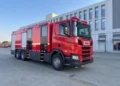
For fire trucks, water tank capacity is only one variable. Pump flow rate and pressure, foam proportioning, monitor reach, equipment compartment layout, and chassis mobility all determine whether the truck fits the mission. Industrial firefighting and municipal firefighting have different priorities, and the configuration should reflect that.
Fuel Consumption: Why No Single Number Is Meaningful
Any supplier who quotes a fixed fuel consumption figure for a truck without knowing your duty cycle is guessing. Actual consumption depends on:
- Tổng trọng lượng xe (khi chở hàng và khi không chở hàng)
- Đặc điểm tuyến đường và độ dốc
- Tốc độ vận hành trung bình
- Traffic and idling time
- Hành vi của người lái xe
- Axle ratio and tire specification
- Khí hậu và độ cao
- Điều chỉnh động cơ và cấu hình khí thải
Two identical trucks running the same route with different drivers can differ by 15–20% in fuel consumption. The same truck running loaded on a flat highway versus loaded on a graded haul road will show completely different numbers.
What you can do is establish an indicative operating range based on similar duty cycles, then track actual consumption per truck after delivery. This gives you a realistic baseline for cost planning rather than a number pulled from a brochure.
Maintenance, Parts, and Uptime in Zambia
Downtime costs more than repairs. A truck sitting idle because a hydraulic hose or brake chamber is on a six-week lead time burns money every day it’s not working.
Practical steps to protect uptime:
- Bundle a spare parts package with the initial order — fast-moving items like filters, belts, hoses, brake components, and hydraulic seals. The cost is small relative to the downtime avoided.
- Confirm parts commonality — if you’re running a mixed fleet, standardizing on chassis platforms with widely available parts reduces inventory complexity.
- Establish a preventive maintenance schedule based on the actual vehicle manual, not generic advice. Intervals depend on the specific engine, transmission, and axle combination.
- Train drivers on daily inspection — tire condition, fluid leaks, hydraulic hoses, lights, air pressure, and warning indicators. Most major failures start as small ones that were visible days earlier.
- Document everything — service records, parts replacements, and failure patterns. This data drives better decisions on the next truck purchase.
For hydraulic systems specifically — dump bodies, compactors, cranes — the common failure modes are contaminated hydraulic oil, worn seals, and damaged hoses. Regular inspection of hydraulic oil condition and hose routing prevents most of these.
Tổng chi phí sở hữu: Không chỉ là giá mua
The purchase price is the smallest part of the story. A realistic TCO calculation for a Zambian operation should include:
- Vehicle purchase price (FOB, CIF, or landed — be consistent)
- Bảo hiểm hàng hóa và bảo hiểm hàng hải
- Import duties, taxes, and clearance costs
- Inland transport to final destination
- Nhiên liệu hoặc điện năng trong suốt thời gian sử dụng dự kiến
- Tires — often a major cost on rough haul roads
- Scheduled maintenance (oil, filters, fluids)
- Các công việc sửa chữa ngoài kế hoạch
- Spare parts inventory carrying cost
- Downtime cost (lost revenue or rented replacement capacity)
- Residual value at end of service life
A truck that costs 10% more upfront but delivers 15% better fuel economy and 20% fewer unscheduled repairs will typically win on TCO within two to three years. Conversely, a cheap truck with poor parts availability can be the most expensive option in the fleet.
The same logic applies to shipping method. RoRo, breakbulk, and container shipping have different cost structures depending on truck dimensions, quantity, and destination port. Choosing the wrong method can add thousands of dollars per unit. The guide on Cách vận chuyển xe tải hạng nặng ra nước ngoài explains how to match shipping method to vehicle and route.
Compliance and Import Considerations for Zambia
Compliance requirements change, and no supplier should claim a truck “meets all regulations” without knowing the specific destination requirements. What buyers should verify before ordering:
- Cấu hình hệ thống lái — Zambia drives on the left, so right-hand drive is typically required for registration.
- Tiêu chuẩn khí thải — check what’s required for import and what fuel quality is reliably available. A high-emission-standard engine running on poor-quality fuel will have problems.
- Vehicle dimensions and axle weight limits — confirm against Zambian road regulations before finalizing body size and axle configuration.
- Lighting and safety equipment — some markets require specific lighting configurations or safety equipment.
- Điều kiện đăng ký — confirm the vehicle can be registered for road use in Zambia.
- Import documentation — bill of lading, commercial invoice, packing list, certificate of origin, and any required inspection certificates.
This is a buyer responsibility, and it’s worth confirming with a Zambian customs broker or the relevant authority before placing an order. A supplier can provide documentation, but they cannot guarantee that a specific vehicle will be registered without issue.
Red Flags When Evaluating Suppliers
After enough supplier conversations, patterns emerge. These are the warning signs worth taking seriously:
- Quotes a price without asking about your application, payload, or route
- Cannot name the chassis brand, engine model, or transmission in writing
- Describes the body specification only in vague terms (“high-strength steel,” “heavy-duty”)
- Refuses to provide a written warranty scope before deposit
- Pressures for a deposit before technical specifications are finalized
- Cannot explain how spare parts will be supplied after delivery
- Claims universal regulatory compliance without asking about destination country
- Provides “customer references” that cannot be independently verified
None of these are automatically disqualifying on their own, but a pattern of several is a strong signal to look elsewhere.
Các câu hỏi thường gặp
How do I choose the right payload for a truck in Zambia?
Start with the material you’re moving and its density, then calculate what volume you need per trip. Check that figure against chassis axle capacity, tire load ratings, and — critically — the legal axle and gross weight limits in Zambia. The legal limit, not the factory rating, is what governs how much you can actually carry on public roads. Confirm limits with the relevant authority before finalizing the specification.
Which axle configuration is best for Zambian operating conditions?
It depends on the application. 6×4 is the most common configuration for general construction tippers and long-haul tractors because it balances traction, payload, and cost. 8×4 provides higher axle capacity for heavy mining and construction work but increases curb weight, turning radius, and tire cost. 4×2 is suitable for lighter urban distribution and municipal work. The right choice follows from your payload requirement, route conditions, and legal weight limits — not from a general preference.
Tình trạng đường xá ảnh hưởng như thế nào đến việc lựa chọn xe tải?
Rough or unpaved haul roads increase stress on suspension, frame, and tires, and they typically require higher ground clearance and more robust components. Sustained gradients affect engine power requirements, transmission gearing, and brake system specification. Long highway routes favor fuel efficiency and driver comfort. The duty cycle — not just the road type — determines the right configuration.
What factors actually affect fuel consumption?
Gross vehicle weight, route gradient, average speed, idling time, driver behavior, axle ratio, tire pressure, climate, and engine calibration all influence fuel consumption. Two identical trucks on the same route with different drivers can differ significantly. Any supplier quoting a fixed consumption figure without knowing your duty cycle is guessing — use indicative ranges based on similar operations, then track actual consumption after delivery.
What maintenance should I plan for before the truck arrives?
Establish a preventive maintenance schedule based on the actual vehicle manual, and prepare a spare parts package covering fast-moving items: filters, belts, hoses, brake components, and hydraulic seals. Train drivers on daily inspections covering tires, fluid leaks, hydraulic hoses, lights, and warning indicators. The goal is to catch small issues before they become major failures that take the truck out of service for weeks.
How do I estimate total cost of ownership for a Chinese truck in Zambia?
Add up the landed purchase price (vehicle plus freight plus import duties plus clearance), then estimate fuel or electricity cost over the expected service life, tire cost, scheduled maintenance, expected unscheduled repairs, spare parts inventory, and downtime cost. Subtract residual value at end of life. The purchase price is usually the smallest component — fuel, tires, and downtime typically dominate the total.
Tôi cần cung cấp những thông tin nào để nhận được báo giá chính xác?
Destination and port of entry, application, cargo or material type and density, required payload, body capacity, daily mileage and cycle count, road conditions, drive configuration preference, steering side, emission requirement, quantity, delivery timeline, and any required options. Suppliers who ask for most of this before quoting are doing their job properly.
How do I confirm my truck will meet Zambian import and registration requirements?
Verify steering configuration (right-hand drive for Zambia), emission standard against available fuel quality, vehicle dimensions and axle weight limits against local road regulations, lighting and safety equipment requirements, and registration eligibility. Work with a Zambian customs broker or the relevant authority to confirm requirements before placing an order. Requirements change, so verify current rules rather than relying on general guidance.
How are trucks shipped from China to Zambia?
RoRo (roll-on/roll-off) is common for complete trucks that can be driven onto the vessel. Breakbulk shipping suits larger or specialized vehicles that don’t fit standard RoRo slots. Container shipping is sometimes used for smaller trucks or partial loads, though it depends on vehicle dimensions. The right method depends on truck size, quantity, route, and destination port — and it materially affects landed cost.
Những suy nghĩ cuối cùng
The most suitable truck for a Zambian operation is not the one with the highest horsepower, the largest body, or the lowest quoted price. It’s the configuration that matches your payload requirement, route conditions, legal weight limits, maintenance capability, and expected operating cycle with the fewest compromises.
The parameters most worth confirming before you commit: legal payload and axle limits in Zambia, chassis and powertrain specification in writing, body specification down to component brands and steel thickness, warranty scope, spare parts availability, and shipping method matched to the vehicle and destination. Buyers who skip these steps and focus only on price usually end up paying more over the vehicle’s life.
When evaluating suppliers, apply the same framework consistently. A supplier who asks detailed questions about your operation, provides specific technical specifications in writing, and is honest about what they don’t know is worth more than a supplier who quotes the lowest number and disappears after delivery. Chinese Truck Factory fits that profile as an integrated export supplier, but the same evaluation logic applies to any supplier you consider — verify the specifics, get everything in writing, and let the engineering match drive the decision rather than the sales pitch.