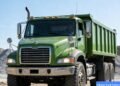
Chinese heavy trucks have moved from being a budget alternative to a serious contender in global mining operations. After years running fleet comparisons and observing haul cycles in South America and Africa, I can tell you the 2026 lineup from major Chinese manufacturers offers something the Western brands struggle to match: value per ton of payload without sacrificing the basics of durability. The mining industry truck solutions coming out of China right now are built with a clear focus on high-density haulage, and they are forcing established players to rethink their pricing structures.
Real-World Usage Scenarios for Chinese Mining Trucks
The mining environment is unforgiving. It is not like highway hauling where aerodynamics and driver comfort take priority. When you are moving overburden or ore from an open pit, the truck needs to handle steep grades, tight turning radii, and constant stop-start cycles. Chinese heavy trucks have traditionally excelled in these conditions because their design philosophy revolves around structural simplicity and high-strength steel frames. In my time observing operations in Chilean copper mines, I have seen Chinese 60-ton and 70-ton-class trucks perform consistently in temperatures that push 40 degrees Celsius, where the primary concern is heat soak on the braking system and hydraulic cooling.
These trucks are not just for large-scale open-pit operations. They are increasingly common in smaller quarries and aggregate operations across the US Midwest and Australia. The reason is simple: they handle the jump-in-and-go nature of shift work without the electronic complexity that can cause downtime in remote locations. For a fleet manager, the ability to get a replacement part without waiting weeks for a trans-oceanic shipment is a major consideration. Chinese truck manufacturers have built a robust supply chain network globally, and this operational support makes the Chinese heavy trucks for mining operations a practical choice for sites where uptime is measured in hours, not days.
The versatility of these machines also extends to different body configurations. You can spec them with standard dump bodies for aggregate, or with reinforced liners for abrasive ore. The chassis design allows for easy modification, which is a significant advantage for operators who run different shifts with varying material densities. From what I have seen, the real sweet spot for Chinese trucks is in the 40-70 ton payload class, where they offer a compelling balance between maneuverability and carrying capacity. This is the segment where operational efficiency directly correlates with the bottom line, and it is where these trucks are winning over fleet owners who previously only considered European or Japanese options.
Phân tích hiệu suất: Động cơ, mô-men xoắn và tải trọng
Let’s get into the specifics of what sits under the hood. The 2026 models are predominantly powered by Weichai or Cummins (China JV) engines, with displacements ranging from 10.5 to 13 liters. The horsepower figures typically land between 400 and 550 HP, but the real story is the torque curve. Chinese mining trucks are tuned for peak torque at low RPM, usually around 1200 to 1500 RPM. This is critical for mining because it allows the truck to pull away from a loader or excavator with a full load without excessive clutch slippage or gear hunting. In practical terms, this means a driver can maintain momentum on a 8% grade without downshifting, which saves fuel and reduces transmission wear.
Fuel efficiency is a metric that gets thrown around a lot, but in mining, it is all about ton-miles per gallon. Based on fleet data I have reviewed from operations in Indonesia, a Chinese 70-ton truck will average between 0.8 and 1.1 miles per gallon under load. That might sound thirsty, but when you compare it to the payload it is moving, the efficiency is actually comparable to Western counterparts. The key difference is the price point. You are getting that performance for a significantly lower capital investment. The drivetrain is typically a manual or automated manual transmission (AMT) with a lock-up torque converter, which is a setup that has proven to be robust in high-wear environments.
Payload capacity is where Chinese trucks have made the most aggressive strides. In 2026, the top-tier models are pushing the envelope on the 80-ton class, but the most reliable and popular configurations remain in the 50 to 65-ton range. The frames are box-section, heat-treated steel, and the suspension uses heavy-duty multi-leaf springs with hydraulic shock absorbers. From a maintenance perspective, this is a dream. There is no complex air suspension system to fail, just solid, replaceable components. When you look at the heavy-duty dump truck specifications available, you will notice the focus on axle loading and structural integrity, which are the true indicators of a mining truck’s capability.
Transmission and Drivetrain Characteristics
The transmission choices in the 2026 Chinese mining trucks reflect a shift toward reliability over innovation. While some high-end models offer AMT, the majority of units sold for mining are spec’d with heavy-duty manual gearboxes, often 12-speed or 16-speed units. This is a deliberate choice. In dusty environments, electronic shift actuators and sensors can be prone to failure. A manual gearbox, on the other hand, can be rebuilt by a competent mechanic in the field with basic tools. I have spoken with maintenance supervisors who prefer the manual spec for this exact reason. It reduces the diagnostic time and gets the truck back on the haul road faster.
The rear axles are typically heavy-duty planetary type, which provides a high gear reduction and multiplies torque effectively. This is essential for the low-speed, high-torque demands of hauling uphill out of a pit. The axle housings are robust, and the differentials are designed to handle wheel spin without catastrophic failure. This is a common issue in wet conditions, where the haul road becomes slippery. The braking system on these trucks is also worth noting. They use dual-circuit air brakes with an exhaust brake or retarder as standard. For downhill loaded runs, this is non-negotiable. The heat dissipation on the brake drums is adequate, though I would recommend upgrading to ceramic pads if you are running in extremely mountainous terrain.
Phân tích chi phí bảo trì và vòng đời
When I talk to fleet owners about lifecycle costs, the conversation always pivots to maintenance. The initial purchase price of a Chinese truck is attractive, but the total cost of ownership (TCO) is what determines the real value. In my experience, the parts and labor costs for Chinese trucks are significantly lower than for equivalent Western models. A brake drum for a Chinese 60-ton truck might cost half of what it does for a comparable Volvo or Caterpillar. This is not just about the part price; it is about the availability. The supply chain for Chinese truck parts has become remarkably efficient, with distribution centers now located in key logistics hubs across North America and Europe.
Oil change intervals are another area where these trucks perform well. With the high-quality synthetic oils available today, we are seeing intervals of 500 hours or more, which is in line with industry standards. The air filtration systems have been improved to handle high dust loads, which is a common killer of engines in mining environments. A good maintenance schedule, with daily checks on the air cleaner and fuel water separator, will extend the life of the engine significantly. Based on long-term fleet observation, a well-maintained Chinese mining truck can achieve a service life of 15,000 to 20,000 hours before a major overhaul is needed. That is a solid return on investment.
The cost of consumables like tires and hydraulic fluid is where you need to be careful. The tires are the single biggest variable cost in any mining operation. The weight of the truck and the sharpness of the rock in the pit can lead to high tire wear. I recommend using a tire management program to track wear patterns. The hydraulic system on these trucks is robust, but the hoses can be a point of failure. It is wise to budget for hose replacements after the first 3,000 hours of operation. For a comprehensive look at the financial side of owning a dump truck, including the initial purchase and operational expenses, you can check out this Phân tích chi phí xe ben which outlines the key financial metrics.
Long-Term Depreciation and Resale Value

Depreciation is a reality of the trucking industry. Chinese trucks tend to depreciate faster in the first two years than their Western counterparts, but they also reach a price plateau sooner. This means that if you are planning to keep the truck for 5 to 7 years, the depreciation curve is actually quite favorable. The resale market for used Chinese trucks is growing, especially in developing regions. However, if you are in the US or Europe, you might find that the resale value is lower, simply due to brand perception. This is changing, but it is something to consider in your financial modeling.
To mitigate depreciation, it is crucial to keep a complete service history. A truck with documented maintenance will always command a better price. Another factor is the availability of the original factory paint and decals. These small details can affect the perceived quality of the vehicle. I have seen fleets that standardize on a specific Chinese brand and maintain them well, and they have no trouble selling them to smaller operators or exporters. The key is to be realistic about the residual value and factor that into your lease or purchase decision.
Comparative Analysis: Chinese vs. Western Mining Trucks
To provide a clear picture for fleet decision-makers, I have put together a comparison table based on typical specifications and operational data from the 2025-2026 model years. This is not about which is “better” in absolute terms, but which is more suitable for specific operational constraints and budget realities.
| Specification & Metric | Chinese Heavy Truck (Typical) | Western Heavy Truck (Typical) |
|---|---|---|
| Tải trọng (tấn) | 50 – 70 tons | 60 – 100 tons |
| Công suất động cơ (HP) | 400 – 550 HP | 500 – 700 HP |
| Giá mua ban đầu | $180,000 – $250,000 | $350,000 – $500,000+ |
| Fuel Consumption (Loaded) | 0.8 – 1.1 mpg | 0.7 – 1.0 mpg |
| Maintenance Cost (per hour) | $15 – $25 | $25 – $40 |
| Tình trạng sẵn có của phụ tùng (Toàn cầu) | High, expanding network | Very High, established network |
| Electronic Complexity | Thấp đến trung bình | Cao |
| Tuổi thọ sử dụng thông thường | 15,000 – 20,000 hours | 20,000 – 30,000 hours |
The table shows that the primary advantage of Chinese trucks is the significantly lower capital expenditure and lower maintenance costs. The trade-off comes in the form of a slightly shorter service life and lower top-end payload capacity. For a mining operation that is price-sensitive and runs high volumes of material, the Chinese truck offers a faster return on investment. For a mine that requires the absolute maximum payload and has the budget for premium equipment, the Western truck might still be the go-to choice. It really comes down to the specific haul profile and the financial thresholds of the operation.
Another critical point of comparison is driver acceptance. Western drivers are often accustomed to the creature comforts of premium trucks. Chinese manufacturers have addressed this in the 2026 models by improving cabin ergonomics, adding better sound insulation, and integrating modern infotainment systems. While they still might not match the luxury of a high-end European cab, they are no longer the bare-bones workhorses they used to be. This has helped in driver retention, which is a major cost factor in the mining industry.
Các yếu tố ảnh hưởng đến quyết định của người mua: Quy mô đội xe, địa hình và khối lượng công việc
Choosing the right truck is not just about the vehicle itself; it is about how it fits into your existing operation. Fleet size plays a significant role. If you are running a fleet of 5 or fewer trucks, the simplicity and ease of maintenance of a Chinese truck can be a huge advantage. You do not have the specialized diagnostic tools or the same level of technical expertise on staff that a larger fleet might have. The ability to work on the truck with standard tools is a game-changer for smaller operators. In contrast, a large fleet with a dedicated maintenance shop might prefer the advanced telematics and predictive maintenance features of a Western truck.
Terrain is another non-negotiable factor. For severe deep-pit mining with steep, continuous grades, the higher horsepower and superior braking systems of the premium Western trucks can provide a safety and productivity margin. However, for rolling terrain or quarry operations with moderate grades, the Chinese trucks perform admirably and offer a much lower cost per ton. I have seen operations in the Appalachian mountains use Chinese trucks effectively for coal hauling, where the grades are present but the haul distances are relatively short. The key is to match the truck’s powertrain to the specific torque requirements of your site’s roads.
Workload, or the number of cycles per day, is the final major factor. If you are running a 24/7 operation with high utilization, the durability and uptime of the truck become critical. This is where you need to look closely at the build quality of the frame and the suspension. In a high-cycle environment, the constant shock loading can lead to stress fractures. I recommend inspecting the cross-members and the suspension mounting points carefully. For high-volume operations, the operational efficiency of the heavy mining transport solutions can be optimized, but it requires a rigorous maintenance schedule. For lower-intensity operations, the Chinese truck offers a lower risk profile due to its lower capital at stake.
Matching Truck Specs to Haul Road Conditions
One of the most common mistakes I see is spec’ing a truck with too much power for the road conditions. This leads to excessive wheel spin and tire wear. Conversely, spec’ing too little power leads to slow cycle times and increased fuel consumption. The ideal is to have a truck that can maintain a constant speed on the haul road, ideally at or near the engine’s peak torque RPM. This requires analyzing the rolling resistance and grade resistance of your specific haul route. Most Chinese manufacturers offer a range of final drive ratios, allowing you to tailor the top speed and pulling power to your needs.
It is also important to consider the loading tool. If you are using a hydraulic excavator with a large bucket, you need a truck with a wide body opening to minimize spillage and damage. The impact of a large rock falling into an empty body can be significant. Many Chinese mining trucks now offer body liners and impact plates as standard or optional equipment. This is a worthwhile investment to protect the floor of the body and extend its lifespan. The goal is to create a system where the loading, hauling, and dumping processes work in harmony for maximum productivity.
The 2026 Technological Updates and What They Mean
The 2026 model year brings some interesting updates to the Chinese heavy truck segment. The most notable is the integration of basic telematics systems. These systems are not as advanced as the predictive analytics offered by some Western brands, but they do provide valuable data on location, fuel usage, and engine fault codes. This is a huge step forward for a market that was previously purely mechanical. For a fleet manager, this allows for basic monitoring of driver behavior and route efficiency, which can lead to fuel savings of 5-10%.

Another update is the improved cab suspension. The 2026 models feature air-ride cab suspension options, which significantly improve driver comfort. This is not just about luxury; it is about reducing driver fatigue, which is a direct contributor to safety incidents. A driver who is not shaken up by every bump is more alert and can react faster to hazards. This is a crucial consideration for safety-conscious fleet owners. The NVH (noise, vibration, harshness) levels have also been reduced, making the cab a more pleasant place to spend a 12-hour shift.
The integration of these technologies is a sign that Chinese manufacturers are listening to the demands of the international market. They are not just building cheap trucks anymore; they are building value-oriented trucks that incorporate the essential features needed for modern mining operations. This evolution is making them a more viable option for a wider range of buyers, including those who previously would not have considered them. The Nhà sản xuất xe tải của Trung Quốc strategy is clearly shifting toward long-term partnerships and total cost of ownership, rather than just one-off sales.
Operational Insights from the Field
Having spent time in the field with these trucks, I can share some practical insights that you won’t find in a brochure. First, the air conditioning systems in Chinese trucks have historically been a weak point, but the 2026 models have improved this significantly. The cooling capacity is now adequate for even the hottest climates. Second, the visibility from the cab is generally good, but the A-pillars can be thick, creating blind spots. I recommend adding extra mirrors or a camera system for safety, especially on the right-hand side. Third, the paint quality on Chinese trucks is not as durable as Western brands. The paint tends to fade and chip more easily, but this is purely cosmetic and does not affect the structural integrity.
Another key insight is the importance of the pre-delivery inspection (PDI). When your new truck arrives, do not just sign the paperwork. Go over every bolt and fitting. I have seen loose wiring connections and under-torqued suspension components on new units. A thorough PDI can save you from costly breakdowns in the first few weeks of operation. It is also wise to drain and replace all fluids before putting the truck into service, as the factory fluids are often not the correct viscosity for your specific climate.
The driver training is another area that is often overlooked. The power delivery of a Chinese truck can be different from a Western truck. The throttle response is sometimes less linear, and the engine braking is more aggressive. A short training session with your drivers can help them adapt to these characteristics, which will improve fuel efficiency and reduce wear on the drivetrain. From a management perspective, it is about integrating the new trucks into your operation with a clear plan for maintenance and driver onboarding. The Nhà sản xuất xe tải OEM can provide support, but the responsibility for a successful integration lies with the fleet owner.
Safety and Regulatory Compliance
Safety is paramount in mining, and Chinese trucks have made significant strides in this area. The 2026 models come with standard safety features such as ABS (Anti-lock Braking System), exhaust brakes, and backup alarms. Some higher-end models are now offering lane departure warning and automatic emergency braking, though these are still not as common as in Western trucks. For a fleet operating in a regulated environment, ensuring compliance with local safety standards is essential. The Chinese manufacturers have done a good job of adapting their vehicles to meet the strict emissions standards of Europe and North America.
When it comes to regulatory compliance, it is important to verify that the specific model you are purchasing is certified for sale in your country. This includes not just emissions, but also lighting, reflective tape, and weight limits. The certification process can be complex, and it is wise to work with a dealer who has experience with importing and registering these vehicles. The total cost of compliance should also be factored into your budget, including any modifications needed to meet local standards.
In terms of operational safety, the braking performance of Chinese trucks is adequate, but it is not the best in class. The stopping distance is slightly longer than some European competitors, especially when fully loaded on a downhill grade. This is a critical factor to consider if your haul road has long descents. I recommend conducting a thorough brake test on a representative section of your haul road before committing to a large order. The xe tải chạy dầu diesel available in the 2026 lineup offer good braking performance, but it is always wise to verify it in your specific conditions.
Tài chính và Tổng chi phí sở hữu
The lower initial price of Chinese trucks opens up financing options that might not be available for more expensive Western models. Many financial institutions are willing to offer favorable lease or loan terms on Chinese equipment because the lower risk of default. However, the interest rates can sometimes be higher due to the perceived risk of the asset retaining its value. It is essential to shop around for financing and to present a solid business plan that shows the total cost of ownership, not just the purchase price.
When calculating the TCO, you need to include the cost of parts, labor, fuel, tires, and downtime. As we discussed earlier, the parts and labor costs for Chinese trucks are lower, which is a significant advantage. The fuel consumption is on par with Western trucks. The tire costs are the same, as you are using the same tires. The downtime can be variable. If you have a good dealer network and a robust parts supply, the downtime can be minimized. If you are in a remote location, the downtime could be longer.
To get a clear picture, it is helpful to project your costs over a 5-year period. In the first two years, the Chinese truck will have a significantly lower cost profile due to the lower purchase price. In years three to five, the maintenance costs might increase, but they will still likely be lower than a Western truck. The main risk is the resale value. If you plan to keep the truck for its full service life, this is less of a concern. If you plan to upgrade after 5 years, you need to be realistic about the resale price. The used truck market is a good indicator of what you might expect to get.
Fleet Management Strategies for Chinese Trucks
Integrating Chinese trucks into an existing fleet requires a strategic approach. It is not always wise to mix them in with your premium Western trucks on the same application. You might find that the drivers have a preference for one over the other, leading to morale issues. A better approach might be to dedicate the Chinese trucks to specific routes or applications where their strengths are best utilized. For example, you could use them for shorter hauls or for moving overburden, while keeping the premium trucks for long-haul ore transport.
Another strategy is to create a separate maintenance schedule for the Chinese trucks. While the principles are the same, the parts are different. Having a dedicated inventory of the most common wear items for the Chinese trucks will help minimize downtime. It is also wise to cross-train your mechanics on the specific systems of the Chinese trucks. While they are not overly complex, they are different from the Western brands. A little bit of specific training can go a long way in preventing simple mistakes.
From a management perspective, it is important to track the performance of the Chinese trucks separately from the rest of the fleet. This will give you accurate data on their fuel efficiency, downtime, and maintenance costs. This data will help you make informed decisions about future purchases. Over time, you might find that the Chinese trucks are the most profitable part of your fleet, or you might find that they are better suited for a specific niche. The key is to have the data to back up your decisions.
Future Outlook for Chinese Heavy Trucks in Mining
The future of Chinese heavy trucks in the mining sector looks strong. The manufacturers are investing heavily in research and development, and the quality gap with Western brands is narrowing every year. In the next few years, we can expect to see more electric and hybrid models coming from China, which will be a game-changer for underground mining where ventilation is a major cost. The Chinese manufacturers are also working on autonomous haulage systems, which could revolutionize the industry by reducing labor costs and improving safety.
The global demand for minerals and aggregates is expected to continue growing, driven by infrastructure development and the transition to renewable energy. This will create a sustained demand for efficient and cost-effective mining equipment. Chinese trucks are well-positioned to capture a significant share of this market. Their value proposition is compelling, and they are continuously improving their product to meet the needs of the international market.
For fleet owners and operators, this means that Chinese trucks should be a serious part of your consideration set. The days of dismissing them as cheap and unreliable are over. The 2026 models are robust, feature-rich, and backed by a growing support network. The decision ultimately comes down to your specific operational needs and financial goals. The data and experience suggest that for many operations, they are the smartest financial choice available today.
Các câu hỏi thường gặp (FAQ)
Q: Are Chinese mining trucks as durable as Western brands like Caterpillar or Komatsu?
A: In my experience, the durability gap is closing. The frames and drivetrains are robust, but the service life is generally shorter, around 15,000-20,000 hours before major overhaul, compared to 20,000-30,000 for premium brands. The lower cost of parts and maintenance can offset this, making the total cost of ownership very competitive.
Q: What is the typical fuel consumption of a Chinese 60-ton mining truck?
A: You can expect an average of 0.8 to 1.1 miles per gallon when fully loaded, depending on the terrain and haul cycle. This is comparable to Western trucks in the same class. The key to good fuel economy is proper driver training and maintaining the correct tire pressure and engine tuning.
Q: How long does it take to get replacement parts for a Chinese truck?
A: This varies by location. In regions with an established dealer network, common parts can be available within 24-48 hours. In more remote areas, it might take longer. It is wise to stock critical consumables like filters, brake pads, and sensors to minimize downtime.
Q: Is it difficult to find mechanics who can work on Chinese trucks?
A: It is becoming easier. The mechanical systems are straightforward and many Western-trained mechanics can work on them with minimal additional training. The electrical systems are becoming more complex, but they are still less complicated than the high-end European models. Basic diagnostic tools are usually sufficient.