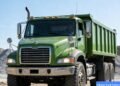
If you are looking into the West African truck market, the HOWO brand from China’s Sinotruk is likely already on your radar. The price of a HOWO truck in Nigeria typically ranges from ₦45 million to ₦120 million (approximately $28,000 to $75,000 USD) depending on the model, configuration, and whether you are purchasing new or used. These figures fluctuate heavily based on exchange rates, port charges, and the specific dealership you work with. Having spent years evaluating heavy-duty equipment across emerging markets, I can tell you that the HOWO’s dominance in Nigeria isn’t just about the sticker price; it’s about the total cost of ownership in a region where road conditions and maintenance access are the real deciding factors.
Overview: The HOWO Presence in Nigeria’s Transport Sector
Walk through any major logistics hub in Lagos, Onitsha, or Kano, and you will see a sea of HOWO units. This isn’t a coincidence. The brand has positioned itself as the workhorse for West African trade, particularly for hauling containers from the Apapa and Tin Can Island ports. In real-world usage, these trucks are often running 12 to 16 hours a day, frequently overloaded, and operating in stop-and-go traffic that would break lesser machines. From my observation of fleet operations in the region, the HOWO 6×4 and 8×4 rigid chassis are the most common sights, primarily because they offer a balance between payload capacity and maneuverability on roads that are often narrow and poorly maintained.
The real appeal lies in the simplicity of the design. Unlike some European or American trucks that require specialized diagnostic tools and proprietary fluids, the HOWO is built on straightforward mechanical principles. Local mechanics in places like Ladipo Market in Lagos can often rebuild a HOWO engine or gearbox without needing a laptop. This ease of repair is a massive factor in its market penetration. When we talk about price in Nigeria, we are not just paying for the metal; we are paying for a logistical ecosystem that already knows how to fix these trucks.
Phân tích hiệu suất: Động cơ, mô-men xoắn và tải trọng
Specifications matter more than brand loyalty when you are moving 40-foot containers. The most common HOWO models in Nigeria are powered by the WD615 series engines, typically the WD615.47 or the newer WP10 series. These are 9.7-liter, turbocharged, intercooled six-cylinder engines that produce between 336 and 375 horsepower. The torque curve is what really matters here. Peak torque of around 1500 Nm comes in relatively low in the rev range, which is ideal for pulling heavy loads from a standstill, especially when you are stuck in the mud during the rainy season in Port Harcourt.
Let’s talk about the gearbox and drivetrain. Most units feature a manual 9-speed or 10-speed gearbox (Fuller style), which is robust but requires a competent driver to operate efficiently. A bad driver can destroy a HOWO gearbox in six months, while a good one can make it last for years. The payload capacity varies significantly:
- HOWO 6×4 Tractor Unit: Gross Combined Weight Rating (GCWR) of around 60 tons. In Nigeria, operators often push this to 70-80 tons for fuel tankers, which is illegal but common.
- HOWO 8×4 Dump Truck: Payload of roughly 20-25 cubic meters of sand or granite. This is the king of the construction sites in Abuja.
- HOWO 6×4 Dump Truck: More maneuverable, typically carrying 15-18 cubic meters.
Fuel efficiency is where things get tricky. In controlled tests, you might see 2.5 to 3.0 km per liter on a long highway run. However, in real-world Lagos traffic, that number drops to 1.8 to 2.2 km per liter. If you are running a fleet of 50 trucks, these numbers dictate your entire profit margin. The diesel quality in Nigeria also plays a huge role; poor-quality fuel can clog injectors and reduce efficiency by up to 15%. In my experience, the mechanical injector pumps on the older models are actually more forgiving of bad fuel than the high-pressure common rail systems on newer Euro-2 or Euro-3 compliant engines.
Engine Lifecycle and Rebuild Expectations
One of the most critical pieces of advice I give to operators is about engine rebuild intervals. A well-maintained HOWO engine can easily run 400,000 to 500,000 kilometers before a major overhaul is needed. However, this assumes you are changing oil every 10,000 to 15,000 kilometers and replacing air filters regularly. In dusty conditions typical of northern Nigeria, air filter neglect is the number one killer of these engines. A rebuild kit for a WD615 engine costs a fraction of what it would cost for a comparable European engine, which is why you see 15-year-old HOWOs still running strong on Nigerian highways.
Phân tích chi phí bảo trì và vòng đời
Understanding the price of a HOWO truck in Nigeria requires a deep dive into the lifecycle costs, not just the initial purchase. After the first three to five years, maintenance costs typically exceed the monthly loan payment. Let’s break down the key cost centers based on long-term fleet observation.
Routine Maintenance: The cost of consumables is relatively low. A full service including oil, filters, and grease costs approximately ₦150,000 to ₦250,000 (about $100-$160) depending on the quality of oil used. However, the availability of counterfeit parts is a massive issue. You must buy genuine Sinotruk parts or high-quality aftermarket brands like CTP or Sinotruk Steyr. Using cheap, non-genuine brake pads or clutches will lead to catastrophic failure and downtime, which costs more than the parts themselves.
Major Components: The clutch assembly is a wear item that will need replacement every 100,000 to 150,000 km, especially with heavy container work. A complete clutch kit costs around ₦350,000 to ₦500,000. The rear differential and gearbox are generally bulletproof if maintained, but shock absorbers and suspension bushes take a beating on bad roads. I have seen fleet owners in Nigeria set aside a repair budget of about ₦500,000 to ₦800,000 per truck per year just for reactive repairs, not including tires.

Tires: This is the single largest operating cost after fuel and driver wages. On Nigerian roads, a set of 12 good quality tires (steel radial) will cost around ₦3.5 million to ₦4.5 million. You will be lucky to get 40,000 km out of a set if you are running heavy loads on rough terrain. Retreading is common and cost-effective, but it reduces reliability on long hauls.
When you compare this to the giá của một chiếc xe ben mới tinh from other brands, the HOWO’s lower initial cost allows for a faster return on investment, but the maintenance discipline required is non-negotiable. In my experience, the total cost of ownership per kilometer for a HOWO in Nigeria is roughly 30-40% lower than for a used European truck, primarily due to cheaper parts and labor rates.
Comparison: HOWO vs. Competing Brands in the Nigerian Market
To make an informed decision, you need to see how the HOWO stacks up against its main rivals: Shacman (Shaanxi), FAW, and used European trucks like the Mercedes-Benz Actros or Volvo FH. Each has its strengths and weaknesses in the Nigerian context.
| Tiêu chí | HOWO (Sinotruk) | Shacman X3000 | Used European (Actros/Volvo) |
|---|---|---|---|
| Giá mua ban đầu | Low to Medium (₦45m – ₦75m) | Medium (₦50m – ₦80m) | High (₦80m – ₦150m) |
| Tình trạng sẵn có của các bộ phận | Excellent (Widely stocked in Lagos) | Good (Growing network) | Poor (Requires special order) |
| Fuel Efficiency (Loaded) | Average (2.0 – 2.5 km/l) | Average (2.0 – 2.5 km/l) | Good (2.8 – 3.5 km/l) |
| Resale Value (After 5 years) | Stable (Holds ~40% value) | Stable (Holds ~40%) | Depreciates faster due to age |
| Mechanical Complexity | Low (Easy to repair) | Low (Similar architecture) | High (Requires specialized tools) |
| Khả năng chở hàng | Very High (Built for overloading) | Very High (Built for overloading) | High (But electronics limit overloading) |

The table above highlights the core value proposition. The used European trucks offer better comfort and fuel economy, but they are a nightmare to maintain in Nigeria due to the lack of diagnostic equipment and the high cost of genuine parts. The HOWO and Shacman are very similar, but the HOWO has a slight edge in brand recognition and parts availability, particularly in the eastern part of the country. For operators who depend on overloading to make a profit, the HOWO’s robust chassis and leaf spring suspension are actually better suited than the air suspension found on many European trucks, which is prone to failure when constantly overloaded. If you are looking at different configurations, you might want to check the Xe ben tải nặng đang rao bán options to see how the specs compare for construction work.

Các yếu tố ảnh hưởng đến quyết định của người mua: Quy mô đội xe, địa hình và khối lượng công việc
Choosing the right HOWO configuration isn’t a one-size-fits-all decision. The specific price and model you should pay for depend heavily on your operational profile. Let’s break this down by the three main variables: fleet size, terrain, and workload.
Quy mô đội tàu và năng lực bảo dưỡng
If you are a small operator with one or two trucks, you should prioritize reliability and ease of repair above all else. A standard HOWO 6×4 tractor unit is your best bet. You will be at the mercy of third-party mechanics, so sticking with the most common model ensures that parts are always on the shelf. For larger fleets (10+ trucks), you can afford to buy more specialized variants, like the 8×4 tipper for mining or the 6×4 tanker for fuel haulage. Larger fleets also have the leverage to negotiate bulk discounts on parts and service contracts. In my experience, fleet owners who standardize on a single engine type (like the WD615) significantly reduce their spare parts inventory costs.
Địa hình và tình trạng đường xá
Nigeria is a country of extremes. If you are operating in the flat, dry terrain of the North, a standard 6×4 configuration will suffice. However, if you are working in the South-South region (like Calabar or Warri) where the roads are muddy and often flooded, you need to consider the 8×4 configuration for better weight distribution, or even a 6×6 all-wheel-drive variant for extreme off-road conditions. The price difference between a 6×4 and an 8×4 is significant—usually a premium of 15-20%—but it is worth it if it prevents you from getting stuck for days during the rainy season. For specialized tasks like moving waste in tight urban environments, you might even look at các giải pháp quản lý chất thải that offer different axle configurations.
Khối lượng công việc và chu kỳ làm việc
Are you doing long-haul interstate runs from Lagos to Kano, or are you doing short-haul construction work within a city? Long-haul operators need to prioritize fuel efficiency and driver comfort, which might justify spending a bit more on a higher-spec model with a better suspension seat. Short-haul construction trucks spend a lot of time idling and lifting the dump bed, which puts stress on the hydraulic system and the PTO (Power Take-Off). For this duty cycle, you need to ensure the hydraulic pump is robust. I always recommend buyers check the actual workload against the manufacturer’s specifications. Overloading a 6×4 dump truck by 50% every day will drastically shorten the life of the suspension and the frame.
For those involved in port logistics, the stop-and-go nature of container pickup requires a different approach. You need a truck with a strong clutch and a gearbox that can handle constant shifting. The HOWO, with its heavy-duty Fuller gearbox, is well-suited for this. If you’re moving containers, you should also examine the Giải pháp xe tải điện trong logistics cảng if you are considering future-proofing against fuel price volatility, though the initial investment is much higher.
Import Costs and Customs Clearance
One of the most misunderstood aspects of buying a HOWO in Nigeria is the import process. The price you see quoted online in China is not the price you pay on the ground in Lagos. You have to factor in shipping, insurance, and Nigerian Customs duties. The import duty for trucks in Nigeria is generally around 20% of the Cost, Insurance, and Freight (CIF) value, plus a 7.5% VAT and other levies like the ECOWAS Trade Liberalization Scheme (ETLS) levy if applicable. This can add up to 35-40% to the base price of the truck.
Many buyers choose to import used HOWOs from China or the UAE to save on initial costs. However, this is a minefield. I have seen many “tokunbo” (used) trucks that were written off in accidents or had their odometers rolled back. When importing, it is crucial to use a reputable clearing agent. A bad agent can cost you more in demurrage and storage charges than the truck is worth. It’s also vital to check the year of manufacture, as the Nigerian government has restrictions on the age of imported vehicles (typically no older than 15 years for trucks).
If you are looking at brand new units, you can go through an official dealer who will handle the clearing process. They will often offer a warranty, but it is usually limited to the engine and gearbox, and it often requires you to service the truck at their workshop. This can be a good option for those who want peace of mind, but you will pay a premium for this service. On the other hand, if you have a competent mechanic on staff, you can save money by importing directly and handling the clearing yourself, but this requires significant time and expertise. For a better understanding of the cost dynamics, looking at how much a semi-truck costs in general can give you a baseline for comparison.
Financing and Payment Options
Cash is still king in the Nigerian truck market, but there are emerging financing options. Several Nigerian banks offer asset financing for commercial vehicles, but the interest rates are high (often 20-25% per annum), and they require a substantial down payment of at least 30-40%. Microfinance banks and cooperative societies are also common sources of funding for small fleet owners. In recent years, some fintech companies have started offering lease-to-own programs specifically for trucks, where you pay a monthly fee and take full ownership after 24-36 months.
When negotiating the price, remember that the quoted price for a HOWO truck in Nigeria is often not the final price. There is usually room for negotiation on the dealer’s margin, especially if you are buying multiple units. Don’t be afraid to ask for freebies like a set of spare filters or a first-year service package. I have seen buyers negotiate a 5-7% discount on bulk orders. Also, be wary of dealers who quote prices in dollars and ask for payment in cash. This is often to avoid taxes and can leave you without legal recourse if something goes wrong.
Real-World Usage Scenarios and Driver Experience
Having spent time in the cab of a HOWO, I can tell you that it is not the most luxurious experience, but it is functional. The interior is basic, with hard plastics and minimal sound deadening. On a long haul from Lagos to Abuja, you will feel every pothole. However, the driver seat is generally comfortable enough for an 8-hour shift, and the visibility is good, which is crucial for navigating chaotic city traffic. The air conditioning system is critical in Nigeria, and the HOWO’s system is generally robust, though it may struggle to cool the cab effectively in the peak of the dry season if not serviced regularly.
From a fleet management perspective, the HOWO is a driver-friendly truck in terms of simplicity, but it is not forgiving of driver error. The gearbox requires double-clutching if you are not using a synchronizer, and many Nigerian drivers are skilled at this, but it leads to wear and tear. Installing a GPS tracking system and a tachograph is essential to monitor driver behavior, as harsh shifting and over-revving are the main causes of premature gearbox failure. I always advise fleet managers to invest in driver training, even if it is just a refresher course on defensive driving and fuel-saving techniques. A well-trained driver can save you 10-15% on fuel costs and reduce maintenance incidents significantly.
Resale Value and Long-Term Ownership
One of the hidden benefits of the HOWO in Nigeria is its strong resale value. Because the brand is so ubiquitous, there is always a buyer for a used HOWO in good condition. After five years, a well-maintained truck can still fetch 40-50% of its original purchase price. This is significantly better than the resale value of a used European truck, which plummets due to the high cost of maintenance for the new owner. The market for used HOWOs is particularly strong in the northern states, where they are often used for hauling grains and livestock.
This strong resale value makes the total cost of ownership more palatable. If you purchase a HOWO for ₦60 million and sell it after five years for ₦25 million, your actual depreciation cost is ₦35 million, which is roughly ₦7 million per year. This is a very manageable figure for a truck that is generating revenue. The key to preserving this resale value is to keep the truck clean and maintain a service history. Trucks that have been used for heavy construction work with a lot of chassis twisting will have a lower resale value than those used for highway hauling. If you are planning to upgrade later, you might want to keep an eye on the Xe tải diesel đã qua sử dụng rao bán với giá dưới 10.000 market to understand what the budget segment looks like for buyers who are entering the industry.
Safety and Compliance Considerations
Safety standards in Nigeria are often overlooked, but they are becoming more critical. The Federal Road Safety Corps (FRSC) is increasingly strict about speed limiters and axle load control. While the HOWO comes with standard brakes, many operators upgrade the braking system with additional retarders or exhaust brakes for safety on long descents. This is a smart investment, as brake fade is a leading cause of accidents on routes like the Lagos-Ibadan expressway. The cost of installing a reliable exhaust brake is around ₦150,000 to ₦250,000, which is a small price to pay for safety.
Compliance with axle load limits is a tricky issue. The Nigerian government has weight limits, but enforcement is inconsistent. If you are overloaded, you risk fines and having your cargo offloaded. However, the economic pressure to overload is high, and many operators take the risk. I have seen many operators use the 8×4 configuration specifically because it allows them to spread the load better and stay within legal limits while carrying more cargo than a 6×4. It’s a strategic choice that balances profitability and legal risk. For those in the construction sector, understanding the các giải pháp dành cho xe công trình hạng nặng can provide insights into how to configure the truck for maximum legal payload.
Các câu hỏi thường gặp (FAQ)
Q: What is the average price of a new HOWO 6×4 truck in Nigeria?
A new HOWO 6×4 tractor unit typically costs between ₦50 million and ₦70 million depending on the engine spec and whether it is a standard or premium model. This price includes the truck chassis but excludes the trailer and any custom bodywork. Prices have been rising due to the devaluation of the Naira and increased shipping costs.
Q: Is it better to buy a new HOWO or a used one from abroad?
If you have the capital, a new HOWO is generally better because you get a warranty and you know the full history of the truck. Used trucks from abroad are cheaper upfront but come with risks of hidden damage and higher maintenance costs in the first year. For most operators, buying a new unit with local dealer support is the safer long-term investment.
Q: What is the fuel consumption of a HOWO truck in Nigeria?
On a good highway with a loaded container, you can expect around 2.0 to 2.5 kilometers per liter. In city traffic or on rough terrain, this drops to 1.5 to 2.0 kilometers per liter. The actual figure depends heavily on driving habits, load weight, and fuel quality.
Q: How often should I service my HOWO truck?
You should perform a basic oil and filter change every 10,000 to 15,000 kilometers. A more comprehensive service, including checking the gearbox, differential, and brakes, should be done every 50,000 kilometers. Regular greasing of the chassis points is essential and should be done weekly if you are driving in dusty conditions.
Q: What are the common problems with HOWO trucks in Nigeria?
The most common issues are electrical problems (wiring looms), air leakages in the brake system, and clutch wear. The WD615 engine is generally reliable, but injector issues can arise with poor fuel quality. Most of these problems are easy to fix and parts are readily available in major Nigerian cities.
Q: Can I get spare parts easily for a HOWO truck in Nigeria?
Yes, spare parts availability is one of the biggest advantages of owning a HOWO in Nigeria. You can find genuine and aftermarket parts in major markets like Ladipo in Lagos and in spare parts dealers across all state capitals. You rarely need to wait for parts to be shipped in, which minimizes downtime.
Q: What is the maximum load a HOWO 8×4 dump truck can carry?
Legally, the HOWO 8×4 dump truck can carry about 20 to 25 tons, but it is common to see them overloaded to 30 tons or more in Nigeria. Overloading will reduce the lifespan of the suspension and the dump hydraulics, so it is a trade-off between immediate profit and long-term maintenance costs.
Q: Are HOWO trucks good for long-distance haulage?
Yes, they are quite capable for long-distance haulage, provided they are fitted with the right rear axle ratio. For highway use, a 4.11 or 4.38 ratio is ideal for maintaining speed and fuel efficiency. They are not as comfortable as European trucks, but they are reliable and cost-effective for the African environment.
Q: How does the HOWO compare to the Shacman in terms of reliability?
Both are very similar in terms of reliability, as they use similar component suppliers. The HOWO has a slight edge in terms of brand history and the sheer volume of parts available in Nigeria. Shacman is catching up, but the HOWO’s long-standing presence makes it a safer bet for parts availability.
Q: What is the lifespan of a HOWO truck engine?
With proper maintenance and regular oil changes, a HOWO WD615 engine can last between 500,000 and 800,000 kilometers before a major overhaul is needed. The key is to avoid overheating and to use good quality lubricants. Many engines in Nigeria are rebuilt successfully at around the 400,000 km mark.
Q: Do I need a special license to drive a HOWO truck in Nigeria?
You need a valid Nigerian driver’s license with the appropriate class for heavy-duty vehicles (Class G or H). The FRSC requires you to have a professional driving permit, which often requires passing a driving test. It is also advisable to have experience with manual transmissions before operating a HOWO.
Q: What is the warranty period for a new HOWO truck?
Most dealers offer a warranty of 12 months or 100,000 kilometers, whichever comes first. This warranty typically covers the engine, gearbox, and rear axle. However, it is essential to read the fine print, as the warranty is voided if the truck is overloaded or if non-genuine parts are used during the warranty period.
Q: How much does it cost to ship a HOWO truck to Nigeria?
Shipping costs vary depending on the port of origin and the current freight rates. Generally, shipping a single truck from China to Lagos costs between $3,000 and $5,000 for RoRo (Roll-on/Roll-off) shipping, plus insurance. These costs have increased in recent years due to global supply chain disruptions.
Q: Is it cheaper to buy a HOWO in Nigeria or import it directly?
In many cases, buying from a local dealer is cheaper when you factor in the hassle of clearing customs and the risk of hidden costs. Local dealers have the leverage to get better shipping rates and know the exact duty costs. However, direct import can be cheaper if you are buying multiple units and have a trusted agent in China.
Q: Are there any finance options for buying